Broadcom issues major guidance; can it boost the chip stock rally?

Decoding Star Stock Earnings | How Does Broadcom Challenge NVIDIA? Understand This Earnings Report in One Article
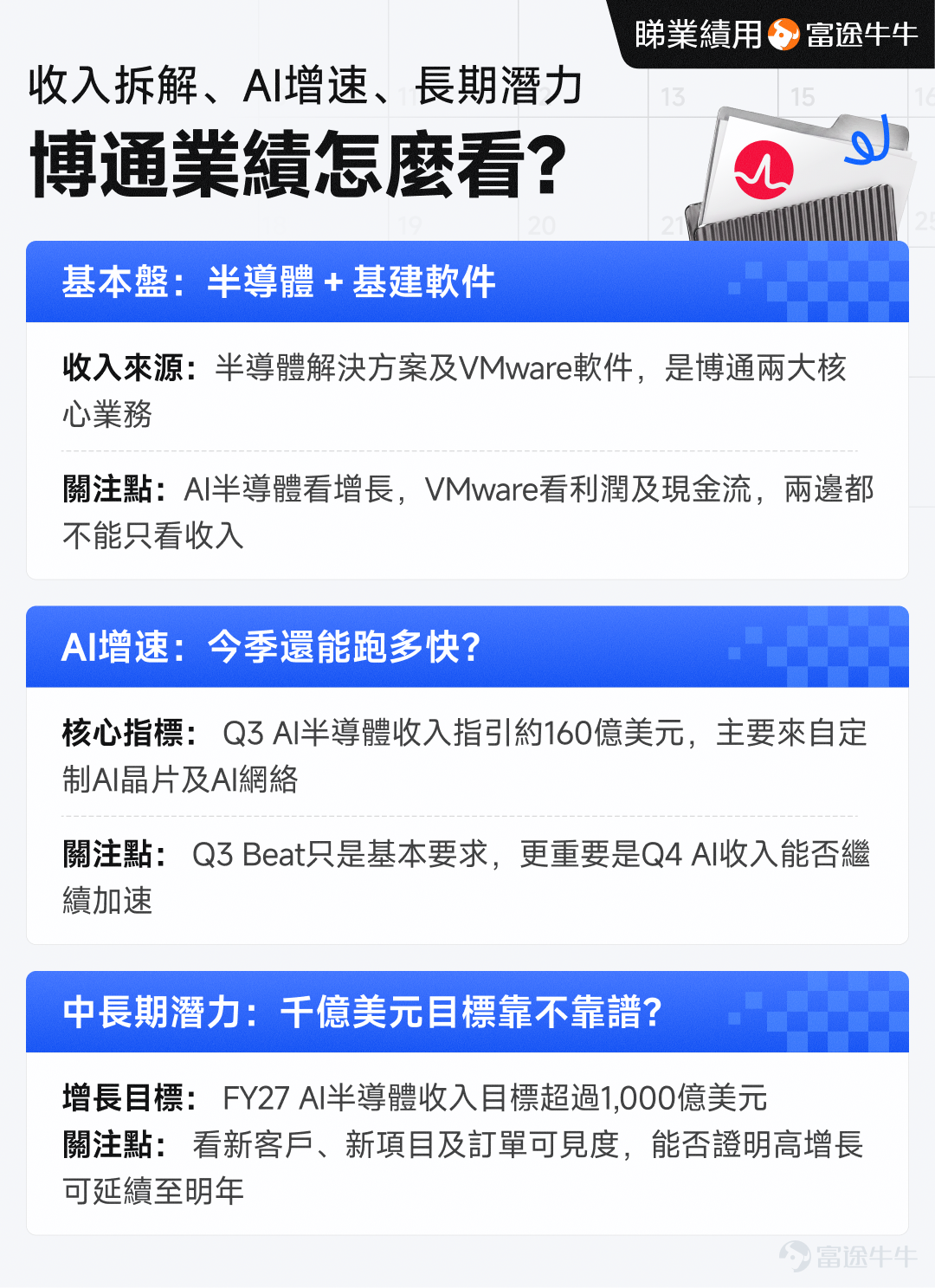
Broadcom willreport its FY2026 Q3 results after the market close on Wednesday, September 2 (ET).What the market cares most about this time may not just be whether Q3 beats expectations, but whether Broadcom can prove that:The rapid growth of custom AI chips can sustain from this year through FY27.
To make sense of this earnings report, keep the following in mind:Semiconductor outlook hinges on AI growth, with Q4 and FY27 guidance indicating potential.
What exactly does Broadcom rely on to generate profits?
Many investors have only started paying attention to Broadcom in recent years due to AI, but it is not a pure-play "AI chip company."
Broadcom currently has two main business segments:Semiconductor SolutionsandInfrastructure Software。
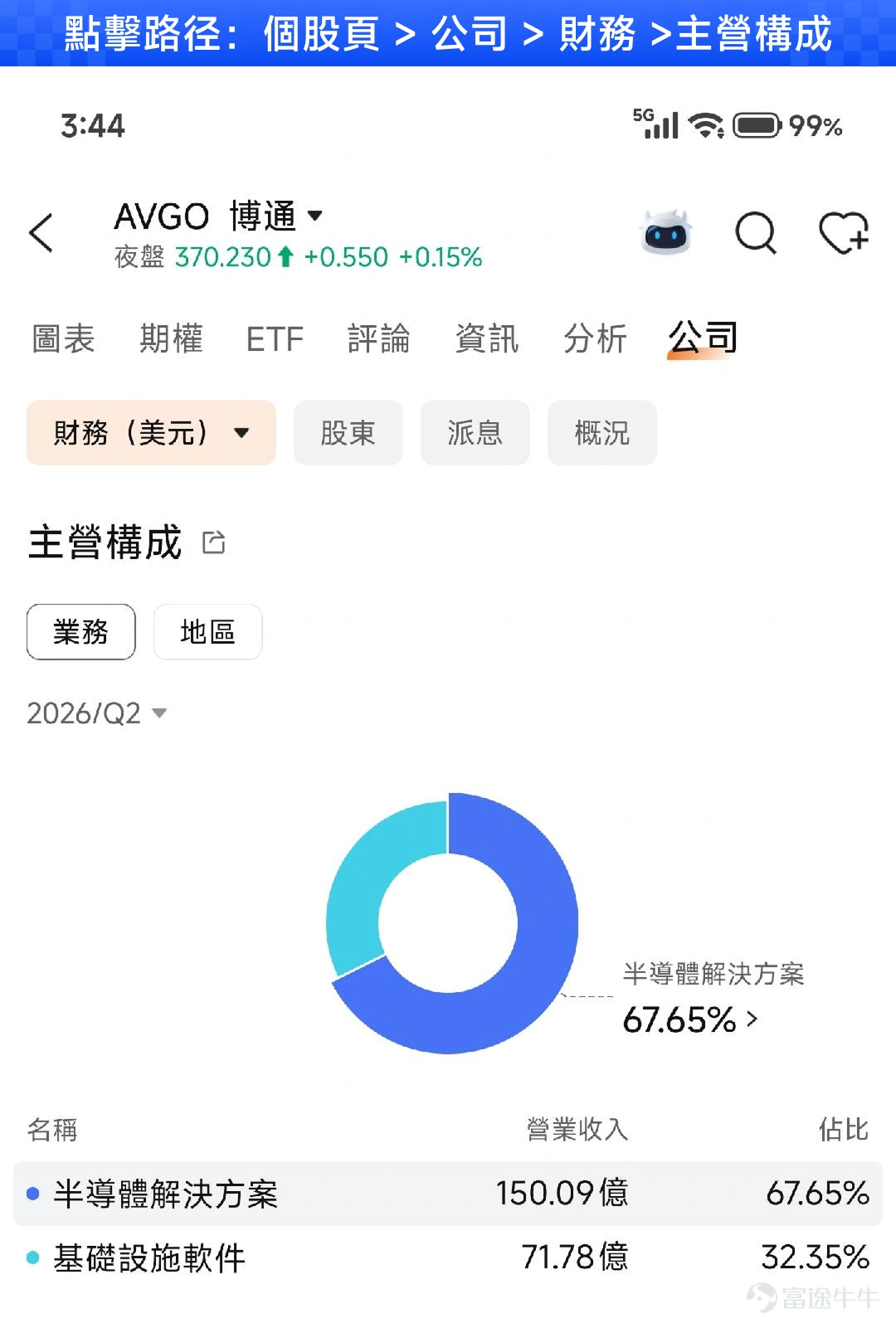
In the previous quarter, FY2026 Q2, Broadcom's total revenue was$22.19 billion, up 48% year-over-year. Of this, semiconductor revenue was approximatelyUSD 15 billion, accounting for 68% of total revenue and up 79% year-over-year; infrastructure software revenue was approximately$7.18 billion, accounting for 32%, with a year-on-year growth of 9%.
In simple terms:AI is driving growth, while infrastructure software provider VMware is responsible for maintaining profitability and cash flow.
Semiconductors: AI is currently the largest growth engine
Broadcom’s semiconductor business is extensive, covering traditional areas such as networking, wireless communications, broadband, and storage connectivity. However, the market currently places the greatest emphasis on two product categories:
Custom AI Accelerators (Custom AI Accelerator / XPU) + AI Networking.
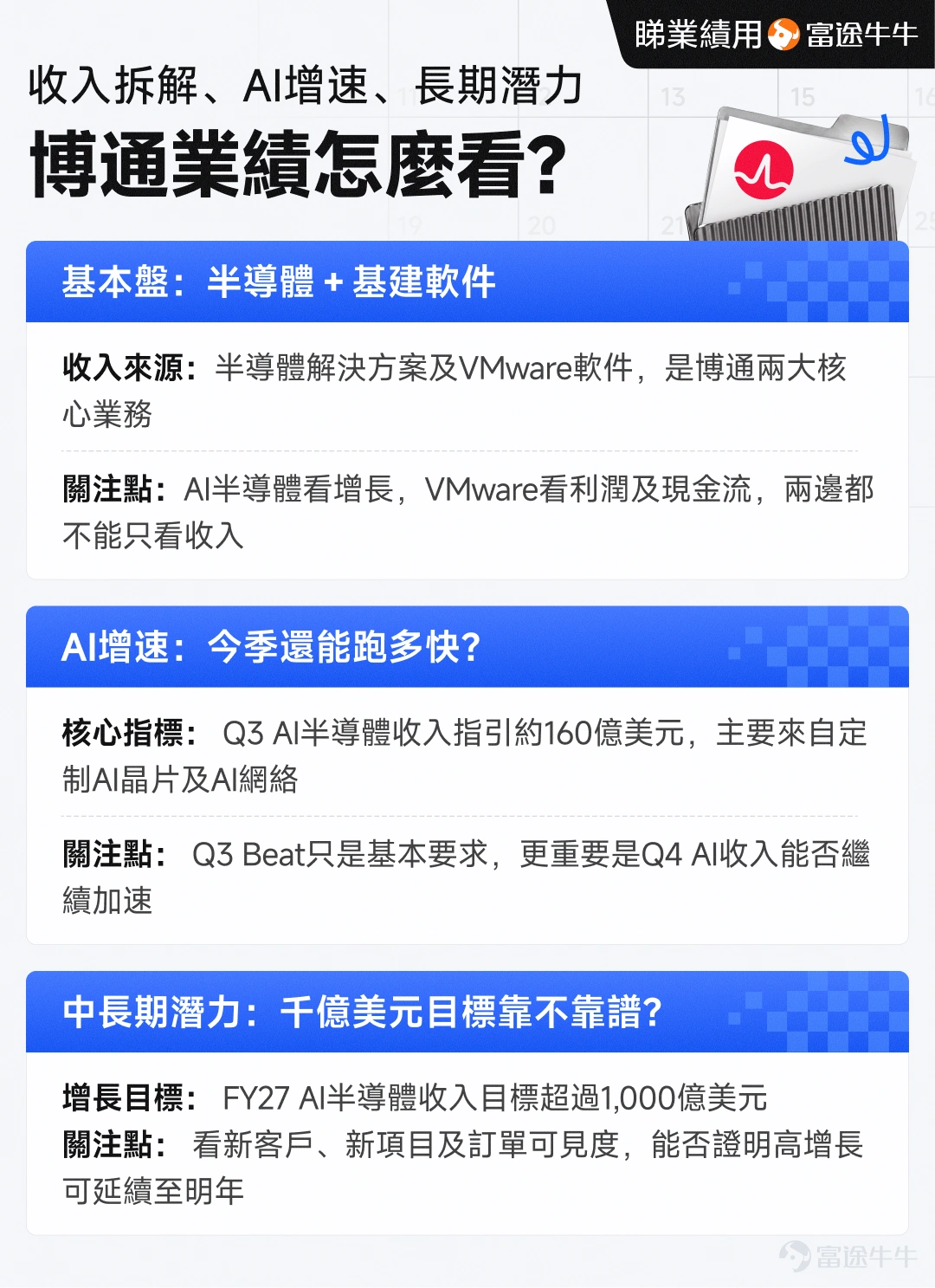
In the previous quarter, Broadcom’s AI semiconductor revenue rose to$10.8 billion, a year-on-year increase of 143%, accounting for nearly half of the company’s total revenue. The company stated that the growth was primarily driven by demand from major customers for custom AI accelerators and AI networking solutions.
This is also the first key to understanding Broadcom’s valuation:Buying Broadcom in the current market is largely a bet on its AI growth.
What makes Broadcom a core AI stock alongside NVIDIA?
Broadcom and NVIDIA are actually pursuing two different paths.
NVIDIA's core isa general-purpose GPU platform,which can be purchased and used by various enterprises; one of Broadcom's key roles is to assist $Alphabet-C (GOOG.US)$ , OpenAI, and other major AI and cloud clients in developingcustom AI chips。
that better meet their specific needs. For example, OpenAI and Broadcom have announced a collaboration to develop and deploy10GW of custom AI accelerators and networking systems.The plan is scheduled to begin deployment in the second half of 2026 and continue through the end of 2029.
In other words, Broadcom is not simply "replacing NVIDIA," but rather betting on another high-growth direction:As giants like Google and OpenAI seek to develop their own AI chips, Broadcom serves as a key partner behind the scenes.
Moreover, Broadcom has a second ace up its sleeve—AI Networking.
Large-scale AI clusters require more than just additional GPUs or XPUs; they also need high-speed interconnects for tens of thousands of chips. Switching chips, DSPs, Ethernet, and other networking products are inherently Broadcom's strengths.
Last quarter, AI Networking accounted for nearly40%. Therefore, as AI clusters grow larger, Broadcom stands to profit not only from selling compute chips but also from network infrastructure.
Does a significant rise in AI revenue necessarily translate to higher profitability?
This is another aspect often overlooked when reviewing Broadcom's financial reports.
AI revenue is growing rapidly, but as semiconductors account for a larger share of the company's revenue, Broadcom's overall gross margin may actually decline.
The company's overall gross margin was 77.1% last quarter, and management expects it to drop further to around 74% in Q3. However, the company specifically emphasized that this is mainlydue to changes in product mix,not a sudden deterioration in the profitability of the semiconductor business itself.
The reason is that the software business, primarily VMware, has very high profitability. Last quarter, the infrastructure software gross margin was approximately 93%, with an operating margin of about 79%; whereas the semiconductor business gross margin was around 70%.
Therefore, when evaluating Broadcom's profitability, one cannot simply ask 'how much did AI revenue increase,' but also need to ask:After the rapid growth of AI, can the company maintain its operating margin and free cash flow?
Broadcom's free cash flow reached$10.26 billionlast quarter, equivalent to 46% of revenue, which is also a key fundamental metric worth noting following the VMware integration.
What should we really focus on in this earnings report?
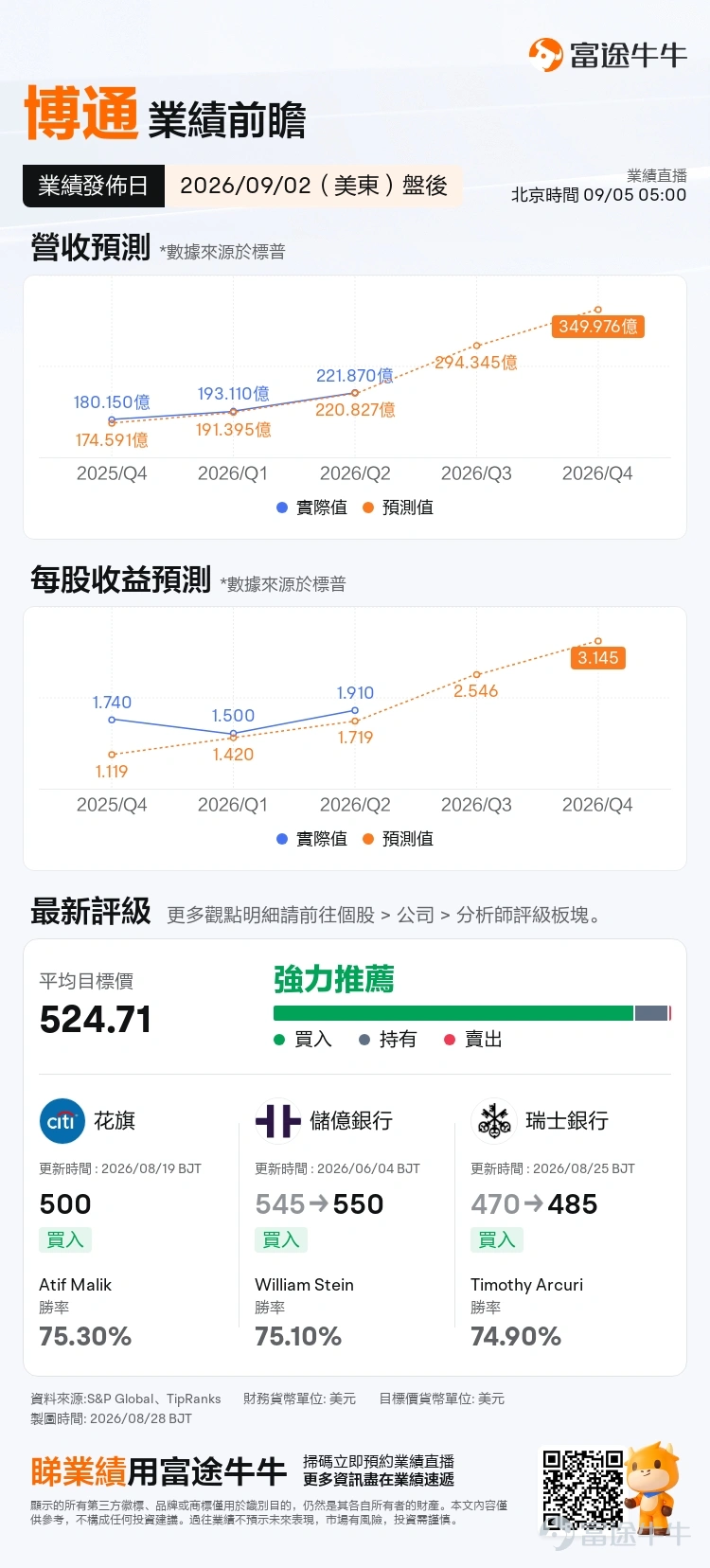
Broadcom already provided fairly aggressive Q3 guidance last quarter:Total revenue of approximately $29.4 billion, up 84% year-over-year; AI semiconductor revenue of approximately $16.0 billion, up over 200% year-over-year; Adjusted EBITDA margin of approximately 68%. Current market consensus is close to the guidance.
Therefore, while meeting these Q3 results is certainly important, the market is more likely to focus on the following three points.
1. Can Q4 AI revenue continue to accelerate?
In the first half of FY26, Broadcom's AI revenue was approximately $19.0 billion; management previously projected full-year FY26 AI semiconductor revenue to reach approximately$56.0 billion。
If Q3 reaches $16.0 billion, based on a simple extrapolation from the full-year target of $56.0 billion, Q4 still needs approximately$21.0 billionAI revenue.
This is not the company's official Q4 guidance, but a simple estimate based on existing disclosures. However, the market will use this to assess:Whether AI revenue is still accelerating rather than starting to peak.
2. Has the credibility of exceeding $100 billion in FY27 improved?
Broadcom has repeatedly stated that its AI semiconductor revenue in FY27 is expected toexceed $100 billion,and indicated that demand visibility extends into 2028.
Rising from approximately $56 billion in FY26 to over $100 billion in FY27 implies that very high growth must be maintained next year.
Therefore, the market may not be satisfied with management merely reiterating "maintaining above $100 billion" or offering a more optimistic outlook this time.
More importantly:How are projects with Google, OpenAI, Meta, Anthropic, and others progressing? When will orders be shipped? How much revenue will truly be recognized in FY27?
3. Can high growth continue to translate into profitability?
Finally, we look at gross margin, operating margin, and free cash flow. If AI revenue continues to surge while the Adjusted EBITDA margin remains around 68%, it would indicate that Broadcom is not just an "revenue story," but that its earnings leverage remains intact.
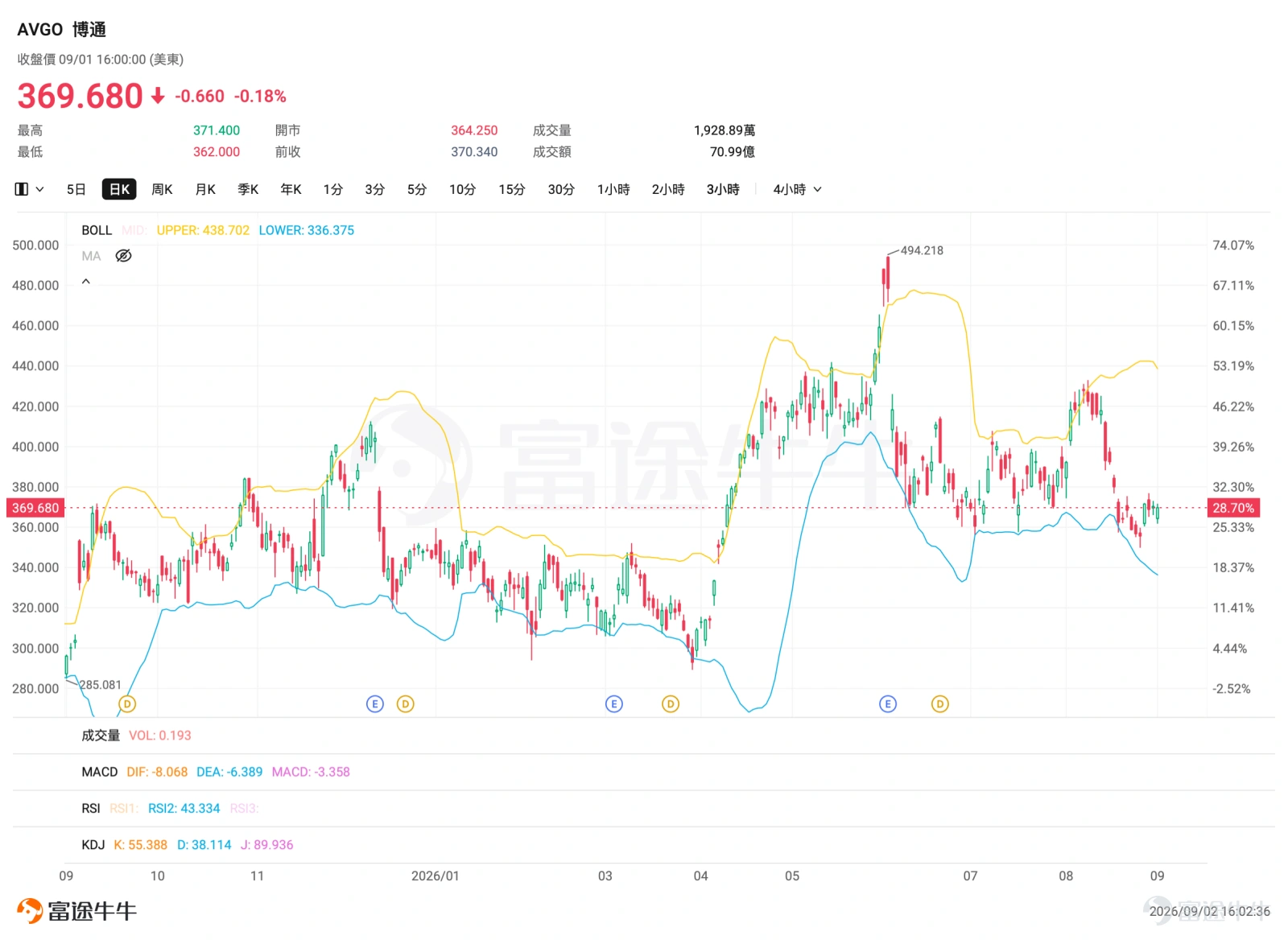
Following last quarter's earnings release, AVGO's stock price has remained in a phase of volatile consolidation. Can this earnings report reverse the downward trend? The Q4 and FY27 guidance will determine how high a valuation the market is willing to assign to its AI narrative.
Broadcom and NVIDIA currently represent two different bets on the AI computing power market: NVIDIA dominates the general-purpose GPU platform, while Broadcom benefits from cloud giants' in-house AI chip development and AI network expansion. The true test in this earnings report is whether this latter growth curve can continue to rise.
Risk Disclaimer: The above content only represents the author's view. It does not represent any position or investment advice of Futu. Futu makes no representation or warranty.Read more


Comments
to post a comment
18
30