Broadcom issues major guidance; can it boost the chip stock rally?

Market Weekly Report | August 24–30, 2026
The main global themes this week were reflation and the impact of hawkish policy: US PCE data exceeded expectations, Walsh's speech pushed the probability of a September rate hike to 58%, and the US Treasury yield curve flattened. Geopolitical easing led to a sharp drop in oil prices (Brent crude down 6.7%). Hong Kong stocks weakened under pressure from Alibaba's share placement and interest rates, with the Hang Seng Index falling 1.63% for the week, while southbound funds recorded a net inflow of HKD 9.8 billion against the trend. Next week, focus on the non-farm payrolls report and Broadcom's earnings.
I. Global Macroeconomic Overview
The core macroeconomic theme globally this week was"Stubborn inflation + Fed signaling hawkishness + slight improvement in economic contraction + easing geopolitical conflicts"—These four threads intertwined to drive sharp divergence across asset classes.
On the U.S. front,, on the 26th local time, the US Department of Commerce announced that the July Personal Consumption Expenditures (PCE) price index rose year-on-year by3.7%, matching the June increase and exceeding the market expectation of3.6%; month-on-month it rose by0.2%, higher than the market expectation of0.1%. With PCE slightly above expectations and core PCE inflation failing to decline further, market speculation about a Fed rate hike in September has intensified. After the release of the PCE data, the probability of a rate hike at the Fed's September monetary policy meeting, as reflected by federal funds futures, shifted from35%Rose to58%. Meanwhile, consumption growth has slowed. In July, personal consumption expenditures increased by only0.2%month-on-month, while personal income grew by0.4%, outpacing the growth in consumption. On August 28, Fed Chair Powell delivered a speech, acknowledging that inflation remains too high and reiterating the commitment to bring inflation back to the 2% target. He hinted that the door to further rate hikes is not closed, leading the market to interpret his remarks as a "hawkish" signal.
In China,, on August 24, the central bank conductedCNY 340 billionworth of 7-day reverse repo operations. On August 25, to ensure sufficient liquidity in the banking system, it conducted500 billionworth of Medium-term Lending Facility (MLF) operations with a one-year tenor. On August 31, the Manufacturing Purchasing Managers' Index (PMI) stood at49.8%, up by0.1percentage points from the previous month. The manufacturing sector showed some improvement; while the economy is still contracting, conditions have eased. The Non-Manufacturing Business Activity Index was49.0%,Flat from the previous month. The composite PMI output index stood at49.5%, up by0.2percentage points from the previous month, indicating a rebound in the overall expansion of business activities among Chinese enterprises.
Geopolitical and commodity developmentsThe new round of U.S. sanctions on Iran has taken effect. This news was already priced in by the market, leading bulls to take profits. Meanwhile, diplomatic easing narratives gained traction: Iran and Oman reached an agreement on the demarcation of waters and revenue sharing in the Strait of Hormuz, fueling market hopes for the strait's reopening. Additionally, reports emerged that the U.S. and Iran have reached a consensus on ceasefire terms, significantly cooling market fears of Middle East supply disruptions and causing oil prices to retreat. For the week ending August 28, 2026, the settlement price for Brent crude oil futures was88.10USD per barrel, down by6.29USD per barrel(-6.66%); the settlement price for WTI crude oil futures was83.40USD per barrel, down by3.66USD per barrel(-4.20%); the spot price for Russian ESPO crude was82.12USD/barrel, down from last week2.66USD/barrel(-3.14%)。
2. Performance of Global Major Asset Classes
Global asset divergence intensified; US equity indices rose in unison, while the Asia-Pacific region remained generally weak. US Treasury yield spreads narrowed, and crude oil and gold pulled back.
In equities,As of the close on August 28, the three major US stock indices closed higher collectively, with the Nasdaq Composite posting the strongest gain at0.85%, the Dow Jones Industrial Average rose by0.53%, and the S&P 500 increased by0.49%; the Philadelphia Semiconductor Index fell by2.31%. NVIDIA's earnings report on Wednesday (with revenue up year-over-year by+106%) drove a sharp single-day surge in the Nasdaq on Thursday1.57%; Following hawkish remarks at Jackson Hole on Friday, the probability of a rate hike in September rose from35%jumped to58%, with all four major indices closing lower. Asian-Pacific markets showed mixed performance; the Hang Seng Index fell by0.24%last week, while the Hang Seng Tech Index dropped3.38%; Mainland China's Shanghai and Shenzhen indices both rose, with the Shanghai Composite up0.72%, and the Shenzhen Component up0.37%; the Nikkei 225 declined by0.14%; South Korea's KOSPI index closed the week at6,788.88points, down6,912.95points from the previous week's close124points, with a weekly decline of approximately1.79%。
In bonds,The US Treasury market exhibited a "stable first, volatile later" pattern during the week. Yields edged lower and consolidated in the first half of the week, but short-term yields surged significantly following Governor Waller's remarks on Friday, leading to a notable flattening of the yield curve. The market remained largely on the sidelines ahead of Waller's speech. On the 26th, the market stabilized further, with the 10-year yield reported at4.66%, and the 30-year yield at5.19%...while the 2-year yield stood at...4.22%. During Governor Waller's speech on August 28, US Treasury yields experienced sharp volatility. The 2-year Treasury yield briefly rose above4.35%, climbing approximately 12 basis points intraday, while the 10-year yield gained about 5 basis points intraday to reach4.72%, with the 30-year yield seeing a significantly smaller increase. In the Chinese bond market, the 10-year Chinese government bond yield closed at approximately1.70%, up by about29basis points compared to last year.
In foreign exchange,from the previous week. The US Dollar Index weakened initially before strengthening later in the week. Affected by the US Treasury's expansion of long-term bond buybacks, the US Dollar Index had previously fallen to near98.85. The buyback operation shook market confidence in fiscal sustainability, triggering USD selling. However, long-end US Treasury yields subsequently rebounded, largely recovering earlier losses, and the US Dollar Index also rallied from its lows. As of August 28, the US Dollar Index closed at99.70, rising approximately0.85%Regarding the renminbi, the PBOC set the central parity rate on August 28 at6.7811, compared to the previous day6.784Declined29point B.
In commodities,, as international oil prices retreated from highs during the week. As of August 28, the WTI crude oil futures settlement price was83.40 USD/barrel, down3.66 USD/barrel from the previous week(-4.20%); the Brent crude oil futures settlement price was88.10 USD/barrel, down6.29 USD/barrel from the previous week(-6.66%). The decline in oil prices was mainly driven by two factors: first, long positions were unwound for profit-taking after the implementation of new US sanctions on Iran; second, traffic through the Strait of Hormuz surged significantly, markedly easing market concerns about supply disruptions in the Middle East. In precious metals, spot gold remained volatile at high levels throughout the week. On August 21, spot gold broke through4600 USD/ounce, briefly touching4632.90The US dollar hit its highest level since May 15. As of August 28, gold prices faced pressure and pulled back, driven by the boost to the US dollar from Waller's hawkish remarks and rising expectations for a September rate hike. Spot gold was quoted at4455USD/ounce.
3. Hong Kong Market Weekly Review
Hong Kong stock market trading days this week were from August 24 to August 28 (5 trading days, with lower volume due to no holidays). The Hang Seng Index closed at25,584.79points, down1.63%; the Hang Seng Tech Index closed at4,605.15points for the week, a weekly decline of3.38%; the SOE Index closed at8,490.39points, down1.67%. The Hang Seng Index's P/E (TTM) was approximately11.29times, with a P/B ratio of approximately1.23times (as of Aug 28).
At the industry level,"Energy and materials showed resilience, discretionary consumption led the decline, financials remained relatively stable, and large AI models attracted contrarian buying."Four main themes. This week, only four GICS sectors in the Hong Kong stock market rose: Energy increased2.09%(driven by a rebound in the geopolitical risk premium pushing up oil prices, benefiting the energy sector), Materials rose1.21%, Utilities rose0.49%, and Financials rose0.31%; Consumer Discretionary fell3.21%(leading the decline), Industrials fell2.63%, Real Estate fell2.11%, and Consumer Staples fell1.58%. On the news front, Alibaba announced plans to place new shares to non-US persons outside the United States, with a total placement amount of80 billionHKD. The net proceeds from this placement will be 100% used to invest in full-stack AI capabilities and strengthen AI infrastructure construction. Sectors such as optical communication, memory semiconductors, and biopharmaceuticals initially attracted capital inflows, but sector rotation accelerated—the previously hyped semiconductor sector faced profit-taking and saw a notable pullback, as funds accelerated their rotation from high-valued to low-valued sectors.
Fundamentals
southbound capitalIn terms of market dynamics, this week (Aug 24–28) saw a pattern of "heavy net buying on Monday, followed by shrinking volume." The total net inflow for the week amounted to approximatelyHKD 9.77 billion,representing a week-on-week increase in net inflows ofHKD 21.354 billion.On Monday, the Hang Seng Index plunged by80 billion492 points in a single day due to news of Alibaba's share placement,yet southbound capital bucked the trend with substantial net buying ofHKD 11.567 billion.Of this, the Shanghai-Hong Kong Stock Connect recorded net buying ofHKD 8.893 billionNet buying via Stock Connect (Shenzhen)HKD 2.674 billionAfter the market stabilized and rebounded on Tuesday, southbound funds immediately turned to net sellingHKD 6.6 billionFrom Wednesday to Friday, the scale of net inflows narrowed day by day toHKD 453 million、HKD 3.18 billionandHKD 1.176 billionSouthbound funds this week clearly demonstrated a characteristic of 'counter-trend support, buying more as prices fell'.
In terms of turnover, the average daily turnover of Hong Kong stocks this week was approximatelyHKD 253.1 billion, an increase ofHKD 3.7 billionmonth-on-month. The average daily short selling amount wasHKD 32.455 billion, with the short selling ratio12.76%, rising month-on-month.1.29percentage points.Regarding foreign capital,Over the seven days ending August 26, global active foreign funds recorded net outflows from Chinese concept stocks in the Hong Kong market.USD 22 millionin net inflows from global passive foreign fundsUSD 900 million. The divergence between 'active outflows vs. passive inflows' persists—passive capital continues to allocate, while active capital chooses to reduce positions amid rising external uncertainty.
This week's drivers for Hong Kong stocks can be summarized into four main themes:First, the shock from Alibaba's share placement liquidity drain—Alibaba80 billion's HKD-denominated share placement plan, which is heavily focused on AI, dragged the Hang Seng Index to its largest single-day drop in five months, becoming the biggest internal stock-specific risk of the week.Second, sustained pressure from external liquidity constraints—Federal Reserve Chair Powell's hawkish speech at the Jackson Hole Global Central Bankers Symposium pushed the probability of a September rate hike from around 30% to over 50%. Elevated US Treasury yields and rising rate hike expectations continue to suppress Hong Kong stock valuations, particularly in the technology sector.Third, southbound capital provided "counter-trend support"—Southbound funds recorded net buying against the trend during Monday's sharp drop in the Hang Seng IndexHKD 11.567 billionin Hong Kong dollars, with total net inflows for the week amounting toHKD 9.770 billionin Hong Kong dollars, indicating that mainland capital did not retreat during the pullback in Hong Kong stocks but instead chose to position itself counter-trend.Fourth, divergence in foreign capital flows: "active outflows vs. passive inflows"—Active foreign funds saw net outflows ofUSD 2.2 millionwhile passive foreign funds recorded net inflows900 millionUSD, reflecting that long-term allocation funds remain bullish on Hong Kong stocks, while short-term hot money chose to exit for safe havens amid rising external uncertainties.
IV. Outlook for the Market Ahead
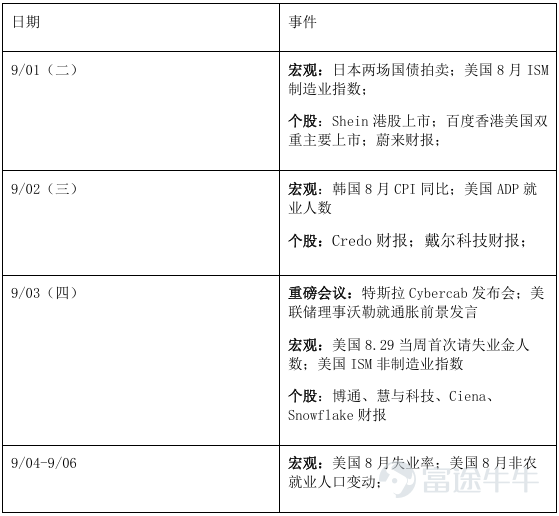
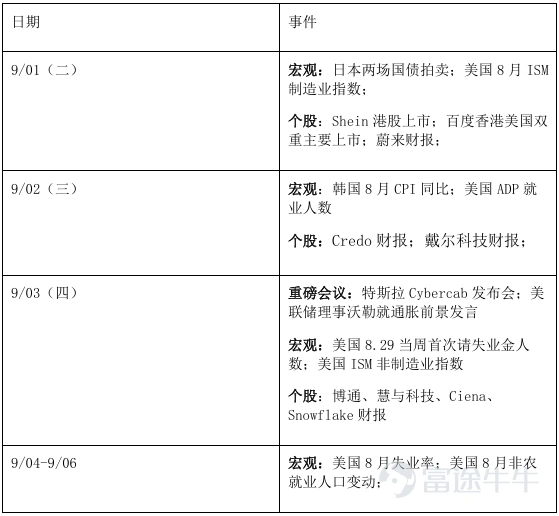
Key Calendar
Core View
Short-term (1–2 weeks), Hong Kong stocks are expected to maintain high volatility and oscillate around the 25,000-26,000 point range, overall presenting a pattern of "southbound support below and interest rate pressure above." The Hang Seng Index fell last week,1.63%and the Hang Seng Tech Index declined,3.38%but southbound capital recorded a net inflow of approximatelyHKD 9.77 billionagainst the trend, with single-day net buying reachingHKD 11.567 billionon Monday during the sharp market drop, indicating that mainland investors still have strong willingness to buy during pullbacks. However, active foreign capital continued to see slight net outflows. Coupled with US PCE data exceeding expectations and Warsh sending hawkish signals, US Treasury yields rose again, putting short-term valuation pressure on long-duration tech assets. Fundamentals in the AI sector are generally positive. NVIDIA's earnings and guidance continue to confirm strong demand for AI computing power, briefly driving a notable rebound in tech stocks, but the Philadelphia Semiconductor Index still declined for the week.2.31%This indicates that the current market has gradually shifted from purely trading on "AI demand growth" to simultaneously evaluating earnings realization, valuation levels, and cost of capital. In the next one to two weeks, US ADP employment data, non-farm payrolls, ISM data, as well as earnings reports from tech companies like Broadcom, will serve as new verification windows.
Medium-term (1–3 months)The core contradiction in Hong Kong stocks has shifted from purely "AI sentiment" to a tug-of-war between the risks of US reflation and monetary policy tightening, combined with the strength of mainland China's economic recovery. July US PCE year-on-year3.7%came in higher than expected. Warsh further emphasized that inflation remains too high, leading the market to raise expectations for a rate hike in September. If subsequent employment remains resilient and energy prices rise again, long-end US Treasury yields may remain elevated, continuing to suppress high-valuation growth assets. Conversely, if employment data cools significantly and inflation does not rise further, Fed rate hike expectations may decline, leaving room for valuation repair in Hong Kong tech stocks. Domestically, the August manufacturing PMI rebounded to49.4%, indicating marginal economic improvement, but it remains in contraction territory, which is insufficient to confirm a reversal in domestic demand and the credit cycle.
Allocation Strategy
1. AI Hardware/Semiconductors: Shift from thematic trading to earnings-based selection:
NVIDIA's strong earnings continue to validate AI computing power demand, but the Philadelphia Semiconductor Index still fell 2.31% for the week, indicating that strong fundamentals are struggling to fully offset pressure from interest rates and high valuations. Prioritize companies with clear order growth in AI servers, optical communication, storage, advanced process nodes, and domestic substitution, while reducing exposure to stocks relying solely on valuation expansion. Going forward, closely monitor whether earnings reports from supply chain companies like Broadcom can further confirm the upward trend in AI capital expenditure.
2. Internet Sector: Focus on return on capital for AI investments:
Alibaba allocated all HKD 80 billion from its share placement to AI infrastructure, but the news caused a sharp single-day drop in its stock price, reflecting growing market concern over whether AI investments require continuous external financing and whether Capex can be converted into revenue, profits, and free cash flow. The long-term AI logic for platform companies like Tencent and Alibaba remains intact, but allocation should prioritize companies with ample cash flow, clear AI commercialization paths, and no reliance on continuous financing for expansion.
3. Energy/Oil Services: Reduce trend-based allocations, retain event-driven positions:
Last week, Brent crude fell 6.66% and WTI dropped 4.20%, indicating that the geopolitical risk premium previously driven by US-Iran tensions can be quickly unwound following diplomatic easing. The energy sector retains significant event-driven elasticity, but it is no longer suitable to chase highs based solely on the logic of continuously rising oil prices. If allocating to energy, it is more appropriate to focus on integrated energy companies with lower costs, stable cash flows, and strong dividend capabilities, while treating high-beta oil service and resource stocks primarily as trading opportunities.
4. Gold retains its medium-term hedging value; manage the risk of chasing highs in the short term:
Fiscal deficits, geopolitical conflicts, and global inflation risks continue to provide medium-to-long-term support for gold. However, Governor Warsh's hawkish stance, along with resurging US Treasury yields and a strengthening US dollar, will exert downward pressure on gold prices in the short term. Gold is better suited as a defensive position to hedge against geopolitical risks, fiscal risks, and policy uncertainty, rather than as a vehicle for pursuing high trend-following returns. If real interest rates rise further, investors should be wary of intensified volatility at elevated price levels.
Risk Warning
"US Re-inflation and Further Fed Rate Hikes"If upcoming data such as non-farm payrolls and ISM indices continue to demonstrate economic resilience, expectations for rate hikes may intensify further."Synchronous Rise in Long-end US Treasury Yields and the US Dollar"The yield on the 10-year US Treasury note has climbed back to around 4.7%. If high interest rates persist longer than expected, it will increase pressure on the discount rates for global equity assets."AI Capital Expenditure Returns Falling Short of Expectations"If cloud providers' AI revenue growth fails to cover the increase in capital expenditures (Capex), or if they frequently rely on financing to support AI infrastructure build-out, the market may become concerned about "free cash flow constraints and shareholder dilution," potentially triggering a second round of valuation contraction."Escalating US-Iran Tensions Lead to a Rapid Rebound in Oil Prices"Significant uncertainty remains regarding the Strait of Hormuz and US-Iran relations. If supply risks escalate again, energy stocks may benefit in the short term. However, sustained high oil prices will ultimately reignite global inflation expectations and further intensify pressure on the Fed to tighten policy, which would be detrimental to overall risk appetite in the Hong Kong stock market."Mainland China's economic recovery is weaker than expected, and capital inflows have weakened."Although the manufacturing PMI rose to 49.4% in August, it remains in contraction territory. Domestic demand, the real estate sector, and credit demand have yet to show a clear trend of improvement.
Disclaimer: This report is for internal reference and discussion purposes only and does not constitute any investment advice.
Data source: AlphaPie database and public market information; data as of September 1.
Risk Disclaimer: The above content only represents the author's view. It does not represent any position or investment advice of Futu. Futu makes no representation or warranty.Read more

Comments
to post a comment
2