
Behind a maritime supply-demand matchmaking event, Jiangsu is addressing the challenges of Chinese manufacturing's global expansion.
By Chen Song
Six hundred years ago, Zheng He's treasure ships were built at the Longjiang Shipyard in Nanjing, from where his fleet set sail on seven voyages to the Western Seas. Six hundred years later, Jiangsu's ports handle 3.71 billion tons of cargo annually, ranking first nationwide.
Over the past six centuries, the ports here have transformed from wooden sailing vessel docks into a world-class port cluster with 606 berths capable of handling 10,000-ton vessels. The scale of these ports now ranks among the top in the country, and the network of routes connecting to the world continues to densify. Currently, Jiangsu Province has 102 international container routes, including 28 deep-sea routes, with some foreign trade cargo exported via ports such as Shanghai and Ningbo.
While there is ample cargo supply and well-developed terminal infrastructure, new challenges remain: the density of Jiangsu's international shipping routes and the caliber of its shipping services have not yet fully kept pace with the global expansion of local industries.
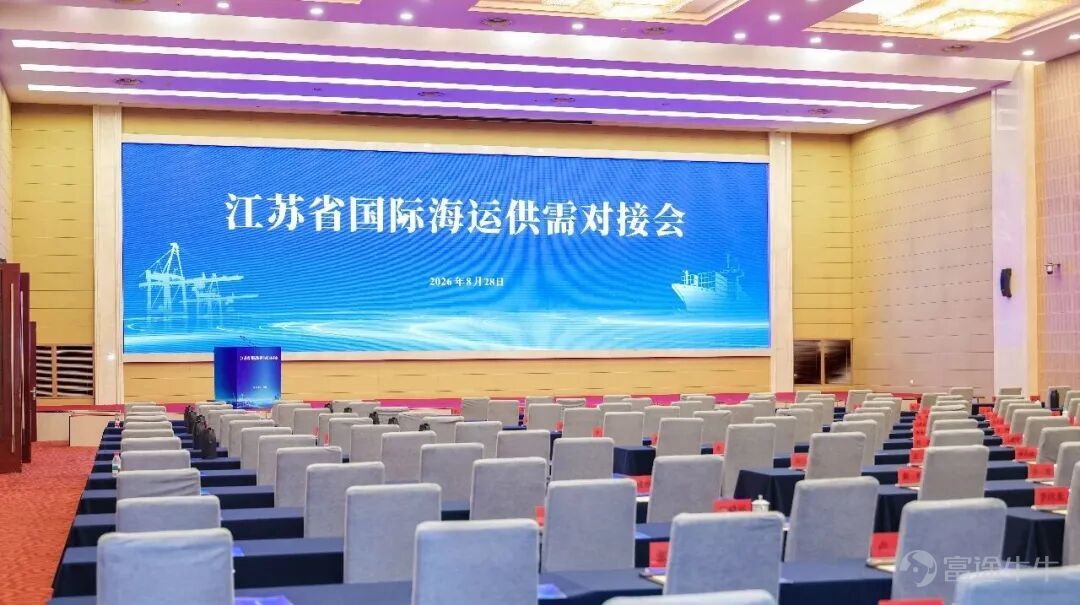
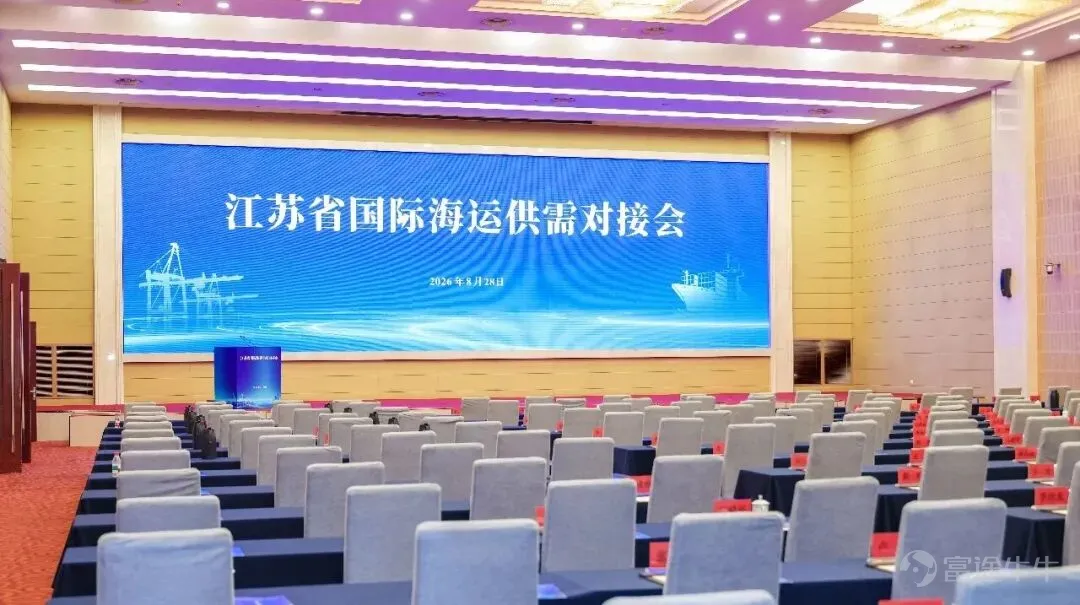
On August 28 in Nanjing, at the Jiangsu Province International Ocean Shipping Supply-Demand Matching Conference, 85 companies from the port, shipping, cargo owner, and freight forwarding sectors gathered, with 14 projects signed on the spot.
Yet more critical than the number of signed deals is the question:As Chinese manufacturing accelerates its global expansion, can Jiangsu's ports provide sufficient channel support? This is precisely the question this matchmaking event aims to answer.
1. Strengthening shipping routes after achieving hardware leadership
Over the past decade, the keyword for Jiangsu's maritime shipping has been "construction." The 12.5-meter deep-water channel from Nanjing to the estuary of the Yangtze River has been fully opened, allowing 50,000-ton ocean-going vessels to reach Nanjing directly. The province boasts ten major ports with annual throughput exceeding 100 million tons each, and the comprehensive handling capacity of its ports reaches 3.06 billion tons.
However, leading infrastructure does not equate to strong shipping capabilities. As a top-tier global shipping enterprise, COSCO SHIPPING Lines operates a route network covering 146 countries and regions. In contrast, the entire province of Jiangsu has only 28 long-haul international shipping routes—Route density and coverage breadth are the key shortcomings Jiangsu must address to transform from a major port hub into a powerful one.
Given these shortcomings, corporate demand has become increasingly urgent.
Jiang Mingzhong, Vice President of XCMG Group, presented a set of data during his speech: in the first seven months of this year, XCMG's international revenue accounted for nearly 51%, with business operations covering 193 countries and regions. "International maritime shipping has become the core artery supporting XCMG's global business growth." Volatility in container slot availability and unstable shipping routes are the most troubling issues for exporters of large-scale equipment.
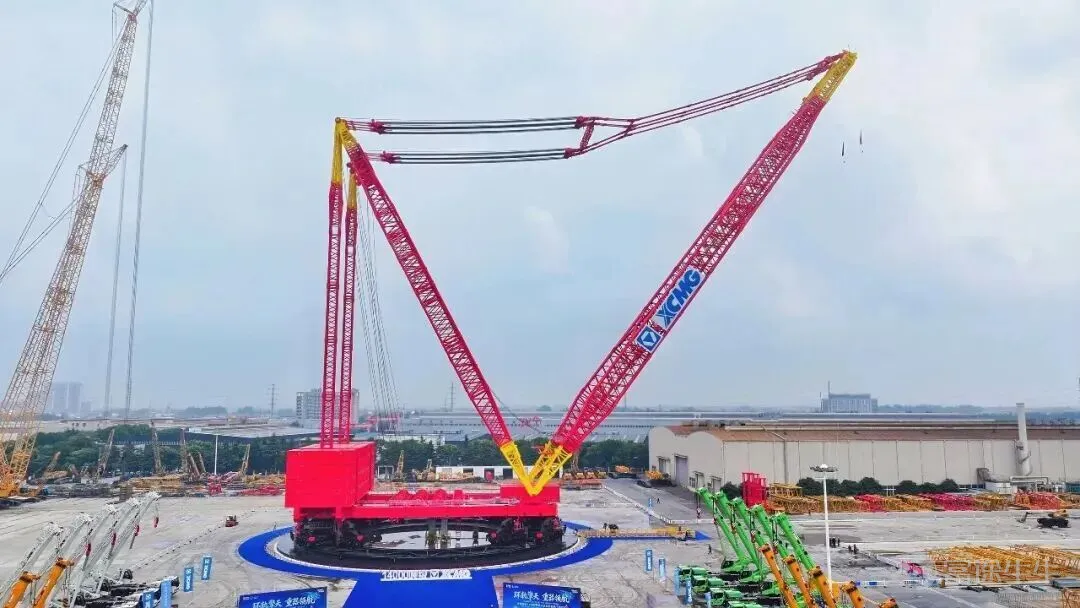
XCMG launches the world's first 14,000-ton ring-rail crane
Efforts to address these weaknesses have already begun. Zhao Qinghong, Deputy Mayor of Nanjing, revealed at the meeting that Nanjing Port has launched an Arctic container shipping route, which shortens the distance by approximately 3,500 nautical miles and reduces transit time by about 10 days compared to the Suez Canal route. The number of high-end maritime service enterprises in Nanjing ranks second only to Shanghai in the Yangtze River Delta, covering shipping transactions, financial insurance, maritime law, and arbitration. Chen Ming, Chairman of Jiangsu Provincial Port Group, introduced that the group's owned fleet has a total deadweight tonnage of approximately 1.65 million tons, with container slot capacity of around 60,000 TEUs, operating 223 routes. Zhou Jianfeng, Vice President of ZTE Corporation, proposed the concept of "Jiangsu Goods via Jiangsu Transport." Since March this year, cargo from ZTE's Nanjing factory has been prioritized for export through Nanjing, Suzhou, and Taicang ports, driving the回流 (return) of cargo sources that previously passed through ports in other regions.
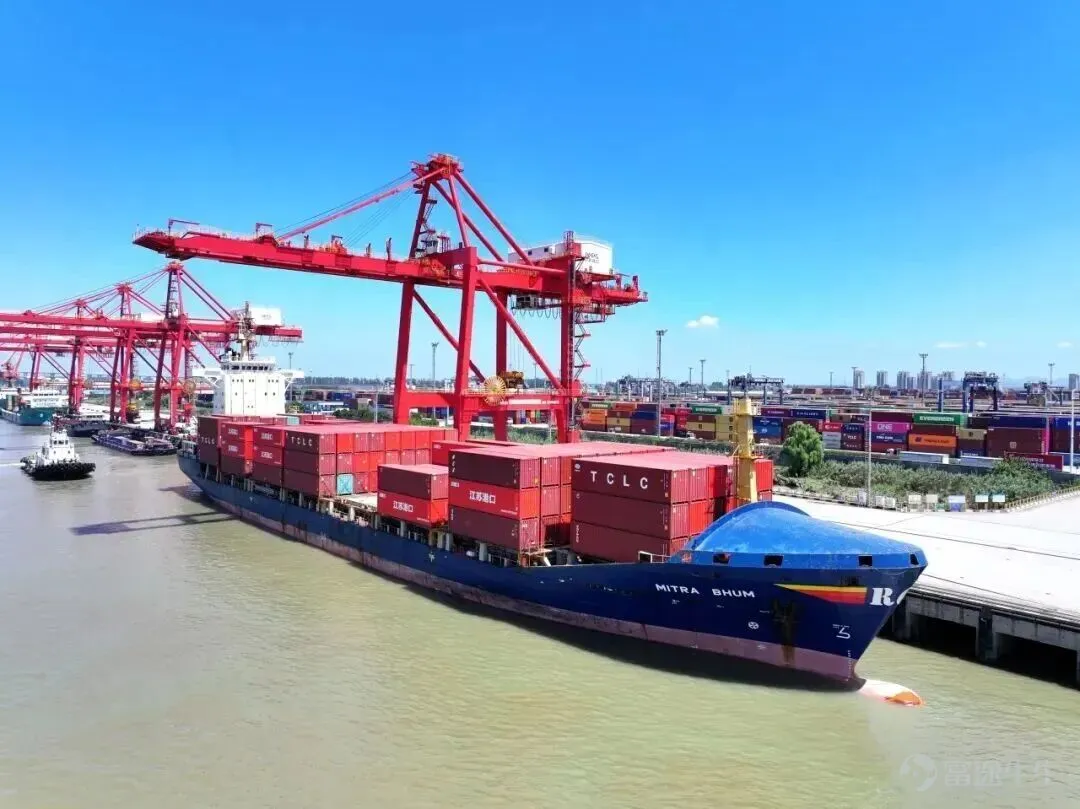
"Nanjing-Philippines" container shipping route officially launched
However, previous efforts to address these shortcomings were largely fragmented and uncoordinated. The supply-demand matchmaking event held on August 28 aims to transform these piecemeal fixes into a systematic strengthening of capabilities—The government facilitated the platform, bringing ports, shipping companies, cargo owners, and freight forwarders to the same table to directly align shipping capacity with cargo demand.
Wu Yonghong, Director of the Jiangsu Provincial Department of Transportation, stated at the matchmaking event that it is necessary to "regularly establish a port-shipping-trade docking platform." The term "regularly" implies that addressing shortcomings has moved from case-by-case initiatives to an institutionalized stage.
2. The in-depth advantages of river-sea intermodal transport
Jiangsu's confidence in addressing its weaknesses stems from the unique depth of resources possessed by its ports. Within the Yangtze River Delta port cluster, while Shanghai serves as an international shipping hub and the Port of Ningbo-Zhoushan ranks first globally in throughput, Jiangsu has taken a different path—focusing on depth. Chen Ming, Chairman of Jiangsu Provincial Port Group, provided the following data:The Jiangsu section of the Yangtze River accounts for only about one-seventh of the navigable mileage of the entire river, yet it handles over 70% of the total freight volume along the whole route.
Along the coastal layer, the Port of Lianyungang faces the central and western regions. Wang Guochao, Chairman of Lianyungang Port Group, introduced that Lianyungang is the eastern starting point of the New Eurasian Land Bridge, with 100 container shipping routes and 27 sea-rail intermodal corridors already opened. Its overseas layout has formed an integrated operational structure involving three hubs: the China-Kazakhstan Logistics Base, the Khorgos Dry Port, and the Aktau Port in Kazakhstan, extending from the shores of the Yellow Sea to the Caspian Sea. In the first seven months of this year, Lianyungang operated 579 international block trains, with over 100 trains in June alone, setting a historical record.
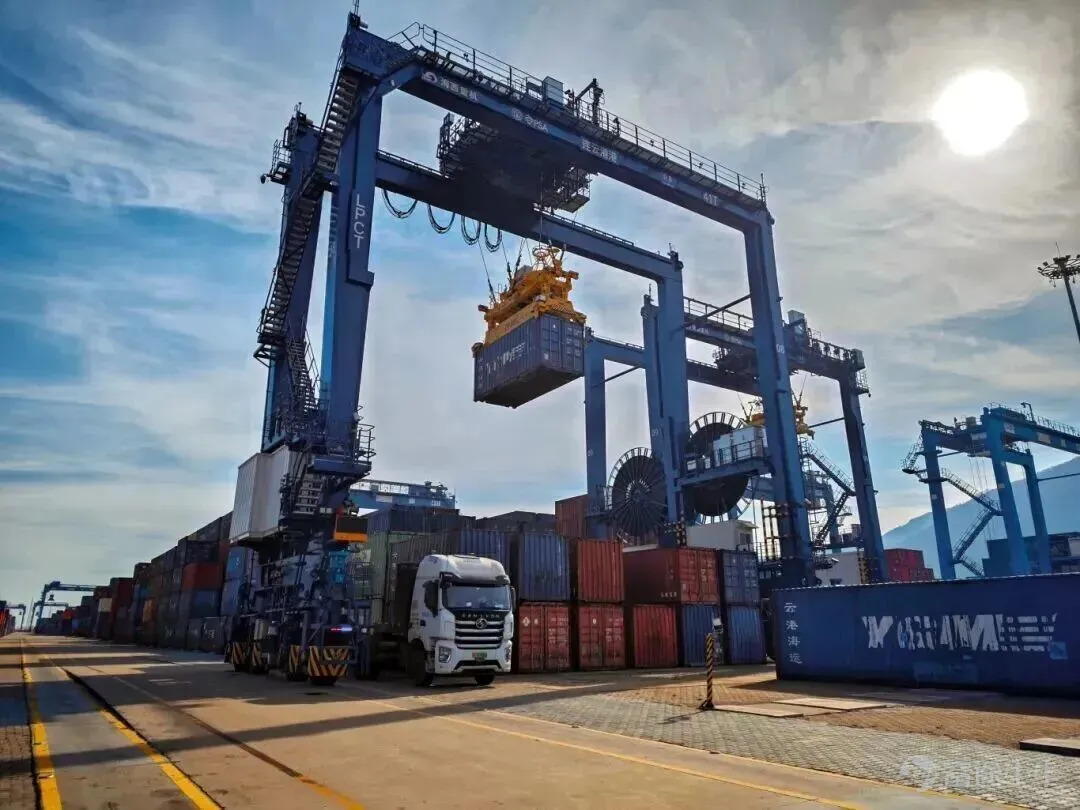
Port of Lianyungang
The layer along the river handles approximately two-thirds of the province's total throughput. Nanjing has established the province's only dedicated channel for roll-on/roll-off ferries carrying oversized items weighing more than 120 tons. Oversized cargo under 200 tons can cross the river in about 30 minutes without disassembly or lifting, which is directly attractive to owners of heavy machinery, wind power equipment, and other large-scale goods. Suzhou Port is the first inland port in China to handle ten million TEUs. Its core port area, Taicang Port, boasts the largest car roll-on/roll-off terminal on the main stem of the Yangtze River. Shen Zhidong, Deputy Mayor of Suzhou, highlighted the "Double Southeast" corridor: the Suzhou-Vietnam railway service launched in June, reducing transit time to 5.5 days and costs by approximately 10%; the international trucking service offers "one certificate for six countries," shortening transit time by over 30% and reducing costs by 15%, currently serving more than 800 enterprises including Samsung, Bosch, and Hengli.
Further inland lies the densest inland waterway network in the country. Jiangsu Province has 24,000 kilometers of inland waterways, of which 2,761 kilometers are Class III or above. The Jiangsu section of the Beijing-Hangzhou Grand Canal can accommodate vessels of up to 2,000 tons. The Su-Lian waterway has opened a direct outlet to the sea for Jiangsu, Anhui, Shandong, and Henan provinces to Lianyungang. In recent years, 10 "small, fast, and flexible" specialized branch lines reaching directly to industrial park entrances have also been completed.
The triple integration of seaports, river ports, and inland waterway ports creates a resource and capability profile for Jiangsu that is rare among China's coastal provinces. Guangdong has seaports but lacks the density of inland waterways found in Jiangsu, while Shandong has seaports but is not traversed by the main stem of the Yangtze River.
3. A competitive benchmark for cost reduction via water transport
In fact, when discussing the value of this deep-water logistics network, the ultimate metric is its impact on corporate cost structures.
In 2025, Jiangsu's total social logistics costs accounted for 12.6% of its GDP, which is 1.3 percentage points below the national average. Based on a GDP of CNY 14.2 trillion, this 1.3-percentage-point difference translates to approximately CNY 180 billion in annual logistics savings for the province. As Director Wu Yonghong stated, this is 'thanks to abundant water transport resources.'
Corporate balance sheets reflect this clearly. Chen Ming cited an example where the Provincial Port Group helped XCMG save over CNY 15 million in cumulative logistics costs by optimizing sea-river-inland multimodal transport solutions. Additionally, Nanjing Port's roll-on/roll-off (Ro-Ro) automobile business reduced vehicle port aggregation time by 2–3 days and lowered per-unit costs by approximately 30%.
For a manufacturing powerhouse like Jiangsu, logistics costs are a key component of competitiveness. The value-added of the manufacturing sector accounts for 33.5% of GDP, ranking first nationwide. Jiangsu leads the country with 14 national-level advanced manufacturing clusters. In 2025, the province's total foreign trade import and export volume reached CNY 5.95 trillion, with 'Made in Jiangsu' products such as new energy vehicles, construction machinery, and automotive equipment selling well globally.
With massive inflows of raw materials and outflows of finished goods, every marginal decrease in logistics costs directly boosts net profit.
Jiangsu is currently transforming its natural advantages in water transport into institutional capabilities.Multimodal transport models featuring 'single bill of lading' and 'single container' systems have been fully promoted. Forty-four rail-water intermodal lines now cover all prefecture-level cities, and more than 20 China-Europe Railway Express routes have extended westward.
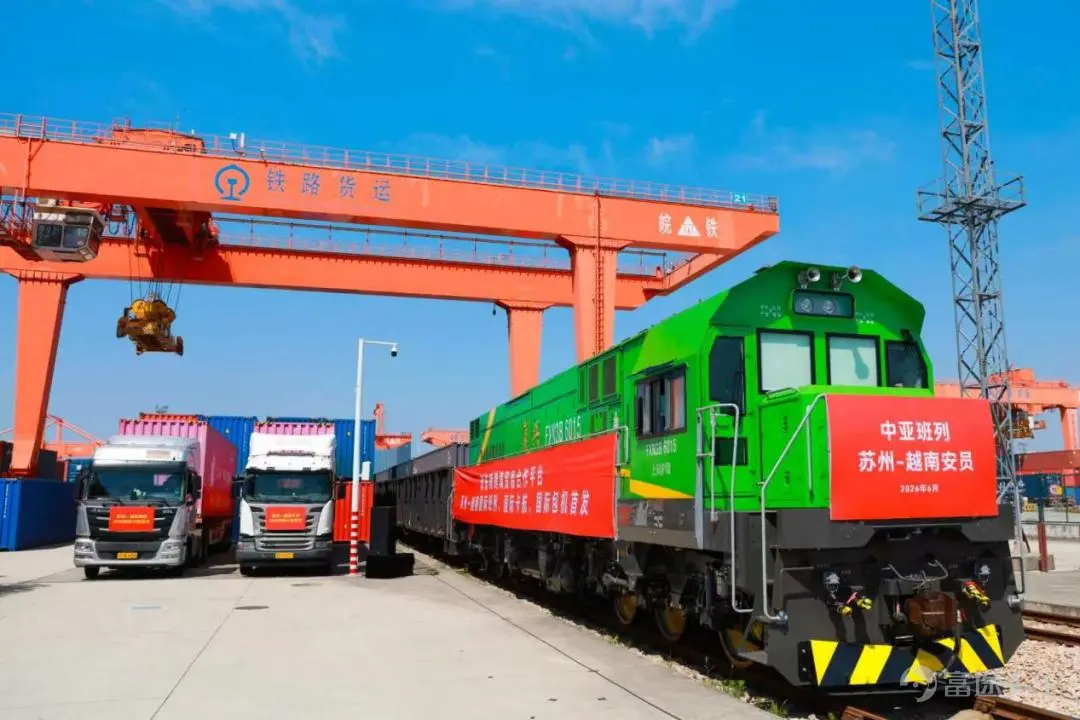
Central Asia Railway Express: Suzhou to Vietnam
Meanwhile, port enterprises are joining manufacturers in expanding overseas. Jiangsu Provincial Port Group has established overseas warehouses to serve Great Wall Motor, XCMG, and Meiling; participated in port and mineral logistics in Guinea, West Africa, to open up an iron ore corridor from overseas mines to the domestic market; and set up logistics hubs in Southeast Asia via Malaysia. While many regions are still competing on highway mileage and industrial park scale, Jiangsu is optimizing its transport structure by shifting more cargo to lower-cost waterways rather than simply slashing freight rates.
Liu Guoqi, Assistant General Manager of COSCO SHIPPING Lines, stated at the conference that the company will implement a 'one industry, one solution' strategy tailored to Jiangsu's new energy, construction machinery, automotive, and electronic information sectors. The willingness of shipping giants to provide customized solutions for a single province indicates that Jiangsu's cargo volume now commands significant bargaining power.
Corporate-level cooperation is being implemented, while institutional alignment is also catching up. The true value of this supply-demand matchmaking event lies not in the 14 signed projects, but in establishing a normalized mechanism for coordination among ports, shipping, and trade.
With stakeholders across cargo sources, shipping routes, ports, and logistics sitting at the same table, Jiangsu is answering the question of how Chinese manufacturing can go global through concrete actions—providing tangible leverage in its transition from a major waterway transport province to a powerful one.
Risk Disclaimer: The above content only represents the author's view. It does not represent any position or investment advice of Futu. Futu makes no representation or warranty.Read more
Comments
to post a comment