US Stock Market Talk | The Fed Resumes Rate Hikes After a Three-Year Pause! Is a New Shift Ahead for

Are US stocks set to fall again? With the Fed turning hawkish and escalating US-Iran tensions, can the Nasdaq hold the 26,000 level? What should investors do with Micron, SK Hynix, and Lumentum?
1. Will US stocks continue to fall? Can the Nasdaq hold above 26,000?
Two major bearish catalysts:
1. Fed hawkish repricing: Following Jackson Hole, the market's probability of a September rate hike has risen to over 60%. Long-end US Treasury yields have soared, and the high-interest-rate environment exerts strong pressure on high-valuation AI tech stocks. September is historically a high-volatility month for US stocks, with Non-Farm Payrolls (September 4) and the FOMC meeting being key time windows.
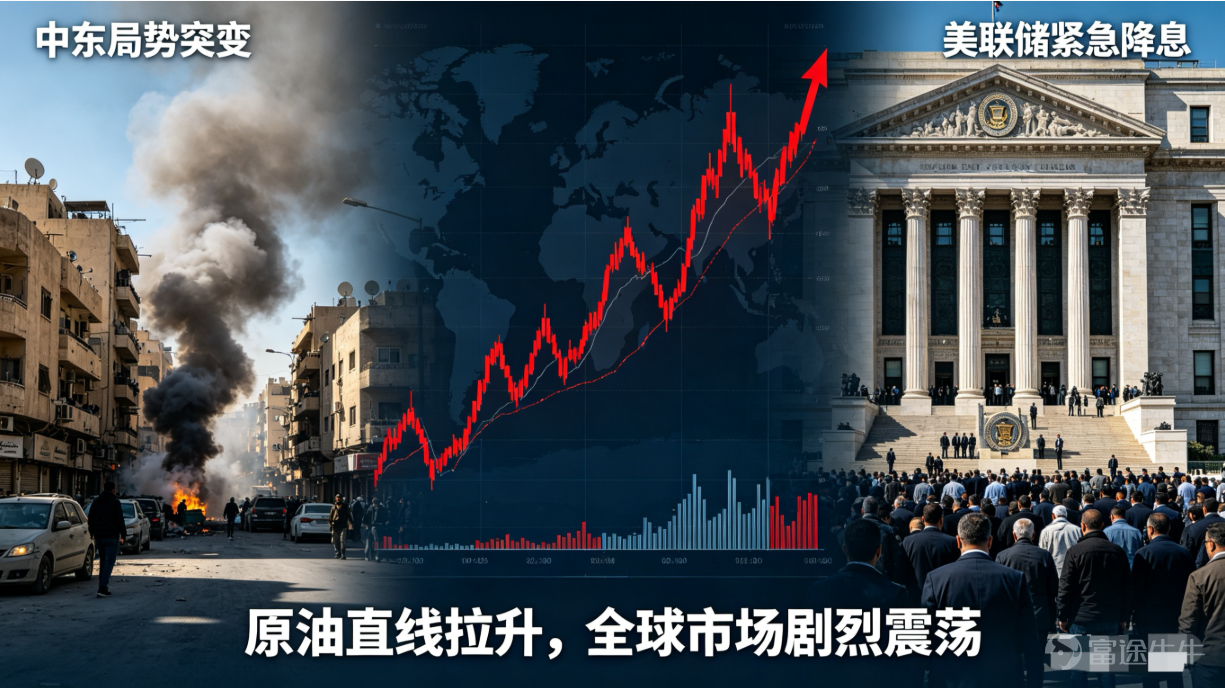
2. Escalation of US-Iran tensions → Rising oil prices: Brent crude tops $90, raising market concerns that energy costs will drive up inflation, forcing the Fed to maintain high rates or even hike further. If the conflict remains limited to localized skirmishes, it constitutes a short-term negative shock; if shipping in the Strait of Hormuz is substantially disrupted, oil prices will surge further, placing significant pressure on the Nasdaq.
Assessment of the Nasdaq 26,000 level
26,000 representsstrong medium-term psychological and technical support,corresponding to the lower boundary of the previous consolidation range.
✅ Support scenario: If the US-Iran conflict does not escalate; non-farm payrolls weaken, cooling rate hike expectations, a technical rebound is likely near 26,000.
❌ Breakdown scenario: If the conflict escalates further and oil prices continue to surge; non-farm employment exceeds expectations, leading to a September rate hike, 26,000 will be effectively breached, with the next support level seen in the 24,500–25,000 range.
Current status: The market is currently in a 'risk-off' phase. Even if 26,000 holds, an immediate return to a strong uptrend is unlikely; the most probable outcome is volatile bottoming.
II. Analysis of three tickers: Micron (MU), SK Hynix, Lumentum (LITE)
All three belong to the high-growth AI sector, butvaluations are already elevated, and they are highly sensitive to US Treasury yields and broader market beta.When the broader market undergoes valuation compression, it is difficult for individual stocks to remain unaffected.
1. Micron Technology (MU) – Memory & HBM $Micron Technology (MU.US)$
✅ Bullish Factors: Robust demand for HBM, strong order books for AI server memory, significant improvement in financial performance, and high institutional long positioning.
⚠️ Risks: ① Highly cyclical nature; if AI capital expenditure slows, memory prices could drop rapidly. ② In a rising interest rate environment, high-valuation growth stocks are prone to sell-offs. ③ Future competition from SK Hynix and Samsung as they ramp up HBM production capacity.
Market Behavior: Tends to fall sharply during broad market declines; exhibits strong rebound elasticity when the broader market stabilizes.
2. SK Hynix (Korean Stock) $SK Hynix (000660.KR)$
✅ Bullish Factors: Core leader in HBM with substantial long-term orders from major AI chipmakers. Institutions believe the market is overly pessimistic; key catalysts include HBM contract pricing and updates to shareholder return policies.
⚠️ Risks: ① High volatility in the Korean stock market and fluctuations in the KRW exchange rate. ② Massive capacity expansion raises concerns about potential oversupply in the long term. ③ If HBM prices miss expectations, valuation multiples could contract sharply. ④ Geopolitical risks combined with tightening global liquidity by the Federal Reserve may trigger foreign capital outflows from Korean equities.
3. Lumentum (LITE) – Optical Chips & EML Lasers $Lumentum (LITE.US)$
✅ Bullish Factors: A core upstream supplier for AI optical modules, holding a high market share in EML lasers for 800G/1.6T optical modules. Strategic investment by NVIDIA has driven explosive earnings growth.
⚠️The primary risk is elevated valuation.The forward P/S ratio is significantly higher than the industry average. Once expectations for AI capital expenditure soften, the pullback could be severe, with historical precedents of single-day drops of 8–14%. Meanwhile, the company faces pressure from debt obligations and supply chain capacity ramp-up.
III. Practical Trading Strategies for Reference (Not Investment Advice)
Macroeconomic Premises
Closely monitor two key signals:10-Year US Treasury Yield, Brent Crude Oil Price, VIX Fear Index, Non-Farm Payrolls Data。
If the VIX remains above 25, it signals a fear-driven market; prioritize position sizing control and avoid rushing to buy the dip.
Strategic Approaches for Three Types of Assets
1. The broader market has not stabilized (Nasdaq lacks solid support, VIX is rising)
Do not allocate heavy positions to buy the dip. High-valuation memory chips and optical chip stocks have high beta exposure; when the broader market undergoes valuation compression, individual stocks struggle to move against the trend. For existing holdings, use rallies to adjust position sizes.
1. The Nasdaq is approaching the 26,000 support zone.
If oil prices stop surging and expectations for rate hikes cool down simultaneously, you can take a small position to bet on a rebound; however, ensure you have a stop-loss plan in place should the level fall below 26,000.
1. Differentiation logic at the individual stock level
Micron, SK Hynix: Monitor HBM orders and pricing. Suitable for swing trading, not for blind buy-and-hold strategies.
Lumentum: Offers the highest elasticity but also experiences the sharpest drawdowns. It acts as a sentiment amplifier and is suitable only for investors with very high risk tolerance.
Key Milestones
September 4: US Non-Farm Payrolls report, which will directly impact expectations for September rate hikes.
Mid-September: Federal Reserve FOMC interest rate decision meeting.
Continuously monitor whether the situation in the Middle East escalates.
⚠️ Risk Disclaimer: The content is solely for market logic analysis,and does not constitute investment advice.。

Risk Disclaimer: The above content only represents the author's view. It does not represent any position or investment advice of Futu. Futu makes no representation or warranty.Read more

Comments
to post a comment
2