Is the food delivery war coming to an end? Meituan's Q2 profits exceed expectations

The peak season highlights Meituan's fundamental strengths, but a full recovery will still take some time.
On the evening of August 28, $MEITUAN-W (03690.HK)$ Announced its financial results for the second quarter of 2026.
During the reporting period, Meituan achieved revenue of RMB 104.643 billion, a year-on-year increase of 14.4%. Specifically, revenue from the Core Local Commerce segment, primarily driven by food delivery, instant retail, and in-store hotel and travel services, grew by 10.1% year-on-year; revenue from New Initiatives, mainly comprising Xiaoxiang Supermarket and overseas businesses, increased by 25% year-on-year.
What attracted the most market attention was that Meituan's operating profit for the second quarter turned positive, with its instant retail business returning to healthy growth.
According to Meituan's disclosure,The turnaround in operating profit was primarily driven by improved unit economics (UE) in the food delivery business, meaning the contribution margin per order turned positive.This data excited some investors, while others began to make linear extrapolations, believing that Meituan's earnings recovery would continue to accelerate.
Admittedly, being the first to achieve profitability after the food delivery wars is a direct reflection of Meituan's refined operational capabilities and business moat. However, it is also important to recognize that the post-war recovery was not achieved overnight.Meituan's profitability improved rapidly this quarter, driven not only by its operational strengths but also by favorable external conditions.
The peak season for unit economics amplifies Meituan's core competencies.
Even during periods of strong operational performance, food delivery remains a low-margin business with net margins of only around 3% based on Gross Transaction Value (GTV).
At the macro level, food delivery profitability hinges on the balance between platform monetization revenue and costs for delivery, operations, and subsidies. At the micro level, profit per order results from the continuous optimization of metrics such as order value, delivery efficiency, user insights, and targeted subsidies.
Minor fluctuations in each metric, when multiplied by the vast volume of orders, can lead to qualitative shifts in total profits.This is precisely the core reason why Meituan has been able to deepen its engagement, refine its operations, and build a moat in the food delivery sector.
Objectively speaking, if consumers exhibit strong spending willingness, generating sufficient high-value orders, while external factors like weather facilitate rider deliveries, the platform can not only increase revenue per order but also reduce related subsidy expenditures.
The second quarter typically offers the conditions necessary for this operating environment, making it the peak season for unit economics in the food delivery business.
Straddling spring and summer, the second quarter generally enjoys favorable weather. On one hand, consumer demand for food delivery usually rebounds in Q2, leading to an increase in higher-ticket main meal orders. On the other hand, moderate temperatures and climate conditions help improve rider delivery efficiency, allowing the platform to reduce subsidies for adverse weather and high temperatures.
While these changes may appear marginal individually, they concurrently impact each order.For the food delivery business, where profit margins are only a few percentage points, even a slight increase in revenue combined with a slight decrease in costs results in a significant improvement in unit economics (UE).
However, peak seasons do not create advantages out of thin air; they merely amplify existing capabilities. Meituan has built deeper strengths in full-service dining and mid-to-high average order value (AOV) orders, core user stickiness, merchant supply density, and rider dispatch efficiency.Therefore, as the peak season arrived, Meituan's existing advantages were further amplified, allowing it to be the first to achieve positive unit economics.
In terms of results, Meituan maintained its lead in order volume and gross merchandise value (GMV) even after subsidy intensity declined from its peak. The market share of food delivery orders stands at approximately 5:4:1, with Meituan's GMV share remaining above 60%, and it was the first to achieve positive unit economics.
The discrepancy between order volume share and GMV share also reflects differences in order quality. While Meituan's order volume share is around half, its GMV share exceeds 60%, indirectly indicating a higher proportion of high-AOV orders. This is also a key reason for its faster UE recovery after subsidies tapered off.
This indicates that high-intensity competition has not altered the fundamental landscape of the industry, and also demonstrates thatwhat is truly amplified during peak seasons is the platform's existing order quality, user structure, and operational efficiency.
The recovery of food delivery unit economics is not linear.
A turning point in the second quarter does not mean that the same profitability model can be applied to the third quarter.
As mentioned earlier, slight changes in various sub-metrics of unit economics, when amplified by a massive order scale, can have a significant impact on overall profitability.。
Entering the third quarter, the food delivery business will face a new operating environment.
On one hand, the summer season is both a peak period for on-demand delivery demand and a high point for platform marketing spending. While order volumes grow, platforms must continue to increase investment to compete for users and stabilize market share. On the other hand, extreme weather conditions such as high temperatures and heavy rain will increase fulfillment difficulties. To ensure stable delivery during peak periods, platforms need to raise rider subsidies, and the average delivery cost per order is expected to be higher than in the second quarter.
The order mix will also change.During the summer, the proportion of low average-ticket orders, such as tea beverages, is likely to rise, which may put pressure on revenue per order and unit economics (UE). In addition, Meituan's "new occupational injury" insurance for riders has covered the entire country since July, with premiums fully borne by the platform, further pushing up delivery costs.
Therefore,Fluctuations in food delivery UE in the third quarter are inevitable; it is unrealistic to expect performance to remain at the same level as in the second quarter.However, Meituan revealed during its earnings call that while food delivery UE is expected to show significant year-on-year improvement and remain positive in the third quarter, it will decline quarter-on-quarter compared to the second quarter due to seasonal factors.
This means that although the second quarter signaled a recovery in profitability, this recovery will not follow a straight upward trajectory.
The situation in the third quarter of "year-on-year improvement but quarter-on-quarter decline" is not contradictory.The former indicates that the most intense loss-making phase following the food delivery wars has passed, and Meituan's profitability is recovering; the latter suggests that food delivery remains a highly seasonal business, sensitive to order mix and fulfillment costs, so annual performance cannot be inferred solely from data of a single quarter.
Industry subsidy levels remain high, and a full recovery will take time.
Overall,The most significant implication of Meituan's Q2 performance lies not in the quarterly profit achieved, but in validating its ability to rapidly recover as competition in the food delivery sector cools down.
The turnaround to positive unit economics (UE) in food delivery and the swift recovery of core local commerce indicate that intensive subsidies have not undermined Meituan's user base, supply density, or fulfillment efficiency. As competitive intensity wanes and the industry returns to competing on efficiency, Meituan's accumulated operational advantages become prominent.
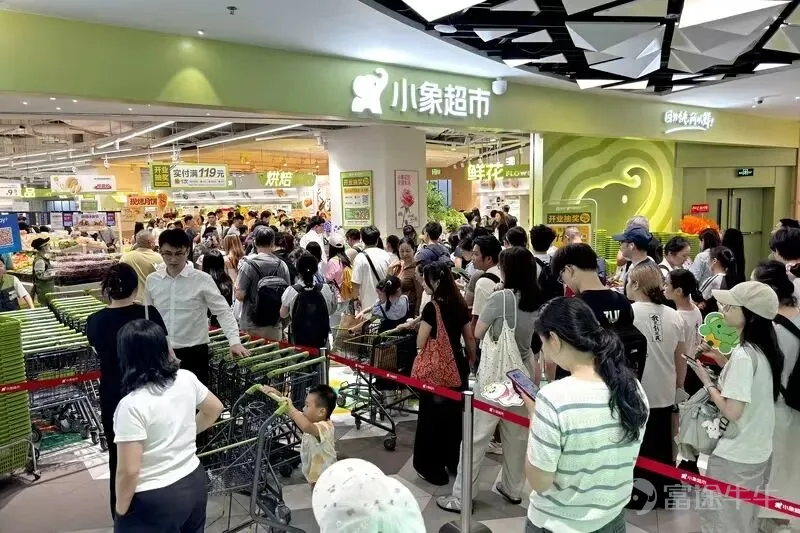
Performance in new businesses also provided some support to overall results.In Q2, revenue in this segment grew 25% year-on-year, while operating losses continued to narrow to RMB 1.7 billion. Notably, Xiaoxiang Supermarket expanded its city coverage and increased the proportion of private-label products. Beyond revenue growth itself, its longer-term value lies in leveraging Meituan's high-frequency users and instant fulfillment capabilities to extend consumption scenarios from dining to household needs such as fresh produce and daily necessities. This, in turn, boosts the open rate of the Meituan app and creates opportunities for cross-business consumption.
However, new businesses are not yet the core variable determining Meituan's current profit trajectory. At this stage, the market should focus more on whether food delivery UE can remain positive and whether core local commerce performance can continue to recover as competition eases.
Meanwhile, the overall level of subsidies in the food delivery industry remains significantly higher than in 2024, indicating that while competition has become more rational, there is still a long way to go before fully returning to the pre-price-war status quo.
Industry participants need to shift away from the惯性 of relying on subsidies to drive order growth, and gradually recognize that genuine demand, high-quality supply, stable fulfillment, and reasonable pricing are the foundations for long-term development.
True normalization,not only means achieving positive platform UE, but also requires a gradual reduction in subsidies, improvement in merchants' operating conditions, enhancement of rider protection mechanisms, and the re-consolidation of genuine consumer demand.This process requires regulatory guidance, as well as joint efforts from platforms, merchants, and consumers.
Thus, Q2 demonstrated Meituan's ability to lead the recovery, rather than indicating that the food delivery industry has fully healed. Meituan has already seen an inflection point, but it will still take time for the industry to return to true normalcy.
*Disclaimer:
The views expressed in this article are solely those of the author.
Investing involves risks; please proceed with caution. Under no circumstances shall the information or opinions expressed herein constitute investment advice for any individual. Before making any investment decisions, investors should consult with professional advisors as needed and exercise prudent judgment. We do not intend to provide underwriting services or any other services that require specific qualifications or licenses.
Risk Disclaimer: The above content only represents the author's view. It does not represent any position or investment advice of Futu. Futu makes no representation or warranty.Read more
Comments
to post a comment