US-Iran tensions flare up again: How will Strait risks impact assets?

Amid intensifying market volatility, how to choose investment instruments
Amid the interplay of geopolitical uncertainty and global macro liquidity, capital markets are entering a new round of asset repricing. The tug-of-war over key price levels for crude oil and other commodities is not only rattling supply chains and the energy sector but also transmitting inflation expectations to long-end interest rates, indirectly impacting the valuation frameworks of high-multiple tech stocks.
When the market enters such a high-volatility cycle driven by geopolitical headlines, different equity sectors often exhibit strong inverse correlations or pronounced divergence.
🌐 Two Macro Evolution Paths and Sector Tug-of-War
Path 1: Supply Risks Ease, Valuation Premiums Return to the Tech CoreIf transit and supply bottlenecks in geopolitical hotspots are substantially alleviated, the squeeze-out of the crude oil premium will directly ease inflationary pressures. A decline in long-end interest rates will reopen room for valuation repair in the tech growth sector.
Path 2: Restrictions Take Effect, Binary Divergence with Energy Outperforming TechIf subsequent trade restrictions and shipping bottlenecks intensify beyond expectations, the anticipated tightening of crude oil supply will heighten the risk of secondary inflation. Capital may continue to flow into defensive energy and resource sectors, while high-beta technology stocks face pressure for short-term pullbacks due to rising discount rates.
In the face of binary market movements driven by policy shifts and breaking news, traditional spot trading often entails significant timing risks and transaction costs.
💡 The Defensive and Hedging Value of Single Stock Futures
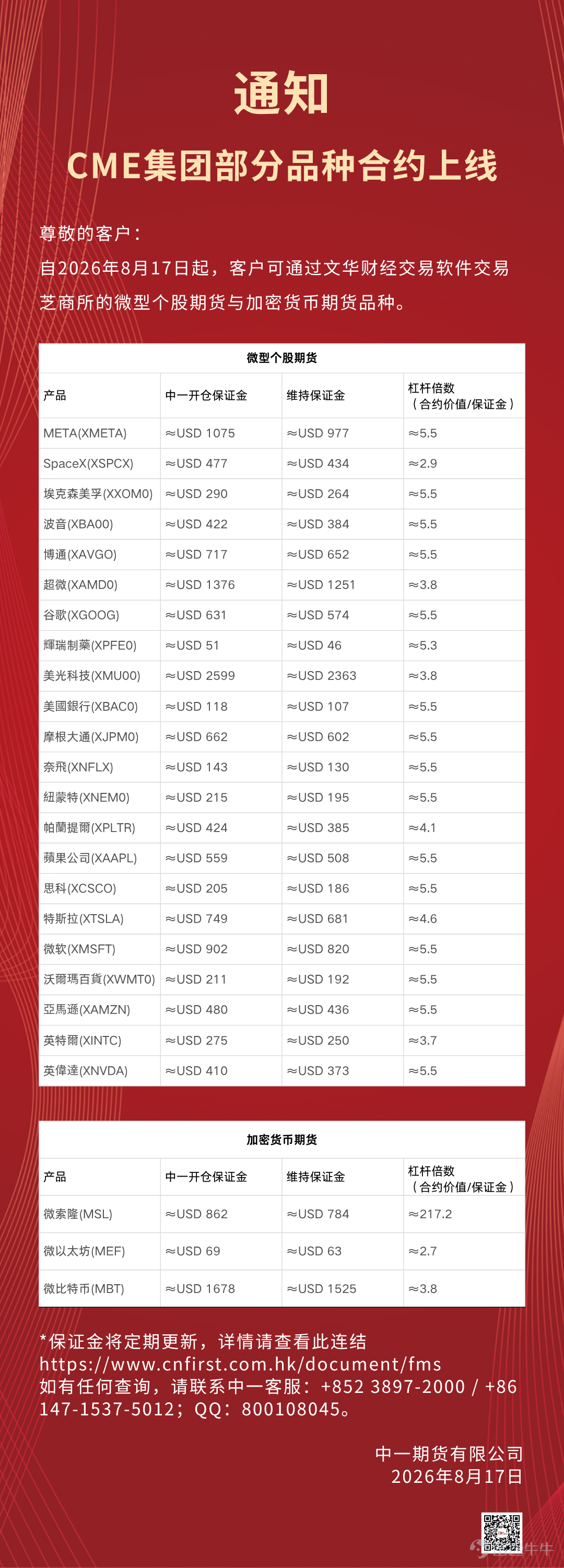
In a market environment characterized by intensifying sector divergence,Single Stock Futures offer investors a risk management solution that is more flexible and capital-efficient than pure spot trading:
Protecting core spot positions without incurring liquidation friction costs: Investors holding spot positions in leading technology or energy stocks do not need to sell their shares during major event windows (thereby avoiding disruptions to cost basis and tax liabilities). Instead, they can establish short positions in corresponding single stock futures to place a "defensive lock" on their spot assets.
Pair Trading to Capture Relative Returns: Investors can leverage the long/short flexibility of single stock futures to implement cross-sector pair strategies—going long on relatively strong sectors and short on relatively weak ones. This approach isolates broad market systemic volatility, allowing investors to focus on capturing relative alpha returns between sectors.
Low capital occupancy with granular, on-demand adjustmentsThanks to the margin mechanism in futures trading, investors can build a risk management safety net with less capital. Meanwhile, micro contract specifications allow for flexible hedging at 20%, 50%, or full coverage, enabling tailored risk control.
Around-the-clock trading with no securities borrowing costsThe near 24-hour continuous trading mechanism allows for immediate reactions to unexpected geopolitical developments outside regular market hours. Additionally, short strategies do not incur the traditional costs associated with locating borrowable shares and paying securities lending interest.
💬 Discussion
Amid the多重 tug-of-war between geopolitical tensions and macroeconomic expectations, in your current portfolio allocation,do you prefer holding energy and resource stocks for hedging, or are you bullish on the rebound potential of tech stocks after inflation subsides?
🏆 The 9th Live Trading Competition is in its final sprint!
Disclaimer: The content provided on this platform is solely for informational purposes and is intended for general reference only, not as an inducement to invest or engage in any other activity. All information contained in this article is derived from publicly available sources or selected by relevant software vendors and reference providers. Neither the descriptions of such content nor the functionalities of the referenced software should be construed as any guarantee by our company regarding specific investment outcomes. While we believe in the reliability of the sources cited in this article, we do not provide any absolute assurance regarding the accuracy or completeness of this information. The opinions expressed, data presented, trading strategy demonstrations, and software feature descriptions in this article must not be relied upon as definitive bases for futures or securities transactions. The market involves risks; investors should proceed with caution. Traders should carefully consider this content in light of their own risk tolerance. Our company shall not be held liable for any losses resulting from trading decisions made based on the content of this article. The information and policy descriptions included herein reflect market conditions and software policies as of the date of publication only. Any subsequent changes, omissions, or delays will be adjusted by our company according to actual circumstances without prior or separate notice. Without the express permission of Zhongyi Futures, no part of this article may be transmitted, copied, distributed to any third party, or used for commercial purposes in any form. Any quotation or republication that adheres to the original intent of this text must clearly credit 'Zhongyi Futures' and acknowledge all rights reserved by our company.

Content Disclosure: Promotional content
Risk Disclaimer: The above content only represents the author's view. It does not represent any position or investment advice of Futu. Futu makes no representation or warranty.Read more
Comments
to post a comment