
Hong Kong and US pharmaceutical stocks remain active; have you positioned your portfolio?

2026 H1 Earnings Call Transcript | 6 Key Q&As on Business Development

On August 14, 2026,$DISTINCT HEALTH (02677.HK)$ the company held its interim results briefing for 2026. In the first half of 2026, the company delivered solid results: revenue reached RMB 596 million, a year-on-year increase of 17%; adjusted operating profit was RMB 38.81 million, approaching the full-year level of 2025.
During the results briefing and subsequent interactions, the management team and investors engaged in in-depth discussions on store upgrades, departmental development, member operations, and the layout of AI health services. We have compiled the transcript of the results briefing and, through six core Q&As, reconstructed the management team's insights on business progress in the first half of the year and future planning.
Q1: How was the overall operational performance in the first half of the year? What were the main drivers of growth?
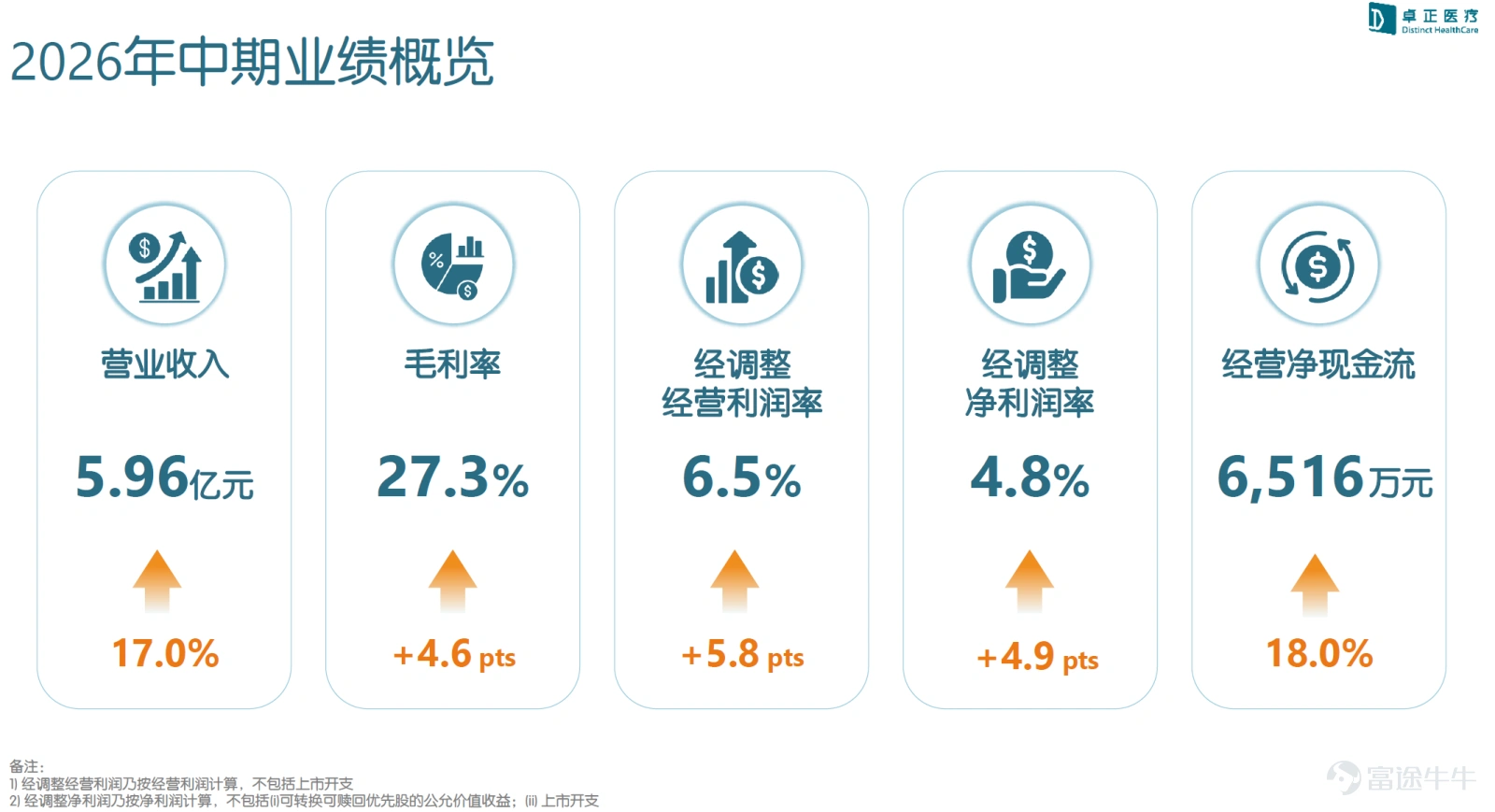
D:In the first half of 2026,The company's total revenue was RMB 596 million, representing a 17% year-on-year increase. Excluding the impact of revenue from stores acquired in Wuhan,the organic growth rate of physical medical services reached 28.8%, driven primarily by same-store sales growth. In terms of profitability indicators, the company's gross margin in the first half of 2026 was 27.3%, an increase of 4.6 percentage points year-on-year; the adjusted operating margin was 6.5%, up 5.8 percentage points year-on-year; adjusted operating profit was approximately RMB 38.8 million, close to the full-year 2025 level of RMB 40.16 million; and the adjusted net profit margin was 4.8%, rising by nearly 5 percentage points year-on-year. Net cash flow from operating activities was RMB 65.16 million, up 18% year-on-year, broadly consistent with revenue growth, indicating a healthy overall financial position.
● Regarding the drivers of revenue growth:Internally, the 'Costco-style' store upgrade was the core driver of revenue growth. By enhancing multi-specialty service capabilities and supply through store upgrades, we jointly boosted customer visit frequency and per-household health consumption. Externally, we observed that macro consumer confidence improved in the first half of the year compared to last year, providing certain support for business growth.
● Regarding the improvement in gross margin:The improvement primarily stems from two factors. First, the number and scale of "Costco-style" outlets are increasing as planned. These large-format stores demonstrate significantly higher operational efficiency and profitability compared to initial standard stores. As the network of large-format stores expands, there remains room for further improvement in the company's overall gross margin. Second, the economies of scale from revenue growth are gradually being realized. The proportion of fixed costs—such as labor, rent, and equipment depreciation and amortization—to revenue declines as income grows.
● Regarding operating profit:Operating profit has increased alongside revenue growth. Zhuozheng Medical consistently prioritizes strong user reputation and member referrals as its core customer acquisition channels, keeping sales expenses as a percentage of revenue at an extremely low level. Administrative expenses (adjusted for IPO-related costs) as a percentage of revenue also decreased by nearly 1.5 percentage points year-over-year against the backdrop of revenue growth.
Q2: What is the progress on the upgrade plan for one-stop health service center outlets? What is the planned pace for future development?
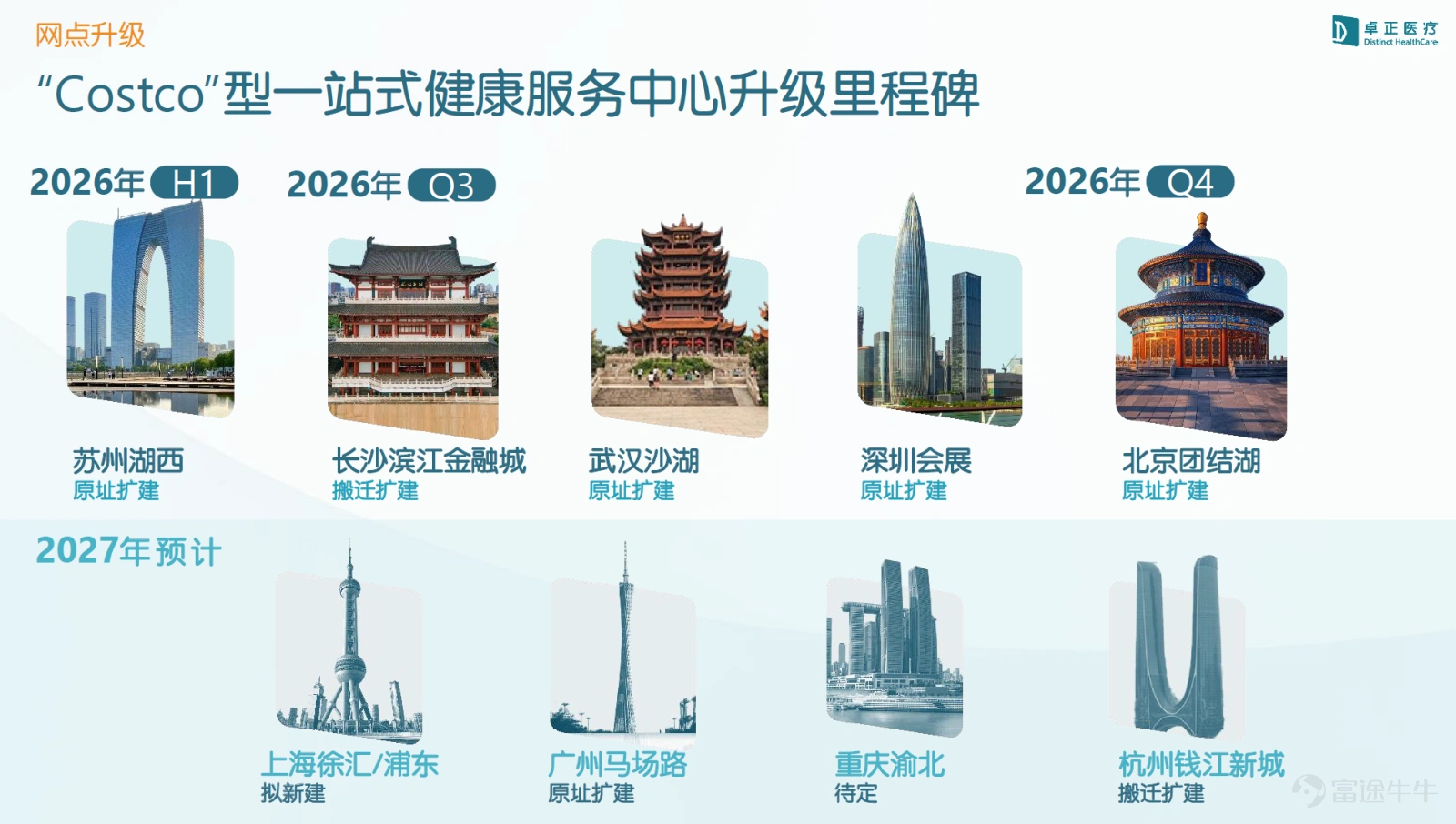
D:As of June 30, 2026, the company operated 18 multi-specialty outlets domestically, covering 12 tier-1 and new tier-1 cities. In the first half of 2026, the company expanded into the new city of Xi'an and completed the upgrade of its Suzhou Huxi outlet. It expects to complete the upgrades and expansions of its Changsha Binjiang Financial City, Wuhan Shahu, Shenzhen Convention and Exhibition Center, and Beijing Tuanjiehu outlets in the second half of 2026. Meanwhile, the company is actively preparing for the upgrades of its Shanghai Xuhui/Pudong, Guangzhou Machang Road, Chongqing Yubei, and Hangzhou Qianjiang New City outlets. Over the next three years, the company plans to continue upgrading existing outlets into "Costco-style" one-stop health service centers to drive further revenue growth.
Q3: What are the differences in the single-store model across different cities? What are the ramp-up expectations for newly entered cities?
D:Strategically, the company prioritizes operational consistency across different cities. The scale, service offerings, and operational processes of the one-stop health service centers remain largely consistent across locations. Objective differences are mainly reflected in pricing and cost structures, with corresponding adjustments made to labor and rental costs based on local market levels.
In newly entered cities, the company initially establishes standard outlets of approximately 1,000–2,000 square meters. A brand-building and market cultivation period of typically 3–5 years is required before upgrading and expanding them into 5,000-square-meter "Costco-style" one-stop health service centers. Revenue scale and profit margins are expected to rise gradually as these outlets undergo upgrades and expansion.
Q4: What is the business performance breakdown by city and by department?
A:By city, Guangzhou and Shenzhen, which contribute a significant portion of revenue, maintained same-store organic growth near 30%. Although Beijing and Shanghai have a slightly smaller base compared to Guangzhou and Shenzhen, their growth rates both exceeded 40%. New first-tier cities such as Chengdu, Changsha, Suzhou, and Hangzhou saw growth rates of approximately 20%.
By department, dentistry, ophthalmology, dermatology and medical aesthetics, as well as adult health management and check-ups, posted impressive growth rates ranging from 25% to 50%. Emerging departments such as rehabilitation therapy and mental health achieved rapid growth of nearly 70%. Despite the decline in newborn numbers and the impact of AI on demand for common pediatric conditions, child healthcare and pediatrics continued to see steady increases in brand influence and market share.
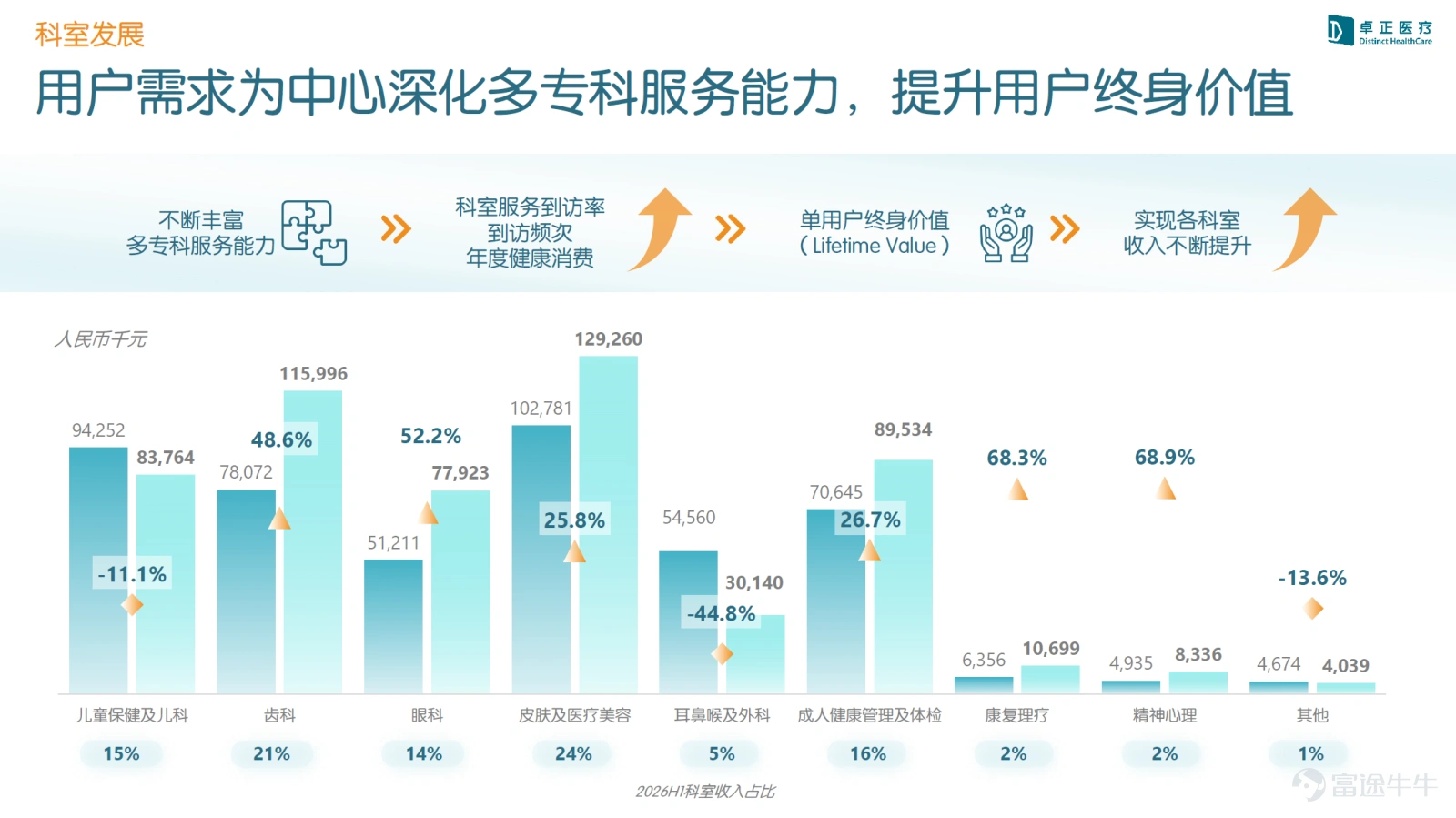
We deepen our multi-specialty service capabilities with a focus on user needs. By leveraging core products to attract users into our service ecosystem, we guide cross-departmental transitions based on users' lifecycle needs, thereby enhancing customer lifetime value. For instance, each department focuses on creating high-quality, cost-effective entry-level core offerings (such as comfortable dental cleaning). This allows users to enter Distinct HealthCare with minimal decision-making costs through word-of-mouth and referrals, and then naturally transition to other departments in line with their family health needs.
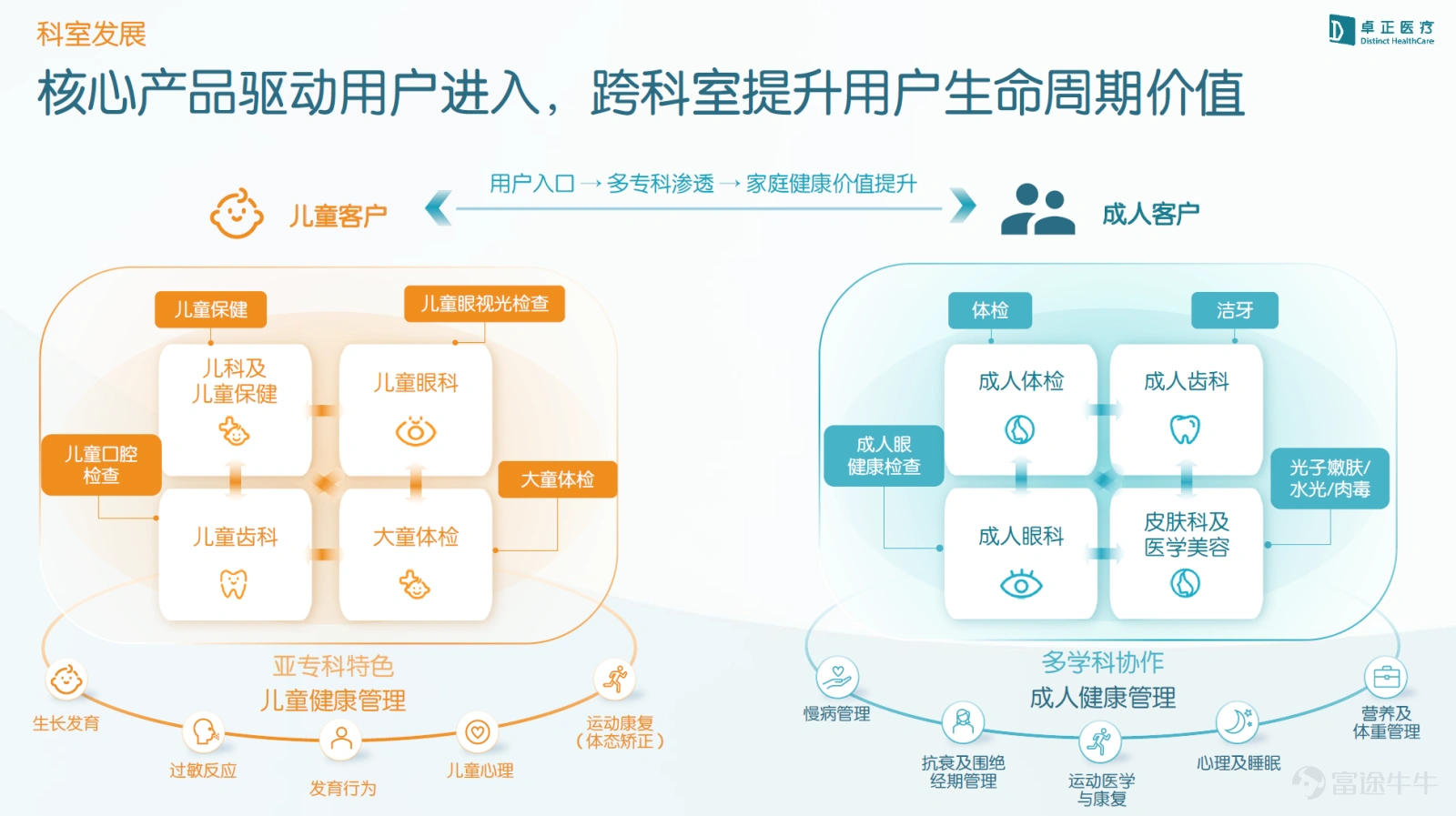
This year, we are also strengthening the development of pediatric sub-specialties. In the first half of 2026, the company will prioritize the development of sub-specialties such as growth and development, and allergy responses. Adult health management focuses on the pre-senior demographic aged 45-55. Starting with high-quality, professional health check-ups, we are building a long-term health service system centered on universal user concerns, including chronic disease management, anti-aging, sports rehabilitation, psychological sleep support, and nutrition and weight management.
Q5: What is the progress in member operations and online health subscription services?
D:As of June 30, 2026, the number of member households reached 124,000, with 23,000 new member households added in the first half of the year. Meanwhile, the momentum for new member growth is shifting from being driven by child healthcare to being driven by multi-specialty services, with the growth rate of new members contributed by adult customers continuing to rise.
The health subscription service was officially launched in March 2026, centered on the "innovative drugs + medical services" model. Phase one primarily focuses on three innovative drug areas: weight management, allergies, and gout management. By combining offline testing with online consultations, we have formed a closed-loop service, providing a new growth channel for acquiring new customers and deepening long-term health management relationships with users.
Q6: What is the progress in the implementation of AI in business operations? What practical value has it brought?
D:We take a very pragmatic approach to AI empowerment—letting AI handle standardized, repetitive tasks to free up human resources for more valuable medical services. Currently, AI applications have extended from pre-diagnosis to core stages during and post-diagnosis:
● Pre-diagnosisAI-powered appointment scheduling and intelligent triage have been successfully implemented, enhancing front-office operational efficiency.
● During ConsultationIn pediatrics, we have completed the proof of concept for automatically generating structured medical records from consultation audio recordings and have entered the product integration phase, which significantly reduces the time physicians spend on documentation. In medical aesthetics, ophthalmology, and dentistry, we have deployed AI-driven analysis of doctor-patient communications to identify follow-up needs and potential health concerns during consultations, integrating these insights with subsequent customer service to enhance the overall patient experience.
● Post-ConsultationIn March this year, our multi-agent assisted follow-up system was launched nationwide, capable of automatically answering standardized post-consultation inquiries. This initiative promotes AI involvement in identifying customer needs, service follow-ups, and operational analysis, thereby improving service precision and collaborative efficiency.
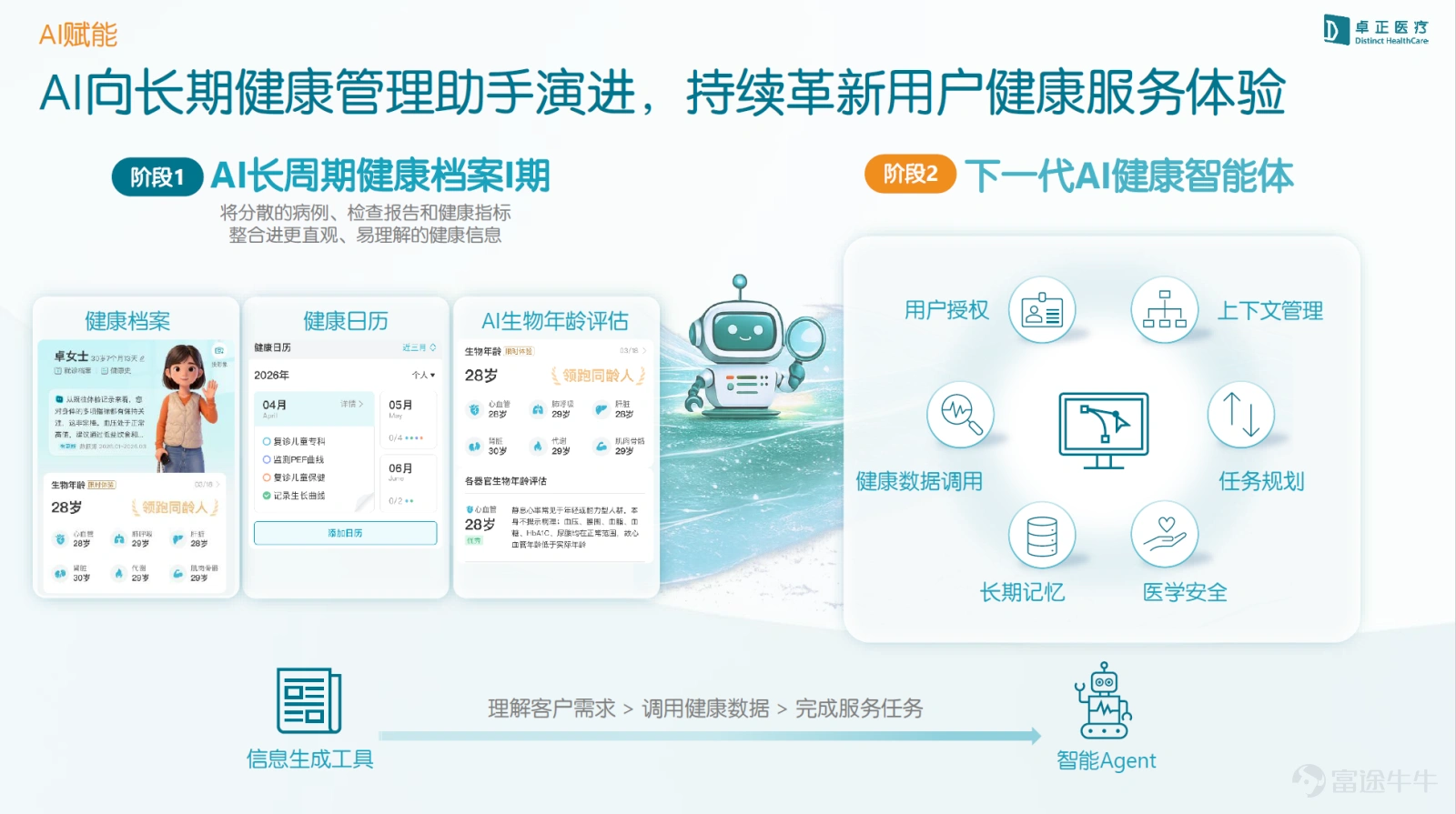
Regarding long-term health management, Phase I of our AI-driven longitudinal health records has gone live. It integrates cross-cycle data on medical visits, physical examinations, lab tests, and medication usage for family members, offering features such as indicator tracking, follow-up visit calendars, and AI-based biological age assessment. Meanwhile, we are developing and iterating the next generation of AI health agents, focusing on core capabilities including user authorization, health data access, long-term memory, context management, task planning, and medical safety. We are exploring the evolution of AI from an information generation tool to an intelligent agent capable of understanding customer needs, accessing health data, and collaboratively completing service tasks.
————
If you would like to gain a deeper understanding of our growth trajectory and long-term strategic planning,please follow the 'Zhuozheng Medical Investor Relations' official account.Going forward, we will continue to provide comprehensive updates on our operational and development progress there, inviting you to witness Zhuozheng's long-term growth alongside us.

Risk Disclaimer: The above content only represents the author's view. It does not represent any position or investment advice of Futu. Futu makes no representation or warranty.Read more
Comments
to post a comment