
HK Stock Market Barometer | HK stocks continue to fluctuate and pull back! How much room for recover

Infographic Preview | Meituan's Q2 earnings report to be released this Friday! Is the food delivery price war gradually subsiding, signaling a turning point in operational recovery?
$MEITUAN-W (03690.HK)$Meituan is scheduled to release its financial report on August 28 (Beijing Time). Institutional consensus expects Meituan to achieve revenue of RMB 100.765 billion in Q2 2026, a year-on-year increase of 9.72%, with an expected earnings per share (EPS) of -RMB 0.458.
The aforementioned data is prepared in accordance with International Financial Reporting Standards (IFRS).
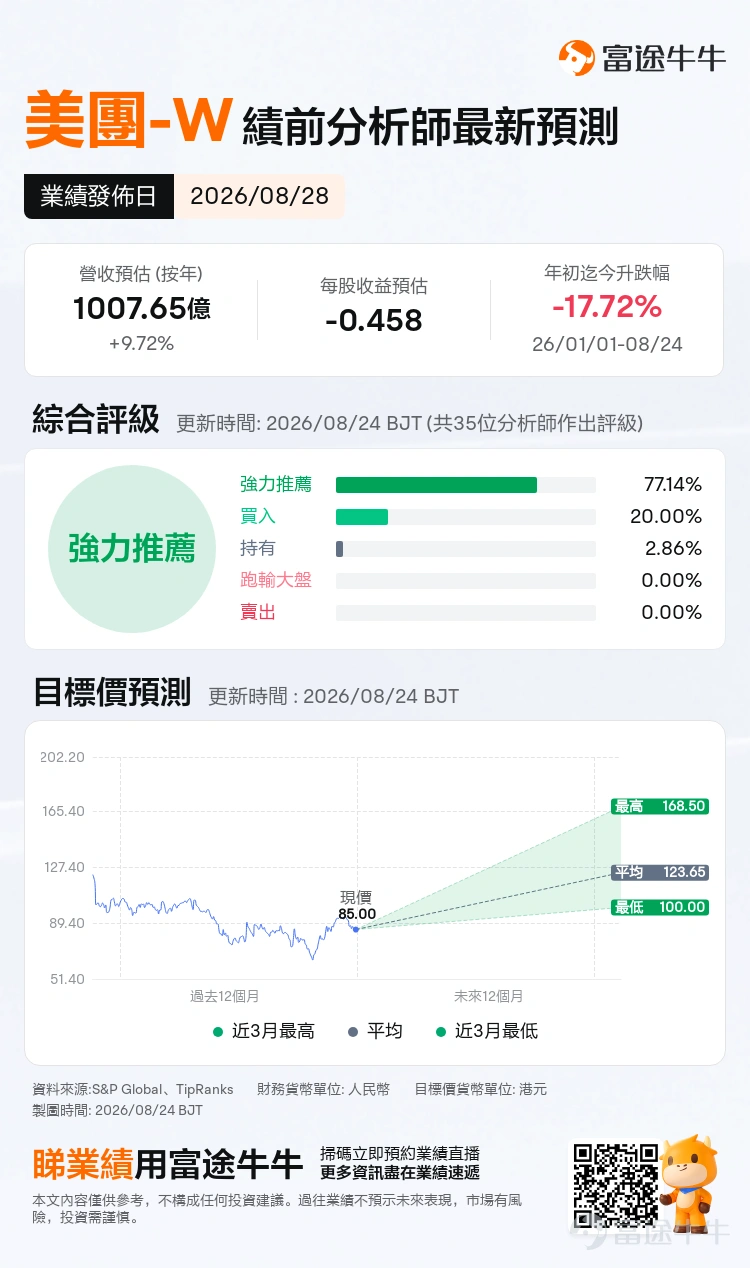
Following years of intense subsidy burn, Meituan achieved a significant reduction in losses in Q1 2026. The irrational expansion of industry subsidies has been curbed, and the market has formed a consensus expectation of transitional losses persisting into Q2. For investors, the key focus of this earnings report lies in:the quality of unit economics (UE) recovery in food delivery, the resilience of the profit pool for in-store services, investment in overseas business, the effectiveness of AI investment and implementation, and management's operational guidance for the second half of the year,among other aspects, to assess whether a profitability turnaround can be realized in the second half, thereby providing a factual basis for valuation repair.
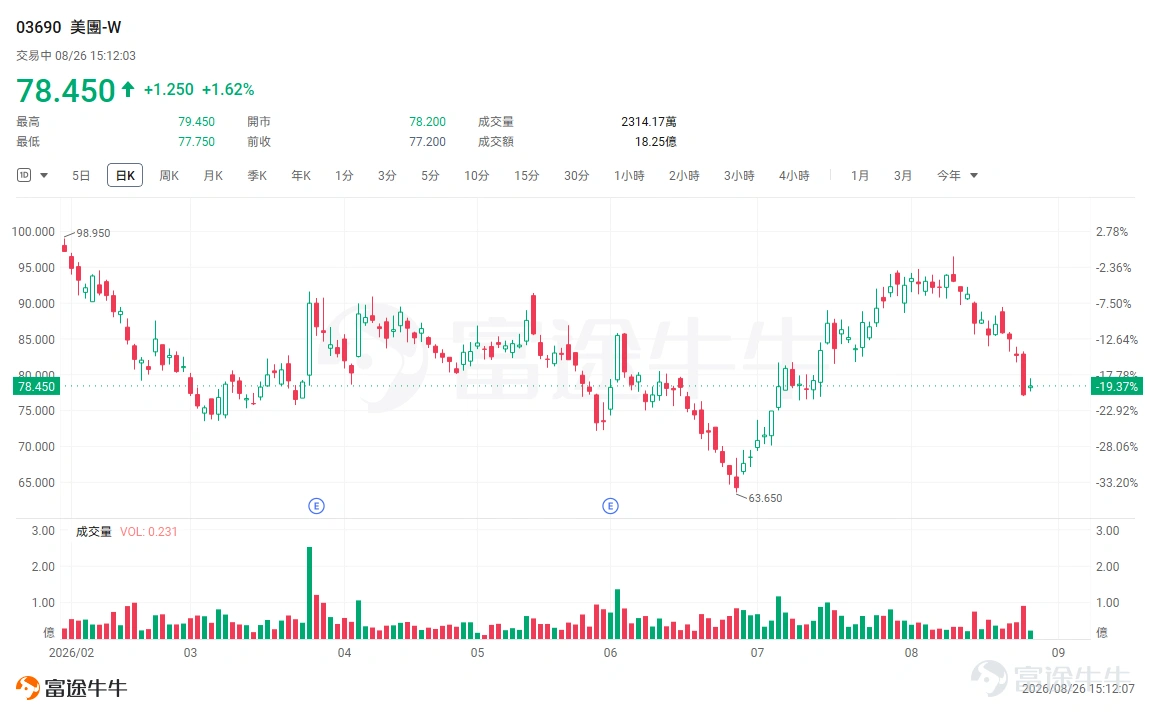
Regarding stock performance, Meituan has shown a volatile recovery trend since the second quarter. Although the Q1 earnings beat initially drove a short-term rebound, the stock remained under pressure. As the market re-priced expectations for marginal easing in industry competition and profitability recovery, the share price oscillated upward after July. As of press time, it has recovered to around HKD 78.5.
Instant Retail: Subsidies are tapering off; structural recovery in food delivery profitability awaits validation.
After a year of price wars, the competitive landscape in the industry has seen marginal changes. Under regulatory guidance, irrational large-scale subsidies have been restrained. Taobao Flash Sales and JD.com Food Delivery have not further increased their annual budgets, and the phenomenon of intense quarterly cash burn has subsided. Competition is gradually shifting from simple subsidy-driven order grabbing to a contest of merchant operations and fulfillment efficiency. While Meituan Food Delivery has largely maintained its core market share, the proportion of low-price orders has risen, and sales and marketing expenses remain at high levels.
Q2 is traditionally the peak season for dining consumption, and order volume is expected to increase year-on-year. The market will closely monitor:changes in order structure, user retention, and UE improvement following the contraction of subsidies.
In this earnings report, investors should focus on two key signals:First, the month-over-month and year-over-year changes in sales and marketing expenses, to gauge the actual reduction in subsidies and verify whether industry competition has truly cooled down. Second, the magnitude of improvement in food delivery unit economics (UE), to distinguish between seasonal benefits from peak periods and structural repairs.。
If per-unit losses in food delivery continue to narrow in Q2, it validates the path to profitability recovery; if UE improvement falls short of expectations, it suggests that the aftermath of price wars persists, pushing back the timing of the profitability inflection point. Meanwhile, attention should be paid to the retention of orders in the low-price segment after subsidy reductions, to assess the true quality of market share.
AI Business: Shifting from technology investment to operational efficiency enhancement, balancing short-term costs with long-term value
Meituan remains committed toPhysical AIits implementation strategy, deeply integrating AI into local life service fulfillment, merchant operations, and consumer scenarios.
Meituan's R&D expenses reached RMB 7 billion in Q1, a 22% year-on-year increase. Wang Xing emphasized that this investment is primarily focused on deploying AI in real-world scenarios.In June this year, Meituan released its next-generation foundational large model, LongCat-2.0,with its consumer-facing AI assistant "Xiao Tuan" now fully covering all dining, entertainment, and lifestyle scenarios. On the business side, the "Smart Store Manager" and CatPaw Merchant AI Agent continue to expand, helping merchants with business analysis and marketing planning. Meanwhile, the AI dispatch system continues to optimize food delivery efficiency, and drone delivery services have become routine in multiple cities both domestically and internationally for Meituan.
The market is no longer solely focused on parameters such as those of Meituan's large language modelsTechnical indicators, placing greater emphasis on whether AI can be translated into business value. For tech giants,AI is currently the only visible breakthrough path: it must be used to revitalize existing businesses while also paving the way for new growth curves.
Overseas Business: Signs of profitability emerge in the Middle East, while expansion in Brazil remains prudent
Against the backdrop of narrowing losses in domestic operations, Keeta's overseas business remains a key growth narrative, though it also brings pressure on capital expenditure.Keeta is currently showing clear divergence: the Hong Kong market has already achieved profitability; in Middle Eastern GCC markets such as Saudi Arabia, high average order values and strong user willingness to pay have led to continuous improvement in unit economics (UE). The market expects the Saudi region to achieve unit profitability soon. Meanwhile, Keeta is gradually expanding into Gulf countries like the UAE and Qatar, but the overall population ceiling in these markets is limited, making it difficult for them to drive broader growth independently.
The Brazilian market offers immense potential, but local leader iFood holds absolute dominance, and Didi is also deploying its food delivery business there, resulting in intense competition. Meituan's management has repeatedly expressed optimism about Brazil's long-term potential but stated they would not rush into large-scale investments. Instead, they will prioritize preliminary research and team building, avoiding blind cash-burning for scale.
Management previously indicated that the overall loss from new businesses in 2026 would not expand significantly compared to 2025. This implies that additional overseas investment in Keeta needs to be offset by reduced losses in domestic new business segments. Key points to watch in this earnings report include:
1. Progress in GMV and UE improvement in the Middle East market, and how far Saudi Arabia is from breaking even;
2. The overall scale of Keeta's losses, and whether it adheres to the full-year loss guidance;
3. The latest pace of city expansion and capital investment plans in the Brazilian market warrant caution against the risk of amplified losses from overexpansion.
Furthermore, fulfillment costs and licensing risks stemming from geopolitical tensions in the Middle East remain significant variables that cannot be ignored.
A trend of narrowing losses has emerged, but a definitive turnaround in profitability remains to be confirmed.
Since pulling back from its 2024 highs, the market's core trading logic has shifted away from high growth toward "narrowing losses and a return to profitability". Significant loss reduction was achieved in Q1, with consensus expectations pointing to a profitability recovery in the core local commerce segment by the second half of 2026. Q2 is a pivotal transitional quarter and serves as a key window to verify whether the trend of narrowing losses can be sustained.
If food delivery unit economics (UE) continue to improve, in-store profit margins stabilize, and losses from new businesses remain controllable, coupled with optimistic guidance for the second half from management, the market will price in expectations of a profitability turnaround in advance, driving a valuation repair. Conversely,if improvements across various business lines fall short of expectations, the inflection point for profitability will be further delayed, and the stock price will remain under pressure.
Institutions have offered a generally positive outlook on Meituan's Q2 performance, but divergences remain regarding the sustainability of the profitability recovery:
Goldman Sachs: Raised target price to HK$123; expects Q2 revenue to increase by 10% year-over-year (YoY), with a substantial YoY improvement in adjusted EBIT for core local commerce. Food delivery unit economics are seen as continuously recovering, leading to an upward revision of mid-to-long-term per-order profitability assumptions for food delivery.
Citi expects results to meet or slightly exceed expectations, remains bullish on the pace of unit economics recovery in food delivery, and maintains a Buy rating with a target price of HK$113. The bank believes that under regulatory oversight of subsidies and competition, the unit economics of the food delivery business may recover faster than expected, potentially driving performance improvement.
JPMorgan stated that Meituan's Q2 results were robust and management's outlook for the second half is positive. Profit margins in in-store services continue to improve amid rationalized competition with Douyin, alongside cost optimization in community group-buying services.
But the direction is already quite clear:The market is shifting its focus from "when will Meituan stop losing money" to "how quickly can Meituan's profitability recover."

 AI breaks down earnings highlights in seconds—set up in three stepsOptions strategies! Open Futubull > Stock page > Tap [Company] >Earnings Flash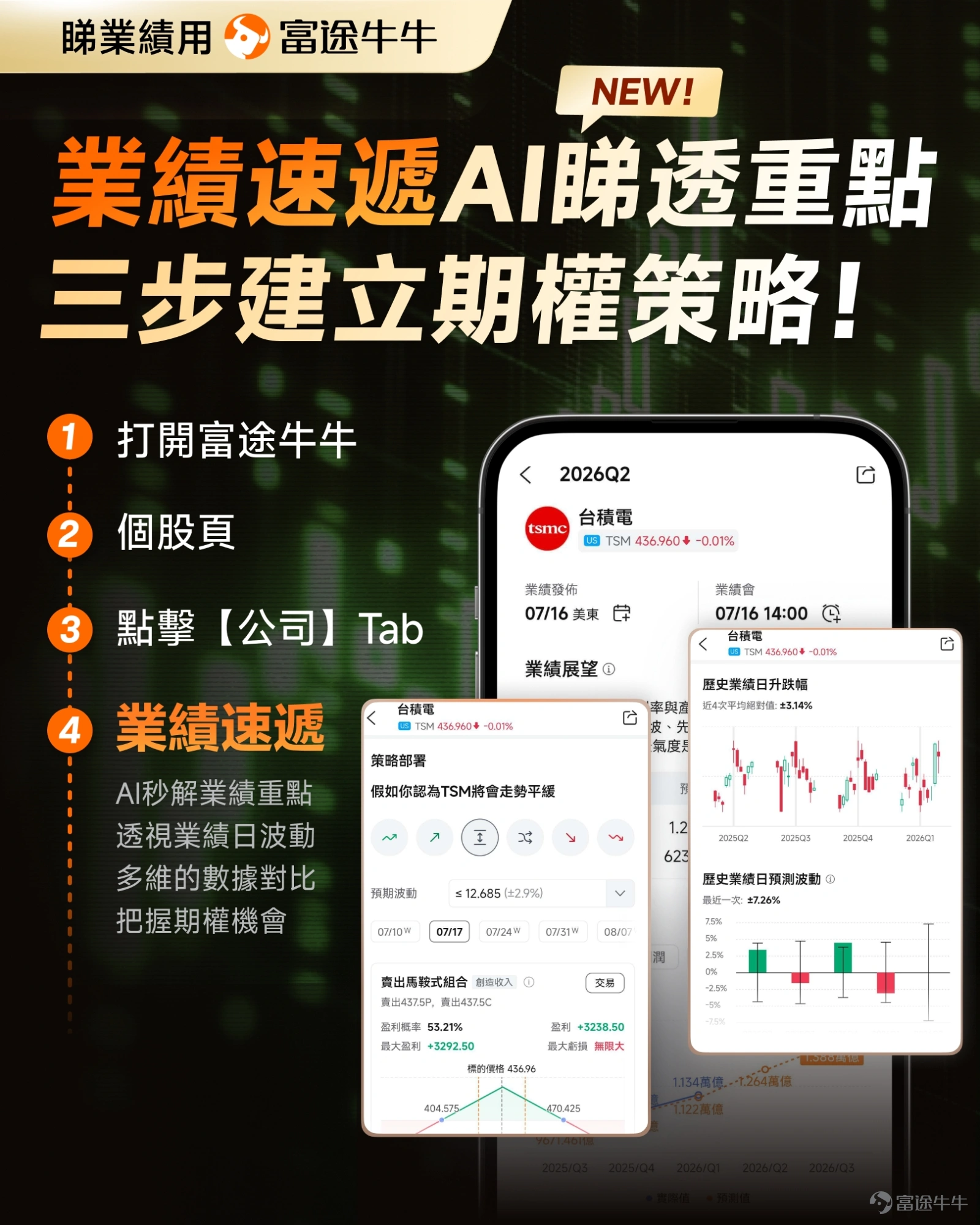
Risk Disclaimer: The above content only represents the author's view. It does not represent any position or investment advice of Futu. Futu makes no representation or warranty.Read more

Comments
to post a comment
18