Apple and Microsoft both raise prices! Is AI-driven inflation showing a 'backlash effect'?

Chip Upgrade + Touchscreen! New MacBook Pro Leaks Reveal: More Powerful, Yet More Expensive
Lei Technology has observed a surge in recent leaks regarding the next-generation MacBook Pro. Synthesizing reports from AppleInsider, Bloomberg’s Mark Gurman, and other sources, it appears Apple is splitting the MacBook Pro into two distinct product lines: a standard model retaining the current chassis design, and a newly designed version featuring an OLED touchscreen.
Barring any unforeseen delays, the new MacBook Pro is scheduled for release by year-end, arriving after the iPhone 18 Pro.The touchscreen MacBook, long rumored in leaks, is finally becoming a reality.
Key Upgrades for the MacBook Pro: Chipset and Touchscreen
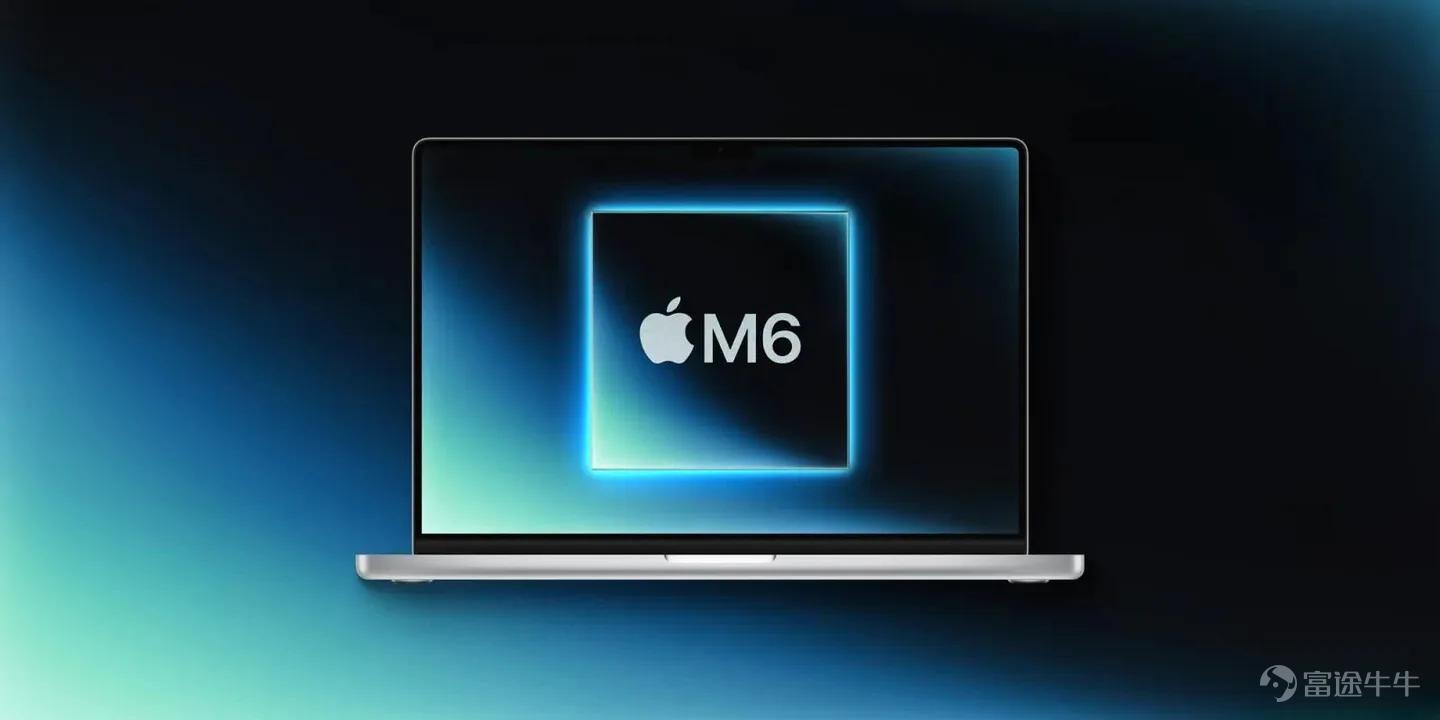
The internal model number for the next-generation standard 14-inch MacBook Pro is J804, continuing the naming convention of the M5's J704 and the M4's J604. Apple's upgrade strategy is straightforward: new chip, same chassis. Other features, including the XDR ProMotion high-refresh-rate display, six-speaker audio system, and various ports, remain unchanged, with the starting price holding steady at $1,999. According to leaks, it is highly likely to be released by late 2026, powered by the next-generation M6 chip.
The M6 chip is the primary selling point of this MacBook. It will utilize Taiwan Semiconductor's first-generation 2nm process (N2), increasing the GPU core count from 10 in the M5 to 12, and boosting memory bandwidth from 153GB/s to 200GB/s, along with enhanced Neural Engine performance. The bandwidth increase from the new memory architecture, combined with further upgraded AI cores, clearly targets on-device AI tasks such as Apple Intelligence and Siri.
Of course, in line with Apple's characteristic precision in product segmentation, the M6's performance will not surpass that of the previous-generation M5 Pro or M5 Max, given its entry-level positioning. Taking memory bandwidth as an example, while the M6's 200GB/s represents a significant improvement over the standard M5, the M5 Pro exceeds 300GB/s, and the M5 Max reaches 460GB/s.
Apple's next-generation Mac chips, particularly the M6 Pro and M6 Max, are likely to attract more attention, with users able to select corresponding versions for the new MacBook Pro. However, even the standard M6-equipped MacBook Pro is not inexpensive, and upgrading the chipset will naturally require a substantial additional investment.

(Image source: 9to5Mac)
Furthermore, Apple's thermal design in hardware devices has long been criticized. The MacBook Air lacks fans altogether, marketed as a 'silent design.' While this works well for daily low-load scenarios and offers a good user experience, under high-load conditions, the inadequate thermal management prevents the theoretically powerful M5 and M4 chips in the MacBook Air from fully delivering their performance.
Under Apple's strategy, fan-based cooling has become exclusive to the more expensive MacBook Pro. The issue is that despite having better thermal performance than the MacBook Air, the MacBook Pro's unchanged chassis still lags behind Windows competitors in heat dissipation. The good news is that Apple is finally introducing changes: both the 14-inch and 16-inch MacBook Pro models will incorporate vapor chamber cooling, a design previously used in the iPhone 16 Pro series. While this may not completely solve the problem overnight, it should at least provide some relief.
Specifically, Apple has redesigned the thermal solution for the 14-inch and 16-inch M6 MacBook Pro models, switching to vapor chambers that cover not only the chip but also extend across the entire motherboard. Additionally, adjustments to the fan and blade design aim to expel hot air from the chassis more efficiently. The goal is to lower temperatures during prolonged high-load operations and reduce thermal throttling. For professional users handling heavy workloads, this is more practical than merely adding two extra GPU cores.
In addition to the standard MacBook Pro models that retain existing tooling, Apple is launching a new series for this product line. The high-end OLED touchscreen versions correspond to codenames K114 and K116, with the initial letter shifting from J to K. The J series continues to use the current platform, while the K series features an entirely new chassis. According to Bloomberg, this product will be a completely redesigned machine, thinner and lighter than the current MacBook Pro.
Moreover, the touchscreen is its biggest selling point, marking a first in Mac history. According to Gurman, Apple positions touch as an auxiliary input method rather than a replacement for the keyboard and trackpad, with the accompanying macOS 27 Golden Gate system specifically optimized for touch controls. OLED panels are also being adopted on the MacBook for the first time. The notch will be eliminated in favor of a punch-hole camera combined with the Dynamic Island, where Siri AI will also reside. Regardless, the aesthetic appeal is sure to see a significant boost.
The only issue is that the touchscreen MacBook Pro will carry a higher price tag, likely starting at a level comparable to the iPhone Ultra, approaching RMB 20,000.

(Image source: Apple)
Leaks also suggest that Apple is considering adding cellular connectivity to the Mac for the first time, leveraging the C2 in-house modem scheduled to debut in the iPhone 18 Pro this autumn. This indicates that the positioning and primary use cases of the touchscreen MacBook are becoming increasingly aligned with those of the iPad Pro.
PC shipments grow against the trend; Apple presses its advantage
Why is Apple introducing touchscreen models at this juncture? A look at the financial reports and shipment data reveals that the Mac business is experiencing a rare period of strong performance in recent years.
Apple's fiscal 2026 third-quarter earnings report (corresponding to calendar year Q2) shows that Mac revenue reached USD 10.35 billion, a year-on-year increase of 28.7% and a quarter-on-quarter growth of over 25%, making it the fastest-growing hardware category within Apple's portfolio. During the same period, Apple's total revenue was USD 109.4 billion, up 16% year-on-year.
This performance stands out even more when viewed against the broader market. According to IDC reports, global PC shipments in Q2 2026 fell 4.9% year-on-year to 68.2 million units, with Lenovo, HP Inc, and Dell all recording negative growth.Apple was the only vendor among the top five to achieve significant growth, with shipments rising 10.1% against the trend, bringing its market share to 9.9%. According to IDC, Apple's share growth coincided with new product launches. Amidst rising memory costs and industry-wide price hikes, Apple finds itself in a more comfortable position than its competitors.

(Source: IDC)
Apple has long held a stance on touchscreen PCs that diverged from the mainstream PC industry. Touchscreen laptops in the Windows ecosystem have been widespread for over a decade; nowadays, most new laptop models positioned at the mid-to-high end come equipped with touchscreens, not to mention foldable laptops and 2-in-1 PCs. Throughout this period, only the MacBook line has steadfastly refused to adopt touchscreens. Apple’s rationale has been straightforward: Steve Jobs once deemed touchscreen laptops an ergonomic disaster, while Tim Cook has consistently emphasized that touch interaction is the defining feature of the iPad, maintaining a clear distinction between the Mac and iPad product lines.
However, Apple’s perspective is now shifting. Rather than making touch the primary mode of interaction, Apple is positioning it as a supplementary input method alongside the keyboard. The question is no longer whether to include touch, but how to integrate it effectively.For MacBook Pro users, the keyboard and trackpad remain the primary tools for daily tasks. However, touch interaction offers a more intuitive experience for frequent, lightweight actions such as scrolling through web pages, zooming into images, or tapping during presentations. This is particularly relevant as Apple Intelligence places greater emphasis on direct content interaction, where tapping on the screen feels far more natural than precise cursor positioning.
Nevertheless, many remain skeptical about a touchscreen Mac. On Macworld, one user lamented, "Apple’s first touchscreen MacBook is coming, and I don’t want it." He argued that the MacBook Pro caters to heavy keyboard users—programmers, video editors, and designers—for whom touchscreens offer limited value while adding cost and weight. With the iPad Pro already covering Apple’s touch-centric use cases, adding touchscreens to Macs could blur the boundaries between the two product lines.
However, Lei Tech (ID: leitech) argues that touchscreens are one of the few strategic cards Apple has left to play, especially as competition in the AI PC era forces its hand. Microsoft has set the hardware baseline for the Windows AI PC camp at 16GB of RAM and a certain level of NPU performance. Qualcomm’s Snapdragon X series, AMD’s Ryzen AI, and Intel’s Core Ultra processors are all aggressively integrating NPUs into laptops, with Windows 11 Copilot+ PCs highlighting AI as a core selling point. Once the narrative of "AI PC + touch interaction" gains traction, all brands will be compelled to follow suit.

(Image source: Dell)
One advantage of Apple’s AI PCs is their unified memory architecture, where the CPU, GPU, and NPU share the same memory pool, eliminating the need for additional VRAM bandwidth. Given the same memory capacity, Mac devices can often run local models with larger parameter sets compared to Windows PCs.Amidst rising memory prices, Windows AI PCs face greater cost pressures. The high memory requirements of AI PCs coincide with a surge in RAM costs. While Apple is also affected—recently raising prices across its Mac lineup—the shared memory architecture reduces overall memory demands for equivalent AI capabilities, offering relative resilience against cost pressures.
The upgrade to the M6 chip also benefits AI PC applications, with bandwidth increasing from 153GB/s to 200GB/s, the Neural Engine doubling in performance, and the 2nm process reducing power consumption—all facilitating on-device AI deployment. Apple’s AI initiatives extend beyond hardware: recently, it was revealed that Mac users in China can access Alibaba’s Qwen large language model, with Apple training China-specific AI models under Alibaba’s support. By leveraging strengths in hardware, operating systems, and models simultaneously, the Mac is strengthening its competitiveness in the AI PC sector.
With standard and touchscreen models running on parallel tracks, Apple seems intent on capturing both markets.
Viewing the two products together, Apple's product strategy for the MacBook Pro is straightforward: the standard model uses the legacy chassis to defend its core market share, while the touch-enabled model leverages a new form factor to seek incremental growth and higher margins.
The standard M6 MacBook Pro continues to utilize the 2021 chassis design. Amid rising memory costs and supply chain constraints, this approach allows Apple to maintain mature production lines, controlled costs, and stable supply. If it can keep the original starting price, it will still attract loyal target users. Its mission is simple: to meet the upgrade needs of existing MacBook Pro users with the performance boost of the M6 chip.
The touch-enabled MacBook represents Apple's attempt to step out of its comfort zone. It seeks to answer not just whether the Mac needs a touchscreen, but also what a PC should look like in the AI era. Elements such as an OLED display, Dynamic Island, cellular connectivity, and touch interaction combine to break away from the traditional MacBook Pro form factor, resembling Apple's preliminary vision for the next generation of laptops.

(Image source: Apple)
Once the touch-enabled MacBook Pro gains market acceptance, the rumored MacBook Ultra could arrive, much like the iPhone Ultra, which broke away from the traditional iPhone form factor.
Furthermore, we believe that under the new CEO, who has long overseen hardware products, the product roadmap will become more aggressive. Based on previous leaks, he plans to further diversify Apple's hardware lineup, including reviving the HomePod and TV set-top box, and even developing a central control screen. Therefore, it is only logical that the touch-enabled MacBook, once hidden in internal labs, is now transitioning into an officially launched product.
In any case, this shift is generally positive for ordinary consumers. The dual-track strategy for the MacBook Pro offers choices for different segments: budget-conscious users with stable needs can stick with the standard model, while those who prefer touch interaction and enjoy trying new technologies have a more suitable option. As for whether the touchscreen on the MacBook Pro is truly useful—whether it is superfluous or a valuable enhancement—the answer will become clear after the new product is released and hits the market.


Risk Disclaimer: The above content only represents the author's view. It does not represent any position or investment advice of Futu. Futu makes no representation or warranty.Read more

Comments
to post a comment
3