August ETF Trading Challenge! Share your trading stories and win great prizes 🎁
ETF Investment Guide | NVIDIA Surges, But Why Isn't Your AI ETF Keeping Up? The Issue May Lie in These 4 Areas
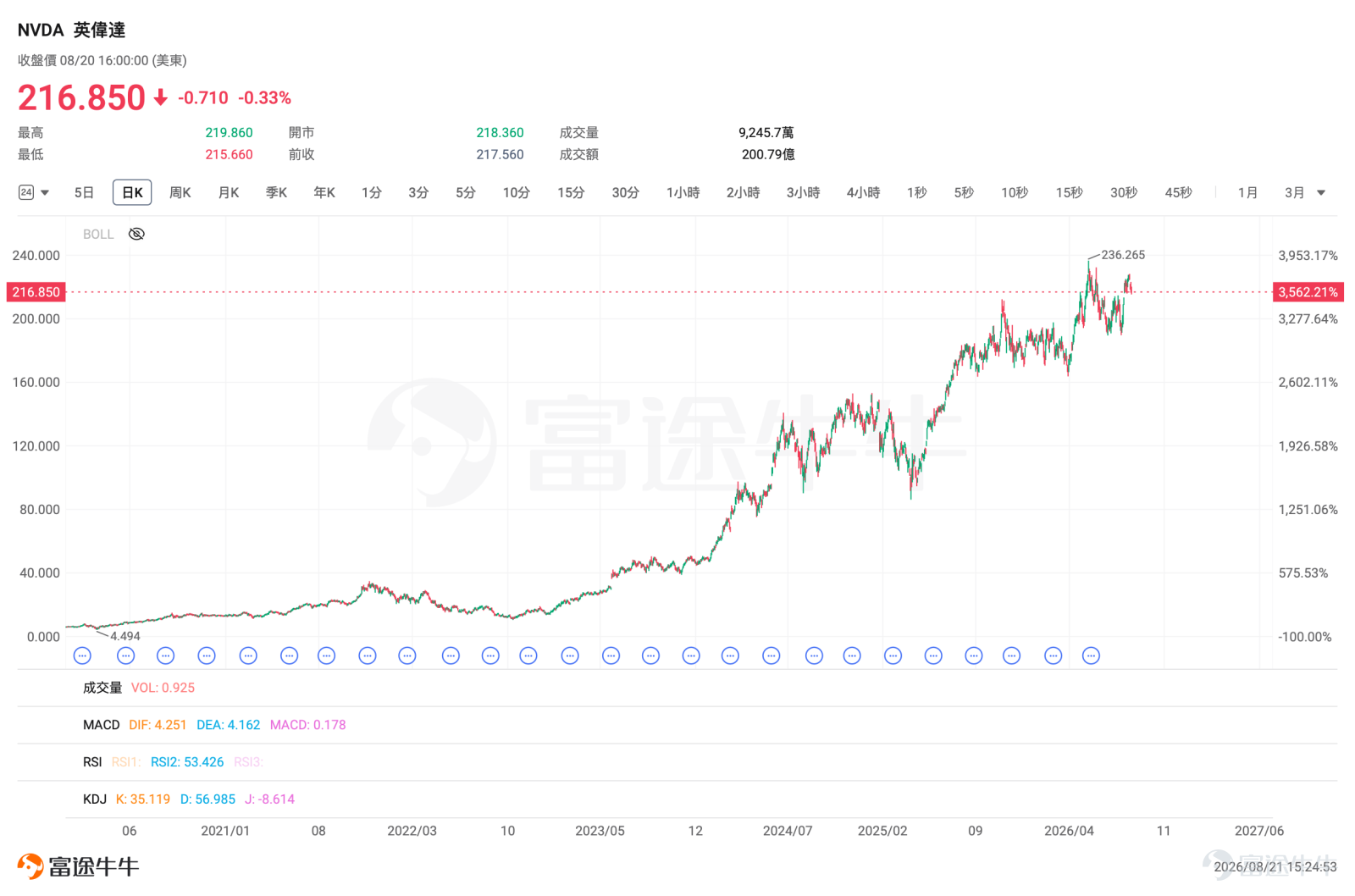
If you've been following the AI market recently, you may have encountered a seemingly strange situation:
NVIDIA has clearly performed well, so why did your AI ETF only rise slightly, or even fail to keep pace?
Or perhaps two ETFs both labeled "AI" show divergent performance, with one rising significantly while the other remains flat.
What exactly is the issue?
![If you've been following the AI market recently, you may have encountered a seemingly strange situation: NVIDIA has clearly performed well, so why did your AI ETF only rise slightly, or even fail to keep pace? Or perhaps two ETFs both labeled "AI" show divergent performance, with one rising significantly while the other remains flat. What exactly is the issue?[Shocked] In the previous installment[Share Link: "ETF Investment Guide"], we explained that an ETF can be understood as an "investment basket": instead of concentrating on a single company, you can hold a basket of related stocks through an ETF. But when it comes to actually buying ETFs, you need to take one more step and ask:What exactly is in this basket? What is the weighting of each stock? These two factors are often the key to the divergent performance of ETFs. Recently, AI trading has become less focused solely on NVIDIA. Market capital is spreading further from GPU chips to cloud platforms, AI software, networking equipment, storage, and even robotics. Institutions are also starting to place greater emphasis on which companies in the AI industry can ultimately convert their investments into revenue and profits. Therefore, ETFs both labeled "AI" may actually be investing in completely different assets. A 10% rise in NVIDIA does not mean an AI ETF will also rise by 10%. Let's start with the simplest example to understand this. Suppose there are two ETFs in the market: - ETF A: NVIDIA accounts for 20% - ETF B: NVIDIA accounts for 3% If one day Yingwei...](https://nnqimage.futunn.com/sns_client_feed/999989/20260821/web-1787297096904-wZJNKhPG0Y.png/big?area=2&is_public=true&imageMogr2/ignore-error/1/format/webp)
In the previous installment"ETF Investment Guide", we explained that an ETF can be understood as an "investment basket": instead of concentrating on a single company, you can hold a basket of related stocks through an ETF.
But when it comes to actually buying ETFs, you need to take one more step and ask:What exactly is in this basket? What is the weighting of each stock?
These two factors are often the key to the divergent performance of ETFs.
Recently, AI trading has become less focused solely on NVIDIA. Market capital is spreading further from GPU chips to cloud platforms, AI software, networking equipment, storage, and even robotics. Institutions are also starting to place greater emphasis on which companies in the AI industry can ultimately convert their investments into revenue and profits.
Therefore, ETFs both labeled "AI" may actually be investing in completely different assets.
A 10% rise in NVIDIA does not mean an AI ETF will also rise by 10%.
Let's start with the simplest example to understand this.
Suppose there are two ETFs in the market:
- ETF A: NVIDIA accounts for 20%
- ETF B: NVIDIA accounts for 3%
If NVIDIA rises by 10% on a given day, while all other stocks in the ETFs remain unchanged, then:
The theoretical gain for ETF A driven solely by NVIDIA would be approximately:20% × 10% = 2%
While for ETF B, it would only be:3% × 10% = 0.3%
Even with NVIDIA rising by the same 10%, its impact on two different ETFs can vary significantly.
Of course, this is just a simplified example to help everyone understand "weighting." In reality, other stocks within an ETF also rise and fall simultaneously, and performance is further influenced by factors such as fees, trading costs, and tracking differences.
But the most important concept is actually quite simple:To determine how much a stock impacts an ETF, you first need to look at its weight within the ETF.
Therefore, seeing that an AI ETF holds NVIDIA does not mean it will move in lockstep with NVIDIA's price changes.
![If you've been following the AI market recently, you may have encountered a seemingly strange situation: NVIDIA has clearly performed well, so why did your AI ETF only rise slightly, or even fail to keep pace? Or perhaps two ETFs both labeled "AI" show divergent performance, with one rising significantly while the other remains flat. What exactly is the issue?[Shocked] In the previous installment[Share Link: "ETF Investment Guide"], we explained that an ETF can be understood as an "investment basket": instead of concentrating on a single company, you can hold a basket of related stocks through an ETF. But when it comes to actually buying ETFs, you need to take one more step and ask:What exactly is in this basket? What is the weighting of each stock? These two factors are often the key to the divergent performance of ETFs. Recently, AI trading has become less focused solely on NVIDIA. Market capital is spreading further from GPU chips to cloud platforms, AI software, networking equipment, storage, and even robotics. Institutions are also starting to place greater emphasis on which companies in the AI industry can ultimately convert their investments into revenue and profits. Therefore, ETFs both labeled "AI" may actually be investing in completely different assets. A 10% rise in NVIDIA does not mean an AI ETF will also rise by 10%. Let's start with the simplest example to understand this. Suppose there are two ETFs in the market: - ETF A: NVIDIA accounts for 20% - ETF B: NVIDIA accounts for 3% If one day Yingwei...](https://nnqimage.futunn.com/sns_client_feed/999989/20260821/web-1787296340645-QI1BsfwoSW.png/big?area=2&is_public=true&imageMogr2/ignore-error/1/format/webp)
Even among funds both labeled "AI ETF," the weighting of NVIDIA can differ vastly.
Let's take a direct look at two well-known AI-themed ETFs in the market.
As of August 19, 2026, $Global X Artificial Intelligence & Technology ETF (AIQ.US)$ it held a total of 88 positions, with NVIDIA accounting for approximately 2.91%。
In contrast, AIQ's larger holdings at the time included Palantir, Microsoft, Oracle, SpaceX, Amazon, and Alphabet, offering broader exposure to AI software, cloud computing, tech platforms, and hardware companies.
Another warrant $Global X Robotics & Artificial Intelligence Thematic ETF (BOTZ.US)$As of August 11, NVIDIA's weighting is approximately 9.13%, significantly higher than that of AIQ.
However, BOTZ is not a pure "AI chip ETF." Its major holdings also include robotics, automation, and industrial companies such as Japan's Keyence, ABB, Fanuc, and Intuitive Surgical.
This makes it easy to understand: if NVIDIA surges one day,ETFs with NVIDIA accounting for around 9% will typically be more directly impacted than those where it represents only about 3%.
But this is still not the whole answer. While NVIDIA is strong, other constituents can also "pull the ETF back down."
After all, an ETF does not consist of just a single stock.
Suppose within an AI ETF:
- NVIDIA rises 8%
- Microsoft rises 1%
- Palantir fell 6%
- Oracle fell 4%
- Other holdings were generally weak
So even if NVIDIA performed very well, declines in other stocks could still offset some of the gains.
Think of an ETF as a sports team.
NVIDIA might be the star player, but just because the star scores a lot of goals doesn't mean the whole team will necessarily win.
Whether the ETF ultimately rises or falls depends on the performance of the entire "lineup" and the weight of each player in the portfolio.
Therefore, next time you see:
"NVIDIA surged today, why didn't my AI ETF react much?"
The first thing to look at is not the ETF's name.
But rather:What exactly is NVIDIA's weighting in this ETF? And what happened to the other major holdings today?
Scrutinize ETF data for more precise positioning
![If you've been following the AI market recently, you may have encountered a seemingly strange situation: NVIDIA has clearly performed well, so why did your AI ETF only rise slightly, or even fail to keep pace? Or perhaps two ETFs both labeled "AI" show divergent performance, with one rising significantly while the other remains flat. What exactly is the issue?[Shocked] In the previous installment[Share Link: "ETF Investment Guide"], we explained that an ETF can be understood as an "investment basket": instead of concentrating on a single company, you can hold a basket of related stocks through an ETF. But when it comes to actually buying ETFs, you need to take one more step and ask:What exactly is in this basket? What is the weighting of each stock? These two factors are often the key to the divergent performance of ETFs. Recently, AI trading has become less focused solely on NVIDIA. Market capital is spreading further from GPU chips to cloud platforms, AI software, networking equipment, storage, and even robotics. Institutions are also starting to place greater emphasis on which companies in the AI industry can ultimately convert their investments into revenue and profits. Therefore, ETFs both labeled "AI" may actually be investing in completely different assets. A 10% rise in NVIDIA does not mean an AI ETF will also rise by 10%. Let's start with the simplest example to understand this. Suppose there are two ETFs in the market: - ETF A: NVIDIA accounts for 20% - ETF B: NVIDIA accounts for 3% If one day Yingwei...](https://nnqimage.futunn.com/sns_client_feed/999989/20260821/web-1787296319515-oG8HibLkQS.webp/big?area=2&is_public=true&imageMogr2/ignore-error/1/format/webp)
More importantly: even though they're all labeled "AI," everyone has a different definition of an "AI company."
This brings us to another crucial concept—the index.
In our previous issue, we briefly mentioned that the index underlying an ETF can be understood as a set of "stock selection and weighting rules."
Why is this so important?
Because there is no universally agreed-upon list of companies that constitute "AI."
Some indices consider:AI chips + cloud platforms + software companies
to all fall within the scope of AI investments.
Another set of indices may place greater emphasis on:Robotics + Automation + AI Applications
Consequently, the selected stocks will naturally be quite different.
For example, AIQ tracks the Indxx Artificial Intelligence & Big Data Index, primarily seeking companies poised to benefit from the development and application of AI technology, as well as related hardware demand.
Meanwhile, BOTZ tracks the Indxx Global Robotics & Artificial Intelligence Thematic Index, with an investment scope more focused on robotics, industrial automation, autonomous driving, and AI.
![If you've been following the AI market recently, you may have encountered a seemingly strange situation: NVIDIA has clearly performed well, so why did your AI ETF only rise slightly, or even fail to keep pace? Or perhaps two ETFs both labeled "AI" show divergent performance, with one rising significantly while the other remains flat. What exactly is the issue?[Shocked] In the previous installment[Share Link: "ETF Investment Guide"], we explained that an ETF can be understood as an "investment basket": instead of concentrating on a single company, you can hold a basket of related stocks through an ETF. But when it comes to actually buying ETFs, you need to take one more step and ask:What exactly is in this basket? What is the weighting of each stock? These two factors are often the key to the divergent performance of ETFs. Recently, AI trading has become less focused solely on NVIDIA. Market capital is spreading further from GPU chips to cloud platforms, AI software, networking equipment, storage, and even robotics. Institutions are also starting to place greater emphasis on which companies in the AI industry can ultimately convert their investments into revenue and profits. Therefore, ETFs both labeled "AI" may actually be investing in completely different assets. A 10% rise in NVIDIA does not mean an AI ETF will also rise by 10%. Let's start with the simplest example to understand this. Suppose there are two ETFs in the market: - ETF A: NVIDIA accounts for 20% - ETF B: NVIDIA accounts for 3% If one day Yingwei...](https://nnqimage.futunn.com/sns_client_feed/999989/20260821/web-1787298175317-eFIv6zdQuO.png/big?area=2&is_public=true&imageMogr2/ignore-error/1/format/webp)
Therefore, even though both product names include "Artificial Intelligence":In reality, they may not be buying shares of the same companies at all.
This is also the point most easily overlooked by beginners when it comes to thematic ETFs:The ETF name is just the entry point; what truly determines what you are buying is the underlying index and its holdings.
Do you want to buy into "AI" as a concept, or are you actually looking to buy into "AI chips"?
This question is also crucial.
Many fellow investors say they are "bullish on AI," but what they really mean might be:I am bullish on the demand for AI computing power, believing that demand for GPUs, memory, and chips will continue to grow.
If that's the case, what you should really focus on may not just be an "AI ETF," but ratherSemiconductor ETF。
for example,$iShares Semiconductor ETF (SOXX.US)$ , which held 30 positions as of August 14, 2026, with NVIDIA accounting for approximately 8.92%. Other major holdings include Micron, AMD, Broadcom, Intel, Applied Materials, Marvell, and Taiwan Semiconductor, making the portfolio significantly more concentrated in the semiconductor supply chain.
Compared to AIQ:AIQIt is more like buying into a broad AI ecosystem, including software, cloud platforms, tech giants, etc.;SOXXwhile the other is more focused on the chip and semiconductor industry.
Therefore:Being bullish on the broader AI trend and being bullish on AI chips are actually two different investment perspectives.
The corresponding ETFs will naturally be quite different as well.
There is no definitive answer as to which category is better.
The key point is: Does the ETF you choose truly align with your intended investment direction?
And how are the weightings determined?
At this point, some fellow investors might ask: Why do some ETFs have a larger holding in NVIDIA while others have a smaller one, even though they all hold NVIDIA?
The reason still comes down to the index rules behind the ETFs.
Different indices may adopt different methods for weighting, such as:
- Weighting based on market capitalization;
- Nearly equal allocation for each company;
- Capping the maximum weight of a single stock;
- Assigning different weights based on themes or sectors;
- Periodically rebalancing constituents and their proportions.
Therefore, even when holding NVIDIA:
One ETF might have a nearly 10% allocation, while another might have only 3%.
This does not necessarily mean that fund managers have suddenly turned "bullish" or "bearish" on NVIDIA; often, it is simply becausethe underlying index rules are different.
For beginners, there's no need to dive into complex index compilation formulas right from the start.
Just remember this one sentence:The index determines how the basket is constructed, while the weighting determines how much impact each stock has on the basket.
That’s enough.
ETFs and their underlying indices don't necessarily match "exactly."
Here’s one last little tip.
The goal of many ETFs isto track the performance of a specific index as closely as possible,。
but "tracking as closely as possible" doesn’t mean the ETF’s daily performance will be identical to that of the index.
Reasons may include:
- ETFs themselves incur costs such as management fees;
- The fund may hold a small amount of cash;
- When the index rebalances its constituents, the ETF needs to execute actual trades;
- Buying, selling, and transaction costs;
- The actual execution methods of funds vary.
Therefore, if an index rises by 10% over a certain period, the actual return of the corresponding ETF may not be exactly 10%.
This gap between the ETF's actual performance and the tracked index can be simply understood astracking difference。
As for the more professional term "Tracking Error," it primarily measures the volatility of this difference.
For fellow investors who are just starting to explore ETFs, here is what you need to know for now:ETFs strive to track their underlying indices, but this does not mean the two performance lines will always overlap perfectly.
Want to invest in US stocks (or HK stocks) easily without picking individual stocks? Open Futubull and let index ETFs help you out.
![If you've been following the AI market recently, you may have encountered a seemingly strange situation: NVIDIA has clearly performed well, so why did your AI ETF only rise slightly, or even fail to keep pace? Or perhaps two ETFs both labeled "AI" show divergent performance, with one rising significantly while the other remains flat. What exactly is the issue?[Shocked] In the previous installment[Share Link: "ETF Investment Guide"], we explained that an ETF can be understood as an "investment basket": instead of concentrating on a single company, you can hold a basket of related stocks through an ETF. But when it comes to actually buying ETFs, you need to take one more step and ask:What exactly is in this basket? What is the weighting of each stock? These two factors are often the key to the divergent performance of ETFs. Recently, AI trading has become less focused solely on NVIDIA. Market capital is spreading further from GPU chips to cloud platforms, AI software, networking equipment, storage, and even robotics. Institutions are also starting to place greater emphasis on which companies in the AI industry can ultimately convert their investments into revenue and profits. Therefore, ETFs both labeled "AI" may actually be investing in completely different assets. A 10% rise in NVIDIA does not mean an AI ETF will also rise by 10%. Let's start with the simplest example to understand this. Suppose there are two ETFs in the market: - ETF A: NVIDIA accounts for 20% - ETF B: NVIDIA accounts for 3% If one day Yingwei...](https://nnqimage.futunn.com/sns_client_feed/999989/20260821/web-1787296734018-EB57SFRbFc.png/big?area=2&is_public=true&imageMogr2/ignore-error/1/format/webp)
When comparing AI ETFs for the first time, start by looking at these four factors.
If you open the ETF section on Futubull and see a slew of AI, tech, and semiconductor ETFs, unsure how to compare them, you can start with these four aspects.
First, check the top holdings.
Who are the largest holdings in this ETF?
NVIDIA? Microsoft? Palantir? Or robotics companies?
This step alone can help you quickly determine its specific orientation.
Second, look at the weightings of key stocks.
Don't just ask: "Does it hold NVDA?"
The key question to ask is:"What is the weighting of NVDA?"
A difference between 3% and 10% can have a significant impact on ETF performance.
Third, examine the sector allocation.
Even among funds labeled as AI ETFs, the focus may vary, leaning towards:
semiconductors, software, cloud computing, industrial automation, or robotics.
These sectors may perform very differently under varying market conditions.
Fourth, look at which index it tracks.
Finally, review the underlying index of the ETF.
Understanding its stock selection criteria is essential to truly grasp:Why does this "AI basket" include these specific companies?
![If you've been following the AI market recently, you may have encountered a seemingly strange situation: NVIDIA has clearly performed well, so why did your AI ETF only rise slightly, or even fail to keep pace? Or perhaps two ETFs both labeled "AI" show divergent performance, with one rising significantly while the other remains flat. What exactly is the issue?[Shocked] In the previous installment[Share Link: "ETF Investment Guide"], we explained that an ETF can be understood as an "investment basket": instead of concentrating on a single company, you can hold a basket of related stocks through an ETF. But when it comes to actually buying ETFs, you need to take one more step and ask:What exactly is in this basket? What is the weighting of each stock? These two factors are often the key to the divergent performance of ETFs. Recently, AI trading has become less focused solely on NVIDIA. Market capital is spreading further from GPU chips to cloud platforms, AI software, networking equipment, storage, and even robotics. Institutions are also starting to place greater emphasis on which companies in the AI industry can ultimately convert their investments into revenue and profits. Therefore, ETFs both labeled "AI" may actually be investing in completely different assets. A 10% rise in NVIDIA does not mean an AI ETF will also rise by 10%. Let's start with the simplest example to understand this. Suppose there are two ETFs in the market: - ETF A: NVIDIA accounts for 20% - ETF B: NVIDIA accounts for 3% If one day Yingwei...](https://nnqimage.futunn.com/sns_client_feed/999989/20260821/web-1787297055804-E3ECuezjlF.png/big?area=2&is_public=true&imageMogr2/ignore-error/1/format/webp)
Through the Futubull ETF zone and related ETF data, you can further examine holdings, AUM, trading volume, expense ratios, and historical performance of different products, then compare them based on your own investment strategy.
The core feature of an ETF is bundling multiple assets into a single portfolio.
The benefit is reduced risk from betting on a single company, but the trade-off is:Even if one star stock surges, the ETF's performance will be diluted by the rest of the portfolio.
Thematic ETFs typically concentrate on specific industries or concepts, which may lead to higher volatility. Their performance may also diverge from the expected "thematic rally" due to index methodology, constituent concentration, and market conditions. Before investing, you should understand the actual holdings and assess your own risk tolerance.
In the next installment of "ETF Investment Guide," we will delve deeper: With AI, storage, and SpaceX gaining momentum one after another, how do you choose the right thematic ETF?
As the number of available ETFs in the market continues to grow, the next question arises:Which ETF truly allows you to invest in the theme you want?
🎁 The August ETF Challenge is in full swing!Whether you're a novice investor just starting out or a seasoned pro with battle-tested experience, join the ETF Trading Challenge now! Share your ETF trading stories and stand a chance to win points, vouchers, Bullboxer merchandise, and other exciting prizes!Click to join now >>
![If you've been following the AI market recently, you may have encountered a seemingly strange situation: NVIDIA has clearly performed well, so why did your AI ETF only rise slightly, or even fail to keep pace? Or perhaps two ETFs both labeled "AI" show divergent performance, with one rising significantly while the other remains flat. What exactly is the issue?[Shocked] In the previous installment[Share Link: "ETF Investment Guide"], we explained that an ETF can be understood as an "investment basket": instead of concentrating on a single company, you can hold a basket of related stocks through an ETF. But when it comes to actually buying ETFs, you need to take one more step and ask:What exactly is in this basket? What is the weighting of each stock? These two factors are often the key to the divergent performance of ETFs. Recently, AI trading has become less focused solely on NVIDIA. Market capital is spreading further from GPU chips to cloud platforms, AI software, networking equipment, storage, and even robotics. Institutions are also starting to place greater emphasis on which companies in the AI industry can ultimately convert their investments into revenue and profits. Therefore, ETFs both labeled "AI" may actually be investing in completely different assets. A 10% rise in NVIDIA does not mean an AI ETF will also rise by 10%. Let's start with the simplest example to understand this. Suppose there are two ETFs in the market: - ETF A: NVIDIA accounts for 20% - ETF B: NVIDIA accounts for 3% If one day Yingwei...](https://nnqimage.futunn.com/sns_client_feed/999989/20260821/web-1787296988698-P38QCFzhk5.png/big?area=2&is_public=true&imageMogr2/ignore-error/1/format/webp)
Risk Disclaimer: The above content only represents the author's view. It does not represent any position or investment advice of Futu. Futu makes no representation or warranty.Read more

Comments (7)
to post a comment
20
6