Tempus AI surges 36% in five days: Is AI healthcare entering the monetization phase?

Moderna surges 177%! A paradigm shift in cancer treatment: Which of the six major AI healthcare sectors stands to benefit the most?
Overnight, the global medical community witnessed a breakthrough worthy of being recorded in history.
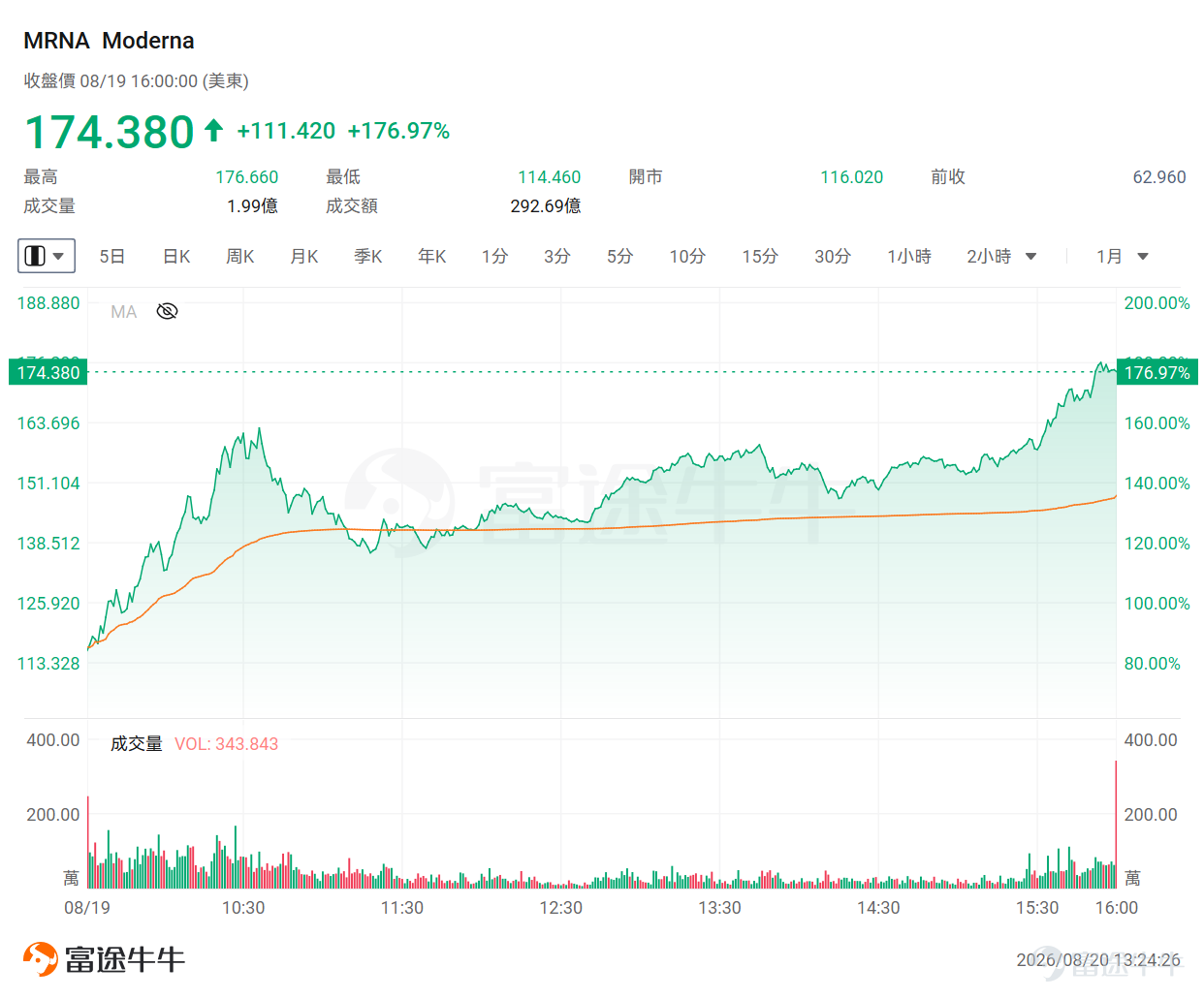
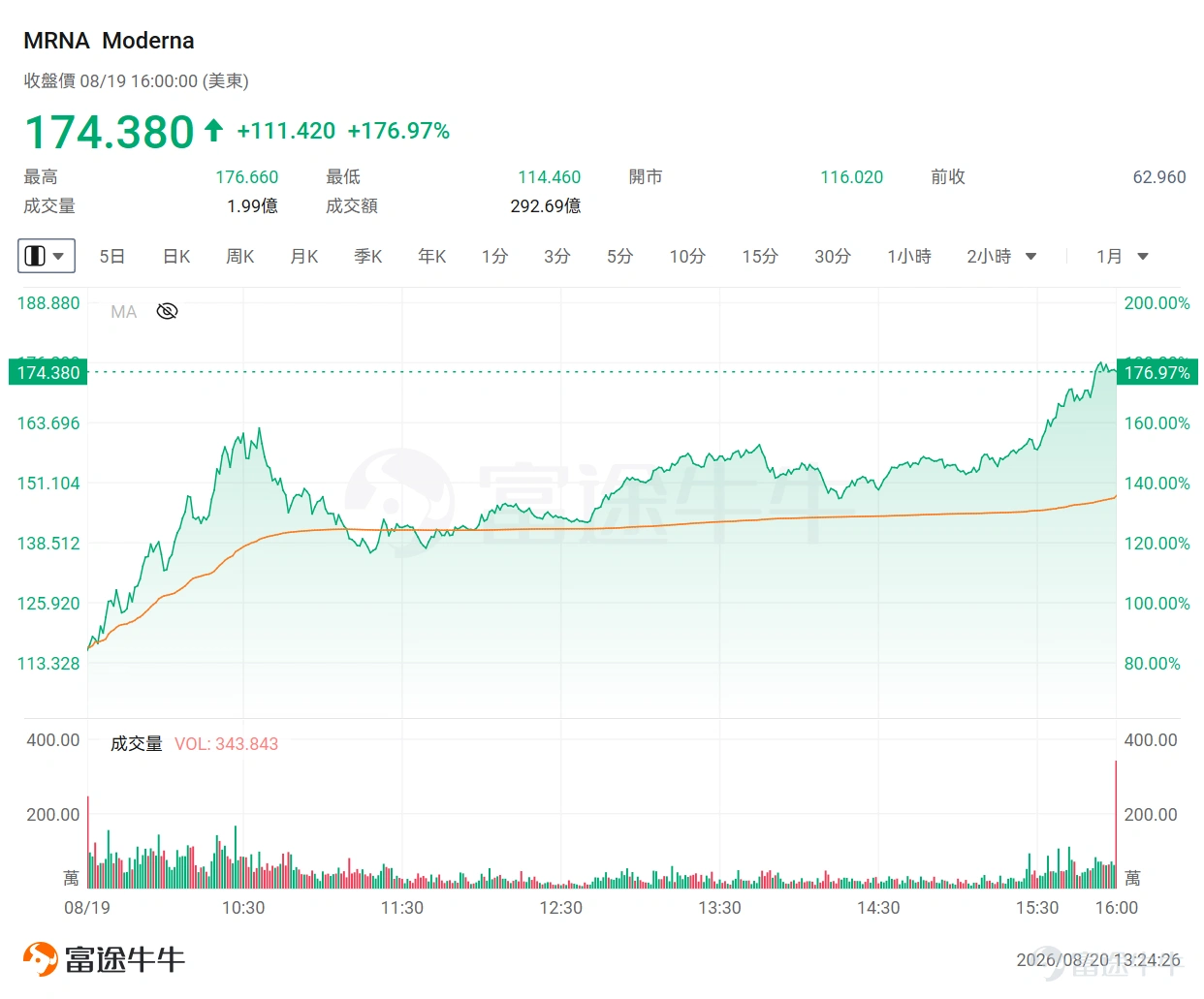
Global mRNA giants $Moderna (MRNA.US)$ and $Merck & Co (MRK.US)$ jointly announced that their first personalized mRNA cancer therapy, intismeran autogene, succeeded in global Phase III clinical trials for high-risk melanoma. This marks a milestone breakthrough in the field of tumor immunotherapy and validates the immense commercial potential of mRNA technology beyond respiratory diseases. Boosted by this major positive news, Moderna's stock price surged approximately 177% at the US market close.
--
--
--
So, how impressive is this technology? Which other companies in the AI healthcare supply chain are worth watching? This article will explain it all to fellow investors.
How impressive is this technology?
Therapeutic cancer vaccines have long been regarded as an elusive goal in oncology. Therefore, more awe-inspiring than the stock price frenzy,is the paradigm shift happening behind the technology.
Past drug development was essentially about finding a standardized drug that could cover hundreds of thousands or even millions of patients. However, cancer is highly heterogeneous. Even among patients with the same type of cancer, tumor mutations may differ completely. Within the same patient, there may also be differences between primary tumors and metastatic tumors.
Therefore, cancer treatment has long faced a paradox:The most precise treatments must be highly personalized, yet high personalization is difficult to scale for mass production.
The true breakthrough of this technology lies in transforming the "one drug per person" model into a scalable industrial process—Researchers can leverage AI and computational biology to read the unique genetic mutation "fingerprints" of each patient's tumor, screen for the neoantigens most worthy of immune system attack, encode them into mRNA, and manufacture customized anticancer drugs for patients.
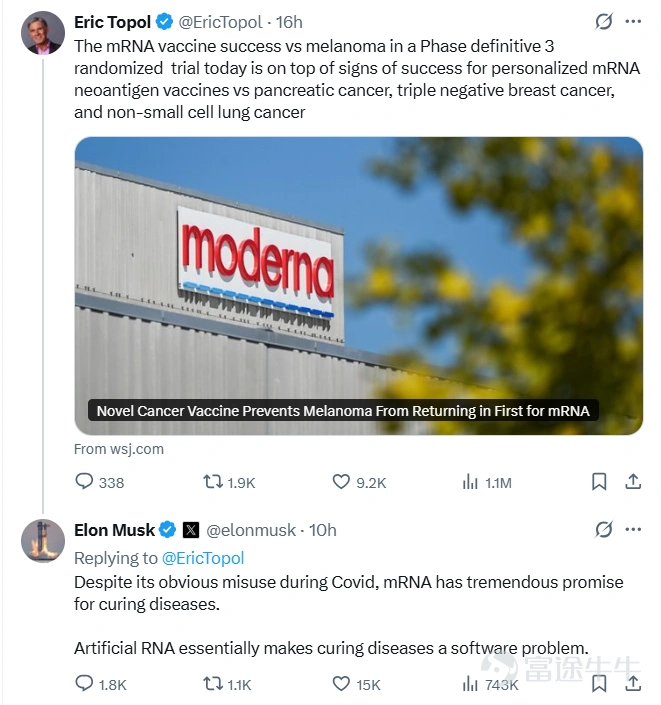
Elon Musk commented on social media that mRNA technology still holds immense potential in curing diseases. Synthetic RNA essentially turns disease cure into a software problem.
However, whether this technology can be widely applied to other cancers is core to determining its ultimate market value.Goldman Sachs remains optimistic, believing that the success in melanoma is indicative for other solid tumors. Goldman Sachs has raised the probability of success for this vaccine in non-small cell lung cancer (NSCLC) to 85%, and forecasts peak global sales of $4.3 billion for melanoma and $6.6 billion for NSCLC (before deducting the 50/50 profit share with Merck & Co).
Citi and JPMorgan are relatively conservative. Citi pointed out that melanoma is a tumor with strong immunogenicity and established sensitivity to checkpoint inhibitors, so these results cannot be simply extrapolated to other cancer types such as lung, bladder, or kidney cancer. Broad platform validation requires demonstrating comparable efficacy in other tumor types and proving that personalized manufacturing can be reliably scaled up.
Among the six major tracks of AI healthcare, which companies truly benefit?
Today, Moderna and Merck & Co provided the most compelling answer with a landmark clinical breakthrough:The ultimate value of AI has never been merely about replacing repetitive labor, nor should it stop at providing conversational companionship. The truly promising direction lies at the forefront of human intellectual boundaries, helping scientists decipher life and design drugs to tackle those once-unsolvable life-and-death challenges.
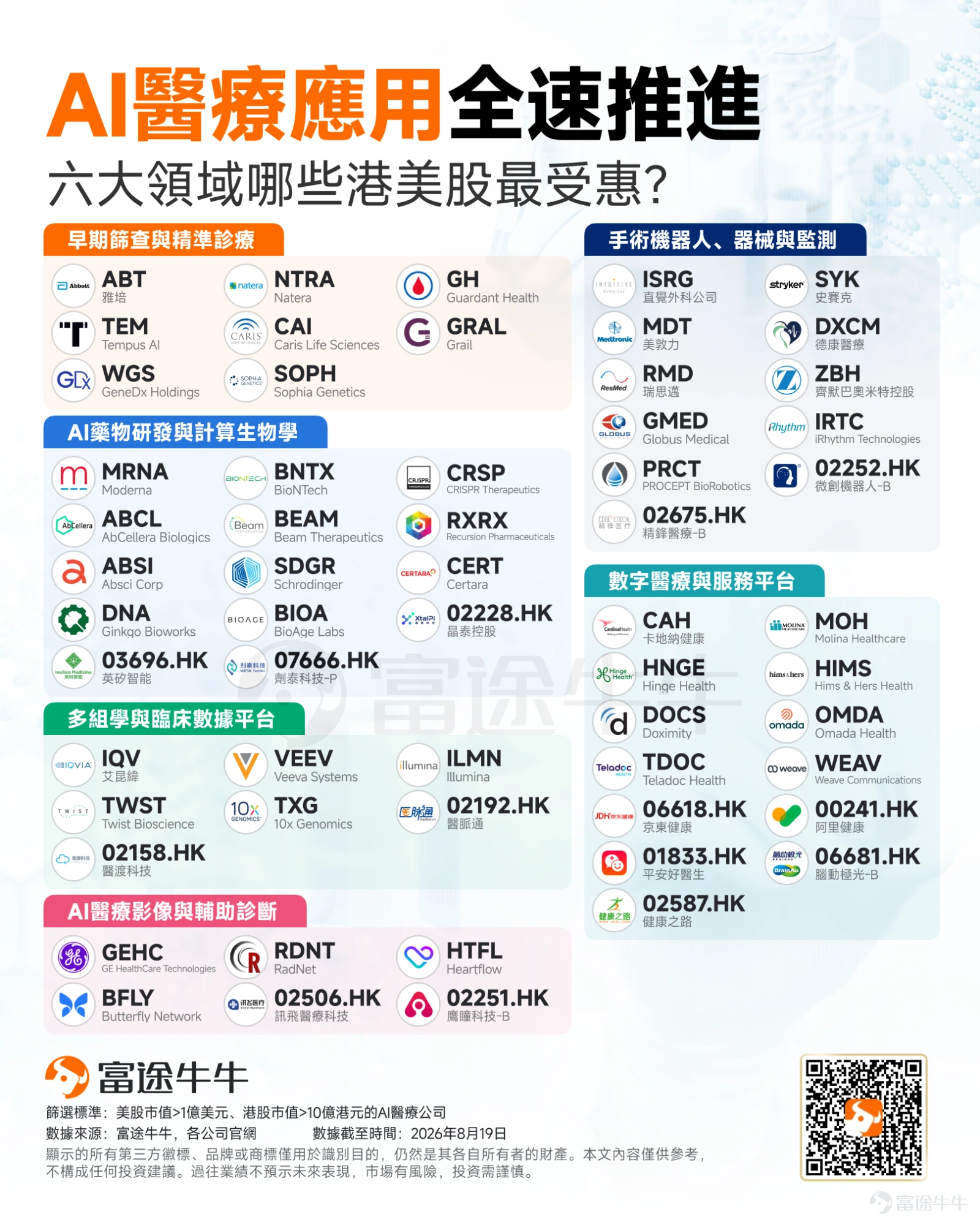
Therefore, this surge in interest is not limited to Moderna alone. The successful completion of Phase III clinical trials for personalized mRNA therapies not only revalidates the value of the mRNA technology platform but also spotlights the entire AI healthcare industry chain, including gene sequencing, precision diagnostics, computational biology, multi-omics data, and clinical services. Fellow investors have outlined six key sectors in AI healthcare for your reference:
--
--
--
The first tier consists of companies directly involved in personalized therapies and computational biology.
$Moderna (MRNA.US)$ and $Merck & Co (MRK.US)$ These are the most direct beneficiaries of this event. $BioNTech (BNTX.US)$ 、 $Recursion Pharmaceuticals (RXRX.US)$ 、 $AbCellera Biologics (ABCL.US)$ 、 $Absci Corp (ABSI.US)$ 、 $CRISPR Therapeutics (CRSP.US)$ and $Beam Therapeutics (BEAM.US)$ Companies such as [Company Names] are strategically positioned in areas including mRNA cancer therapies, AI-driven drug discovery, protein design, gene editing, and computational biology.
This Phase III success at least proves that the model of 'algorithm-based target screening + biotech manufacturing + immunotherapy' is no longer just a laboratory concept but can advance to large-scale late-stage clinical trials.
The second tier comprises gene sequencing, precision diagnostics, and multi-omics platforms.
The starting point for personalized cancer therapy is not the mRNA factory, but patient tumor data. Without high-quality sequencing, mutation identification, and biomarker analysis, subsequent therapies cannot be developed.
Therefore, $Tempus AI (TEM.US)$ 、 $Guardant Health (GH.US)$ 、 $Natera (NTRA.US)$ 、 $Illumina (ILMN.US)$ 、 $10x Genomics (TXG.US)$ 、 $Caris Life Sciences (CAI.US)$ and $Sophia Genetics (SOPH.US)$ Precision diagnostics, multi-omics data, and clinical decision support platforms represented by companies such as Tempus AI may become critical infrastructure in the era of 'one drug per person'.
Among them, Tempus AI rose approximately 24% overnight. The company previously announced the acquisition of Personalis, a minimal residual disease (MRD) detection firm, at an enterprise value of roughly $1.5 billion, further integrating oncology genetic testing, clinical data, and AI capabilities.
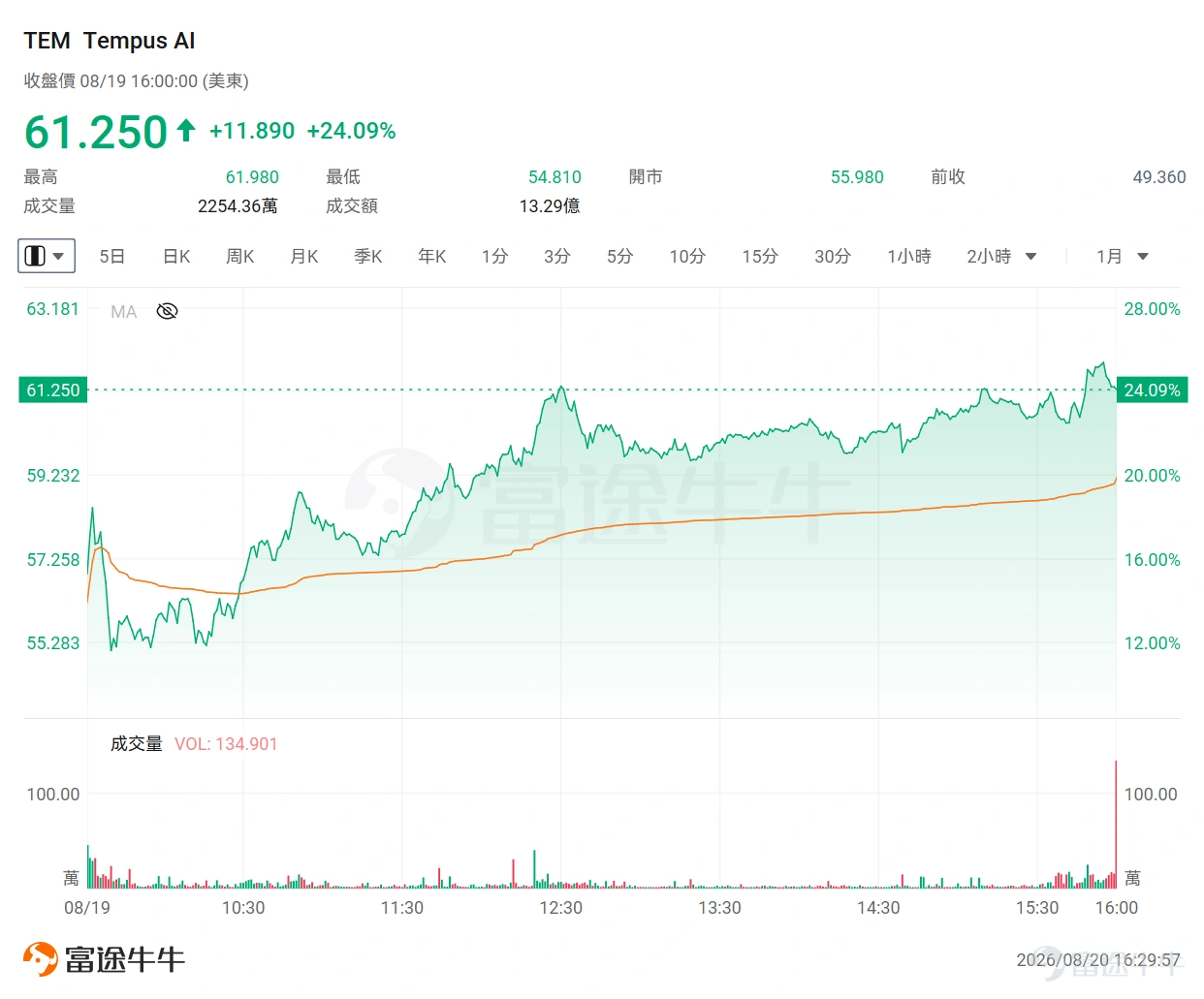
The market's interest in Tempus stems from the expectation that as personalized cancer therapies become more widespread, demand for sequencing, patient stratification, recurrence monitoring, and efficacy tracking will increase correspondingly.
The third layer represents the long-term beneficiaries of AI in healthcare.
AI imaging, surgical robots, device monitoring, and digital health platforms are not direct beneficiaries of this breakthrough in cancer therapy, but they remain central to the long-term trend of healthcare digitalization.
$GE HealthCare Technologies (GEHC.US)$ 、 $RadNet (RDNT.US)$ 、 $Heartflow (HTFL.US)$ Represents AI imaging and assisted diagnosis; $Intuitive Surgical (ISRG.US)$ 、 $Medtronic (MDT.US)$ 、 $Stryker Corp (SYK.US)$ Represents surgical robots and smart devices; Hims & Hers, Teladoc, Doximity, and Chinese digital health platforms are responsible for extending medical services into post-diagnosis management and daily health scenarios.
Therefore, the event most directly triggers a revaluation of 'AI-driven drug discovery,' 'precision diagnostics,' and 'multi-omics platforms' among the six major sectors. Other areas are structural beneficiaries of the long-term penetration of AI in healthcare, and their valuations should not be extrapolated to the same extent based solely on a single clinical result.
Could AI + Pharmaceuticals be the most promising direction for artificial intelligence?
For most ordinary households, healthcare expenses are among the heaviest and most unpredictable costs in later life.
Especially in countries with relatively limited social security, what truly undermines people's sense of security is often not just declining income, but the uncertainty regarding how high the treatment costs for a major illness might be, and whether substantial spending will yield effective outcomes.
The most significant value of AI in healthcare lies not in creating a few more highly valued companies, but in reducing the human and financial burdens caused by late-stage diagnoses, ineffective drug trials, disease recurrence, and repeated hospitalizations.
In the short term, the per-treatment cost of personalized cancer therapies may be prohibitively high; however, if AI enables earlier detection, more precise therapy selection, and reduces the probability of post-surgical recurrence and distant metastasis, the total lifetime treatment cost for patients could actually decrease.
The shift from standardized drugs to 'one drug per patient,' from merely slowing tumor growth to proactively preventing recurrence, and from physicians selecting medications based on experience to algorithms interpreting the mutational fingerprint of each tumor—this is what makes this breakthrough truly exciting.
Moderna's overnight surge of 177% may simply reflect a剧烈 repricing by the capital markets.
But more importantly for humanity, we are witnessing for the first time how AI, gene sequencing, mRNA, and immunotherapy are being integrated into a system capable of truly changing cancer outcomes.
If artificial intelligence can ultimately help humans live longer, suffer fewer illnesses, and alleviate the fear families face when confronting serious diseases, then no amount of expectation is too high for AI's breakthroughs in the pharmaceutical sector.
Risk Disclaimer: The above content only represents the author's view. It does not represent any position or investment advice of Futu. Futu makes no representation or warranty.Read more


Comments (4)
to post a comment
90
412