US Stock Market Talk | The Fed Resumes Rate Hikes After a Three-Year Pause! Is a New Shift Ahead for

US Treasury alarm bells are ringing: What events should investors watch next?
August 18, when US stocks rose during evening trading, with market sentiment appearing stable. Until$U.S. 30-Year Treasury Bonds Yield (US30Y.BD)$Intraday levels once surged to 5.338%, hitting the highest level since 2007; $U.S. 10-Year Treasury Notes Yield (US10Y.BD)$Yields simultaneously rose above 4.74%.US stocks plunged in response, $Nasdaq Composite Index (.IXIC.US)$closing down 1.33% for the day, $S&P 500 Index (.SPX.US)$down 0.69%, $Dow Jones Industrial Average (.DJI.US)$falling 116.38 points, with the three major indices closing lower for three consecutive days.
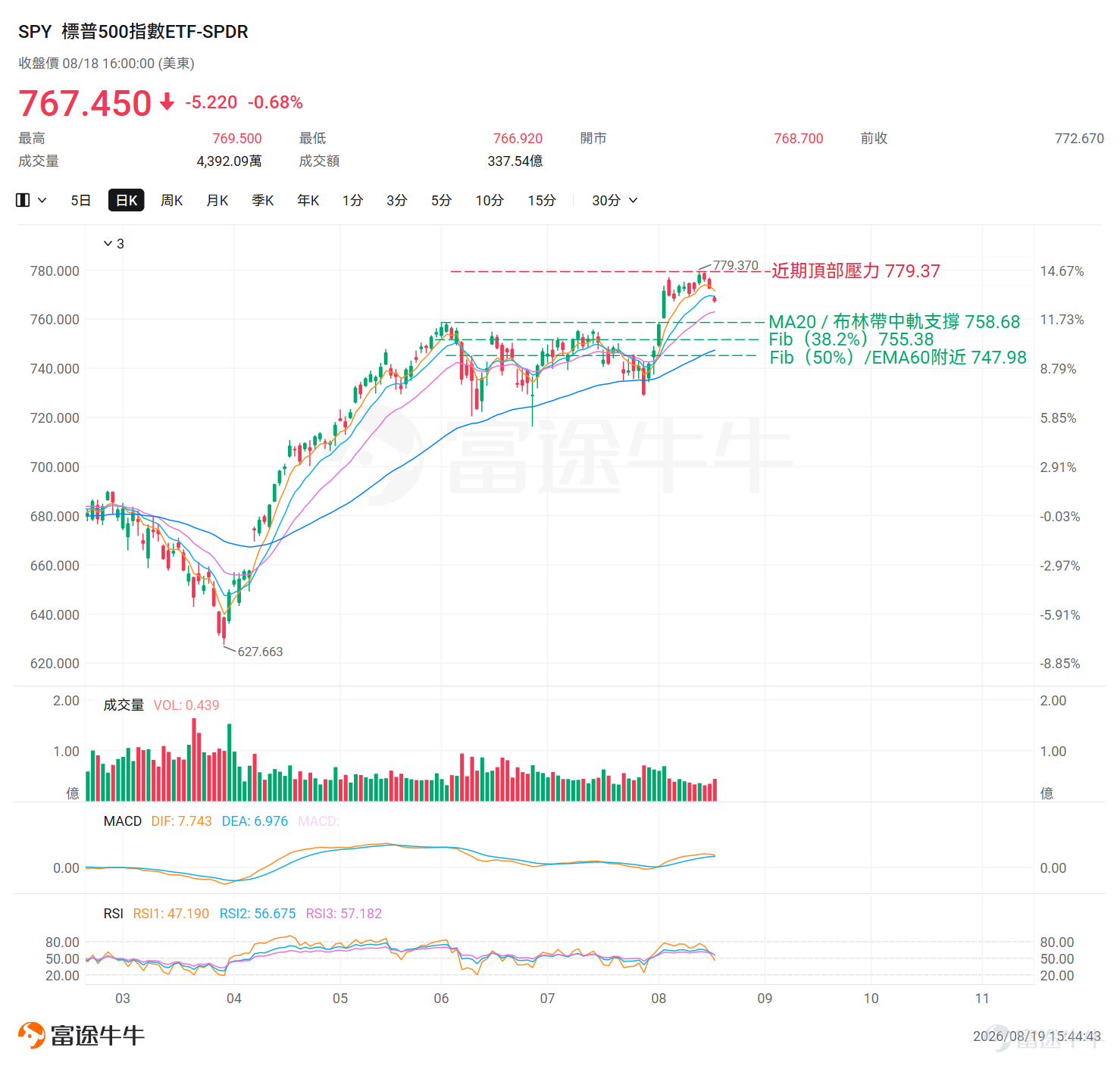
Taking $SPDR S&P 500 ETF (SPY.US)$ and $Invesco QQQ Trust (QQQ.US)$ Taking SPY as an example,the current medium-term uptrend structure of SPY remains intact overall,with moving averages maintaining a standard bullish alignment. The current closing price of $767.45 has successively broken below the EMA5 and EMA10, breaching both short-term moving average support levels,and short-term momentum has clearly weakened.Close monitoring of the stock price is required in the near term.Whether it can hold firmly above the 20-day EMA ($763.01) is key; a breakdown below this level would further confirm the depth of the current correction.
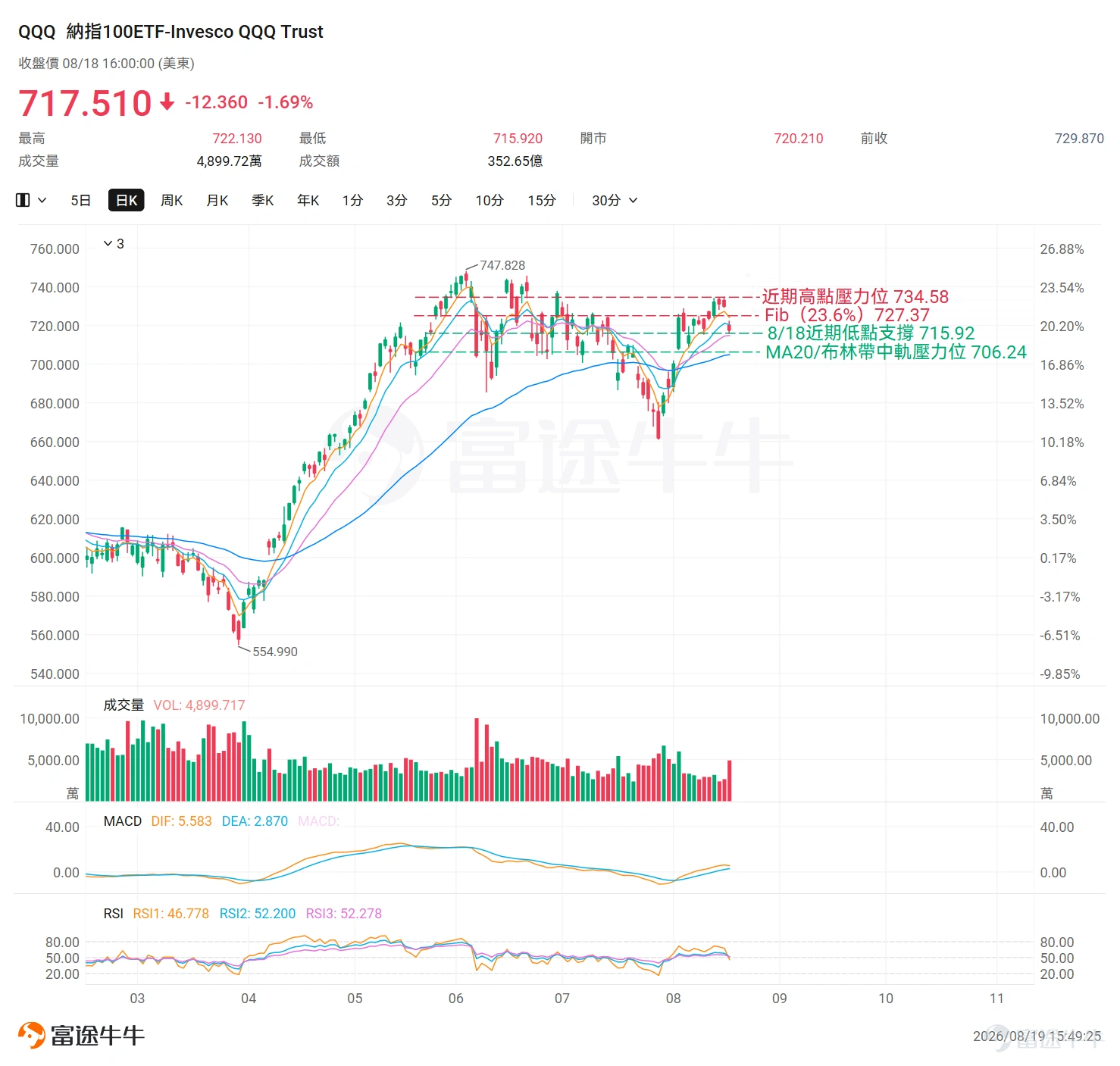
QQQ remains supported above its 60-day EMA ($704.92),and the overall trend remains within a technical bull market range.However,However, the short-term structure has shown clear signs of weakening.The nearest support levels to watch are:the intraday low of $715.92 on August 18,andand the 38.2% Fibonacci retracement level at $714.71;if these levels break,the next key support lies at $706.24, where the 20-day EMA and the Bollinger Bands' middle line converge, serving as a critical dividing line for short-term bullish and bearish sentiment.
On the surface, this appears to be a "bond yield shock," but in reality, it is the result of multiple factors resonating simultaneously, leaving virtually no room for error in the current market.
1. US Treasury Yield Shock
The first key factor is the fiscal deficit and massive bond issuance. According to the Committee for a Responsible Federal Budget, by the end of July 2026 (the first 10 months of fiscal year 2026), the US federal government'scumulative budget deficit reached approximately $1.8 trillion, with borrowing in July alone hitting $432 billion,equivalent to roughly $14 billion in daily debt issuance. Facing the continuously expanding debt scale, investorswill demand higher premiums to compensate for long-term holding risks, thereby driving up long-end US Treasury yields.
The second reason is the bond issuance frenzy among AI tech giants.Goldman Sachs predicts that large technology companies will issue $250 billion in bonds throughout 2026, potentially exceeding $400 billion in 2027.The massive issuance of tech bonds has increased the supply of long-term fixed-income assets, creating structural upward pressure on global long-end bond yields and term premiums.
2. The AI Valuation Trust Crisis
Market focus on AI companies is undergoing a qualitative shift. Investors are beginning to demand visibility intotrends of narrowing losses, credible timelines to profitability, and financial resilience before the GPU depreciation cycle hits.Take the two core AI companies as examples:
As OpenAI enters 2026, its Q1 single-quarter loss has reached $3.7 billion. Its latest reported revenue for Q2 2026 was $6.7 billion, representing only an 18% increase from Q1's $5.7 billion, while operating losses further widened to $12.3 billion.
Anthropic is reportedly preparing for an IPO with an unprecedented valuation of up to $2 trillion. The market is concerned thatif AI infrastructure costs fail to decline or if corporate growth rates experience marginal deceleration, the extremely high valuation supported by Anthropic's forward revenue estimates will face an imminent risk of collapse.
3. A Shift in Oil Pricing Logic
The reason why the pressure from current oil prices on the market is proving difficult to dissipate lies in the fundamental shift in its pricing logic.
Over the past few decades, whenever tensions in the Middle East pushed oil prices higher, the standard market response was to wait for diplomatic mediation or ceasefire agreements to take effect, expecting oil prices to fall once the geopolitical risk premium dissipated. This logic is no longer applicable.
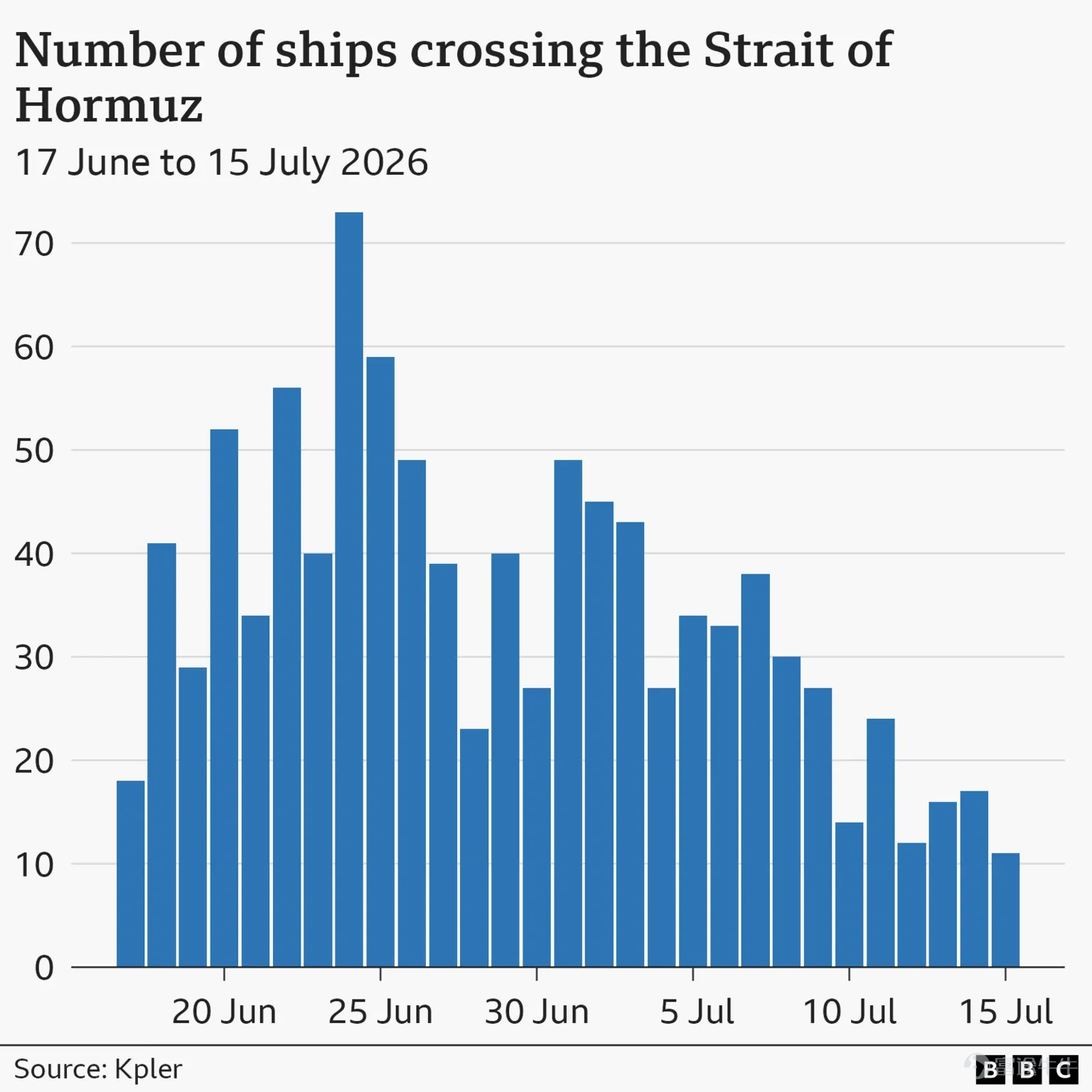
The situation in the Strait of Hormuz clearly illustrates the structural nature of the problem:Oil prices are high due to structural damage to supply.The IEA also explicitly confirmed in its May report that this loss in oil supply is the largest single disruption since the 1973 OPEC oil embargo, with production in relevant Gulf countries falling by more than 12 million barrels per day compared to pre-conflict levels. Inventory data is equally concerning. Global visible inventories drew down at a rate of approximately 5 million barrels per day in March and April, with an overall average daily decline of 5.1 million barrels in Q2, continuing to deplete at a rate of 2.2 million barrels per day in Q3. Goldman Sachs pointed out that,even if navigation through the Strait of Hormuz were to resume immediately, global inventories would hit historical lows not seen since 2018, and the restocking process is expected to last until at least 2027.
On the diplomatic front, the 60-day ceasefire agreement between the US and Iran expired on August 14, with no progress in negotiations. The market has repeatedly bet on a ceasefire only to be disappointed, causing the floor for oil prices to rise with each reversal.
The consequences of high oil prices have also spread beyond the energy sector.Persistent energy inflation is re-anchoring the market's inflation expectations center,making it increasingly difficult to meet the prerequisites for the Federal Reserve to cut interest rates;sticky inflation, in turn, supports elevated long-end US Treasury yields, creating sustained pressure on equity valuations.
4. What should investors focus on next?
In terms of interest rates,whether core PCE inflation shows a continuous and substantial decline, and whether there is a shift in the scale of the Treasury's quarterly financing plan—improvement in either condition could become a turning point for long-term interest rates.
In the AI technology sector, next $NVIDIA (NVDA.US)$ the latest earnings results and the Q3 earnings season are key windows.If mega-cap companies further raise capital expenditure, market skepticism regarding AI returns will deepen; if they can deliver AI commercialization profitability figures that satisfy the market, sentiment may recover.
In terms of oil prices, a ceasefire agreement accompanied by the full reopening and sustained implementation of strait passages, or continuous and substantial global inventory restocking, could change the pricing logic.
The current equity risk premium (ERP) is near historical lows. This means the stock market has almost no safety buffer against any rise in long-term interest rates, and the traditional "stocks down, bonds up" hedging logic has largely become ineffective.
Gold-related assets,such as:$SPDR Gold ETF (GLD.US)$$Gold Futures (DEC6) (GCmain.US)$$E-micro Gold Futures (DEC6) (MGCmain.US)$ andEnergy stocks may perform well in the current environment characterized by supply-shock-driven inflation and geopolitical uncertainty.Furthermore, investors concerned about the repricing of high-growth AI tech stocks triggered by the spillover effects of rising US Treasury yields should focus on market performance such as $ProShares UltraPro Short QQQ ETF (SQQQ.US)$$ProShares Short QQQ (PSQ.US)$ and other related instruments.
When the market is in a state of low fault tolerance and repeated volatility,diversified hedging, maintaining liquidity, and avoiding excessive concentration in positionsare more important than attempting to precisely predict short-term directions. Before uncertainty dissipates, strive to preserve your optionality.
Risk Disclaimer: The above content only represents the author's view. It does not represent any position or investment advice of Futu. Futu makes no representation or warranty.Read more


Comments (5)
to post a comment
24
29