English
Back
Open Account
US-Japan Intervene to Prop Up Yen — What's Next for US Stocks?

華夏基金香港
joined discussion ·

Say Goodbye to FX Anxiety, Focus on the Intrinsic Value of Japanese Equities — A Comprehensive Analysis of 3160.HK China AMC MSCI Japan Equity (USD Hedged) ETF
The continuous improvement in profitability and capital efficiency of Japanese companies provides support for a structural re-rating of Japanese equities. Meanwhile, the Japanese yen remains influenced by factors such as interest rate differentials, policy expectations, and foreign exchange intervention. $ChinaAMC MSCI Japan Hedged to USD ETF (03160.HK)$ By combining a basket of core Japanese stocks with a USD hedging mechanism, the fund aims to help investors capture opportunities in Japanese equities while managing exchange rate volatility. 1. Profitability Improvement: Japan's Structural Re-rating Enters the Realization Phase Corporate reforms in Japan are translating from governance requirements into operational results. The new Corporate Governance Code for 2026 further drives companies to focus on cost of capital, stock prices, and shareholder returns. A DBS report shows that TOPIX companies' profits grew 35% year-on-year in Q1 2026, with improving profitability and rising capital efficiency becoming key supports for the re-rating of Japanese equities. Figure 1: Improvement in ROE of Japanese Listed Companies Expected to Support Higher P/B Re-rating   Source: LSEG, DBS; data as of June 3, 2026. • Changes in the inflation and wage environment create conditions for corporate pricing power and nominal growth Japan is gradually emerging from its long-term low-inflation environment. CICC Research estimates that, excluding special factors such as fresh food and policy impacts, Japan's inflation rate remained around 3% in mid-2026. Moderate inflation and wage growth are expected to enhance corporate pricing power, providing support for the recovery of nominal revenue and profits. Figure 2: Japan’s inflation excluding special factors...
The continuous improvement in profitability and capital efficiency of Japanese companies provides support for a structural re-rating of Japanese equities. Meanwhile, the Japanese yen remains influenced by factors such as interest rate differentials, policy expectations, and foreign exchange intervention. $ChinaAMC MSCI Japan Hedged to USD ETF (03160.HK)$ By combining a basket of core Japanese stocks with a USD hedging mechanism, the fund aims to help investors capture opportunities in Japanese equities while managing exchange rate volatility.
1. Profitability Improvement: Japan's Structural Re-rating Enters the Realization Phase
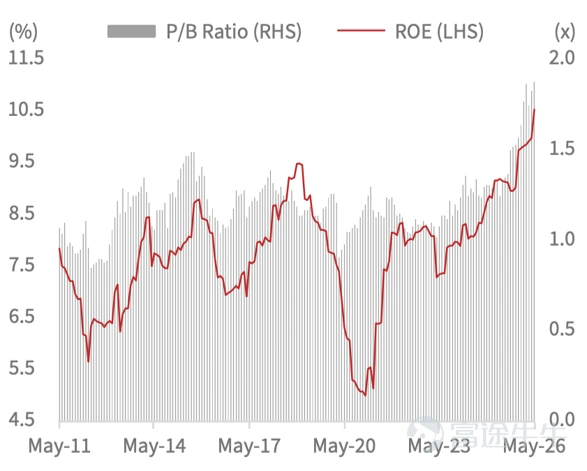
Corporate reforms in Japan are translating from governance requirements into operational results. The new Corporate Governance Code for 2026 further drives companies to focus on cost of capital, stock prices, and shareholder returns. A DBS report shows that TOPIX companies' profits grew 35% year-on-year in Q1 2026, with improving profitability and rising capital efficiency becoming key supports for the re-rating of Japanese equities.
Figure 1: Improvement in ROE of Japanese Listed Companies Expected to Support Higher P/B Re-rating
The continuous improvement in profitability and capital efficiency of Japanese companies provides support for a structural re-rating of Japanese equities. Meanwhile, the Japanese yen remains influenced by factors such as interest rate differentials, policy expectations, and foreign exchange intervention. $ChinaAMC MSCI Japan Hedged to USD ETF (03160.HK)$ By combining a basket of core Japanese stocks with a USD hedging mechanism, the fund aims to help investors capture opportunities in Japanese equities while managing exchange rate volatility. 1. Profitability Improvement: Japan's Structural Re-rating Enters the Realization Phase Corporate reforms in Japan are translating from governance requirements into operational results. The new Corporate Governance Code for 2026 further drives companies to focus on cost of capital, stock prices, and shareholder returns. A DBS report shows that TOPIX companies' profits grew 35% year-on-year in Q1 2026, with improving profitability and rising capital efficiency becoming key supports for the re-rating of Japanese equities. Figure 1: Improvement in ROE of Japanese Listed Companies Expected to Support Higher P/B Re-rating   Source: LSEG, DBS; data as of June 3, 2026. • Changes in the inflation and wage environment create conditions for corporate pricing power and nominal growth Japan is gradually emerging from its long-term low-inflation environment. CICC Research estimates that, excluding special factors such as fresh food and policy impacts, Japan's inflation rate remained around 3% in mid-2026. Moderate inflation and wage growth are expected to enhance corporate pricing power, providing support for the recovery of nominal revenue and profits. Figure 2: Japan’s inflation excluding special factors...
Source: LSEG, DBS; data as of June 3, 2026.
• Changes in the inflation and wage environment create conditions for corporate pricing power and nominal growth
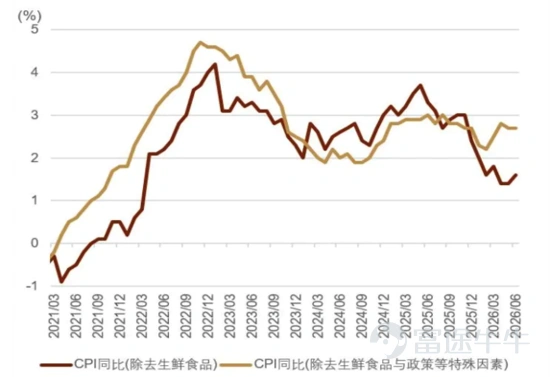
Japan is gradually emerging from its long-term low-inflation environment. CICC Research estimates that, excluding special factors such as fresh food and policy impacts, Japan's inflation rate remained around 3% in mid-2026. Moderate inflation and wage growth are expected to enhance corporate pricing power, providing support for the recovery of nominal revenue and profits.
Figure 2: Japan’s inflation level excluding special factors remains around 3%
The continuous improvement in profitability and capital efficiency of Japanese companies provides support for a structural re-rating of Japanese equities. Meanwhile, the Japanese yen remains influenced by factors such as interest rate differentials, policy expectations, and foreign exchange intervention. $ChinaAMC MSCI Japan Hedged to USD ETF (03160.HK)$ By combining a basket of core Japanese stocks with a USD hedging mechanism, the fund aims to help investors capture opportunities in Japanese equities while managing exchange rate volatility. 1. Profitability Improvement: Japan's Structural Re-rating Enters the Realization Phase Corporate reforms in Japan are translating from governance requirements into operational results. The new Corporate Governance Code for 2026 further drives companies to focus on cost of capital, stock prices, and shareholder returns. A DBS report shows that TOPIX companies' profits grew 35% year-on-year in Q1 2026, with improving profitability and rising capital efficiency becoming key supports for the re-rating of Japanese equities. Figure 1: Improvement in ROE of Japanese Listed Companies Expected to Support Higher P/B Re-rating   Source: LSEG, DBS; data as of June 3, 2026. • Changes in the inflation and wage environment create conditions for corporate pricing power and nominal growth Japan is gradually emerging from its long-term low-inflation environment. CICC Research estimates that, excluding special factors such as fresh food and policy impacts, Japan's inflation rate remained around 3% in mid-2026. Moderate inflation and wage growth are expected to enhance corporate pricing power, providing support for the recovery of nominal revenue and profits. Figure 2: Japan’s inflation excluding special factors...
Source: Statistics Bureau of Japan, Bank of Japan, CICC Research Department. Data as of June 30, 2026.
• Structural opportunities remain, but return drivers are expected to shift more toward earnings.
As valuation repair gradually materializes, future returns in the Japanese stock market are expected to rely more on earnings growth. J.P. Morgan notes that the forward P/E ratio of major Japanese indices at around 17x is no longer cheap, but structural opportunities persist in banks, industrials, and AI-related technology.
II. Exchange Rate Volatility: The "Second Variable" in Investing in Japanese Stocks
For USD-based investors, allocating to Japanese equities primarily involves two judgments: Japanese stock performance and the direction of the yen. Historically, rises in Japanese stocks have often coincided with a weaker yen, which can erode USD-denominated returns; USD hedging can help mitigate this interference.
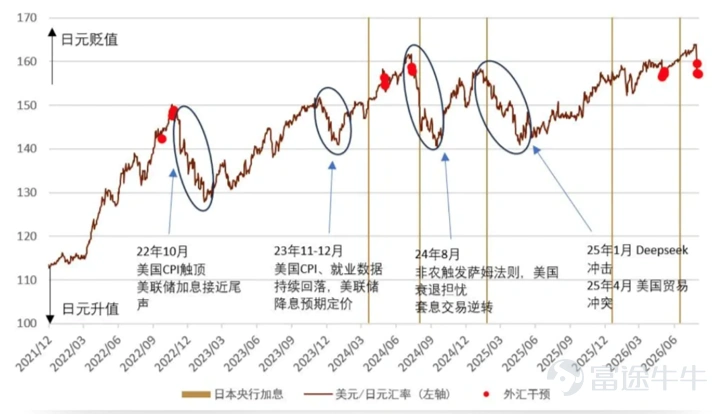
Figure 3: Relationship between USD/JPY exchange rate, foreign exchange intervention, and Bank of Japan rate hikes
The continuous improvement in profitability and capital efficiency of Japanese companies provides support for a structural re-rating of Japanese equities. Meanwhile, the Japanese yen remains influenced by factors such as interest rate differentials, policy expectations, and foreign exchange intervention. $ChinaAMC MSCI Japan Hedged to USD ETF (03160.HK)$ By combining a basket of core Japanese stocks with a USD hedging mechanism, the fund aims to help investors capture opportunities in Japanese equities while managing exchange rate volatility. 1. Profitability Improvement: Japan's Structural Re-rating Enters the Realization Phase Corporate reforms in Japan are translating from governance requirements into operational results. The new Corporate Governance Code for 2026 further drives companies to focus on cost of capital, stock prices, and shareholder returns. A DBS report shows that TOPIX companies' profits grew 35% year-on-year in Q1 2026, with improving profitability and rising capital efficiency becoming key supports for the re-rating of Japanese equities. Figure 1: Improvement in ROE of Japanese Listed Companies Expected to Support Higher P/B Re-rating   Source: LSEG, DBS; data as of June 3, 2026. • Changes in the inflation and wage environment create conditions for corporate pricing power and nominal growth Japan is gradually emerging from its long-term low-inflation environment. CICC Research estimates that, excluding special factors such as fresh food and policy impacts, Japan's inflation rate remained around 3% in mid-2026. Moderate inflation and wage growth are expected to enhance corporate pricing power, providing support for the recovery of nominal revenue and profits. Figure 2: Japan’s inflation excluding special factors...
Source: Bank of Japan, Bloomberg, CICC Research Department. Data as of June 30, 2026.
• Intervention, rate hikes, and fluctuating interest rate differentials suggest yen volatility may persist.
Recent foreign exchange intervention briefly pushed the yen up by about 5%, though some gains were later given back; the market's pricing of a Bank of Japan rate hike in September rose from 24% on July 30 to 76%. The interplay of policy, interest rate differentials, and intervention expectations implies that yen volatility is likely to continue.
III. USD Hedging: Keeping the Investment Focus on Japanese Equities Themselves
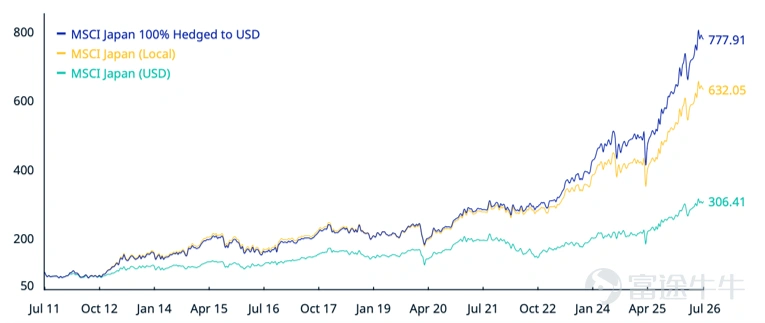
The USD return of unhedged Japanese equities is determined by both "Japanese equity performance + JPY/USD exchange rate movements." The USD-hedged version aims to reduce the impact of JPY/USD fluctuations on returns by regularly selling JPY forwards, allowing investors to focus more on the performance of Japanese equities themselves.
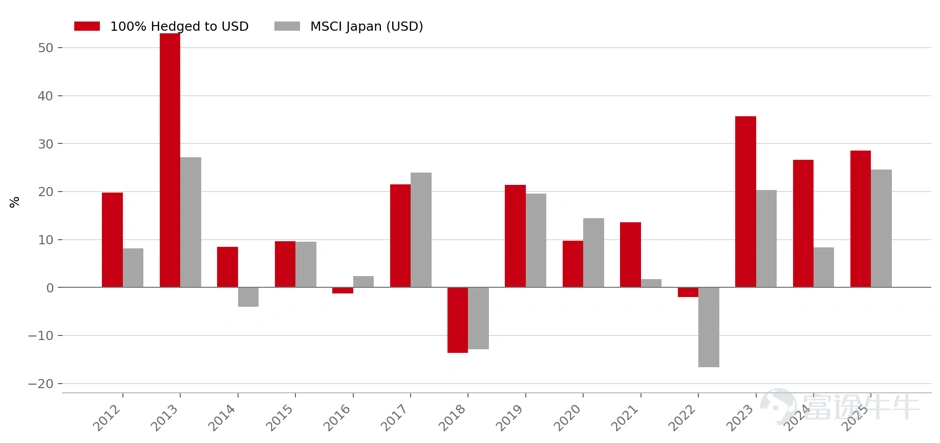
Historical data indicates that the performance of hedged and unhedged indices diverges significantly across exchange rate cycles. The USD-hedged version does not outperform every year, but it can mitigate the erosion of USD-denominated returns caused by exchange rate movements during periods of significant JPY depreciation. The cyclical nature of hedging effectiveness also highlights that currency management is an independent asset allocation decision.
Figure 4: Cumulative Performance of MSCI Japan Index (Hedged, Local Currency, and USD Denominated) (Net Total Return Index)
The continuous improvement in profitability and capital efficiency of Japanese companies provides support for a structural re-rating of Japanese equities. Meanwhile, the Japanese yen remains influenced by factors such as interest rate differentials, policy expectations, and foreign exchange intervention. $ChinaAMC MSCI Japan Hedged to USD ETF (03160.HK)$ By combining a basket of core Japanese stocks with a USD hedging mechanism, the fund aims to help investors capture opportunities in Japanese equities while managing exchange rate volatility. 1. Profitability Improvement: Japan's Structural Re-rating Enters the Realization Phase Corporate reforms in Japan are translating from governance requirements into operational results. The new Corporate Governance Code for 2026 further drives companies to focus on cost of capital, stock prices, and shareholder returns. A DBS report shows that TOPIX companies' profits grew 35% year-on-year in Q1 2026, with improving profitability and rising capital efficiency becoming key supports for the re-rating of Japanese equities. Figure 1: Improvement in ROE of Japanese Listed Companies Expected to Support Higher P/B Re-rating   Source: LSEG, DBS; data as of June 3, 2026. • Changes in the inflation and wage environment create conditions for corporate pricing power and nominal growth Japan is gradually emerging from its long-term low-inflation environment. CICC Research estimates that, excluding special factors such as fresh food and policy impacts, Japan's inflation rate remained around 3% in mid-2026. Moderate inflation and wage growth are expected to enhance corporate pricing power, providing support for the recovery of nominal revenue and profits. Figure 2: Japan’s inflation excluding special factors...
Source: MSCI, data as of July 31, 2026.
Figure 5: Annual Net Returns of MSCI Japan 100% USD-Hedged Index vs. Unhedged Index
The continuous improvement in profitability and capital efficiency of Japanese companies provides support for a structural re-rating of Japanese equities. Meanwhile, the Japanese yen remains influenced by factors such as interest rate differentials, policy expectations, and foreign exchange intervention. $ChinaAMC MSCI Japan Hedged to USD ETF (03160.HK)$ By combining a basket of core Japanese stocks with a USD hedging mechanism, the fund aims to help investors capture opportunities in Japanese equities while managing exchange rate volatility. 1. Profitability Improvement: Japan's Structural Re-rating Enters the Realization Phase Corporate reforms in Japan are translating from governance requirements into operational results. The new Corporate Governance Code for 2026 further drives companies to focus on cost of capital, stock prices, and shareholder returns. A DBS report shows that TOPIX companies' profits grew 35% year-on-year in Q1 2026, with improving profitability and rising capital efficiency becoming key supports for the re-rating of Japanese equities. Figure 1: Improvement in ROE of Japanese Listed Companies Expected to Support Higher P/B Re-rating   Source: LSEG, DBS; data as of June 3, 2026. • Changes in the inflation and wage environment create conditions for corporate pricing power and nominal growth Japan is gradually emerging from its long-term low-inflation environment. CICC Research estimates that, excluding special factors such as fresh food and policy impacts, Japan's inflation rate remained around 3% in mid-2026. Moderate inflation and wage growth are expected to enhance corporate pricing power, providing support for the recovery of nominal revenue and profits. Figure 2: Japan’s inflation excluding special factors...
Source: MSCI, data as of July 31, 2026; charted based on MSCI annual data.
IV. $ChinaAMC MSCI Japan Hedged to USD ETF (03160.HK)$: An ETF Completing Japanese Equity Allocation and Currency Management
$ChinaAMC MSCI Japan Hedged to USD ETF (03160.HK)$Tracks the MSCI Japan Index (100% USD Hedged) (Net Total Return), using the MSCI Japan Index as the parent index, and manages USD currency exposure through one-month JPY forward contracts.
The product mechanism can be understood in three sentences:
• A basket of core Japanese equities: Covers large- and mid-cap listed companies in Japan, aiming to share in corporate earnings and improvements in capital efficiency.
• USD hedging mechanism: Regular monthly sales of JPY forwards to mitigate JPY/USD volatility and reduce the impact of exchange rate fluctuations on investment returns.
• Convenient trading via HK stock accounts: Gain USD-hedged exposure to Japanese equities through a single ETF, enhancing cross-market allocation efficiency.
5. $ChinaAMC MSCI Japan Hedged to USD ETF (03160.HK)$— One-click allocation to a basket of core Japanese listed companies
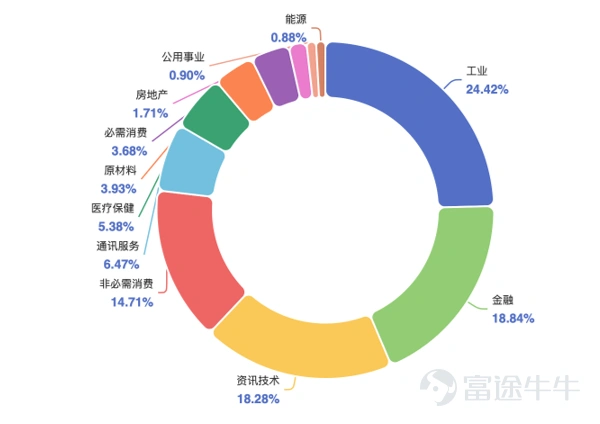
company$ChinaAMC MSCI Japan Hedged to USD ETF (03160.HK)$ Tracks the MSCI Japan Index (100% USD Hedged), which covers large- and mid-cap Japanese stocks, representing approximately 85% of the free float-adjusted market capitalization of the Japanese equity market. As of July 31, 2026, the hedged index comprised 168 constituents, allowing investors to allocate to a basket of core Japanese listed companies through a single ETF.
Figure 6: Sector Allocation of 3160.HK
The continuous improvement in profitability and capital efficiency of Japanese companies provides support for a structural re-rating of Japanese equities. Meanwhile, the Japanese yen remains influenced by factors such as interest rate differentials, policy expectations, and foreign exchange intervention. $ChinaAMC MSCI Japan Hedged to USD ETF (03160.HK)$ By combining a basket of core Japanese stocks with a USD hedging mechanism, the fund aims to help investors capture opportunities in Japanese equities while managing exchange rate volatility. 1. Profitability Improvement: Japan's Structural Re-rating Enters the Realization Phase Corporate reforms in Japan are translating from governance requirements into operational results. The new Corporate Governance Code for 2026 further drives companies to focus on cost of capital, stock prices, and shareholder returns. A DBS report shows that TOPIX companies' profits grew 35% year-on-year in Q1 2026, with improving profitability and rising capital efficiency becoming key supports for the re-rating of Japanese equities. Figure 1: Improvement in ROE of Japanese Listed Companies Expected to Support Higher P/B Re-rating   Source: LSEG, DBS; data as of June 3, 2026. • Changes in the inflation and wage environment create conditions for corporate pricing power and nominal growth Japan is gradually emerging from its long-term low-inflation environment. CICC Research estimates that, excluding special factors such as fresh food and policy impacts, Japan's inflation rate remained around 3% in mid-2026. Moderate inflation and wage growth are expected to enhance corporate pricing power, providing support for the recovery of nominal revenue and profits. Figure 2: Japan’s inflation excluding special factors...
Source: China AMC (HK) official website, data as of August 13, 2026.
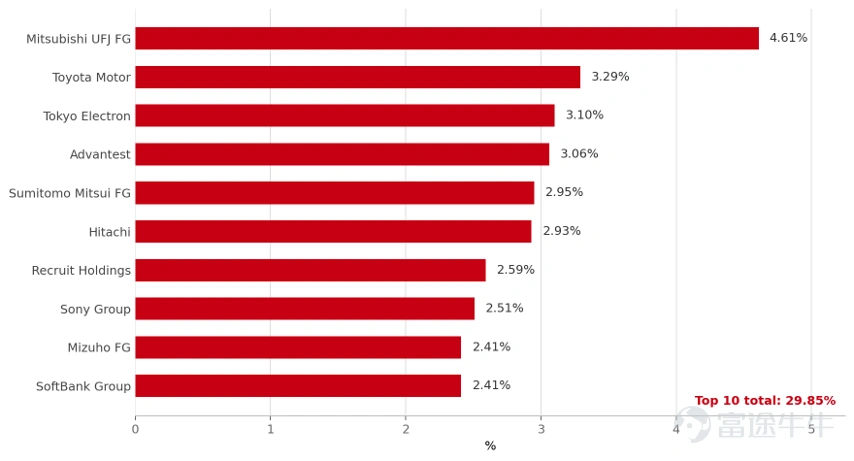
The index is primarily allocated to Industrials, Financials, Information Technology, and Consumer Discretionary sectors. The top ten holdings cover areas such as financials, automobiles, semiconductor equipment, testing equipment, and digital platforms, combining the strengths of Japan's traditional industries with opportunities related to AI hardware.
Figure 7: Top Ten Holdings and Specific Weightings of 3160.HK
The continuous improvement in profitability and capital efficiency of Japanese companies provides support for a structural re-rating of Japanese equities. Meanwhile, the Japanese yen remains influenced by factors such as interest rate differentials, policy expectations, and foreign exchange intervention. $ChinaAMC MSCI Japan Hedged to USD ETF (03160.HK)$ By combining a basket of core Japanese stocks with a USD hedging mechanism, the fund aims to help investors capture opportunities in Japanese equities while managing exchange rate volatility. 1. Profitability Improvement: Japan's Structural Re-rating Enters the Realization Phase Corporate reforms in Japan are translating from governance requirements into operational results. The new Corporate Governance Code for 2026 further drives companies to focus on cost of capital, stock prices, and shareholder returns. A DBS report shows that TOPIX companies' profits grew 35% year-on-year in Q1 2026, with improving profitability and rising capital efficiency becoming key supports for the re-rating of Japanese equities. Figure 1: Improvement in ROE of Japanese Listed Companies Expected to Support Higher P/B Re-rating   Source: LSEG, DBS; data as of June 3, 2026. • Changes in the inflation and wage environment create conditions for corporate pricing power and nominal growth Japan is gradually emerging from its long-term low-inflation environment. CICC Research estimates that, excluding special factors such as fresh food and policy impacts, Japan's inflation rate remained around 3% in mid-2026. Moderate inflation and wage growth are expected to enhance corporate pricing power, providing support for the recovery of nominal revenue and profits. Figure 2: Japan’s inflation excluding special factors...
Source: China AMC (HK) official website, data as of August 13, 2026.
6. Focus $ChinaAMC MSCI Japan Hedged to USD ETF (03160.HK)$ : Earnings Improvement, FX Insensitivity, and Institutional Interest
• Earnings Improvement – Aiming to capture the structural revaluation of Japanese companies
Recent improvements in corporate governance reform, capital efficiency, and shareholder returns support earnings growth and the structural revaluation of Japanese companies.
• FX Hedging – Managing JPY volatility to focus on Japanese equity performance
USD hedging mechanisms help manage JPY exchange rate fluctuations, allowing investors to focus more on the underlying performance of Japanese equities.
• Institutional Interest – Rising allocation demand
Recent participation by institutional funds has increased market attention on "Japanese equity allocation + USD hedging" instruments, further reinforcing the allocation appeal of 3160.
Sources:
1. Japan Equities 3Q26 – Selectivity in the Rough, DBS Chief Investment Office, 26 June 2026.
2. Japan: A Delicate Balance, J.P. Morgan Private Bank, May 2026.
3. "Why Is the US Participating in Yen Intervention? — A Perspective from the US Treasury Market," CICC Research Department, 7 August 2026.
4. Rate hike bets leave yen’s post-intervention gains at BOJ’s mercy, Reuters, 13 August 2026.
5. Japan’s Corporate Governance Code (2026 Revision), Financial Services Agency of Japan & Tokyo Stock Exchange, 21 July 2026.
6. MSCI Japan US Dollar Hedged Index (USD) Factsheet, MSCI, 31 July 2026.
7. MSCI Hedged Indexes Methodology, MSCI, November 2024.
8. China AMC MSCI Japan Equity (USD Hedged) ETF Monthly Report, China AMC (HK), 30 June 2026; product website data as of 13 August 2026.
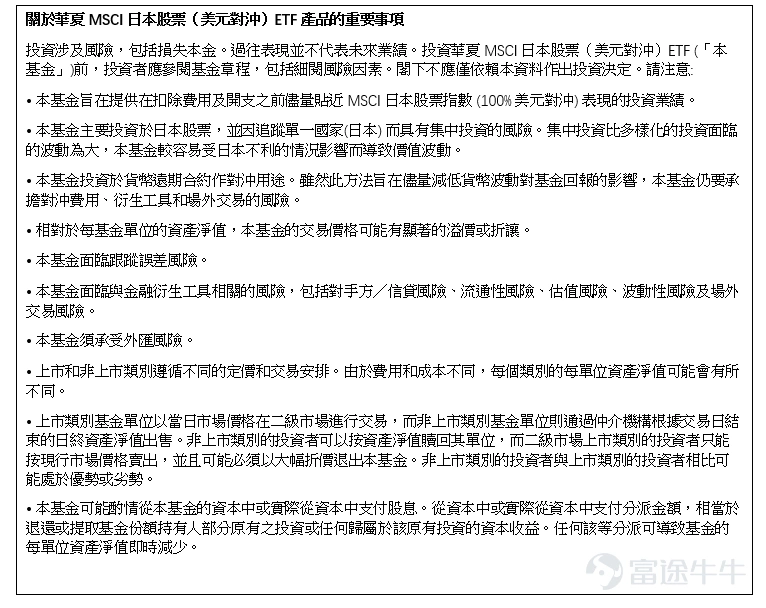
Investing involves risks, including the possible loss of principal. Any forecasts, outlooks, or opinions contained herein are for your reference only and are not guaranteed to materialize. The information provided reflects market conditions and our views as of the date of publication, which are subject to change without notice. This document is issued by China AMC (HK) Limited. This material has not been reviewed by the Securities and Futures Commission of Hong Kong. For full details and risk factors regarding the funds mentioned herein, please refer to our official website and the fund offering documents.
Risk Disclaimer: The above content only represents the author's view. It does not represent any position or investment advice of Futu. Futu makes no representation or warranty.Read more
Thumbs Up
2
41K Views
Report
Comments
Write a Comment...
2
1