NEBIUS and CoreWeave raise prices: Is the surge in AI computing demand here to stay?

In-Depth Analysis | CoreWeave and Nebius Both Surge Post-Earnings! What Is Really Driving Market Excitement?
Demand for AI computing power continues to accelerate.
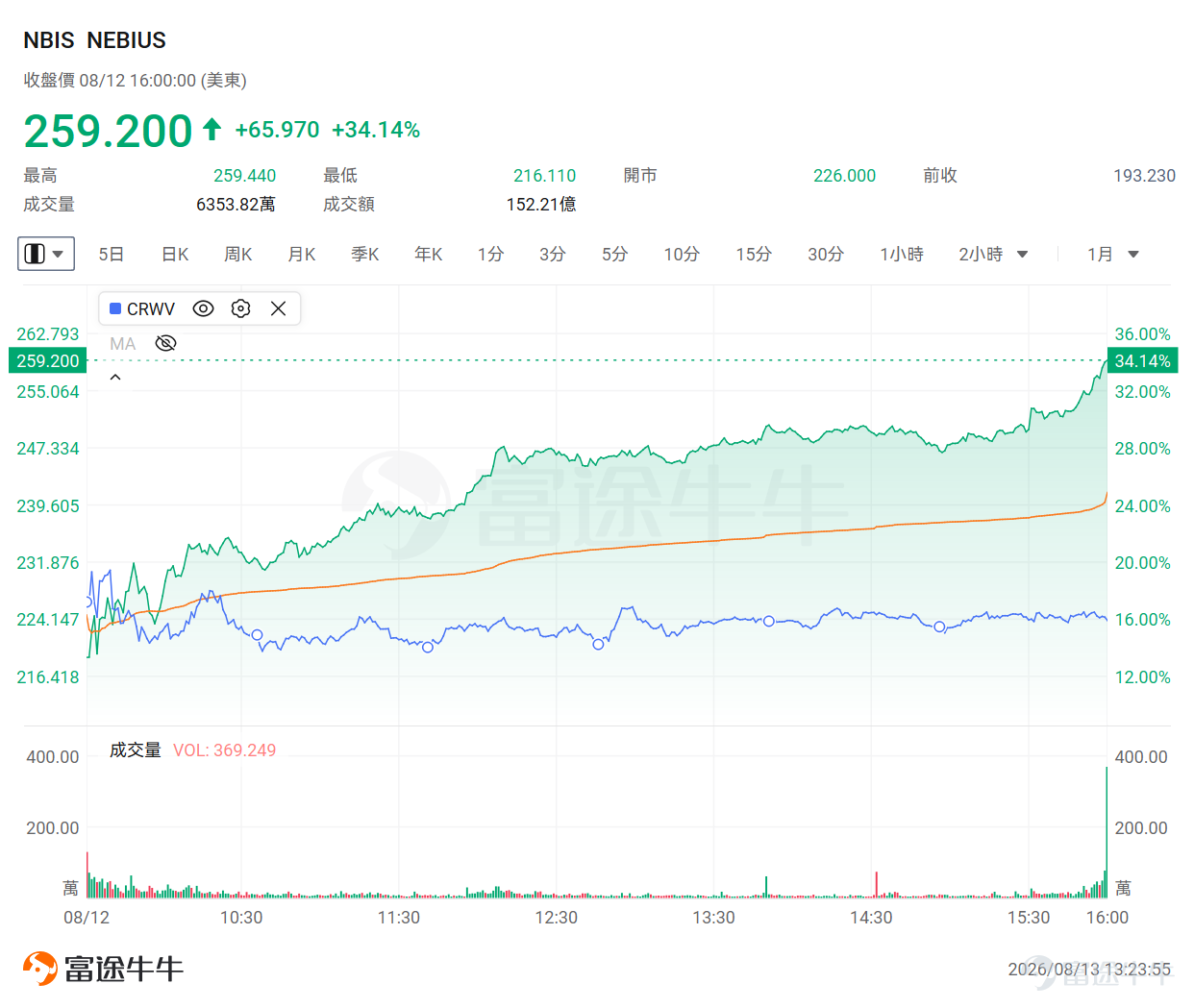
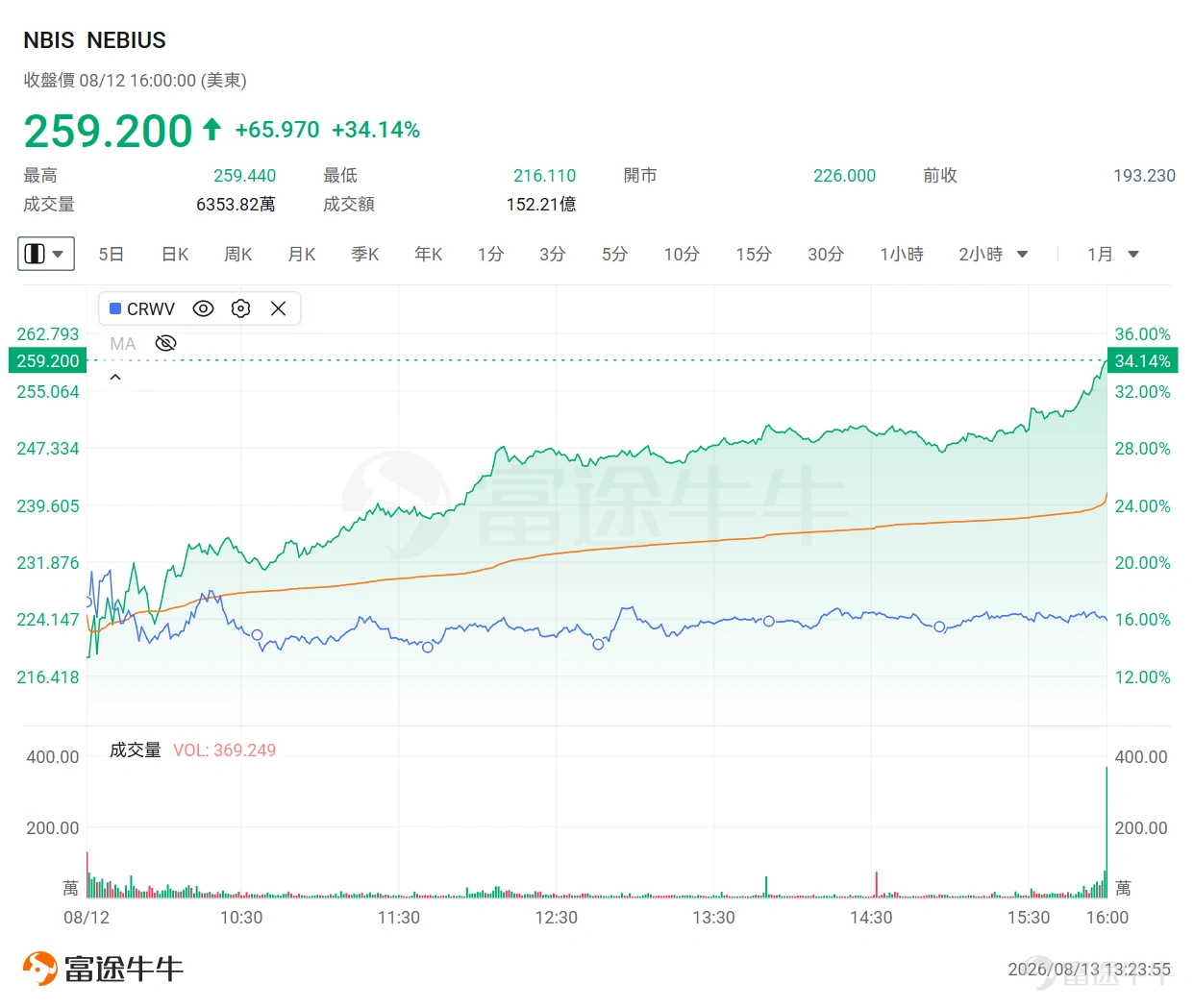
Yesterday, $CoreWeave (CRWV.US)$ and $NEBIUS (NBIS.US)$ [Company Names] sequentially announced their Q2 2026 earnings reports. Both companies saw significant stock price gains, driving a collective rally in the Neocloud and AI infrastructure sectors.
--
--
--
On the surface, the direct catalyst for both companies' rallies was earnings that exceeded expectations. However, focusing solely on revenue growth rates makes it easy to miss what the market is truly excited about.
Over the past few months, the market's primary concern regarding Neocloud has never been "whether there is demand for AI," but rather: Can such massive capital expenditures ultimately translate into sufficiently high revenue, profits, and cash returns? As computing supply increases and GPUs iterate rapidly, will leasing prices decline? Will older chips depreciate quickly? And will high debt levels and continuous financing needs erode shareholder returns?
CoreWeave and NEBIUS provided a set of answers in their latest earnings reports that are more important than revenue: Computing power remains in short supply, with prices not only holding steady but continuing to rise; return rates on newly signed contracts are improving; and customer prepayments along with asset-backed financing are beginning to cover a larger share of expansion costs.
More critically, a long-term A100 contract disclosed by CoreWeave has prompted the market to reassess the economic lifespan and residual value of GPUs.Some market participants believe this contract is challenging the traditional narrative that "AI chips have very short lifecycles."
Jensen Huang subsequently responded that the A100 can remain operational from 2020 through 2029. He emphasized that the NVIDIA computing platform is not just about chips; CUDA continuously enhances the practical value of different GPU generations like Ampere, Hopper, and Blackwell, allowing them to be flexibly allocated across various customers and workloads. This improves utilization, extends economic lifespan, and transforms AI computing power into a "rentable, durable, and financeable" productive asset.

These remarks hit the most sensitive variable in Neocloud valuations: Are GPUs merely electronic products that depreciate rapidly, or are they infrastructure assets capable of generating sustained rental income, retaining residual value, and securing long-term financing?
CoreWeave: The real beat wasn't revenue, but the simultaneous improvement in orders, pricing, and profit margins.
CoreWeave's Q2 revenue reached $2.575 billion, up 112% year-over-year; adjusted EBITDA hit $1.51 billion, with a margin of 59%.
However, what deserves more attention is that adjusted operating income surged from $21 million in Q1 to $128 million, significantly exceeding the upper end of the company's previous guidance. This indicates that the 'operating leverage' CoreWeave has repeatedly emphasized in recent quarters is finally starting to show up on the income statement.
Of course, the company still has a long way to go before achieving true profitability. CoreWeave reported a net loss of $626 million in Q2, with single-quarter net interest expenses as high as $640 million. Interest costs alone exceeded adjusted operating income, indicating that its high-leverage expansion model continues to bear a heavy financial burden.
But this time, the capital market is more focused on the future, and CoreWeave has sent strong signals on three key metrics.
First, the backlog of orders surpassed $100 billion, continuing to accelerate at the start of Q3.
As of the end of Q2, CoreWeave's revenue backlog reached $104.2 billion, up 246% year-over-year. Approximately 40% is expected to convert into revenue within the next 24 months, and about 79% within 48 months.
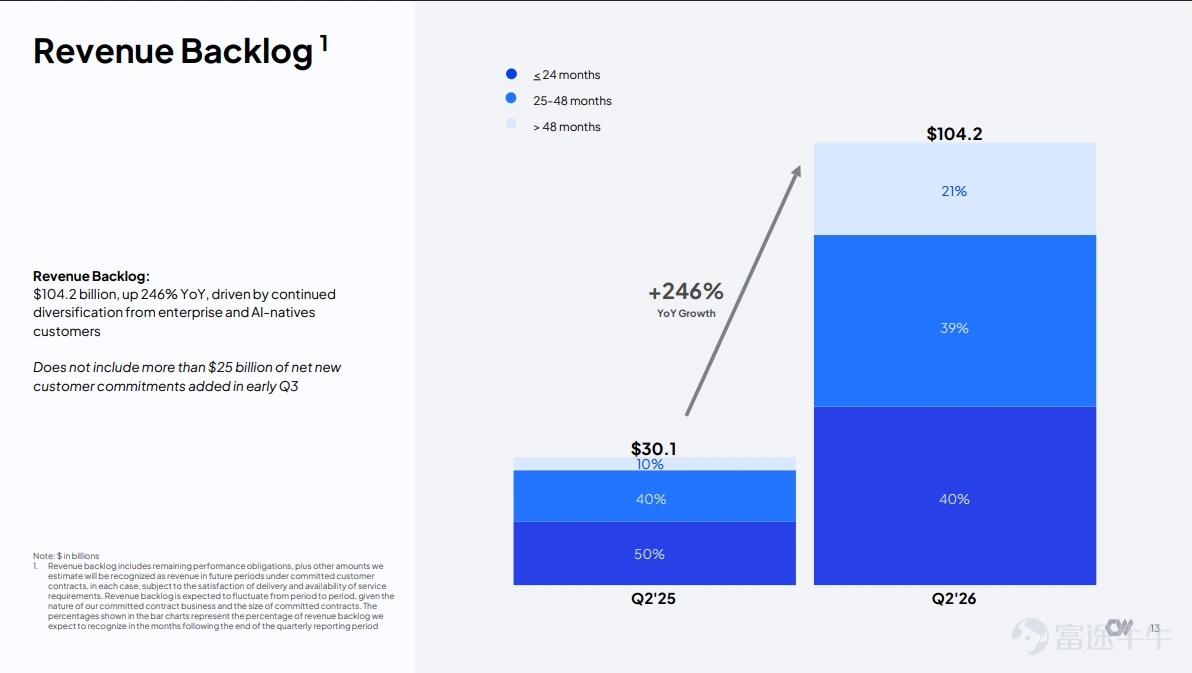
More importantly, this figure does not include over $25 billion in new customer commitments added at the beginning of Q3.
These two figures cannot be simply added together and equated to recognized revenue, but they at least demonstrate that even after the order scale surpassed $100 billion, customers' willingness to lock in future computing power has not waned.
This is also the first layer of logic behind the market's repricing of CoreWeave: previously, the concern was that massive capital expenditures would fail to find sufficient demand; now, the more realistic issue has become whether the company can convert orders into deliverable capacity quickly enough.
Secondly, near-term capacity is nearly sold out, and CoreWeave is beginning to gain pricing power.
In Q2, CoreWeave's active power capacity reached 1.5 GW, an increase of nearly 500 MW for the quarter, with approximately 300 MW coming online in June alone. Consequently, related revenue will continue to be recognized in Q3 and Q4. As of August 11, the company's contracted power capacity rose further to approximately 4.2 GW.
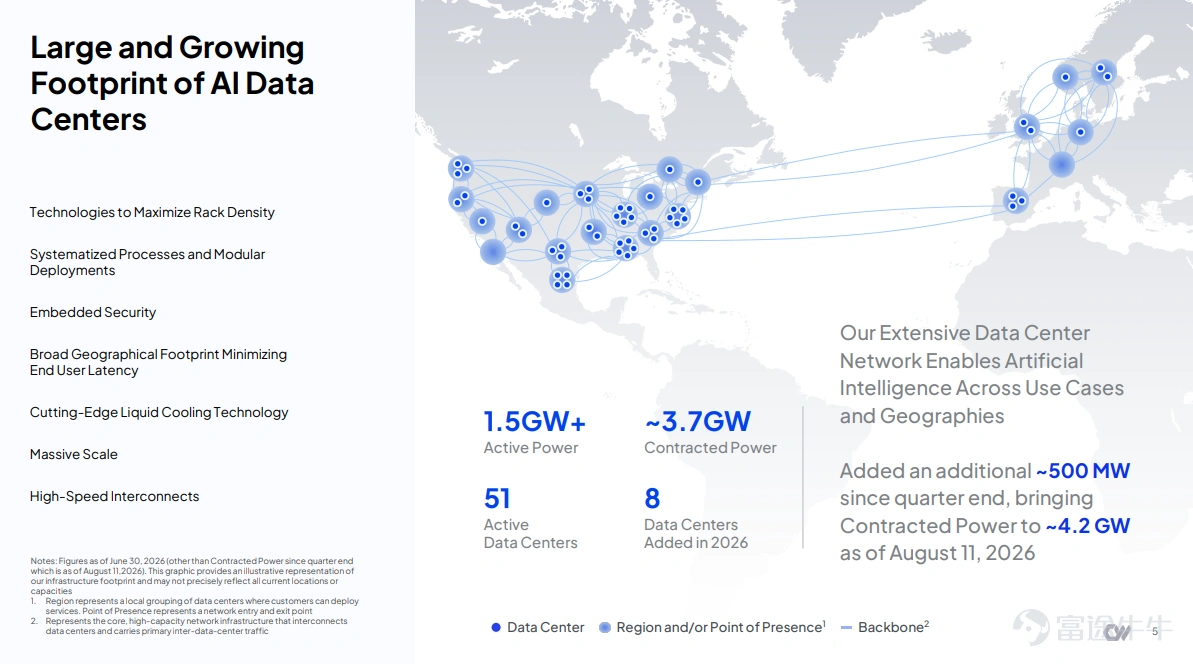
Management stated outright that recent available capacity has been "basically sold out," with multiple customers competing for every unit of GPU capacity that comes online. This supply-demand dynamic is now directly reflected in pricing and profit margins:
1) The expected profit margin contribution from new contracts signed in Q2 increased by 5 to 10 percentage points compared to previous quarters;
2) The company raised average prices across various SKUs by approximately 25% in July;
3) Prices and profit margins for Blackwell and Vera Rubin products hit new highs;
4) Even for the A100, launched in 2020, CoreWeave has secured contracts extending through 2029.
This last point is particularly important.
The market had previously been concerned that rapid GPU updates would cause older chips to depreciate significantly after contracts expired. However, the fact that the A100 can still be renewed at attractive prices indicates that previous-generation compute power has not lost its value due to the launch of new architectures. Training, inference, fine-tuning, and workloads with varying cost sensitivities are creating a more layered demand for compute power.
This not only extends the monetizable lifespan of GPU assets but also suggests that CoreWeave's project returns may not come solely from initial contracts; re-leasing after contract expiration is expected to generate additional revenue.
Third, full-year guidance has been raised, and high capital expenditure is no longer simply viewed as a negative.
CoreWeave expects Q3 revenue to reach $3.45 billion to $3.60 billion, and has raised its full-year 2026 revenue guidance to $12.4 billion to $13.2 billion. Adjusted operating profit guidance has increased to $960 million to $1.15 billion, while the annualized revenue run-rate guidance for year-end has been raised to $18.5 billion to $19.5 billion.Meanwhile, the company has raised its full-year capital expenditure guidance to $35 billion to $39 billion.
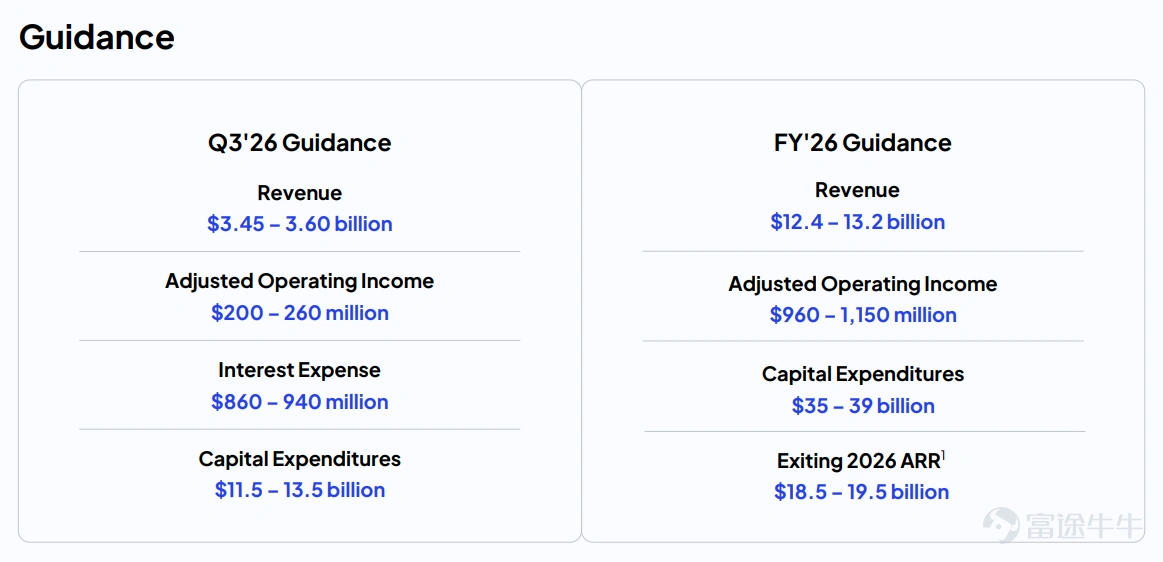
Under normal circumstances, higher capital expenditure implies greater financing pressure and depreciation burdens. However, the market did not simply interpret this as a negative this time, as three positive developments accompanied the increased spending: capacity has already been secured by customers in advance, contract prices continue to rise, and margins on new contracts have improved significantly.
Therefore, the market sees not just 'CoreWeave spending more money,' but rather 'the company having the opportunity to deploy more assets at higher returns.' The simultaneous upward revision of capital expenditure alongside orders, pricing, and margins is the most critical combination in this earnings report.
NEBIUS: Moving from a 'high-growth story' to 'unit economics validation'
If CoreWeave has proven its ability to continue securing orders at a hyperscale level,then the highlight of NEBIUS's latest earnings report is the proof that the economic value per megawatt of computing power is rising rapidly.
NEBIUS's group revenue in Q2 reached $582.3 million, up 454% year-over-year and 46% quarter-over-quarter. Among this, AI cloud business revenue reached $574.9 million, up 514% year-over-year, accounting for approximately 98% of total group revenue.
As of the end of June, the company's annualized revenue reached $3.0 billion, up 598% year-over-year and 56% from the end of Q1.More importantly, NEBIUS has seen a significant jump in profitability. The Group's adjusted EBITDA reached $236.2 million, with margins rising from 32% in Q1 to 41%; the Core AI Cloud business achieved an adjusted EBITDA of $285.7 million, with margins approaching 50%.
Compared to revenue growth, the market is even more excited about the following order data.
First, four billion-dollar mega-deals, with improvements in both pricing and payback periods.
NEBIUS signed four landmark AI Cloud contracts in Q2, each with an average total value exceeding $1 billion. The total value of new contracts signed in Q2 increased nearly fourfold quarter-over-quarter, while the value of contracts from new customers surged by more than nine times.
Not only did the order size increase, but contract prices also rose:
The annualized contract value for new Core AI Cloud contracts reached $20–25 million per megawatt,higher than the previous baseline of approximately $12 million;
Pricing for older-generation GPUs increased by over 30% compared to Q1;The company recently secured its first short-term compute contract, with target pricing reaching $40–50 million per megawatt; the transaction price for the inaugural Blackwell compute auction was 15% higher than the company's previous peak pricing.
Alongside the price increases,The project payback period has shortened from the previous 2–3 years to 1 year and 10 months.Approximately 70% of new contracts signed in Q2 include customer prepayments, which cover 50% to 60% of the related capital expenditures.
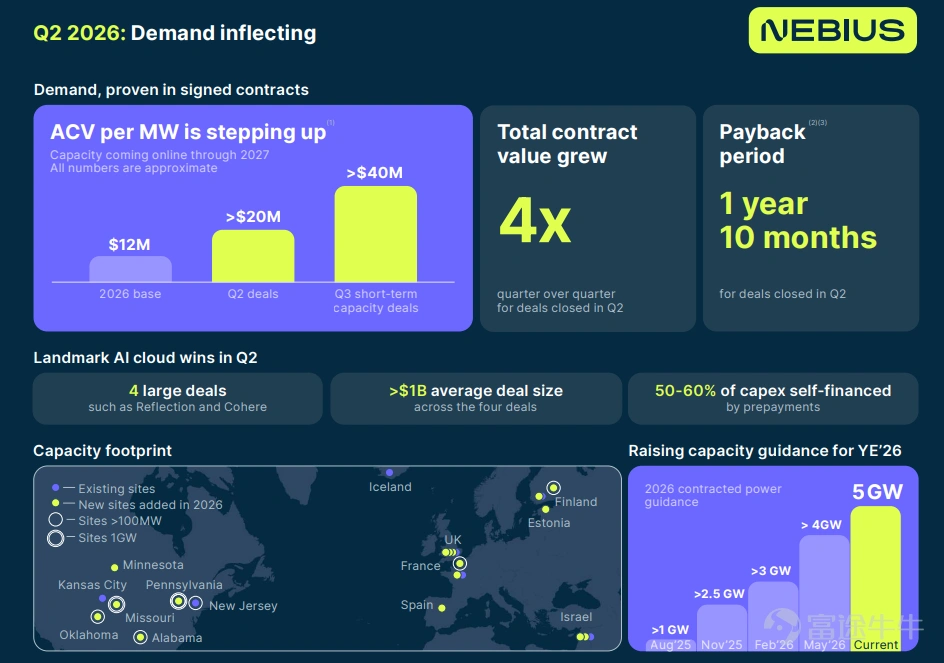
These figures effectively address the core skepticism surrounding the Neocloud model: When a company increases capital expenditures, is it forced to rely solely on equity financing and high-cost debt?
NEBIUS’s answer is that, at least in the current supply-constrained market, customers are willing to make substantial prepayments to secure scarce capacity, while higher leasing rates further shorten the investment payback period.
The company expects to receive over $9 billion in customer prepayments in 2026, which will directly reduce its need for external financing.
Second, the strongest signal: NEBIUS states it could already sell out its entire 2027 capacity.
NEBIUS management indicated that, if desired, the company could currently sell out all planned capacity for 2027 under existing contract terms.However, the company has chosen not to do so, deliberately retaining some capacity to capture higher prices from short-term contracts and spot demand.
The implication behind this statement is significant.It suggests that NEBIUS is not facing a challenge of 'how to find customers,' but rather deciding 'to whom to allocate scarce capacity, for what duration, and at what price.'When short-term compute pricing is significantly higher than medium- to long-term contract rates, retaining some available capacity inherently carries option value.
Meanwhile,Most new contracts signed in Q2 correspond to capacity coming online at the end of 2026, with revenue contributions primarily realized in 2027.
Therefore, the company’s decision to merely maintain its full-year 2026 guidance—revenue of $3.0–$3.4 billion, annualized revenue of $7.0–$9.0 billion by year-end, adjusted EBITDA margin of approximately 40%, and capital expenditures of $20–$25 billion—does not imply that new orders lack value; rather, their primary impact has yet to flow into this year’s revenue.
Third, the asset-light model opens a second path for expansion.
In addition to building and leasing data centers, NEBIUS has launched a new asset-light partnership model:Partners are responsible for funding the construction and operation of AI infrastructure, while NEBIUS provides complete cloud software, system architecture, and customer demand, generating high-margin revenue from upper-layer services.
This model aims to simultaneously address the two major constraints in the Neocloud industry: capital and capacity.
NEBIUS has raised its power capacity target for contracts signed by the end of 2026 from over 4 GW to 5 GW, and plans to deploy more than 1 GW of additional capacity annually starting in 2027.
Relying entirely on its own balance sheet would create immense financing pressure; however, combining customer prepayments, asset-backed financing, and the asset-light partnership model is expected to allow the company to accelerate capacity deployment while reducing capital占用 (capital tie-up).
In July, the company completed its first asset-backed financing transaction of approximately $775 million, priced at SOFR + 250 basis points, supported by cash flows from deployed GPUs and investment-grade customer contracts.
This indicates that AI computing power contracts are not only generating future revenue but are also emerging as financeable assets that can be separately underwritten by the capital markets.
Both companies saw significant gains simultaneously. What exactly is the market pricing in?
CoreWeave and NEBIUS differ in scale, customer structure, and financing models,but both earnings reports confirm the same trend: the AI computing market is currently facing a "shortage of deliverable supply" rather than a "lack of demand."More specifically, the market is trading on four key shifts:
First, demand is expanding beyond a few large model developers to a broader range of industries.
CoreWeave's new customers span industrial sectors, life sciences, finance, enterprise software, and the public sector; meanwhile, NEBIUS has secured AI startups, quantitative trading firms, and enterprise-level clients. Computing power demand is no longer driven solely by training a handful of frontier models.
Second, supply-demand tightness is translating into genuine pricing power.
Both companies disclosed higher contract prices, improved margins on new projects, and evidence that older-generation GPUs continue to command strong prices. This alleviates market concerns about the rapid commoditization of computing power and an impending collapse in leasing rates.
Third, returns on capital expenditure are improving.
CoreWeave's new contracts are expected to boost profit margins by 5 to 10 percentage points; the payback period for NEBIUS projects has shortened to 1 year and 10 months. The market is no longer just focusing on escalating capital expenditures but is also beginning to recognize the potentially higher returns on every dollar invested.
Fourth, a self-sustaining financing loop is taking shape.
Customer prepayments, asset-based financing secured by GPUs and contract cash flows, and an asset-light model funded by third parties are all reducing Neoclouds' reliance on corporate-level debt or equity issuance.
The combination of these four factors is the real reason behind the significant post-earnings surges for both CoreWeave and NEBIUS.
Risks have not disappeared; the next key focus is how orders will convert into cash flow.
These two earnings reports significantly strengthen the evidence that demand for AI computing power remains robust, but this does not mean the Neocloud model is risk-free.
CoreWeave still reported a net loss of $626 million in Q2, with interest expenses of $640 million indicating its heavy financial leverage; NEBIUS's quarterly capital expenditure reached approximately $5.7 billion, and it raised about $2.8 billion through an ATM offering in Q2, meaning the expansion process will continue to cause equity dilution.
Both companies face execution risks in the future regarding data center construction, power grid connectivity, GPU delivery, and customer concentration.
Furthermore, current high prices and high prepayment ratios are largely built on the shortage of computing power. Once industry supply scales up significantly in the future, it remains to be seen whether contract prices, renewal terms, and asset payback periods can be maintained.
Therefore, the market's focus in the next phase will shift from 'whether there are orders' to 'whether orders can be converted into capacity, revenue, and free cash flow on time.'
For CoreWeave, key metrics to watch include the conversion rate of backlog orders, adjusted operating margin, and interest burden. For NEBIUS, focus should be on whether production capacity comes online on schedule by 2027, whether customer prepayments can continue to cover a significant portion of capital expenditures, and whether its asset-light model can truly achieve scalability.
Overall, what truly shifted market expectations in this earnings report was not merely that both companies delivered another set of high-growth figures,but rather that they simultaneously demonstrated that new computing power can still be sold quickly at higher prices, the economic lifespan of older GPUs may exceed market expectations, and both customers and financial institutions are willing to provide upfront funding for these assets.
When order growth, pricing power, asset residual value, project returns, and financing capabilities improve simultaneously, capital expenditures cease to be just a risk and may instead become a leading indicator of future revenue and profit expansion.
This is the most noteworthy change behind the significant post-earnings surge seen in both CoreWeave and Nebius.
Risk Disclaimer: The above content only represents the author's view. It does not represent any position or investment advice of Futu. Futu makes no representation or warranty.Read more


Comment (1)
to post a comment
76
110