
English
Back
Open Account
创业最前线
wrote a column · Aug 13 07:01

"King of Clone Phones" Loses Ground in Handsets; MediaTek Bets $5 Billion on AI—Can It Evade the Siege by Qualcomm and Others?

Produced by | Frontline of Entrepreneurship Author | Yu Ying Editor | Wang Yajing Art Editor | Xing Jing Reviewed | Songwen From its days as the "King of Clones" dominating Huaqiangbei to becoming a global smartphone chip giant backed by China's Android ecosystem, MediaTek's rise over the past two decades has largely resonated with the expansion of China's consumer electronics industry. This chip major, which once secured its footing with mid-to-low-end smartphone chips, now stands at another crossroads of transformation. In the second quarter of 2026, MediaTek's consolidated revenue reached TWD 152.183 billion, a slight year-on-year increase of 1.2%; however, gross margin stood at only 46.2%, down 2.9 percentage points from the same period last year. Operating profit fell sharply by 22.2% year-on-year to TWD 22.868 billion, while net profit declined 12.3% year-on-year. Over a longer timeframe, total revenue for the first half of 2026 was TWD 301.333 billion, a slight year-on-year decline of 0.8%; net profit attributable to parent company shareholders was TWD 48.489 billion, with the year-on-year drop widening to 15.19%. More notably, its smartphone business lost its position as the largest revenue contributor for the first time. Under mounting pressure, the company is attempting to bet on AI chips to fill the gap left by the declining smartphone segment. However, in this new赛道 (track), former rival Qualcomm has also announced its entry, while international chip giants and domestic self-developed chip companies are all crowding in, making industry competition unprecedentedly fierce. MediaTek's path of "transformation" remains fraught with challenges. 1. Smartphone Business...
Produced by | Frontline of Entrepreneurship
Author | Yu Ying
Editor | Wang Yajing
Art Editor | Xing Jing
Reviewed | Songwen
From the once-dominant "King of Counterfeits" sweeping through Huaqiangbei to a global mobile chip giant backed by China's Android ecosystem, MediaTek's rise over the past two decades has largely resonated with the expansion of China's consumer electronics industry.
This chip major, which initially gained its footing with mid-to-low-end mobile phone chips, now stands at another crossroads of transformation.
In the second quarter of 2026, MediaTek's consolidated revenue reached NT$152.183 billion, a slight year-on-year increase of 1.2%; however, gross margin was only 46.2%, down 2.9 percentage points from the same period last year. Operating profit fell sharply by 22.2% year-on-year to NT$22.868 billion, while net profit declined by 12.3% year-on-year.
Over a longer timeframe, the company's total revenue for the first half of 2026 was NT$301.333 billion, a slight year-on-year decline of 0.8%; net profit attributable to shareholders was NT$48.489 billion, with the year-on-year drop widening to 15.19%.
More notably, its mobile phone business lost its position as the largest revenue contributor for the first time. Under mounting pressure, the company is attempting to bet on AI chips to fill the gap left by the decline in its mobile business.
However, in this new arena, former rival Qualcomm has also announced its entry, while international chip giants and domestic self-developed chip companies are all crowding in, making industry competition unprecedentedly fierce.
MediaTek's path of "transformation" remains fraught with challenges.
1. Declining share of mobile phone business; struggling with rising memory prices
MediaTek's growth history has resonated with the development of China's mobile phone market, to the extent that they can be described as "interdependent."
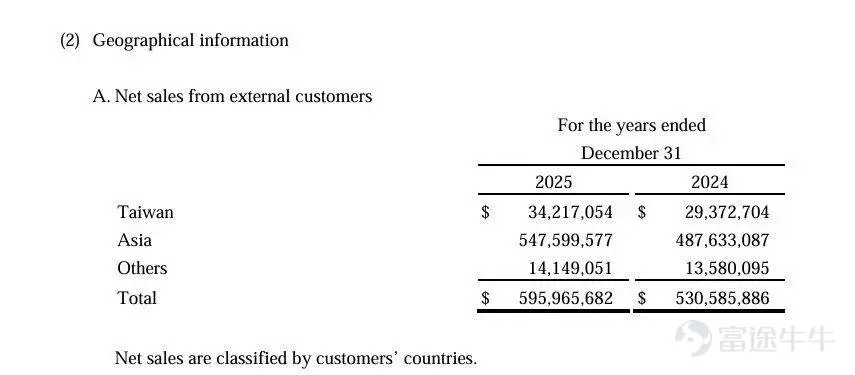
In the geographic breakdown of customers in its financial reports, MediaTek divides the market into three categories: Taiwan, Asia, and Others. In 2025, revenue from the Asian market accounted for as high as 91.88%, with the mainland China market contributing the majority of this share.
Produced by | Frontline of Entrepreneurship Author | Yu Ying Editor | Wang Yajing Art Editor | Xing Jing Reviewed | Songwen From its days as the "King of Clones" dominating Huaqiangbei to becoming a global smartphone chip giant backed by China's Android ecosystem, MediaTek's rise over the past two decades has largely resonated with the expansion of China's consumer electronics industry. This chip major, which once secured its footing with mid-to-low-end smartphone chips, now stands at another crossroads of transformation. In the second quarter of 2026, MediaTek's consolidated revenue reached TWD 152.183 billion, a slight year-on-year increase of 1.2%; however, gross margin stood at only 46.2%, down 2.9 percentage points from the same period last year. Operating profit fell sharply by 22.2% year-on-year to TWD 22.868 billion, while net profit declined 12.3% year-on-year. Over a longer timeframe, total revenue for the first half of 2026 was TWD 301.333 billion, a slight year-on-year decline of 0.8%; net profit attributable to parent company shareholders was TWD 48.489 billion, with the year-on-year drop widening to 15.19%. More notably, its smartphone business lost its position as the largest revenue contributor for the first time. Under mounting pressure, the company is attempting to bet on AI chips to fill the gap left by the declining smartphone segment. However, in this new赛道 (track), former rival Qualcomm has also announced its entry, while international chip giants and domestic self-developed chip companies are all crowding in, making industry competition unprecedentedly fierce. MediaTek's path of "transformation" remains fraught with challenges. 1. Smartphone Business...
(Chart / MediaTek 2025 Financial Report)
This deep integration began with a strategic pivot thirty years ago.
Founded in 1997, MediaTek initially focused on optical drive chip design before officially entering the mobile phone market in 2003. At that time, tri-SIM standby phones were proliferating in Shenzhen's Huaqiangbei electronics hub. By offering 'turnkey smartphone solutions,' MediaTek significantly lowered the technical and capital barriers to entry for handset manufacturing, rapidly capturing this wild-growth market.
In the smartphone era, MediaTek continued to anchor its main battlefield in the mid-to-low-end market. It first partnered with brands such as OPPO, vivo, Gionee, and Coolpad to promote affordable 3G smartphone chips, and later solidified its position thanks to the blockbuster success of the 799-yuan Redmi phone.
Supported by the massive shipment volumes of mid-to-low-end models in the Chinese market, MediaTek once became the world's largest mobile chip vendor by shipment volume.
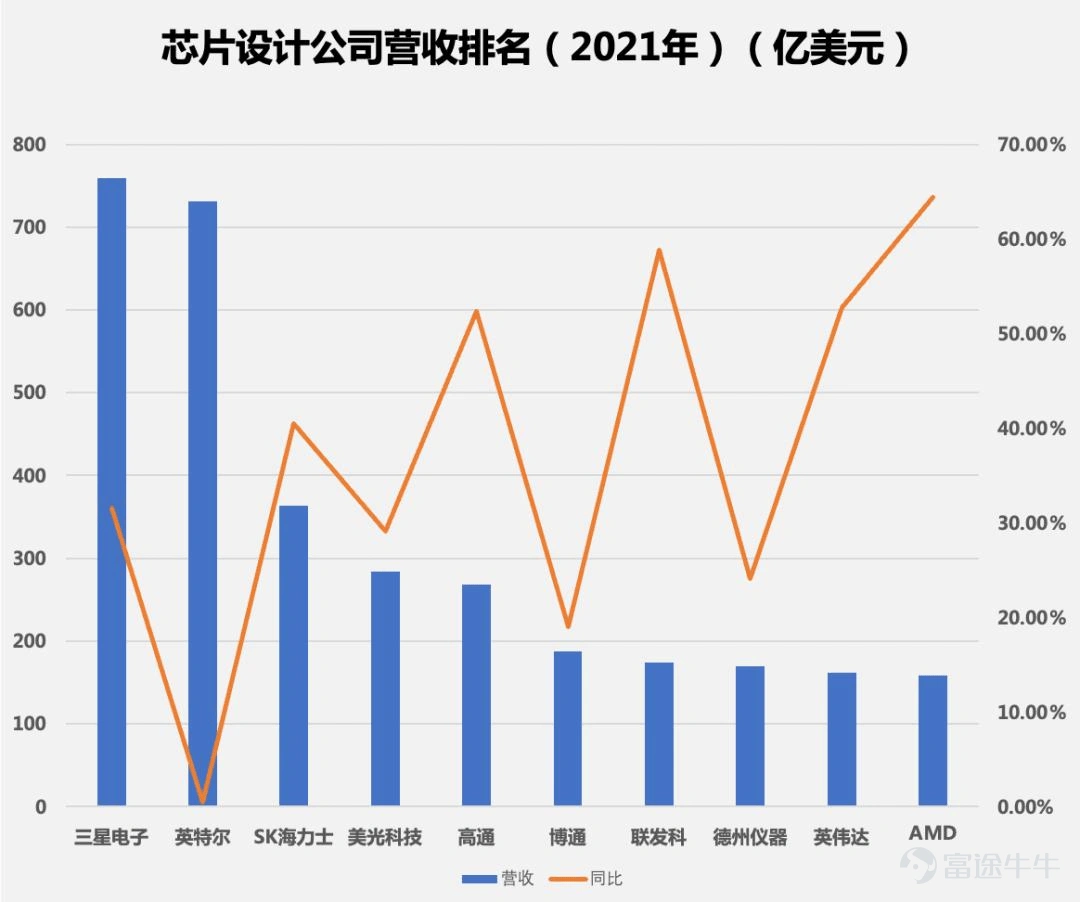
Data from Yuanchuan Institute shows that, based on 2021 revenue, it even surpassed NVIDIA and AMD, ranking as the seventh-largest chip design company globally.
Produced by | Frontline of Entrepreneurship Author | Yu Ying Editor | Wang Yajing Art Editor | Xing Jing Reviewed | Songwen From its days as the "King of Clones" dominating Huaqiangbei to becoming a global smartphone chip giant backed by China's Android ecosystem, MediaTek's rise over the past two decades has largely resonated with the expansion of China's consumer electronics industry. This chip major, which once secured its footing with mid-to-low-end smartphone chips, now stands at another crossroads of transformation. In the second quarter of 2026, MediaTek's consolidated revenue reached TWD 152.183 billion, a slight year-on-year increase of 1.2%; however, gross margin stood at only 46.2%, down 2.9 percentage points from the same period last year. Operating profit fell sharply by 22.2% year-on-year to TWD 22.868 billion, while net profit declined 12.3% year-on-year. Over a longer timeframe, total revenue for the first half of 2026 was TWD 301.333 billion, a slight year-on-year decline of 0.8%; net profit attributable to parent company shareholders was TWD 48.489 billion, with the year-on-year drop widening to 15.19%. More notably, its smartphone business lost its position as the largest revenue contributor for the first time. Under mounting pressure, the company is attempting to bet on AI chips to fill the gap left by the declining smartphone segment. However, in this new赛道 (track), former rival Qualcomm has also announced its entry, while international chip giants and domestic self-developed chip companies are all crowding in, making industry competition unprecedentedly fierce. MediaTek's path of "transformation" remains fraught with challenges. 1. Smartphone Business...
(Chart / Yuanchuan Institute)
Additionally, according to China Securities Journal, in the fourth quarter of 2023, MediaTek's mobile business revenue surged 53% quarter-on-quarter, accounting for 64% of total revenue, firmly establishing it as the company's core business.
However, what made them successful also led to their decline. The mobile business, which once secured its industry-leading position, is now the primary cause of its performance slump.
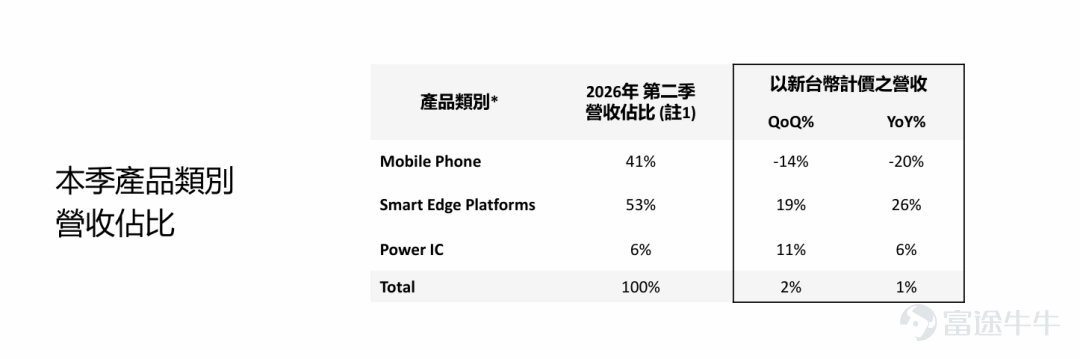
MediaTek's financial report shows that in the second quarter of 2026, the company's overall revenue increased slightly by about 1% year-on-year. Among this, the mobile business accounted for only 41% of total revenue, dropping sharply by 20% year-on-year and facing significant pressure.
Notably, this marks the first time in MediaTek's history that its smartphone business has lost its position as the company's largest revenue contributor.

Produced by | Frontline of Entrepreneurship Author | Yu Ying Editor | Wang Yajing Art Editor | Xing Jing Reviewed | Songwen From its days as the "King of Clones" dominating Huaqiangbei to becoming a global smartphone chip giant backed by China's Android ecosystem, MediaTek's rise over the past two decades has largely resonated with the expansion of China's consumer electronics industry. This chip major, which once secured its footing with mid-to-low-end smartphone chips, now stands at another crossroads of transformation. In the second quarter of 2026, MediaTek's consolidated revenue reached TWD 152.183 billion, a slight year-on-year increase of 1.2%; however, gross margin stood at only 46.2%, down 2.9 percentage points from the same period last year. Operating profit fell sharply by 22.2% year-on-year to TWD 22.868 billion, while net profit declined 12.3% year-on-year. Over a longer timeframe, total revenue for the first half of 2026 was TWD 301.333 billion, a slight year-on-year decline of 0.8%; net profit attributable to parent company shareholders was TWD 48.489 billion, with the year-on-year drop widening to 15.19%. More notably, its smartphone business lost its position as the largest revenue contributor for the first time. Under mounting pressure, the company is attempting to bet on AI chips to fill the gap left by the declining smartphone segment. However, in this new赛道 (track), former rival Qualcomm has also announced its entry, while international chip giants and domestic self-developed chip companies are all crowding in, making industry competition unprecedentedly fierce. MediaTek's path of "transformation" remains fraught with challenges. 1. Smartphone Business...
(Image source: MediaTek earnings briefing materials)
So, why has the company's smartphone business suddenly stalled?
In fact, this is not an issue unique to MediaTek, but rather a contraction faced by the entire industry.
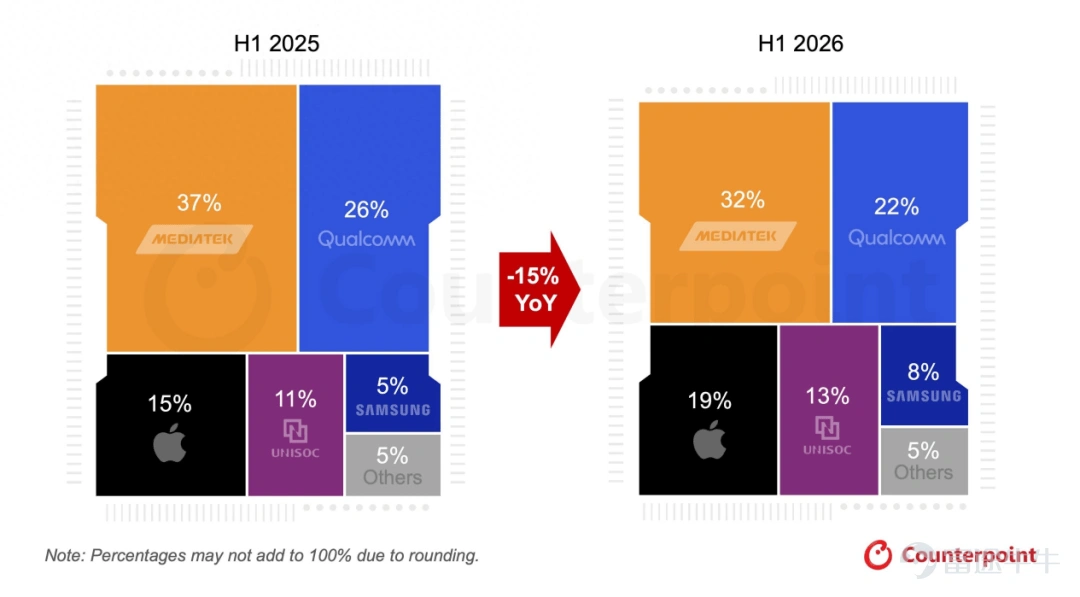
According to the H1 2026 Smartphone SoC Market Report released by research firm Counterpoint, global shipments of main smartphone chips fell 15% year-over-year in the first half of the year. Shipments from the two core suppliers, Qualcomm and MediaTek, both declined by more than 25% year-over-year. The primary trigger for this industry-wide contraction was the surge in memory chip prices.
Produced by | Frontline of Entrepreneurship Author | Yu Ying Editor | Wang Yajing Art Editor | Xing Jing Reviewed | Songwen From its days as the "King of Clones" dominating Huaqiangbei to becoming a global smartphone chip giant backed by China's Android ecosystem, MediaTek's rise over the past two decades has largely resonated with the expansion of China's consumer electronics industry. This chip major, which once secured its footing with mid-to-low-end smartphone chips, now stands at another crossroads of transformation. In the second quarter of 2026, MediaTek's consolidated revenue reached TWD 152.183 billion, a slight year-on-year increase of 1.2%; however, gross margin stood at only 46.2%, down 2.9 percentage points from the same period last year. Operating profit fell sharply by 22.2% year-on-year to TWD 22.868 billion, while net profit declined 12.3% year-on-year. Over a longer timeframe, total revenue for the first half of 2026 was TWD 301.333 billion, a slight year-on-year decline of 0.8%; net profit attributable to parent company shareholders was TWD 48.489 billion, with the year-on-year drop widening to 15.19%. More notably, its smartphone business lost its position as the largest revenue contributor for the first time. Under mounting pressure, the company is attempting to bet on AI chips to fill the gap left by the declining smartphone segment. However, in this new赛道 (track), former rival Qualcomm has also announced its entry, while international chip giants and domestic self-developed chip companies are all crowding in, making industry competition unprecedentedly fierce. MediaTek's path of "transformation" remains fraught with challenges. 1. Smartphone Business...
(Image source: Counterpoint)
According to media reports from TMTPost, memory chip costs have risen by nearly 300% compared to the same period last year, with their share of total mobile phone bill of materials (BOM) costs soaring from 10-15% to over 30%.
Facing skyrocketing upstream costs, Qualcomm and MediaTek announced price hikes in June and July respectively, attempting to pass supply chain pressures down to downstream smartphone manufacturers. However, smartphone brands have found it difficult to fully pass these costs on to end consumers.
This "wave of price increases" has had a particularly pronounced impact on MediaTek, whose core market is concentrated in the entry-level 5G chip segment.
As reported by PConline Pacific Technology, mid-to-low-end smartphone manufacturers, already operating on thin margins, were unable to bear the pressure of rising chip prices. They consequently cut orders for 5G chips and delayed new product launches, with some low-end product lines even reverting to 4G solutions. This significantly reduced demand for entry-level chips, directly dragging down MediaTek's overall shipment performance.
The actions of smartphone manufacturers also confirm this predicament. Since mid-March this year, leading handset makers such as OPPO, vivo, and Honor have successively raised prices for their mid-to-low-end devices. However, subsequent sales data indicate that Android vendors have generally fallen into a vicious cycle where price hikes lead to volume losses.
According to IDC data, smartphone shipments in the Chinese market reached approximately 66.01 million units in the second quarter of 2026, a year-on-year decline of 4.3%, marking the fifth consecutive quarter of annualized decreases.
The chill in the end-market has transmitted up the supply chain, ultimately impacting the financials of chip suppliers.
Although MediaTek stated that it is offsetting the decline in mobile chip sales through emerging businesses such as intelligent edge computing, the current growth is insufficient to fully counteract profit pressures. In the first half of 2026, the company's net profit attributable to shareholders was NT$48.489 billion, a year-on-year decrease of 15.19%.
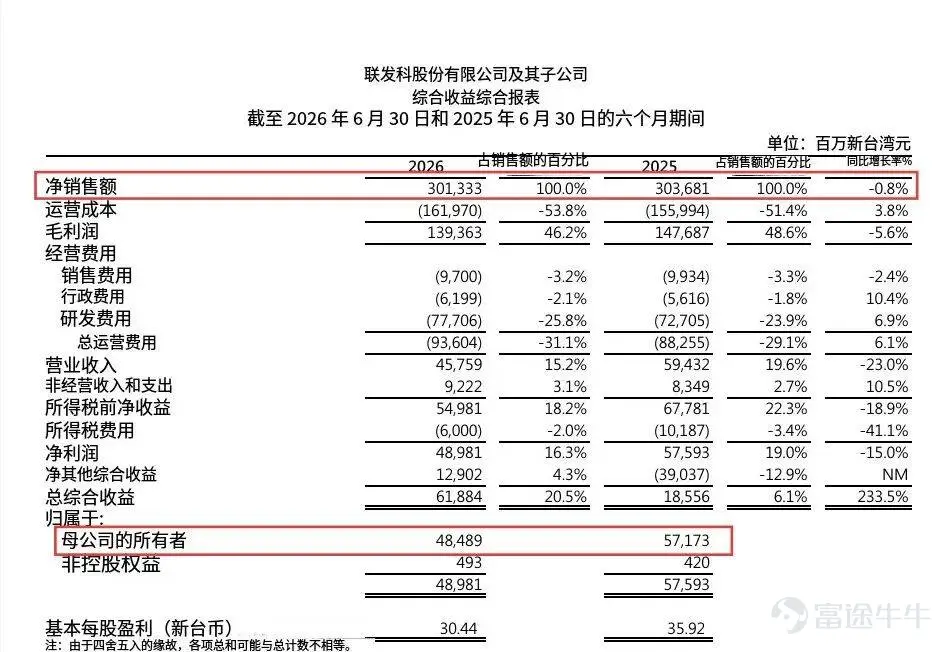
Produced by | Frontline of Entrepreneurship Author | Yu Ying Editor | Wang Yajing Art Editor | Xing Jing Reviewed | Songwen From its days as the "King of Clones" dominating Huaqiangbei to becoming a global smartphone chip giant backed by China's Android ecosystem, MediaTek's rise over the past two decades has largely resonated with the expansion of China's consumer electronics industry. This chip major, which once secured its footing with mid-to-low-end smartphone chips, now stands at another crossroads of transformation. In the second quarter of 2026, MediaTek's consolidated revenue reached TWD 152.183 billion, a slight year-on-year increase of 1.2%; however, gross margin stood at only 46.2%, down 2.9 percentage points from the same period last year. Operating profit fell sharply by 22.2% year-on-year to TWD 22.868 billion, while net profit declined 12.3% year-on-year. Over a longer timeframe, total revenue for the first half of 2026 was TWD 301.333 billion, a slight year-on-year decline of 0.8%; net profit attributable to parent company shareholders was TWD 48.489 billion, with the year-on-year drop widening to 15.19%. More notably, its smartphone business lost its position as the largest revenue contributor for the first time. Under mounting pressure, the company is attempting to bet on AI chips to fill the gap left by the declining smartphone segment. However, in this new赛道 (track), former rival Qualcomm has also announced its entry, while international chip giants and domestic self-developed chip companies are all crowding in, making industry competition unprecedentedly fierce. MediaTek's path of "transformation" remains fraught with challenges. 1. Smartphone Business...
(Chart / MediaTek Q2 Report)
In the second quarter of 2026, the company's operating revenue increased by 1.2% year-on-year, while operating profit plummeted by 22.2%. The comprehensive gross margin stood at 46.2%, down 2.9 percentage points year-on-year. While revenue maintained growth, profit margins continued to narrow.
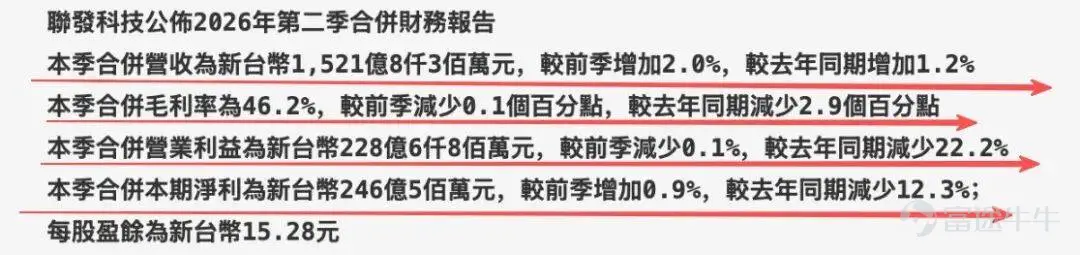
Produced by | Frontline of Entrepreneurship Author | Yu Ying Editor | Wang Yajing Art Editor | Xing Jing Reviewed | Songwen From its days as the "King of Clones" dominating Huaqiangbei to becoming a global smartphone chip giant backed by China's Android ecosystem, MediaTek's rise over the past two decades has largely resonated with the expansion of China's consumer electronics industry. This chip major, which once secured its footing with mid-to-low-end smartphone chips, now stands at another crossroads of transformation. In the second quarter of 2026, MediaTek's consolidated revenue reached TWD 152.183 billion, a slight year-on-year increase of 1.2%; however, gross margin stood at only 46.2%, down 2.9 percentage points from the same period last year. Operating profit fell sharply by 22.2% year-on-year to TWD 22.868 billion, while net profit declined 12.3% year-on-year. Over a longer timeframe, total revenue for the first half of 2026 was TWD 301.333 billion, a slight year-on-year decline of 0.8%; net profit attributable to parent company shareholders was TWD 48.489 billion, with the year-on-year drop widening to 15.19%. More notably, its smartphone business lost its position as the largest revenue contributor for the first time. Under mounting pressure, the company is attempting to bet on AI chips to fill the gap left by the declining smartphone segment. However, in this new赛道 (track), former rival Qualcomm has also announced its entry, while international chip giants and domestic self-developed chip companies are all crowding in, making industry competition unprecedentedly fierce. MediaTek's path of "transformation" remains fraught with challenges. 1. Smartphone Business...
(Chart / MediaTek Announcement)
More concerning than the decline in profits is the risk associated with inventory levels.
Financial reports show that as of June 30, 2026, MediaTek's inventory reached NT$98.421 billion, a year-on-year increase of 77.4%, with the inventory growth rate far exceeding the revenue growth rate.
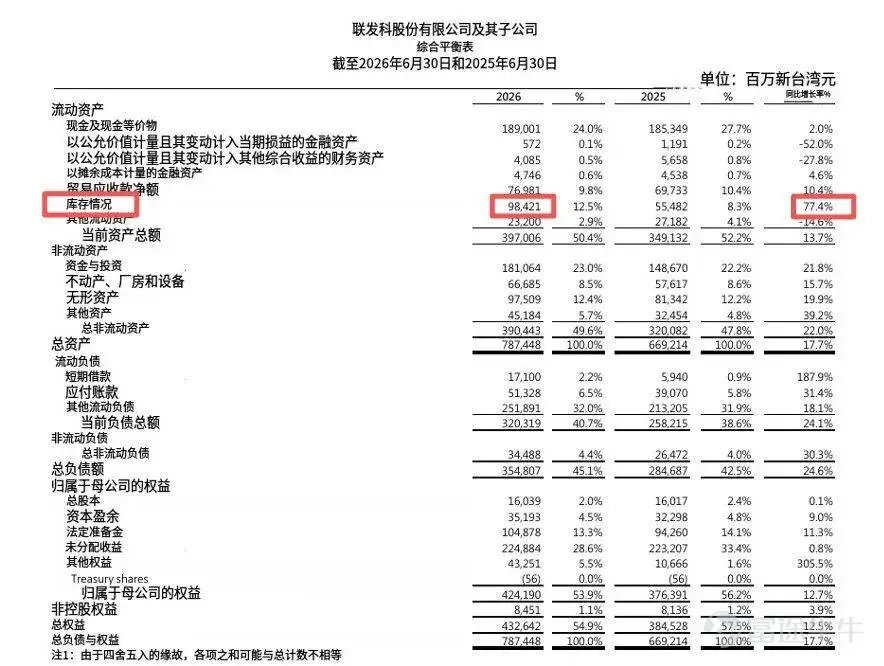
Produced by | Frontline of Entrepreneurship Author | Yu Ying Editor | Wang Yajing Art Editor | Xing Jing Reviewed | Songwen From its days as the "King of Clones" dominating Huaqiangbei to becoming a global smartphone chip giant backed by China's Android ecosystem, MediaTek's rise over the past two decades has largely resonated with the expansion of China's consumer electronics industry. This chip major, which once secured its footing with mid-to-low-end smartphone chips, now stands at another crossroads of transformation. In the second quarter of 2026, MediaTek's consolidated revenue reached TWD 152.183 billion, a slight year-on-year increase of 1.2%; however, gross margin stood at only 46.2%, down 2.9 percentage points from the same period last year. Operating profit fell sharply by 22.2% year-on-year to TWD 22.868 billion, while net profit declined 12.3% year-on-year. Over a longer timeframe, total revenue for the first half of 2026 was TWD 301.333 billion, a slight year-on-year decline of 0.8%; net profit attributable to parent company shareholders was TWD 48.489 billion, with the year-on-year drop widening to 15.19%. More notably, its smartphone business lost its position as the largest revenue contributor for the first time. Under mounting pressure, the company is attempting to bet on AI chips to fill the gap left by the declining smartphone segment. However, in this new赛道 (track), former rival Qualcomm has also announced its entry, while international chip giants and domestic self-developed chip companies are all crowding in, making industry competition unprecedentedly fierce. MediaTek's path of "transformation" remains fraught with challenges. 1. Smartphone Business...
(Chart / MediaTek Q2 Report)
Given the semiconductor industry's characteristics of short chip technology iteration cycles, rapid inventory depreciation, and steep price declines, the value of older model inventories decays quickly over time.
If the recovery in consumer electronics demand in the second half of the year falls short of expectations, or if market acceptance of new products is lower than anticipated, the company may face significant inventory impairment charges, further eroding current-period profits.
2. Betting on AI business with a planned investment of $5 billion
As its smartphone business continues to face pressure, MediaTek is also seeking new growth curves.
In the second quarter of 2026, revenue from MediaTek's smart device platform business accounted for 53% of total revenue, representing a substantial year-on-year increase of 26%.This business has officially surpassed the smartphone segment to become the company's largest source of revenue.

Produced by | Frontline of Entrepreneurship Author | Yu Ying Editor | Wang Yajing Art Editor | Xing Jing Reviewed | Songwen From its days as the "King of Clones" dominating Huaqiangbei to becoming a global smartphone chip giant backed by China's Android ecosystem, MediaTek's rise over the past two decades has largely resonated with the expansion of China's consumer electronics industry. This chip major, which once secured its footing with mid-to-low-end smartphone chips, now stands at another crossroads of transformation. In the second quarter of 2026, MediaTek's consolidated revenue reached TWD 152.183 billion, a slight year-on-year increase of 1.2%; however, gross margin stood at only 46.2%, down 2.9 percentage points from the same period last year. Operating profit fell sharply by 22.2% year-on-year to TWD 22.868 billion, while net profit declined 12.3% year-on-year. Over a longer timeframe, total revenue for the first half of 2026 was TWD 301.333 billion, a slight year-on-year decline of 0.8%; net profit attributable to parent company shareholders was TWD 48.489 billion, with the year-on-year drop widening to 15.19%. More notably, its smartphone business lost its position as the largest revenue contributor for the first time. Under mounting pressure, the company is attempting to bet on AI chips to fill the gap left by the declining smartphone segment. However, in this new赛道 (track), former rival Qualcomm has also announced its entry, while international chip giants and domestic self-developed chip companies are all crowding in, making industry competition unprecedentedly fierce. MediaTek's path of "transformation" remains fraught with challenges. 1. Smartphone Business...
(Chart / MediaTek Q2 Report)
"Entrepreneurship Frontline" notes that this business covers an extremely wide landscape, ranging from home broadband and networking chips, smart TV and audio-video processing chips, to tablet and Chromebook computing platforms, wearable devices and smart home IoT chips, as well as automotive electronics and in-vehicle communication chips, and customized AI accelerator ASIC services for data centers and cloud service providers.
From this perspective, the essence of this business is to provide comprehensive edge computing and connectivity solutions for customers in the consumer electronics, industrial, automotive, and cloud computing sectors.
MediaTek appears significantly more confident about the growth of this segment. In its performance outlook, the company mentioned that growth in the smart device platform business in the third quarter of 2026 is expected to offset the negative impact of the decline in its smartphone business.
The core source of this confidence may well be the company's AI chips, which are poised to enter mass production.
As disclosed by the company during its Q2 2026 earnings call, the first AI accelerator ASIC, developed in collaboration with a major US cloud service provider, is scheduled to commence production in the fourth quarter of this year.
To ensure the smooth progression of mass production,MediaTek's Board of Directors has approved a flexible financing budget of up to $5 billion to secure supply chain capacity in advance if necessary.
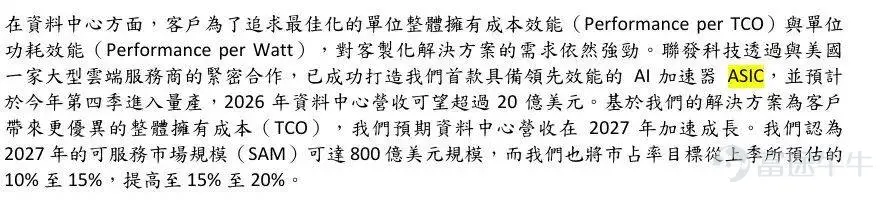
Produced by | Frontline of Entrepreneurship Author | Yu Ying Editor | Wang Yajing Art Editor | Xing Jing Reviewed | Songwen From its days as the "King of Clones" dominating Huaqiangbei to becoming a global smartphone chip giant backed by China's Android ecosystem, MediaTek's rise over the past two decades has largely resonated with the expansion of China's consumer electronics industry. This chip major, which once secured its footing with mid-to-low-end smartphone chips, now stands at another crossroads of transformation. In the second quarter of 2026, MediaTek's consolidated revenue reached TWD 152.183 billion, a slight year-on-year increase of 1.2%; however, gross margin stood at only 46.2%, down 2.9 percentage points from the same period last year. Operating profit fell sharply by 22.2% year-on-year to TWD 22.868 billion, while net profit declined 12.3% year-on-year. Over a longer timeframe, total revenue for the first half of 2026 was TWD 301.333 billion, a slight year-on-year decline of 0.8%; net profit attributable to parent company shareholders was TWD 48.489 billion, with the year-on-year drop widening to 15.19%. More notably, its smartphone business lost its position as the largest revenue contributor for the first time. Under mounting pressure, the company is attempting to bet on AI chips to fill the gap left by the declining smartphone segment. However, in this new赛道 (track), former rival Qualcomm has also announced its entry, while international chip giants and domestic self-developed chip companies are all crowding in, making industry competition unprecedentedly fierce. MediaTek's path of "transformation" remains fraught with challenges. 1. Smartphone Business...
(Image / MediaTek Earnings Briefing)
Such substantial investment underscores MediaTek's determination to bet on the AI computing power赛道 (sector). So, what exactly is an AI ASIC, and why has it become the central lever for MediaTek's transformation?
In simple terms, AI ASIC stands for Artificial Intelligence Application-Specific Integrated Circuit. It is a specialized chip with hardware-level custom optimizations designed specifically for deep learning training and inference tasks.
By way of analogy, if the well-known general-purpose GPUs (such as NVIDIA's H series) are the "all-rounders" of the computing world, retaining all control units required for general-purpose computing and graphics rendering, they can adapt to almost all AI algorithms and application scenarios. However, the trade-off is that a significant amount of hardware resources remains idle during specialized AI computations, meaning energy efficiency is not optimal.
In contrast, AI ASICs are akin to "specialist craftsmen" deeply focused on a single domain. They retain only the hardware units essential for core AI tasks such as matrix and tensor operations, eliminating all redundant modules. They can even hardwire mainstream AI operators, such as the Transformer attention mechanism, directly into the circuitry, ensuring that nearly all hardware resources are dedicated to the target AI tasks.
For cloud service providers, custom AI ASICs allow them to tailor chips with superior power efficiency and lower costs based on their specific model characteristics, traffic structures, and deployment scenarios. This represents a critical pathway for cost reduction and efficiency improvement during the large-scale implementation of AI computing power.
From an industry trend perspective, the AI ASIC sector offers immense growth potential. According to Frost & Sullivan estimates, the scale of China's chip customization service industry will reach approximately RMB 68 billion in 2025 and is projected to approach RMB 300 billion by 2030.

Produced by | Frontline of Entrepreneurship Author | Yu Ying Editor | Wang Yajing Art Editor | Xing Jing Reviewed | Songwen From its days as the "King of Clones" dominating Huaqiangbei to becoming a global smartphone chip giant backed by China's Android ecosystem, MediaTek's rise over the past two decades has largely resonated with the expansion of China's consumer electronics industry. This chip major, which once secured its footing with mid-to-low-end smartphone chips, now stands at another crossroads of transformation. In the second quarter of 2026, MediaTek's consolidated revenue reached TWD 152.183 billion, a slight year-on-year increase of 1.2%; however, gross margin stood at only 46.2%, down 2.9 percentage points from the same period last year. Operating profit fell sharply by 22.2% year-on-year to TWD 22.868 billion, while net profit declined 12.3% year-on-year. Over a longer timeframe, total revenue for the first half of 2026 was TWD 301.333 billion, a slight year-on-year decline of 0.8%; net profit attributable to parent company shareholders was TWD 48.489 billion, with the year-on-year drop widening to 15.19%. More notably, its smartphone business lost its position as the largest revenue contributor for the first time. Under mounting pressure, the company is attempting to bet on AI chips to fill the gap left by the declining smartphone segment. However, in this new赛道 (track), former rival Qualcomm has also announced its entry, while international chip giants and domestic self-developed chip companies are all crowding in, making industry competition unprecedentedly fierce. MediaTek's path of "transformation" remains fraught with challenges. 1. Smartphone Business...
The first AI accelerator is scheduled to enter mass production in Q4 2026, indicating that MediaTek has successfully cleared the front-end design and tape-out verification stages for its chips. The company is transitioning from a consumer-grade chip supplier to joining the ranks of core computing power providers for top-tier global cloud service providers.
More practically, achieving large-scale shipments will not only fill the revenue gap left by the decline in the mobile phone business but also directly drive a recovery in the company's overall profitability. During its earnings call, MediaTek also stated that the AI ASIC business will have a significant accretive effect on the company's overall operating profit margin.
3. Surrounded by strong rivals, the new track still faces 'old opponents'
It is worth noting that MediaTek is far from the only player eyeing the AI ASIC market.
In the early hours of June 25, 2026 (June 24 local time), Qualcomm officially announced its major entry into the AI data center market at its 2026 Investor Day, revealing that it had secured Meta as one of the first customers for its AI ASIC business.
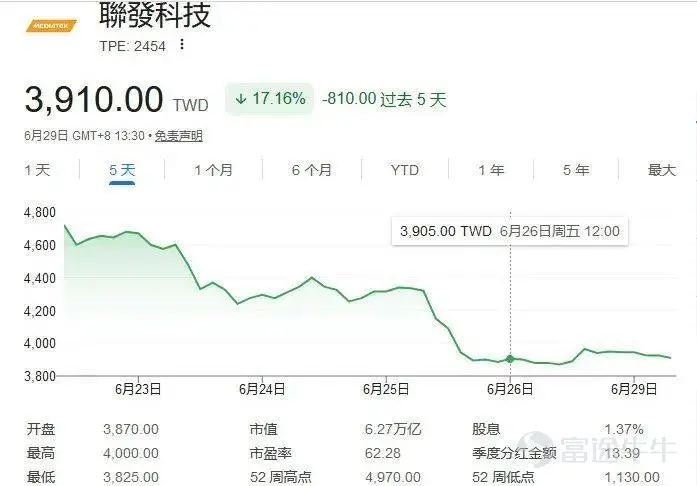
The following day (June 26), MediaTek's stock price suffered a sharp decline, hitting the limit down during intraday trading and ultimately breaking below the psychological support level of NT$4,000 per share. This occurred less than a month after it hit an all-time high of NT$4,970 per share on June 2, with its market capitalization evaporating by over NT$100 billion in a single day, highlighting the palpable market panic.
Produced by | Frontline of Entrepreneurship Author | Yu Ying Editor | Wang Yajing Art Editor | Xing Jing Reviewed | Songwen From its days as the "King of Clones" dominating Huaqiangbei to becoming a global smartphone chip giant backed by China's Android ecosystem, MediaTek's rise over the past two decades has largely resonated with the expansion of China's consumer electronics industry. This chip major, which once secured its footing with mid-to-low-end smartphone chips, now stands at another crossroads of transformation. In the second quarter of 2026, MediaTek's consolidated revenue reached TWD 152.183 billion, a slight year-on-year increase of 1.2%; however, gross margin stood at only 46.2%, down 2.9 percentage points from the same period last year. Operating profit fell sharply by 22.2% year-on-year to TWD 22.868 billion, while net profit declined 12.3% year-on-year. Over a longer timeframe, total revenue for the first half of 2026 was TWD 301.333 billion, a slight year-on-year decline of 0.8%; net profit attributable to parent company shareholders was TWD 48.489 billion, with the year-on-year drop widening to 15.19%. More notably, its smartphone business lost its position as the largest revenue contributor for the first time. Under mounting pressure, the company is attempting to bet on AI chips to fill the gap left by the declining smartphone segment. However, in this new赛道 (track), former rival Qualcomm has also announced its entry, while international chip giants and domestic self-developed chip companies are all crowding in, making industry competition unprecedentedly fierce. MediaTek's path of "transformation" remains fraught with challenges. 1. Smartphone Business...
The market's volatile reaction was not an overreaction. Qualcomm's aggressive entry means that MediaTek faces a formidable rival in the AI chip sector, and the AI ASIC market is far from being an incremental market that MediaTek can monopolize.
In fact, this is not the first head-to-head confrontation between MediaTek and Qualcomm.As the two core players with the longest competitive span and widest scenario coverage in the global smartphone chip sector, their rivalry has spanned three major industrial cycles: feature phones, 4G, and 5G. The battlefield has gradually expanded from mobile phone chips to encompass the full-spectrum tracks of AI, automotive, and edge computing.
In the early days, the two companies largely operated in separate spheres. MediaTek focused on the mid-to-low-end and white-label markets, sweeping through the clone phone and entry-level segments with its "high cost-performance" strategy. Meanwhile, Qualcomm partnered with global top-tier brands like Nokia and Samsung, targeting the high-end smartphone and carrier-customized markets. Their areas of overlap were limited.
The real all-out war erupted in the 4G era.According to Semiconductor Industry Observer, in 2016, Qualcomm launched hit mid-to-low-end chips such as the Snapdragon 625. Leveraging mature manufacturing processes and stable power consumption, it penetrated the sub-1,000-yuan smartphone market, precisely encroaching on MediaTek's core stronghold. As major domestic smartphone manufacturers shifted to Qualcomm solutions, MediaTek rapidly lost market share.
In the second quarter of 2017, MediaTek's revenue declined by nearly 20% year-over-year, and its net profit hit a five-year low. At the time, the company's then-CFO publicly admitted during an official conference call: "Market share will continue to be lost, and improvement is unlikely before the fourth quarter of 2017."
Competition intensified further in the 5G era. In 2020, MediaTek launched its first 5G flagship chip, the Dimensity 1000, just one week before Qualcomm released the Snapdragon 865.
As one of the industry's first integrated 5G SoC solutions, it offered clear advantages in power efficiency and integration compared to Qualcomm's external modem approach at the time, officially kicking off MediaTek's counterattack toward the high-end market in the 5G era.
At the end of 2021, the Dimensity 9000 was released, adopting TSMC's advanced 4nm process for the first time and directly competing with Qualcomm's Snapdragon 8-series flagships. Subsequent iterations, including the Dimensity 9200, 9300, and 9400, gradually caught up with or even partially surpassed Qualcomm's same-generation products in multi-core CPU performance, energy efficiency, and manufacturing process technology.
However, catching up in hardware specifications does not equate to a breakthrough in the high-end market.
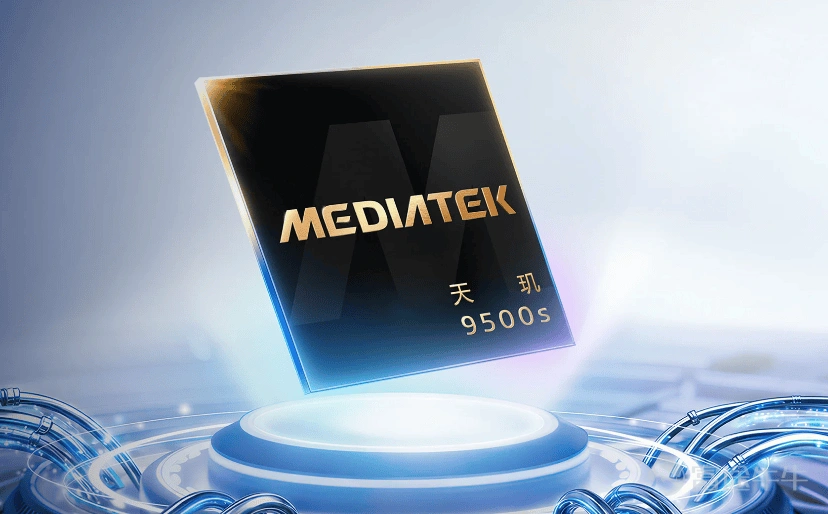
From the Dimensity 9000 to the Dimensity 9500, MediaTek's flagship chips have matched Qualcomm in terms of on-paper specifications, yet the brand has struggled to shake off its "cost-performance" image. The adoption rate in core configurations of mainstream flagship models remains low, with the high-end market still largely monopolized by Qualcomm's Snapdragon series.
Produced by | Frontline of Entrepreneurship Author | Yu Ying Editor | Wang Yajing Art Editor | Xing Jing Reviewed | Songwen From its days as the "King of Clones" dominating Huaqiangbei to becoming a global smartphone chip giant backed by China's Android ecosystem, MediaTek's rise over the past two decades has largely resonated with the expansion of China's consumer electronics industry. This chip major, which once secured its footing with mid-to-low-end smartphone chips, now stands at another crossroads of transformation. In the second quarter of 2026, MediaTek's consolidated revenue reached TWD 152.183 billion, a slight year-on-year increase of 1.2%; however, gross margin stood at only 46.2%, down 2.9 percentage points from the same period last year. Operating profit fell sharply by 22.2% year-on-year to TWD 22.868 billion, while net profit declined 12.3% year-on-year. Over a longer timeframe, total revenue for the first half of 2026 was TWD 301.333 billion, a slight year-on-year decline of 0.8%; net profit attributable to parent company shareholders was TWD 48.489 billion, with the year-on-year drop widening to 15.19%. More notably, its smartphone business lost its position as the largest revenue contributor for the first time. Under mounting pressure, the company is attempting to bet on AI chips to fill the gap left by the declining smartphone segment. However, in this new赛道 (track), former rival Qualcomm has also announced its entry, while international chip giants and domestic self-developed chip companies are all crowding in, making industry competition unprecedentedly fierce. MediaTek's path of "transformation" remains fraught with challenges. 1. Smartphone Business...
(Image / MediaTek Official Website)
According to data from Counterpoint Research, MediaTek led the global market with a 36% overall share in the first quarter of 2025, followed closely by Qualcomm at 28%. However, in the high-end segment (typically referring to chips used in smartphones priced above $500), Qualcomm still holds approximately 55% to 60% of the market, while MediaTek accounts for only 27% to 30%.
MediaTek's dominance in the overall market contrasted with its weakness in the high-end segment remains a regrettable aspect of its presence in the mobile phone market, and it is highly likely to serve as a cautionary tale for its ventures into the AI sector.
Furthermore, Qualcomm is not its only competitor. On a global scale, the AI ASIC sector is already crowded with industry giants.
Among international players, Broadcom has established itself as a veritable hidden giant, providing custom chips to cloud providers such as Google and Meta for many years, thereby capturing the majority of the market share for custom AI chips in the cloud. Marvell Technology (MRVL.US) is also deeply entrenched in the custom chip sector, recently strengthening its synergy in optical interconnects and AI chips through the acquisition of Celestial AI. AMD has been refining its AI computing matrix by acquiring multiple companies, including ZT Systems and Taalas. Intel continues to exert pressure with its Gaudi series of AI accelerators. Even OpenAI released its first custom AI inference chip, Jalapeño, jointly developed with Broadcom, on June 24.
The domestic market in China is equally dynamic. Alibaba's T-Head Semiconductor launched the Hanguang 800, one of the earliest cloud-based AI inference ASICs to achieve large-scale commercial adoption in China, customized for internal scenarios such as e-commerce recommendations and visual recognition. Kunlun Xin, originating from Baidu, has tailored its K-series AI chips for internal businesses like the Wenxin large language model, search, and autonomous driving. VeriSilicon has adopted a design service model similar to Broadcom's, providing custom chip design services to clients in communications, consumer electronics, and the internet sectors, leveraging mature expertise in AI ASIC tape-out and backend implementation.
In addition, domestic internet giants such as ByteDance, Tencent, and Meituan have been advancing their self-developed AI inference and training chips in recent years. These chips primarily serve specific internal data center scenarios, including recommendation systems, advertising, and large language models, representing a typical ASIC approach, though most are not currently offered for public sale.

Produced by | Frontline of Entrepreneurship Author | Yu Ying Editor | Wang Yajing Art Editor | Xing Jing Reviewed | Songwen From its days as the "King of Clones" dominating Huaqiangbei to becoming a global smartphone chip giant backed by China's Android ecosystem, MediaTek's rise over the past two decades has largely resonated with the expansion of China's consumer electronics industry. This chip major, which once secured its footing with mid-to-low-end smartphone chips, now stands at another crossroads of transformation. In the second quarter of 2026, MediaTek's consolidated revenue reached TWD 152.183 billion, a slight year-on-year increase of 1.2%; however, gross margin stood at only 46.2%, down 2.9 percentage points from the same period last year. Operating profit fell sharply by 22.2% year-on-year to TWD 22.868 billion, while net profit declined 12.3% year-on-year. Over a longer timeframe, total revenue for the first half of 2026 was TWD 301.333 billion, a slight year-on-year decline of 0.8%; net profit attributable to parent company shareholders was TWD 48.489 billion, with the year-on-year drop widening to 15.19%. More notably, its smartphone business lost its position as the largest revenue contributor for the first time. Under mounting pressure, the company is attempting to bet on AI chips to fill the gap left by the declining smartphone segment. However, in this new赛道 (track), former rival Qualcomm has also announced its entry, while international chip giants and domestic self-developed chip companies are all crowding in, making industry competition unprecedentedly fierce. MediaTek's path of "transformation" remains fraught with challenges. 1. Smartphone Business...
(Image / MediaTek official website)
For MediaTek, which is in a critical period of transformation, AI ASICs undoubtedly represent a new sector filled with potential. However, it faces established players like Broadcom controlling the market ahead, strong pursuit from its old rival Qualcomm behind, and accelerating competition from numerous domestic manufacturers nearby.
Can MediaTek find a clear differentiated position in the data center AI ASIC sector and quickly deliver compelling products and customer case studies? For MediaTek, this test of 'transformation' has only just begun.
*Note: The featured image and unattributed images in this article are sourced from 699pic.com under the VRF license.
Risk Disclaimer: The above content only represents the author's view. It does not represent any position or investment advice of Futu. Futu makes no representation or warranty.Read more
Thumbs Up
1
93K Views
Report
Comments
Write a Comment...
1
1