
What can Casarte still rely on to sustain its premium brand myth?
On August 1, at the Gegen Tala Grassland in Siziwang Banner, Ulanqab, Inner Mongolia, Casarte hosted a Business School Grassland Challenge. The event fully embedded a comprehensive lifestyle solution into every stage of the competition, covering multiple dimensions such as garment care, dietary supplies, and air and water quality assurance.
Participants in this event were students from 80 domestic and international business schools, representing Casarte’s core target demographic. The brand’s message was clear: to showcase its full-scenario AI capabilities in a grassland environment to its target consumers.
However, within this carefully crafted brand narrative, Casarte’s strategic logic warrants closer scrutiny.
Casarte’s event focused on its private-domain customer base, specifically targeting highly educated individuals. But can the product’s lifestyle experience be effectively demonstrated in the context of the grassland and the competition? Can the advantages of its product suites be highlighted through such low-frequency, fragmented event scenarios?
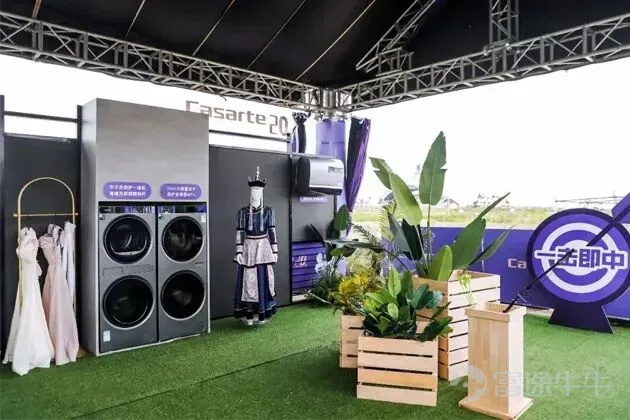
Image source: Casarte official website
Underlying these questions is the fact that Casarte is facing mounting pressure.
This established domestic high-end home appliance brand has just passed its 20th anniversary. While it still holds a major share of the high-end refrigerator and washing machine market, its growth potential has hit a ceiling.
Amid the continuous decline in overall retail sales in the home appliance market, it is becoming increasingly difficult for Casarte to attract consumers solely through its high-end positioning. Market demand is shifting towards full-scenario customization and the construction and sales of holistic solutions, rendering Casarte’s previous model of breakthroughs via single products ineffective.
As industry consolidation becomes the norm, Haier Smart Home is promoting synergistic integration across its multi-brand portfolio, extending proven high-end technologies to broader price segments. Casarte, a premium brand with numerous technological advantages, must align with this strategy. However, Haier Smart Home’s overall technology trickle-down approach has created internal friction within the group, weakening the stabilizing effect previously provided by its dual leaders in refrigerators and washing machines.
Casarte also hopes to leverage AI technology to change the current landscape, but the necessity of AI in home scenarios is not yet compelling. The industry debate over whether home appliances can truly become smart terminals continues. For every home appliance company, AI represents a new beginning.
Entering a new era, it is more difficult for Casarte to continue writing its high-end legend than it was 20 years ago.
1. The Pioneer's Paradox
The establishment of Casarte carried a hint of daring to venture into dangerous territory.
In 2006, when it was founded, the most expensive display spaces in domestic Tier-1 and Tier-2 home appliance markets were mostly occupied by international brands such as Siemens, Bosch, and Panasonic. Meanwhile, most domestic home appliance brands adhered to the logic of trading scale for market share and were in the midst of fierce price competition.
It was during this period that Haier launched the Casarte brand, championing the slogan of 'creating China's own high-end home appliance brand,' and broke into the premium segment priced above RMB 10,000, which had long been dominated by imported appliances.
History has proven that Casarte's unconventional approach allowed it to capture the first-mover advantage.
At that time, the advantage of most domestic home appliance brands lay in their manufacturing capabilities. Being large but not strong, with low brand value-added, was the core dilemma for domestic brands. However, the trend of consumption upgrading was evident. Data from the National Bureau of Statistics showed that in 2005, the per capita disposable income of urban residents in China had reached RMB 10,000, indicating that many consumers already had the financial capacity to purchase high-end home appliances priced above RMB 10,000.
Casarte's strategy was to address widespread market pain points by launching groundbreaking products, thereby solidifying its position as a high-end brand.
For instance, its first French-style side-by-side refrigerator, launched in 2007, broke the limitations of traditional side-by-side models with vertical left-right divisions. It eliminated the vertical beam in the refrigeration compartment and featured a cold drawer design, representing a radical departure from traditional refrigerator designs at the time.
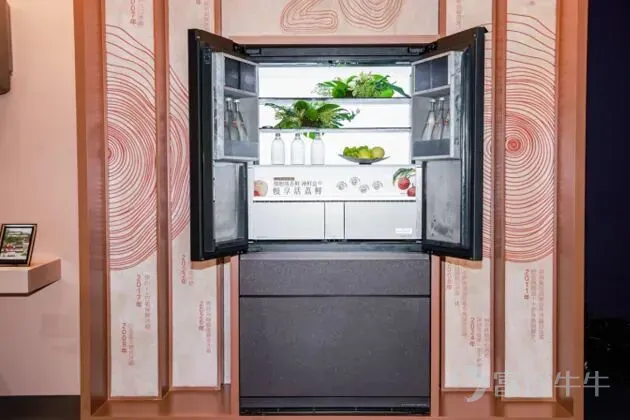
Image source: Casarte official website
This model of achieving design breakthroughs in single products to reshape traditional industry landscapes and enhance brand influence has been repeatedly demonstrated in Casarte's refrigerator and washing machine lines. It is the primary driver behind Casarte's growth from its inception to its current scale.
Casarte achieved profitability for the first time in 2016. According to Xinhua News Agency, from 2016 to 2026, Casarte's sales volume grew from over RMB 2.2 billion to more than RMB 38 billion; its user base expanded from 10 million to 20 million; and its brand value increased from RMB 50.581 billion to RMB 92.816 billion.
In the first quarter of 2026, Casarte captured a 71.1% market share in the refrigerator segment priced above RMB 15,000, and an 80% share in the washing machine market.
Within the grand narrative of China's transition from manufacturing hub to brand powerhouse, Casarte stands out as nearly the only home appliance brand capable of directly competing with—and ultimately defeating—foreign brands in the premium price bracket (above RMB 10,000).
However, the path pioneered by early movers often becomes a shortcut for latecomers. By defining this premium segment, Casarte effectively saved subsequent entrants the cost of educating the market.
In 2018 and 2020, Midea and Hisense launched their respective high-end sub-brands, COLMO and CuiCan. Meanwhile, German brands such as Siemens and Bosch fortified their positions in precision engineering while accelerating localized R&D. As more players entered the arena, Casarte shifted from being the 'only choice' to merely 'one of the choices,' quickly finding itself under pressure from both established rivals and new entrants.
Simultaneously, the overall capability of China's home appliance manufacturing sector has improved significantly. Features once exclusive to Casarte, such as zero-clearance integration, ultra-slim designs, and advanced freshness preservation, are now common in the RMB 4,000–8,000 price range.
More critically, Casarte's past growth was primarily driven by its refrigerator and washing machine lines. Its air conditioning, kitchen appliances, and TV businesses have yet to establish comparable premium brand equity. In the air conditioning segment, traditional leaders like Gree and Midea maintain稳固 market structures; in kitchen appliances, Robam and Fotile have long held dominant positions; and in the TV sector, TCL and Hisense enjoy greater visibility.
While Casarte holds over 70% market share in the premium refrigerator and washing machine segments, this also implies limited room for further growth. Within the Haier Group, the scenario-based brand Three-Winged Bird has already assumed the role of promoting whole-home smart living solutions, leaving Casarte's specific role and positioning within whole-home scenarios yet to be clearly defined.
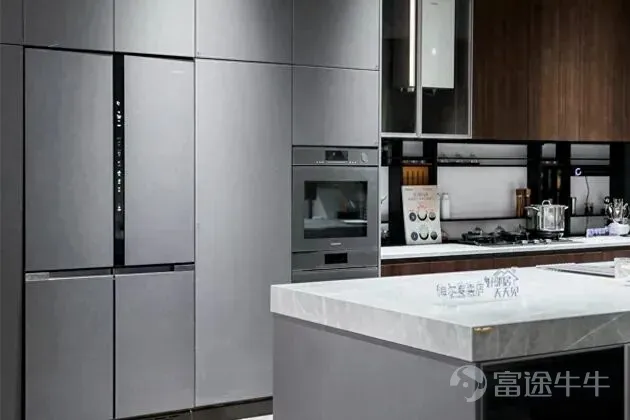
Image source: Casarte official website
It can be said that the differentiated value of Casarte's "category invention" strategy is being diluted. The model of building brand awareness through single hero products is no longer viable.
2. The Dilemma of Maintaining Status Quo Beneath the High-End Throne
Casarte has consistently adhered to a high-end positioning, but accumulating real-world factors have compounded to form invisible shackles constraining its growth.
Amid the sustained downturn in the real estate market and suppressed demand for new homes, the mainstream consumer mindset has shifted to "replace only if broken," leading to an overall decline in the home appliance sector. Data from All View Cloud Network (AVC) shows that the domestic retail market size for home appliances (excluding 3C products) reached RMB 893.1 billion in 2025, a year-on-year decrease of 4.3%.
Entering 2026, the downward trend has not reversed. According to AVC data, the retail scale of China's home appliance industry in Q1 2026 was RMB 172.6 billion, down 6.2% year-on-year, with March alone seeing a 12.5% year-on-year decline. Air conditioner retail sales dropped 13.8% year-on-year, refrigerators fell 5.3%, range hoods decreased 12%, and gas stoves declined 15%.
As the overall market size shrinks, the share of the high-end home appliance market is naturally affected.
Meanwhile, the marginal effect of national subsidies is diminishing. The significant quarter-on-quarter and year-on-year declines in Haier Smart Home's revenue and net profit in Q4 last year were primarily driven by the tapering of these subsidies.
In 2026, Haier Smart Home continues to face performance pressure: Q1 revenue stood at RMB 73.687 billion, down 6.86% year-on-year; net profit attributable to shareholders was RMB 4.652 billion, a substantial year-on-year drop of 15.22%.
From a group perspective, integration is an imperative path for Haier Smart Home. Therefore, extending proven high-end technologies to broader price segments has become a key move to enhance the competitiveness of its main brand and boost overall sales volume.
Casarte, positioned as a high-end brand, has become the technological "nutrient" for the group.
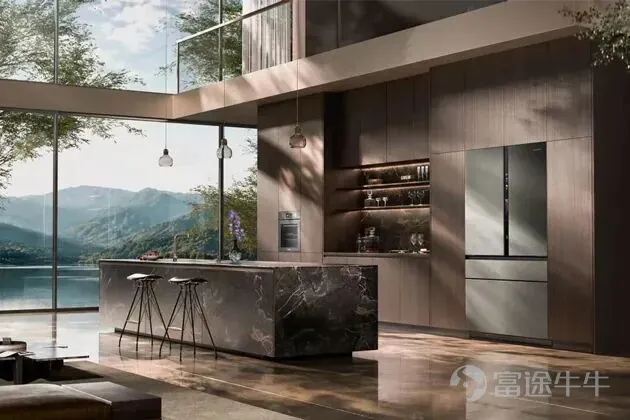
Image source: Casarte official website
Taking refrigerators as an example, Casarte's core selling points are its flush-mount design and MSA nitrogen-oxygen smart control preservation technology. However, these technologies have now become standard across Haier's entire brand portfolio. For instance, Haier's "Heyue" and "Mailang" series refrigerators focus on full-space preservation and a professional ultra-thin 594mm zero-clearance embedded design, priced at only RMB 10,000–15,000, significantly lower than comparable Casarte products.
Furthermore, Leader, a brand targeting younger consumers, has also launched the "Yueji" series refrigerators featuring 594mm ultra-thin zero-clearance embedded technology, priced at just RMB 2,999–4,999.
Beyond environmental and group-level influences, frequent quality control and after-sales service issues with Casarte are also shaking the foundation of its premium brand positioning.
On consumer complaint platforms such as Heimao Tousu, users have reported that their offline-purchased high-end Casarte air-cooled refrigerators suffered from the same recurring faults for two consecutive years, including evaporator icing that jammed the circulation fan, abnormal noises, and failure of the refrigeration compartment. Other users complained that their frost-free refrigerators, purchased for over RMB 10,000, now experience internal ice buildup and frosting, to the extent that doors cannot be opened in severe cases, seriously affecting usability.
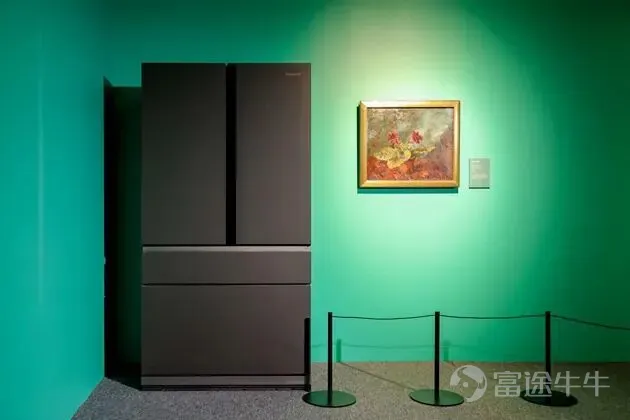
Image source: Casarte official website
Moreover, chaos in the channel pricing structure has further diluted Casarte's premium image.
During certain exhibitions or promotional events, Casarte's prices have been heavily discounted. For example, during the 2026 Consumer Goods Expo, the exclusive price for Casarte's 522-liter French multi-door refrigerator was as low as RMB 6,799. However, on JD.com, the price for the same model ranges between RMB 8,500 and RMB 9,500.
There are also many individuals selling brand-new Casarte products on Xianyu, with prices ranging from RMB 1,000 to RMB 2,000 lower than those on JD.com or Tmall flagship stores.
The core premium of high-end brands stems from "product quality + exclusive services + brand scarcity." However, these attributes appear to be wavering for Casarte today.
3. Can Casarte find an inflection point in the AI era?
Whether viewed from industry trends, group requirements, or the brand's future, Casarte's growth model driven by a few product categories is no longer sustainable. It needs a new narrative to unlock incremental growth space.
Casarte's recent strategy can be summarized as "AI + scenario-based solutions," using AI technology to craft a narrative of "proactive regulation." AI simultaneously connects its suite-based product matrix, attempting to shift from a single-product model to focusing on user lifestyle scenario experiences.
Previously, Casarte's suite-based strategy achieved certain results.
In its 2024 report, Haier Smart Home mentioned that within the Three-Winged Bird complete home appliance system, Casarte's suite products accounted for 35% of sales.
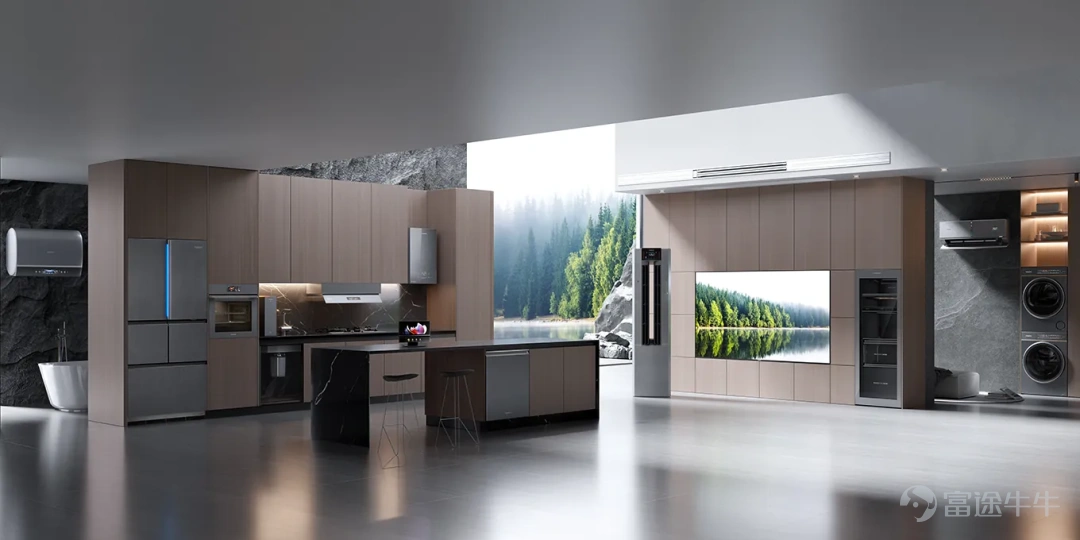
In April 2026, retail volume for Casarte's high-end suites grew by 84.42%, with the Languang suite seeing a 122.20% increase; the Zhijing suite also recorded a 42.95% rise in retail volume.
Source: Casarte official website
Casarte's layout in AI technology mainly revolves around its "AI Eye" technology, which has now iterated to version 2.0 and is primarily featured in the Conductor suite.
The core of this technology is enabling home appliances to make autonomous decisions.For instance, refrigerators can identify over 2,000 types of ingredients and automatically match them with optimal preservation modes; ovens can recognize the type and quantity of ingredients to automatically adjust temperature and humidity curves; range hoods can predict boil-overs two seconds in advance and reduce heat intensity; washing machines can identify fabric types and automatically select appropriate care programs, among other features.
Casarte’s "Conductor" full-scenario appliance suite previously received L4-level smart home appliance certification from the China Household Electric Appliance Research Institute. The market defines it as a high-end whole-home appliance product line that has taken the lead in meeting standards for highly autonomous decision-making intelligence.
Judging by its technical specifications and marketing materials, Casarte indeed seized an early-mover advantage in the AI home appliance race. However, questions remain regarding its practical utility in real-world scenarios.
Although Casarte aims to use an AI system to coordinate its appliance suite, its promotional materials suggest that the "AI Eye" functionality still revolves around individual product features, with limited interoperability between appliances.
Meanwhile, how many of these features do consumers actually need? Can users perceive a significant improvement in experience between "identifying 2,000 types of ingredients" and "automatically matching preservation modes"? These are questions Casarte needs to answer.
Of course, this is not a challenge unique to Casarte. The development of smart terminals for home scenarios in today’s appliance market is still in an exploratory phase. Immature technology, impractical features, and weak interoperability between products are widespread issues.
The "Smart Home Appliance Consumer Survey Report" released by the Jiangsu Provincial Consumers Association shows that 58.62% of respondents encountered problems during use, 44.29% believed some product features were redundant, and 37.12% felt that ecosystems across different brands were fragmented.
A survey by CTR also indicates that 52.4% of consumers find AI-enabled appliances too complex to operate, and 49.4% consider the prices too high, finding it difficult to judge whether the premium is reasonable. Only 3.4% of respondents reported having almost no concerns.
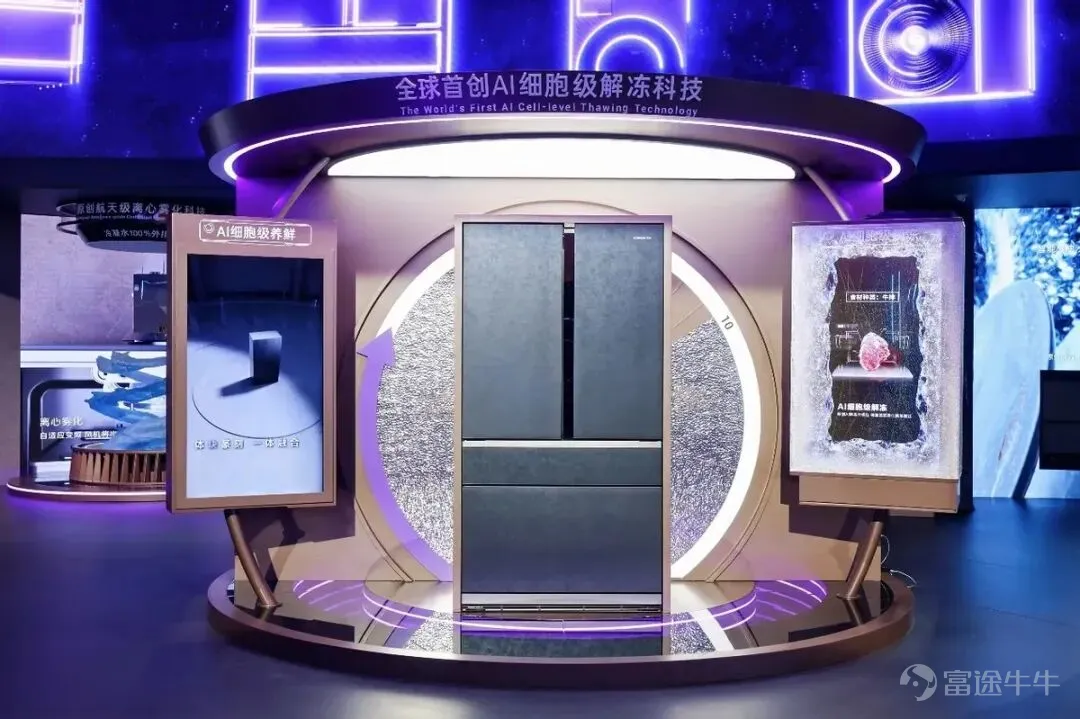
Image source: Casarte official website
A greater challenge lies in the fact that AI-driven scenario-based exploration is not exclusive to Casarte, nor is it even exclusive to home appliance brands.
Take Midea’s COLMO brand as an example: it follows an AI-native strategy, having launched the industry’s first AI agent. Its core approach centers on an AI butler that integrates five major functional systems—air, water, cooking, laundry care, and energy—with five smart home systems covering privacy, lighting, entertainment, security, and intelligent control.
Beyond traditional appliance brands, internet companies like Huawei and Xiaomi are also building out their 'human-car-home' ecosystems. Huawei achieves deep integration primarily through its HarmonyOS ecosystem, linking Huawei Smart Screens and smart home devices to offer comprehensive smart-life solutions across all scenarios. Meanwhile, Xiaomi uses its HyperOS (Xiaomi HyperConnect) to seamlessly connect three key scenarios: smartphones, automobiles, and smart homes.
Twenty years ago, Casarte could shift design conventions for an entire product category with just a simple tweak. For years, by focusing solely on product quality, it securely held the top spot among premium brands.
Today, however, Casarte faces many unresolved questions. With its proprietary technological moats being eroded from within, what can still support Casarte’s premium pricing power? How can it find a breakthrough in its AI strategy? And how should the brand coordinate with Three-Winged Bird and COSMOPlat?
It is evident that Casarte needs new strategic levers to maintain its high-end positioning.
(The header image of this article is sourced from the official Casarte website.)
Original/Insight Connection, by Wenxue Dou, edited by Ziyе.
Risk Disclaimer: The above content only represents the author's view. It does not represent any position or investment advice of Futu. Futu makes no representation or warranty.Read more
Comments
to post a comment