Mid-2026 Review: How to Identify the Key Themes Amidst Changing Market Dynamics?

Hang Seng Index sees a rollercoaster 'gap-up, then sell-off'! Is this a short-term pullback or the end of the rebound? It briefly reclaimed 26,000 in early trading but barely held above 25,600 at the close! Southbound capital outflow neared HK$1.4 billion! Is a reversal now unlikely?
Hong Kong Stock Market Recap Analysis – August 11, 2026
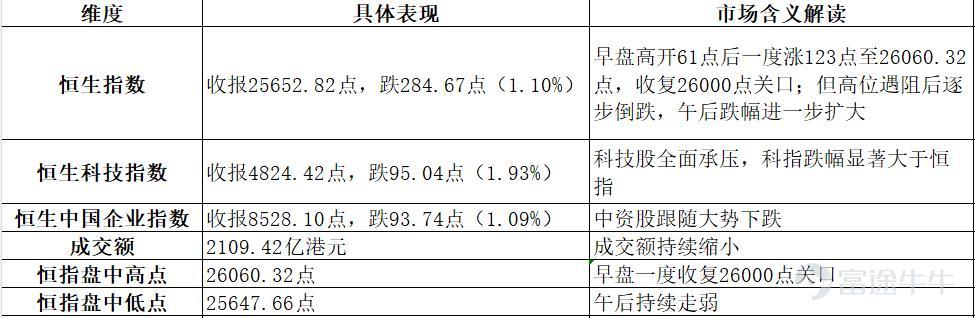
Today, Hong Kong's three major indices opened higher but traded lower afterward, aligning with my view from yesterday. After breaking above the 200-day moving average, the indices began a second retest of support. The Hang Seng Index briefly reclaimed the 26,000-point mark during early trading but retreated in the afternoon, continuing to weaken.It ultimately closed down 1.10% at 25,652.82 points; the Hang Seng Tech Index plunged 1.93% to close at 4,824.42 points. Gold stocks, tech and internet stocks, airline stocks, and PCB stocks all suffered heavy losses, becoming the four main drags on the broader market. In contrast, oil & gas and pharmaceutical/biotech stocks gained ground, reflecting a clear defensive shift in investor sentiment. On the external front, uncertainty surrounding U.S.-Iran negotiations dampened risk appetite, leading all three major U.S. indices to close lower overnight. Semiconductor and optical communication-related stocks tumbled collectively, exerting downward pressure on Hong Kong market sentiment.
I. Overall Market Performance
Today, Hong Kong’s main indices opened higher but trended lower throughout the session. The Hang Seng Index briefly reclaimed the 26,000-point level in early trading but subsequently weakened steadily, with losses widening further in the afternoon.
Key market characteristics today:The Hang Seng Index briefly reclaimed the 26,000-point level in early trading but reversed course after encountering strong resistance at higher levels. Since rebounding from its August 6 low of 25,389 points to today’s intraday high of 26,060 points—a cumulative gain of approximately 671 points—the index met significant resistance. The sustained weakening in the afternoon was closely linked to broad-based pullbacks in tech/internet and gold-related stocks.
II. Sector Rotation Analysis
Today’s market displayed sharp divergence: oil & gas and pharmaceutical/biotech sectors rose against the trend, while gold, tech/internet, airline, and PCB stocks all plunged collectively.
Strong-performing sectors
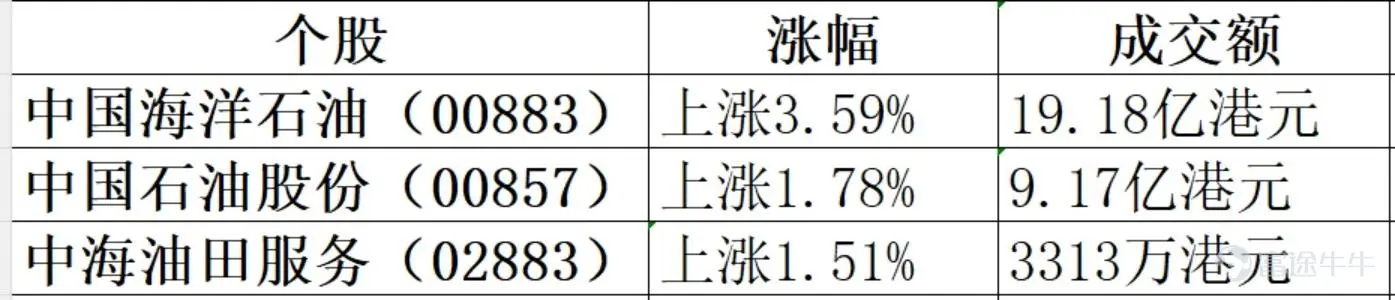
1. Oil & Petrochemicals – Driven by rising crude prices
International crude oil prices continued to strengthen, with WTI crude futures surpassing USD 82 per barrel and Brent crude settling at USD 87.88 per barrel. The U.S. Strategic Petroleum Reserve (SPR) fell below the 300-million-barrel mark for the first time since 1983, fueling concerns over supply contraction and strongly boosting crude-related assets.
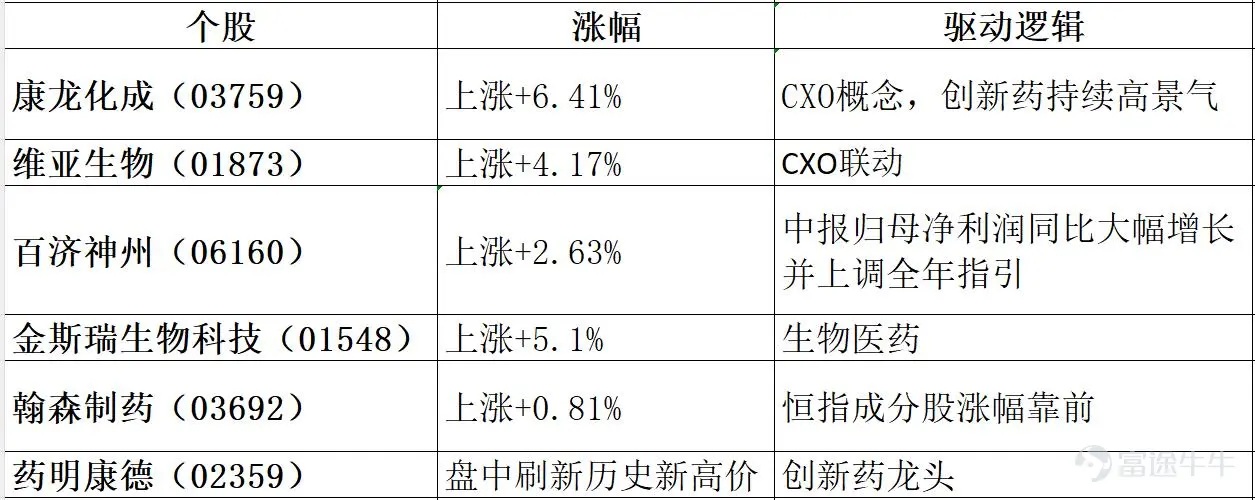
2. Pharmaceuticals/Biotech & CXO – Dual drivers of earnings and overseas expansion
The sector’s fundamentals remain solid, supported by dual drivers of robust earnings and international expansion. In the first half of the year, China’s innovative drugmakers recorded over USD 100 billion in outbound licensing deals, and multiple innovative biopharma companies reported strong interim results.
3. Pork-related stocks — Rising prices ignite investor enthusiasm
Rising pork prices have sparked strong interest in the sector, driving broad gains among pork-related stocks, with Muyuan Foods up 2.2%.
Weak Sectors
1. Gold/Precious Metals — Hit hard by Fed's hawkish signals
Hawkish signals from Federal Reserve officials have triggered concerns over macro liquidity—the president of the Cleveland Fed stated that multiple rate hikes may be necessary to achieve the 2% inflation target. Spot gold fell below USD 4,360, and gold mining stocks saw their losses accelerate toward the close.
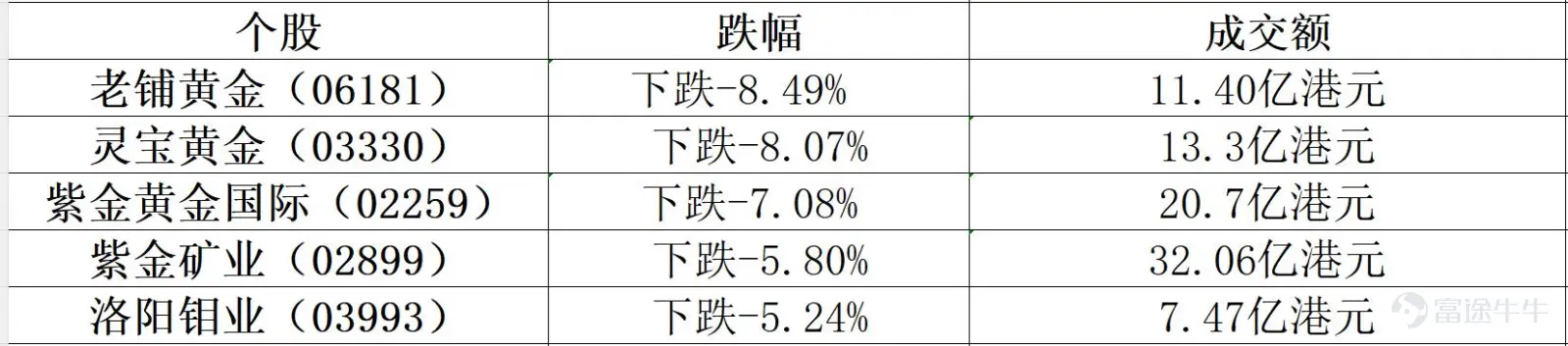
Huatai Futures noted that the market is currently pricing in a 'waning expectation of rate hikes,' and expects gold prices to remain strong within a high-range consolidation in the near term, putting short-term downward pressure on related stocks.
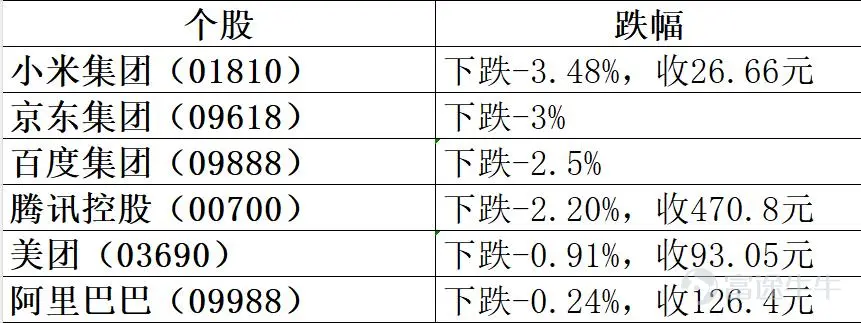
2. Tech and internet stocks — Afternoon losses continued to widen
Losses among major tech and internet stocks continued to deepen in the afternoon, exerting significant downward pressure on the broader market:
3. Airline stocks — High oil prices continue to erode profitability
Geopolitical tensions in the Middle East have pushed international oil prices higher, directly increasing airlines' expected fuel costs:
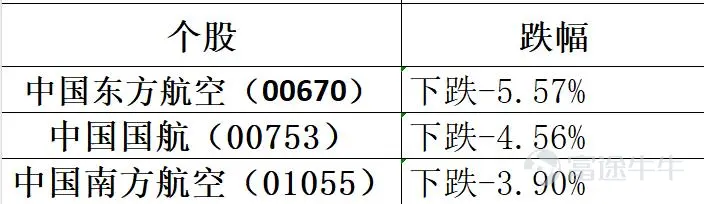
China Merchants Securities pointed out that US-Iran tensions and Strait transit conditions remain highly uncertain in the near term.
4. PCB-related stocks — concerns over excess capacity
The PCB industry’s sentiment has improved, prompting significant capacity expansion across the supply chain, raising concerns about overcapacity:
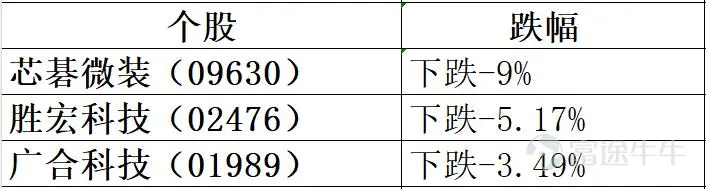
Guosheng Securities noted that the impact of rising electronic fabric prices on PCB output reductions will take time to materialize and is likely to affect only certain low-end PCB segments.
5. Other weak sectors:Automotive stocks, AI application stocks, heavy machinery stocks, paper stocks, insurance stocks, optical communication concept stocks, mainland property developer stocks, and Chinese brokerage stocks all declined.
6. Notable stock movement — Luxshare Precision plunges
Luxshare Precision (06088) fell 14.14% to HK$5.13, as the company reported a 29.5% year-over-year decline in interim operating profit.
III. Market Capital Flow Characteristics
1. Southbound capital:Outflow of HK$1.376 billion
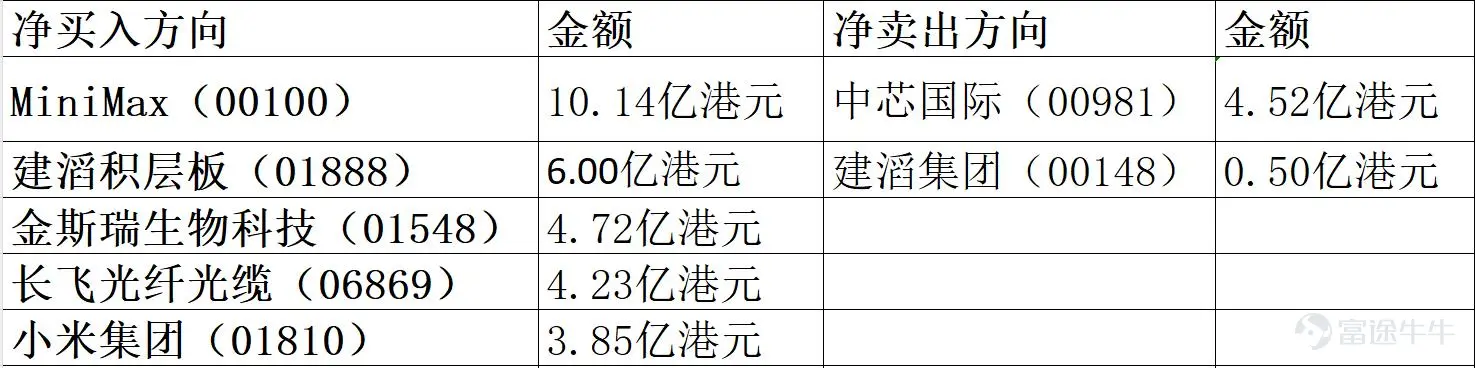
2. Stock-level fund flows
3. Stock Connect trading share
Main Board turnover totaled nearly HK$240.3 billion, with Stock Connect turnover exceeding HK$108 billion, accounting for approximately 45% of total trading volume.
Interpretation of capital flows:
The rebalancing strategy of 'buying AI applications and selling semiconductors' is clear: MiniMax saw net purchases exceeding HK$1 billion, while SMIC recorded net sales of HK$452 million.
The PCB sector showed clear divergence: KB Laminate Holdings saw net purchases of HK$600 million, whereas KB Group faced net selling, indicating selective allocation by capital within the PCB supply chain.
Biotech stocks gained investor favor: GenScript Biotech recorded net purchases of HK$472 million.
IV. Impact from Overseas Markets
1. U.S. Equities: All three major indices closed lower, with chip and optical communication stocks plunging sharply.
On August 10 (U.S. Eastern Time), uncertainty surrounding U.S.-Iran negotiations dampened risk appetite, leading all three major U.S. equity indices to close in the red:
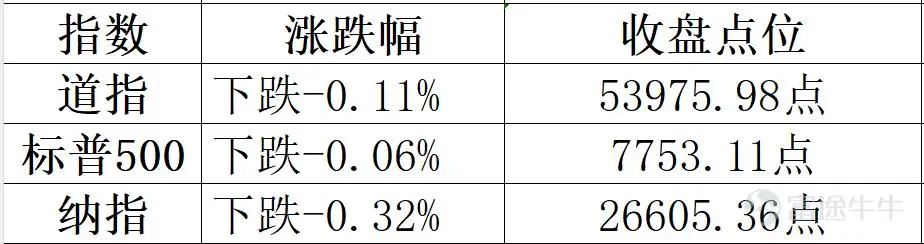
Chip and optical communication stocks tumbled collectively: The Philadelphia Semiconductor Index fell nearly 3%, with all 30 constituents declining. Coherent dropped over 14%, Intel fell more than 4%, Marvell Technology declined over 4%, and NVIDIA slid nearly 3%.
2. Spillover Impact on Hong Kong Stocks
Bearish spillover: The sharp drop in the Philadelphia Semiconductor Index directly weighed on sentiment in Hong Kong’s semiconductor sector.
Bearish spillover: Optical communication stocks plunged across the board, keeping pressure on Hong Kong’s optical communication segment.
Oil prices surged: WTI crude futures climbed above $82 per barrel, boosting oil stocks but weighing on airline shares.
3. Exchange Rates and Commodities
Offshore RMB: No clear data found in search results
V. Institutional Views
Huatai Futures: Precious metals are currently showing a muted response to shifts in the oil price anchor. In the absence of clear signals indicating escalating geopolitical tensions, the market is focused on positioning around the fading expectations of rate hikes. Gold prices are expected to trade in a strong, range-bound manner in the near term.
China Merchants Securities: In the short term, the U.S.-Iran situation and Strait transit conditions remain highly uncertain, warranting close monitoring of their potential disruptions to oil prices and sector sentiment. The valuation recovery and market cap upside for the airline sector will likely require tangible relief from cost-side pressures.
Guosheng Securities: It will take time for rising electronic cloth prices to translate into reduced PCB output, and this impact will most likely affect only certain low-end PCB segments. Standard PCBs’ low profit margins make them sensitive to increases in electronic cloth prices, whereas high-end PCBs are buffered by order backlogs, certifications, and stronger pricing power.
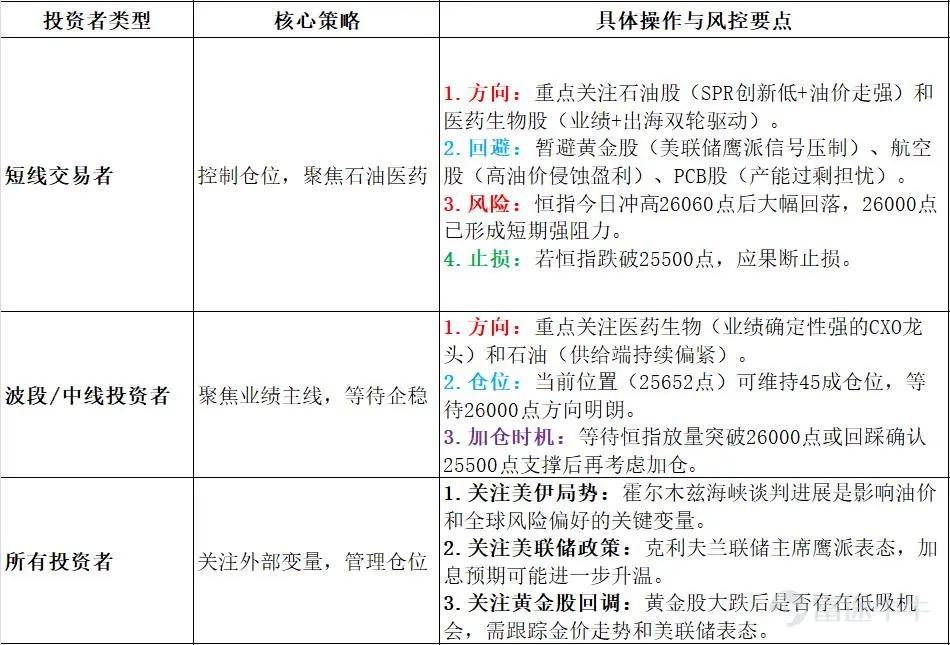
6. Comprehensive Trading Strategy Recommendations
Based on the core assessment that 'the Hang Seng Index retreated after testing highs and fell below 26,000, while gold, tech, airline, and PCB stocks faced pressure, and oil and pharmaceutical stocks strengthened against the trend':
VII. Key Observations for Tomorrow
1. Can the 26,000 level be reclaimed? The Hang Seng Index rallied to 26,060 today before pulling back sharply. Whether it can retake the 26,000 mark tomorrow will be key to determining near-term direction.
2. Can gold stocks halt their decline? After Laopu Gold and Lingbao Gold each dropped more than 8%, their ability to stabilize tomorrow will directly influence market sentiment.
3. Sustainability of oil stocks: With SPR hitting a new low and oil prices strengthening, can the rally in oil stocks continue?
4. Can tech stocks stabilize? After Tencent, Xiaomi, and other tech names fell collectively, can they halt their decline tomorrow?
5. Overseas markets: Watch the performance of US stocks tonight and the latest remarks from Federal Reserve officials.
Risk Disclaimer: The above content only represents the author's view. It does not represent any position or investment advice of Futu. Futu makes no representation or warranty.Read more

Comment (1)
to post a comment
2