Gold prices break above USD 4,400—can the precious metals rally accelerate?

With commercial ramp-up coinciding with a sustained bull run in gold prices, Merdekagold-Drs (06228.HK) has a clear growth trajectory
Since July, Hong Kong-listed gold stocks have staged a collective rally, with the sector up over 40% cumulatively, making it one of the market’s brightest themes.
Among them, Merdekagold-Drs<$MERDEKAGOLD-DRS (06228.HK)$> has stood out particularly, climbing steadily between July 21 and August 7, with cumulative gains exceeding 35%, as capital continues to flow into this gold play with strong growth visibility.
The strength in Merdekagold-Drs’ share price stems from the convergence of two core drivers: First, during its IPO, an elite cornerstone investor group—comprising 11 leading industrial and financial institutions including Glencore, Trafigura, Mercuria, Ping An Asset Management, Wanguo Gold Group, and Zhongwei New Materials—committed to lock up over 44 million shares, securing nearly half of the offering. This not only established a solid valuation floor but also unlocked global gold sales channels and industry resources for the company;
Second, the company’s core asset, the Pani Gold Mine, has officially entered commercial production, with a clear ramp-up trajectory. Combined with the macro tailwind of persistently rising international gold prices, a classic Davis double-play of earnings delivery and valuation expansion is gradually unfolding.
Holding Indonesia’s premier primary gold deposit, its low-cost advantage significantly outpaces peers
Merdekagold-Drs represents PT Merdeka Gold Resources Tbk, an Indonesian gold miner, listed on the Hong Kong Stock Exchange via Hong Kong Depositary Receipts (HDRs) as a secondary listing, backed by MCG, a leading Indonesian mining conglomerate.
MCG is a veteran player in Indonesia’s capital markets, having successfully operated major projects including the Tujuh Bukit large-scale gold mine in East Java and the Wetar copper mine. It possesses deep expertise in local mining approvals, environmental assessments, labor management, and supply chain development. Moreover, it indirectly benefits from strategic support by two of Indonesia’s top investment groups, PCI and Saratoga, which provide a strong backstop for the smooth operation of the Pani Gold Mine, substantially mitigating risks related to project delays and regulatory policy changes typical of greenfield developments.
As the company’s sole core asset, the Pani Gold Mine stands as the pinnacle among Indonesia’s primary gold deposits, uniquely combining three rare attributes: scale, low-cost profile, and growth potential.
First, its scale places it firmly among Asia’s top tier, with resource reserves supporting long-cycle operations.
According to authoritative data from independent industry consultant CRU, the Pani Gold Mine is Indonesia’s largest primary gold deposit, ranking fifth in Asia by gold resources and fourth by reserves.
As of the end of 2025, the mine holds mineral resources totaling 292 million tonnes, containing 7 million ounces of gold; its ore reserves amount to 231 million tonnes, containing 5.2 million ounces of gold, providing a mine life of 15 years.
Even more promising is that the majority of the company’s approximately 7,400-hectare mining concession area remains underexplored, offering significant potential for deep and peripheral discoveries. Between 2023 and 2025, the mine’s reserves have surged from 1.2 million ounces to 5.2 million ounces, leaving ample room for further expansion of both resources and reserves in the future.

Second, the mine possesses world-class low-cost characteristics, with a strip ratio as low as 0.7:1.
For open-pit mines, the strip ratio directly determines operating costs—the lower the ratio, the less waste rock needs to be stripped, resulting in lower mining costs. According to prior research by S&P Global Market Intelligence, a leading global authority on mining data, the average strip ratio for gold mines worldwide was as high as 4.24:1 in 2022. In contrast, thanks to its near-surface, thick and extensive ore body, the Pani gold mine maintains an average strip ratio of just 0.7:1 over its full production life.This places it among the lowest strip ratios globally for open-pit gold mines.
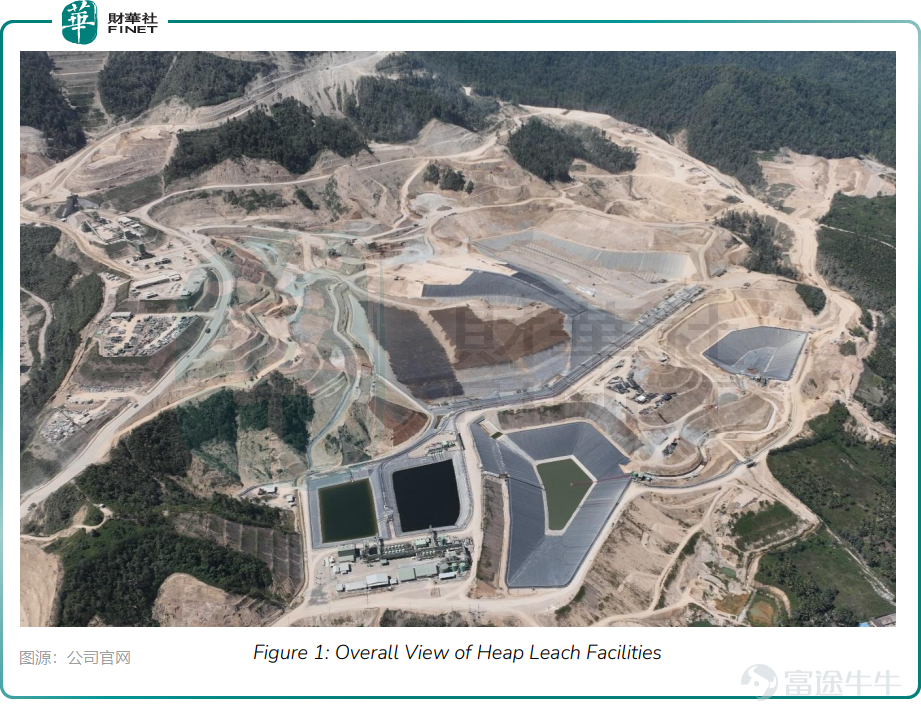
The company employs a dual-processing route combining heap leaching (HL) and carbon-in-leach (CIL) technologies, ensuring stable mine operations.Successwith all-in sustaining costs (excluding royalties) of approximately USD 794 per ounce,firmly positioning it in the lowest quartile of the global gold production cost curve—i.e., among the lowest-cost 25% of gold producers worldwide.
It is worth noting thatThe company’s heap leach process achieves an average gold recovery rate of 82%, while its carbon-in-leach process averages 92%—both exceeding industry averages of 73% and 90%, respectively,demonstrating a clear cost advantage.
Third, capacity expansion is purely incremental, without being weighed down by production declines from aging mines.
The Pani gold mine employs a phased development strategy, which is expected to significantly increase throughput and recovery rates, ultimately reaching a peak annual production of 545,000 ounces. Unlike many established gold producers burdened by output declines from aging assets, the company’s capacity growth is entirely incremental.Production from 2026 to 2030 will rise steadily year-over-year, with the mine projected to become Asia’s second-largest primary gold producer by 2030—offering a clear and highly certain growth trajectory.。
The inflection point of its inaugural commercial year has arrived, as earnings transition from 'expectations' to 'realization.'
2026 marks the company’s inaugural commercial year and a pivotal fundamental inflection point—potentially the key catalyst for a market-driven re-rating of its valuation logic. The conversion of 'resource reserves' into actual cash flow is accelerating rapidly.
The Pani gold mine produced its first gold in February and completed its first gold sale in March, signaling the company’s exit from the pure investment phase and entry into a revenue realization cycle.
Latest Q2 production data confirmed the rapid ramp-up pace: the mine produced 15,594 ounces of gold, a 758% sequential surge; silver output reached 29,796 ounces, up 752% quarter-over-quarter; and gold sales totaled 6,439 ounces, soaring 1,147% sequentially—far exceeding market expectations for capacity rollout speed.

Sales-side certainty is equally strong: the company has signed a two-year gold offtake agreement with Indonesia’s state-owned mining giant ANTAM, covering up to 3 metric tons (approximately 100,000 ounces), fully securing core output during the initial production phase and sidestepping the common distribution challenges faced by new mining entrants.
In terms of production guidance, the company has set a 2026 full-year gold output target of 100,000–115,000 ounces.In the second half of the year, as ore processing volumes continue to rise, economies of scale will quickly drive down mining costs, leading to a notable decline in all-in sustaining costs compared to Q2, with full-year profitability expected to be achieved within the year.
Over the medium to long term, 2026–2030 will be a golden period for the company’s rapid capacity ramp-up, with production expected to scale from the 100,000-ounce level to the 500,000-ounce level. Coupled with continuously declining costs stabilizing at a steady-state level, free cash flow is poised for explosive growth, providing ample firepower for future dividends, capacity expansion, and exploration. According to calculations in the prospectus, the company expects to achieve positive cumulative cash flow as early as 2028, with steadily improving earnings quality.
Gold stocks rebounded collectively—why does this one deserve the most attention for its leverage?
Since July, Hong Kong-listed gold stocks have strengthened collectively, fundamentally driven by a higher gold price floor and valuation recovery in the sector.
In early August, international spot gold broke through USD 4,260 per ounce and briefly surpassed the USD 4,300 mark. The sustained strength in gold prices reflects a confluence of three macro drivers: frequent global geopolitical conflicts boosting safe-haven demand, persistently falling U.S. Treasury yields, and rising expectations of Federal Reserve rate cuts weakening the dollar—all叠加 with the long-term trend of central banks globally continuing to accumulate gold reserves, further highlighting gold’s strategic allocation value.
According to CRU forecasts, the nominal gold price could reach USD 5,566 per ounce by 2030, underscoring that the fundamental rationale for a prolonged bull market in gold remains intact.

For gold producers, rising gold prices do not translate into linear gains but rather deliver strong operating leverage—mine depreciation, labor, and equipment costs are largely fixed, meaning nearly all incremental revenue from higher gold prices flows directly to net profit.Low-cost mines like Pani will maximize the earnings elasticity of Merdekagold-Drs, thereby significantly expanding the company’s earnings potential and supporting higher valuation expectations for its share price.
Take Merdekagold-Drs as an example: with a highly competitive all-in sustaining cost of USD 794 per ounce, its theoretical gross margin per ounce exceeds USD 3,000 in the current gold price environment above USD 4,000. For every USD 100 increase in the gold price, the company’s net profit growth significantly outpaces the industry average, making it a 'high-leverage play' during gold’s upward cycle.
This thesis has also gained broad consensus among institutional investors.
Major investment banks including Deutsche Bank, BNP Paribas, and CITIC Securities are all bullish on the upward cycle in the gold sector and specifically recommend gold equities characterized by 'low cost plus high production growth.'
CITIC Securities believes that USD 4,000 per ounce represents the floor for gold prices and that gold remains in a major bull market, expecting prices to re-enter an upward trajectory within the year.
Merdekagold-Drs, as a rare pure-play Southeast Asian gold mining HDR listing in the Hong Kong market, offers domestic investors convenient exposure to Indonesian gold assets and possesses three key attributes: large resource scale, low operating costs, and rapid production growth—making it a natural core choice for capital positioning ahead of the gold rally.
Conclusion
Overall, Merdekagold-Drs holds a world-class, low-cost gold mine, backed by both leading industrial capital and its parent company’s proven operational capabilities, along with a clear and verifiable production growth trajectory, rendering it a rare dual-play asset—combining growth and cyclical characteristics—during the current gold upcycle.
The company is currently at the early stage of production ramp-up, with a clear inflection point in earnings realization already emerging. The expectation of achieving profitability by 2026 is becoming increasingly evident. As the gold price anchor continues to rise and production capacity steadily scales up, Merdekagold-Drs offers compelling upside potential through both earnings and valuation expansion, warranting sustained investor attention.
Risk Disclaimer: The above content only represents the author's view. It does not represent any position or investment advice of Futu. Futu makes no representation or warranty.Read more

Comments
to post a comment
3