US Stock Market Talk | The Fed Resumes Rate Hikes After a Three-Year Pause! Is a New Shift Ahead for

SpaceX's First Earnings Report Since Going Public: Four Key Metrics to Understand This 'Super Machine'
SpaceX $SpaceX (SPCX.US)$ It has delivered its first earnings report since going public, reporting second-quarter 2026 revenue of USD 7.81 billion—an increase of 92% year-over-year and approximately 16% above Wall Street consensus. Net losses narrowed to USD 541 million, while adjusted EBITDA surged 191% to USD 3.54 billion. Judged by these three figures alone, the results are nearly flawless.
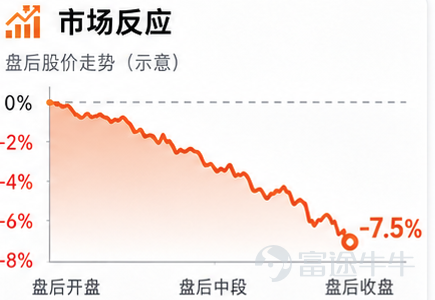
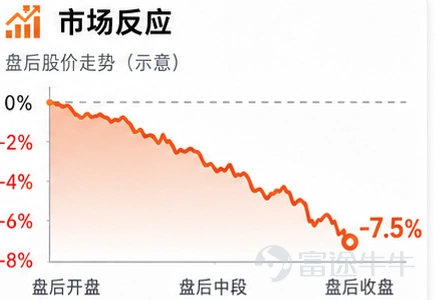
However, the stock price dropped 7% after hours. The reason lies in the fourth set of figures: capital expenditures for the quarter reached $18.37 billion, of which $15.83 billion was poured into AI computing infrastructure—a more than twentyfold year-over-year surge.
To understand this earnings report, we need to piece together three key components.
Starlink is the only profitable engine
Starlink has surpassed 12 million users across 167 countries, generating $4.3 billion in revenue with an operating margin of 38.6%. Enterprise and government revenue doubled (+108%), and Starshield secured over $6 billion in multi-year government contracts. However, it also faces risks: average revenue per user (ARPU) has steadily declined from $85 to $66, indicating that expansion is coming at the cost of pricing power.
AI is both the biggest surprise and the biggest point of contention
AI-related revenue hit $2.6 billion (+247%), and adjusted EBITDA turned positive for the first time at $1.15 billion. Yet the cost is staggering: $15.8 billion in capital expenditures in a single quarter. Full-year AI investment could exceed $60 billion. Of the $14.1 billion in signed cloud contracts, most include 90-day termination clauses, highlighting significant customer concentration risk.
Spaceflight is a money-losing black hole—but also an option on the future
Starship development caused this segment to post a quarterly loss of $540 million, yet it embodies the ambition to increase orbital payload capacity from kilotons to megatons and slash launch costs to one-tenth of current levels. During the earnings call, Musk dismissed his competitors as being 'one pixel high on the chart.' Indeed, SpaceX currently handles over 80% of global commercial orbital launches—a fact that gives Musk ample justification for his bold claims.
SpaceX management provided extremely aggressive guidance: annualized revenue is expected to reach $100 billion by year-end, up from the current $31 billion; and the trillion-dollar revenue target has been moved forward from 2031 to 'possibly 2029.' However, AI-related capital expenditures will remain at current levels for the next two quarters, meaning deeply negative free cash flow will persist in the near term.
How should investors view this stock?
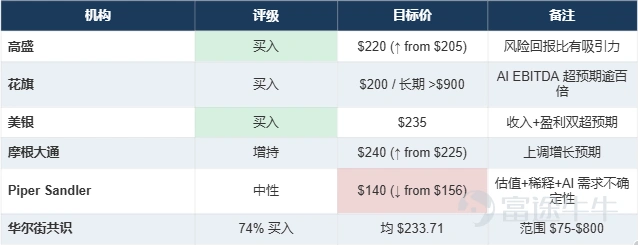
The current price of $114 and a $1.5 trillion market cap (~80x price-to-sales ratio) already price in an extremely optimistic future; Wall Street’s average price target is $234, with Goldman Sachs, Citi, and JPMorgan all issuing buy ratings; however, Piper Sandler lowered its price target to $140, warning of valuation and dilution risks.
Fundamentals are currently accelerating their improvement, but the margin of safety remains insufficient. It would be a better time to enter once there are signs of marginal improvement in AI-related capital returns.
This report is for research purposes only and does not constitute personal investment advice.
Risk Disclaimer: The above content only represents the author's view. It does not represent any position or investment advice of Futu. Futu makes no representation or warranty.Read more

Comments (2)
to post a comment
8
1