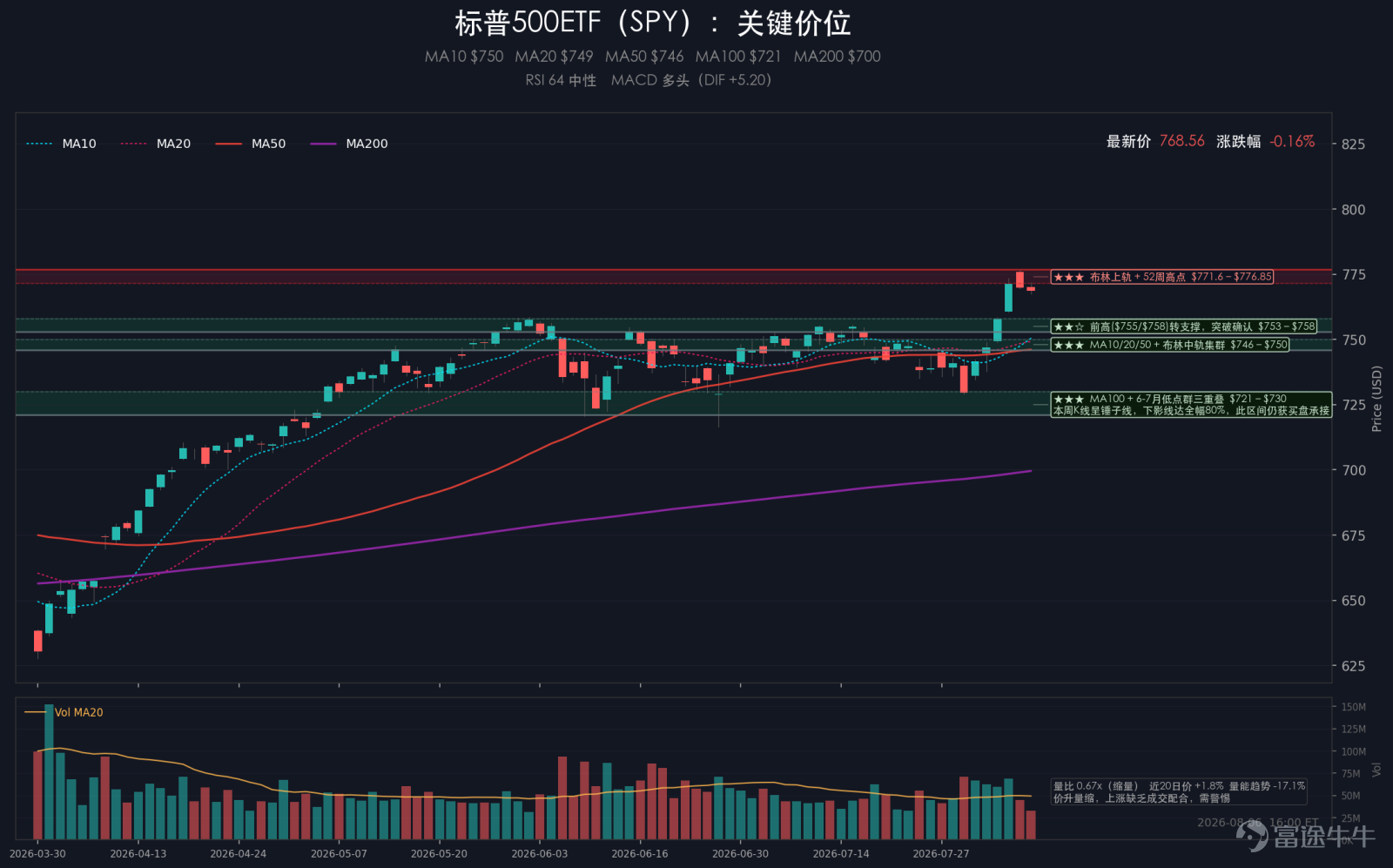
Simultaneous pressure on the Red Sea and the Strait of Hormuz drives international oil prices higher

Wall Street Brief (August 7): US equities broadly retreated on Thursday, with traditional heavyweight sectors under pressure, though market sentiment has not deteriorated significantly; a sharp rise in oil prices dampened risk appetite, prompting another pullback in the memory storage chain.
Summary: US stocks broadly declined on Thursday, with the S&P 500 down 0.18%, the Nasdaq down 0.06%, the Dow Jones down 0.85%, and the Russell 2000 down 0.58%. Among the four major indices, the Dow posted the steepest loss, while the Nasdaq held up relatively better. Selling pressure was concentrated more on traditional heavyweights and rate-sensitive sectors rather than across the entire tech space. The VIX fell to 15.15, down 4.17% on the day, indicating sentiment has not yet shifted markedly toward defensive positioning. The primary drag on markets was another sharp jump in crude oil prices, reigniting inflation concerns. Separately, although SanDisk and Western Digital reported solid earnings, their guidance failed to meet elevated expectations, leading the memory storage sector to give back gains once again. On a sector basis, energy outperformed, while memory storage, software, retail, and brokerages lagged. In broader asset classes, the 10-year Treasury yield rose 1.15%, gold fell 0.14%, crude oil gained 4.20%, Bitcoin dropped 0.44%, and the dollar index climbed 0.25%.
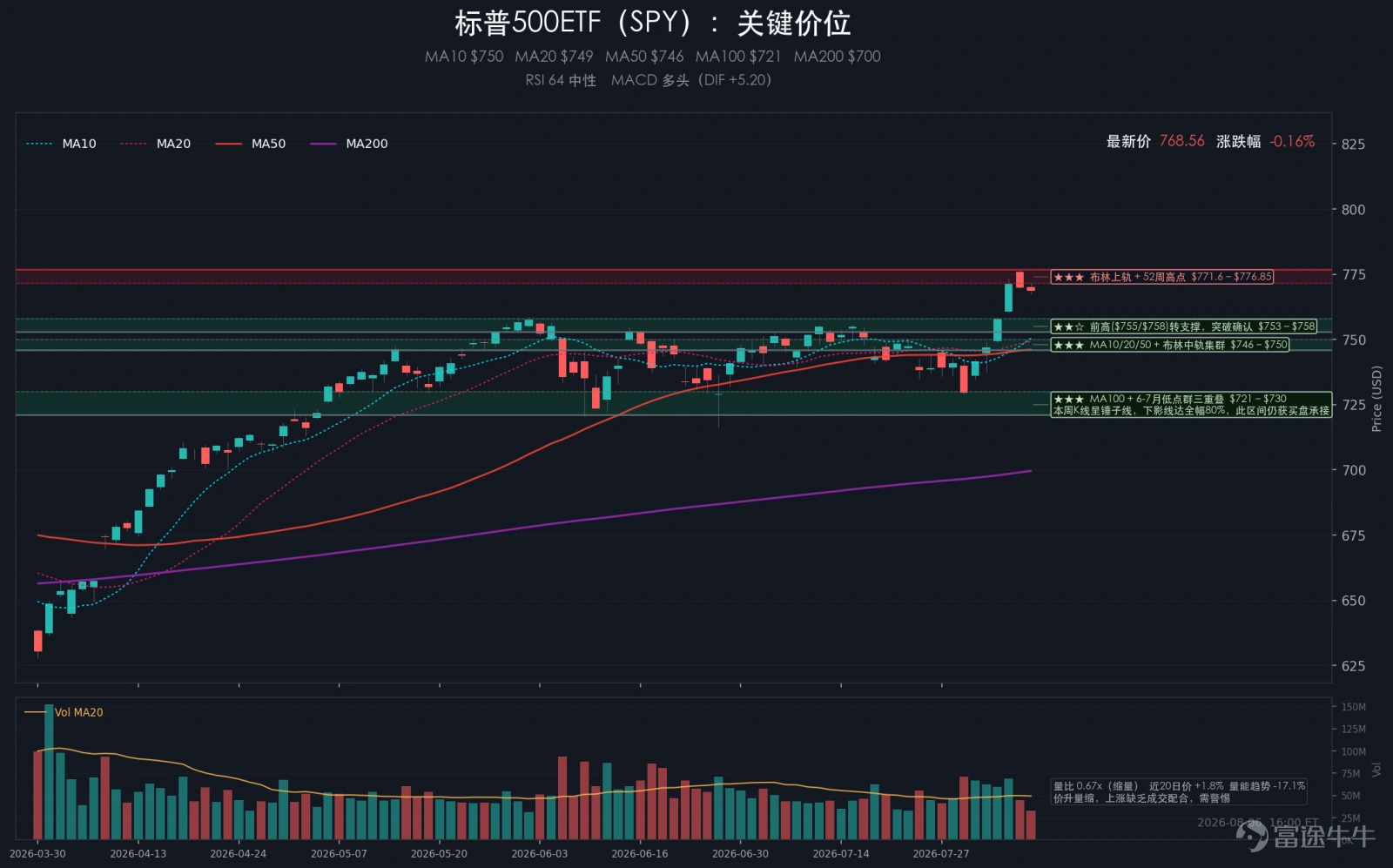
I. Major Events
1. Strait of Hormuz negotiations are nearing completion, but geopolitical risks remain unresolved.
Iran stated that its arrangement with Oman regarding the Strait of Hormuz has entered the final drafting stage, but US President Trump has not confirmed a deal has been reached. Over the past week, vessels near the strait have continued to face attacks or warnings. Markets are seeing progress in talks—but not resolution—with risks still looming. As a result, crude oil prices surged sharply, while the 10-year Treasury yield and the US dollar also strengthened in tandem, and equities pulled back from record highs, signaling that markets are re-pricing in inflation and shipping cost risks.
2. SanDisk and Western Digital guidance fell short of lofty expectations, triggering another pullback in the memory storage chain.
Both SanDisk and Western Digital delivered quarterly results that beat expectations, but their forward guidance failed to further elevate market expectations that were already running high, causing the memory storage sector to retreat noticeably. The issue isn’t that earnings suddenly worsened—it’s that share prices had already priced in even stronger growth ahead. Memory storage, software, and cloud computing segments all came under pressure together. Although the Nasdaq only dipped modestly, internal divergence within the tech sector and profit-taking on overly optimistic expectations have resurfaced.
II. Major Trends
On Thursday, all four major indices broadly retreated, with the Dow Jones Industrial Average down 0.85%—the weakest performer—followed by the Russell 2000 falling 0.58%, the S&P 500 dropping 0.18%, and the Nasdaq declining 0.06%. The pressure wasn't limited to high-valuation tech stocks alone; traditional heavyweights and cyclical sectors saw more pronounced pullbacks.
From a medium-term structural perspective, DIA has gained 8.23% over the past three months, significantly outpacing QQQ's 2.83% rise. Similarly, RSP climbed 7.12% over the same period, surpassing SPY’s 5.00% gain. Industrial-weighted sectors and market breadth remain dominant, indicating this rally isn’t being propped up solely by a handful of mega-cap tech stocks.
In terms of short-term momentum, SPY’s two-week gain accelerated to 4.12%, QQQ’s rose to 3.28%, and MAGS surged to an 8.46% two-week gain. This suggests that while the Dow and market breadth remain stronger on a medium-term basis, short-term elasticity is primarily concentrated among leading tech names.
III. Market Sentiment
The VIX declined to 15.15, falling 4.17% in a single day, as volatility continues to ease—indicating market sentiment hasn’t deteriorated significantly despite Thursday’s pullback. The CNN Fear & Greed Index held steady at 60, unchanged from the prior day, reflecting neither further warming nor a notable cooling in investor sentiment.
The CBOE total put/call ratio stood at 0.74, with the index options put/call at 0.98 and the equity options put/call at 0.65. Equity positioning remains optimistic, but protective positions on the index side haven’t been fully unwound, suggesting the market is maintaining a defensive layer ahead of rising oil prices and the upcoming nonfarm payrolls report.
IV. Market Scan
1. Index ETFs
All four major index ETFs pulled back on Thursday. DIA, tracking the Dow, posted the largest decline, followed by IWM (Russell 2000) giving back gains, while SPY (S&P 500) and QQQ (Nasdaq 100) only saw modest losses. Selling pressure was concentrated in traditional heavyweights and rate-sensitive segments, while the tech leadership theme did not show signs of broad-based deceleration.
2. Sector Performance
Energy (XLE) rose 1.48%, making it the strongest-performing sector and one of the few to clearly move higher against the broader trend. On the other end, Materials (XLB) fell 0.89%, the worst performer. Absolute sector dispersion remained limited, but rising oil prices have already redirected capital back into energy. At the sub-industry level, Oil Services (OIH) gained 1.82%, the top performer. Conversely, DRAM stocks dropped 4.28%, leading the declines, followed by Cloud Computing (SKYY) down 1.88%, Software (IGV) down 1.87%, Homebuilders (XHB) down 1.87%, Retail (XRT) down 1.72%, and Brokerages (IAI) down 1.53%. The clearest areas of weakness remain memory-related supply chains and rate-sensitive sectors.
3. The Magnificent Seven Tech Stocks
Divergence persisted among the Magnificent Seven tech stocks. Microsoft rose 2.54%, the strongest performer, while Google fell 0.97%, relatively the weakest. The mega-cap tech group didn’t uniformly weaken; Microsoft continued to provide support to the broader index but wasn’t strong enough to lift the entire tech sector.
4. Chinese ADRs
Chinese ADRs lacked a unified direction. NetEase gained 1.76%, the relative outperformer, while Futu dropped 5.17%, the weakest link. Significant internal divergence persisted within the group. Overall, Chinese ADRs exhibited more of a stock-specific trading pattern rather than a coordinated return of capital.
5. Cryptocurrencies
Bitcoin dipped 0.44%, registering only a modest pullback, but related equities came under sharper pressure. MARA fell 5.25%, MSTR declined 1.55%, and CRCL was flat—indicating that during broader market pullbacks, investor tolerance for high-beta cryptocurrency-related stocks diminishes more rapidly.
$S&P 500 Index (.SPX.US)$ $SPDR S&P 500 ETF (SPY.US)$ $NASDAQ 100 Index (.NDX.US)$ $Invesco QQQ Trust (QQQ.US)$ $Dow Jones Industrial Average (.DJI.US)$ $State Street® SPDR® Dow Jones Industrial Average® ETF Trust (DIA.US)$ $Russell 2000 Index (.RUT.US)$ $iShares Russell 2000 ETF (IWM.US)$ $Roundhill Magnificent Seven ETF (MAGS.US)$ $USD (USDindex.FX)$ $U.S. 10-Year Treasury Notes Yield (US10Y.BD)$ $iShares 20+ Year Treasury Bond ETF (TLT.US)$ $XAU/USD (XAUUSD.CFD)$ $SPDR Gold ETF (GLD.US)$ $CBOE Volatility S&P 500 Index (.VIX.US)$ $CME-Bitcoin RR Futures (SEP6) (BTCmain.US)$ $iShares Ethereum Trust ETF (ETHA.US)$ $NVIDIA (NVDA.US)$ $Tesla (TSLA.US)$ $Meta Platforms (META.US)$ $Amazon (AMZN.US)$ $Alphabet-C (GOOG.US)$ $Microsoft (MSFT.US)$ $Apple (AAPL.US)$
Risk Disclaimer: The above content only represents the author's view. It does not represent any position or investment advice of Futu. Futu makes no representation or warranty.Read more


Comments
to post a comment
8