Approximately 80% of new listings are expected to rise on their debut in 2026; how will subsequent p

Jia Shijia's product unit prices continue to decline: its largest customer is also a shareholder, accounting for 36% of related-party sales
On July 16, the Shenzhen Stock Exchange disclosed Jiangsu Jia Shijia New Materials Group Co., Ltd.'s (hereinafter referred to as 'Jia Shijia') reply to the first round of review inquiries, addressing 18 issues including business independence, customer concentration, reasonableness of fundraising projects, related-party transactions, and the status of the actual controller.
Previously, Jia Shijia had submitted its application for listing on the main board of the Shenzhen Stock Exchange in late 2025 and received acceptance, with Orient Securities acting as its sponsor.
According to the prospectus and Tianyancha, Jia Shijia was founded in 2010 and is a company specializing in the research and development, production, and sales of paper-based new materials—specifically impregnated paper and related products. The company modifies printed decorative paper using polymer-modified resin solutions such as amino resins, offering customers impregnated paper products that are wear-resistant, stain-resistant, impact-resistant, aging-resistant, heat-resistant, flame-retardant, moisture-resistant, easy to clean, and aesthetically designed.
In terms of financial performance, Jia Shijia has maintained a growth trajectory in recent years, yet it still faces certain challenges regarding reliance on core businesses, pricing pressure on products, and expansion into new business areas.
Continued revenue growth accompanied by steadily declining product prices
Financial data shows that during the reporting period (2023 to 2025), Jia Shijia generated revenues of RMB 1.59 billion, RMB 1.60 billion, and RMB 1.895 billion, respectively; net profits of RMB 147 million, RMB 133 million, and RMB 173 million, respectively; and net profits attributable to owners of the parent company of RMB 147 million, RMB 135 million, and RMB 168 million, respectively.
Overall, the company’s revenue scale has continued to expand, and its profitability remains stable. However, behind this growth, the company’s revenue structure remains heavily dependent on its traditional flagship products.
During the reporting period, impregnated paper generated revenues of RMB 1.074 billion, RMB 1.017 billion, and RMB 1.107 billion, accounting for 67.74%, 63.82%, and 58.81% of total main business revenue, respectively.
Impregnated paper composite materials (technology wood veneer) generated revenues of RMB 244 million, RMB 339 million, and RMB 418 million, representing 15.39%, 21.26%, and 22.20% of total main business revenue, respectively.
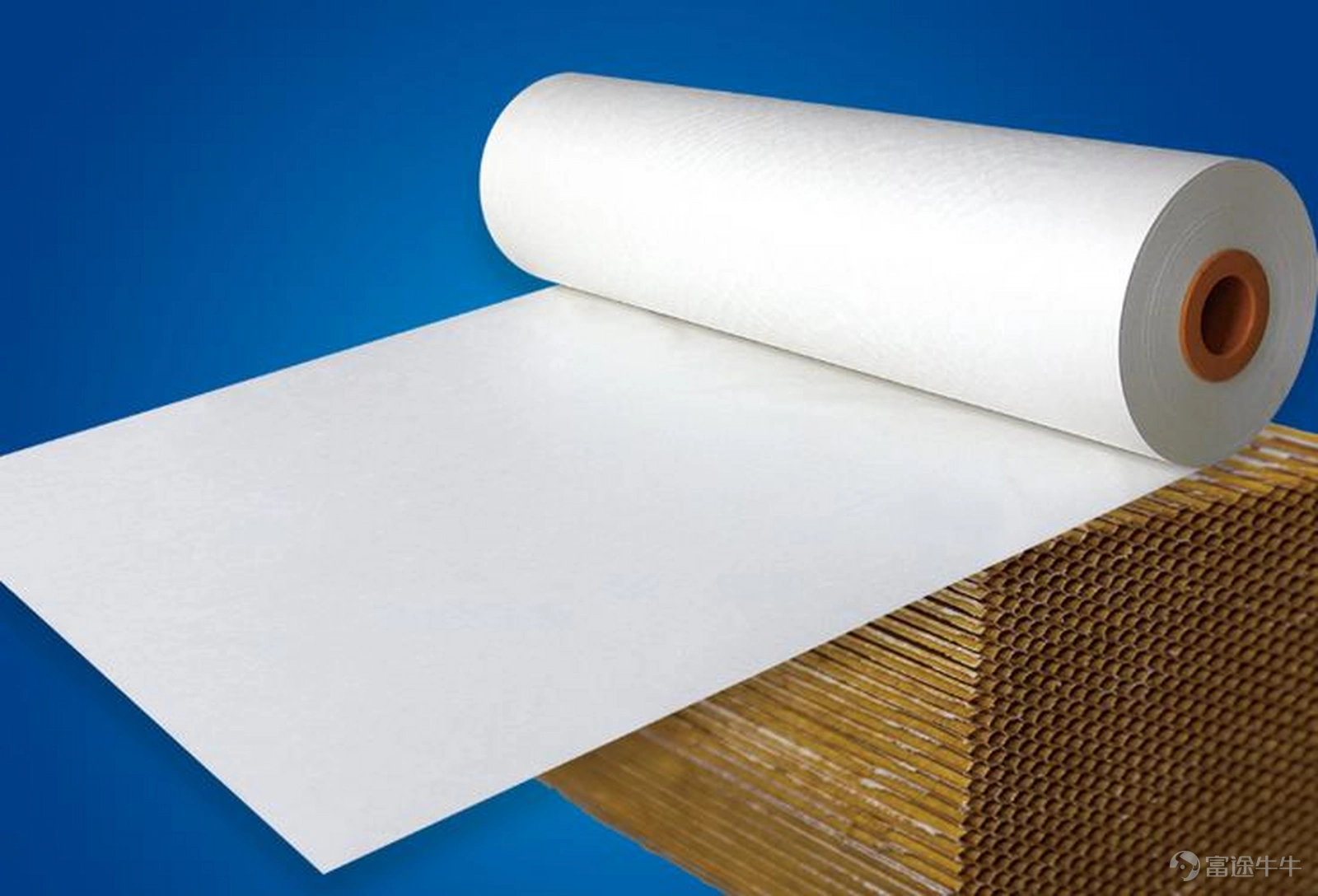
Combined, impregnated paper and impregnated paper composite materials accounted for 83.13%, 85.08%, and 81.01% of main business revenue during the reporting period, making them the company’s most critical revenue sources.
By contrast, the company’s expansion into new areas such as engineered wood panels and commercial spaces remains in the incubation phase. During the reporting period, engineered wood panels generated revenues of RMB 99.67 million, RMB 90.39 million, and RMB 123 million, representing 6.29%, 5.67%, and 6.54% of total main business revenue, respectively; other products generated revenues of RMB 168 million, RMB 147 million, and RMB 234 million, accounting for 10.58%, 9.25%, and 12.45% of total main business revenue, respectively.
During the reporting period, the company extended its impregnated paper and engineered wood panel products into the building materials segment through its subsidiary Guangzhou Yili, aiming to expand applications in the commercial space market. However, due to limited brand recognition and insufficient industry experience in these areas, the company faces certain challenges in developing new businesses, resulting in a relatively long market penetration cycle.
Data shows that in fiscal year 2025, Guangzhou Yili reported a net loss of RMB 5.5315 million and has yet to achieve profitability.
Notably, while its core business continues to grow, Jia Shijia is experiencing pricing pressure on its products.
During the reporting period, the company's average unit selling prices for impregnated paper were RMB 8.64, RMB 8.06, and RMB 7.40 per sheet, representing year-over-year declines of 6.71% and 8.19%, respectively; meanwhile, the average unit selling prices for technological wood veneer were RMB 14.91, RMB 13.98, and RMB 13.08 per sheet, down 6.27% and 6.46% year-over-year, respectively.
Regarding the decline in product prices, the company stated that in recent years, certain downstream branded manufacturers have stimulated end-market consumption through promotional price cuts or by launching cost-effective products, transmitting this pricing pressure upstream across the supply chain, which has led to an overall downward trend in the selling prices of its impregnated paper.
Zhou Di, an expert from the Ministry of Science and Technology’s National Expert Database, noted that Jia Shijia’s current strategy of boosting revenue through volume growth driven by price reductions is difficult to sustain over the long term. At present, the market for standard-grade impregnated paper suffers from significant overcapacity, while demand from real estate and home furnishing end markets remains weak. Intense price competition among peers continues to compress profit margins for basic product categories. The company’s gross margin is currently stabilized only by falling raw material costs. Should upstream raw material prices rebound and industry-wide price wars intensify further, low- to mid-tier impregnated paper products—lacking sufficient pricing premium buffers—would see sustained gross margin erosion. Moreover, the marginal benefit of scaling up volume to dilute fixed costs would continue to diminish, making it increasingly difficult for sales growth to offset profit losses caused by declining unit prices.
In fact, the engineered wood panel and home furnishings industry chain, in which Jia Shijia operates, has recently faced mounting pressure from demand-side adjustments. Shifts in the real estate market, slowing home furnishing consumption, and intensifying industry competition have collectively created an operating environment characterized by 'difficulty in achieving volume growth and persistent price declines' for companies across the sector.
Against this backdrop, although Jia Shijia has maintained profitability through economies of scale, the sustainability of its gross margin will ultimately depend on the recovery of market demand and the company’s ability to optimize its product mix.
During the reporting period, the company’s gross margin from core operations stood at 21.99%, 22.04%, and 23.18%, respectively. Impregnated paper and technological wood veneer remained the primary profit contributors, with gross margins of 22.92%, 22.03%, and 23.00% for these two segments. Fluctuations in the company’s overall core business gross margin were primarily driven by the profitability trends of these two key product lines.
R&D investment below industry peers and dual reliance on two major customers
In addition to its concentrated business structure, Jia Shijia’s relatively low level of R&D investment has also drawn considerable external scrutiny.
During the reporting period, the company's R&D expenses amounted to RMB 24.63 million, RMB 26.40 million, and RMB 31.45 million, representing 1.55%, 1.65%, and 1.66% of revenue, respectively. In comparison, the average R&D expense ratio among comparable listed companies was 4.44%, 4.88%, and 4.41% for the same periods, indicating that Jia Shijia’s R&D investment as a percentage of revenue is significantly lower than industry peers.
In response, Jia Shijia explained that due to its large scale and the concentration of R&D activities within the parent company, the overall R&D expense ratio is diluted by the operating scale of its subsidiaries. If considering only the parent company’s R&D expense ratio, the figures were 3.51%, 3.54%, and 3.87%, which are much closer to the industry average.
However, from a capital markets perspective, as a company focused on paper-based new materials, Jia Shijia’s R&D capabilities are critical not only for product upgrades but also for building future competitive moats. Particularly amid intensifying industry competition and pricing pressure on traditional impregnated paper products, it remains to be seen whether the company can escape price-based competition through material innovation, process upgrades, and development of high-value-added products.
Zhou Di pointed out that the company has consistently maintained its R&D expense ratio within the range of 1.5% to 1.66%, less than half the average among peer listed companies. Even if R&D is concentrated at the parent company level, the overall level of technological investment still shows a clear shortfall. Today’s home furnishings market increasingly emphasizes premium decorative surfaces with features such as scratch resistance, fingerprint resistance, and low formaldehyde emissions. The key to breaking away from homogeneous competition lies in continuous iteration of new materials and new processes. Persistently low R&D investment will delay the commercialization of advanced formulations and functional decorative surface products, trapping the company long-term in the low-to-mid-end red ocean market, hindering the establishment of differentiation barriers, gradually eroding its long-term competitiveness, and forcing it to rely continuously on price competition to secure orders.
During the same period, the company’s selling expenses were RMB 53.92 million, RMB 60.47 million, and RMB 70.42 million, accounting for 3.39%, 3.78%, and 3.72% of revenue, respectively, remaining relatively stable overall.
Regarding customer structure, Jia Shijia’s high customer concentration has become a key focus of the Shenzhen Stock Exchange’s review inquiries.
Data shows that during the reporting period, sales to the company’s top five brand channels accounted for 50.38%, 55.95%, and 68.48% of total revenue, reflecting a continued upward trend. Among these, sales through the TUBAO (stock code: 002043.SZ) brand channel amounted to RMB 466 million, RMB 476 million, and RMB 669 million, representing 29.84%, 30.50%, and 35.98% of total revenue, respectively. By 2025, TUBAO had become Jia Shijia’s largest brand channel customer.
Meanwhile, another major customer, Yunfeng New Materials, has gradually entered the company’s core customer base. During the reporting period, sales to Yunfeng New Materials were RMB 0, RMB 0, and RMB 187 million, accounting for 0%, 0%, and 9.85% of total revenue, respectively.
Notably, Jia Shijia maintains not only business relationships with these two companies but also capital-level ties.
In October 2021, TUBAO Investment (a wholly owned subsidiary within the TUBAO Group) acquired a stake in Jia Shijia and currently holds 4.84% of the company’s shares.
In July 2024, Jia Shijia and its subsidiary Linyi Jia Shijia jointly established Linyi Yunjia with Yunfeng New Materials, in which Yunfeng New Materials holds a 49% equity stake.
Accordingly, in its first-round review inquiry, the Shenzhen Stock Exchange specifically requested Jia Shijia to clarify: its cooperation history with Tubaobao Group and Yunfeng New Materials; whether the company’s business operations are dependent on major customers and related parties such as Tubaobao Group and Yunfeng New Materials; the impact of these matters on the company’s operational independence; and whether the company possesses independent operational capabilities.
Regarding its cooperative relationship with Tubaobao Group, Jia Shijia stated that shortly after the company’s establishment, Tubaobao Group’s panel contract manufacturers began procuring impregnated paper from Jia Shijia for surface lamination of engineered wood panels. Throughout this collaboration, Tubaobao Group developed a thorough understanding and assessment of the company’s industrial advantages and supply chain value—particularly Jia Shijia’s early-mover competitive strengths in industrial layout, product quality, supply reliability, and cost control. Building on this foundation, Tubaobao Group commenced a strategic partnership with Jia Shijia in 2013 in the field of paper-based surface-treated engineered wood panels. According to Tubaobao’s annual reports, sales volume of its laminated panels (primarily eco-friendly ready-to-use panels surface-treated with paper-based materials) increased by 44.87% in 2013, followed by another 42.53% growth in 2014, surpassing plywood in production and sales volume for the first time. As Tubaobao Group gradually assumed an industry leadership position in China’s engineered wood panel sector, it began investing across the upstream and downstream segments of the value chain and expressed interest in investing in Jia Shijia.
Jia Shijia noted that, given its early-stage collaboration with Tubaobao Group and the latter’s industry leadership status, the company decided to bring Tubaobao Group on board as a strategic investor. After completing its shareholding restructuring and finalizing its 2020 financial statements, Jia Shijia received a minority equity investment from Tubaobao Investment—a wholly owned equity investment platform under Tubaobao Group—in 2021. This investment represented a further step to strengthen mutual trust and deepen cooperation based on their long-standing business relationship and mutual understanding.
Aside from Tubaobao, Yunfeng New Materials has also become a key cooperation partner for Jia Shijia in recent years. The company stated that it initiated business cooperation with Yunfeng New Materials immediately upon its founding, resulting in over a decade of collaborative history to date. Similar to Tubaobao Group, Yunfeng New Materials is an early entrant into the paper-based laminated panel segment among engineered wood panel brands. According to its Hong Kong IPO prospectus (application version) disclosed in January 2026, Yunfeng ranked as China’s third-largest green engineered wood panel service provider by revenue in 2024. During its ongoing promotion of paper-based laminated panels, both Yunfeng New Materials and its OEM panel manufacturers have maintained regular business cooperation with Jia Shijia on impregnated paper-related products.
Prior to the joint venture established between Jia Shijia and Yunfeng New Materials in 2024, Yunfeng New Materials, like other corporate clients, had only signed an annual procurement framework agreement with the company and had not entered into any strategic cooperation agreements or similar arrangements. In 2024, driven by multiple factors—including Yunfeng New Materials’ intention to restructure its supply chain to respond to downstream market competition and the availability of temporarily idle factory space—the two parties ultimately reached a strategic cooperation agreement and formed a joint venture.
In response to concerns regarding customer concentration and business independence, Jia Shijia stated that it acquires clients primarily through its market position, brand reputation, and competitive advantages in full-industry-chain integration and nationwide supply chain coverage. The company possesses independent capability to secure orders from the market and does not exhibit significant dependence on Tubaobao Group or Yunfeng New Materials.
Transactions between the company and Tubaobao Group and Yunfeng New Materials follow market-based pricing principles. During the reporting period, the gross margins on sales to Tubaobao Group and Yunfeng New Materials were close to the company’s overall gross margin for core operations, indicating fair and reasonable transaction pricing.
With respect to settlement terms and credit periods, the company maintains largely consistent credit policies for its major customers. Currently, the credit terms for primary clients generally remain within 90 days, aligning with the industry norm of 1–3 months. The credit periods and settlement methods for Tubaobao Group and Yunfeng New Materials do not materially differ from those of other major clients, and there are no special accommodations such as extended credit terms or unique payment arrangements.
In summary, the company does not engage in any form of improper benefit transfer through non-arm’s-length purchases or sales to Tubaobao Group or Yunfeng New Materials. All orders are independently secured based on genuine commercial needs and market-driven negotiations, fully complying with requirements related to business independence.
The new factory is still ramping up production, and multiple relatives of the actual controller hold shares and serve in management roles.
From the perspective of asset structure, Jiashijia’s working capital pressure also warrants attention.
At the end of each reporting period, the company’s accounts receivable balances were RMB 328 million, RMB 388 million, and RMB 374 million, representing 20.61%, 24.27%, and 19.76% of revenue for the respective periods. Bad debt provisions amounted to RMB 22.94 million, RMB 25.95 million, and RMB 25.35 million, respectively. Correspondingly, the accounts receivable turnover ratios were 5.31, 4.80, and 5.33.
In addition, the company’s inventory levels have remained relatively high.
At the end of each reporting period, the company’s net inventory values were RMB 162 million, RMB 159 million, and RMB 175 million, accounting for 16.34%, 14.92%, and 13.79% of current assets, respectively. Inventory write-down provisions totaled RMB 8.83 million, RMB 14.90 million, and RMB 17.71 million, representing 5.16%, 8.56%, and 9.18% of gross inventory balances, respectively.
In terms of cash flow performance, the company’s operating quality appears acceptable. During the reporting periods, net cash flows from operating activities amounted to RMB 210 million, RMB 157 million, and RMB 398 million, respectively.
In this IPO, Jiashijia plans to raise RMB 771 million, of which RMB 669 million will be allocated to a smart and green factory construction project; RMB 237 million for an intelligent automated impregnated paper production line project in Guangdong; RMB 131 million for an intelligent automated impregnated paper and composite materials production line project in Hubei; RMB 233 million for an intelligent automated impregnated paper, composite materials, and engineered wood panel production line project in Guangxi; RMB 68.47 million for an intelligent automated impregnated paper and EB electron beam roll/sheet production line project at its Jiangsu headquarters; RMB 71.47 million for a research and development center and IT infrastructure project; and the remaining RMB 30 million for supplementing working capital.
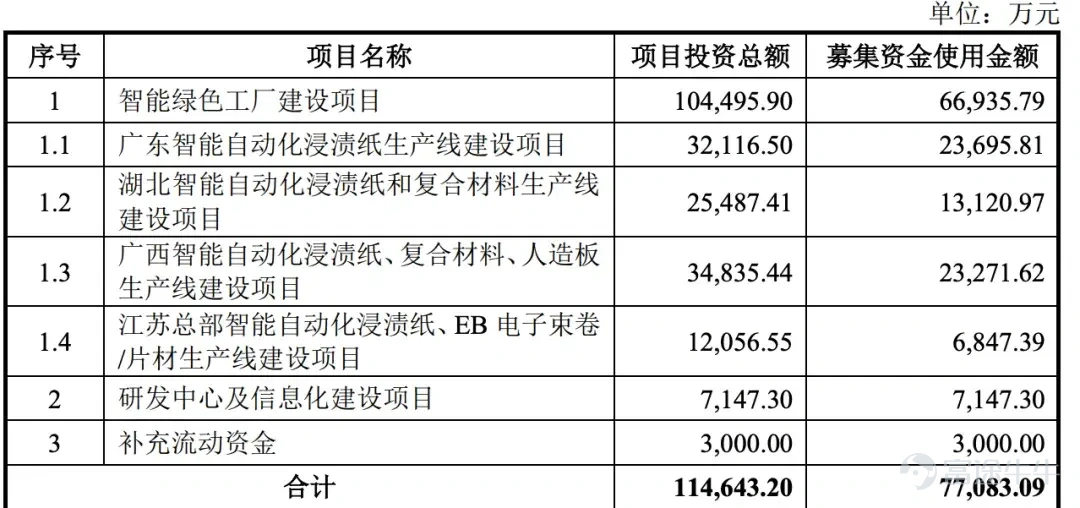
In recent years, Jiashijia has actively expanded its nationwide production capacity, establishing manufacturing bases successively in Zhejiang, Hubei, Guangxi, and Guangdong. Among these, Youpinyuan in Hubei, Jiashijia in Guangxi, and Jiashijia in Guangdong are all part of the current IPO fundraising projects.
According to the plan, once all fundraising projects reach full operational capacity, they are expected to add approximately 108 million sheets per year of impregnated paper capacity, 5.4 million sheets per year of impregnated paper composite materials capacity, 3.024 million sheets per year of engineered wood panel capacity, and 2 million square meters per year of EB electron beam roll/sheet capacity.
For a company with current annual revenue of approximately RMB 1.9 billion, this expansion is substantial. However, whether the market can absorb the additional capacity will be a critical challenge for Jiashijia’s future growth.
According to the prospectus, as of the end of the reporting period, Jia Shijia’s aforementioned fundraising projects have progressively completed partial construction and entered the production phase. However, as these projects are still in the ramp-up stage, capacity utilization rates at certain bases remain relatively low. Specifically, Hubei Youpinyuan reported a net loss of RMB 7.6334 million in 2025, while Guangxi Jiashijia incurred a net loss of RMB 3.3001 million in the same year.
Meanwhile, the company’s overall capacity utilization has also experienced some fluctuations. During the reporting period, the capacity utilization rates for impregnated paper were 80.63%, 78.63%, and 83.55%, respectively, while those for engineered wood veneer were 83.18%, 88.53%, and 69.08%, showing noticeable volatility. In particular, the capacity utilization rate for engineered wood veneer declined significantly in 2025.
The company acknowledged that if macroeconomic growth slows in the future, the real estate market remains sluggish, or industry competition intensifies further, the newly added capacity from this fundraising initiative may face risks of underperforming in market expansion. The newly operational facilities may fail to reach their designed capacity, potentially causing the company’s overall capacity utilization to decline further.
In addition, during the reporting period, the company carried out a cash dividend distribution in 2024, amounting to RMB 50 million.
Additionally, the company implemented two rounds of equity incentives through Changzhou Runrong, Changzhou Runying, and Changzhou Runjia. Changzhou Runrong, Changzhou Runying, and Changzhou Runjia hold 16.85%, 12.98%, and 4.48% of the company’s shares, respectively, with each incentive unit subscribed at a price of RMB 1 per unit.
From 2022 to 2025, the company recognized share-based compensation expenses of RMB 10.7717 million, RMB 10.3835 million, RMB 8.6382 million, and RMB 10.1241 million, respectively.
In terms of equity structure, as of the date of signing the prospectus, Jiangsu Hanrun directly holds 50 million shares of the company, representing 37.30% of the total issued shares, making it the company’s controlling shareholder. Liu Jianwen directly and indirectly holds 47.756861 million shares, or 35.62% of the total shares. Since the company’s inception, he has successively served as Technical Director, Supervisor, and Chairman. Additionally, Liu Jianwen is the executive partner of Changzhou Runying and its de facto controller. Zhu Zhihua also directly and indirectly holds 47.756861 million shares, or 35.62% of the total shares, and has held positions as Executive Director and General Manager, and later as Director and General Manager since the company’s establishment. Zhu Zhihua is also the executive partner of Changzhou Runrong and its de facto controller.
On April 18, 2024, Liu Jianwen, Zhu Zhihua, Jiangsu Hanrun, Changzhou Runrong, and Changzhou Runying entered into a Concert Party Agreement, designating them as concert parties. As a result, Liu Jianwen and Zhu Zhihua collectively hold and effectively control voting rights representing 89.51% of the company’s total shares.
Notably, to date, seven relatives of the company’s actual controllers indirectly hold shares in the company through its shareholding platforms, collectively owning 5.02% of the total shares. Among them, Zhang Linchang, Zhu Zhihua’s brother, serves as the company’s Vice President; Zhu Zhi’an, another brother of Zhu Zhihua, is a mid-level manager; Zhu Zhiyu, Zhu Zhihua’s sister, previously worked as a finance staff member at a subsidiary; and Liu Jianxiang, Liu Jianwen’s brother, serves as a director and senior executive at a subsidiary.
Therefore, the Shenzhen Stock Exchange has requested Jiashijia to detail, in light of enterprises controlled or significantly influenced by the actual controllers’ relatives (including dissolved entities), their basic information, equity structures, main businesses, and products, whether these enterprises engage in businesses identical or similar to the issuer’s. If so, the company must clarify whether any material adverse impact arising from such activities constitutes significant competition with the issuer, and whether any business cooperation or transactions occurred between these enterprises and the company during the reporting period.
Jia Shijia responded: enterprises controlled or significantly influenced by close relatives of the actual controller (including those already deregistered) primarily engage in road freight transportation, venture capital, and other businesses. These activities do not overlap or closely resemble those of the issuer and therefore do not constitute materially adverse competitive conflicts. During the reporting period, transaction prices between the issuer and the aforementioned entities were determined through mutual negotiation based on market conditions, ensuring fair pricing, with no instances of improper benefit transfers via related-party transactions.
During the reporting period, Jia Shijia’s subsidiary, Chongqing Jia Shijia, was subject to two administrative penalties related to production safety, amounting to a total fine of RMB 17,000.
Specifically, in April 2023, the Jiangjin District Fire and Rescue Brigade of Chongqing Municipality issued Administrative Penalty Decision No. [2023] 0034, imposing a fine of RMB 7,000 on Chongqing Jia Shijia for obstructing a safety exit, in violation of Article 28 of the People's Republic of China Fire Control Law.
In September 2024, the Jiangjin District Fire and Rescue Brigade of Chongqing Municipality issued Administrative Penalty Decision No. [2024] 0177. Chongqing Jia Shijia New Materials Co., Ltd. was penalized for non-compliant configuration and installation of fire protection facilities and equipment, which violated Article 16(1)(ii) of the People's Republic of China Fire Control Law. This violation was deemed a relatively minor offense. Additionally, the company was found to have obstructed a fire hydrant, violating Article 28 of the same law. The penalties for both violations were combined into a single fine of RMB 10,000.
Clearly, for a new materials company actively expanding its nationwide production footprint and continuously scaling up capacity, workplace safety remains a critical component of its long-term operational capability. As the number of production bases grows, how the company further strengthens standardized management across regional plants and enhances its capabilities in safety, environmental compliance, and quality control will be a key test of its post-listing sustainability. (Produced by Harbor Financial)
Zhang Ranqi, Harbor Business Observer
Risk Disclaimer: The above content only represents the author's view. It does not represent any position or investment advice of Futu. Futu makes no representation or warranty.Read more
Comments
to post a comment