
English
Back
Open Account
如何選擇合適的期權,有什麼秘笈?
森木美股小生
joined discussion ·

Discover the Appeal of Options (Options for Absolute Beginners)

Why Trade Options?
Because the era of options is sweeping in

Advantages of Options:
1. Flexible Trading: Options differ from all other investment instruments—they have no cyclical constraints and don’t depend on market conditions. They work in any market environment (bullish, bearish, or sideways) and support round-the-clock T+0 trading.
2. Risk Hedging: Options offer significant leverage, enabling investors to hedge large equity positions with relatively small capital outlays. Moreover, options are a crucial hedging tool in both domestic and international financial markets—especially in mature overseas markets.
3. Limited Loss: As a buyer of options, your risk exposure is capped—you can lose no more than the premium paid, with no risk of margin calls or negative account balances, similar to insurance (e.g., car insurance).
4. High Profit Potential: Thanks to their high leverage, options can be used either to hedge equity positions or as standalone speculative instruments. Option buyers enjoy limited risk with unlimited profit potential—correct directional bets can generate substantial returns.

I. What Are Options?
Term: Time
Right: Entitlement
Option: An entitlement held over a future period of time
Another way to classify options:

Mooncake voucher — American-style option: An option that allows the buyer to exercise their right on any trading day before expiration or on the expiration date itself
Movie ticket — European-style option: An option that allows the buyer to exercise their right only on the expiration date


*Example of a call option
Mr. Wong, a Hong Kong resident:
My son is getting married next year, and I’d like to buy him an apartment. But... if I buy now, what if prices drop next year? Yet if I wait until next year, what if prices surge even higher?
Property developer: You can pay HK$100,000 now for an option on an off-plan unit, giving you the right to purchase the property next year at HK$3 million.
● Next year, if the market price of the property reaches HK$4 million, Mr. Wong still has the right to buy it at the agreed price of HK$3 million.
● Next year, if the market price falls to HK$2 million, Mr. Wong can choose to let the option expire, but the HK$100,000 premium will not be refunded.

*Example of a put option
Background
Suppose you are the owner of an orchard, and you have a batch of apples about to ripen. The current market price for apples is RMB 3 per kilogram, and you are concerned that a potential decline in market prices over the coming period could hurt your profits.
Purchase an option
To hedge against the risk of a price drop, you pay a premium to a fruit distributor and enter into a contract granting you the right to sell your apples to the distributor at RMB 3 per kilogram one month from now.
Exercise at expiration
1) If the apple price rises to RMB 4 per kilogram, you can choose not to exercise the option and instead sell at the higher market price.
2) If the apple price falls to RMB 2 per kilogram, you can exercise your right and sell the apples at the agreed-upon price of RMB 3 per kilogram.

II. Functions of options:
Risk transfer: Hold put options on stocks you own or buy call options when short selling (via securities lending).
Enhanced returns: When expecting a stock to remain flat or rise only modestly, you can use covered calls to boost returns and lower effective cost basis.
Leveraged gains: When capital is limited, buying call (or put) options can provide leveraged exposure to amplify potential returns.
Precision investing: the sharper your insight, the greater your returns

Multi-dimensional trading: executing strategies across multiple dimensions
Why Trade Options? Because the era of options is sweeping in  Advantages of Options: 1. Flexible Trading: Options differ from all other investment instruments—they have no cyclical constraints and don’t depend on market conditions. They work in any market environment (bullish, bearish, or sideways) and support round-the-clock T+0 trading. 2. Risk Hedging: Options offer significant leverage, enabling investors to hedge large equity positions with relatively small capital outlays. Moreover, options are a crucial hedging tool in both domestic and international financial markets—especially in mature overseas markets. 3. Limited Loss: As a buyer of options, your risk exposure is capped—you can lose no more than the premium paid, with no risk of margin calls or negative account balances, similar to insurance (e.g., car insurance). 4. High Profit Potential: Thanks to their high leverage, options can be used either to hedge equity positions or as standalone speculative instruments. Option buyers enjoy limited risk with unlimited profit potential—correct directional bets can generate substantial returns.  I. What Are Options? Term: Time Right: Entitlement Option: An entitlement held over a future period of time Another way to classify options:  Mooncake voucher — American-style option: An option that allows the buyer to exercise their right on any trading day before expiration or on the expiration date itself Movie ticket — European-style option: An option that allows the buyer to exercise their right only on the expiration date   *Example of a call option Mr. Wong, a Hong Kong resident: My son is getting married next year, and I’d like to buy him an apartment, but... if I buy now, what if next year...
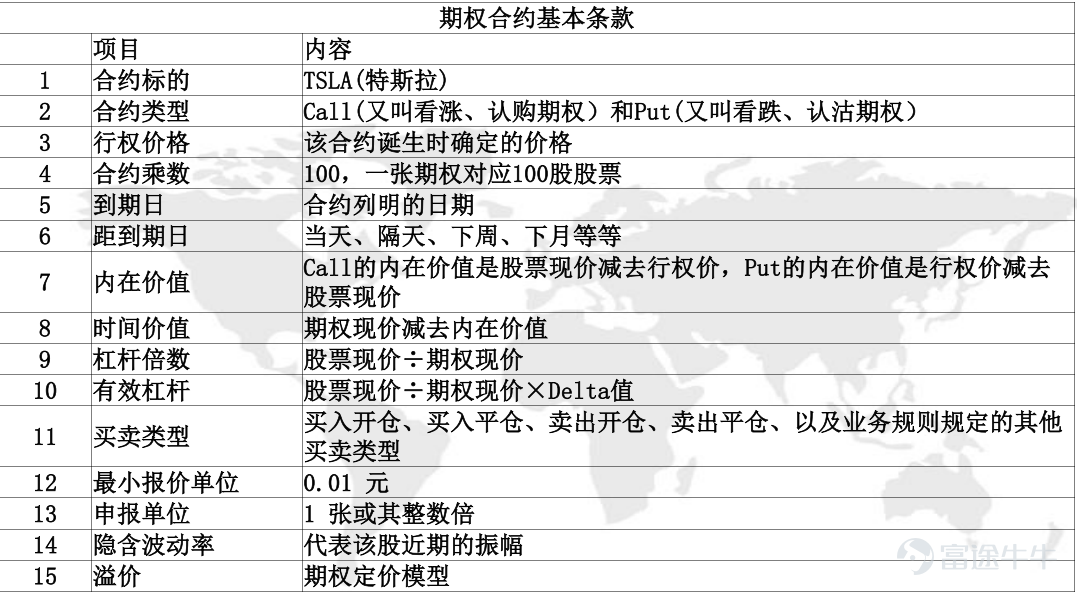
Option price = intrinsic value + time value
Options are like 'ice in the sun'—their time value decays at an accelerating, parabolic rate as expiration approaches.
Many stock investors firmly believe that as long as the stock they hold continues to exist and they hold it long enough, profits are guaranteed. However, this 'long-term investment' mindset does not apply to options. Investors must pay close attention: an option’s time value decays at an accelerating, parabolic rate.
Why Trade Options? Because the era of options is sweeping in  Advantages of Options: 1. Flexible Trading: Options differ from all other investment instruments—they have no cyclical constraints and don’t depend on market conditions. They work in any market environment (bullish, bearish, or sideways) and support round-the-clock T+0 trading. 2. Risk Hedging: Options offer significant leverage, enabling investors to hedge large equity positions with relatively small capital outlays. Moreover, options are a crucial hedging tool in both domestic and international financial markets—especially in mature overseas markets. 3. Limited Loss: As a buyer of options, your risk exposure is capped—you can lose no more than the premium paid, with no risk of margin calls or negative account balances, similar to insurance (e.g., car insurance). 4. High Profit Potential: Thanks to their high leverage, options can be used either to hedge equity positions or as standalone speculative instruments. Option buyers enjoy limited risk with unlimited profit potential—correct directional bets can generate substantial returns.  I. What Are Options? Term: Time Right: Entitlement Option: An entitlement held over a future period of time Another way to classify options:  Mooncake voucher — American-style option: An option that allows the buyer to exercise their right on any trading day before expiration or on the expiration date itself Movie ticket — European-style option: An option that allows the buyer to exercise their right only on the expiration date   *Example of a call option Mr. Wong, a Hong Kong resident: My son is getting married next year, and I’d like to buy him an apartment, but... if I buy now, what if next year...
III. Concept and Rationale Behind Buying to Open
Buying to open: establishing a new position by purchasing an option contract
• Buying a call: the investor pays a premium upfront to obtain the right, but not the obligation, to buy a specified quantity of the underlying asset at a predetermined price (the strike price) in the future.
• Buying a put: the investor pays a premium upfront to obtain the right, but not the obligation, to sell a specified quantity of the underlying asset at a predetermined price (the strike price) in the future.
Why Trade Options? Because the era of options is sweeping in  Advantages of Options: 1. Flexible Trading: Options differ from all other investment instruments—they have no cyclical constraints and don’t depend on market conditions. They work in any market environment (bullish, bearish, or sideways) and support round-the-clock T+0 trading. 2. Risk Hedging: Options offer significant leverage, enabling investors to hedge large equity positions with relatively small capital outlays. Moreover, options are a crucial hedging tool in both domestic and international financial markets—especially in mature overseas markets. 3. Limited Loss: As a buyer of options, your risk exposure is capped—you can lose no more than the premium paid, with no risk of margin calls or negative account balances, similar to insurance (e.g., car insurance). 4. High Profit Potential: Thanks to their high leverage, options can be used either to hedge equity positions or as standalone speculative instruments. Option buyers enjoy limited risk with unlimited profit potential—correct directional bets can generate substantial returns.  I. What Are Options? Term: Time Right: Entitlement Option: An entitlement held over a future period of time Another way to classify options:  Mooncake voucher — American-style option: An option that allows the buyer to exercise their right on any trading day before expiration or on the expiration date itself Movie ticket — European-style option: An option that allows the buyer to exercise their right only on the expiration date   *Example of a call option Mr. Wong, a Hong Kong resident: My son is getting married next year, and I’d like to buy him an apartment, but... if I buy now, what if next year...
Finally, a word of advice to all investors (especially beginners): never over-leverage! Never over-leverage! Never over-leverage!
Important things must be said three times!
Hit follow, and in my next post I’ll explain what kinds of stocks are suitable for options trading! Excited? Drop a comment below! $Apple (AAPL.US)$$Microsoft (MSFT.US)$$NVIDIA (NVDA.US)$$Amazon (AMZN.US)$$Meta Platforms (META.US)$     $Alphabet-A (GOOGL.US)$       $Tesla (TSLA.US)$
Risk Disclaimer: The above content only represents the author's view. It does not represent any position or investment advice of Futu. Futu makes no representation or warranty.Read more
Thumbs Up
1
Heart
1
57K Views
Report
Comments
Write a Comment...
2
1