

English
Back
Open Account
创业最前线
wrote a column · Aug 4 04:09

Amid a downturn in the e-commerce agency sector, why has Liren Lizhuang suffered a deeper chill?
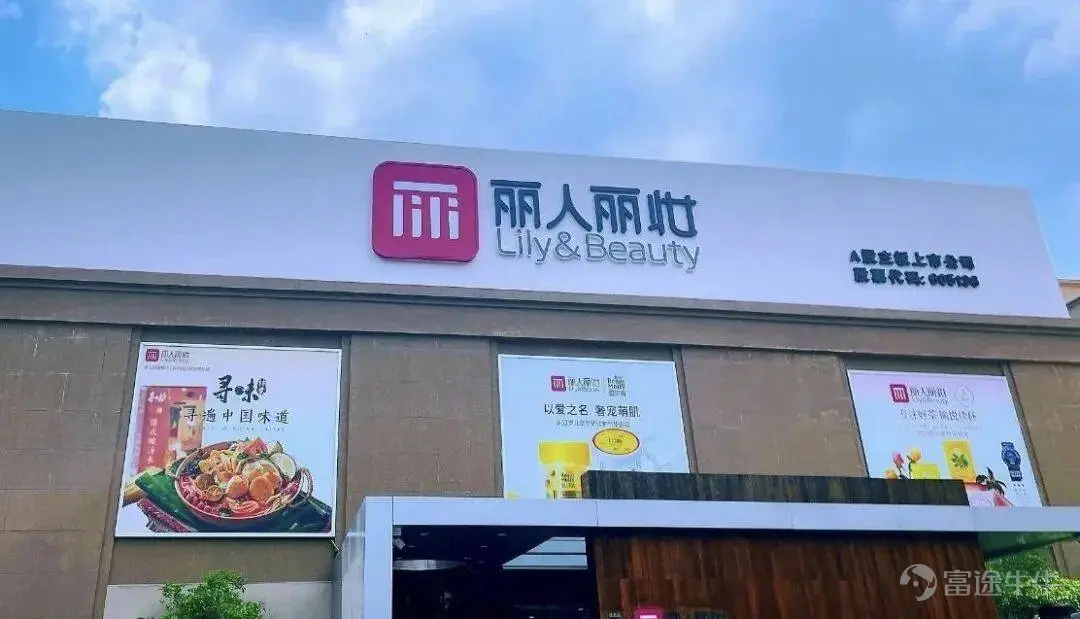
Produced by | Frontline of Entrepreneurship Author | Li Bin Edited by Hu Fangjie Art Editor | Xing Jing Reviewed | Songwen In July 2026, Liren Lizhuang issued a profit forecast, expecting net earnings of RMB 22.083 million to RMB 26.5 million for the first half of the year. This beauty-focused e-commerce agency, which had posted losses in three out of the past four years, finally seemed to glimpse a faint ray of hope. Yet when this forecast is viewed alongside another document, the picture becomes far more complicated. In the same month, a regulatory letter from the Shanghai Securities Regulatory Bureau exposed seven years of governance irregularities at the company. Paying divorce-related legal fees on behalf of its controlling shareholder, prepaying tens of millions of yuan to suppliers with zero paid-in capital, and providing massive guarantees to suppliers without timely disclosure of related-party relationships—these practices all point to one core question: where have the company’s resources and attention truly been directed? Liren Lizhuang’s story is no longer just about the rise and fall of an e-commerce agency; it has become a case study in lost strategic focus. With its founder embroiled in a protracted divorce battle and company funds flowing toward suppliers with ambiguous ties, how much priority could possibly remain for the core business? Behind the signal of a return to profitability, has the company truly regained its footing? 1. Family affairs unsettled, business troubles erupt anew For many observers, Liren Lizhuang is remembered less for any brand campaign report and more for founder Huang Tao’s long-running divorce saga. The divorce case began in 2021, when Huang Tao’s wife, Weng Shuhua, publicly called on her husband to come home via Weibo, exposing deep rifts in their family life. Over the following years, the two parties became locked in a bitter dispute over asset division...
Produced by | Frontline of Entrepreneurship
Author | Li Bin
Edited by Hu Fangjie
Art Editor | Xing Jing
Reviewed | Songwen
In July 2026, Liren Lizhuang issued a profit forecast, expecting net earnings of RMB 22.083 million to RMB 26.5 million for the first half of the year. This beauty-focused e-commerce agency, which had posted losses in three out of the past four years, finally seemed to glimpse a faint ray of hope.
But when this preliminary announcement is placed alongside another document, the picture becomes far more complicated. In the same month, a regulatory letter from the Shanghai branch of the China Securities Regulatory Commission (CSRC) exposed seven years of corporate governance chaos at this company.
Paying divorce-related legal fees on behalf of the actual controller, prepaying tens of millions of yuan to suppliers with zero paid-in capital, and providing massive guarantees for suppliers without timely disclosure of related-party relationships—these actions all point to one question: where have this company’s resources and attention truly been directed?
The story of Lilith Beauty is no longer just about the commercial ups and downs of a brand e-commerce operator—it has become a case study in lost strategic focus. With its founder embroiled in a divorce dispute and funds flowing to suppliers with ambiguous ties, how much room is left for the core business? Behind the signals of a return to profitability, has this company truly reclaimed its core strength?
1. Family affairs unsettled, business troubles arise
What the public remembers most about Lilith Beauty may not be any particular brand performance report, but rather founder Huang Tao’s protracted divorce saga.

Produced by | Frontline of Entrepreneurship Author | Li Bin Edited by Hu Fangjie Art Editor | Xing Jing Reviewed | Songwen In July 2026, Liren Lizhuang issued a profit forecast, expecting net earnings of RMB 22.083 million to RMB 26.5 million for the first half of the year. This beauty-focused e-commerce agency, which had posted losses in three out of the past four years, finally seemed to glimpse a faint ray of hope. Yet when this forecast is viewed alongside another document, the picture becomes far more complicated. In the same month, a regulatory letter from the Shanghai Securities Regulatory Bureau exposed seven years of governance irregularities at the company. Paying divorce-related legal fees on behalf of its controlling shareholder, prepaying tens of millions of yuan to suppliers with zero paid-in capital, and providing massive guarantees to suppliers without timely disclosure of related-party relationships—these practices all point to one core question: where have the company’s resources and attention truly been directed? Liren Lizhuang’s story is no longer just about the rise and fall of an e-commerce agency; it has become a case study in lost strategic focus. With its founder embroiled in a protracted divorce battle and company funds flowing toward suppliers with ambiguous ties, how much priority could possibly remain for the core business? Behind the signal of a return to profitability, has the company truly regained its footing? 1. Family affairs unsettled, business troubles erupt anew For many observers, Liren Lizhuang is remembered less for any brand campaign report and more for founder Huang Tao’s long-running divorce saga. The divorce case began in 2021, when Huang Tao’s wife, Weng Shuhua, publicly called on her husband to come home via Weibo, exposing deep rifts in their family life. Over the following years, the two parties became locked in a bitter dispute over asset division...
The divorce case began in 2021, when Huang Tao’s wife, Weng Shuhua, publicly called on her husband to return home via Weibo, exposing cracks in their marriage. Over the following years, the two were locked in a tug-of-war over asset division and share ownership. In early 2025, the court ruled that Huang Tao must transfer 16.75 million of his company shares to Weng Shuhua—a stake valued at approximately RMB 172 million based on the share price that day.
But the share transfer did not bring peace. Huang Tao’s remaining shares have been repeatedly frozen by judicial orders, and the company’s business defenses have been breached as the founder’s energy was drained by personal turmoil.
Now, the regulatory letter offers an even starker perspective: between 2021 and 2024, Lilith Beauty paid RMB 48 million in divorce-related legal fees on behalf of Huang Tao. For four years, a personal expense that should have been borne by the individual remained on the company’s books until regulators intervened and forced corrective action.
When a controlling shareholder’s personal affairs become entangled with corporate finances, internal control failures are only a matter of time. An even more serious issue lies in another allegation within the regulatory letter.
The Shanghai CSRC found that Lilith Beauty provided bank loan guarantees for five suppliers—including Shanghai Maipeng E-Commerce Co., Ltd. ('Shanghai Maipeng')—without conducting required internal reviews, disclosing the transactions, or ever identifying Shanghai Maipeng as a related party.
According to Tianyancha, Shanghai Maipeng was established in September 2018, with primary business activities including technical services and the sales, design, and agency of apparel, footwear, hats, and cosmetics. The company’s registered capital is RMB 18.2 million, with zero paid-in capital and zero employees enrolled in social insurance.
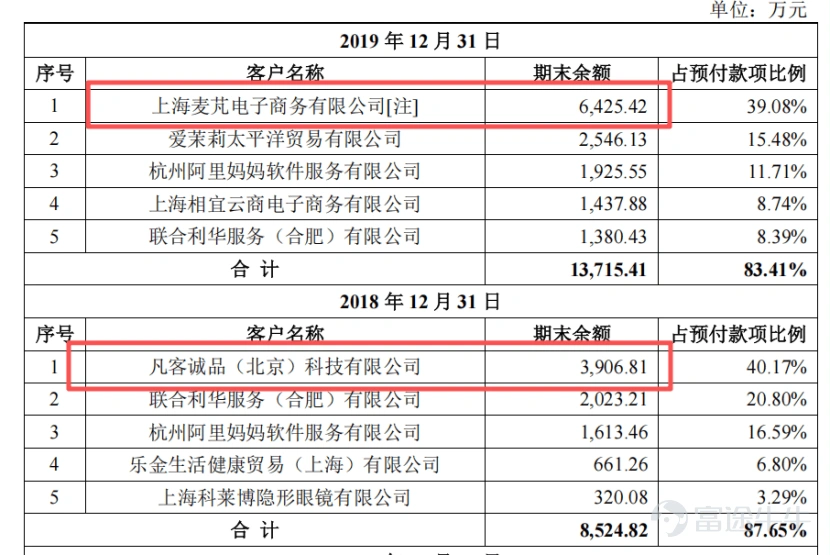
According to Liren Lizhuang’s prospectus, business dealings between Shanghai Maipeng and Liren Lizhuang began half a year after Shanghai Maipeng’s establishment. In March 2019, Liren Lizhuang shifted its distribution partnership for the VANCLO brand—from Vanclo (Beijing) Technology Co., Ltd. (hereinafter 'Vanclo Technology')—to directly contracting with Shanghai Maipeng, which held the exclusive trademark licensing rights for 'Vanclo.'
Produced by | Frontline of Entrepreneurship Author | Li Bin Edited by Hu Fangjie Art Editor | Xing Jing Reviewed | Songwen In July 2026, Liren Lizhuang issued a profit forecast, expecting net earnings of RMB 22.083 million to RMB 26.5 million for the first half of the year. This beauty-focused e-commerce agency, which had posted losses in three out of the past four years, finally seemed to glimpse a faint ray of hope. Yet when this forecast is viewed alongside another document, the picture becomes far more complicated. In the same month, a regulatory letter from the Shanghai Securities Regulatory Bureau exposed seven years of governance irregularities at the company. Paying divorce-related legal fees on behalf of its controlling shareholder, prepaying tens of millions of yuan to suppliers with zero paid-in capital, and providing massive guarantees to suppliers without timely disclosure of related-party relationships—these practices all point to one core question: where have the company’s resources and attention truly been directed? Liren Lizhuang’s story is no longer just about the rise and fall of an e-commerce agency; it has become a case study in lost strategic focus. With its founder embroiled in a protracted divorce battle and company funds flowing toward suppliers with ambiguous ties, how much priority could possibly remain for the core business? Behind the signal of a return to profitability, has the company truly regained its footing? 1. Family affairs unsettled, business troubles erupt anew For many observers, Liren Lizhuang is remembered less for any brand campaign report and more for founder Huang Tao’s long-running divorce saga. The divorce case began in 2021, when Huang Tao’s wife, Weng Shuhua, publicly called on her husband to come home via Weibo, exposing deep rifts in their family life. Over the following years, the two parties became locked in a bitter dispute over asset division...
(Figure / Liren Lizhuang IPO Prospectus (Details of Top Five Entities by Prepayment Balance))
Due to the payment-before-delivery settlement terms, Shanghai Maipeng quickly rose to the top of Liren Lizhuang’s prepayment list. In 2019, Shanghai Maipeng topped the prepayment rankings with RMB 64.2542 million, accounting for 39.08% of the year’s total prepayments—an amount exceeding Liren Lizhuang’s 2018 procurement payments to Vanclo Technology. At that time, Liren Lizhuang had not yet gone public.
However, this business relationship ultimately ended up in court.
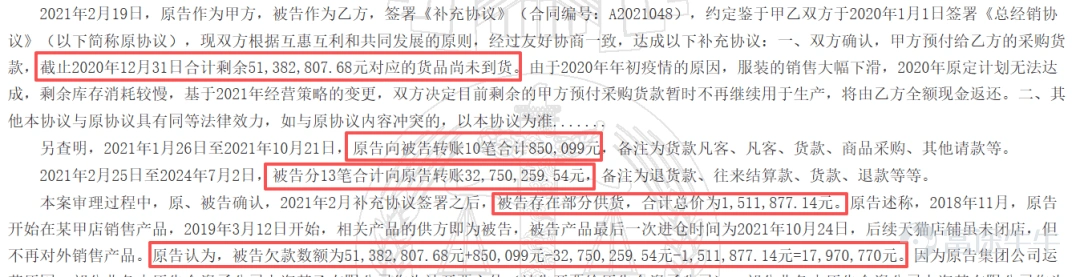
According to information from China Judgements Online, in July 2025, Liren Lizhuang filed a lawsuit against Shanghai Maipeng with the Songjiang District People’s Court of Shanghai on grounds of a sales contract dispute, under case number (2025) Hu 0117 Min Chu No. 20181.
The court judgment reconstructed the full sequence of events behind their dispute.
Produced by | Frontline of Entrepreneurship Author | Li Bin Edited by Hu Fangjie Art Editor | Xing Jing Reviewed | Songwen In July 2026, Liren Lizhuang issued a profit forecast, expecting net earnings of RMB 22.083 million to RMB 26.5 million for the first half of the year. This beauty-focused e-commerce agency, which had posted losses in three out of the past four years, finally seemed to glimpse a faint ray of hope. Yet when this forecast is viewed alongside another document, the picture becomes far more complicated. In the same month, a regulatory letter from the Shanghai Securities Regulatory Bureau exposed seven years of governance irregularities at the company. Paying divorce-related legal fees on behalf of its controlling shareholder, prepaying tens of millions of yuan to suppliers with zero paid-in capital, and providing massive guarantees to suppliers without timely disclosure of related-party relationships—these practices all point to one core question: where have the company’s resources and attention truly been directed? Liren Lizhuang’s story is no longer just about the rise and fall of an e-commerce agency; it has become a case study in lost strategic focus. With its founder embroiled in a protracted divorce battle and company funds flowing toward suppliers with ambiguous ties, how much priority could possibly remain for the core business? Behind the signal of a return to profitability, has the company truly regained its footing? 1. Family affairs unsettled, business troubles erupt anew For many observers, Liren Lizhuang is remembered less for any brand campaign report and more for founder Huang Tao’s long-running divorce saga. The divorce case began in 2021, when Huang Tao’s wife, Weng Shuhua, publicly called on her husband to come home via Weibo, exposing deep rifts in their family life. Over the following years, the two parties became locked in a bitter dispute over asset division...
(Image / China Judgements Online)
As of the end of 2020, Liren Lizhuang had paid Shanghai Maipeng a total of RMB 51.3828 million for goods that were never delivered. The two parties signed a supplementary agreement under which Shanghai Maipeng committed to refund the amount in cash. In the following years, Liren Lizhuang made an additional payment of RMB 0.8501 million, while Shanghai Maipeng refunded RMB 32.7503 million and delivered goods worth approximately RMB 1.5188 million, leaving RMB 17.9708 million still unrecovered.
Liren Lizhuang initiated legal action seeking the return of the remaining RMB 17.9708 million in prepaid funds. From core supplier to courtroom adversary, Shanghai Maipeng’s role has exposed a critical vulnerability in Liren Lizhuang’s recent operational challenges.
2. The Same Cold Spell, Different Responses
If footing the bill for the actual controller’s divorce lawyers and supplier litigation represents a governance-level ailment at Liren Lihzhuang, then its ongoing business hemorrhage is the most direct diagnostic report of this crisis.
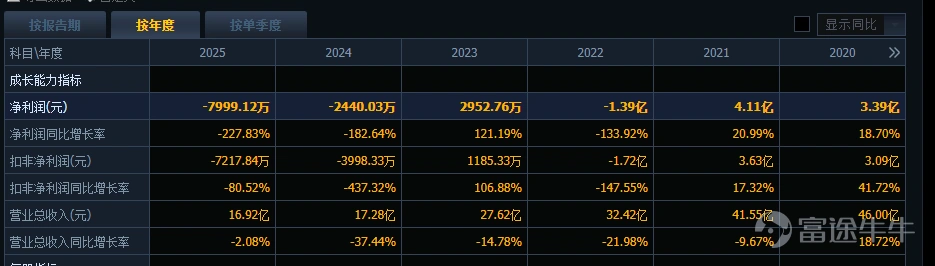
In September 2020, Liren Lihzhuang listed on the Shanghai Stock Exchange, becoming the first beauty brand e-commerce operator on China’s A-share market. In its debut year, revenue soared to RMB 4.6 billion, with net profit attributable to shareholders reaching RMB 339 million—a moment of unparalleled success.
Produced by | Frontline of Entrepreneurship Author | Li Bin Edited by Hu Fangjie Art Editor | Xing Jing Reviewed | Songwen In July 2026, Liren Lizhuang issued a profit forecast, expecting net earnings of RMB 22.083 million to RMB 26.5 million for the first half of the year. This beauty-focused e-commerce agency, which had posted losses in three out of the past four years, finally seemed to glimpse a faint ray of hope. Yet when this forecast is viewed alongside another document, the picture becomes far more complicated. In the same month, a regulatory letter from the Shanghai Securities Regulatory Bureau exposed seven years of governance irregularities at the company. Paying divorce-related legal fees on behalf of its controlling shareholder, prepaying tens of millions of yuan to suppliers with zero paid-in capital, and providing massive guarantees to suppliers without timely disclosure of related-party relationships—these practices all point to one core question: where have the company’s resources and attention truly been directed? Liren Lizhuang’s story is no longer just about the rise and fall of an e-commerce agency; it has become a case study in lost strategic focus. With its founder embroiled in a protracted divorce battle and company funds flowing toward suppliers with ambiguous ties, how much priority could possibly remain for the core business? Behind the signal of a return to profitability, has the company truly regained its footing? 1. Family affairs unsettled, business troubles erupt anew For many observers, Liren Lizhuang is remembered less for any brand campaign report and more for founder Huang Tao’s long-running divorce saga. The divorce case began in 2021, when Huang Tao’s wife, Weng Shuhua, publicly called on her husband to come home via Weibo, exposing deep rifts in their family life. Over the following years, the two parties became locked in a bitter dispute over asset division...
(Chart / Tonghuashun)
But its listing marked its peak. Over the following five years, Liren Lihzhuang’s revenue steadily shrank from RMB 4.155 billion to RMB 1.692 billion, evaporating nearly RMB 3 billion. By 2025, its net loss attributable to shareholders widened to RMB 799.912 million, while its non-GAAP net loss reached RMB 721.784 million—marking the third time in four years that its non-GAAP net income turned negative.
Liren Lihzhuang’s troubles stem first from the collapse of its core e-commerce operations. Its e-commerce retail segment—the main revenue driver—generated RMB 1.55 billion in 2025, down slightly year-over-year, while its brand marketing and operations services brought in only RMB 685.38 million, a 9.62% decline from the prior year.
Leading beauty brands reclaiming control of their online operations has become an industry-wide trend, causing Liren Lihzhuang to steadily lose clients. Public filings show that major brands such as L’Oréal, Lancôme, Maybelline, Sulwhasoo, and Herborist have successively taken back operational control from Liren Lihzhuang; correspondingly, Liren Lihzhuang has deepened its partnerships with firms like Shanghai Maipeng.
Beneath the surface lies an even deeper issue: the value proposition of the e-commerce operator model itself is being diluted.
Public information indicates that traffic红利 on Tmall has plateaued, while PDD Holdings and Douyin have rewritten channel dynamics. Live-streaming commerce and short-path conversion models are rising, rendering the meticulous operational capabilities once vital to traditional operators no longer scarce. As brands increasingly manage their own e-commerce operations, the role of intermediaries is significantly diminished.
Yet the industry does offer benchmarks. In 2025, fellow operator Ruoyuchen reported revenue of RMB 3.432 billion and net profit of RMB 194 million, with over 52% of revenue coming from its own brands; Yiwangyichuang posted RMB 1.073 billion in revenue and RMB 108 million in net profit. Despite facing the same industry headwinds, peers delivered markedly different results.
Liren Lihzhuang is not blind to the crisis. Its annual reports repeatedly mention strategic pivots such as 'expanding proprietary brands' and 'developing master distributor businesses.' However, to date, these new initiatives remain far too small to fill the void left by the shrinking core agency business.
Financial statements show that in 2025, Liren Lihzhuang’s proprietary brand sales grew by over 35% year-over-year, though management candidly admitted that 'their contribution to total revenue remains modest.' Master distributor business accounted for over 8% of total revenue in 2025, rising to approximately 18% in Q1 2026. While growth rates are impressive, the absolute scale still lags behind the nearly RMB 3 billion lost from its core business by a full order of magnitude.

Produced by | Frontline of Entrepreneurship Author | Li Bin Edited by Hu Fangjie Art Editor | Xing Jing Reviewed | Songwen In July 2026, Liren Lizhuang issued a profit forecast, expecting net earnings of RMB 22.083 million to RMB 26.5 million for the first half of the year. This beauty-focused e-commerce agency, which had posted losses in three out of the past four years, finally seemed to glimpse a faint ray of hope. Yet when this forecast is viewed alongside another document, the picture becomes far more complicated. In the same month, a regulatory letter from the Shanghai Securities Regulatory Bureau exposed seven years of governance irregularities at the company. Paying divorce-related legal fees on behalf of its controlling shareholder, prepaying tens of millions of yuan to suppliers with zero paid-in capital, and providing massive guarantees to suppliers without timely disclosure of related-party relationships—these practices all point to one core question: where have the company’s resources and attention truly been directed? Liren Lizhuang’s story is no longer just about the rise and fall of an e-commerce agency; it has become a case study in lost strategic focus. With its founder embroiled in a protracted divorce battle and company funds flowing toward suppliers with ambiguous ties, how much priority could possibly remain for the core business? Behind the signal of a return to profitability, has the company truly regained its footing? 1. Family affairs unsettled, business troubles erupt anew For many observers, Liren Lizhuang is remembered less for any brand campaign report and more for founder Huang Tao’s long-running divorce saga. The divorce case began in 2021, when Huang Tao’s wife, Weng Shuhua, publicly called on her husband to come home via Weibo, exposing deep rifts in their family life. Over the following years, the two parties became locked in a bitter dispute over asset division...
When the industry faces a downturn, RYR relies on its brand assets to weather the storm, while One Network One Creation leverages its service capabilities to stay warm. Meanwhile, Li Ren Li Zhuang’s focus and capital have been steadily drained by divorce disputes, supplier lawsuits, and regulatory rectifications.
With its core business shrinking, transformation proving difficult, and funds tied up, Li Ren Li Zhuang faces an uphill battle escaping its losses under this three-pronged pressure.
3. The Long Road Ahead for In-House Brand Development
Regulatory penalties and financial losses belong to the past; what truly determines Li Ren Li Zhuang’s future is whether its in-house brands can grow into new pillars of the business.
In the first quarter of 2026, Li Ren Li Zhuang’s situation appeared to show a glimmer of improvement. Financial statements revealed revenue of RMB 415 million for the quarter, an increase of 15.07% year-over-year, with net profit attributable to shareholders reaching RMB 103.377 million, marking a return to profitability. The company’s earnings guidance for the first half of the year projected net profit attributable to shareholders between RMB 220.833 million and RMB 265 million.
However, a closer look at the data reveals that the key driver behind the return to profit was not the maturity of its in-house brands, but rather a surge in its total agency business. Revenue from the total agency segment grew by over 300% year-over-year in Q1, accounting for approximately 18% of total revenue.
The in-house brand segment—the one truly pinned with high expectations—remains in the investment phase. Looking back, Li Ren Li Zhuang’s journey in building its own brands has been fraught with challenges.
Starting in 2023, Li Ren Li Zhuang elevated in-house brand development to a strategic priority, focusing on incubating brands such as Yu Rong Chu and Mei Yi Tang.
Among them, Yu Rong Chu centers on saffron as its key ingredient, claiming it can suppress the gene expression of enzymes involved in cortisol synthesis, thereby reducing cortisol levels in the skin and targeting the emotional skincare niche. Mei Yi Tang, meanwhile, entered the efficacy skincare market through ceramides and has since gradually expanded into the oral beauty and wellness segment.
Produced by | Frontline of Entrepreneurship Author | Li Bin Edited by Hu Fangjie Art Editor | Xing Jing Reviewed | Songwen In July 2026, Liren Lizhuang issued a profit forecast, expecting net earnings of RMB 22.083 million to RMB 26.5 million for the first half of the year. This beauty-focused e-commerce agency, which had posted losses in three out of the past four years, finally seemed to glimpse a faint ray of hope. Yet when this forecast is viewed alongside another document, the picture becomes far more complicated. In the same month, a regulatory letter from the Shanghai Securities Regulatory Bureau exposed seven years of governance irregularities at the company. Paying divorce-related legal fees on behalf of its controlling shareholder, prepaying tens of millions of yuan to suppliers with zero paid-in capital, and providing massive guarantees to suppliers without timely disclosure of related-party relationships—these practices all point to one core question: where have the company’s resources and attention truly been directed? Liren Lizhuang’s story is no longer just about the rise and fall of an e-commerce agency; it has become a case study in lost strategic focus. With its founder embroiled in a protracted divorce battle and company funds flowing toward suppliers with ambiguous ties, how much priority could possibly remain for the core business? Behind the signal of a return to profitability, has the company truly regained its footing? 1. Family affairs unsettled, business troubles erupt anew For many observers, Liren Lizhuang is remembered less for any brand campaign report and more for founder Huang Tao’s long-running divorce saga. The divorce case began in 2021, when Huang Tao’s wife, Weng Shuhua, publicly called on her husband to come home via Weibo, exposing deep rifts in their family life. Over the following years, the two parties became locked in a bitter dispute over asset division...
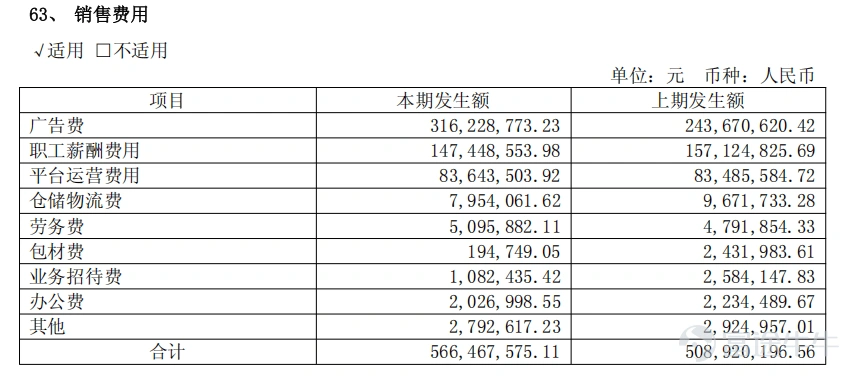
(Chart / Li Ren Li Zhuang 2025 Financial Report)
According to its 2025 financial report, Liren Lihua recorded sales expenses of RMB 566 million (including RMB 316 million in advertising), an 11.2% increase from the previous year—an aggressive investment given the backdrop of shrinking revenue. However, despite pouring substantial resources into its initiatives, the highest-selling product on Yu Rong Chu’s Tmall flagship store, a brand pinned with high expectations, has sold just over 2,000 units, while Mei Yi Tang has generated even less market buzz.
In its 2025 financial report, Liren Lihua acknowledged, 'The primary reason for the loss is that our proprietary brands are currently in a phase of product innovation and operational promotion. Continued investments in R&D and marketing have yet to yield corresponding economic returns, resulting in operating losses from our proprietary brand stores, increased asset impairment losses, and higher losses from changes in fair value.'
Faced with reality, Liren Lihua promptly adjusted its strategy.
In its 2026 strategic plan, Liren Lihua shifted its focus for proprietary brands to Yu Rong Chu and Bei Yang Le, an oral beauty brand acquired the same year. Mei Yi Tang was no longer mentioned in the annual report, and its Tmall store has vanished from the platform.
Produced by | Frontline of Entrepreneurship Author | Li Bin Edited by Hu Fangjie Art Editor | Xing Jing Reviewed | Songwen In July 2026, Liren Lizhuang issued a profit forecast, expecting net earnings of RMB 22.083 million to RMB 26.5 million for the first half of the year. This beauty-focused e-commerce agency, which had posted losses in three out of the past four years, finally seemed to glimpse a faint ray of hope. Yet when this forecast is viewed alongside another document, the picture becomes far more complicated. In the same month, a regulatory letter from the Shanghai Securities Regulatory Bureau exposed seven years of governance irregularities at the company. Paying divorce-related legal fees on behalf of its controlling shareholder, prepaying tens of millions of yuan to suppliers with zero paid-in capital, and providing massive guarantees to suppliers without timely disclosure of related-party relationships—these practices all point to one core question: where have the company’s resources and attention truly been directed? Liren Lizhuang’s story is no longer just about the rise and fall of an e-commerce agency; it has become a case study in lost strategic focus. With its founder embroiled in a protracted divorce battle and company funds flowing toward suppliers with ambiguous ties, how much priority could possibly remain for the core business? Behind the signal of a return to profitability, has the company truly regained its footing? 1. Family affairs unsettled, business troubles erupt anew For many observers, Liren Lizhuang is remembered less for any brand campaign report and more for founder Huang Tao’s long-running divorce saga. The divorce case began in 2021, when Huang Tao’s wife, Weng Shuhua, publicly called on her husband to come home via Weibo, exposing deep rifts in their family life. Over the following years, the two parties became locked in a bitter dispute over asset division...
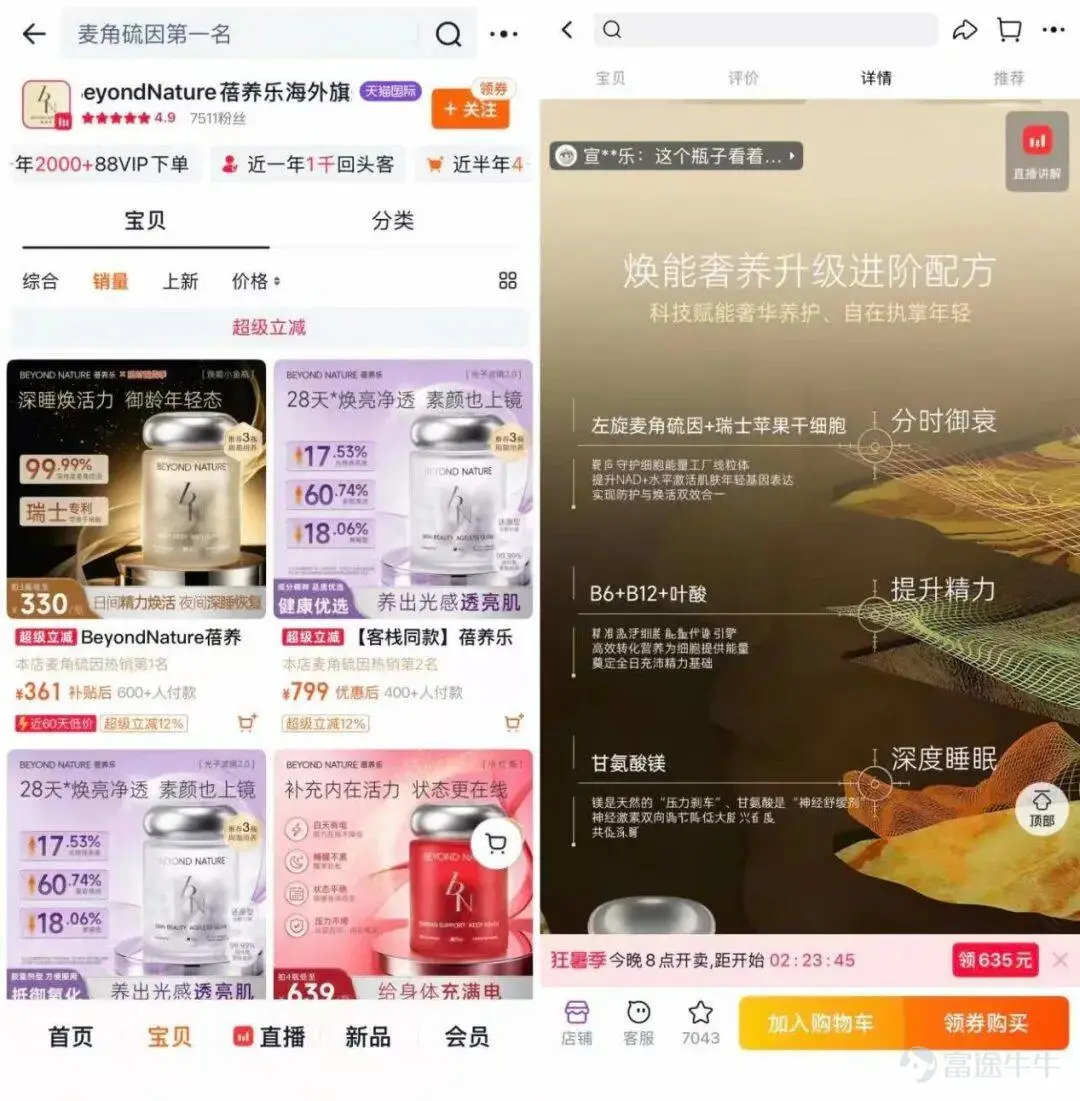
(Image / Bei Yang Le Overseas Flagship Store)
Founded in Hong Kong in January 2024, Bei Yang Le specializes in high-purity ergothioneine and the oral anti-aging segment, offering products such as the Energy Boosting Gold Bottle and Photon Filter Pills. However, according to Tmall data, the best-selling item in its overseas flagship store has sold only around 600 units—indicating that turning this brand into a second growth curve remains a formidable challenge.
The strategic shift—from broad bets to focused retrenchment—sends a clear signal: this path is far more arduous than anticipated.
Transitioning from brand e-commerce operations to building owned brands represents a fundamental shift in business logic. The former tests channel efficiency; the latter hinges on product strength and brand equity. Liren Lihua’s early struggles are compounded by dual pressures: shrinking core operations and governance challenges.
While the first-quarter return to profitability is certainly a positive sign, Liren Lihua’s transformation cannot be deemed successful until its proprietary brands achieve self-sustaining profitability.
*Note: The featured image in this article is sourced from Liren Lihua’s official WeChat account; other unattributed images are from Shetu.com under the VRF license.
Risk Disclaimer: The above content only represents the author's view. It does not represent any position or investment advice of Futu. Futu makes no representation or warranty.Read more
5011 Views
Report
Comments
Write a Comment...