English
Back
Open Account
Hong Kong stocks are rebounding—what sectors deserve attention?

港股窩輪Jenny
joined discussion · Aug 2 13:53

Hang Seng Index approaches the 26,100-point bear warrant concentration zone: bullish positions are still viable, but the knock-in buffer needs to be reassessed

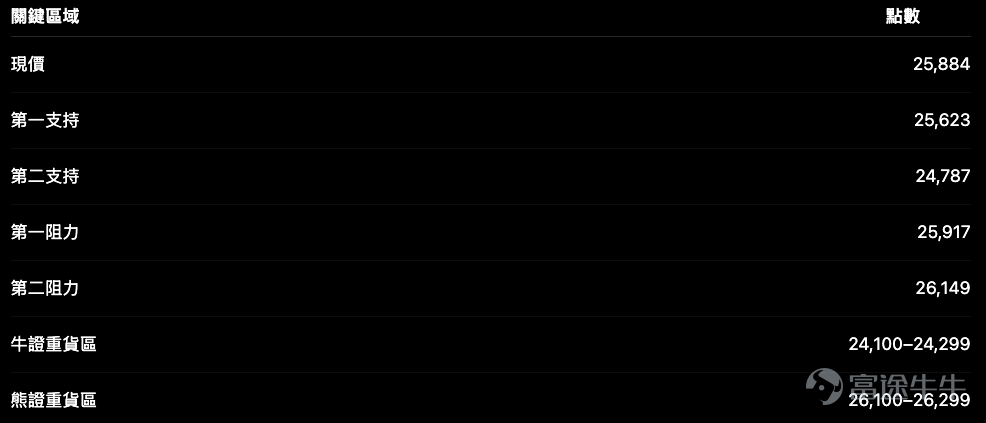
Hang Seng Index $Hang Seng Index (800000.HK)$ Closed at 25,884 points, marking a fifth consecutive gain and trading above all moving averages. Judging solely by trend, the conclusion is clear: the market remains relatively strong.
However, with HSI bull/bear warrants, direction is only the first step. What truly determines whether a trade can withstand volatility ishow far the recall price is from the current spot price
First, assess where the HSI currently stands
Hang Seng Index $Hang Seng Index (800000.HK)$ Closed at 25,884 points, marking a fifth consecutive gain and trading above all moving averages. Judging solely by trend, the conclusion is clear: the market remains relatively strong. However, with HSI bull/bear warrants, direction is only the first step. What truly determines whether a trade can withstand volatility ishow far the recall price is from the current spot price。 First, assess where the HSI currently stands The HSI bear warrant concentration zone nearly overlaps with the upper Bollinger Band and technical resistance levels. This doesn’t mean the HSI absolutely cannot break above 26,100 points; rather, it implies:Entering high-leverage bull warrants at this level exposes traders not just to directional risk, but also to recall risk stemming from pullbacks ahead of resistance. Market observations also show that HSI call open interest declined for two consecutive days, while put open interest rose for four straight days; bull warrant open interest increased by 1.42% in a single day, whereas bear warrant open interest dropped by 9.31%. This reflects continued participation in the rally, alongside rising demand for downside protection. Bullish on the Hang Seng Index: Two bull certificates actually represent two different strategies 62373 has higher leverage—meaning that for every move in the Hang Seng Index, the product’s theoretical price reaction will be larger; however, if the index pulls back from 25,900 to 25,600 points, holders will experience more noticeable price volatility. 61633 has a lower knock-out level and slightly less leverage, but offers a wider safety cushion. Given that the Hang Seng Index has already risen for five consecutive days and its RSI is elevated, this trade-off may be more important than having three to four times more leverage. Operationally, we can consider two scenarios: – Pullback setup: The Hang Seng Index retests...
The HSI bear warrant concentration zone nearly overlaps with the upper Bollinger Band and technical resistance levels.
This doesn’t mean the HSI absolutely cannot break above 26,100 points; rather, it implies:Entering high-leverage bull warrants at this level exposes traders not just to directional risk, but also to recall risk stemming from pullbacks ahead of resistance.
Market observations also show that HSI call open interest declined for two consecutive days, while put open interest rose for four straight days; bull warrant open interest increased by 1.42% in a single day, whereas bear warrant open interest dropped by 9.31%. This reflects continued participation in the rally, alongside rising demand for downside protection.
Bullish on the Hang Seng Index: Two bull certificates actually represent two different strategies
Hang Seng Index $Hang Seng Index (800000.HK)$ Closed at 25,884 points, marking a fifth consecutive gain and trading above all moving averages. Judging solely by trend, the conclusion is clear: the market remains relatively strong. However, with HSI bull/bear warrants, direction is only the first step. What truly determines whether a trade can withstand volatility ishow far the recall price is from the current spot price。 First, assess where the HSI currently stands The HSI bear warrant concentration zone nearly overlaps with the upper Bollinger Band and technical resistance levels. This doesn’t mean the HSI absolutely cannot break above 26,100 points; rather, it implies:Entering high-leverage bull warrants at this level exposes traders not just to directional risk, but also to recall risk stemming from pullbacks ahead of resistance. Market observations also show that HSI call open interest declined for two consecutive days, while put open interest rose for four straight days; bull warrant open interest increased by 1.42% in a single day, whereas bear warrant open interest dropped by 9.31%. This reflects continued participation in the rally, alongside rising demand for downside protection. Bullish on the Hang Seng Index: Two bull certificates actually represent two different strategies 62373 has higher leverage—meaning that for every move in the Hang Seng Index, the product’s theoretical price reaction will be larger; however, if the index pulls back from 25,900 to 25,600 points, holders will experience more noticeable price volatility. 61633 has a lower knock-out level and slightly less leverage, but offers a wider safety cushion. Given that the Hang Seng Index has already risen for five consecutive days and its RSI is elevated, this trade-off may be more important than having three to four times more leverage. Operationally, we can consider two scenarios: – Pullback setup: The Hang Seng Index retests...
62373 has higher leverage—meaning that for every move in the Hang Seng Index, the product’s theoretical price reaction will be larger; however, if the index pulls back from 25,900 to 25,600 points, holders will experience more noticeable price volatility.
61633 has a lower knock-out level and slightly less leverage, but offers a wider safety cushion. Given that the Hang Seng Index has already risen for five consecutive days and its RSI is elevated, this trade-off may be more important than having three to four times more leverage.
Operationally, we can consider two scenarios:
Pullback setup: If the Hang Seng Index retests 25,623 points and holds steady, consider bull warrants with a wider knock-in buffer;
Bullish Positioning: After the Hang Seng Index breaks above 26,149 points, consider higher-leverage bull warrants and set a short-term defensive level near 26,000 points.
If the Hang Seng Index falls below 25,623 points, the short-term uptrend will start to cool; if it breaks below 24,787 points, it is no longer advisable to hold bull warrants based on the original bullish assumption.
Bearish on the Hang Seng Index: Not about calling the top, but waiting for invalidation signals
Hang Seng Index $Hang Seng Index (800000.HK)$ Closed at 25,884 points, marking a fifth consecutive gain and trading above all moving averages. Judging solely by trend, the conclusion is clear: the market remains relatively strong. However, with HSI bull/bear warrants, direction is only the first step. What truly determines whether a trade can withstand volatility ishow far the recall price is from the current spot price。 First, assess where the HSI currently stands The HSI bear warrant concentration zone nearly overlaps with the upper Bollinger Band and technical resistance levels. This doesn’t mean the HSI absolutely cannot break above 26,100 points; rather, it implies:Entering high-leverage bull warrants at this level exposes traders not just to directional risk, but also to recall risk stemming from pullbacks ahead of resistance. Market observations also show that HSI call open interest declined for two consecutive days, while put open interest rose for four straight days; bull warrant open interest increased by 1.42% in a single day, whereas bear warrant open interest dropped by 9.31%. This reflects continued participation in the rally, alongside rising demand for downside protection. Bullish on the Hang Seng Index: Two bull certificates actually represent two different strategies 62373 has higher leverage—meaning that for every move in the Hang Seng Index, the product’s theoretical price reaction will be larger; however, if the index pulls back from 25,900 to 25,600 points, holders will experience more noticeable price volatility. 61633 has a lower knock-out level and slightly less leverage, but offers a wider safety cushion. Given that the Hang Seng Index has already risen for five consecutive days and its RSI is elevated, this trade-off may be more important than having three to four times more leverage. Operationally, we can consider two scenarios: – Pullback setup: The Hang Seng Index retests...
Warrant 66595 offers an attractive leverage ratio, but its call price is notably closer. If the Hang Seng Index successfully breaks above 26,150 points and continues its rally, the risk associated with such bear warrants with close call prices will rise rapidly.
Bearish positioning should await two types of signals:
1. The Hang Seng Index rises into the 26,100–26,300 point range and shows clear resistance;
2. The Hang Seng Index first breaks below 25,623 points, confirming a weakening of the short-term uptrend.
Simply buying bear warrants because “the market has already risen a lot” is not a sufficient rationale. In a strong market, overbought conditions can persist for some time, and bear warrants with close call prices may not provide enough time to wait for a trend reversal.
How to select warrants if you wish to avoid the call mechanism?
Bull Certificates:
Hang Seng Index $Hang Seng Index (800000.HK)$ Closed at 25,884 points, marking a fifth consecutive gain and trading above all moving averages. Judging solely by trend, the conclusion is clear: the market remains relatively strong. However, with HSI bull/bear warrants, direction is only the first step. What truly determines whether a trade can withstand volatility ishow far the recall price is from the current spot price。 First, assess where the HSI currently stands The HSI bear warrant concentration zone nearly overlaps with the upper Bollinger Band and technical resistance levels. This doesn’t mean the HSI absolutely cannot break above 26,100 points; rather, it implies:Entering high-leverage bull warrants at this level exposes traders not just to directional risk, but also to recall risk stemming from pullbacks ahead of resistance. Market observations also show that HSI call open interest declined for two consecutive days, while put open interest rose for four straight days; bull warrant open interest increased by 1.42% in a single day, whereas bear warrant open interest dropped by 9.31%. This reflects continued participation in the rally, alongside rising demand for downside protection. Bullish on the Hang Seng Index: Two bull certificates actually represent two different strategies 62373 has higher leverage—meaning that for every move in the Hang Seng Index, the product’s theoretical price reaction will be larger; however, if the index pulls back from 25,900 to 25,600 points, holders will experience more noticeable price volatility. 61633 has a lower knock-out level and slightly less leverage, but offers a wider safety cushion. Given that the Hang Seng Index has already risen for five consecutive days and its RSI is elevated, this trade-off may be more important than having three to four times more leverage. Operationally, we can consider two scenarios: – Pullback setup: The Hang Seng Index retests...
13632 offers the highest leverage and its strike price is closest to the current market price, making it suitable for short-term breakout strategies; 29583 and 13686 are deeper in-the-money with slightly lower leverage but more balanced terms.
Hang Seng Index $Hang Seng Index (800000.HK)$ Closed at 25,884 points, marking a fifth consecutive gain and trading above all moving averages. Judging solely by trend, the conclusion is clear: the market remains relatively strong. However, with HSI bull/bear warrants, direction is only the first step. What truly determines whether a trade can withstand volatility ishow far the recall price is from the current spot price。 First, assess where the HSI currently stands The HSI bear warrant concentration zone nearly overlaps with the upper Bollinger Band and technical resistance levels. This doesn’t mean the HSI absolutely cannot break above 26,100 points; rather, it implies:Entering high-leverage bull warrants at this level exposes traders not just to directional risk, but also to recall risk stemming from pullbacks ahead of resistance. Market observations also show that HSI call open interest declined for two consecutive days, while put open interest rose for four straight days; bull warrant open interest increased by 1.42% in a single day, whereas bear warrant open interest dropped by 9.31%. This reflects continued participation in the rally, alongside rising demand for downside protection. Bullish on the Hang Seng Index: Two bull certificates actually represent two different strategies 62373 has higher leverage—meaning that for every move in the Hang Seng Index, the product’s theoretical price reaction will be larger; however, if the index pulls back from 25,900 to 25,600 points, holders will experience more noticeable price volatility. 61633 has a lower knock-out level and slightly less leverage, but offers a wider safety cushion. Given that the Hang Seng Index has already risen for five consecutive days and its RSI is elevated, this trade-off may be more important than having three to four times more leverage. Operationally, we can consider two scenarios: – Pullback setup: The Hang Seng Index retests...
Both have similar leverage levels, but 13336 has a strike price closer to the current market price and lower premium; 15113 has a more distant strike price and higher premium, so its sensitivity may be suboptimal if the Hang Seng Index only experiences a mild pullback.
Bull/Bear Certificates or Warrants?
Hang Seng Index $Hang Seng Index (800000.HK)$ Closed at 25,884 points, marking a fifth consecutive gain and trading above all moving averages. Judging solely by trend, the conclusion is clear: the market remains relatively strong. However, with HSI bull/bear warrants, direction is only the first step. What truly determines whether a trade can withstand volatility ishow far the recall price is from the current spot price。 First, assess where the HSI currently stands The HSI bear warrant concentration zone nearly overlaps with the upper Bollinger Band and technical resistance levels. This doesn’t mean the HSI absolutely cannot break above 26,100 points; rather, it implies:Entering high-leverage bull warrants at this level exposes traders not just to directional risk, but also to recall risk stemming from pullbacks ahead of resistance. Market observations also show that HSI call open interest declined for two consecutive days, while put open interest rose for four straight days; bull warrant open interest increased by 1.42% in a single day, whereas bear warrant open interest dropped by 9.31%. This reflects continued participation in the rally, alongside rising demand for downside protection. Bullish on the Hang Seng Index: Two bull certificates actually represent two different strategies 62373 has higher leverage—meaning that for every move in the Hang Seng Index, the product’s theoretical price reaction will be larger; however, if the index pulls back from 25,900 to 25,600 points, holders will experience more noticeable price volatility. 61633 has a lower knock-out level and slightly less leverage, but offers a wider safety cushion. Given that the Hang Seng Index has already risen for five consecutive days and its RSI is elevated, this trade-off may be more important than having three to four times more leverage. Operationally, we can consider two scenarios: – Pullback setup: The Hang Seng Index retests...
Key points to remember
The Hang Seng Index isn’t necessarily unappealing right now—it’s just that its current level can’t be ignored. As long as the 25,623 level holds, the uptrend remains intact; whether it can consolidate between 26,100 and 26,300 will determine the potential for the next move.
Leverage in Bull/Bear Certificates must always be evaluated alongside the knock-out distance. Focusing solely on 18x or 22x leverage without considering the 4%–6% buffer zone means you’re only looking at half of the product.
Risk Disclaimer: The above content only represents the author's view. It does not represent any position or investment advice of Futu. Futu makes no representation or warranty.Read more
Thumbs Up
1
15K Views
Report
Comments
Write a Comment...
1