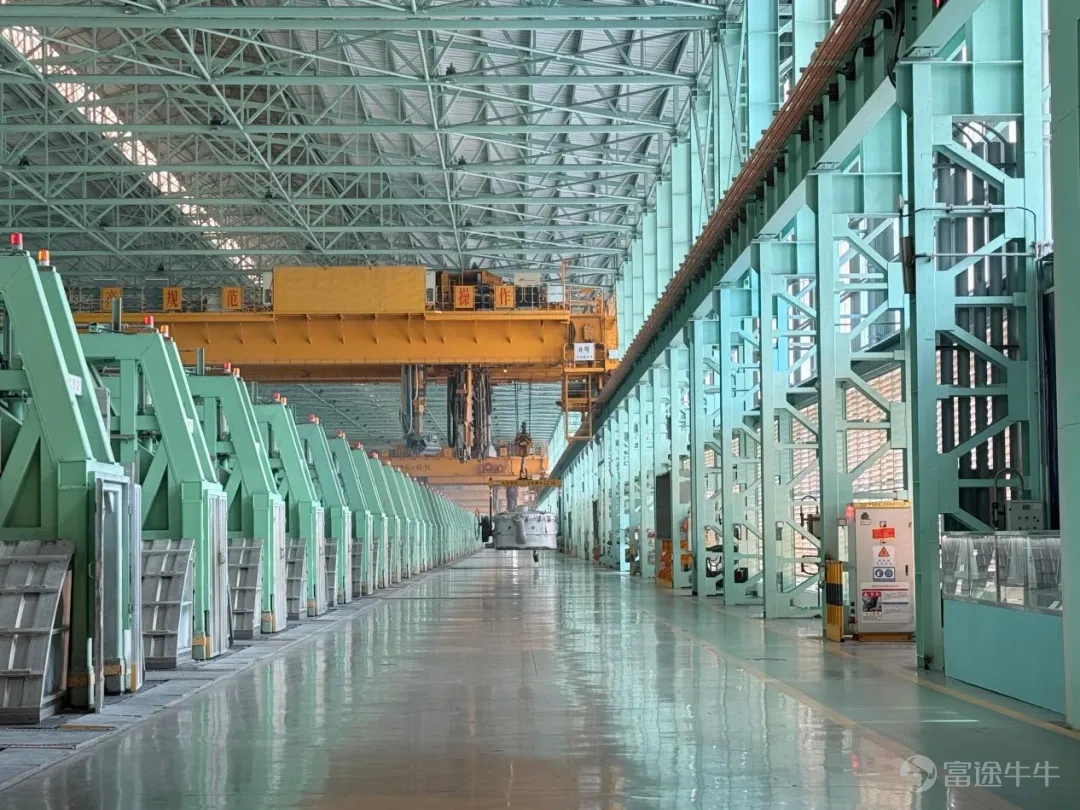

The era of stringent green electricity consumption mandates has arrived, prompting Hongqiao Holding—a trillion-yuan giant—to redefine its cyclical valuation logic
With only one day left until August 1, 2026, the 'Implementation Measures for Minimum Renewable Energy Consumption Targets and Renewable Electricity Consumption Responsibility Weight System' (hereinafter referred to as the 'Measures') is about to take effect. This marks the formal entry of key energy-intensive sectors such as domestic electrolytic aluminum into a new phase characterized by stricter renewable energy consumption requirements, thereby reshaping the industry’s fundamental operating logic.
Electricity has long accounted for over 40% of electrolytic aluminum production costs, making it a critical variable affecting profitability. Over the past decade, the electrolytic aluminum industry focused primarily on capacity expansion. However, with production capacity ceilings now firmly in place, the sector has fully transitioned away from growth-driven competition toward a new stage centered on greening, decarbonization, and compliance—emphasizing quality improvement within existing capacity. For leading electrolytic aluminum producers, access to green power is no longer a competitive advantage but rather a baseline requirement for survival and a core component of long-term competitive moats.
At this pivotal moment of industry transformation, Hongqiao Holding (SZSE: 002379), a trillion-yuan electrolytic aluminum giant, has announced a private placement plan to raise RMB 12 billion. The proceeds will fund investments in wind and solar clean energy projects, while simultaneously expanding downstream aluminum processing capacity, repaying loans, and bolstering liquidity.
It is worth noting that Hongqiao Holdings has just completed a restructuring project involving the 100% acquisition of Hongtuo Industrial, enhancing its integrated upstream and downstream resources in the aluminum industry.
Why is the company launching an equity financing round at this juncture? This may also be a key concern for the market: how will Hongqiao Holdings’ self-developed wind and solar renewable energy projects achieve deep synergy with its existing primary electrolytic aluminum business to hedge against the dual pressures of compliance and costs imposed by the new regulatory measures? Furthermore, how will the successful implementation of this refinancing reshape the company’s share liquidity and financial structure, thereby altering capital markets’ traditional valuation logic for electrolytic aluminum producers?
Dual-dimensional synergy builds a differentiated competitive moat
According to the announcement, the core investment focus of Hongqiao Holdings’ current private placement is the development of wind and solar power stations in Yunnan Province. Coupled with complementary expansion in aluminum processing capacity, all projects funded through this placement are deeply aligned with the company’s ongoing 'North Aluminum Southward Shift' production layout. This creates dual synergies—stable coordination in energy supply and closed-loop integration across the electrolytic aluminum value chain—establishing a rare, vertically integrated 'green aluminum' competitive advantage among national electrolytic aluminum producers.
Following the implementation of the Measures, electrolytic aluminum producers have three main pathways to fulfill their annual green electricity consumption targets: purchasing long-term green power contracts across provinces, buying green certificates in bulk, or directly developing their own renewable energy projects to supply electricity.
However, the first two approaches suffer from inherent instability. Prices for externally procured long-term green power contracts rise annually in line with market supply and demand, particularly during Yunnan’s dry season when hydropower output declines sharply, leading to significant green power price premiums. Meanwhile, purchasing green certificates alone merely satisfies compliance requirements without materially reducing electricity costs for production, thereby imposing additional fixed compliance expenses per ton of aluminum and partially eroding profit margins.
In contrast, the wind and solar projects Hongqiao Holdings plans to fund through this capital raise are precisely tailored to Yunnan’s regional energy endowments. They complement the province’s abundant hydropower during summer and autumn on a seasonal basis, enhancing the stability and predictability of green electricity supply and reducing the company’s reliance on externally purchased green power and certificates.
Public data shows that Yunnan’s core hydropower generation period concentrates between June and October—the wet season—when electricity prices are low and supply abundant. From November through May of the following year, the region enters the dry season, marked by sharply reduced water inflows and declining hydropower output. This dry period coincides precisely with the peak pressure window for electrolytic aluminum producers to meet green power compliance obligations. Mountain-based photovoltaic and onshore wind installations, however, deliver stable power generation during winter and spring, providing seasonal complementarity with hydropower and enabling balanced green electricity supply throughout the year.
In fact, the Measures explicitly encourage high-energy-consuming enterprises to co-locate renewable energy projects on-site for self-generation and self-consumption. Self-produced wind and solar power can fully offset the enterprise’s own renewable energy consumption obligation, free from cross-provincial transaction quotas or grid transmission constraints. Leveraging the wind and solar assets funded by this placement, Hongqiao Holdings’ Yunnan production base will establish a green power supply system combining 'hydropower as the base load plus wind and solar as supplements,' significantly reducing dependence on externally sourced green power and certificates, and building a hard-to-replicate green electricity competitiveness barrier within the industry.
A set of figures further illustrates the long-term value of self-developed renewable energy projects used for self-consumption.
According to data from the China Photovoltaic Industry Association, the current levelized cost of electricity (LCOE) for photovoltaic systems in China is generally below RMB 0.25 per kilowatt-hour, and in regions with superior solar resources, it has even dropped below RMB 0.15 per kilowatt-hour. Data from the Wind Energy Committee of the China Renewable Energy Society shows that onshore wind power generation costs in China’s regions with favorable wind resources have fallen to RMB 0.10–0.15 per kilowatt-hour, while nearshore offshore wind power averages RMB 0.33 per kilowatt-hour. The global average LCOE for onshore wind is approximately RMB 0.20 per kilowatt-hour. These aforementioned costs for solar and wind power are already significantly lower than those of thermal power and green electricity purchased during dry seasons.
Moreover, 'green aluminum' produced using renewable electricity not only reduces carbon emissions but also saves on carbon tax expenses. According to data released by the China Nonferrous Metals Industry Association, in 2025, conventional coal-powered aluminum production will emit approximately 2.2 tons of CO2 equivalent per ton of aluminum. Based on the Q1 2026 CBAM certificate price of EUR 75.36 per ton of CO2 equivalent, the carbon tariff cost alone for each ton of coal-powered aluminum would reach as high as EUR 165.79. In contrast, green aluminum produced via direct renewable power supply can reduce carbon emissions by more than 80%, resulting in a carbon tariff cost of just EUR 33.16 per ton. By the end of 2025, Hongqiao Holding had already relocated 2.176 million tons of its electrolytic aluminum capacity to Yunnan Province, with long-term plans to expand green aluminum capacity there to 3.96 million tons—accounting for over 60% of the company’s total electrolytic aluminum capacity. This substantial capacity creates urgent demand for stable, low-cost renewable electricity, and the cost reduction and compliance benefits derived from Hongqiao Holding’s self-built wind and solar projects are expected to continue growing.
Currently, the electrolytic aluminum industry is experiencing strong market conditions. In the first half of 2026, domestic electrolytic aluminum prices remained elevated with significant volatility. According to data from SMM, the average electrolytic aluminum price in H1 2026 was approximately RMB 24,140 per ton, representing a year-over-year increase of 14.81%. Benefiting from higher prices, Hongqiao Holding reported significantly higher net profit in the first half of this year. As announced in its earnings guidance on July 11, the company expects attributable net profit for the first half of the year to range between RMB 15 billion and RMB 16 billion, marking a substantial year-over-year growth of 69.72% to 81.04%.
Hongqiao Holding’s industry-leading profitability stems from its vertically integrated business model. When complemented by dedicated renewable power supply, its market competitiveness is further enhanced, creating a three-layer profit 'cushion': First, self-developed wind and solar projects secure high-value renewable electricity, lowering power costs; second, a high degree of upstream alumina self-sufficiency shields the company from alumina price volatility; third, downstream aluminum processing capacity located near its Yunnan smelters directly consumes molten aluminum, eliminating the need for re-melting and logistics costs associated with aluminum ingots, thereby enabling product premiums above those of standard primary aluminum.
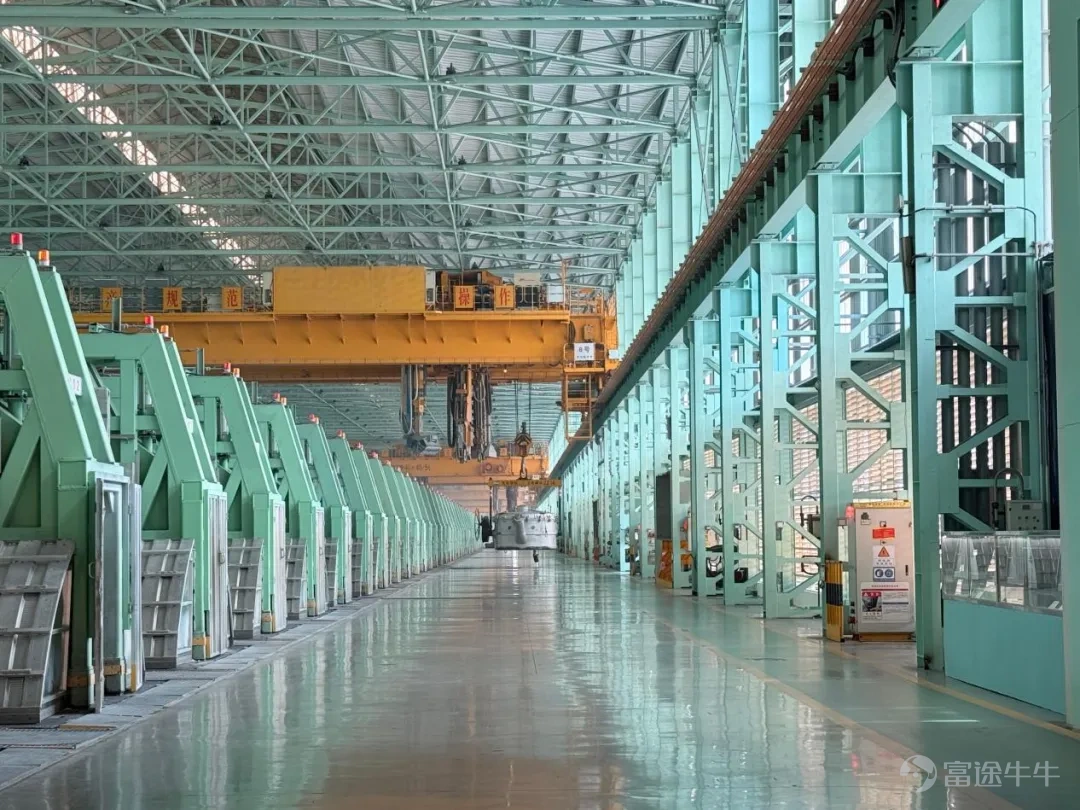
Supported by stable energy supply from its self-built wind and solar power stations, Hongqiao Holding has established a virtuous cycle of closed-loop industrial synergy: declining green electricity costs boost electrolytic aluminum gross margins, while integrated downstream aluminum processing further enhances product premiums. This fully integrated value chain enables the company to achieve significantly greater earnings elasticity than peers during upward cycles in aluminum prices, and during industry downturns, comprehensive cost buffers across all segments mitigate the impact of cyclical volatility.
Unlocking liquidity to reshape the long-term valuation curve
Beyond dual-dimensional synergies, Hongqiao Holding’s recently announced private placement will further enhance share liquidity, optimize capital structure, and support sustained fundamental improvements.
This private placement will effectively address Hongqiao Holding’s relatively limited free float, further improving stock liquidity, institutional investor participation, and market pricing efficiency—ensuring the company’s operational strength and industry leadership receive fuller recognition in the capital markets.
According to Wind data, prior to the announcement of this private placement plan, Hongqiao Holding had a total share capital of 13 billion shares, with tradable and free-float shares amounting to 1.136 billion and 875 million shares respectively, representing 8.7% and 6.7% of the total. Following the completion of its 100% acquisition of Hongtuo Industrial in early this year, the company’s ownership became highly concentrated: as of the end of Q1 this year, Shandong Weiqiao Aluminum & Electricity Co., Ltd. and its concert party, Shandong Hongqiao New Materials Co., Ltd., collectively held 88.98% of the shares.
Hongqiao Holding’s low free float has two implications. On one hand, the low proportion of tradable shares indicates substantial room to improve secondary market liquidity and institutional investor participation. On the other hand, according to the latest Wind Aluminum Industry Index data, Hongqiao Holding’s current forward P/E ratio stands at just 11.0x, below the index’s average of 13.6x on the same day—suggesting that the company’s valuation remains below the sector average and its investment value has yet to be fully reflected.
Based on Hongqiao Holdings’ closing share price as of July 31, 2026, the company is expected to issue approximately 4.4% of its total pre-offering outstanding shares to professional institutional investors and strategic industrial investors. Once the newly issued shares become tradable on the secondary market, they will directly expand the company's floating share base. By attracting long-term allocation capital, this move will further optimize the shareholder structure. In fact, beyond alleviating valuation constraints by enhancing share liquidity, this private placement is also a critical step toward improving the company’s fundamentals and reshaping its long-term valuation trajectory. Currently, the mandatory transition to green electricity in the electrolytic aluminum industry has become a widely recognized medium- to long-term certainty among capital markets. Following the integration of upstream alumina and electrolytic aluminum assets earlier this year, Hongqiao Holdings now embodies vertically integrated operations, low valuation, and high dividend characteristics.
Undeniably, since completing its asset restructuring earlier this year, capital markets have already begun repricing Hongqiao Holdings. Consequently, the company’s short-term market capitalization surged in the first half of this year, peaking above RMB 400 billion. However, as short-term sentiment cools, the core drivers for Hongqiao Holdings’ medium- to long-term valuation recovery will hinge on its 'earnings performance + cyclical growth + high dividend yield' fundamentals.
First, key factors influencing Hongqiao Holdings’ earnings and cyclical growth include its power cost structure and whether its advanced aluminum processing capabilities can mitigate cyclical volatility. Given that the proceeds from this private placement will fund self-built wind and solar projects, which are expected to structurally lower fixed power costs over the long term, the company’s power cost curve will continue to shift downward, thereby enhancing its long-term profitability.
It should be noted that brokerage firms remain optimistic about Hongqiao Holdings’ future earnings growth. According to Wind data, six brokerages project the company’s net profit attributable to shareholders of listed companies to reach RMB 31.4 billion, RMB 33.9 billion, and RMB 35.5 billion in 2026, 2027, and 2028, respectively. China Securities Journal cited CITIC Securities as stating: 'Hongqiao Holdings will continue its orderly relocation of electrolytic aluminum capacity to Yunnan Province, steadily increasing its clean energy ratio. This will progressively highlight the company’s green energy advantage and enable steady annual growth in low-carbon aluminum output. Through this capacity transfer, the company can leverage Yunnan Province’s abundant hydropower and renewable energy resources to raise its renewable energy usage ratio, achieve green and low-carbon development, and effectively meet demand in China’s southern aluminum consumption markets.'
Second, robust fundamentals provide strong support for high dividend payouts. Hongqiao Holdings holds the core aluminum assets of its parent company, China Hongqiao Group, contributing approximately 79% of China Hongqiao’s net profit attributable to shareholders and serving as its primary source of profits and dividends. China Hongqiao has consistently maintained high shareholder returns in recent years, with dividend payout ratios of 62.03% and 62.46% in 2024 and 2025, respectively. Based on its 89% ownership stake, Hongqiao Holdings’ future dividend payout ratio could exceed 70%. Using the current market capitalization and consensus earnings estimates from Wind, the company’s 2026 dividend yield is projected to surpass 8%, placing it among the highest in the A-share market. Notably, during an institutional investor briefing in May this year, Hongqiao Holdings reaffirmed: 'The company values long-term and stable shareholder returns and aims to maintain a sustainable and consistent dividend policy.'
Overall, as high-energy-consuming sectors like electrolytic aluminum enter an era of stringent renewable energy consumption mandates, competition among electrolytic aluminum producers has entered a new phase characterized by capped total capacity, optimized energy mix, and low-carbon competitiveness. In essence, the mandatory green power requirements introduced by the new regulatory framework represent a supply-side structural shakeout within the electrolytic aluminum industry. Leading players equipped with integrated green power sources—wind, solar, and hydropower—and closed-loop industrial chains will continue to widen their competitive advantages.
The transformation of the electrolytic aluminum industry is already underway. For Hongqiao Holdings, this private placement is not merely a capital-raising exercise but a systemic strategic initiative centered on green energy, aluminum industry chain synergy, and long-term value creation—an integrated effort to reshape competitiveness across three dimensions: industrial cost structure, industrial chain value, and capital market valuation.
*This article is for reference only and does not constitute investment advice.
Source: 21st Century Business Herald
Author: Cao Enhui
Risk Disclaimer: The above content only represents the author's view. It does not represent any position or investment advice of Futu. Futu makes no representation or warranty.Read more
Comments
to post a comment