Tengsi IPO Analysis | How is Shein, one of the 'Four Little Dragons Going Global'?
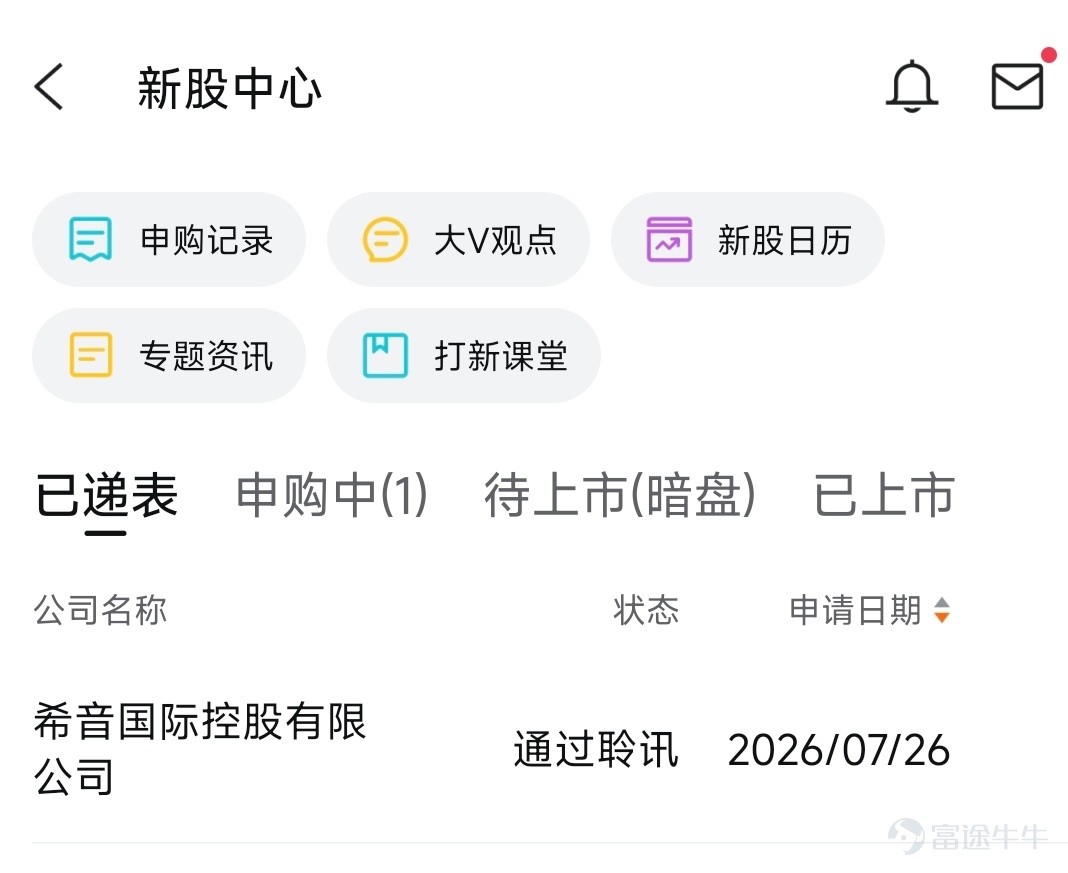
On July 26, 2026, Shein International Holding Limited passed the Hong Kong Stock Exchange listing hearing, and the market generallyExpectedexpects it to list as early as the end of August 2026.

Data source: Futu
Please note: Unless otherwise specified, all data below is sourced from Shein International Holding Limited’s post-hearing filing with the Hong Kong Stock Exchange (hkexnews.hk/app...), compiled by HighTide International Asset Management Limited and not reviewed by the Securities and Futures Commission.
Fellow investors can subscribe to the IPO via Futu's auto-subscription feature. For details, seeTengsi · IPO Strategy | Which money market fund offers the best returns? Can you use money market funds for IPO subscriptions?! Backtested returns over 232 trading days on a RMB 10,000 investment! – NiuNiu Community。

Data source: HighTide International Asset Management Limited, as of July 31, 2026
What is the macroeconomic environment facing Shein?
Starting May 2, 2025, the United States officially terminated the de minimis exemption for goods shipped from mainland China to the U.S. with a value below $800, imposing either an ad valorem tariff of up to 54% or a flat fee of $100 per shipment.
Subsequently, the European Union eliminated the €150 duty-free threshold effective July 1, 2026, and initially imposed a flat tariff of €3 per category of goods.
These two policy changes together have precisely targeted Shein’s foundationalcross-border direct mail business model, increasing its costs.
Meanwhile, on February 20, 2026, the U.S. Supreme Court issued a ruling declaring several tariff measures implemented under the IEEPA invalid.
U.S. Customs and Border Protection subsequently launched the CAPE portal and refund process on April 20, but the final enforcement of the court’s ruling and the future direction of tariff policy remain highly uncertain and in a legal gray area.
For Shein, the current complex situation is both a near-term valuation headwind and a potential catalyst for upside if marginal policy improvements materialize.
business model
Shein's core competitive advantage lies in its proprietary, large-scale automated small-batch, rapid-replenishment model.
—testing new products in small batches of 100 to 200 units, using real-time data feedback to decide on reorder quantities within as little as five days, and maintaining a 36-day inventory turnover cycle with unsold inventory representing only low single-digit percentages, supported by an average daily addition of approximately 4,700 new apparel SKUs.
This system is fundamentally built upon the flexible supply chain capabilities of China’s Panyu garment manufacturing cluster and"Low-value exemption-enabled, low-cost cross-border direct shipping"A tripartite structure driven by cost advantages and big data-powered demand forecasting as its efficiency engine.
However, as cross-border direct shipping tariff costs have sharply increased from a range of 0%–62.5% to 10%–87.5%, the cost advantage pillar of this model is undergoing structural fracture, forcing Shein to deeply transform from an asset-light cross-border direct shipping approach toward a globally localized operational footprint.
By the end of June 2026, Shein had built a global warehouse network totaling approximately 6 million square meters. Fulfillment expenses as a percentage of net revenue rose from 42.1% in 2023 to 45.6% in 2025, and further surged to 47.7% in Q1 2026—meaning nearly half of every dollar of net revenue is consumed by fulfillment costs, eroding the capital efficiency benefits of its asset-light model.
Meanwhile, since the second half of 2022, Shein has initiated a strategic shift from a purely proprietary brand model toward"proprietary + platform"dual-engine business model.
Service revenue skyrocketed from $868 million in 2023 to $47.40 billion in 2025, increasing its share of net revenue from 2.7% to 11.3% (reaching 14.3% in Q1 2026). According to the prospectus, the operating profit margin of its brand-enablement services is approximately double that of the group as a whole.
This indicates that the platform transformation not only diversifies Shein’s revenue mix but also opens a potential path toward higher earnings quality—if service revenue can exceed 20% of total net revenue within the next two to three years, its valuation logic could shift from"low-margin retailer"toward"Platform-based business"has undergone a fundamental shift.
Financial Analysis: Growth Stall and the Profitability Paradox
Shein's financial data during its historical reporting period shows"high gross profit but low net profit"a puzzling phenomenon—gross margin steadily climbed from 60.2% in 2023 to 67.9% in 2025 (surpassing 70.4% in Q1 2026), reflecting significant improvements as cost of sales declined from 39.8% to 32.1%, driven by higher third-party platform revenue;
yet net profit margin halved from 8.7% to 4.9%, with a net loss of $990 million recorded in Q1 2026 (compared to a net profit of $3.95 billion in the same period of 2025).
—the root cause lies in the dual失控 of fulfillment and marketing expenses. Marketing expenses as a percentage of revenue surged from 10.8% in 2023 to 14.8% in 2025 (further rising to 15.8% in Q1 2026), with absolute spending increasing from $3.453 billion to $6.191 billion over three years—a staggering increase of 79.3%.
This indicates that Shein’s early strategy of leveraging social media content for low-cost customer acquisition is losing effectiveness. Facing aggressive ad spending by rivals like Temu and TikTok Shop, Shein has been forced to sacrifice profitability to sustain growth.
Even more alarming is the cliff-like decline in revenue growth—plummeting from 41.1% in 2023 to just 8.0% in 2025, and further dropping to a mere 1.1% year-over-year increase in Q1 2026, nearly stalling altogether.
For companies whose valuations are underpinned by high-growth narratives, a 40% plunge in growth rate over two years has become a key driver behind capital market repricing.
Revenue contribution from the U.S. market shrank from 29.4% to 22.5% (Q1 2026), reflecting dual pressures from tariff impacts and weakening growth momentum in its core market; meanwhile, the European market, which accounts for 35.4% of revenue, is about to face the test of the EU’s new tariff regime effective July 1.
On the cash flow front, net cash from operating activities reached $2.838 billion in 2025, but had already declined to $392 million in Q1 2026 (compared to $1.058 billion in the same period of 2025), indicating that the negative impact of tariffs on cash generation is accelerating.
As of March 31, 2026, total cash resources stood at $14.831 billion, providing a buffer for short-term liquidity, though the high proportion of short-term investments carries maturity mismatch risk.
Valuation Dynamics
Shein’s pre-money valuation peaked historically at $98.2 billion in its Series D round in 2022 (post-money exceeding $100 billion), but had fallen to $64 billion by its Series D+ round in 2023. The current market consensus expects its Hong Kong IPO valuation target range to be only $40–50 billion—nearly halved from its peak.
Based on 2025 net profit of $2.064 billion, a $40 billion valuation implies a P/E ratio of approximately 19.4x. If calculated using adjusted net profit (excluding changes in fair value of preferred shares, which grew 85.9% year-over-year in 2025), the valuation multiple would be even lower.
While this valuation isn’t expensive relative to the global fashion retail sector average, low near-term earnings visibility—due to Q1 2026 growth of just 1.1%, an interim loss, and the fact that full-year tariff impacts have yet to materialize—leaves room for further valuation discounting.
From the perspective of private-market exit pressure: as of March 31, 2026, Shein carried $17.294 billion in convertible redeemable preferred stock liabilities on its balance sheet. Its prospectus discloses that Shein must pay approximately $1.1 billion in make-whole payments to Pre-D, Series D, and Series D+ preferred shareholders (accrued at 8% annual interest, rising to 12% if the IPO is delayed). Combined with a lock-up period of no more than 180 days, this means primary investors such as Sequoia HongShan, IDG Capital, Boyu Capital, General Atlantic, and Tiger Global face strong exit pressure once the lock-up expires.
Against the backdrop of significantly eroded valuations,"Stop-loss exit"and"Long-term holding"will become a key source of volatility in the stock price trajectory following its listing.
Furthermore, holders of the Series D+ preferred shares—invested at approximately $64 billion in 2023 and protected by full ratchet anti-dilution provisions—will trigger mandatory downward price adjustments if the offering price falls below their conversion price, further complicating the equity structure and intensifying potential dilution pressure.
Catalyst and Risk Matrix
For investors, Shein’s current investment thesis rests on multiple layers of uncertainty. The following four catalysts and four risks form a potential core game-theoretic matrix. Please note that the following does not constitute any investment advice.
Potential Catalysts
First, an expected marginal policy improvement arising from the U.S. Supreme Court overturning certain IEEPA tariff measures in February 2026 could directly improve the cost structure if U.S.-China trade negotiations make progress;
Second, if service revenue exceeds 20% of total revenue between 2027 and 2028, it would trigger a re-rating of the company from a retailer to a platform business model;
Third, in February 2026, founder Chris Xu announced plans to invest over RMB 10 billion in Guangdong over the next three years to build a smart supply chain (the China Securities Regulatory Commission has confirmed the domestic core operating entity via filing notice), injecting clear strategic certainty into the company.
Key Risks
First, the dual impact of the termination of the U.S. de minimis exemption and the European Union’s new tariff policies is fundamentally reshaping Shein’s cost structure, with policy uncertainty pushing earnings forecast visibility to a historic low;
Second, Temu’s ultra-low-price strategy across all product categories and TikTok Shop’s short-video livestream e-commerce model are jointly intensifying a marketing expense arms race among the three players (Shein’s marketing expense ratio has risen from 10.8% to 15.8%), creating a competitive dynamic akin toa 'prisoner’s dilemma'competitive landscape;
Third, France’s'ultra-fast fashion'bill officially passed on June 29, 2026 (published in the Official Journal on July 9), stipulates that by 2030, an environmental surcharge of up to €20 per item could be levied on'ultra-fast fashion'products and bans social media promotion; if emulated by other EU member states, this would deliver a dual structural blow;
Fourth, over $17.2 billion in preferred stock liabilities and approximately $1.1 billion in mandatory cash outflows for compensation create irreversible financial pressure, and concentrated selling following the expiration of lock-up periods could continue to weigh on the share price within six to twelve months after listing.
In conclusion
Penetrating Shein’s entire underlying asset base—the flexible supply chain network of over 7,500 contract manufacturers, an active customer base of 281 million, the capability to launch 4,700 new SKUs daily on average, inventory turnover efficiency of 36 days, and the platform’s rapidly rising service revenue share reaching 14.3%—clearly reveals that its core operating assets still possess significant competitive moats and intrinsic business value, particularly its deep supply chain integration capability in apparel enabled by the small-batch, fast-replenishment model.This is unlikely to be fully replicated by competitors in the short term.。
However, a cliff-like deceleration in growth—from 41.1% down to 1.1%—combined with fulfillment and marketing expenses consuming over 60% of revenue, systemic tariff pressures expanding from the U.S. to the EU, and the exit pressure from $17.2 billion in preferred stock liabilities, collectively form the fundamental basis for sustained valuation pressure. Until these uncertainties are fully priced in, the stock price is more likely to exhibithigh volatility with low directional biascharacteristics.
For investors, Shein’s investment value lies not in chasing certain profit growth, but in identifying whether the current valuation discount has excessively reflected negative expectations—i.e., spotting potential oversold/overbought opportunities:
If, around the lock-up expiration period, market selling pressure from private-market shareholders compresses the valuation further below $30 billion (implying a ~14.5x P/E ratio based on 2025 net profit), this would represent a potentially attractive entry point relative to the global fashion retail industry average and the latent re-rating potential embedded in its platform transformation.could constitutean observation window offering an attractive Sharpe ratio;
conversely, if the valuation approaches or exceeds $50 billion and the market has already prematurely priced in transformation expectations, near-term downside risks will significantly outweigh upside potential.
Investors can closely monitor the final direction of U.S. tariff policy, the actual financial impact of the EU's new regulations once implemented, and whether service revenue as a percentage of total revenue can break through the critical threshold of 18% to 20% by 2027—using these as key signal indicators for dynamically adjusting investment positions.
![On July 26, 2026, Shein International Holding Limited passed the Hong Kong Stock Exchange listing hearing, and the market generallyExpectedexpects it to list as early as the end of August 2026. Please note: Unless otherwise specified, all data below is sourced from Shein International Holding Limited’s post-hearing filing with the Hong Kong Stock Exchange ([Share Link: hkexnews.hk/app...]), compiled by HighTide International Asset Management Limited and not reviewed by the Securities and Futures Commission. Fellow investors can subscribe to the IPO via Futu's auto-subscription feature. For details, see[Share Link: Tengsi · IPO Strategy | Which money market fund offers the best returns? Can you use money market funds for IPO subscriptions?! Backtested returns over 232 trading days on a RMB 10,000 investment! – NiuNiu Community]。 What is the macroeconomic environment facing Shein? Starting May 2, 2025, the United States officially terminated the de minimis exemption for goods shipped from mainland China to the U.S. with a value below $800, imposing either an ad valorem tariff of up to 54% or a flat fee of $100 per shipment. Subsequently, the European Union eliminated the €150 duty-free threshold effective July 1, 2026, and initially imposed a flat tariff of €3 per category of goods. These two policy changes together have precisely targeted Shein’s foundationalcross-border direct mail business model, increasing its costs. Meanwhile, on February 20, 2026, the U.S. Supreme Court issued a ruling declaring several tariff measures implemented under the IEEPA invalid. U.S. Customs and Border Protection subsequently launched the CAPE portal and refund process on April 20, but the final enforcement status of the court ruling and...](https://nnqimage.futunn.com/sns_client_feed/12486530/20260731/web-1785478490992-yxbUEQwyOF.png/big?area=1&is_public=true&imageMogr2/ignore-error/1/format/webp)
$GaoTeng WeInvest Money Market Fund (HK0000478930.MF)$ $GaoTeng WeValue USD Money Market Fund (HK0000584752.MF)$ $GaoTeng WeFund-GaoTeng Asian Income Fund (HK0000447943.MF)$ $Global Multi-asset ETF Quant Strategy- Active (GTHK005.US)$ $CBOE Volatility S&P 500 Index (.VIX.US)$ $Nasdaq Composite Index (.IXIC.US)$ $Dow Jones Industrial Average (.DJI.US)$ $PHLX Semiconductor Index (.SOX.US)$ $S&P 500 Index (.SPX.US)$ $CSOP SK Hynix Daily Max (2x) Leveraged Product (07709.HK)$ $CSOP Samsung Electronics Daily Max (2x) Leveraged Product (07747.HK)$ $Micron Technology (MU.US)$ $ZJ INNOLIGHT (03308.HK)$ $GIGADEVICE (03986.HK)$
Risk Disclaimer: The above content only represents the author's view. It does not represent any position or investment advice of Futu. Futu makes no representation or warranty.Read more

Comment (1)
to post a comment
1
1