
Mech Mind and SHEIN are in the midst of hot IPOs! Approximately 80% of new listings saw first-day ga

Bai Fei Dairy's Third Failed Attempt at A-Share IPO Leads to Shift to Hong Kong Listing: Net Profit Under Pressure, Pros and Cons of Asset-Light Model
On July 22, 2026, Guangxi Bai Fei Dairy Co., Ltd. (hereinafter referred to as 'Bai Fei Dairy') submitted its listing application to the Hong Kong Stock Exchange, with GF Securities acting as its sponsor. After one month of internal preparation and regulatory filing procedures, all steps have been completed, fulfilling the board’s resolution passed on June 22 to proceed with a Hong Kong listing.
This marks the fourth attempt by this niche dairy company—specializing in water buffalo milk—to access capital markets. Previously, it filed twice for the Shanghai Stock Exchange Main Board and once for the Beijing Stock Exchange, but all efforts were terminated mid-process. With repeated setbacks on the mainland, a Hong Kong listing has become its only viable path to capital market access.
After Repeated Failures Across Mainland Capital Markets, Hong Kong Becomes New Listing Route
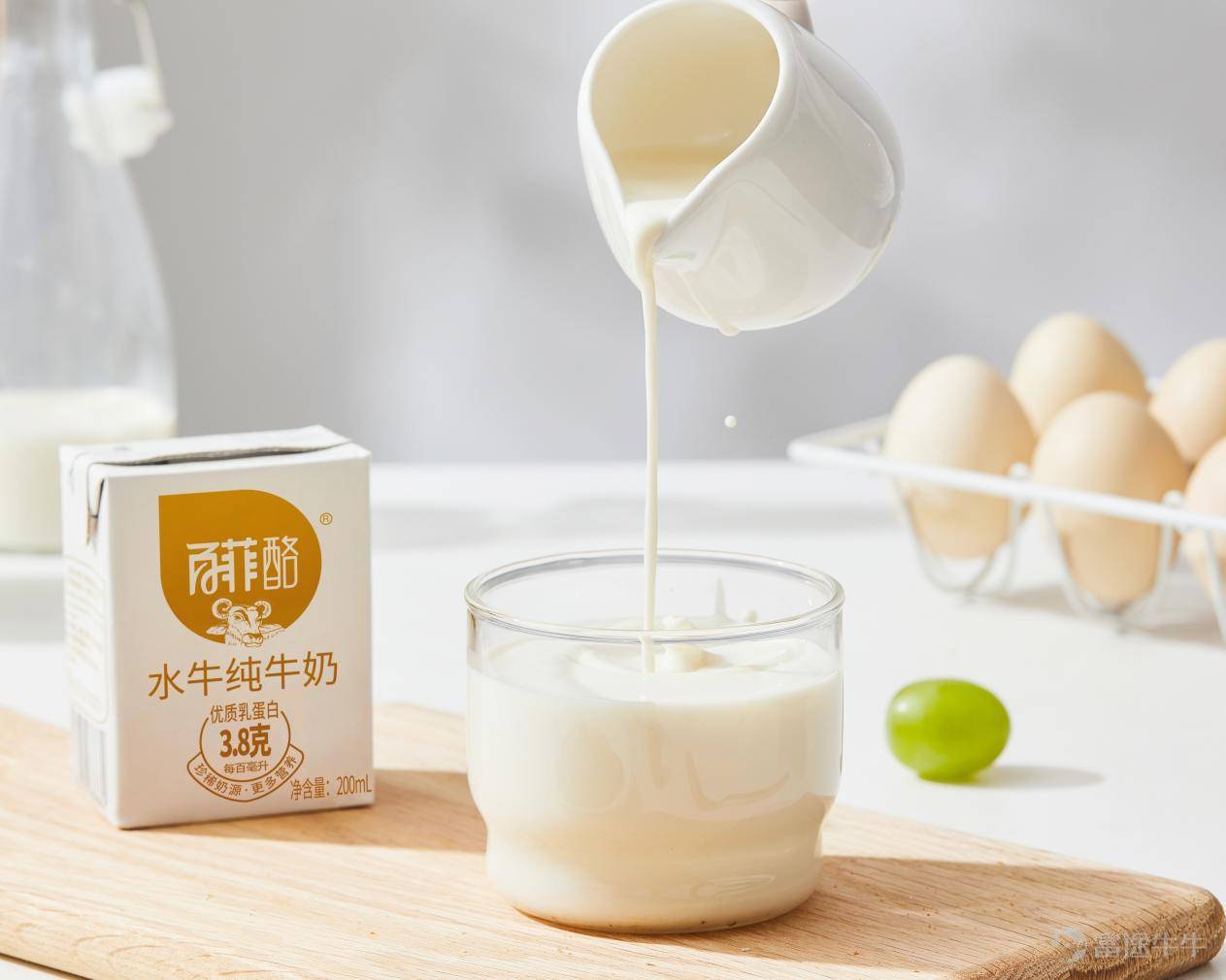
According to Tianyancha and the company's prospectus, Baifei Dairy was established in 2017 and specializes in the research and development, production, and sales of dairy products and milk-containing beverages. Its product portfolio includes sterilized milk, formulated milk, fermented milk, pasteurized milk, and milk-containing beverages, primarily made from raw buffalo milk and raw cow milk. The company has successfully built an integrated marketing network that deeply combines online and offline channels while fully leveraging both traditional and emerging sales channels, enabling precise coverage across consumer scenarios. 'Baifei Lao' has grown into a distinctive buffalo milk brand with broad market recognition.
Looking back at Baifei Dairy’s eight-year capital journey, the company was listed on the National Equities Exchange and Quotations (NEEQ) as early as 2018, delisted in 2021, and immediately commenced A-share IPO preparation, initiating a prolonged domestic listing process.In 2023, Baifei Dairy signed an IPO advisory agreement with Guorong Securities, initially targeting the Shanghai Stock Exchange (SSE) Main Board. Midway through the advisory process, the company adjusted its listing strategy; in 2024, it switched to the Beijing Stock Exchange (BSE), which has relatively lower entry requirements, but voluntarily withdrew its BSE IPO application materials by year-end, marking the failure of its first domestic listing attempt. In June 2025, the company submitted its prospectus again to the SSE Main Board for a second attempt to list on the Shanghai market, only to voluntarily terminate the IPO review process in early 2026—resulting in two failed SSE Main Board filings and one unsuccessful BSE filing.
After three consecutive failed domestic IPO attempts, the company’s board of directors approved a comprehensive plan for an H-share offering and listing on June 22, 2026. The next day, the company disclosed the announcement on NEEQ, officially unveiling its Hong Kong listing plan. On July 22, it formally submitted its full application dossier via HKEXnews.
The announcement clearly outlined the intended use of proceeds from the offering, covering seven key areas: construction of a new smart buffalo dairy farm, capacity expansion of dairy production lines, digital transformation of intelligent warehousing, nationwide sales network upgrades, establishment of an online digital marketing system, brand image enhancement, and strengthening of R&D capabilities.
Revenue growth fails to offset a sharp decline in net profit; direct sales are rising but marketing costs are increasing
In terms of overall operating scale, the company reported revenues of RMB 1.072 billion, RMB 1.421 billion, RMB 1.614 billion, and RMB 493 million for fiscal years 2023, 2024, 2025, and Q1 2026 (the reporting period), respectively, representing a compound annual growth rate (CAGR) of 22.7% over the three-year period, indicating continued expansion. However, annual growth rates clearly reveal diminishing momentum: revenue grew by 32.5% year-over-year in 2024, but slowed sharply to 13.6% in 2025. Revenue rebounded to a 45.9% year-over-year increase in Q1 2026, benefiting from the Chinese New Year peak season and new product promotions—though whether this temporary recovery can be sustained remains uncertain.
In stark contrast to revenue growth, profitability weakened significantly during the reporting period, with both net profit and net margin contracting. The company posted net profits of RMB 233 million in 2023 (net margin: 21.7%) and RMB 310 million in 2024 (net margin: 21.8%). However, net profit plummeted to RMB 235 million in 2025—a 24.2% year-over-year decline—with net margin narrowing to 14.6%.
The company acknowledged in its prospectus that the immediate cause of the profit decline was a RMB 1.11 billion loss from fair value adjustments of biological assets in 2025. Even after excluding this non-operating impact, adjusted net profit stood at approximately RMB 239 million, still reflecting a roughly 20% year-over-year drop, signaling a material weakening in core business profitability.
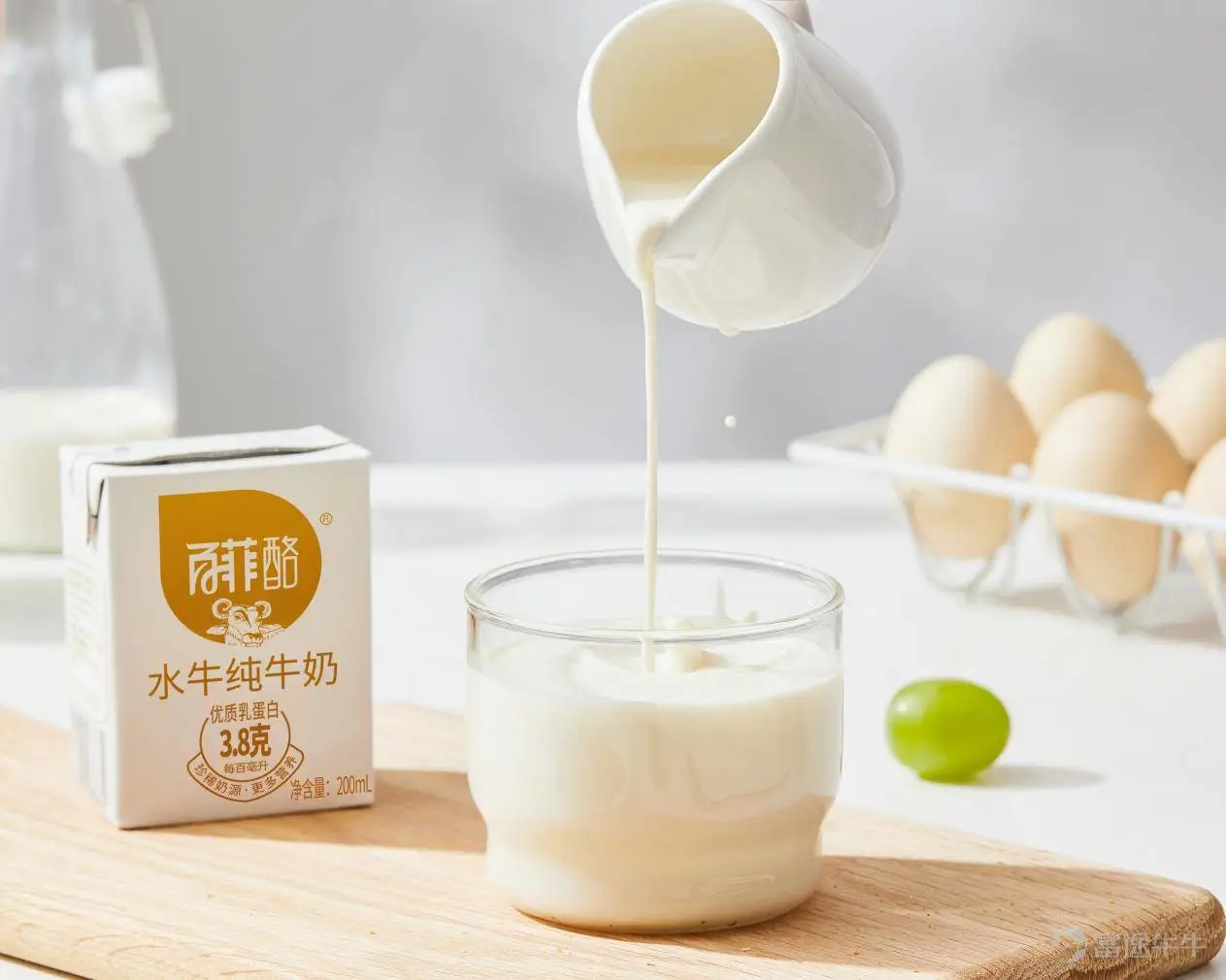
Sterilized milk serves as the cornerstone of the company’s performance, but this heavy reliance highlights significant structural concentration risk. During the reporting period, sterilized milk generated revenues of RMB 832 million, RMB 1.087 billion, RMB 1.207 billion, and RMB 357 million in 2023, 2024, 2025, and Q1 2026, respectively, accounting for 77.6%, 76.4%, 74.7%, and 72.5% of total core business revenue. Formulated milk, the second-largest product line, contributed RMB 221 million, RMB 302 million, RMB 333 million, and RMB 101 million over the same periods, maintaining a stable revenue share of 20%–21%. Together, these two ambient-temperature products accounted for over 95% of the company’s total revenue, while high-value-added chilled products such as pasteurized milk and fermented milk remained negligible and insufficient to offset the slowdown in ambient-category growth.
Growth momentum for core SKUs continues to weaken. During the reporting periods, sales volumes of sterilized milk were 52,700 tons, 73,400 tons, 82,400 tons, and 24,500 tons, respectively, but average selling prices have declined annually to RMB 15,800/ton, RMB 14,800/ton, RMB 14,700/ton, and RMB 14,500/ton, as intensifying price competition at the retail level continues to compress gross margins per unit. Sales of formulated milk have steadily increased to 21,400 tons, 29,100 tons, 31,800 tons, and 9,700 tons, with average prices slightly rising to RMB 10,500/ton; however, the category remains too small in scale to offset the gross margin shortfall caused by declining sterilized milk profitability. Although chilled products have shown impressive growth rates, their revenue base remains too small to form a second growth curve, and the company’s progress in product innovation and category expansion has significantly lagged behind industry expectations.
On the distribution front, Bifei Dairy has achieved nationwide market penetration through Douyin livestreaming and snack discount retailers, but two major risks have simultaneously emerged: high channel expenses eroding profits and rising customer concentration.
During the reporting periods, the company generated distributor channel revenue of RMB 711 million, RMB 801 million, RMB 803 million, and RMB 211 million, respectively. Of this, offline distributor revenue amounted to RMB 711 million, RMB 793 million, RMB 778 million, and RMB 206 million, while online distributor revenue was RMB 0, RMB 81.77 million, RMB 256.05 million, and RMB 51.14 million.
Direct sales channels generated total revenue of RMB 361 million, RMB 620 million, RMB 810 million, and RMB 281 million during the same periods. This included retailer revenue of RMB 153 million, RMB 325 million, RMB 436 million, and RMB 141 million, and DTC (direct-to-consumer) channel revenue of RMB 208 million, RMB 296 million, RMB 375 million, and RMB 141 million.
The channel mix has undergone a reversal: traditional offline distributor revenue as a share of total revenue has continuously declined, while the direct sales segment has grown year-over-year. In 2025, total direct sales revenue surpassed distributor channel revenue for the first time, with livestream e-commerce, supermarket discount chains, and online self-operated DTC emerging as key growth drivers. Accompanying this shift is a change in the number of distributors: year-end distributor counts stood at 670 in 2023, 968 in 2024, 1,179 in 2025, and dropped to 882 by Q1 2026, indicating significant channel rationalization in the first quarter and raising concerns about terminal management stability.
Uncontrolled sales expenses represent the biggest downside of channel expansion. During the reporting periods, the company’s sales and distribution expenses amounted to RMB 107 million, RMB 193 million, RMB 281 million, and RMB 104 million, marking a cumulative increase of over 160% over three years. E-commerce channel expenses alone reached RMB 373.63 million, RMB 849.23 million, RMB 1.22 billion, and RMB 480.88 million, respectively, accounting for an increasing share of total sales expenses—reaching 46.4% in Q1 2026. The company has placed all its growth bets on online traffic acquisition, but this continuous cash-burning model is unsustainable in the long run; rising traffic acquisition costs and declining conversion efficiency will continue to squeeze profit margins.
Extremely low proportion of self-produced buffalo milk: pros and cons of an asset-light model
Bifei Dairy, which focuses on the specialty buffalo milk segment and initially gained market entry through its flagship product Bifeiluo, faces a critical shortfall in core milk supply. During the reporting periods, self-produced raw milk accounted for only 20% of total raw milk usage, and the self-sufficiency rate for raw buffalo milk was less than 4%, leaving production heavily reliant on external farms and cooperatives.
Fundamental constraints exist in the dairy industry: each dairy buffalo produces only 1.8 to 2.1 tons of milk annually, far below the 8 to 10 tons produced by Holstein cows. Buffalo are suited only to humid, subtropical regions in southern China, resulting in extremely limited national herd sizes. Consequently, the purchase price of raw buffalo milk has consistently been 3 to 5 times higher than that of regular cow milk. In 2025, the average price of raw buffalo milk was RMB 12.40 per kilogram, compared to just RMB 3.33 per kilogram for regular cow milk during the same period.
Although the company is based in Lingshan, Guangxi—the region known as 'China’s Buffalo Dairy Capital'—progress in building its own milk supply has been slow. During the reporting periods, the company’s purchases of raw buffalo milk amounted to RMB 1.86 billion, RMB 1.85 billion, RMB 2.13 billion, and RMB 680.07 million, representing 55%, 44.9%, 41%, and 41.9% of total raw milk procurement costs, respectively. Purchases of raw cow milk totaled RMB 1.4 billion, RMB 2.02 billion, RMB 1.97 billion, and RMB 612.51 million, accounting for 41.4%, 49.3%, 38.0%, and 37.7% of total raw milk procurement costs in the respective periods.
The structural divergence in self-produced raw milk is even more pronounced. Revenue from self-produced raw buffalo milk amounted to RMB 12.148 million, RMB 20.732 million, RMB 19.163 million, and RMB 5.179 million, respectively, accounting for 3.6%, 5%, 3.7%, and 3.2% of total raw milk procurement expenses during the corresponding periods. Revenue from self-produced raw cow milk was RMB 0, RMB 3.348 million, RMB 89.768 million, and RMB 28.011 million, respectively, representing 0%, 0.8%, 17.3%, and 17.2% of total raw milk procurement expenses during the same periods.
Song Liang, head of the expert panel at China State Farms Dairy Alliance and a senior dairy analyst, stated that Bifei Dairy has pursued an asset-light operational model since its inception, focusing primarily on downstream product development, marketing, and channel sales rather than adopting a capital-intensive upstream dairy farming strategy. This is the core reason behind its persistently low self-sufficiency rate in raw milk supply.
He pointed out that the company’s brand was built through multi-party collaboration, with upstream dairy supplier Huangshi among its key partners. In its early stages, Bifei relied almost entirely on Huangshi and surrounding external dairy farmers for raw milk supply. Its original business plan never included large-scale construction of its own farms or self-supply of raw milk. Even though the company is based in Lingshan, Guangxi—known as 'China’s Buffalo Milk Capital'—and benefits from strong regional advantages in buffalo milk sourcing, its fundamental business model has always depended heavily on externally procured raw milk. Only during its pre-IPO preparations did the company begin modestly developing its own milk sources and gradually increasing the share of self-produced raw milk, yet its overall upstream self-sufficiency remains weak, with externally sourced milk still forming the core of its raw material supply.
As of the end of March 2026, the company’s total herd size—including both cows and buffaloes—stood at only 7,965 heads. Buffalo inventory declined from 1,659 heads at the end of 2025 to 1,540 heads in Q1. To address raw milk shortages, the company acquired a 60% stake in Ningxia Saishang Bifei Dairy in August 2024 for RMB 60 million, significantly expanding its Holstein dairy herd. By Q1, its inventory of regular dairy cows had reached 6,418 heads. This has raised critical concerns in capital markets: while Bifei markets its flagship 'Bifei Le' brand as a premium water buffalo milk product, its procurement of regular cow milk has consistently approached or even surpassed that of buffalo milk. Moreover, its self-produced milk supply is dominated by Holstein cows, with buffalo milk self-sufficiency below 4%. The extensive use of regular cow milk in product formulations risks diluting its differentiated positioning as a buffalo milk brand and undermining the foundation of its premium pricing strategy.
Song Liang stated,From an IPO perspective, Bifei Dairy’s asset-light model is not necessarily an advantage. On one hand, to boost profitability and valuation, the company needs to avoid heavy investments in upstream dairy farming and minimize its own milk production footprint. Building farms entails significant fixed asset expenditures, which increase depreciation costs and erode net profits. Sourcing milk externally and minimizing upstream operations can thus enhance reported profitability and support a higher valuation. However, this asset-light approach has clear drawbacks. It constrains the company’s overall asset base and operational scale, resulting in insufficient total assets—which is unfavorable for meeting listing requirements. To balance these conflicting demands, Bifei has been investing in its own processing plants and co-building production facilities to bolster its fixed asset base and satisfy both asset scale and profitability thresholds for listing.
Regarding supply chain procurement, the company’s purchases from its top five suppliers amounted to RMB 222 million, RMB 274 million, RMB 307 million, and RMB 95.541 million, respectively, representing 33.70%, 27.80%, 25.50%, and 28.20% of total procurement expenses. Notably, direct materials constitute a persistently high share of total costs. Direct material costs were RMB 555 million, RMB 664 million, RMB 778 million, and RMB 245 million, accounting for 79.5%, 75.7%, 69.7%, and 70.9% of cost of sales, respectively. Consequently, fluctuations in raw material prices directly impact profitability.
Additionally, the company faces compounding risks from inventory and accounts receivable. Inventory levels stood at RMB 64.821 million, RMB 111 million, RMB 170 million, and RMB 148 million, nearly doubling over three years. Inventory turnover days fluctuated significantly at 46.8, 36.5, 46.0, and 41.5 days. Given the strict shelf-life constraints of dairy products, any shortfall in terminal sales could lead to substantial inventory write-downs or write-offs. Trade receivables also rose steadily, reaching RMB 16.519 million, RMB 20.483 million, RMB 43.29 million, and RMB 71.485 million, with receivables turnover days extending from 3 days to 10.5 days. This is primarily due to extended payment terms granted to retailers as distribution channels expanded, resulting in growing capital tied up by downstream customers and increasing liquidity pressure.
Cash flow data further confirms deteriorating operational quality. Net cash used in operating activities amounted to RMB 374 million, RMB 343 million, RMB 241 million, and -RMB 48.858 million, showing a sharp year-over-year decline in 2025 and turning into a net cash outflow in Q1 2026. Net cash used in investing activities totaled -RMB 247 million, -RMB 311 million, -RMB 268 million, and -RMB 116 million, reflecting continued heavy investment in farms and production lines. Cash and cash equivalents at period-end stood at RMB 223 million, RMB 286 million, RMB 291 million, and RMB 126 million, indicating a sustained decline in cash reserves. The company’s internal cash generation capacity is insufficient to support its expansion, making urgent IPO fundraising a core strategic driver.
In resource allocation, Bifei Dairy exhibits an extreme imbalance—prioritizing channel investment while neglecting technological R&D. Despite high marketing expenditures, R&D spending has remained persistently low, undermining product innovation and technological differentiation. During the reporting periods, R&D expenses were RMB 4.569 million, RMB 8.213 million, RMB 9.107 million, and RMB 0.661 million. Collaborative R&D expenditures from 2023 to 2025 totaled RMB 1.942 million, RMB 2.816 million, and RMB 4.816 million, accounting for 42.5%, 34.3%, and 52.9% of total R&D investment in those years, highlighting the company’s weak in-house R&D capabilities.
Compared to the dairy industry's average R&D expense ratio of 1.36% and peer company Huangshi Group's investment level of 3.52%, the company's R&D spending has consistently remained below 1%, significantly lagging behind competitors in both patent reserves and new product development progress. The company has long relied on livestreaming traffic for sales volume and lacks differentiated premium products; once the online traffic红利 dissipates, it will lose its core growth driver.
At the ownership and corporate governance level, Baifei Dairy exhibits a pronounced family-controlled structure. Controlling shareholders Wu Shouyun and his son Wu Lianqiao have signed a concerted action agreement, holding 87.97% of shares through Guangxi Baifei Investment. Combined with their direct shareholdings, they collectively control 88.39% of the company's voting rights. Other shareholders hold highly fragmented stakes: Yijian Dexuedu holds 4.9%, employee shareholding platform Qiangfei Investment holds 2.44%, and Yijian Guangmao and Yijian Qingben each hold 2.1%. There are no external institutional shareholders capable of counterbalancing the controlling shareholders. The entire management team is dominated by core family members—Wu Shouyun serves as both chairman and general manager, while Wu Lianqiao acts as executive director—resulting in a high degree of alignment between ownership and management. (Produced by Harbor Financial)
Xiao Xiuni, Harbor Business Observer
Risk Disclaimer: The above content only represents the author's view. It does not represent any position or investment advice of Futu. Futu makes no representation or warranty.Read more
Comments
to post a comment