
English
Back
Open Account
创业最前线
wrote a column · Jul 31 05:14

Revenue down by 2 billion yuan over two years, Topstar makes another attempt at a Hong Kong listing: 'Amputating' legacy businesses to bet on embodied intelligence

Produced by | Frontline of Entrepreneurship Author | Xingkong Editor | Wang Yajing Art Editor | Xing Jing Reviewed | Songwen 2026 is being hailed as the inaugural year for mass production of humanoid robots. According to forecasts by China's Ministry of Industry and Information Technology, domestic annual output of complete humanoid robots is expected to exceed 100,000 units this year. A wave of capitalization in the robotics sector has followed. Unitree Robotics, for instance, completed its IPO process—from application acceptance to registration effectiveness—in just 104 days, becoming the first listed humanoid robotics company on China’s A-share market; on July 24, Agibot also launched its Hong Kong IPO process. Almost simultaneously, Guangdong Topstar Technology Co., Ltd.—a veteran A-share industrial robotics firm (hereinafter referred to as 'Topstar')—submitted its second listing application to the Hong Kong Stock Exchange on July 20, merely four days after its initial filing lapsed. Today, Topstar is also developing humanoid robot products, but stands in stark contrast to new robotics startups: its humanoid robots remain in the production line validation phase, with no large-scale orders yet secured. More troubling for the market is its financial fundamentals: the company’s revenue has fallen from RMB 4.55 billion to RMB 2.5 billion over two years, accounts receivable and notes receivable have surpassed RMB 1.2 billion, and net operating cash outflow exceeded RMB 100 million in the first quarter of 2026. These issues have become unavoidable questions Topstar must answer on its path to a Hong Kong listing. 1. Profits surge, yet cash on hand declines further In June 2007, Wu Fengli founded Topstar with an 80% stake and an initial registered capital of RMB 500,000. It is reported that Wu Fengli has been deeply involved in the automation equipment industry for over 20 years and holds both a Tsinghua EMBA and a Doctorate in Business Administration from the University of Minnesota.
Produced by | Frontline of Entrepreneurship
Author | Xingkong
Editor | Wang Yajing
Art Editor | Xing Jing
Reviewed | Songwen
2026 is being dubbed the inaugural year for mass production of humanoid robots. According to forecasts by China's Ministry of Industry and Information Technology, the country’s total annual output of humanoid robots this year is expected to exceed 100,000 units.
A wave of capitalization in the robotics sector has followed. Notably, Unitree Robotics completed its IPO process—from application acceptance to registration approval—in just 104 days, becoming the first A-share listed 'humanoid robot stock.' On July 24, Agibot also initiated its Hong Kong listing process.
Almost simultaneously, Guangdong Topstar Technology Co., Ltd.—a long-established A-share industrial robotics company (hereinafter referred to as 'Topstar')—resubmitted its listing application to the Hong Kong Stock Exchange on July 20, merely four days after its initial filing lapsed.
Today, Topstar is also developing humanoid robot products, but stands in stark contrast to the new wave of robotics startups: its humanoid robots remain at the production line validation stage, with no large-scale orders secured yet.
More concerning to the market is its financial fundamentals: the company’s revenue has dropped from RMB 4.55 billion to RMB 2.5 billion over two years, accounts receivable and notes receivable have surpassed RMB 1.2 billion, and its operating cash flow recorded a net outflow exceeding RMB 100 million in the first quarter of 2026.
These issues have become unavoidable questions Topstar must address on its path toward a Hong Kong listing.
1. Profits surged, yet cash on hand decreased further
In June 2007, Wu Fengli founded Topstar with an 80% stake and an initial registered capital of RMB 500,000.
It is reported that Wu Fengli has been deeply involved in the automation equipment industry for over 20 years and holds both a Tsinghua EMBA and a Doctorate in Business Administration from the University of Minnesota.
This company, headquartered in Dongguan, Guangdong, started in auxiliary injection molding equipment, completed its shareholding reform and listed on the National Equities Exchange and Quotations (NEEQ) in 2014, and in 2017 became the first robotics company from Guangdong to go public on the ChiNext board of the Shenzhen Stock Exchange.
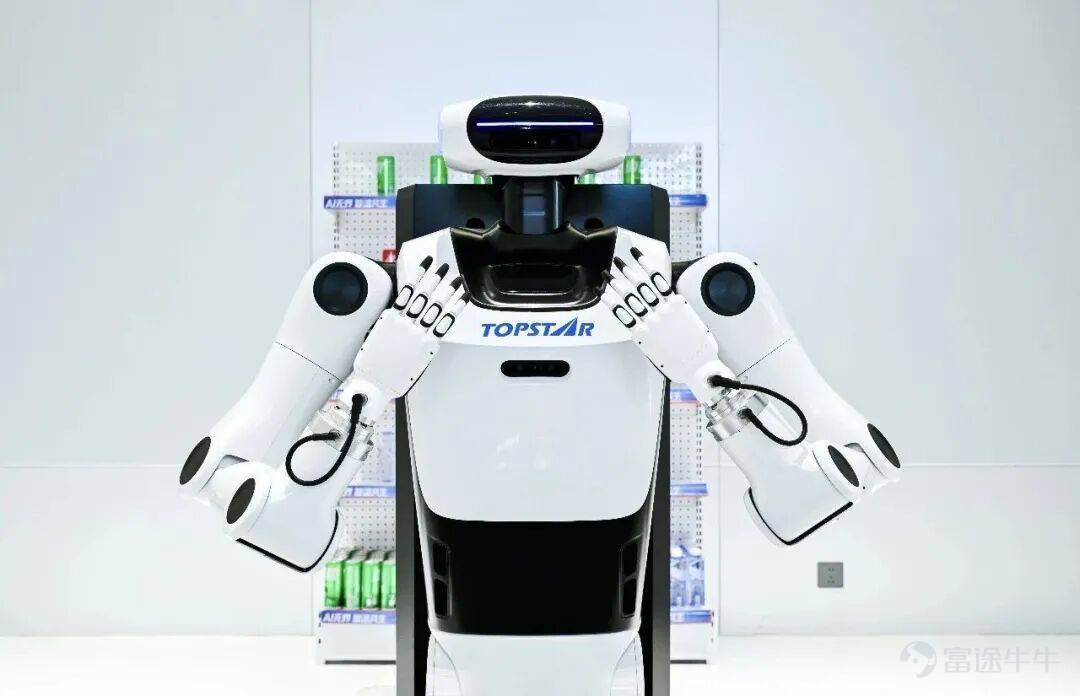
Over the past several years, Topstar has continuously iterated its industrial robot and CNC machine tool product lines. In 2025, it launched the injection molding humanoid robot 'Xiao Tuo,' and in 2026 unveiled the quadruped robot 'Xing Zai,' establishing a strategic focus on injection molding automation, general-purpose robotics, and humanoid embodied intelligence.
Produced by | Frontline of Entrepreneurship Author | Xingkong Editor | Wang Yajing Art Editor | Xing Jing Reviewed | Songwen 2026 is being hailed as the inaugural year for mass production of humanoid robots. According to forecasts by China's Ministry of Industry and Information Technology, domestic annual output of complete humanoid robots is expected to exceed 100,000 units this year. A wave of capitalization in the robotics sector has followed. Unitree Robotics, for instance, completed its IPO process—from application acceptance to registration effectiveness—in just 104 days, becoming the first listed humanoid robotics company on China’s A-share market; on July 24, Agibot also launched its Hong Kong IPO process. Almost simultaneously, Guangdong Topstar Technology Co., Ltd.—a veteran A-share industrial robotics firm (hereinafter referred to as 'Topstar')—submitted its second listing application to the Hong Kong Stock Exchange on July 20, merely four days after its initial filing lapsed. Today, Topstar is also developing humanoid robot products, but stands in stark contrast to new robotics startups: its humanoid robots remain in the production line validation phase, with no large-scale orders yet secured. More troubling for the market is its financial fundamentals: the company’s revenue has fallen from RMB 4.55 billion to RMB 2.5 billion over two years, accounts receivable and notes receivable have surpassed RMB 1.2 billion, and net operating cash outflow exceeded RMB 100 million in the first quarter of 2026. These issues have become unavoidable questions Topstar must answer on its path to a Hong Kong listing. 1. Profits surge, yet cash on hand declines further In June 2007, Wu Fengli founded Topstar with an 80% stake and an initial registered capital of RMB 500,000. It is reported that Wu Fengli has been deeply involved in the automation equipment industry for over 20 years and holds both a Tsinghua EMBA and a Doctorate in Business Administration from the University of Minnesota.
(Image / Topstar's robotic products (Source: Topstar official website))
In January 2026, Topstar filed for a Hong Kong IPO for the first time, but the application lapsed due to an expired prospectus. The company is now making a second attempt.
A notable shift is that Topstar is undergoing an 'active divestiture' to transform its business, significantly scaling back its intelligent energy and environmental management segment, which previously accounted for nearly 60% of its revenue.
This segment provided services such as water and electricity systems and temperature control for electromechanical engineering projects. In 2023, the intelligent energy and environmental management systems business contributed 59% of total revenue, making it the company’s largest income source.
However, this business not only relied heavily on on-site implementation—limiting its scalability—but also suffered from relatively low and unstable gross margins, dipping to -11.7% in 2024. Consequently, it was classified as non-core and has been progressively scaled down.
By the first quarter of 2026, revenue from the intelligent energy and environmental management systems business had already declined to 5.6% of total revenue. The company expects the wind-down of this segment to be fully completed by the first half of 2026.
Produced by | Frontline of Entrepreneurship Author | Xingkong Editor | Wang Yajing Art Editor | Xing Jing Reviewed | Songwen 2026 is being hailed as the inaugural year for mass production of humanoid robots. According to forecasts by China's Ministry of Industry and Information Technology, domestic annual output of complete humanoid robots is expected to exceed 100,000 units this year. A wave of capitalization in the robotics sector has followed. Unitree Robotics, for instance, completed its IPO process—from application acceptance to registration effectiveness—in just 104 days, becoming the first listed humanoid robotics company on China’s A-share market; on July 24, Agibot also launched its Hong Kong IPO process. Almost simultaneously, Guangdong Topstar Technology Co., Ltd.—a veteran A-share industrial robotics firm (hereinafter referred to as 'Topstar')—submitted its second listing application to the Hong Kong Stock Exchange on July 20, merely four days after its initial filing lapsed. Today, Topstar is also developing humanoid robot products, but stands in stark contrast to new robotics startups: its humanoid robots remain in the production line validation phase, with no large-scale orders yet secured. More troubling for the market is its financial fundamentals: the company’s revenue has fallen from RMB 4.55 billion to RMB 2.5 billion over two years, accounts receivable and notes receivable have surpassed RMB 1.2 billion, and net operating cash outflow exceeded RMB 100 million in the first quarter of 2026. These issues have become unavoidable questions Topstar must answer on its path to a Hong Kong listing. 1. Profits surge, yet cash on hand declines further In June 2007, Wu Fengli founded Topstar with an 80% stake and an initial registered capital of RMB 500,000. It is reported that Wu Fengli has been deeply involved in the automation equipment industry for over 20 years and holds both a Tsinghua EMBA and a Doctorate in Business Administration from the University of Minnesota.
(Image / Hong Kong Stock Exchange prospectus)
Due to the downsizing of this segment, Topstar’s total revenue fell from RMB 4.553 billion in 2023 to RMB 2.510 billion in 2025—a decline of over RMB 2 billion within two years.
After the revenue contribution from low-margin businesses gradually declined, the company's overall gross margin jumped from a low of 14.6% in 2024 to 28.3% in 2025, and further climbed to 32.5% in the first quarter of 2026.
Produced by | Frontline of Entrepreneurship Author | Xingkong Editor | Wang Yajing Art Editor | Xing Jing Reviewed | Songwen 2026 is being hailed as the inaugural year for mass production of humanoid robots. According to forecasts by China's Ministry of Industry and Information Technology, domestic annual output of complete humanoid robots is expected to exceed 100,000 units this year. A wave of capitalization in the robotics sector has followed. Unitree Robotics, for instance, completed its IPO process—from application acceptance to registration effectiveness—in just 104 days, becoming the first listed humanoid robotics company on China’s A-share market; on July 24, Agibot also launched its Hong Kong IPO process. Almost simultaneously, Guangdong Topstar Technology Co., Ltd.—a veteran A-share industrial robotics firm (hereinafter referred to as 'Topstar')—submitted its second listing application to the Hong Kong Stock Exchange on July 20, merely four days after its initial filing lapsed. Today, Topstar is also developing humanoid robot products, but stands in stark contrast to new robotics startups: its humanoid robots remain in the production line validation phase, with no large-scale orders yet secured. More troubling for the market is its financial fundamentals: the company’s revenue has fallen from RMB 4.55 billion to RMB 2.5 billion over two years, accounts receivable and notes receivable have surpassed RMB 1.2 billion, and net operating cash outflow exceeded RMB 100 million in the first quarter of 2026. These issues have become unavoidable questions Topstar must answer on its path to a Hong Kong listing. 1. Profits surge, yet cash on hand declines further In June 2007, Wu Fengli founded Topstar with an 80% stake and an initial registered capital of RMB 500,000. It is reported that Wu Fengli has been deeply involved in the automation equipment industry for over 20 years and holds both a Tsinghua EMBA and a Doctorate in Business Administration from the University of Minnesota.
(Chart / HKEX Prospectus)
According to financial statements, Topstar reported net profit attributable to shareholders of RMB 73.87 million in 2025, successfully returning to profitability; in the first quarter of 2026, net profit attributable to shareholders reached RMB 48.083 million, surging 1,147.36% year-over-year.
Produced by | Frontline of Entrepreneurship Author | Xingkong Editor | Wang Yajing Art Editor | Xing Jing Reviewed | Songwen 2026 is being hailed as the inaugural year for mass production of humanoid robots. According to forecasts by China's Ministry of Industry and Information Technology, domestic annual output of complete humanoid robots is expected to exceed 100,000 units this year. A wave of capitalization in the robotics sector has followed. Unitree Robotics, for instance, completed its IPO process—from application acceptance to registration effectiveness—in just 104 days, becoming the first listed humanoid robotics company on China’s A-share market; on July 24, Agibot also launched its Hong Kong IPO process. Almost simultaneously, Guangdong Topstar Technology Co., Ltd.—a veteran A-share industrial robotics firm (hereinafter referred to as 'Topstar')—submitted its second listing application to the Hong Kong Stock Exchange on July 20, merely four days after its initial filing lapsed. Today, Topstar is also developing humanoid robot products, but stands in stark contrast to new robotics startups: its humanoid robots remain in the production line validation phase, with no large-scale orders yet secured. More troubling for the market is its financial fundamentals: the company’s revenue has fallen from RMB 4.55 billion to RMB 2.5 billion over two years, accounts receivable and notes receivable have surpassed RMB 1.2 billion, and net operating cash outflow exceeded RMB 100 million in the first quarter of 2026. These issues have become unavoidable questions Topstar must answer on its path to a Hong Kong listing. 1. Profits surge, yet cash on hand declines further In June 2007, Wu Fengli founded Topstar with an 80% stake and an initial registered capital of RMB 500,000. It is reported that Wu Fengli has been deeply involved in the automation equipment industry for over 20 years and holds both a Tsinghua EMBA and a Doctorate in Business Administration from the University of Minnesota.
(Chart / Topstar A-share Financial Statements)
The company’s profits are rising rapidly, yet its cash on hand has actually decreased.
The prospectus shows that in the first quarter of 2026, Topstar recorded a net operating cash outflow of RMB 130 million, and cash and cash equivalents fell 25% year-over-year to RMB 8.20 billion.
Produced by | Frontline of Entrepreneurship Author | Xingkong Editor | Wang Yajing Art Editor | Xing Jing Reviewed | Songwen 2026 is being hailed as the inaugural year for mass production of humanoid robots. According to forecasts by China's Ministry of Industry and Information Technology, domestic annual output of complete humanoid robots is expected to exceed 100,000 units this year. A wave of capitalization in the robotics sector has followed. Unitree Robotics, for instance, completed its IPO process—from application acceptance to registration effectiveness—in just 104 days, becoming the first listed humanoid robotics company on China’s A-share market; on July 24, Agibot also launched its Hong Kong IPO process. Almost simultaneously, Guangdong Topstar Technology Co., Ltd.—a veteran A-share industrial robotics firm (hereinafter referred to as 'Topstar')—submitted its second listing application to the Hong Kong Stock Exchange on July 20, merely four days after its initial filing lapsed. Today, Topstar is also developing humanoid robot products, but stands in stark contrast to new robotics startups: its humanoid robots remain in the production line validation phase, with no large-scale orders yet secured. More troubling for the market is its financial fundamentals: the company’s revenue has fallen from RMB 4.55 billion to RMB 2.5 billion over two years, accounts receivable and notes receivable have surpassed RMB 1.2 billion, and net operating cash outflow exceeded RMB 100 million in the first quarter of 2026. These issues have become unavoidable questions Topstar must answer on its path to a Hong Kong listing. 1. Profits surge, yet cash on hand declines further In June 2007, Wu Fengli founded Topstar with an 80% stake and an initial registered capital of RMB 500,000. It is reported that Wu Fengli has been deeply involved in the automation equipment industry for over 20 years and holds both a Tsinghua EMBA and a Doctorate in Business Administration from the University of Minnesota.
(Chart / HKEX Prospectus)
The immediate cause of the operating cash burn was the concentrated maturity and payment of short-term bills payable and accounts payable.In addition, persistently high accounts receivable and notes receivable, along with long-standing inventory buildup, have also strained the company’s working capital.
This reveals a harsh reality: while Topstar’s exit from low-margin businesses can improve its income statement, it cannot cure the chronic issue of tight operating cash flow.
2. A single major customer accounts for nearly half of revenue, with RMB 1.2 billion in receivables posing a risk
More concerning than operating cash flow is the extreme concentration in customer structure.
In Q1 2026, Topstar’s largest customer contributed 49.1% of its revenue—effectively propping up nearly half the business. Combined with sales from the next four largest customers, the top five clients accounted for 59.5% of total revenue, meaning nearly 60% of income came from just five customers.
Produced by | Frontline of Entrepreneurship Author | Xingkong Editor | Wang Yajing Art Editor | Xing Jing Reviewed | Songwen 2026 is being hailed as the inaugural year for mass production of humanoid robots. According to forecasts by China's Ministry of Industry and Information Technology, domestic annual output of complete humanoid robots is expected to exceed 100,000 units this year. A wave of capitalization in the robotics sector has followed. Unitree Robotics, for instance, completed its IPO process—from application acceptance to registration effectiveness—in just 104 days, becoming the first listed humanoid robotics company on China’s A-share market; on July 24, Agibot also launched its Hong Kong IPO process. Almost simultaneously, Guangdong Topstar Technology Co., Ltd.—a veteran A-share industrial robotics firm (hereinafter referred to as 'Topstar')—submitted its second listing application to the Hong Kong Stock Exchange on July 20, merely four days after its initial filing lapsed. Today, Topstar is also developing humanoid robot products, but stands in stark contrast to new robotics startups: its humanoid robots remain in the production line validation phase, with no large-scale orders yet secured. More troubling for the market is its financial fundamentals: the company’s revenue has fallen from RMB 4.55 billion to RMB 2.5 billion over two years, accounts receivable and notes receivable have surpassed RMB 1.2 billion, and net operating cash outflow exceeded RMB 100 million in the first quarter of 2026. These issues have become unavoidable questions Topstar must answer on its path to a Hong Kong listing. 1. Profits surge, yet cash on hand declines further In June 2007, Wu Fengli founded Topstar with an 80% stake and an initial registered capital of RMB 500,000. It is reported that Wu Fengli has been deeply involved in the automation equipment industry for over 20 years and holds both a Tsinghua EMBA and a Doctorate in Business Administration from the University of Minnesota.
(Chart / HKEX IPO prospectus)
Topstar’s downstream industry exposure is similarly highly concentrated.In Q1 2026, the consumer electronics segment contributed 63.8% of revenue, while combined revenue from the new energy, automotive, and home appliance sectors accounted for less than 10%.
This reliance on a 'single customer and single industry' revenue model means Topstar’s performance will closely follow cyclical swings in the consumer electronics sector.
Should capital expenditures in the downstream 3C electronics industry contract or key clients reduce orders, the company’s revenue and profits could suffer, amplifying earnings volatility.
Accompanying this customer concentration risk is over RMB 1.2 billion in trade receivables and notes receivable. As of the end of Q1 2026, Topstar’s trade receivables and notes receivable totaled RMB 1.208 billion, with a turnover days figure as high as 202 days, continuously tying up working capital.
Produced by | Frontline of Entrepreneurship Author | Xingkong Editor | Wang Yajing Art Editor | Xing Jing Reviewed | Songwen 2026 is being hailed as the inaugural year for mass production of humanoid robots. According to forecasts by China's Ministry of Industry and Information Technology, domestic annual output of complete humanoid robots is expected to exceed 100,000 units this year. A wave of capitalization in the robotics sector has followed. Unitree Robotics, for instance, completed its IPO process—from application acceptance to registration effectiveness—in just 104 days, becoming the first listed humanoid robotics company on China’s A-share market; on July 24, Agibot also launched its Hong Kong IPO process. Almost simultaneously, Guangdong Topstar Technology Co., Ltd.—a veteran A-share industrial robotics firm (hereinafter referred to as 'Topstar')—submitted its second listing application to the Hong Kong Stock Exchange on July 20, merely four days after its initial filing lapsed. Today, Topstar is also developing humanoid robot products, but stands in stark contrast to new robotics startups: its humanoid robots remain in the production line validation phase, with no large-scale orders yet secured. More troubling for the market is its financial fundamentals: the company’s revenue has fallen from RMB 4.55 billion to RMB 2.5 billion over two years, accounts receivable and notes receivable have surpassed RMB 1.2 billion, and net operating cash outflow exceeded RMB 100 million in the first quarter of 2026. These issues have become unavoidable questions Topstar must answer on its path to a Hong Kong listing. 1. Profits surge, yet cash on hand declines further In June 2007, Wu Fengli founded Topstar with an 80% stake and an initial registered capital of RMB 500,000. It is reported that Wu Fengli has been deeply involved in the automation equipment industry for over 20 years and holds both a Tsinghua EMBA and a Doctorate in Business Administration from the University of Minnesota.
(Figure / Prospectus)
Produced by | Frontline of Entrepreneurship Author | Xingkong Editor | Wang Yajing Art Editor | Xing Jing Reviewed | Songwen 2026 is being hailed as the inaugural year for mass production of humanoid robots. According to forecasts by China's Ministry of Industry and Information Technology, domestic annual output of complete humanoid robots is expected to exceed 100,000 units this year. A wave of capitalization in the robotics sector has followed. Unitree Robotics, for instance, completed its IPO process—from application acceptance to registration effectiveness—in just 104 days, becoming the first listed humanoid robotics company on China’s A-share market; on July 24, Agibot also launched its Hong Kong IPO process. Almost simultaneously, Guangdong Topstar Technology Co., Ltd.—a veteran A-share industrial robotics firm (hereinafter referred to as 'Topstar')—submitted its second listing application to the Hong Kong Stock Exchange on July 20, merely four days after its initial filing lapsed. Today, Topstar is also developing humanoid robot products, but stands in stark contrast to new robotics startups: its humanoid robots remain in the production line validation phase, with no large-scale orders yet secured. More troubling for the market is its financial fundamentals: the company’s revenue has fallen from RMB 4.55 billion to RMB 2.5 billion over two years, accounts receivable and notes receivable have surpassed RMB 1.2 billion, and net operating cash outflow exceeded RMB 100 million in the first quarter of 2026. These issues have become unavoidable questions Topstar must answer on its path to a Hong Kong listing. 1. Profits surge, yet cash on hand declines further In June 2007, Wu Fengli founded Topstar with an 80% stake and an initial registered capital of RMB 500,000. It is reported that Wu Fengli has been deeply involved in the automation equipment industry for over 20 years and holds both a Tsinghua EMBA and a Doctorate in Business Administration from the University of Minnesota.
(Chart / HKEX IPO prospectus)
A troubling signal is that accounts receivable aged between three and four years surged from RMB 108.51 million in 2023 to RMB 1.33 billion by the first quarter of 2026—an increase of over 11 times in just over two years. As receivables age, the probability of bad debt rises, and the subsequent pressure to increase impairment provisions cannot be ignored.
Moreover, Topstar’s inventory and other contract-related costs have also grown, rising from RMB 6.99 billion at the end of 2023 to RMB 9.36 billion by the end of the first quarter of 2026, while average inventory turnover days increased from 90 to 230.
The company acknowledged that failure to adequately manage inventory risks could result in obsolete inventory or inventory write-downs.
Amid intensifying price competition and accelerating technological iteration in the industrial robotics sector, Topstar’s stockpiled standardized equipment and work-in-progress could easily turn from 'assets' into 'liabilities' with even a slight misstep, further eroding its already fragile profit margins.
Historical regulatory issues have further fueled market skepticism about Topstar’s accounts receivable accounting practices and internal financial controls. In December 2025, just before the company’s initial listing application to the Hong Kong Stock Exchange, the Guangdong branch of the China Securities Regulatory Commission (CSRC) issued a warning letter citing five violations:
Premature revenue recognition of RMB 79.686 million, which led to an overstatement of 2023 profits by RMB 23.829 million; cost misallocation across periods amounting to RMB 40.369 million; under-provisioning for bad debts on accounts receivable by RMB 11.301 million in 2024; a RMB 6.99 million discrepancy between the actual and disclosed amount of funds replaced from the 2021 convertible bond offering; and administrative lapses such as incomplete insider information logs and missing signatures from informed parties.
With alarms sounding simultaneously on customers, receivables, inventory, and compliance, Topstar’s operational pressures have become acutely evident.
3. Betting on Embodied Intelligence: Commercialization Remains a High-Stakes Gamble
Topstar’s second Hong Kong listing application has a clear fundraising objective: investing in technology R&D, embodied intelligence product development, expanding its global sales network, and repaying bank loans.
Among these initiatives, embodied intelligence is seen as particularly promising. In September 2025, the company launched 'Xiao Tuo,' mainland China’s first humanoid robot designed for injection molding applications; in January 2026, it unveiled its quadruped robot 'Xing Zai.'
In addition, the company has launched flexible sorting and loading/unloading workstations, embodied intelligent palletizing workstations, and AI-powered creative building block assembly workstations, continuously expanding the deployment of embodied intelligence in industrial applications.
However, reality is starkly different.
Topstar acknowledged on an investor interaction platform that its humanoid robot 'Xiao Tuo' and quadruped robot 'Xing Zai' are still in the validation phase, have not yet generated large-scale orders, and have had no impact on the company's revenue.
In the first quarter of 2026, Topstar’s industrial robot sales declined to 1,900 units from 2,000 units in the same period of 2025, and revenue slightly decreased to RMB 565.2 million from RMB 577.25 million year-over-year.
Produced by | Frontline of Entrepreneurship Author | Xingkong Editor | Wang Yajing Art Editor | Xing Jing Reviewed | Songwen 2026 is being hailed as the inaugural year for mass production of humanoid robots. According to forecasts by China's Ministry of Industry and Information Technology, domestic annual output of complete humanoid robots is expected to exceed 100,000 units this year. A wave of capitalization in the robotics sector has followed. Unitree Robotics, for instance, completed its IPO process—from application acceptance to registration effectiveness—in just 104 days, becoming the first listed humanoid robotics company on China’s A-share market; on July 24, Agibot also launched its Hong Kong IPO process. Almost simultaneously, Guangdong Topstar Technology Co., Ltd.—a veteran A-share industrial robotics firm (hereinafter referred to as 'Topstar')—submitted its second listing application to the Hong Kong Stock Exchange on July 20, merely four days after its initial filing lapsed. Today, Topstar is also developing humanoid robot products, but stands in stark contrast to new robotics startups: its humanoid robots remain in the production line validation phase, with no large-scale orders yet secured. More troubling for the market is its financial fundamentals: the company’s revenue has fallen from RMB 4.55 billion to RMB 2.5 billion over two years, accounts receivable and notes receivable have surpassed RMB 1.2 billion, and net operating cash outflow exceeded RMB 100 million in the first quarter of 2026. These issues have become unavoidable questions Topstar must answer on its path to a Hong Kong listing. 1. Profits surge, yet cash on hand declines further In June 2007, Wu Fengli founded Topstar with an 80% stake and an initial registered capital of RMB 500,000. It is reported that Wu Fengli has been deeply involved in the automation equipment industry for over 20 years and holds both a Tsinghua EMBA and a Doctorate in Business Administration from the University of Minnesota.
(Image / HKEX prospectus)
The outlook for the robotics sector is undoubtedly promising. According to data from Frost & Sullivan, the market size of industrial robotics solutions in mainland China grew from RMB 50.9 billion in 2021 to RMB 92.4 billion in 2025, representing a compound annual growth rate (CAGR) of 16.1%. It is projected to further expand to RMB 200.7 billion by 2030, with a CAGR of 16.8% between 2025 and 2030—faster than the 2021–2025 period.
A similar trend is observed in shipment volumes of industrial robots in mainland China, with a CAGR of 11.5% expected from 2025 to 2030, significantly higher than the 4.7% CAGR recorded between 2021 and 2025.
Amid rapid industry growth, leading enterprises continue to capture market share by leveraging advantages in technology, production capacity, and distribution channels, steadily squeezing out smaller players.
Within this landscape, Topstar holds a relatively modest position. In 2025, its revenue from industrial robotics solutions amounted to RMB 600 million, ranking fourth among domestic suppliers in mainland China’s industrial robotics solutions market, with a mere 0.7% market share. The market leader, 'Company H,' reported revenue of RMB 6.4 billion and a 7% market share—ten times that of Topstar.
Produced by | Frontline of Entrepreneurship Author | Xingkong Editor | Wang Yajing Art Editor | Xing Jing Reviewed | Songwen 2026 is being hailed as the inaugural year for mass production of humanoid robots. According to forecasts by China's Ministry of Industry and Information Technology, domestic annual output of complete humanoid robots is expected to exceed 100,000 units this year. A wave of capitalization in the robotics sector has followed. Unitree Robotics, for instance, completed its IPO process—from application acceptance to registration effectiveness—in just 104 days, becoming the first listed humanoid robotics company on China’s A-share market; on July 24, Agibot also launched its Hong Kong IPO process. Almost simultaneously, Guangdong Topstar Technology Co., Ltd.—a veteran A-share industrial robotics firm (hereinafter referred to as 'Topstar')—submitted its second listing application to the Hong Kong Stock Exchange on July 20, merely four days after its initial filing lapsed. Today, Topstar is also developing humanoid robot products, but stands in stark contrast to new robotics startups: its humanoid robots remain in the production line validation phase, with no large-scale orders yet secured. More troubling for the market is its financial fundamentals: the company’s revenue has fallen from RMB 4.55 billion to RMB 2.5 billion over two years, accounts receivable and notes receivable have surpassed RMB 1.2 billion, and net operating cash outflow exceeded RMB 100 million in the first quarter of 2026. These issues have become unavoidable questions Topstar must answer on its path to a Hong Kong listing. 1. Profits surge, yet cash on hand declines further In June 2007, Wu Fengli founded Topstar with an 80% stake and an initial registered capital of RMB 500,000. It is reported that Wu Fengli has been deeply involved in the automation equipment industry for over 20 years and holds both a Tsinghua EMBA and a Doctorate in Business Administration from the University of Minnesota.
(Image / HKEX prospectus)
Topstar must not only catch up with established leaders in traditional industrial robotics but also directly compete in the humanoid robotics arena against emerging players such as Agility Robotics and Unitree Robotics. Its current strategy of raising capital through a Hong Kong listing to bet on embodied intelligence remains highly uncertain.
Recently, amid market volatility in the robotics sector, Topstar’s share price hit an all-time intraday high of RMB 54.84 per share on July 3 this year, only to plunge to RMB 26.64 per share by July 21—halving in just 12 trading days.
The fleeting stock price rally quickly fizzled out, underscoring investor concerns: technology narratives lacking strong financial performance and core technological capabilities ultimately struggle to sustain credibility in capital markets.
Amid the rising wave of embodied intelligence and rapidly diverging valuations in capital markets, Topstar urgently needs to escape the awkward predicament of being perceived as 'conceptually hot but commercially hollow.' A second IPO prospectus filing alone cannot bridge the gap created by its weakening core business and pressured operating cash flows. Only the realization of large-scale humanoid robot orders and tangible improvements in operational quality can turn this high-stakes capital gamble on the future into actual value.
*Note: The featured image in this article is sourced from Topstar Technology's official WeChat public account.
Risk Disclaimer: The above content only represents the author's view. It does not represent any position or investment advice of Futu. Futu makes no representation or warranty.Read more
180 Views
Report
Comments
Write a Comment...