Midea's acquisition of an Australian retailer to be decided in August: This overseas expansion test could become a watershed moment
In April this year, Midea Group officially announced the acquisition of a 60% stake in Residentia Group, an Australian home appliance retailer. Following the announcement, the Australian Competition and Consumer Commission (ACCC) immediately launched a review.
According to Australian media outlet ChannelNews on July 7, this formal investigation is expected to last until August 7, 2026.
Based on the current pace of the investigation, the Australian Competition and Consumer Commission is expected to release its findings around August 7. For Midea, this is not merely a matter of overseas investment approval—it could also shape its strategic approach to entering mature markets in the future.
If the deal is successfully approved, Midea will gain access to an established local brand and a ready-made channel into the market. This would further validate the strategy employed by Chinese home appliance manufacturers of entering overseas markets through brand acquisitions and channel integration. Conversely, if the transaction is blocked, Midea will need to explore alternative avenues to overcome long-standing barriers in Australia related to distribution channels and brand recognition.

This acquisition could prove to be a double-edged sword.
Should the deal receive approval, industry observers worry that Residentia’s future product planning and supply chain decisions may increasingly align with Midea’s ecosystem.
For competing brands, the emergence of a manufacturer-backed entity behind what was previously an independent distributor—now possessing both market sales data and channel intelligence—could introduce new competitive pressures.
If the transaction ultimately fails to pass regulatory scrutiny, it would pose fresh challenges for Residentia Group, which has faced mounting operational pressures in recent years.
From the perspective of Australia’s home appliance industry chain, this transaction entails more than just a shift in equity ownership—it also triggers a realignment of relationships among manufacturers, brand owners, and distributors.
Why has this deal drawn the attention of regulators? The story begins with the acquisition’s main subject—Residentia Group.
The Past and Present of Residentia Group
Residentia Group was founded in 2014 and is headquartered in Melbourne, Australia. It operates as a brand house in the home appliance sector rather than a traditional manufacturer.
The company primarily handles brand management, product definition, marketing, channel sales, and after-sales service. It does not own manufacturing facilities; instead, its products are mainly produced by global OEM and ODM suppliers and sold in markets including Australia, New Zealand, and the United Kingdom.
This business model is relatively common in the European home appliance industry. Some companies do not build extensive manufacturing systems but instead focus on brand building, product planning, and maintaining consumer relationships, relying on global supply chains for production.
After more than a decade of development, Residentia has established a multi-tiered brand portfolio catering to different consumer segments.
Its InAlto brand targets the mid-to-high-end market, offering products across categories such as refrigerators, washing machines, ovens, dishwashers, and air conditioners; Esatto serves entry-level consumers; and Sôlt covers the mass market.
In addition to its own brands, Residentia has expanded its product portfolio through acquisitions and agency agreements.
In 2023, the company acquired Omega, an Australian kitchen appliance brand, and also holds the Australian distribution rights for the Spanish brand Teka and the Italian premium range hood brand Elica.
Therefore, Residentia’s core value lies not in manufacturing capability but in its long-established local brands, retail relationships, and consumer recognition.
In mature markets like Australia, manufacturing capacity is not the scarcest resource; what is truly scarce is access to consumer distribution channels and an established brand foundation.
Midea and Residentia are no longer in a typical supplier relationship.
If this were merely the acquisition of an ordinary distributor, the deal might not have drawn such attention.
The key point is that Midea and Residentia already had a long-standing partnership prior to this transaction.
According to information disclosed by the Australian Competition and Consumer Commission, Midea is Residentia’s largest OEM supplier, manufacturing approximately 80% of Residentia’s products.
Upon completion of the transaction, Midea plans to hold a 60% stake in Residentia, while Residentia will retain its existing brand operations, with its manufacturing systems further integrated into Midea’s.
This means their relationship will extend beyond supply chain collaboration to encompass capital, manufacturing, branding, and distribution channels.
Viewed from another angle, Residentia was previously a major customer of Midea; now, Midea aims to become the controlling shareholder of this customer.
This move goes beyond traditional OEM collaboration. From the perspective of evolving dynamics in the home appliance industry chain, manufacturers increasingly extending their reach upstream and downstream has become a clear trend. In the past, roles among manufacturers, brands, and distributors were relatively distinct; today, more companies seek control over market touchpoints closer to end consumers.
It is precisely this shift in the industrial chain that has drawn scrutiny from the Australian Competition and Consumer Commission.
As local brands, manufacturing capabilities, and distribution resources gradually consolidate under a single entity, whether this alters the competitive market landscape has become a focal point of regulatory review.
Why is Midea Group so determined to acquire Residentia?
To understand this deal, one must look back at Midea Group's actual experience in the Australian market.
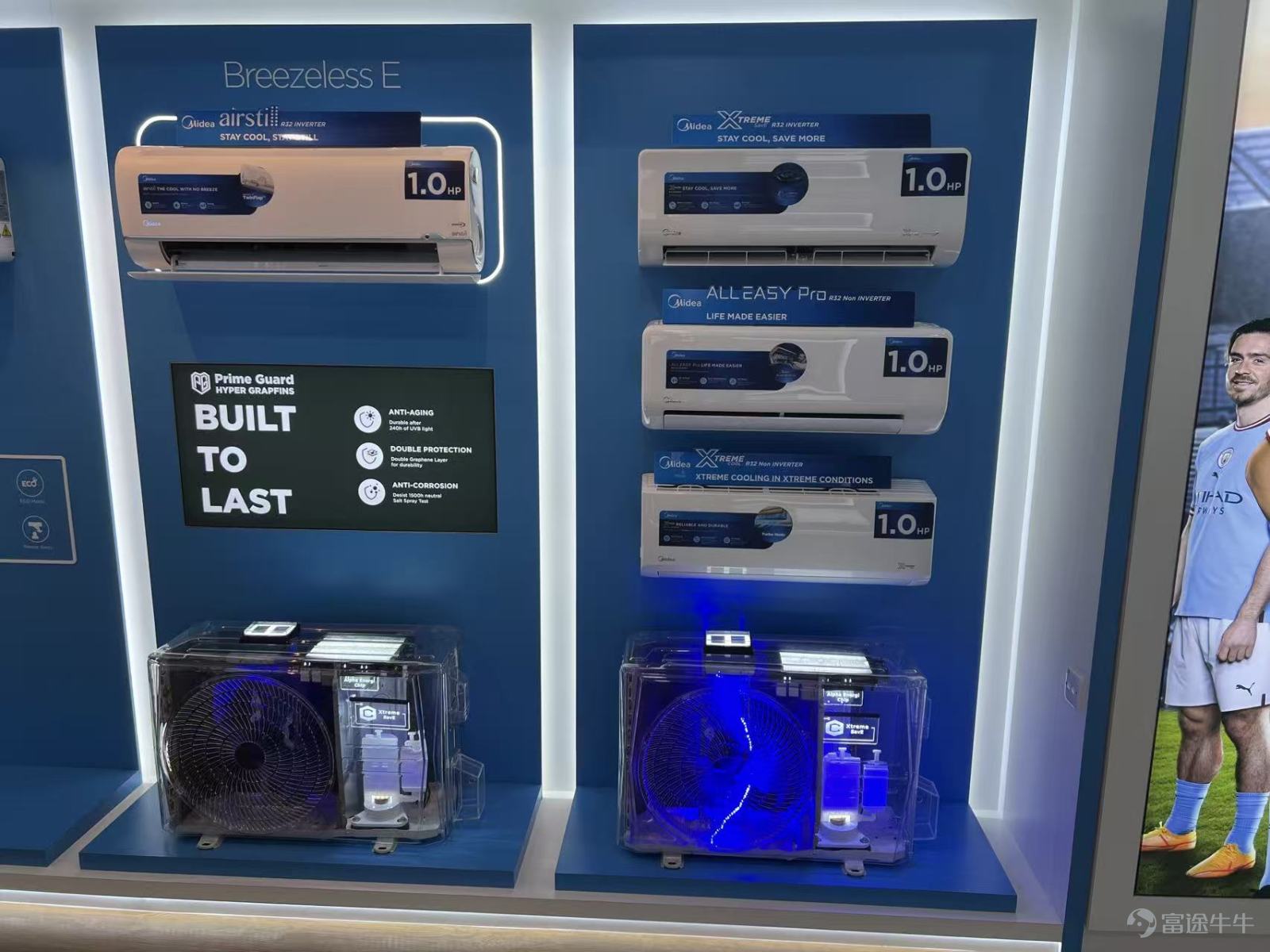
Midea Group did attempt to enter the Australian market under its own brand. According to ChannelNews, the company previously planned to open 20 branded stores across Australia to boost consumer awareness, but the results fell short of expectations, and its store in Chatswood, Sydney, has since closed.
The issue was not entirely due to product capabilities. As a globally leading home appliance manufacturer, Midea Group possesses a comprehensive product portfolio, a mature supply chain, and large-scale manufacturing capabilities.
The real challenge lies in the fact that in a mature market like Australia, new brands need more than just products—they require long-term accumulation of consumer recognition and channel relationships.
The Australian home appliance retail market is highly concentrated, with major retailers such as The Good Guys and Harvey Norman controlling key distribution channels.
For overseas brands, manufacturing advantages alone are insufficient; they also need local market acceptance.
By contrast, although Residentia is relatively new, it has already built a fairly mature market system through brand management, acquisitions, and channel development.
Its portfolio—including brands such as Omega, Esatto, Sôlt, InAlto, Teka, and Elica—has been present in the Australian market for years and enjoys stable consumer bases and established retail channel relationships.

Notably, Midea Group has long served as Residentia’s manufacturing backbone yet has been unable to directly capture brand premium or channel profits.
Now, Midea Group hopes to move from behind the scenes to the forefront by taking control of Residentia.
Through this transaction, Midea Group will not only acquire an established portfolio of brands but also further integrate into local retail networks and consumer markets.
However, whether this path will truly succeed remains to be seen.
Regulatory Scrutiny: When a Manufacturer Controls Both Brands and Distribution Channels
The Australian Competition and Consumer Commission is not primarily concerned with the expansion of a company's size per se, but rather with whether the competitive market environment will change following the completion of the transaction.
Regulators worry that when a manufacturer owns both brands and the distribution system, the boundaries between traditional market roles could be redefined.
For instance, in areas such as product planning, supply arrangements, and resource allocation, a company with manufacturing capabilities may gain greater influence. For other brands and suppliers relying on Residentia’s channels for sales, the fairness of future cooperative relationships will become a key market concern.
On the other hand, brand independence is also a critical factor considered by regulators.
Some of Residentia’s brands have long been positioned as Australian-local brands in the eyes of consumers. Although these brands may retain their original names post-transaction, their actual control has already shifted.
Moreover, market data itself holds significant value.
As a brand operator, Residentia has access to sales performance, pricing structures, and channel feedback across multiple brands. A key focus of regulatory review is how manufacturers entering the brand operation ecosystem can avoid leveraging market information to gain an undue competitive advantage.
Regulators are concerned not merely with whether a company is being acquired, but whether the long-standing relationships among manufacturers, brand owners, and distributors will undergo significant changes.
From selling products to acquiring ecosystems, Chinese home appliance firms are entering a new phase of globalization.
Looking back at the past two decades of overseas expansion by Chinese home appliance companies, it is evident that their competitive strategies are evolving.
Initially, Chinese companies primarily entered overseas markets through exports and OEM arrangements, securing orders by leveraging their manufacturing strengths.
Subsequently, companies began establishing manufacturing facilities overseas to enhance local supply chain capabilities.
Today, an increasing number of Chinese companies are acquiring overseas brands, distribution channels, and sales networks.
Manufacturing capability has become the foundation for Chinese companies going global, but in mature markets, brand influence, channel relationships, and consumer trust are equally critical to long-term competitiveness.
Midea Group’s recent acquisition of the European kitchen appliance brand Teka, followed by its purchase of Residentia, reflects a consistent strategic shift—from manufacturing strength toward brand operation.
This approach can shorten the market development cycle, but it also means companies must navigate a more complex regulatory landscape.
Currently, Midea Group's acquisition of Residentia remains under regulatory review, and the final outcome has not yet been determined.
However, regardless of whether the deal is ultimately approved or restricted, it reflects a broader trend:
As Chinese manufacturing companies shift from the back end of the supply chain toward the front end of brands and distribution channels, the concerns of overseas markets are also evolving.
In the past, Chinese home appliance manufacturers demonstrated their ability to produce globally leading products.
Going forward, they must prove whether they can build long-term brand value in mature markets and truly integrate into local business ecosystems.
For Midea Group, this acquisition is not just an overseas investment but also a test of its global capabilities.
For Chinese home appliance manufacturers more broadly, this transaction highlights the new challenges companies face when entering mature markets.
Competition among Chinese home appliance makers overseas is shifting from pure product competition to a comprehensive contest encompassing brands, distribution channels, and localization capabilities.
As companies move from 'selling products' to 'buying brands and buying channels,' the focus of overseas competition is expanding from manufacturing prowess to brand management and market control.
Risk Disclaimer: The above content only represents the author's view. It does not represent any position or investment advice of Futu. Futu makes no representation or warranty.Read more

Comments
to post a comment
1