
Apple and Amazon reported starkly contrasting earnings— which one are you bullish on?

Behind NVIDIA's sharply widening CDS spread: The AI arms race enters the leverage era—how much longer can the flywheel keep spinning?
Over the past two years, the market has grown accustomed to a simple narrative to understand AI infrastructure: tech giants, flush with cash, have been building data centers one after another using their own balance sheets.
This narrative is now being challenged. Public information shows that AI capital expenditures are shifting from expansion funded by tech giants’ own cash to expansion financed through debt, guarantees, special purpose vehicles (SPVs), and supply-chain financing.
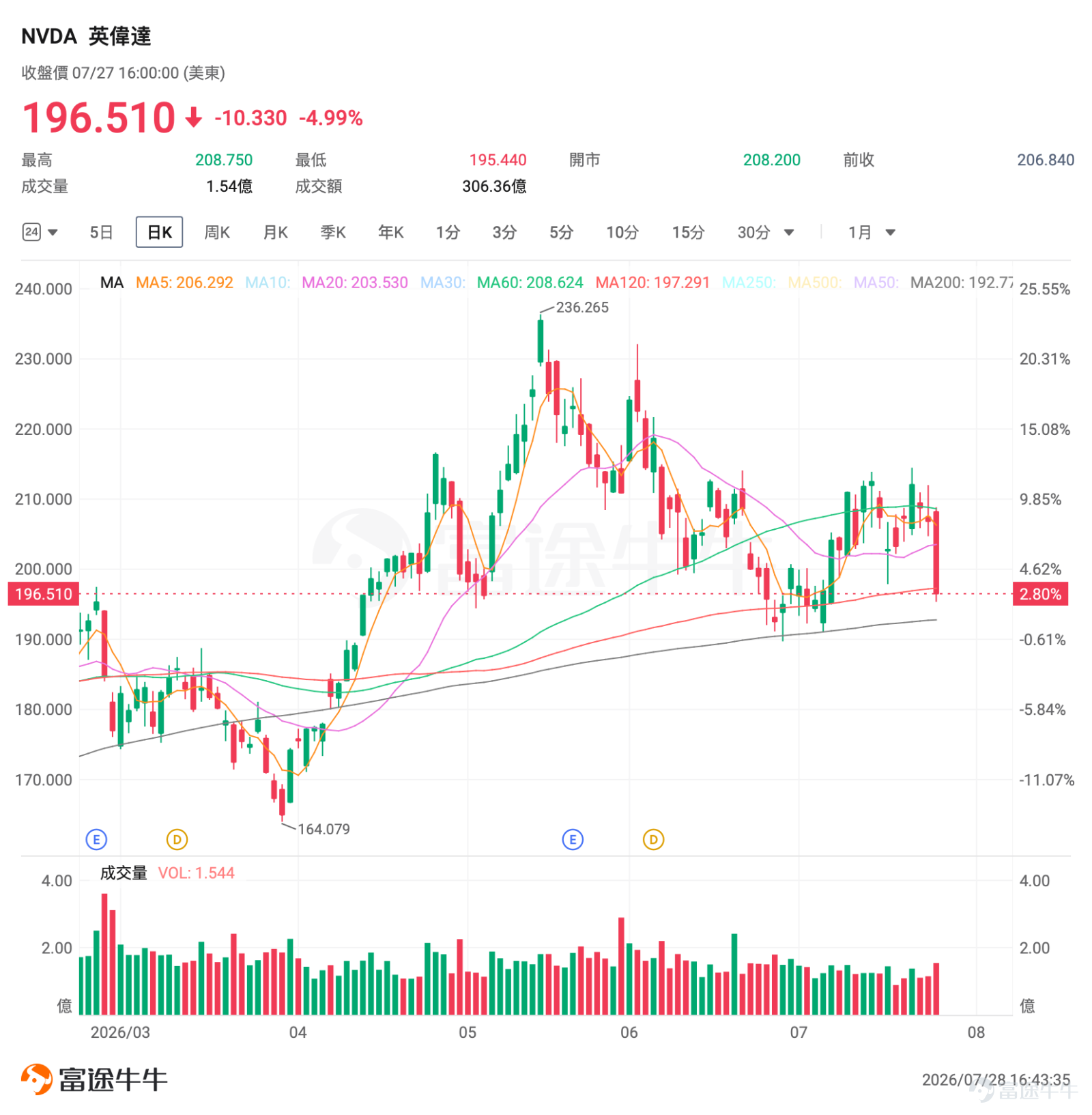
$NVIDIA (NVDA.US)$ The single-day spike in the five-year CDS spread reflects market concerns that go far beyond NVIDIA’s short-term default risk—it signals a shift in its business model from pure chip sales toward assuming significant credit and financing backstop obligations for downstream large-model companies and data centers.
From an investor’s perspective, this high-speed leveraged flywheel still has room to expand in the near term, but its long-term sustainability faces major challenges:
The key variable determining the cycle’s trajectory has never been how much additional capital markets can deploy, but whether the recurring cash flows generated by AI commercialization can sufficiently cover hardware depreciation, ongoing equipment upgrades, debt interest, and reasonable shareholder returns.
I. Paradigm Shift: Funding for AI expansion is moving from internal cash to debt-financed models
Prior to 2024, $Microsoft (MSFT.US)$ 、 $Amazon (AMZN.US)$ 、 $Alphabet-A (GOOGL.US)$ 、 $Meta Platforms (META.US)$ 、 $Oracle (ORCL.US)$ capital expenditures on AI infrastructure by the five hyperscale cloud providers were primarily supported by their own operating cash flows.
However, the explosive demand for compute power driven by generative AI has completely disrupted this balance. In 2025, capital expenditures as a share of revenue for the top five cloud vendors surged to 23%, and institutions expect this ratio could exceed 40% by 2027—approaching historical peaks seen in global energy and heavy-chemical industries during past capex cycles,making it impossible for internally generated cash flows to keep pace with the pace of expansion.
Currently, the financing structure for AI capital expenditures has begun to shift, with an increasing number of new computing capacity projects no longer relying on tech giants’ internally generated cash but instead utilizingdebt financing, government guarantees, special purpose vehicles (SPVs), and supply chain-level arrangements such as installment payments and extended payment termsto allocate funding.
This more complex financing structure essentially shifts part of the capital burden for AI infrastructure off tech companies’ balance sheets and onto creditors, policy-backed funds, and upstream/downstream supply chain partners.
This represents the underlying change driving the current expansion—growth is now outpacing operating cash flow.According to Goldman Sachs’ latest research report, as of July 18, AI-related debt issuance in global investment-grade bonds, high-yield bonds, and leveraged loan markets has already reached $489 billion, exceeding the full-year 2025 forecast of $322 billion.
II. NVIDIA CDS Spreads Surge Sharply: The Market Isn’t Worried About NVIDIA Defaulting
Recently, $NVIDIA (NVDA.US)$ Credit default swap (CDS) spreads have widened significantly, drawing market attention. ICE data shows NVIDIA’s five-year CDS spread jumped by 14 basis points in a single day to 82 bps—the largest one-day increase since the contract launched in November 2025—while NVIDIA’s stock price fell nearly 5% that day.

NVIDIA’s fundamentals have not materially deteriorated, and its financial condition remains robust; the sharp rise in CDS spreads does not indicate a genuine increase in default risk.What the market is truly concerned about is a deeper, more fundamental issue—Is NVIDIA evolving from a mere 'chip supplier' into a dual role as both a 'customer financier' and a 'credit risk bearer'?
According to reports, NVIDIA plans to provide up to $250 billion in financing guarantees for OpenAI, specifically to support SoftBank’s development of a 10-gigawatt hyperscale data center in Ohio. Separate financing arrangements for chip purchases could reach approximately $350 billion.
Deconstructing this transaction model reveals a classic leveraged cycle:NVIDIA issues a guarantee letter; OpenAI uses this guarantee to borrow from banks and private credit funds, with all loan proceeds used to purchase NVIDIA hardware. Once the data center is built, it generates cash flow through leasing to repay the debt. If downstream large-model companies underperform commercially or experience declining compute capacity utilization, repayment pressure will transmit upstream to NVIDIA—the guarantor—effectively transforming it from a pure hardware vendor into the ultimate risk absorber across the entire financing chain.
The widening CDS spread precisely reflects the market’s repricing of this evolving role,not due to NVIDIA’s own solvency risk, but because its business model is now implicitly absorbing more systemic risk.
III. How much longer can this financing flywheel keep spinning?
Understanding today’s AI financing ecosystem requires both a short-term and a long-term perspective:
Short-term view: Supported by multiple funding channels, the financing flywheel still has room to keep spinning
Over the next 1–2 years, this leverage-driven AI capex flywheel currently faces no imminent risk of funding disruption.The continued entry of sovereign wealth funds, infrastructure investment institutions, bond markets, and policy-backed capital has provided ample external liquidity for AI computing capacity expansion.
Government guarantees under the U.S. CHIPS Act framework have further lowered financing barriers for certain projects. Along the supply chain, payment terms arranged by server manufacturers and ODMs have objectively served as a quasi-financing buffer. This multi-layered financing network sustains the high-speed rotation of the flywheel.
Long-term core test: Whether the flywheel can become self-sustaining hinges on whether AI-generated cash flows can cover full-cycle fixed costs.
The ultimate question of this AI-driven leverage expansion cycle is not how much debt capital the market can continuously deploy, but whether the AI industry can generate sustainable external operating cash flows sufficient to fully cover four major fixed long-term expenditures:
Annual hardware depreciation—GPUs and data center equipment depreciate extremely rapidly;
Capital investment for GPU generational upgrades—next-generation chips and associated power and cooling infrastructure upgrades represent recurring costs, not one-time expenses;
Interest—debt and leasing costs will rise with scale;
Equity returns—shareholders ultimately seek sustainable free cash flow, not perpetual capital expenditures.
If commercial cash flows cannot cover these costs, the financing flywheel will inevitably fall into a cycle of rolling over old debt with new borrowing. Once credit markets tighten risk appetite, the turning point of the cycle will arrive immediately.This is the core contradiction—and also the aspect for which there is currently no clear answer.
CICC Industry In-Depth Report, July 24, 2026"AI's Financial Moment"CICC estimates: under the baseline assumption of a 10% pre-tax return on invested capital (ROIC), the globalAI application sector needs to generate nearly USD 1 trillion in sustainable and stable annual commercial revenueto fully cover depreciation, interest, equipment replacement, and shareholder returns;if this target is to be met by 2030, AI commercial revenue must grow at an average annual rate close to doubling over the next five years.
CICC notes that this target is not unattainable, but it imposes high demands on capacity utilization, profit margins, and equipment economic life.If commercialization growth continues to lag behind capital spending, risks will gradually shift from valuation adjustments to overcapacity, declining asset residual values, and deteriorating credit quality, propagating through the financial system via revolving financing, private credit, and securitization channels.

IV. Conclusion
This round of AI capital expenditure has already undergone a historic shift—from expansion funded by tech giants’ own cash reserves to a leveraged flywheel built on debt, guarantees, SPVs, and supply-chain revolving financing. The widening CDS spread of NVIDIA signals that credit markets have keenly detected the emerging credit risk among chipmakers, sounding an alarm for the entire industry’s leveraged expansion.
In the short term, as long as market optimism about AI’s prospects remains intact and new financing can cover both the rollover of existing debt and new capital expenditures, the flywheel can continue to spin.
However, the long-term sustainability of Flywheel hinges on whether the external cash flows generated by its AI business can truly cover the sum of depreciation cycles, equipment renewal investments, financing costs, and expected equity returns.
For market investors, the focus of subsequent tracking needs to shift—from solely monitoring GPU shipments, capital expenditure guidance, and the scale of financing secured—to continuously observing three core metrics:
First, the year-over-year growth rate of AI-end commercialization revenue and its progress toward achieving the stable-state revenue threshold of one trillion dollars;
Second, the extent to which operating cash flow from computing power projects fully covers depreciation plus interest expenses;
Third, the scale of new guarantees and off-balance-sheet SPV contingent liabilities from upstream chipmakers and cloud providers.
 Fellow investors, what do you think about NVIDIA's stock price trend going forward?
Risk Disclaimer: The above content only represents the author's view. It does not represent any position or investment advice of Futu. Futu makes no representation or warranty.Read more


Comments (8)
to post a comment
39
43