
Apple and Amazon reported starkly contrasting earnings— which one are you bullish on?

Tengsi | Semiconductor rally fades, US AI corporate debt soars! How is this different from the 2008 subprime mortgage crisis?
In early trading on July 28 Beijing time, South Korea's KOSPI index plunged sharply after the market opened, with losses briefly exceeding 8%.
Among major weighted stocks, $SK hynix (SKHY.US)$ plunged more than 10%, $Samsung Electronics (005930.KR)$ tumbled more than 8%.
Japanese stocks also suffered broad-based declines, $Nikkei 225 (.N225.JP)$ dropped more than 4%, led by chip and metal stocks, $Kioxia Holdings (285A.JP)$ shares plunged as much as 18% at one point, $Advantest (6857.JP)$ tumbled more than 8%, $Mitsui Kinzoku (5706.JP)$ fell by more than 6%.
The Hang Seng Artificial Intelligence Theme Index (HSAIT) has also declined approximately 41.9% from its 52-week high; $Z.AI (02513.HK)$ 、 $MINIMAX-W (00100.HK)$ have retraced over 66% and more than 85% from their respective peaks, with the sector’s valuation bubble rapidly unwinding.

Unprecedented credit expansion is approaching a critical tipping point.
$Morgan Stanley (MS.US)$ Global AI-related bond issuance is projected to reach nearly USD 570 billion in 2026, more than doubling from 2025 levels, with USD 236 billion already issued in just the first five months.
Bloomberg data shows that since the beginning of 2025 $Alphabet-A (GOOGL.US)$ 、 $Meta Platforms (META.US)$ 、 $Amazon (AMZN.US)$ and $Oracle (ORCL.US)$ Total bond issuance has already exceeded $300 billion, and Barclays forecasts that total U.S. corporate bond issuance will reach $2.46 trillion in 2026.
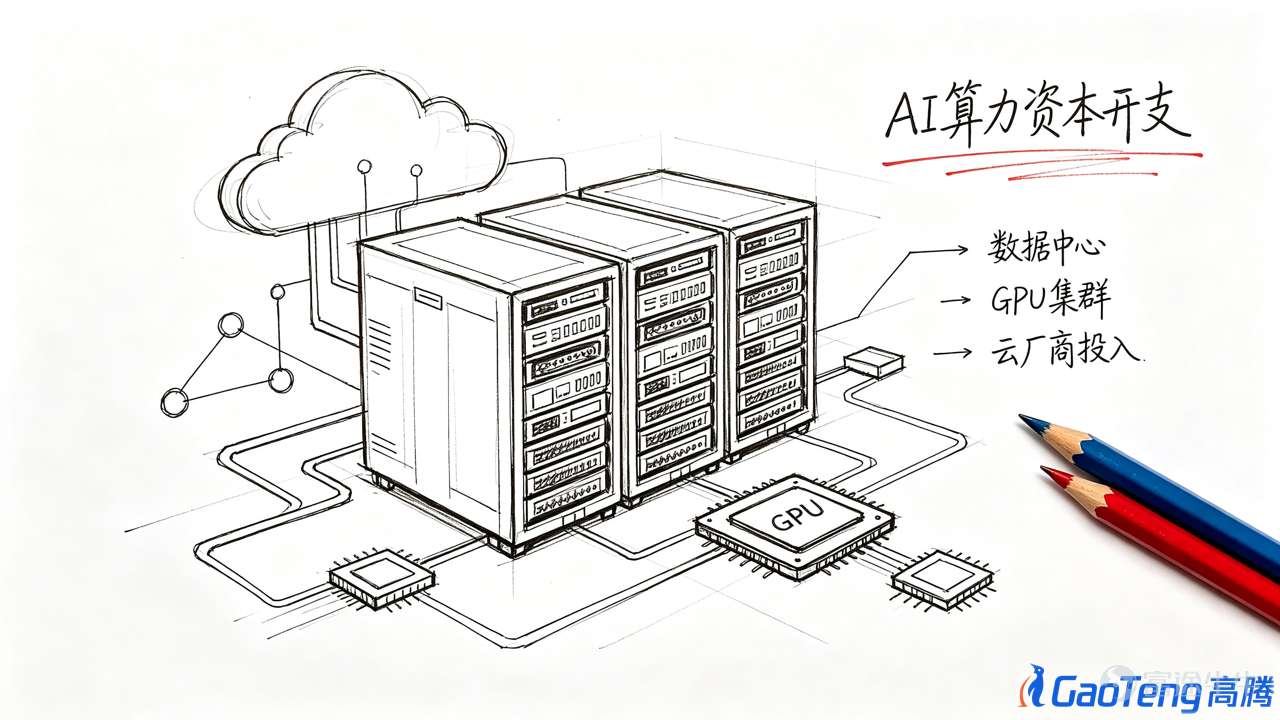
Matching this trend is the combined capital expenditure plans of Amazon, Google, Meta, and $MICROSOFT-T (04338.HK)$ a total ofover $725 billionin capital expenditure planning for 2026, $Goldman Sachs (GS.US)$ with even higher projections of cumulative AI-related capital spending by hyperscalers reaching $5.3 trillion between 2025 and 2030.
However, the most alarming development is the structural fragility accumulating at a visibly accelerating pace:
Torsten Sløk, Chief Economist at Apollo, stated thathyperscalers’ bond subscription multiples(a key metric in the bond market measuring investor demand for a specific bond issue, analogous to IPO subscription multiples in the Hong Kong stock market) have sharply declined from nearly 5x in February to less than 2x in July, while the overall investment-grade bond market declined only modestly by about half a point over the same period—indicating highly targeted aversion.
Amazon's $25 billion bond issuance in July was forced to offer an additional premium of 18–21 basis points, with order coverage at only 2.5x, significantly lower than the 3.2x seen in March.
$Bank of America (BAC.US)$ stated bluntly"Investors are pushing back.", $SpaceX (SPCX.US)$ Bond yields have climbed to junk-bond levels, and the stock price has fallen approximately 45% from its all-time high (Fortune, July 17, 2026).
Crisis transmission
If credit enhancement mechanisms completely fail under extreme stress, the destructive impact—amplified by off-balance-sheet financing structures—could far exceed that of the dot-com bubble.
Oliver Wyman revealed that Meta’s $27.2 billion data center financing combined ABS, CMBS, and investment-grade bonds using an off-balance-sheet structure;
In early 2026, Compass Datacenters issued AAA/AA-rated ABS backed by data center lease agreements with a weighted average lease term of 13.2 years, hailed by Wall Street as a"milestone"。
JLL forecasts that U.S. data center-related ABS/CMBS issuance will double from $26 billion in 2025 to approximately $50 billion in 2026.
Ramp data shows that as of February 2026, the penetration rate of AI models among U.S. enterprises reached 47.6%, yet the gap between revenue generation capability and compute investment continues to widen.
Outstanding investment-grade bonds linked to AI now exceed $1.2 trillion, surpassing the banking sector.
If AI commercialization falls short of expectations, off-balance-sheet SPV cash flows will be far insufficient to cover debt principal and interest. Parent company guarantee mechanisms will transmit risk to the endorsing entities, triggering a cascade of credit rating downgrades and resulting in massive write-downs by insurers, pension funds, and mutual funds—ushering in widespread crisis.
Comparison of Structural Similarities and Differences Between the 2008 Subprime Crisis and AI-Related Debt
(I) Transmission Chain and Scale of Losses in the 2008 Subprime Crisis
According to Market Histories, of the CDOs issued by Wall Street between 2004 and 2007, approximately $700 billion were backed by subprime mortgages—homebuyers purchased properties with minimal down payments, banks packaged these loans into MBS, which were then nested into CDOs for credit tranching, and rating agencies, based onthe assumption that 'housing prices would not decline simultaneously nationwide,'assigned numerous AAA ratings while charging fees from the issuing banks, creating a fundamental conflict of interest.
During the same period, AIG sold approximately $527 billion worth of CDS protection but held virtually no reserves against it.
The crisis transmission chain wasThe Federal Reserve's rate hikes from 2004 to 2006, raising the federal funds rate to 5.25%, triggered ARM defaults → disrupted MBS cash flows → caused CDO ratings to plummet → rendered Bear Stearns and Lehman Brothers insolvent → sparked a run on the repo market → led to AIG receiving a $182 billion bailout → and resulted in a global credit freeze.
Ultimately, U.S. household net worth dropped from approximately $69 trillion to about $55 trillion, unemployment reached around 10%, and the S&P 500 declined by over 50%.
(II) Four Structural Similarities and Five Fundamental Differences
[Four Similarities]
* Off-balance-sheet SPV structures are virtually identical
In 2008, subprime assets were hidden through SPVs; similarly, in 2026, the Big Five cloud companies used SPVs to conceal $982 billion in GPU purchase commitments and $822 billion in unactivated data center leases—totaling $1.8 trillion in off-balance-sheet exposure—from their financial statements (Morgan Stanley, May 2026). Such structures“are virtually identical to those in 2008”。
* Credit rating mechanisms suffer from the same flaws
Data center ABS also received AAA ratings, likewise based on the assumption that“lease cash flows would not default simultaneously”Assume, also paid for by the issuer.
*Similar narrative structure
“Home prices always rise”Corresponds to“AI will always deliver high growth”, both systematically underestimating tail risks.
*Leverage accumulation pace measured quarterly
Morgan Stanley noted that gross leverage rose from 0.9x to 1.8x, doubling in two quarters and surpassing the energy sector.
[Five Key Differences]
*Underlying asset characteristics
Subprime mortgages were backed by consumer housing (collateral that collapsed to zero), whereas AI-related debt is backed by GPUs and data centers (productive assets).
Goldman Sachs stress tests show that GPU values could fall by up to ~50%, with residual value of prior-generation models around 20%; data center valuations would see a 50% discount if vacancy exceeds 40%, but would not drop to zero. This represents the“bubble asset”and“tangible asset”most fundamental difference.
*Borrower creditworthiness
Subprime borrowers were low-credit individuals, whereas AI bond issuers are five companies—Microsoft, Amazon, etc.—with combined annual operating cash flows in the hundreds of billions of dollars. Their capital expenditures as a share of cash flow will rise from over 60% to over 90%, yet they still retain room for financial flexibility.
*Leverage multiples
Subprime mortgage chains, after layering, had effective leverage of 30x–60x, whereas AI-related debt has only 8x–12x leverage, which determines the risk of“systemic collapse.”and"Controllable adjustment"is the fundamental difference.
*Bank exposure
In 2008, banks were deeply intertwined with real estate, causing their intermediary functions to collapse. ECB stress tests in 2026 showed bank equity losses would not exceed 1.3%, insurance institutions 4%, and pension funds 5%–6%—all within manageable ranges—and retail investors’ direct debt exposure remains below 1%.
*Regulatory timing
Before 2008, credit default swaps (CDS) were entirely unregulated; by 2026, the Federal Reserve had already incorporated them into routine financial stability monitoring and conducted extreme stress tests. Senator Warren proposed the 'AI Bubble Transparency Act,' and the Financial Stability Board is advancing constraints on private credit—meaning regulatory tightening has begun early in this cycle, during the bubble’s nascent stage.
(3) Key takeaways for investors
The extreme tail risk of AI-related debt is far lower than that of subprime mortgages (underlying assets have utility value, bank exposure is minimal, and leverage is controllable), but"gray rhino"-style gradual adjustments are inevitable—once credit impulse turns negative, private credit default rates (already at 4.4% and potentially rising to 9%–10% by year-end) will impact the real economy.
This cycle’s reference framework is closer to the 2014–2016 shale credit downturn.
Investors should treat 2008 as a“transmission channel”template rather than a“loss magnitude”benchmark.
Key leading indicators
(1) Primary market subscription multiples and issuance spreads for hyperscalers’ bonds—multiples persistently below 2x and accelerating spread widening indicate that market absorption capacity is nearing exhaustion;
(2) Secondary market CDS spreads—Oracle’s CDS has recorded its sharpest increase since mid-2025 (Economic Times, 2026);
(3) Revisions to capital expenditure and free cash flow guidance in quarterly earnings reports from individual companies.
(4) HKD exchange rate and Hong Kong Interbank Offered Rate (HIBOR): In an extreme crisis scenario, the HKD could trigger the weak-side Convertibility Undertaking, prompting the Hong Kong Monetary Authority (HKMA) to tighten liquidity and push HIBOR higher, exerting additional downward pressure on Hong Kong equity valuations.
Advantages of money market funds
When credit impulse turns negative and default rates continue to rise, the core value of money market funds lies in their ability to effectively avoid risks associated with credit repricing.
Money market funds have virtually zero duration, thus they are not directly impacted by interest rate volatility or widening credit spreads.
From an asset allocation perspective, money market funds primarily invest in short-duration government bonds, repurchase agreements, and high-grade commercial paper. Their portfolios remain insulated from the transmission channels linked to AI-related bonds and data center asset-backed securities, offering relatively high asset safety.
More notably, they offer a liquidity premium—once a wave of defaults triggers market panic, cash and cash equivalents often become the scarcest assets in the market, and money market funds possess precisely this liquidity conversion capability.
Of course, holding money market funds is not without cost.
If the Federal Reserve opts to cut rates in response to economic downturn pressures, yields on money market funds will inevitably decline.
However, current FOMC meetings have not signaled any rate cuts, and even if such a scenario were to occur, at most it would merely mean“earning less”, compared to stocks—especially now, amid the semiconductor downturn and potential troubles facing AI-related bonds,“simultaneous principal drawdown and net asset value decline”represents a fundamentally different type of risk.

$GaoTeng WeValue USD Money Market Fund (HK0000584752.MF)$ $GaoTeng WeInvest Money Market Fund (HK0000478930.MF)$ $GaoTeng WeFund-GaoTeng Asian Income Fund (HK0000447943.MF)$ $Global Multi-asset ETF Quant Strategy- Active (GTHK005.US)$ $Hang Seng Index (800000.HK)$ $Hang Seng TECH Index (800700.HK)$ $Dow Jones Industrial Average (.DJI.US)$ $S&P 500 Index (.SPX.US)$ $Nasdaq Composite Index (.IXIC.US)$ $USD (USDindex.FX)$ $CSOP SK Hynix Daily Max (2x) Leveraged Product (07709.HK)$ $CSOP Samsung Electronics Daily Max (2x) Leveraged Product (07747.HK)$
Content Disclosure: AI-generated content
Risk Disclaimer: The above content only represents the author's view. It does not represent any position or investment advice of Futu. Futu makes no representation or warranty.Read more


Comments
to post a comment
16
9