
English
Back
Open Account
钛媒体APP
wrote a column · Jul 28 06:00

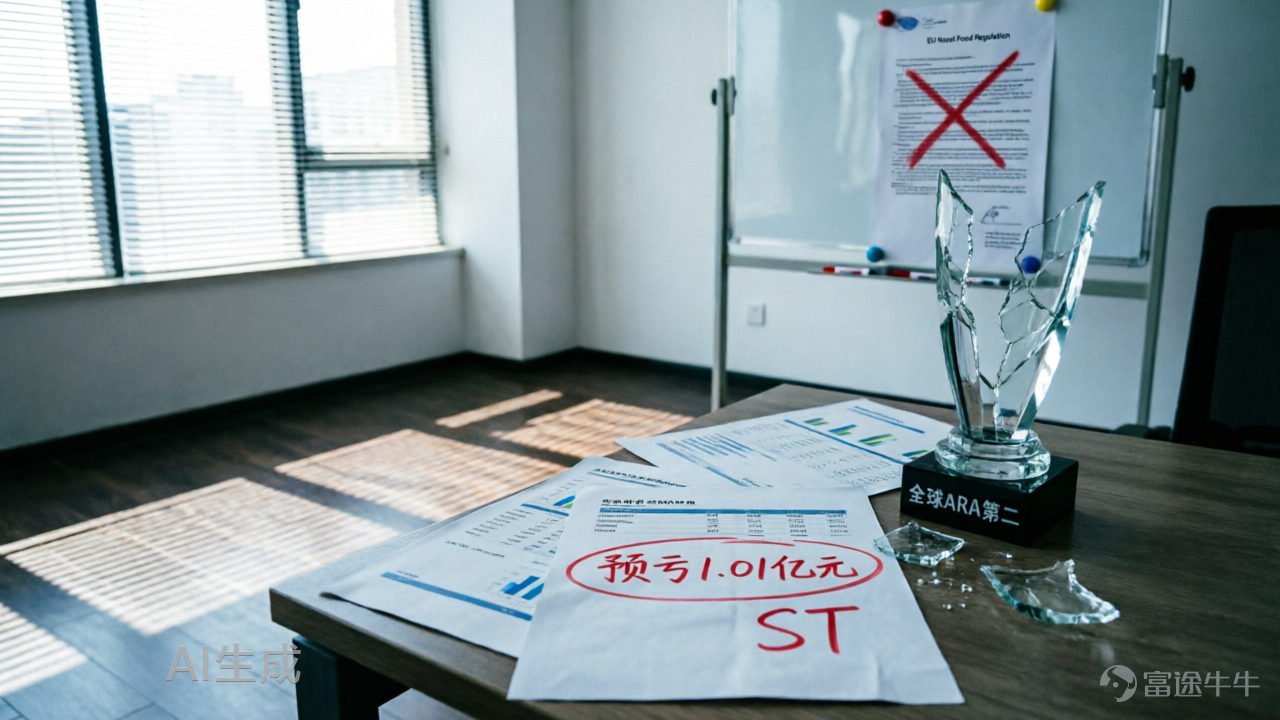
Jiabiyou forecasts a first-half loss exceeding RMB 100 million and will be designated with an 'ST' label starting tomorrow, as dual overseas shocks severely hit this global No. 2 ARA producer

Starting July 28, shareholders of Jiabiyou (SHA: 688089) will see an unfamiliar stock ticker—'ST Jiabiyou.' On the evening of July 24, this STAR Market synthetic biology company, widely recognized as the world’s second-largest producer of arachidonic acid (ARA), issued two consecutive announcements. One stated that due to negative overseas sentiment and new regulatory requirements, the company’s production and sales have not yet fully resumed, its operations have been severely disrupted, and it is expected that normal operations cannot be restored within three months—triggering the STAR Market’s special treatment clause for operational abnormalities. The other announcement, a profit forecast, revealed that the company’s revenue for the first half of 2026 was only RMB 55 million, a sharp year-on-year decline of 82.07%; net profit attributable to shareholders is projected at a loss of RMB 101 million, compared with a profit of RMB 108 million in the same period last year and full-year 2025 net profit of RMB 144 million—marking a dramatic reversal in business performance within just six months. A critical warning signal is that if Jiabiyou’s total revenue for 2026 falls below RMB 100 million, the company could face delisting risk warnings (*ST). With only RMB 55 million in revenue already recorded in the first half, it must generate at least RMB 45 million in the second half to stay above the survival threshold—a daunting task for a company whose overseas channels remain blocked and whose production-sales rhythm is struggling to recover. An operational collapse triggered by a public relations crisis Tracing the entire risk transmission chain, the disruption began with Nestlé’s global infant formula recall incident in early 2026. On January 5, Nestlé initiated recalls across 31 countries...
Starting July 28, shareholders of Jiabiyou (SHA: 688089) will see an unfamiliar stock ticker—'ST Jiabiyou.'
On the evening of July 24, this Shanghai Stock Exchange STAR Market synthetic biology company—widely regarded as the world’s second-largest producer of ARA (arachidonic acid)—issued two consecutive announcements. One stated that due to overseas market sentiment and new regulatory requirements, the company’s production and sales have not yet fully resumed, its business operations have been severely disrupted, and it does not expect to return to normal within the next three months, triggering the STAR Market’s special treatment (ST) clause for abnormal business operations.
The other announcement was a profit forecast indicating that the company’s revenue for the first half of 2026 amounted to only RMB 55 million, a sharp year-on-year decline of 82.07%. It also projected a net loss attributable to shareholders of RMB 101 million, compared with a net profit of RMB 108 million in the same period last year and full-year 2025 net profit of RMB 144 million—a dramatic reversal in business performance over just six months.
A critical warning sign is that if the company’s total revenue for 2026 falls below RMB 100 million, Jiabiyou may be subjected to delisting risk warning (*ST). Excluding the revenue already generated in the first half, it must secure at least RMB 45 million in the second half to stay above this threshold—an arduous task for a company whose overseas distribution channels remain blocked and whose production-sales rhythm has been slow to recover.
Tracing the entire chain of risk transmission, the disruption originated from Nestlé’s global infant formula recall incident in early 2026.
On January 5, Nestlé issued a precautionary recall notice for infant formula across 31 countries, citing the detection of cereulide—a heat-stable emetic toxin produced by Bacillus cereus—in ARA oil ingredients used in certain products. This toxin is highly resistant to heat and cannot be neutralized through standard preparation methods, posing risks of nausea, vomiting, and gastrointestinal cramps in infants upon ingestion.
Following the global recall announcement, Nestlé China issued a voluntary product retrieval notice on January 6 for its domestic market, covering 30 batches across four brands: Lactogen, NAN Supreme Pro, NAN Comfortis, and S-26 Gold Progress. The company simultaneously stated that, as of that date, it had not received any reports of adverse health effects linked to these products.
Starting July 28, shareholders of Jiabiyou (SHA: 688089) will see an unfamiliar stock ticker—'ST Jiabiyou.' On the evening of July 24, this STAR Market synthetic biology company, widely recognized as the world’s second-largest producer of arachidonic acid (ARA), issued two consecutive announcements. One stated that due to negative overseas sentiment and new regulatory requirements, the company’s production and sales have not yet fully resumed, its operations have been severely disrupted, and it is expected that normal operations cannot be restored within three months—triggering the STAR Market’s special treatment clause for operational abnormalities. The other announcement, a profit forecast, revealed that the company’s revenue for the first half of 2026 was only RMB 55 million, a sharp year-on-year decline of 82.07%; net profit attributable to shareholders is projected at a loss of RMB 101 million, compared with a profit of RMB 108 million in the same period last year and full-year 2025 net profit of RMB 144 million—marking a dramatic reversal in business performance within just six months. A critical warning signal is that if Jiabiyou’s total revenue for 2026 falls below RMB 100 million, the company could face delisting risk warnings (*ST). With only RMB 55 million in revenue already recorded in the first half, it must generate at least RMB 45 million in the second half to stay above the survival threshold—a daunting task for a company whose overseas channels remain blocked and whose production-sales rhythm is struggling to recover. An operational collapse triggered by a public relations crisis Tracing the entire risk transmission chain, the disruption began with Nestlé’s global infant formula recall incident in early 2026. On January 5, Nestlé initiated recalls across 31 countries...
Although Nestlé did not publicly disclose the name of the ARA ingredient supplier involved, the market swiftly initiated supply-chain traceability investigations. DSM-Firmenich, the global ARA market leader, immediately released a clarification denying involvement. Major dairy companies including Feihe, Mengniu, Junlebao, Danone, Arla, and HiPP also subsequently disclosed their ARA sourcing origins, distancing themselves from the contamination incident.
As China’s largest and the world’s second-largest ARA producer—with significant sales into the EU market—Jiabiyou quickly became the focal point of public speculation. On January 7, the company’s securities department responded externally, stating it was coordinating with third-party testing agencies and regulators to investigate its products, though test results had not yet been released. The following day, the company’s share price plummeted nearly 12% at market close, marking the start of a sustained downtrend from its prior peak above RMB 24 per share.
Just one month after the reputational crisis began to escalate, the European Commission adopted Implementing Regulation (EU) 2026/459, announcing temporary enhanced import controls effective February 26 on ARA oils produced in China and intended for use in infant formula.
The new regulation mandates that every batch of ARA exported to China must be accompanied by an official Chinese certificate confirming the absence of Bacillus cereus toxin, with a detection limit no higher than 0.1 μg/kg. All testing must uniformly follow the ISO 18465 standard method, and the on-the-ground physical inspection rate at borders has been raised to 50%. After a two-month transition period, all ARA products originating from China entering the EU must comply with these requirements.
These stringent import rules have nearly severed the main artery of Cabio’s overseas business. According to its 2025 annual report, the company generated RMB 388 million in revenue from ARA products, accounting for nearly 70% of total annual revenue, with overseas markets serving as a key growth driver for this segment. Hit by the EU’s regulatory measures, the company’s total revenue in the first half of 2026 plummeted to RMB 55 million, a sharp year-over-year decline of 82.07% compared to RMB 3.07 billion in the same period of 2025.
Starting July 28, shareholders of Jiabiyou (SHA: 688089) will see an unfamiliar stock ticker—'ST Jiabiyou.' On the evening of July 24, this STAR Market synthetic biology company, widely recognized as the world’s second-largest producer of arachidonic acid (ARA), issued two consecutive announcements. One stated that due to negative overseas sentiment and new regulatory requirements, the company’s production and sales have not yet fully resumed, its operations have been severely disrupted, and it is expected that normal operations cannot be restored within three months—triggering the STAR Market’s special treatment clause for operational abnormalities. The other announcement, a profit forecast, revealed that the company’s revenue for the first half of 2026 was only RMB 55 million, a sharp year-on-year decline of 82.07%; net profit attributable to shareholders is projected at a loss of RMB 101 million, compared with a profit of RMB 108 million in the same period last year and full-year 2025 net profit of RMB 144 million—marking a dramatic reversal in business performance within just six months. A critical warning signal is that if Jiabiyou’s total revenue for 2026 falls below RMB 100 million, the company could face delisting risk warnings (*ST). With only RMB 55 million in revenue already recorded in the first half, it must generate at least RMB 45 million in the second half to stay above the survival threshold—a daunting task for a company whose overseas channels remain blocked and whose production-sales rhythm is struggling to recover. An operational collapse triggered by a public relations crisis Tracing the entire risk transmission chain, the disruption began with Nestlé’s global infant formula recall incident in early 2026. On January 5, Nestlé initiated recalls across 31 countries...
Since the implementation of the new rules, customs clearance times have significantly lengthened, logistics costs have surged, and customer order uncertainty has risen sharply—uncertainties severe enough to prompt dairy companies, which operate on just-in-time inventory models, to switch to alternative suppliers.
The impact on profitability has been even more devastating. The company reported RMB 1.08 billion in net profit attributable to shareholders in the first half of 2025, but its earnings guidance for the first half of 2026 forecasts a net loss attributable to shareholders of RMB 1.01 billion, with non-GAAP net losses also approaching RMB 1 billion.
Starting July 28, shareholders of Jiabiyou (SHA: 688089) will see an unfamiliar stock ticker—'ST Jiabiyou.' On the evening of July 24, this STAR Market synthetic biology company, widely recognized as the world’s second-largest producer of arachidonic acid (ARA), issued two consecutive announcements. One stated that due to negative overseas sentiment and new regulatory requirements, the company’s production and sales have not yet fully resumed, its operations have been severely disrupted, and it is expected that normal operations cannot be restored within three months—triggering the STAR Market’s special treatment clause for operational abnormalities. The other announcement, a profit forecast, revealed that the company’s revenue for the first half of 2026 was only RMB 55 million, a sharp year-on-year decline of 82.07%; net profit attributable to shareholders is projected at a loss of RMB 101 million, compared with a profit of RMB 108 million in the same period last year and full-year 2025 net profit of RMB 144 million—marking a dramatic reversal in business performance within just six months. A critical warning signal is that if Jiabiyou’s total revenue for 2026 falls below RMB 100 million, the company could face delisting risk warnings (*ST). With only RMB 55 million in revenue already recorded in the first half, it must generate at least RMB 45 million in the second half to stay above the survival threshold—a daunting task for a company whose overseas channels remain blocked and whose production-sales rhythm is struggling to recover. An operational collapse triggered by a public relations crisis Tracing the entire risk transmission chain, the disruption began with Nestlé’s global infant formula recall incident in early 2026. On January 5, Nestlé initiated recalls across 31 countries...
The root cause lies in stalled overseas orders, which have depressed capacity utilization. Fixed costs—including depreciation, labor, and equipment maintenance—remain rigid and cannot be reduced, compounded by inventory impairment provisions. As a result, costs have failed to contract in line with falling revenues, ultimately triggering substantial operating losses.
In response to disruptions in its overseas operations, Cabio stated during an investor relations event on May 18 that all its products meet the latest domestic and international testing requirements and that the company is actively engaging with customers to restore performance as soon as possible. However, within just two months—from management’s initial mention of 'potential obstacles' in May to the explicit announcement on July 24 stating that normal operations could not resume within three months—the company’s operational stress has deteriorated fundamentally.
Cabio’s financial fundamentals are actually solid. As of the end of 2025, the company held total assets of RMB 18.6 billion, with a debt-to-asset ratio of only 11.62%, no significant interest-bearing debt, ample cash reserves on its balance sheet, and net cash inflow from operating activities totaling RMB 2.7 billion for the full year.
As of the market close on July 24, the company’s share price stood at RMB 9.94, corresponding to a book value per share of RMB 9.71, resulting in a price-to-book ratio of just 1.02—essentially trading at par with its net asset value.
Over a longer time horizon, the company has consistently delivered annual net profits exceeding RMB 1 billion in stable operating years. Its current market capitalization is below RMB 17 billion, implying a static price-to-earnings ratio of just over 10x. From a valuation perspective, the market has already priced in maximum pessimism.
Starting July 28, shareholders of Jiabiyou (SHA: 688089) will see an unfamiliar stock ticker—'ST Jiabiyou.' On the evening of July 24, this STAR Market synthetic biology company, widely recognized as the world’s second-largest producer of arachidonic acid (ARA), issued two consecutive announcements. One stated that due to negative overseas sentiment and new regulatory requirements, the company’s production and sales have not yet fully resumed, its operations have been severely disrupted, and it is expected that normal operations cannot be restored within three months—triggering the STAR Market’s special treatment clause for operational abnormalities. The other announcement, a profit forecast, revealed that the company’s revenue for the first half of 2026 was only RMB 55 million, a sharp year-on-year decline of 82.07%; net profit attributable to shareholders is projected at a loss of RMB 101 million, compared with a profit of RMB 108 million in the same period last year and full-year 2025 net profit of RMB 144 million—marking a dramatic reversal in business performance within just six months. A critical warning signal is that if Jiabiyou’s total revenue for 2026 falls below RMB 100 million, the company could face delisting risk warnings (*ST). With only RMB 55 million in revenue already recorded in the first half, it must generate at least RMB 45 million in the second half to stay above the survival threshold—a daunting task for a company whose overseas channels remain blocked and whose production-sales rhythm is struggling to recover. An operational collapse triggered by a public relations crisis Tracing the entire risk transmission chain, the disruption began with Nestlé’s global infant formula recall incident in early 2026. On January 5, Nestlé initiated recalls across 31 countries...
No matter how robust the financial cushion, it cannot offset the vulnerability of a highly concentrated business structure. An analysis of financial data from 2023 to 2025 shows that revenue from ARA products has consistently accounted for around 70% of total revenue; the human nutrition segment, focused on infant formula, contributed over 94% of revenue each year during this period; and overseas revenue averaged approximately 35% of total revenue across the three years.
With an overreliance on a single product, heavy dependence on the infant formula sector as its sole downstream market, and roughly 30% of revenue tied to overseas markets, the company faced a perfect storm of structural weaknesses. When the European Union imposed import controls, it immediately blocked ARA export channels, causing the company’s core revenue base to collapse.
Starting July 28, shareholders of Jiabiyou (SHA: 688089) will see an unfamiliar stock ticker—'ST Jiabiyou.' On the evening of July 24, this STAR Market synthetic biology company, widely recognized as the world’s second-largest producer of arachidonic acid (ARA), issued two consecutive announcements. One stated that due to negative overseas sentiment and new regulatory requirements, the company’s production and sales have not yet fully resumed, its operations have been severely disrupted, and it is expected that normal operations cannot be restored within three months—triggering the STAR Market’s special treatment clause for operational abnormalities. The other announcement, a profit forecast, revealed that the company’s revenue for the first half of 2026 was only RMB 55 million, a sharp year-on-year decline of 82.07%; net profit attributable to shareholders is projected at a loss of RMB 101 million, compared with a profit of RMB 108 million in the same period last year and full-year 2025 net profit of RMB 144 million—marking a dramatic reversal in business performance within just six months. A critical warning signal is that if Jiabiyou’s total revenue for 2026 falls below RMB 100 million, the company could face delisting risk warnings (*ST). With only RMB 55 million in revenue already recorded in the first half, it must generate at least RMB 45 million in the second half to stay above the survival threshold—a daunting task for a company whose overseas channels remain blocked and whose production-sales rhythm is struggling to recover. An operational collapse triggered by a public relations crisis Tracing the entire risk transmission chain, the disruption began with Nestlé’s global infant formula recall incident in early 2026. On January 5, Nestlé initiated recalls across 31 countries...
In response to this operational crisis, the company disclosed four key self-rescue measures in its announcement: establishing a comprehensive end-to-end product risk monitoring system, prioritizing the restoration of its health and wellness business with core clients, expanding into new segments such as animal nutrition and cosmetics, and accelerating the commercialization of new synthetic biology products like HMOs.
According to disclosed operational updates, the company secured a major new client for its animal nutrition algal DHA business in the second quarter, deepened international brand collaborations in the cosmetics segment, and obtained approval from China’s National Health Commission for LNnT, a core synthetic biology product—signaling initial progress in its diversification strategy.
However, these short-term gains are insufficient to fill the revenue gap left by the suspension of ARA exports. The 2025 annual report shows that combined revenue from the animal nutrition and personal care/cosmetics segments totaled less than RMB 18 million for the full year, representing just 3.2% of total revenue—far too little to support the company’s earnings foundation.
This crisis has exposed not only Jiabiyu’s own operational vulnerabilities but also the structural challenges facing China’s ARA industry and synthetic biology companies seeking international expansion. As the only domestic ARA producer capable of competing with global giants, Jiabiyu possesses clear advantages in technological barriers, customer certifications, and production scale. Yet these strengths prove inadequate against the backdrop of overseas regulatory rulemaking power.
The global ARA market has long been dominated by DSM-Firmenich of the Netherlands, which built formidable industry barriers through a global patent network. These patents only began expiring en masse in 2023.
Prior to this, Jiabiyu’s overseas expansion was constrained by DSM’s regional patent restrictions. In 2015, the two parties reached a patent settlement and signed a long-term cooperation agreement, allowing Jiabiyu to sell limited volumes of ARA to designated regions and approved customers. The agreement also stipulated that DSM must purchase a fixed volume of raw materials annually from Jiabiyu, with compensation payable if the target is not met.
From 2019 to 2021, compensation payments from DSM accounted for 33.17%, 26.06%, and 25.56% of Jiabiyu’s total profit in each respective year, serving as a significant supplementary income source.
Yet just three years after DSM’s patent restrictions were lifted, new non-tariff barriers have emerged. Overseas testing methodologies, market access certifications, and customs clearance procedures—rules determined and interpreted by others—now dictate who can enter these markets, leaving domestic ingredient suppliers in a passive position.
Looking back at Gabright’s past six months—from over a decade of consecutive profitability to a projected loss exceeding RMB 100 million in its 2026 interim report, and from being the world’s second-largest ARA leader to a newly added member of the ST group—the swiftness of this reversal is truly lamentable. The pace of production and sales recovery over the next three months and whether full-year revenue can surpass the RMB 100 million delisting warning threshold will determine the medium- to long-term fate of this synthetic biology company.By Company WatchBy Cao Qian, Edited by Cao Shengyuan
Risk Disclaimer: The above content only represents the author's view. It does not represent any position or investment advice of Futu. Futu makes no representation or warranty.Read more
2872 Views
Report
Comments
Write a Comment...
1