
Will Gold Hit New Highs Amid Geopolitical Tensions, Rate Uncertainty, and AI Hot Money Reversal?
Global geopolitical dynamics continue to evolve, particularly with escalating tensions in the Middle East driving oil prices higher—now the foremost macroeconomic risk. Against a macro backdrop characterized by 'stubborn inflation, cooling growth, and high volatility,' the Federal Reserve may keep interest rates elevated longer than expected. After retreating from its early-year highs, gold prices now find robust support at lower levels, primarily underpinned by structural buying from sovereign nations and central banks. According to the World Gold Council’s recently released Central Bank Gold Reserves Survey 2026, the top three issues influencing reserve management decisions are interest rates, geopolitics, and inflation.
Gold Prices Find Structural Support on Pullback
Recently, gold prices retreated sharply from their all-time high near $5,400 per ounce at the start of the year to trade around $4,000 per ounce—a dramatic 'plunge from the peak' that has broken gold’s multi-year uptrend. The explosive rally in AI hardware and tech stocks has drawn speculative hot money—particularly non-strategic, growth-chasing capital—out of gold and into the tech bull market, causing gold to temporarily fall out of favor. However, recent deleveraging adjustments in AI and semiconductor-related sectors may prompt a rotation of funds back into gold as a long-term strategic asset allocation. $Value Gold ETF (03081.HK)$
Value Partners Gold ETF 3081
De-Dollarization Strategy and Central Bank Gold Buying Provide Support
Central bank gold purchases are the main catalyst behind the current rebound in gold prices. Historically, global central banks followed a golden rule for managing foreign exchange reserves: safety, liquidity, and return. U.S. Treasuries, thanks to their immense market depth, were considered 'risk-free assets.' However, the 2022 sanctions on Russia made central banks outside the Western bloc acutely aware that gold is the only truly safe asset that does not rely on any country's creditworthiness, cannot be remotely frozen, and carries no counterparty risk. $Value Gold ETF (03081.HK)$ Over the past three years, central banks have consistently purchased more than 1,000 tonnes of gold annually. Given that emerging market central banks still hold relatively low allocations of gold in their reserves, their ongoing structural shift away from a dollar-dominated reserve composition toward greater diversification remains a work in progress—providing sustained support for gold prices.
Currency devaluation trade
Global concerns over the rapid expansion of U.S. government debt and spiraling fiscal deficits have led emerging market central banks—such as those in China and India—to view gold as an irreplaceable decentralized strategic asset. This persistent official-sector buying has become the strongest 'safety shield' underpinning gold prices. As U.S. national debt continues to hit record highs, annual interest payments alone have surpassed USD 1 trillion. Such heavy fiscal burdens make it extremely difficult for the Fed to maintain ultra-high interest rates over the medium to long term, ultimately necessitating either quantitative easing or tolerance for higher inflation targets to dilute the debt burden. The 'sell Treasuries, buy gold' currency devaluation trade strategy has evolved from a tactical adjustment into an institutionalized asset reallocation.
How can physical gold be allocated more efficiently?
For retail investors, directly purchasing physical gold often involves practical challenges such as storage, custody, and insurance; investing in gold mining stocks may be simultaneously affected by company operations, equity market conditions, and individual company-specific factors, meaning their performance may not fully reflect gold price movements.
In comparison, gold ETFs allow investors to gain exposure to gold with a lower entry barrier, trading directly through the Hong Kong Stock Exchange (HKEX), thereby enhancing convenience and liquidity in gold allocation.
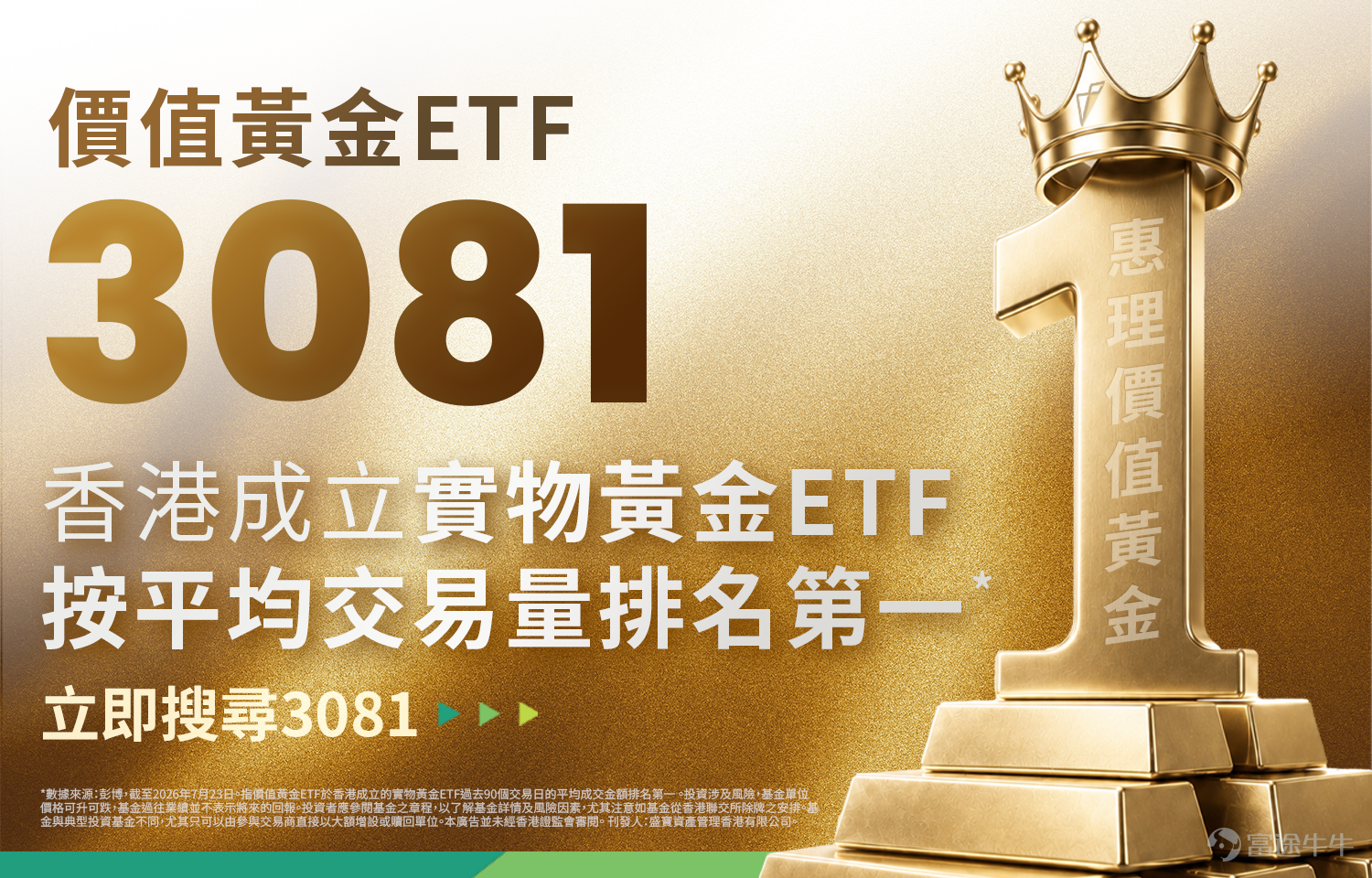
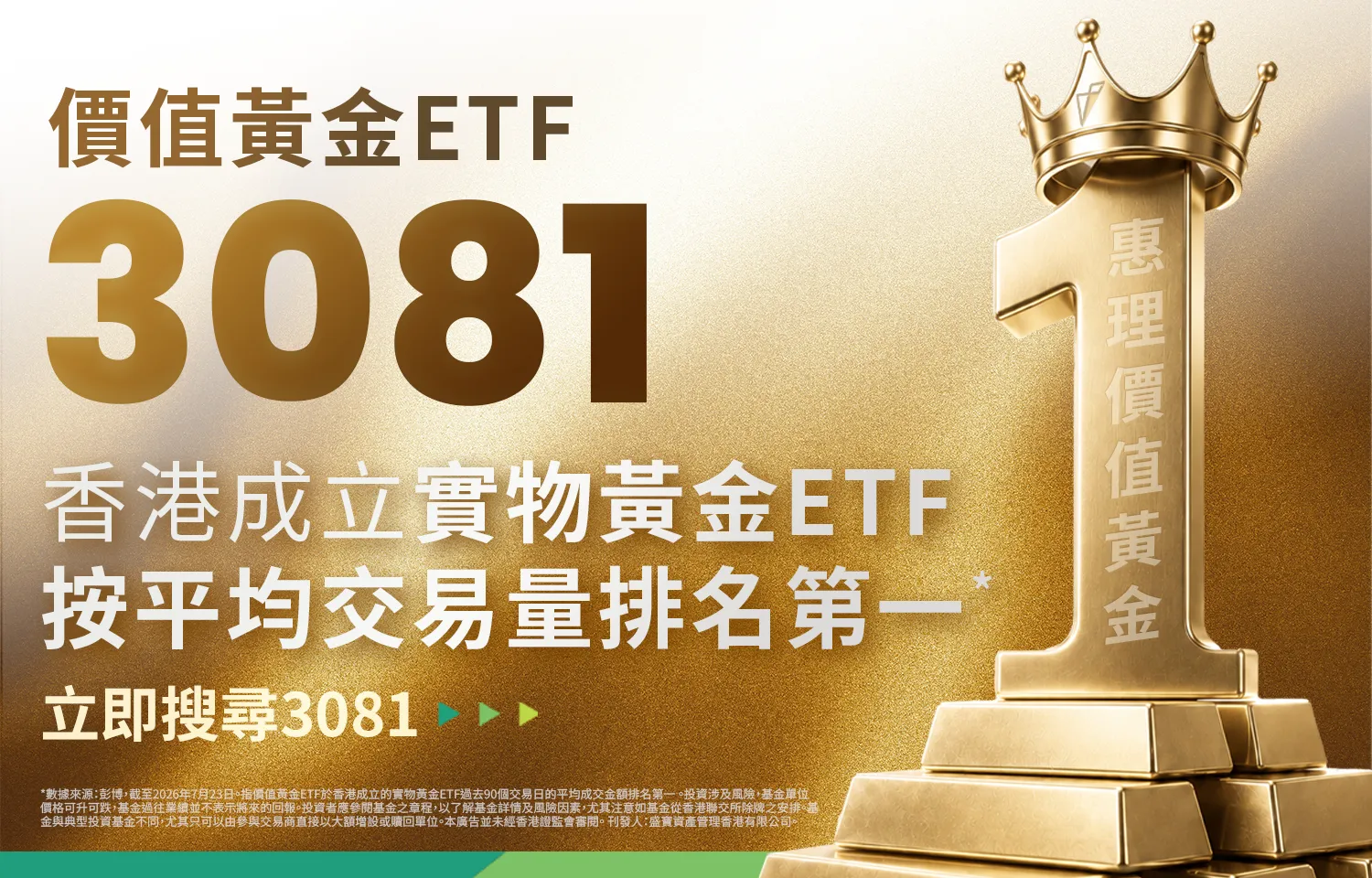
Value Gold ETF (3081) is Hong Kong-domiciled and ranks #1* among physically backed gold ETFs in Hong Kong. With 100% of its gold stored in Hong Kong, it provides investors with the hedging benefits of gold without requiring a personal safe deposit box. Investors can participate in the gold market and leverage gold’s hedging and portfolio diversification characteristics without arranging their own vault storage, custody, or insurance.
Compared to buying physical gold, $Value Gold ETF (03081.HK)$ it reduces the inconvenience associated with storing and transacting physical gold; compared to investing in gold mining stocks, its performance correlates more directly with physical gold prices and is less influenced by individual mining companies’ operational issues or stock market volatility. $Value Gold ETF (03081.HK)$ Listed and traded on HKEX, it offers investors a transparent, convenient, and physically gold-backed investment vehicle.
Gold price trends depend on developments in the macroeconomic landscape, and geopolitical conditions remain highly uncertain. A key immediate concern is prolonged elevated oil prices stemming from conflict, which fuels inflation and increases the likelihood of interest rate hikes. Fundamentally, however, gold’s long-term drivers remain strong. Continued central bank purchases, geopolitical uncertainty, and gold’s role as a hedge against inflation and currency depreciation continue to support demand. Looking ahead, if the Federal Reserve maintains a patient stance on rate hikes this year—and especially if it signals a more dovish outlook than markets expect, initiates actual rate cuts, and triggers a broad return of safe-haven capital—gold could re-enter a sustained bull market and reach new record highs.
*Source: Bloomberg, as of July 23, 2026. Refers to Value Gold ETF being ranked #1 by average daily trading volume over the past 90 trading days among physically backed gold ETFs domiciled in Hong Kong. Investment involves risk. The unit price of the fund may go up or down, and past performance or any forecasts are not indicative of future returns. Investors should refer to the fund’s offering documents for details and risk factors, particularly regarding arrangements in the event of delisting from HKEX. This fund differs from typical mutual funds, as units can only be created or redeemed in large blocks directly by authorized participants. The views expressed herein are solely those of Saxo Asset Management Hong Kong Limited and are subject to change based on market and other conditions. The information provided does not constitute investment advice, an offer to sell, or a solicitation to buy or subscribe to any investment, nor should it be relied upon as a basis for investment decisions. All data has been obtained from sources believed to be reliable, but Wayfoong (or the issuer) does not guarantee its accuracy. Certain statements contained herein may be forward-looking and do not guarantee future performance; actual results or developments may differ materially from such statements. This advertisement has not been reviewed by the Securities and Futures Commission of Hong Kong. Issued by Saxo Asset Management Hong Kong Limited.
Risk Disclaimer: The above content only represents the author's view. It does not represent any position or investment advice of Futu. Futu makes no representation or warranty.Read more


Comments
to post a comment
3