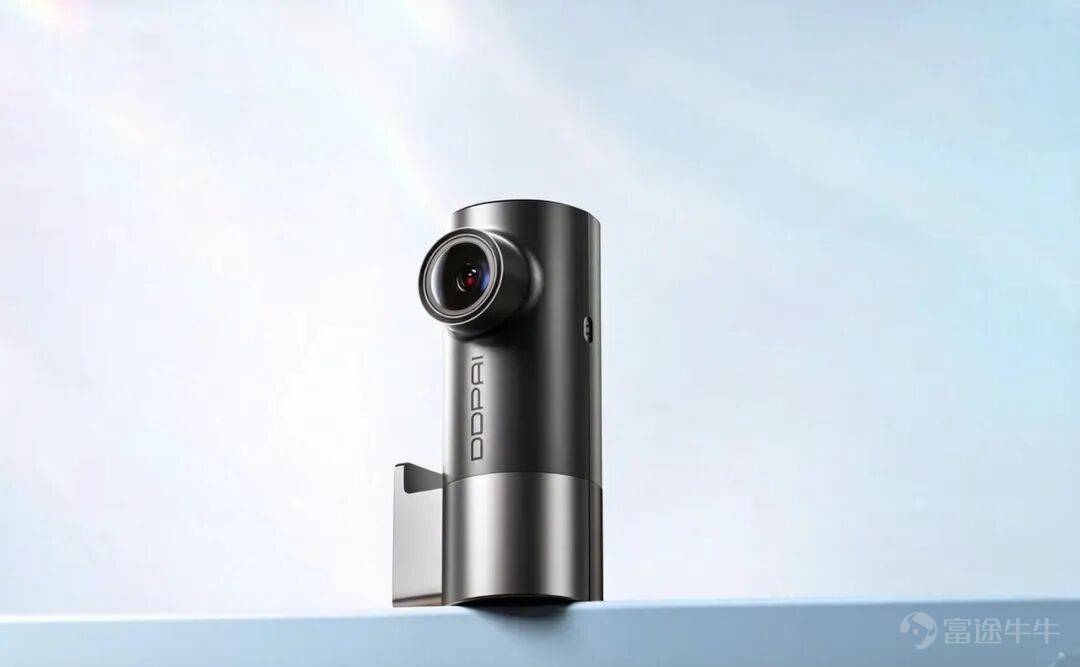

Bearing the halo of 'world number one,' is DingDingPai getting undercut by automakers?
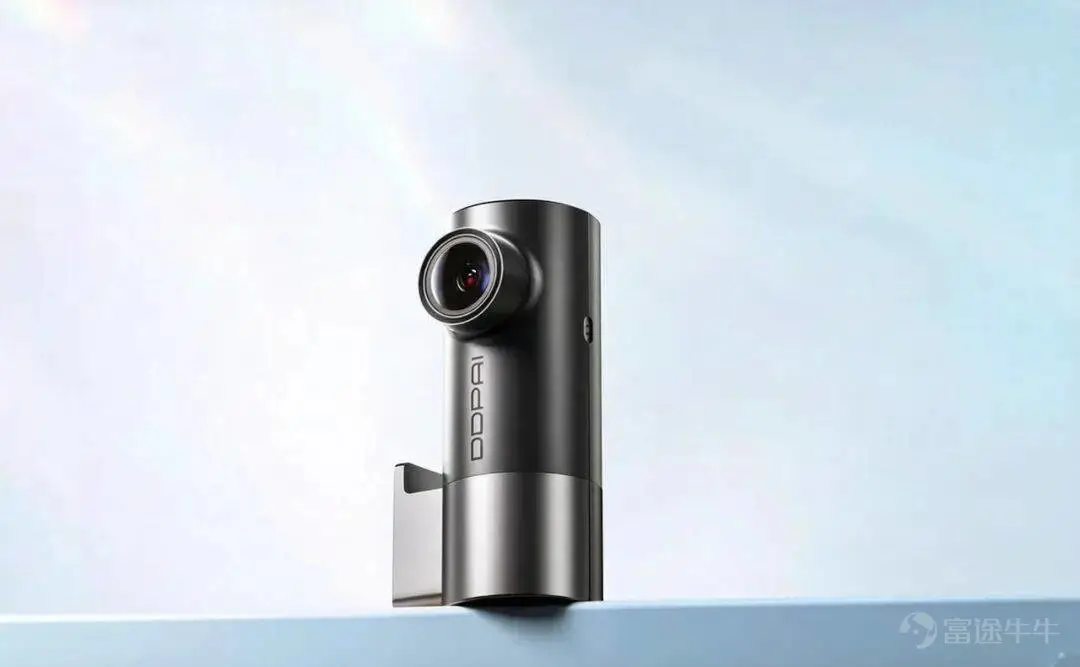
Produced by | Frontline of Entrepreneurship
Author | Wei Shuai
Edited by Feng Yu
Visual editor | Xing Jing
Reviewed | Songwen
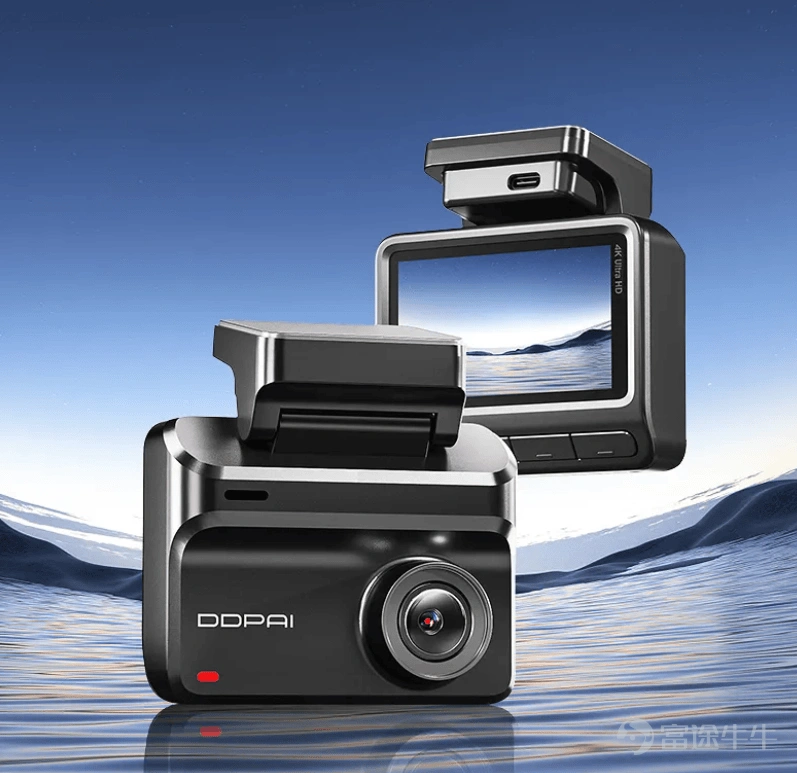
Another company emerging from the automotive supply chain is making its debut attempt on the Hong Kong Stock Exchange—DDPai, a vehicle imaging company founded in Shenzhen by four former Huawei employees, has officially filed for a main board listing in Hong Kong.
Founder Luo Yong boasts experience at HiSilicon and Huawei, while the other three executive directors—Yu Yunhui, Wang Kai, and Guo Xiaogang—are also Huawei alumni. In 2013, they rented an office in Nanshan District, Shenzhen, and developed a dashcam. Thirteen years later, the company is now knocking on the door of the Hong Kong stock market.
The most eye-catching line in the prospectus reads: 'Based on shipment volume in 2025, DDPai ranks first globally in the screenless in-vehicle smart imaging device market, with a 7% share.'But zooming out, based on revenue (measured by shipment price), it held a 1.5% global market share in the same year, ranking fifth.
This divergence—'number one by shipment volume, yet fifth by revenue'—perfectly encapsulates DDPai’s current predicament: domestically, aftermarket access points have been captured by players like BYD; overseas, it relies on distributors to expand its footprint, driving growth at the cost of steadily declining R&D expense ratios and rising sales expense ratios.
DDPai, branded as the 'first dashcam stock,' is heading to the Hong Kong exchange—but beneath that glossy label, its income statement is far less impressive.
1. Huawei veterans make their move on the Hong Kong market
Reviewing the resumes of the four executive directors reveals a uniform background: all are veterans from Huawei.
Luo Yong is 47 years old this year, but he has already spent over two decades in the semiconductor and smart hardware industries, including a distinguished tenure at HiSilicon and Huawei. According to disclosed information, in 2013 he teamed up with Yu Yunhui and Wang Kai to leave Huawei and start their own venture, founding 'YouShiXun,' the predecessor of DDPai.
This 'Huawei veteran entrepreneur' persona isn't uncommon in Shenzhen's hardware circle, but having all four executive directors come from the same former employer clearly underscores the company's strong technical DNA.
Yet even the Huawei name isn’t an absolute golden seal of approval in the automotive imaging segment.
Frost & Sullivan’s two metrics clearly unpack DingDingPai’s claim to being 'number one.'
By 2025 shipment volume, DingDingPai holds a 7% share of the global screenless smart automotive imaging device market, ranking first; it accounts for 4.9% of the overall global smart automotive imaging device market (including screen-equipped devices), placing it second.
However, this market is far more fragmented than one might imagine—in short, it’s certainly not a market DingDingPai can dominate solely through market share.
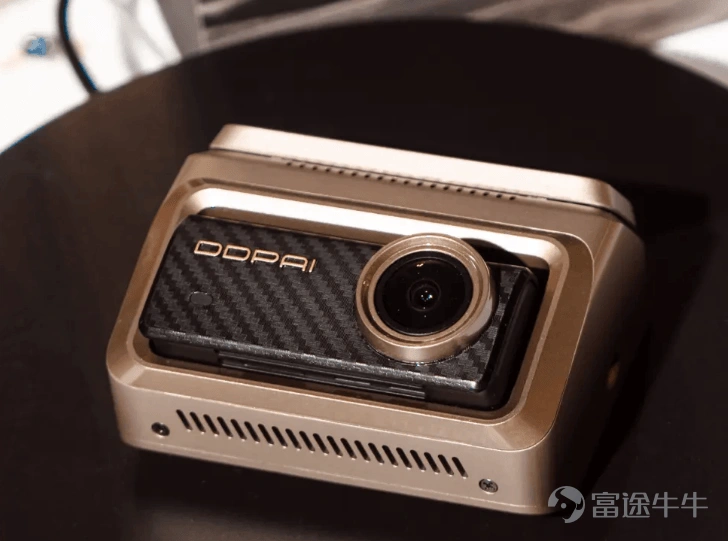
Data shows that by revenue, the top five players in the global smart automotive imaging market together hold just 12.8% of the market share. DingDingPai, with roughly 1.5% of the global share, drops directly to fifth place.
More awkwardly, there’s a significant gap between gross margin and net margin.
According to prospectus data, from 2023 to 2025 (hereinafter referred to as the 'Reporting Period'), gross margin rose from 36.4% to 38.2%, while net margin only edged up slightly from 4.7% to 7.7%. In 2025, the company’s profit for the year was merely RMB 36.61 million against annual revenue of RMB 476 million.
Behind these figures lies a 'chasm' of sales and administrative expenses. Data shows that in 2025, the company’s sales expenses amounted to RMB 77.41 million, while general and administrative expenses reached as high as RMB 35.02 million—combined, these costs were more than three times its profit. In other words, every yuan DingDingPai earns must first pass through two toll gates: sales and management.
Moreover, the founders’ actions prior to filing the listing application were rather intriguing.
Between July 2024 and January 2025, the company conducted intensive share buybacks, all of which were 'taken over' by the actual controller and core management team.
In July 2024, the company repurchased 395,900 shares from Pinghu Yichen (effectively controlled by the actual controller Luo Yong) for RMB 4.3 million;
In September and October of the same year, it spent RMB 3.4917 million and RMB 2.2382 million respectively to repurchase 321,500 shares from co-founder Yu Yunhui and 206,100 shares from founding shareholder Yu Xiping.
Following these buybacks, external investor Zhou Guangde acquired the shares via share transfers, enabling certain original shareholders to fully exit: in September 2025, Zhou Guangde acquired shares from Yu Xiping for RMB 10 million; in November 2025, he acquired additional shares from Pinghu Yichen for RMB 23.36 million.
As a result of the above buybacks and transfers, both Pinghu Yichen and Yu Xiping have fully exited and no longer hold any shares in DingDingPai.
Such maneuvers are not uncommon prior to an IPO and clearly represent a meticulously orchestrated 'win-win' capital play.Early investors cashed out, the actual controller consolidated control and achieved personal liquidity, core executives received cash incentives, and the company successfully brought in external investors, optimizing its equity structure and paving the way for its eventual IPO.
Notably, the prospectus highlights two unusual circumstances as 'special matters.'
Oriental Net Power Technology Co., Ltd., an early investor holding 3.97% of DingDingPai’s shares, was delisted from the Shenzhen Stock Exchange in June 2022 after reporting negative net assets for two consecutive years and receiving audit reports with disclaimers of opinion on its financial statements. Subsequently, its wholly owned subsidiary was placed into bankruptcy liquidation by court order and officially declared bankrupt, concluding the proceedings in September 2025.
As of DingDingPai’s IPO filing date, its entire stake of 853,100 shares held by Oriental Net Power was under judicial freeze, meaning these shares cannot be freely transferred or used in normal shareholder voting.

(Image / Shutterstock, licensed under VRF agreement)
Moreover, Li Xu, who was newly appointed in March 2026 as an independent non-executive director and chairman of the audit committee at DDPai, also serves as an independent non-executive director of another Hong Kong-listed company, China South City. That company was ordered by the Hong Kong High Court to be wound up in August 2025 due to its inability to repay USD 289 million in senior notes, and its shares have been suspended from trading since then.
These issues—relating to audit independence, professional judgment, and overall corporate governance—are undoubtedly 'red flags' that will inevitably draw intense scrutiny during subsequent HKEX review inquiries.
2. Domestic Market Being Preempted by Automakers
Returning to the business level, DDPai’s core market is heading toward 'collapse.'
According to the prospectus, during the reporting period, DDPai’s revenue from mainland China declined continuously from RMB 308 million to RMB 212 million, and its share of total revenue dropped sharply from 78.2% to 44.6%, reflecting a nearly RMB 100 million contraction in its domestic market size over three years.

(Image / SheTu.com (AI-generated digital content), under VRF license)
This decline stems not only from industry-wide price wars, channel migration to online platforms, and intensifying competition, but more critically from the disruption of demand channels caused by automakers’ trend toward factory-installed (front-loaded) integration.
With BYD now equipping its entire vehicle lineup with factory-installed dashcams, and brands like Geely, Cadillac, and Tank deeply integrating dashcams with the vehicle’s ECU, collision sensors, and 360-degree panoramic imaging systems, third-party aftermarket products struggle to replicate this level of seamless integration.
Automakers turning dashcams into standard factory equipment has directly eroded the channel value of the aftermarket, leaving DDPai’s foundational distribution network—comprising online platforms, offline distributors, and auto repair shops—in a bind as access points become locked down.
During the reporting period, revenue from domestic offline distributors fell from RMB 43.74 million to RMB 19.62 million, and B2B revenue from third-party branded sales to automakers also declined from RMB 87.66 million to RMB 50.49 million.
Amid setbacks in the domestic market, DingDingPai has shifted its focus overseas.
In 2025, its overseas revenue reached RMB 263 million, up 98.9% year-over-year, accounting for 55.4% of total revenue for the first time—surpassing domestic sales. Asia (excluding mainland China) was the clear driver, contributing RMB 206 million (43.3% of total revenue). In comparison, Europe and the Americas contributed RMB 24.78 million and RMB 18.89 million respectively, remaining relatively small in scale.
However, this overseas expansion comes with exceptionally high channel turnover and vulnerability.
In 2025, DingDingPai’s number of overseas distributors grew to 123, with 70 new additions offset by 56 exits during the year. This high-frequency channel churn suggests that DingDingPai’s overseas advantage relies more on broad channel coverage to drive sales volume rather than a solid brand moat.
Meanwhile, this overseas expansion has come at the cost of significantly higher R&D investment and sales expenses. During the reporting period, DingDingPai’s R&D expenditures were RMB 31.58 million, RMB 26.91 million, and RMB 32.13 million respectively, with the R&D expense ratio declining from 8.0% to 6.8%. Over the same period, sales expenses surged from RMB 56 million to RMB 77.41 million, pushing the sales expense ratio up from 14.2% to 16.3%.

(Image / Shutterstock, licensed under VRF agreement)
From a profitability standpoint, the 43.4% gross margin from overseas operations in 2025 effectively lifted the company’s overall gross margin to 38.2%, while the domestic market’s gross margin declined from 34.7% to 31.7%, reflecting continued margin compression.
Overall, however, DingDingPai’s 2025 performance rebound relied almost entirely on a single engine—overseas markets. This business model, heavily dependent on external distribution channels and growth in a single region, clearly faces serious challenges regarding risk resilience and long-term sustainability.
3. Challenges in Realizing the 'Second Growth Curve'
In fact, DingDingPai is currently grappling with severe structural imbalance, as its core revenue becomes increasingly reliant on a single hardware product—the dashcam.
According to prospectus data, during the reporting period, dashcam revenue rose steadily from 69.3% to 79.2% of total revenue, while other product categories—such as 4G cloud boxes and smart in-car displays—intended to build a 'mobile third space,' saw their revenue share shrink from 30.7% to 20.8%.
From a product pricing perspective, although dashcams—driven by their mid-to-high-end series in overseas markets—saw their average selling price (ASP) rise from RMB 252.2 to RMB 303.9, the ASP of other product categories plummeted sharply from RMB 77.4 to RMB 56.3, dragging the company’s overall ASP down to approximately RMB 158.
Amid intense market competition, DDPAI still appears unable to shake off its fundamental positioning as a 'functional hardware provider operating in a price-sensitive market.'
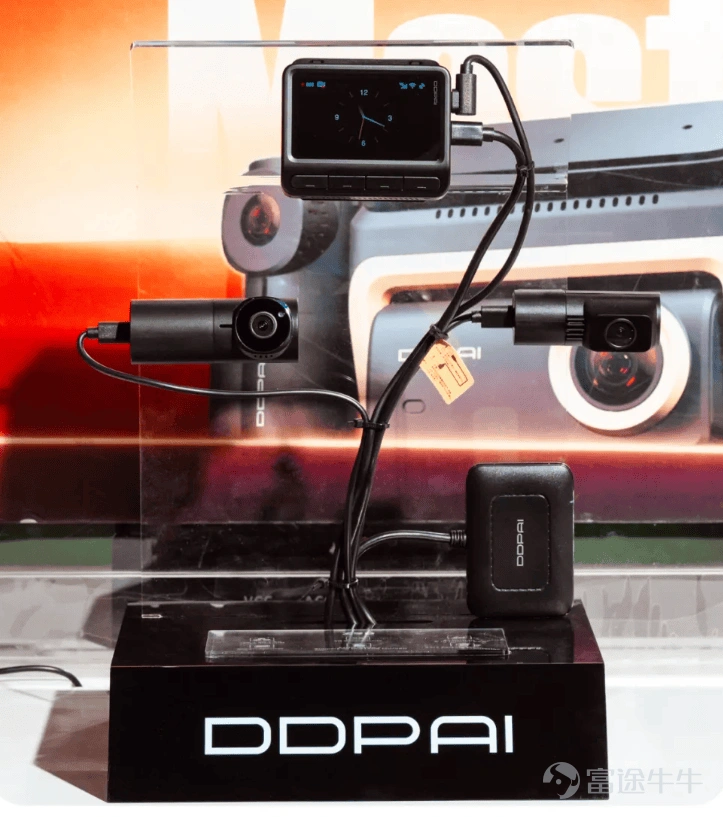
Faced with a nearly 30% contraction in its domestic core business over three years and dashcams accounting for close to 80% of total revenue, DDPAI outlined in its prospectus a second-growth-curve strategy centered on transforming into an AI-powered mobility camera company. The plan involves leveraging edge-side lightweight large models and multimodal perception technologies to offer subscription services such as AI-generated Vlogs, driving behavior analytics, and cloud storage—aiming to transition from a 'pure hardware sales' model to a 'hardware-plus-services' ecosystem.
However, this ecosystem narrative faces extremely high barriers to implementation.
As new energy vehicle makers like Tesla, BYD, and Nio deeply integrate features such as dashcams, Sentry Mode, and cloud storage into their vehicle systems, automakers have inherently secured a strategic advantage in data access and user engagement. In contrast, third-party brands face significantly higher customer acquisition costs if they attempt to roll out standalone apps and cloud-based subscription services, making it considerably more difficult to establish a closed-loop ecosystem.
Although the company emphasizes that platform-based development has improved R&D efficiency, stagnant absolute investment levels remain insufficient to support its ambitious 'AI ecosystem' vision. During the reporting period, R&D expenses remained flat between RMB 31.6 million and RMB 32.1 million, while the R&D expense ratio declined from 8.0% to 6.8%. In stark contrast—a classic scissors divergence—sales and marketing expenses surged from RMB 55.99 million to RMB 77.41 million, pushing the sales expense ratio up to 16.3%.
In response to concerns over declining R&D intensity, DDPAI explained in its prospectus that it has shifted to a platform-based product development model. By reusing three core technology platforms—πChips (hardware platform), πOS (software platform), and πLens (imaging processing platform)—across multiple product lines, the company claims to have enhanced R&D efficiency.
While this argument may hold water in financial logic, it appears thin within the valuation framework of capital markets.
DDPAI is striving to tell the market a story of transformation—from a 'traditional hardware manufacturer' to an 'AI-powered mobility ecosystem service provider.' Yet, annual R&D investments of only around RMB 30 million are insufficient to build a deep enough technological moat in the AI space, which demands massive computing power, continuous algorithmic iteration, and relentless innovation.
Clearly, DDPAI stands at a critical strategic inflection point. On one hand, its market leadership as the world’s top exporter of screenless in-car imaging devices, its overseas revenue contributing more than half of total income, and its team’s Huawei pedigree collectively form strong positive catalysts for its Hong Kong IPO push.
On the other hand, however, persistent contraction in the domestic market, the structural vulnerability of dashcam sales accounting for nearly 80% of revenue, the widening gap between declining R&D expense ratios and rising sales expense ratios, frequent turnover among overseas distributors, and concentrated pre-filing share sell-offs by major shareholders—all point to significant governance weaknesses that constitute non-negligible risk exposure.
Today, the automotive supply chain has created a listing window for the company, but ultimately, capital markets will anchor valuation on core fundamentals: profitability and the sustainability of its business model.
In the face of operational realities, the 'world’s number one' label appears insufficient to sustain valuation over the long term. The real test for Dindin after its IPO will be whether it can truly transcend the hardware sales cycle and convert its shipment volume advantage into high-barrier, ecosystem-driven profits.
*Note: Cover image and unattributed images in this article are sourced from Dindin’s official WeChat public account.
Risk Disclaimer: The above content only represents the author's view. It does not represent any position or investment advice of Futu. Futu makes no representation or warranty.Read more

Comment (1)
to post a comment
6
4