
Despite the breakout success of its acne treatment, Zhiyuan Pharma faces underlying growth concerns as it pivots to the Hong Kong Stock Exchange with a 'pharma-beauty crossover' narrative

Produced by | Frontline of Entrepreneurship
Author | Li Bin
Edited by Hu Fangjie
Visual editor | Xing Jing
Reviewed | Songwen
On July 9, Jiangsu Zhiyuan Pharmaceutical submitted an application for a main board listing on the Hong Kong Stock Exchange.
This is not its first attempt to enter the capital markets. In April 2023, Zhiyuan Pharma filed an IPO application with the Shenzhen Stock Exchange’s main board but voluntarily withdrew it in October 2024 after undergoing two rounds of regulatory inquiries.
After stumbling in China's A-share market, this pharmaceutical company—propelled to internet fame by a single acne treatment product, metronidazole gel priced at just over ten RMB—has now turned its sights on Hong Kong listings, branded as the 'first acne-focused pharma stock' and backed by high-profile investors including Sinovation Ventures, L'Oréal, and Ali Health.
According to its prospectus, Zhiyuan Pharmaceutical’s revenue rose from RMB 1.031 billion in 2023 to RMB 1.324 billion in 2025. However, another set of figures stands out starkly: net profit declined from RMB 146 million in 2023 to RMB 94.516 million in 2025; in Q1 2026, the company reported net profit of only RMB 12.629 million, a sharp year-over-year drop of 66.7%.
Meanwhile, the company’s revenue growth remains heavily reliant on sales and marketing expenditures, with a sales expense ratio reaching 43.7% in Q1 2026. Additionally, its nearly RMB 300 million Pre-IPO financing round completed in 2025 came with stringent valuation adjustment (‘valuation bet’) agreements.
When a pharmaceutical company’s growth is primarily driven by marketing, when profits continue to decelerate sharply, and when it faces looming valuation bet obligations, is Zhiyuan Pharmaceutical’s IPO truly aimed at business development—or merely a means to fulfill those bet agreements?
1. A veteran in the pharmaceutical industry transforms a local drugmaker, achieving a 47-fold increase in valuation over ten years
On Ali Health’s medicine sales rankings, Liv Metronidazole Gel once topped the overall sales chart across all categories. Relying largely on this acne treatment product—retailing for less than RMB 20—the company carved out a niche in the seemingly unremarkable topical dermatology segment and built a business generating over RMB 1.3 billion in annual revenue.

(Image / E-commerce platforms)
This company is precisely Jiangsu Zhiyuan Pharmaceutical, which has just filed its listing application with the Hong Kong Stock Exchange.
However, it should be noted that metronidazole gel represents only a key component of Zhiyuan Pharmaceutical’s broader product portfolio.
Beyond facial acne treatments, Zhiyuan Pharmaceutical’s offerings also include scalp washes, antifungal foot sprays, back and chest acne sprays, psoriasis ointments, non-steroidal creams for eczema and dermatitis, and nail fungus creams—covering nearly every skin condition from head to toe, including nails.
Correspondingly,Zhiyuan Pharmaceuticals has established a portfolio of four major brands: Lifu focuses on topical facial dermatological ointments; Luofu specializes in antifungal and foot care products; Jin Niu Er covers immune-inflammatory skin conditions such as psoriasis; and Zhirun is an efficacy-driven skincare brand developed from the company’s pharmaceutical R&D background.


(Image / Zhiyuan Pharmaceuticals IPO prospectus)
According to the prospectus, in 2025, eight of Zhiyuan Pharmaceuticals’ products—including Lifu® Metronidazole Gel—ranked first in their respective categories across all channels or online channels.
There is currently no listed company on the Hong Kong Stock Exchange with topical dermatological drugs as its core business. If Zhiyuan Pharmaceuticals successfully lists, its clear strategic focus will create a distinct differentiation in the Hong Kong market.
This story began thirteen years ago with a bold bet by two seasoned pharmaceutical executives.
In 2015, Xu Jun and Xie Hongwei—who had worked together for over a decade at Sanjiu Pharmaceutical and Langsheng Pharma—acquired Jiangsu Shengbaoluo Pharmaceutical Co., Ltd. (later renamed Jiangsu Zhiyuan Pharmaceutical Co., Ltd.), the predecessor of Zhiyuan Pharmaceuticals. At the time, Zhiyuan was merely a local pharmaceutical manufacturer with a scattered product portfolio and mediocre performance, acquired for just RMB 60 million.
After the acquisition, the two executives entered through their area of greatest expertise—dermatology—eliminating unrelated businesses and concentrating on topical dermatological drugs, a segment that was then considered unexciting.
A decade later, that decision has become the core engine driving the company’s growth.

(Image / Zhiyuan Pharmaceuticals IPO prospectus)
From 2023 to 2025, Zhiyuan Pharmaceutical's revenue increased from RMB 1.031 billion to RMB 1.324 billion. Of this, dermatology product revenue rose from RMB 779 million to RMB 1.161 billion, increasing its share of total revenue from 75.6% to 87.7%. The nasal and facial dermatology segment, including Livex Metronidazole Gel, generated RMB 272 million in 2025, accounting for 20.6% of the company's total revenue.
Additionally, in 2025, autoimmune rheumatology products accounted for 10.2% of the company's revenue.
This growth was also directly reflected in industry rankings. According to Frost & Sullivan data, based on 2025 ex-factory prices, Zhiyuan Pharmaceutical ranked sixth among China’s topical dermatology drug manufacturers, with revenue of approximately RMB 960 million.
It was precisely this market performance that attracted investments from Innovation Works, Cathay Capital, and Ali Health in 2025, resulting in a post-investment valuation of RMB 2.82 billion—47 times higher than the price Xu Jun paid to acquire Zhiyuan Pharmaceutical a decade earlier.
How did an obscure regional pharmaceutical manufacturer, transformed by two seasoned industry veterans, become a breakout acne-treatment star, drawing investment from tech-focused platforms, beauty-industry capital, and internet giants? The answer lies in Zhiyuan Pharmaceutical’s product development philosophy.
2. Applying consumer goods logic to build a hit-product pipeline
According to its prospectus, as of the end of 2025, Zhiyuan Pharmaceutical had commercialized more than 50 products across six core therapeutic areas, with over 30 additional candidates in its pipeline. More importantly, in terms of speed, the company led China in the total number of marketing authorization applications submitted and approved for topical dermatology drugs over the past three years.
Zhiyuan Pharmaceutical not only sells drugs quickly but also launches new drugs rapidly.
Behind this speed is a replicable approach: select well-established active ingredients, optimize formulations, and swiftly bring them to market. Livex Metronidazole Gel is a textbook example.
Metronidazole was originally developed and launched by Sanofi in 1959. Its core compound patents have long expired globally, and dozens of Chinese companies hold relevant approvals. Multiple brands already sell metronidazole gel alone. In other words, when Zhiyuan Pharmaceutical entered this market, it was already a mature-ingredient, off-patent, highly competitive red ocean.
Zhiyuan Pharma has not focused on inventing new drugs, but instead pursued differentiation with existing medications that anyone can produce.
Zhiyuan Pharma reformulated traditional greasy ointments into water-based gels, addressing the key pain point for acne patients—greasiness after application and poor treatment adherence. Additionally, the company upgraded packaging from conventional aluminum tubes to pump dispensers featuring vacuum mechanisms that prevent direct contact between air and the medication, aligning with the frequent, small-dose, repeated-application needs of topical facial treatments and significantly improving convenience and hygiene.
Zhiyuan Pharma applied the same logic to other products. It developed a bifonazole solution as a spray, solving the issue of traditional creams being difficult to apply between toes and ineffective against fungi inside shoes. Similarly, its topical clindamycin phosphate solution comes with a specialized nozzle designed specifically to treat back and chest acne in hard-to-reach areas.

(Figure / Zhiyuan Pharma IPO prospectus)
After developing its products, Zhiyuan Pharma did not prioritize traditional hospital distribution channels; instead, it shifted its focus to e-commerce platforms, with Ali Health and JD Health serving as its core sales outlets.
According to the IPO prospectus, online sales revenue as a share of total company revenue rose from 46.4% in 2023 to 58.0% in 2025, further increasing to 61.8% in the first quarter of 2026—meaning over 60% of its revenue now comes through e-commerce channels.
However, this business model carries significant costs. From 2023 to 2025, Zhiyuan Pharma’s sales expenses—primarily spent on e-commerce platform promotions and KOL collaborations—rose from RMB 407 million to RMB 475 million.

(Figure / Zhiyuan Pharma IPO prospectus)
In the first quarter of 2026, Zhiyuan Pharma’s sales expenses climbed further to RMB 147 million, resulting in a sales expense ratio of 43.7% for the period. Of this, marketing and promotional expenses amounted to RMB 122 million, accounting for 83% of total sales expenses.
According to Wind data, the average sales expense ratio among 154 A-share-listed chemical pharmaceutical companies in 2025 was only 19.8%. Even Hengrui Pharma, a leading firm with multiple innovative drugs on the market, reported a sales expense ratio of just 29% in 2025.
In other words, Zhiyuan Pharma’s sales expenditure intensity has far exceeded the industry average and is even higher than that of most leading innovative pharmaceutical companies. From this perspective, it resembles less a pharmaceutical company and more a consumer goods firm wrapped in a pharmaceutical shell.
When a company spends 40% of its revenue on sales, it’s no surprise that profits get eroded.
From 2023 to 2025, Zhiyuan Pharma’s net profit fell from RMB 146 million to RMB 45.6 million before rebounding to RMB 94.5 million, showing significant volatility. In Q1 2026, the company’s revenue rose 15% year-over-year to RMB 337 million, yet net profit plunged 66.6% to RMB 12.6 million.
Over three years, Zhiyuan Pharma’s cumulative net profit amounted to approximately RMB 287 million, while its sales expenses during the same period totaled a staggering RMB 1.338 billion—4.7 times its net profit.
3. From Pharmaceuticals to Cosmetics: Who Will Pay for the RMB 2.8 Billion Valuation?
Sales and marketing promotions consume substantial capital, and sustained growth requires continuous investment. In April 2023, Zhiyuan Pharma first filed its prospectus with the Shenzhen Stock Exchange, aiming to raise RMB 700 million.
After two rounds of regulatory inquiries, Zhiyuan Pharma voluntarily withdrew its IPO application in October 2024. The core reason for the withdrawal was the tightening scrutiny by China’s A-share market on companies combining generic drugs with heavy marketing. Between 2021 and 2023, Zhiyuan Pharma incurred over RMB 300 million in academic promotion expenses, which became a key focus of both inquiry rounds.
More than a year later, Zhiyuan Pharma shifted its listing target to Hong Kong.
During the window between withdrawing its A-share application and filing for a Hong Kong listing, Zhiyuan Pharma completed a critical funding round. In 2025, the company raised nearly RMB 300 million in a pre-IPO round led by Sinovation Ventures, with participation from Cathay Capital and Ali Health. Prior to the IPO, Sinovation Ventures held a 6.98% stake, Cathay Beauty Fund held 3.37%, and Ali Health held 1.69%.
But behind the high valuation lie redemption clauses tied to performance targets.
According to the prospectus, pre-IPO investors were granted redemption rights. If Zhiyuan Pharma fails to complete a qualified IPO within the agreed timeframe or if there is a change in actual control, these investors have the right to require the company to repurchase their shares at the original investment amount plus simple interest.

(Image / Zhiyuan Pharma Prospectus)
The prospectus shows that Zhiyuan Pharma has classified these special rights as a financial liability, recognizing RMB 292 million in 2025 and increasing it to RMB 397 million by the first quarter of 2026. This liability directly reduced the company’s net assets from RMB 677 million at the end of 2024 to RMB 511 million as of March 31, 2026.
If this Hong Kong IPO is blocked, Zhiyuan Pharma will face substantial share repurchase obligations. As of March 31, 2026, the company held RMB 343 million in cash on its balance sheet.
The prospectus states that Zhiyuan Pharma intends to use the proceeds from this offering to expand its product pipeline, upgrade manufacturing platforms, enhance brand promotion, pursue strategic acquisitions both domestically and overseas, and supplement working capital. Specifically, the company has already lined up more than 30 candidate products in its R&D pipeline and plans to launch 15 to 20 new products over the next three to five years.
Zhiyuan Pharma’s multi-product strategy stems from the structural characteristics of the topical dermatological drug market.
According to Frost & Sullivan, the topical dermatological drug market was valued at approximately RMB 27.8 billion in 2025 and is projected to reach RMB 45.1 billion by 2030. However, within the specific core categories where Zhiyuan Pharma operates, the market size is relatively modest; public market data estimates the metronidazole gel market at around RMB 160 million.
In a segment with limited growth potential, the marginal returns from driving growth through sales investment continue to diminish. Therefore, market participants must constantly launch new products and maintain ongoing marketing efforts to sustain scale growth.
Beyond topical dermatological drugs, Zhiyuan Pharma has also expanded into the personal care market. In 2021, the company established Zhiyan Bio and launched the Zhirun brand, offering a range of products including selenium sulfide shampoo and azelaic acid acne cream.

(Image / Zhirun Tmall Flagship Store)
According to Tmall platform data, selenium sulfide anti-dandruff shampoo shows over 90,000 buyers, with a final price of RMB 87.79 for 250ml. The product primarily contains selenium sulfide, salicylic acid, and maleic acid-modified castor oil, targeting oil control, volume enhancement, and dandruff removal. Per the prospectus, this selenium sulfide anti-dandruff shampoo generated RMB 75.8 million in revenue in 2024, the year it was launched.
Additionally, the 15% azelaic acid acne treatment cream shows over 50,000 buyers, priced at RMB 46.39 for 15g. The formulation features azelaic acid, bisabolol, purslane, and witch hazel, working together to suppress surface breakouts, fade mid-layer acne marks, and repair the skin barrier beneath the surface.
However, Zhiyuan Pharmacy's flagship store has 144,000 followers, still significantly trailing Yu Su, a specialized acne skincare brand with 463,000 followers. Transitioning from pharmaceuticals to cosmetics means Zhiyuan Pharma is entering a far more competitive market, where its rivals are no longer traditional drugmakers but consumer brands like L'Oréal, Winona, and Yu Su—companies with stronger direct-to-consumer connections.
The RMB 2.8 billion valuation reflects a narrative combining leadership in topical dermatological drugs, strong online growth, and a crossover into cosmeceuticals. With persistently slowing profits, soaring marketing expenses, and a visibly approaching market ceiling, will investors continue to buy into this story?
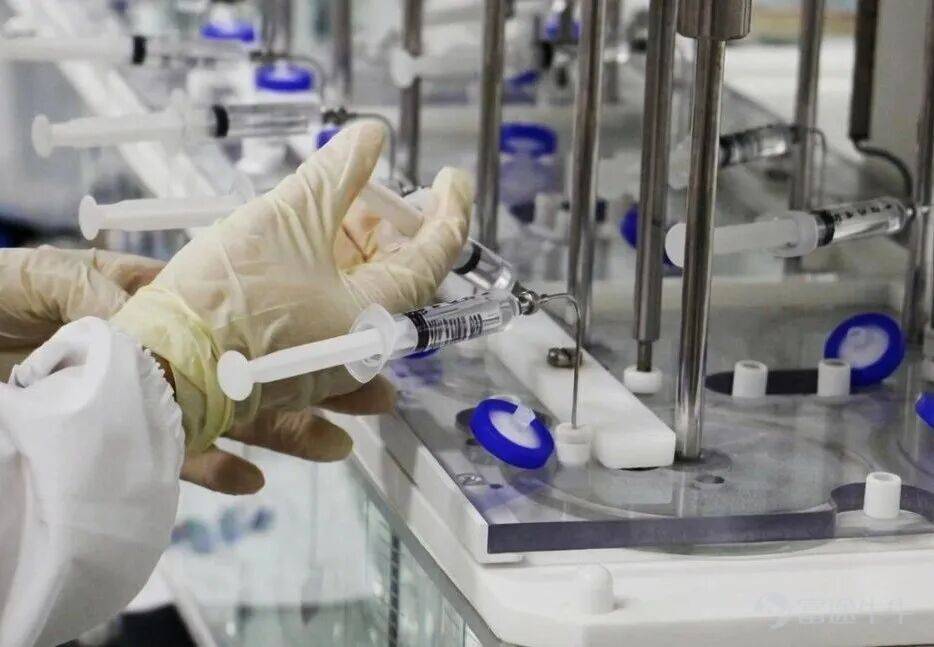
*Note: The featured image in this article is sourced from Zhiyuan Pharma’s official website.
Risk Disclaimer: The above content only represents the author's view. It does not represent any position or investment advice of Futu. Futu makes no representation or warranty.Read more
Comments
to post a comment