
Hong Kong stocks are rebounding—what sectors deserve attention?

Multiple institutions are turning bullish! Is the Hong Kong stock market shifting from 'high odds' to 'high win rate'? These key themes deserve attention...
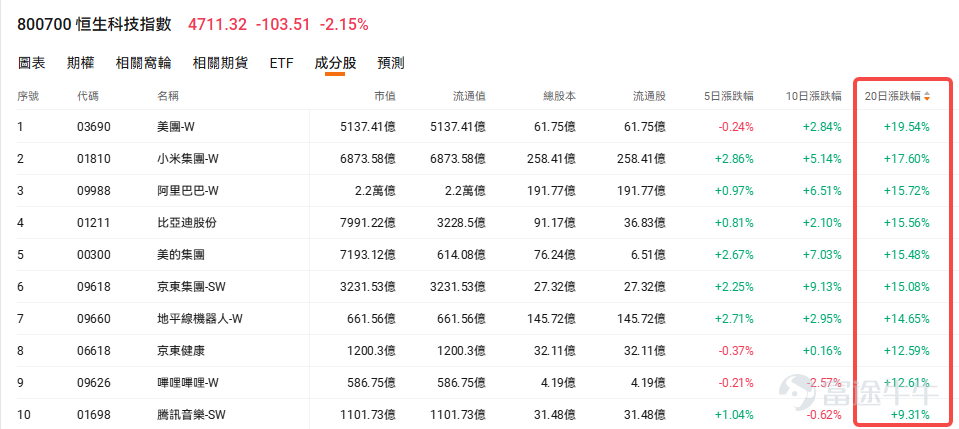
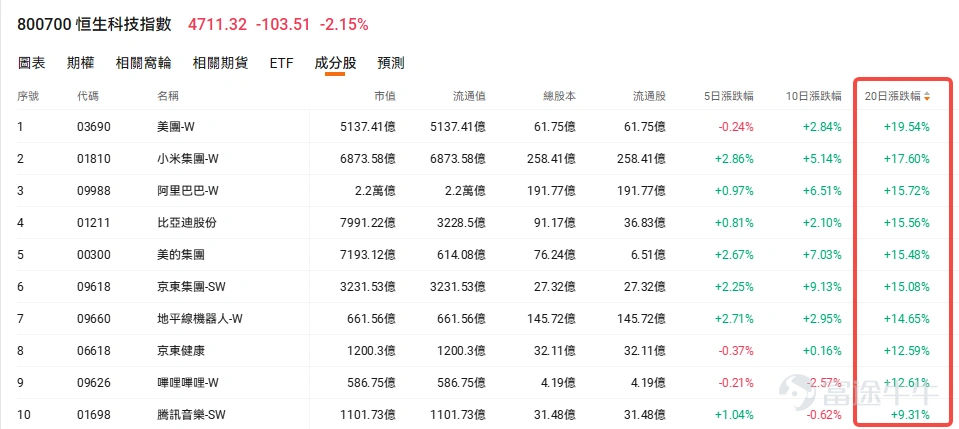
As the second half of 2026 begins, the Hong Kong stock market has seen a recovery rally. As of intraday trading on July 22, $Hang Seng TECH Index (800700.HK)$ the index has gained over 5% in July, with heavyweight tech and internet stocks performing particularly well, $BABA-W (09988.HK)$ surging more than 25% in tandem, $MEITUAN-W (03690.HK)$ and others also recording gains of 20%, offering some relief to investors after a prolonged period of adjustment.
Hong Kong equities have become a 'buzzword' in institutional research reports. Citi noted that heightened AI-related volatility has exposed concentration risks, while China positions remain light and the macro environment is improving,and has upgraded Chinese equities to 'overweight,'upgrading $Hang Seng Index (800000.HK)$ Targeting 29,600 points by the end of 2026, while upgrading the insurance sector to 'Overweight'; Michael Burry, known as the 'Big Short' investor, also stated that now is a good time for investors to seek undervalued opportunities in Hong Kong equities. The Cathay Securities and Haitong Securities strategy team has made an even more critical assessment—The core logic driving Hong Kong tech stocks is shifting from 'high payoff speculation' to 'improved probability of success.'
This shift is driven by multiple converging signals: from the U.S. easing its Hong Kong-related policies, to a surge in domestically developed AI showcased at WAIC, to Kimi K3 going viral globally and growing expectations of Moonshot AI’s potential listing in Hong Kong.The global pricing focus for AI is migrating from hardware to cloud, models, and applications—and Hong Kong tech stocks, trading at historical valuation troughs, are becoming a key destination for capital reallocation.
Four marginal changes are underway:
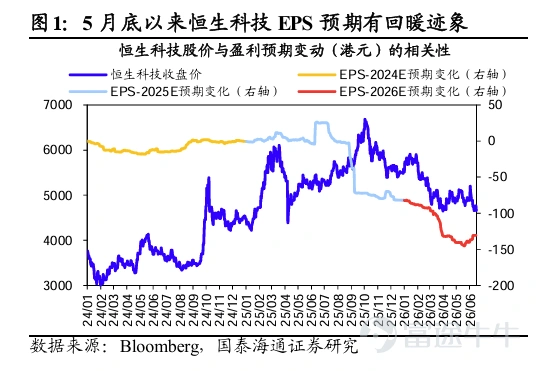
1)Signs of an inflection point in earnings expectations have emerged.Cathay Securities and Haitong Securities observed thatearnings-per-share (EPS) expectations for the Hang Seng Tech Index have shown signs of recovery since late May.This is an easily overlooked yet critically important detail—the fundamental issue suppressing Hong Kong tech valuations over the past two years wasn’t that the 'AI story lacked appeal,' but rather that 'earnings realization was too slow.' Now that earnings expectations for major internet stocks are turning around, the sector is positioned to transition from 'trading on expectations' to 'focusing on delivery.'
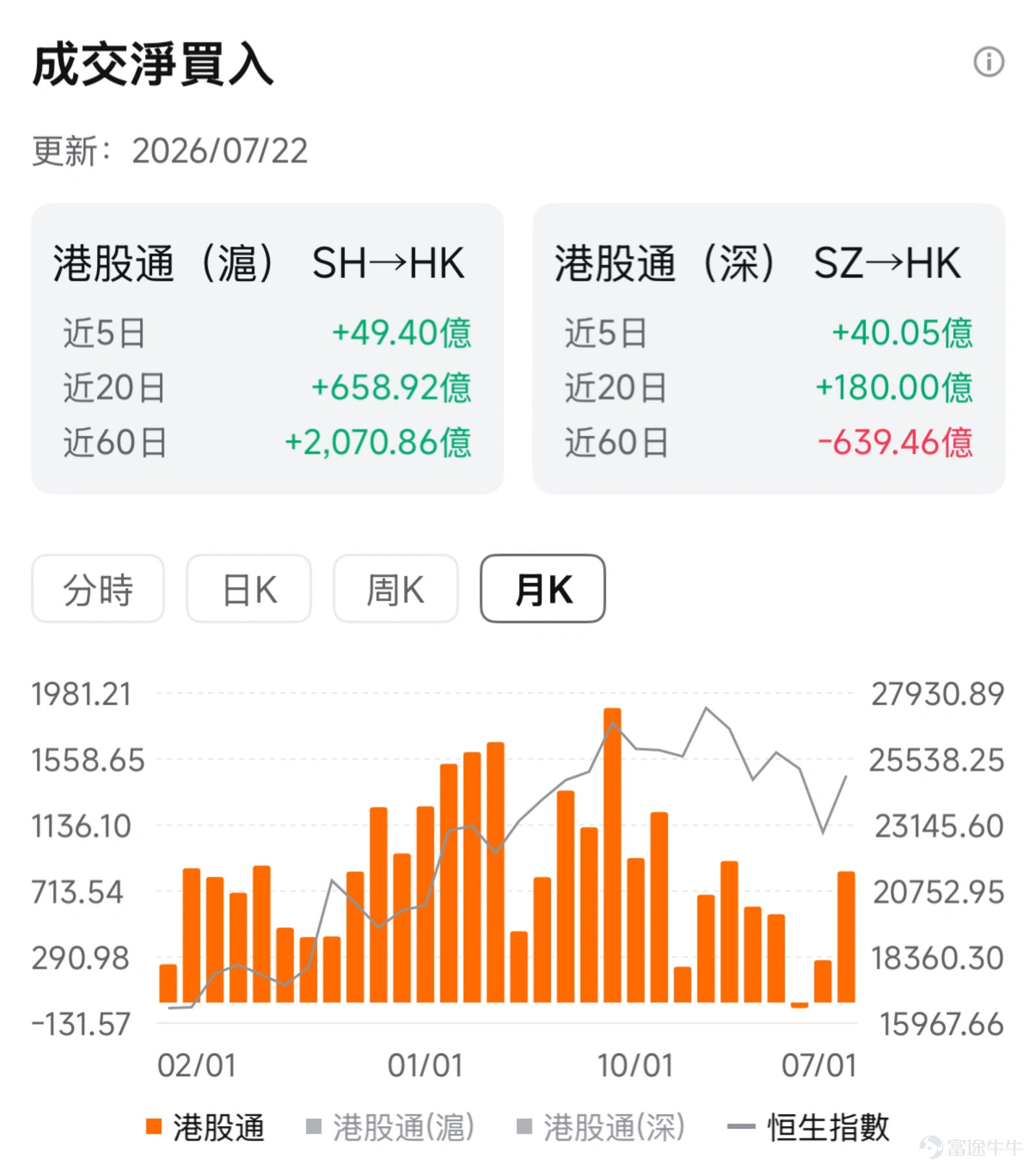
2)Domestic and foreign capital flows are reinforcing each other.Since July, southbound capital has cumulatively flowed into Hong Kong markets by over HK$80 billion, while foreign capital has gradually reversed its earlier outflow trend since mid-May, recording cumulative inflows exceeding HK$70 billion.More importantly, the structure of capital flows shows that southbound investors have been adding positions in software, hardware equipment, and semiconductors, while foreign investors have been increasing exposure to software services, hardware, and semiconductors.Guotai Junan and Haitong Securities noted that IPO activity has entered its seasonal low for the year, with the next major wave of lock-up expirations by industrial capital concentrated around late September. Overall, outflow pressures have eased, making it easier for incoming capital to act in concert.
3)Kimi K3 has rewritten the narrative around AI pricing power. On July 16, Moonshot AI released Kimi K3, a model with 2.8 trillion total parameters—the world’s first open-source model approaching the 3-trillion-parameter scale. It ranks third globally in Artificial Analysis’ composite score, narrowing the SOTA (state-of-the-art) performance gap between China and the U.S. from 15% in June to just 5%, directly compressing the differentiated pricing space for overseas closed-source models. This breaks the previous market concern that 'Chinese AI can only burn money but cannot generate profits'—Model capabilities coupled with application commercialization could become a standalone investable theme。
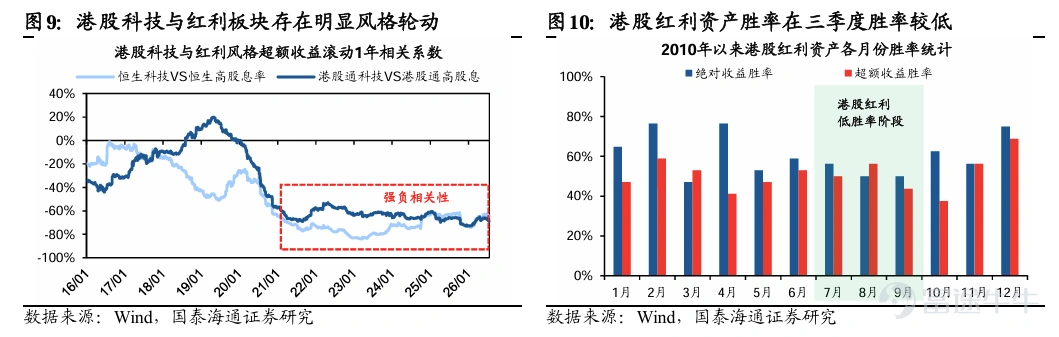
4)A seesaw effect is boosting the odds for Hong Kong tech stocks. Guotai Junan and Haitong Securities’ research finds that the Hong Kong stock market exhibits a value/growth style rotation similar to that of the A-share market. Since 2020,the rolling one-year correlation coefficient between excess returns of Hong Kong tech and dividend-paying sectors has consistently remained in the range of -60% to -80%, reflecting a strong negative correlation between the two.As the seasonal strength of Hong Kong dividend-paying stocks typically wanes in Q3, the seesaw dynamic between dividend and tech sectors suggests that the odds for Hong Kong tech stocks are poised to strengthen.
Which sectors deserve attention in the market ahead?
Theme 1: Integration of AI hardware and software—from infrastructure to models + applications
Hong Kong tech stocks showed extreme K-shaped divergence in the first half of the year: the Hang Seng Tech Index fell nearly 20% year-to-date, yet $KINGBOARD HLDG (00148.HK)$ 、 $GIGADEVICE (03986.HK)$ 、 $MONTAGE TECH (06809.HK)$ AI hardware stocks such as ... doubled in value, $HUA HONG GRACE (01347.HK)$ ... surged over 200%, $LENOVO GROUP (00992.HK)$ ... rose approximately 170%, ranking first among Hang Seng Index constituents.
The open-source release of Kimi K3 has enhanced the global competitiveness of domestic large language models. The key shift in the second half lies in:Market focus on AI is shifting from infrastructure segments—such as chips, servers, and data centers—toward model capabilities and application commercialization.。In this theme, $TENCENT (00700.HK)$ ... is an unavoidable investment target; Citi has retained it on its top H-share buy list with a price target of HK$783. $BABA-W (09988.HK)$ Equally worth watching is the strengthening synergy between its cloud computing business and AI products. Additionally, $Z.AI (02513.HK)$ and $MINIMAX-W (00100.HK)$ As a newly added constituent of the Hang Seng Tech Index, it represents a core new asset at both the model and application layers, and the incremental effect from passive fund inflows has yet to be fully realized.
Theme 2: 'Sharp Decline Followed by Rebound' in Semiconductors and AI Hardware
This primarily focuses on segments that were previously oversold, have issued positive interim earnings guidance, and exhibit strong industry trends:Memory/storage, semiconductors, and computing power sectors.According to Morgan Stanley's latest research report, the supply shortage of AI data center memory chips continues to worsen, and the sector’s 'super cycle' is expected to extend through 2028. Recent short-term pullbacks in the segment reflect sentiment-driven volatility and do not alter the medium- to long-term bullish outlook.When the market excessively trades the narrative of a 'cycle peak,' industry leaders with genuine earnings delivery capability actually offer a more favorable risk-reward profile.
$GIGADEVICE (03986.HK)$ It is the most representative stock in the Hong Kong-listed memory/storage segment. On July 9, the company released a positive profit alert for the first half of 2026, forecasting H1 revenue of approximately RMB 11.5 billion (up ~177% YoY), attributable net profit of around RMB 6.9 billion (surging ~1,099% YoY), and adjusted net profit of RMB 4.85 billion (up ~791% YoY). The company is accelerating DRAM self-research and industrialization during this industry upcycle, converting cyclical tailwinds into a long-term capacity moat.
Beyond memory/storage, the wafer fabrication segment is also experiencing accelerating momentum. $SMIC (00981.HK)$ Its Q1 2026 earnings report showed revenue of USD 2.505 billion, up 11.5% YoY. The company provided Q2 guidance: revenue expected to increase 14%–16% QoQ, with gross margin of 20%–22%. Management explicitly stated, 'Based on customer demand and our current order backlog, we are more optimistic about our overall business this year than we were in Q4 last year.' $HUA HONG GRACE (01347.HK)$ Capacity utilization in Q1 reached as high as 99.7%, approaching full operational capacity—Capacity utilization is the most leading indicator of the foundry industry's business cycle; near-full production implies that a price hike cycle could begin at any time.
Theme 3: 'Defensive + Valuation Recovery' Dual Play in High-Dividend Blue Chips
The investment rationale for high-dividend assets lies in their ability to provide a margin of safety amid high market uncertainty; if fundamentals improve in the second half of the year, sector leaders with both dividend yields and pro-cyclical characteristics could see valuation recovery.
$CNOOC (00883.HK)$ First-half net profit was RMB 79.731 billion, up 25% year-over-year, with an interim dividend of HK$0.74 per share—the highest ever for the same period in history; $CHINA MOBILE (00941.HK)$ First-half attributable profit to shareholders was RMB 84.235 billion, up 5.03% year-over-year, and southbound capital recorded net purchases of HK$2.872 billion in Q1. These figures indicate that the fundamentals of high-dividend blue chips remain solid. It should be noted that such assets are better suited as core holdings in a portfolio to provide downside protection, rather than as short-term momentum trades.
Theme 4: Innovative Drugs and Healthcare
Citi maintains an 'Overweight' rating on the healthcare sector, $HENGRUI PHARMA (01276.HK)$ included in Citi's top H-share buy list, with a target price of HK$134. From a capital flow perspective, the innovative drugs segment demonstrated relative resilience in July, $Innovative drug (LIST23675.HK)$ with cumulative gains of nearly 10%.
The investment case for the innovative drug sector lies in a triple convergence: prior overselling, positive interim earnings guidance, and strong industry trends. Companies like Simcere Pharmaceutical have already begun share buybacks—a signal that industrial capital is voting with real money.
Strategy Five: Regular investments in broad-based ETFs
If you are bullish on the Hong Kong equity market but lack confidence in individual stock selection, $TRACKER FUND OF HONG KONG (02800.HK)$$Hang Seng TECH Index ETF (03032.HK)$ broad-based ETFs offer the simplest way to participate in the overall recovery of Hong Kong equities. According to Guotai Junan and Haitong Securities data, the Hang Seng Tech Index’s valuation percentile since 2019 stands at just 35.4%, ranking at the bottom among mainstream broad-based indices—meaning that even if individual stock picks go wrong, broad-based exposure still offers a favorable probability of valuation recovery. Dongwu Securities estimates the Hang Seng Tech Index’s PE (TTM) in June to be around 20x, sitting at the 10th percentile historically.In a choppy market characterized by 'limited downside and capped upside,' a dollar-cost averaging strategy outperforms market timing.
Overall, the Hong Kong equity market has recently seen multiple catalysts, yet the outlook remains cautious, with risks still present. Short-selling as a percentage of total trading volume is at a historical high, posing liquidity challenges, while geopolitical tensions in the Middle East and Federal Reserve policy remain unpredictable external variables.We recommend a strategy focused on phased positioning and adding positions during sharp sell-offs.On one hand, build a barbell or balanced core position to avoid excessive exposure to any single theme; on the other hand, maintain ample dry powder to capitalize on sharp dip opportunities when external shocks materialize and the index consolidates sideways to digest bearish sentiment.
Risk Disclaimer: The above content only represents the author's view. It does not represent any position or investment advice of Futu. Futu makes no representation or warranty.Read more


Comments (13)
to post a comment
39
50