
Domestically developed AI large models are gaining pricing power—will the industry chain undergo a r

On the first day of WAIC, whether or not you attended, you should know about these changes

AI is evolving from chatting to doing real work.
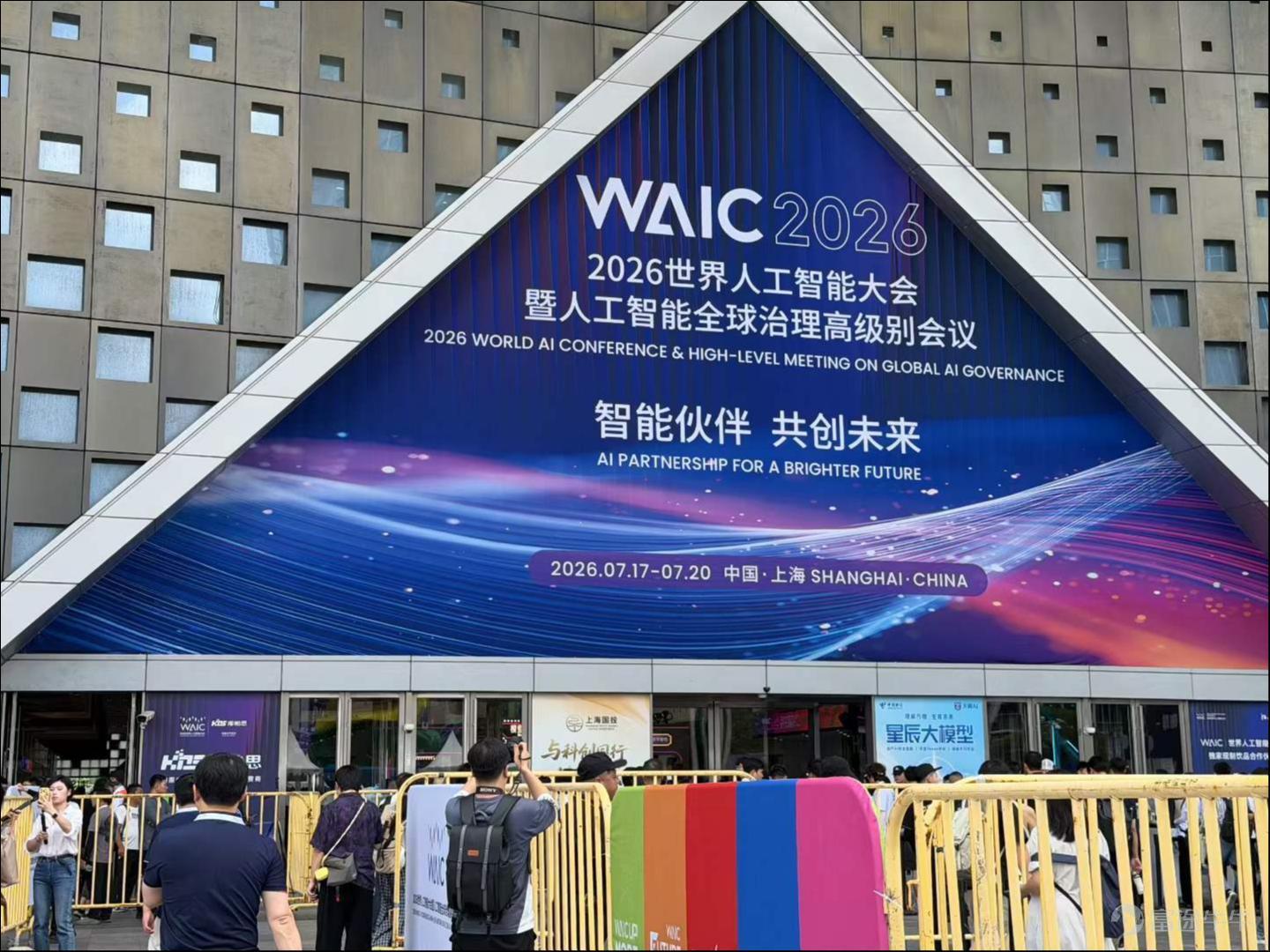
That was our most immediate impression after exploring the first day of the 2026 World Artificial Intelligence Conference (WAIC).
This annual event is China's premier gathering in the AI field—without equal. In both scale and stature, this year’s conference has reached new heights: co-organized by 12 national ministries and commissions, 8 national key laboratories, and over ten international organizations; featuring nine Turing Award and Nobel laureates; spanning four venues across Expo, Zhangjiang, and West Bund; covering a total exhibition area of 1 million square meters; and showcasing more than 300 global product launches, spanning domestic computing power, homegrown large models, industry-specific AI agents, embodied intelligence, robotics, and consumer-grade AI devices.
We toured the entire exhibition right away and bring you fresh insights from day one.
This year’s exhibition clearly conveyed one overarching theme: AI has truly evolved from being able to chat to being able to get real work done. Whether it’s major internet companies rolling out full-stack solutions from computing infrastructure to applications, breakthroughs by large model developers and robotics firms, or showcases by leading enterprise clients, everyone emphasized embedding technology into real-world production and daily life. Today, AI technological innovation is experiencing collective breakthroughs, and AI industrial innovation has entered an unprecedentedly vibrant phase.
The Expo Center exhibition area is divided into four halls—H1, H2, H3, and H4—dedicated respectively to applications, computing power, robotics and embodied intelligence, and AI startup projects. This zone gathersHuawei, Alibaba, Tencent, Baidu, JD.comand other tech giants,MiniMax, StepFun, Moonshot AI, SenseTime, iFlytek, 01.aiand other large model developers, Moore Threads, Enflame Technology, Tianshu Zhixin, Kunlunxinand other leading domestic chip companies,Unitree, Agibot, Galaxy General, Ant Lingbo, Fourier Intelligence, ZhiJi Dynamics, Songyan Dynamics, Geekplus-Wand other leaders in the embodied intelligence industry chain. Notably, over 200 exhibitors each showcased computing infrastructure and robotics at this year’s conference—combined, they accounted for more than one-third of all exhibitors.
Whether or not you attended this year’s WAIC, we hope to provide you with this exhibition guide. It may not be the most comprehensive in terms of information, but it will certainly highlight the key takeaways for you.
Tech giants such as Huawei, Alibaba, Tencent, Baidu, and JD.com still occupied the largest and most content-rich exhibition areas. From foundational computing power and infrastructure to models and application ecosystems, they have built comprehensive full-stack AI strategies.
Alibaba CloudTheir exhibits covered end-to-end capabilities including the Zhenwu chip, Panjiu server, and Qwen Cloud. Their Bailian model service platform has already served 5 million users. The Qwen large model series introduced a 'Peak-Valley Token' pricing model, offering tokens at up to an 80% discount between 10 p.m. and 8 a.m. the following day. DAMO Academy launched the 'DAMO LingShu' AI research agent platform.

AI agent applications were among the hottest segments at this year’s conference and formed the main highlight of Tencent’s booth. Themed 'Hey, My AI Buddy,'Tencentthe focus centered on entry points and applications for intelligent agents, featuring recent star productsWorkbuddy,toQclaw and Ima for individual users, as well as the HunYuan HY3 large model,were all on display. Tencent also showcasedits Marvis AI assistant,positioned as an operating system-level personal assistant.

BaiduAt the heart of the booth was the general-purpose intelligent agent, recognized as a 'star exhibit of the venue,'Baidu DuMate.Its personal version added smart routing, cross-device shared memory, and PPT generation capabilities, and launched a professional content creator suite. The enterprise version enables knowledge, skills, and outcomes to be shared and accumulated within organizations. The no-code development platform Miaoda has served over 35 million users to date.Kunlun ChipThe focus was on showcasing technical achievements such as high-performance interconnectivity and ultra-large-scale cluster deployment. Its 32/64-GPU supernode is among China’s first supernode products to achieve mass production and delivery, featuring a proprietary architecture scalable up to 512 GPUs; the Kunlunxin 256 supernode supports up to 256 interconnected GPUs, with the company claiming a 50% improvement in inference efficiency.


JD.com, under the theme 'AI Entering the Physical World,' demonstrated large-scale applications across retail, logistics, healthcare, and industrial sectors. In the 'AI Home' created by JoyInside, the Jingzao AI projection desk lamp can scan questions multimodally and provide answers, while the smart sleep mattress records physiological sleep indicators and generates reports. JD’s logistics 'Wolf Pack' robot fleet leverages the 'SuperBrain' large model 2.0. AI doctors 'David' and 'JD Zhiyi' made appearances, alongside an AI procurement manager for industrial applications. In the embodied intelligence zone, JD also showcased the JoyEgoCam wearable data capture device.

DingTalkfocuses on enterprise AI applications, featuring core demonstrations"AI Spreadsheet"(build applications with zero coding and support million-row datasets with sub-second response times) and"AI Meeting Notes"(supports speech recognition in 118 languages and real-time translation in 79 languages, with AI automatically generating meeting summaries and action items). On the hardware side, it showcases a full-scenario AI hardware ecosystem including pocket voice recorders, conference headsets, all-in-one video conferencing systems, and facial recognition time-attendance and access control devices.

A key takeaway this year is that high-performance computing companies are no longer satisfied with displaying individual chips; competition has moved toward system-level integration and cluster deployment. Halls H2 at Expo and Zhangjiang Science Hall have become central venues for showcasing domestic computing power.
Huaweimaking its public debutthe industry's largest-scale "Ascend 950 Super Node" (Atlas 950 SuperPoD),which leverages the Lingqu interconnect protocol to support clusters of up to 1,024 AI accelerator cards, delivering a total compute capacity of 1 EFLOPS (FP8), equipped with 256TB of globally unified memory addressing and terabyte-level interconnect bandwidth, and achieving a round-trip latency of just 3 microseconds; also on display is the Atlas 850E air-cooled super node, supporting 96-card configurations and deployable in conventional air-cooled data centers.

Enflame TechnologyIntroduced its self-developed AI chips and hyper-node systems, highlighting those jointly developed with ZTEincluding the ESL64-O hyper-node with orthogonal architecture and the Cable-tray hyper-node solution. The former leverages an orthogonal architecture to achieve 'zero-cable' connectivity between compute and switch nodes, enabling deployment of 64 accelerator cards per rack and horizontal scaling up to a 16,000-card cluster.

Moore ThreadsOn-site demonstrations featured the“Kuae” intelligent computing cluster solution supporting ten-thousand-card-scale deployments,alongside the MoE-236B foundation model trained from scratch, the 5D world model “EvoPhys-World” supporting Peking University, and inference solutions based on the MTT S5000 AI computing card, as well as the home AI hub MTT AICUBE and the developer-focused AI laptop MTT AIBOOK.

Sugonthe Dawning8000 scaleX all-domestic AI hyper-converged cluster with a capacity of 100,000 cardswas selected as a “Museum Highlight.” This cluster follows a hyper-intelligent convergence approach, supports full-precision computation from FP64 to INT8, achieves 20x higher computational density per unit compared to other hyper-nodes, and—paired with its proprietary scaleFabric high-speed interconnect technology—has already been integrated into China’s nationwide unified computing power network, completing optimizations for over 300 applications.

ZTE CorporationThe core showcase featuredAI factory plus AIOS, with a single rack supporting up to 128 GPUs, and hyper-nodes scalable to a 16,000-GPU scale; delivery cycles are claimed to be shortened to 3–6 months. The AIDC solution adopts a 4T co-design approach, with a claimed PUE of under 1.15, and delivery of a 20MW campus compressed to 4.5 months. AIOS was officially launched on-site, along with Co-Claw—an enterprise intelligent agent platform targeting industries such as manufacturing and power. Additionally, there is a humanoid robotics portfolio covering both lightweight bionic and heavy-duty bipedal wheeled models. ZTE also separately showcasedthe OEX hyper-node,which uses domestically developed CPUs, AI chips, and switching chips, supporting flexible networking.

In a corner of the Expo Mart,Houmo Intelligencedrew considerable attention at its booth. What was on display wasn’t a traditional server cluster, but a series of handheld terminal devices—Lenovo AI PCs, holographic personal interaction devices, and AI NAS units—all powered by Houmo Intelligence’s Manjie® M50 computing-in-memory chip. The chip’s specs were clearly listed on the display board: 160 TOPS@INT8 and 100 TFLOPS@bFP16 physical compute performance, up to 48GB of memory, 153.6GB/s bandwidth, and a typical power consumption of just 10W. According to Houmo Intelligence, the M50 can run large language models with 30B to 120B parameters offline.
We seem to be witnessing a rising emphasis on IP foundations within China’s domestic chip ecosystem. In the past, the industry focused on comparing peak compute performance, process node, power consumption, and memory bandwidth of individual chips. Now, the real question is whether chips from different vendors can work together under a unified underlying architecture—progressing from IP design to tape-out, from accelerator cards to servers, and ultimately from servers to hyper-nodes and clusters.
From terminals down to chips, and further down to cluster systems—when individual chips approach physical limits, how can compute scale continue to expand?Biren Technology offers optical interconnects as its answer—itsofficially launchednext-generation NPO optical interconnect and distributed decoupled architecture hyper-node solution, supporting scale-up expansion to 1,024 GPUs within a single hyper-node; in this solution, GPU nodes and switch nodes are physically separated and interconnected via optical fiber, with GPU nodes adopting a standard rack-mounted form factor.
The underlying industry logic is very clear. Optical interconnect leverages photon-based transmission, which is faster than electron-based transmission and generates no heat or power consumption, making it inherently well-suited for large-scale, high-speed data transfer.
We also observed thatJiuzhang Yunjilaunched“DCU Unit-based Computing Power Metering System”, which categorizes tokens into consumer-grade, professional-grade, and frontier-grade tiers, and showcased on-site a global computing power scale of 22 EFLOPS along with a “Computing Power Panorama Cockpit” display wall;Qingcheng Jizhi, in collaboration with domestic computing power partners including Hygon, Huawei, MetaX, Enflame, and Taichu, has built an immersive “storefront-and-factory” token experience space.The event also unveiled the ATM (Agent Token Manager) tool to help users manage token consumption across multiple platforms.
It is worth noting that amid this year's surge in demand for mechanical hard drives,leading storage manufacturers such as Western Digital and Seagate also made appearances at this year's WAIC.Western Digital showcased high-bandwidth hard drive technology, dual-pivot hard drive technology, as well as HAMR, ePMR, and UltraSMR technologies, and introduced the Ultrastar Data3000 series JBOD.
A group of independent large-model companies also presented their latest advancements.
MiniMax prominently featured its flagship model MiniMax M3 (with 428 billion total parameters and 23 billion activated parameters, supporting up to 1 million tokens of context),which leverages its proprietary MSA sparse attention architecture to achieve further improvements in long-context processing, coding, and agentic tasks. Additionally,its next-generation multimodal generative model H3 was teased during WAIC, designed for multimodal contexts combining text, images, video, and audio.

Shengshu TechnologyThree core products were showcased: Vidu, a world-generation model for the digital realm; Vidu S1, a real-time interactive model that enables users to create personalized interactive avatars from a single image, supporting real-time video calls and voice control; and Motubrain, a world-action model targeting the physical world.
Embodied intelligence and robotics remain a focal point this year. Coverage spans the entire industrial chain—from embodied models and full robots to dexterous hands and core components. Unlike previous years, robot movements are now more precise, multi-robot collaboration is more flexible, and—most importantly—they are beginning to enter real-world scenarios.
AgiBotA crowd gathered in front of the booth. The Yuanzheng A3 Ultra was placed beside a simulated production line. This full-size humanoid robot, standing 174 centimeters tall, is equipped with a 700 TOPS embodied processor, LiDAR, and fisheye cameras on multiple body parts, along with a standard high-degree-of-freedom dexterous hand. Booth staff explained that the A3 Ultra has a very clear positioning: it’s not for show—it’s a full-size commercial robot ready for deployment in exhibition halls, hotels, retail stores, and factories.
Compared to demos that occasionally succeed once, commercial robots require long-duration operation, rapid deployment, on-site maintenance, and safe human takeover. The Ling G2 Max, showcased at the same event, has already delivered over 300 units and is performing sorting and assembly tasks on factory production lines.

Unitree Robotics’ booth presented a different style. The GD01, the world's first manned transformable mech, occupied the most prominent spot. Its seamless switching between humanoid and quadrupedal locomotion modes delivered strong visual impact, making it the absolute center of attention at the venue. This kind of 'showmanship' itself serves as a product definition: if robots can evolve from tools into personal mobility devices, their market potential will no longer be confined to factories.
The robotic smart pharmacy lacks the visual drama of humanoid robots but may be one of the most commercially viable embodied intelligence products at this year’s WAIC.Ant Lingbo’s Full-Stack Brain 2.0, which adopts an 'embodied-native' approach with pretraining from the ground up for the physical world; LingBot-VA 2.0 reportedly achieves 150Hz real-time inference on consumer-grade GPUs.LingBot-VA 2.0achieves the industry’s first hour-long continuous generation, trained on 60,000 hours of real robot data.


Force InspirationIt demonstrates the feasibility of 'real work' in another way: six robots collaborated to assemble a Great Wall model made of 81,920 miniature building blocks, operating continuously for 15 hours with precision maintained between 0.1 and 1 millimeter. This system is powered by the DM0.5 embodied general foundation model. Stability during prolonged continuous operation is precisely the metric industrial clients value most.
Beyond complete robotic systems, deeper changes at this year's WAIC are occurring in the 'brain' and 'hand' components.
DAMO Academy unveiled the RynnBrain series of models(the industry's first 30B-parameter MoE-architecture embodied model, setting new SOTA records across 16 benchmarks), along withthe 'Leyun' Embodied Intelligence Education Platform(deployable on edge devices without GPUs, already implemented in 18 universities worldwide). Its technical approach follows a 'general-specialized integration, layered architecture' design: embodied understanding is handled by RynnAgent, while embodied manipulation is managed by the RynnVLA series. DAMO Academy also open-sourced RynnRCP, the industry's first robot context protocol.
Dexterous hands represent another fiercely competitive niche segment.Lingxin QiaoshouOn display were thedirect-drive dexterous hand Linker Hand O30 series, developed specifically for complex dexterous manipulation tasks, and the new Linker Hand L30 Pro tendon-driven dexterous hand. Tipping pointOmniHand 3 Ultra-M, a fully direct-drive dexterous hand, made its domestic debut, integrating 20 active degrees of freedom and featuring vision-tactile sensors at the fingertips, with over 300 three-dimensional tactile sensing points across the entire hand.Other Mountain TechnologyThe exhibition showcased a complete tactile perception ecosystem spanning chips, sensors, and application solutions, centered on the Emerald E10A chip—the world's first dynamic tactile perception chip, according to the company. It achieves microsecond-level temporal resolution and a standby current of 0.9μA. The company claims it holds over 80% market share in the humanoid robot tactile perception segment.

Advancements in these components indicate that competition in embodied intelligence is shifting from the whole-system level down to core components. When robots need to perform more delicate tasks, tactile feedback from fingers, force control precision at joints, and real-time responsiveness of chips often determine the depth of commercial deployment more than the overall physical design.
In the same pavilion, new products were also being launched and displayed.Shi ZhihangIt unveiled AWE 3.5, its next-generation embodied intelligence native foundation model, and brought a full-scale 1:1 replica of an automotive assembly plant’s circular wiring harness production line to the venue, where A1 robots demonstrated processes such as 'wire picking, routing, and plug-in.'
Qianxun IntelligenceIt also presented for the first time a real-robot demonstration of long-horizon composite tasks: the Moz1 robot, powered by its self-developed Spirit v1.6, can complete tasks like living room tidying and desktop organization based on a single natural language instruction.
Pudu RoboticsIts humanoid robot PUDU D7 also made its debut, showcasing on-site the synergy among the PuduFM embodied foundation model, the PuduAgent OS intelligent operating system, and multi-form robot hardware.

The on-device AI terminal exhibition area was equally bustling, emphasizing the delivery of low-latency, high-privacy intelligent services directly on local devices.
If the embodied intelligence showcased in Hall H3 answers the question of whether AI can perform tasks, then the on-device AI and industrial intelligence systems exhibited in Halls H1 and H2 address another: Can AI become the system itself? Judging from the exhibits on-site, this transformation is already underway. Whether in consumer electronics or industrial settings, AI is no longer content to serve as an add-on feature within specific applications—it is now reconstructing operating systems, reshaping business workflows, and even redefining the fundamental logic of human-computer interaction.
StepFunAt the booth, the STEPX Neo AI agent smartphone was placed in the most prominent position. Rather than running conventional AI applications, this device features Step AOS—the world’s first agent-native operating system. In live demonstrations, users simply described their travel needs in natural language, and the system automatically coordinated with Ctrip to plan flights and hotels, avoided scheduling conflicts, and invoked Alipay to complete subsequent actions via information cards.

This signifies a fundamental shift in human-computer interaction: from users operating apps to users expressing intent, with the system autonomously orchestrating execution. Yannick Yin, CEO of StepFun, previously stated that traditional systems aim to maximize user engagement time, whereas agent-native systems are designed precisely to minimize users’ cognitive load.
Echoing StepFun’s system-level rearchitecture, the AI glasses segment is vying to become the 'second screen' after smartphones.iFLYTEKIts AI glasses weigh just 40 grams, making them the world’s lightest binocular monochrome-display multimodal smart glasses. They pioneer a lip-motion-based multimodal noise-reduction solution and support real-time interpretation, meeting transcription, and multimodal recognition tasks. Also on display were iFLYTEK’s simultaneous interpretation devices, translation machines, translation earbuds, and multilingual AI transparent displays.

Qwen (Alibaba's AI model)The S1 series, by contrast, takes a different approach: integrating dual-display spatial 3D visuals with first-person perspective recording. Key selling points include hot-swappable battery technology, 4,000-nit brightness displays, and Super RAW low-light enhanced imaging. On the AI front, it runs a customized closed-source Qwen model and integrates Alibaba’s ecosystem—enabling features like glance-to-pay and near-eye navigation.
The strategic divergence between the two companies is clear: iFLYTEK aims to deploy AI across vertical scenarios such as office productivity, education, and healthcare, positioning AI as an efficiency tool for specific tasks; Alibaba, meanwhile, seeks to bring its existing e-commerce, payment, and local services ecosystem directly into users’ field of view, turning AI glasses into an ecosystem gateway.
Moreover, Rokid’s YodaOS and Mobvoi’s CodeBanana operating system further illustrate that competition in on-device AI has expanded beyond hardware specifications into the system layer—whoever can respond within 0.2 seconds and enable seamless multi-agent collaboration will gain a decisive edge in the next wave of device disruption.

If changes on the device side represent a reconstruction of interaction, then transformations on the industrial side resemble a fundamental overhaul of workflows.
Tianwu TechnologyAt the booth, an automated laboratory device was connected to a conversational interface, showcasing the 'MatwingsVenus™' conversational AI agent for protein design. Researchers can use natural language to perform tasks such as protein structure prediction, property evaluation, functional design, and engineering. This new R&D paradigm compresses what traditionally took months—and heavily relied on expert experience—into quantifiable agent-driven workflows.
In more traditional industrial sectors, similar transformations are also underway. China Southern Power Grid exhibited its 'Da Wate Yunrui' distribution network planning AI agent, which assists power engineers with grid topology analysis, load forecasting, and planning solution generation.HollySysIts XMagital 2.0 system uses the XWorld industrial world model as its cognitive engine, building a three-layer progressive architecture that spans from an industrial data foundation to autonomous industrial operations.
Together, these two companies’ exhibits illustrate that industrial AI is evolving from decision support toward autonomous operation—enabling systems themselves to understand, reason, and execute actions in closed-loop workflows.
In the commercial domain, this transformation is reflected in billing models.Baixing Intelligence(OntoZ) focuses on cross-border B2B markets and showcased its ontology-driven industrial AI Agent implementation solution. Its differentiation lies in proprietary Markov blanket and causal world model algorithms, which enable swarm agents to deliver controllable outcomes over long-horizon tasks and self-evolve alongside business needs. Using a Results-as-a-Service (RaaS) outcome-based billing model, it helped an air purification equipment manufacturer achieve new-market orders growing from zero to tens of millions of RMB within three months.

Digital Chinaexhibitedthe enterprise-grade Agent Workspace platform Shenzhou Wenxue. In the pharmaceutical sector, it claims to reduce target screening cycles by 40%; in the automotive sector, its marketing and service agents cover everything from customer acquisition to fault diagnosis. The underlying infrastructure is powered by Shenzhou Kuntai AI servers, Muxi intelligent switches, the HICA inference operating system, and the HISO heterogeneous management platform.
In a corner of Hall H1,Dancing with LoveMaking its debut at WAIC, it has set up the AiXue AI Learning Lab—offering yet another perspective. Core experiences include the AiXue AI Learning Agent, the 'ZhiYin Platform'—an open platform for teachers to generate personalized AI avatars in minutes—the AiXue AI voiceprint noise reduction feature, and the AiXue AI cultural experience zone that uses digital human technology to reconstruct Confucius and restore ancient texts.
This presents an intriguing contrast to the aforementioned industrial applications: while industry pursues autonomous operation and outcome-based payment models, AI in education is still exploring the boundaries of human-AI collaboration. Teacher AI avatars are not meant to replace educators but rather to offload repetitive teaching tasks, freeing humans to focus on more creative interactions. Meanwhile, using digital humans to reconstruct Confucius and restore ancient texts applies technology to the nuanced details of cultural heritage preservation.
In short, this year’s WAIC sent a clear signal: AI is no longer lofty or abstract—it has truly entered reality. From domestic AI computing clusters and industry-specific agents to humanoid robots and on-device AI terminals, every product on display sought to answer one question: the true power of AI lies in the tangible value it creates for the real world.
In the past, everyone competed on model parameters; this year, the race is about who can solve real problems. AI has evolved from merely conversing and demonstrating capabilities to actually boosting enterprise efficiency and assisting employees in their work. Embodied intelligence has stepped out of the lab and begun operating in factories, pharmacies, and warehouses. Intelligent agents are no longer just chatbots—they can now break down tasks, invoke tools, and deliver results.
Thousands of exhibiting companies showcased both hard-core breakthroughs in domestic chips and deep integrations of AI into healthcare, energy, and manufacturing. From chip clusters and humanoid robots to vertical-specific assistants and biotech R&D, AI is permeating reality at every level.
(Authors: Yang **ai, Tao Tianyu, Zhang Shenyu, Qian Yujuan, Hu Jiameng, Guo Hongyun; Editor: Yang Lin)
Risk Disclaimer: The above content only represents the author's view. It does not represent any position or investment advice of Futu. Futu makes no representation or warranty.Read more


Comments
to post a comment
5
3