

Singo International aims for Beijing Stock Exchange debut as the 'first professional audio stock': Over 80% of revenue comes from overseas, raising questions over distributor income
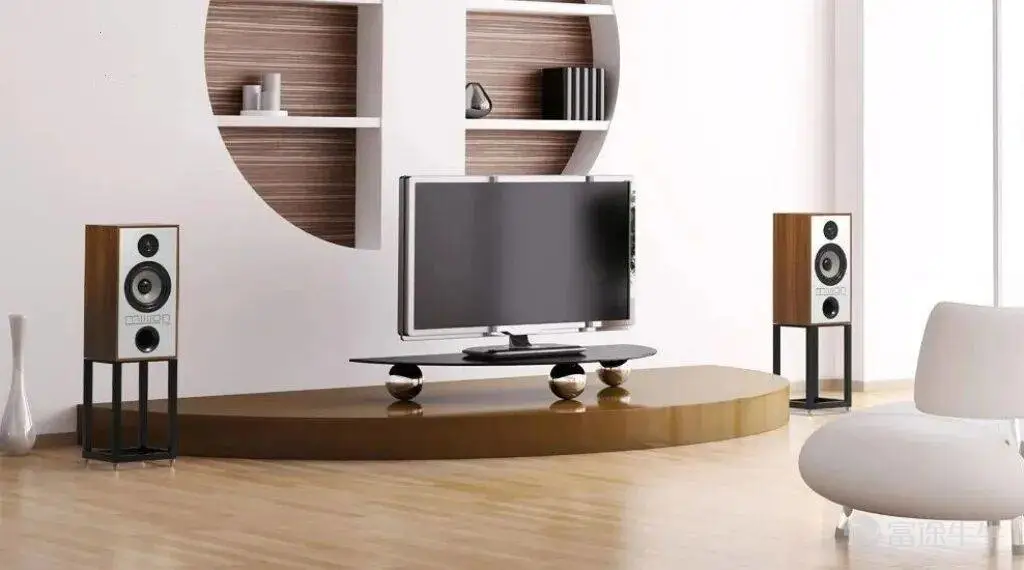
Produced by | Frontline of Entrepreneurship
Author | Xibo
Editor | Wang Yajing
Visual editor | Xing Jing
Reviewed by | Song Wen
Whether in offline entertainment venues such as cinemas, concert halls, and cultural tourism facilities, or in home theater setups, audio systems serve as the critical infrastructure for sound delivery.
The vast and diverse demand for audio quality has attracted numerous companies to enter the audio equipment industry, with several even seeking listings on capital markets. Among them, Sino International Audiovisual Co., Ltd. (hereinafter referred to as 'Sino International') recently filed its registration application with the Beijing Stock Exchange.
In recent years, Sino International has seen steady growth in both revenue and net profit. However, it faces significant risks, including over 80% of its revenue relying on overseas sales and a heavy dependence on distributors—issues that have prompted repeated inquiries from regulators regarding the authenticity of its distributor-related income.
Meanwhile, Sino International’s ownership structure is highly concentrated, and the company has drawn market attention for simultaneously implementing continuous cash dividends while pursuing IPO fundraising.
1. The Zhang family holds 100% ownership; working capital supplementation project dropped before listing review
Sino International’s product portfolio includes speakers, amplifiers, media players, and decoders, categorized into high-fidelity (Hi-Fi) audio systems and professional audio systems.
Reportedly, Hi-Fi audio systems offer high sound fidelity and cater to audiophiles, making them suitable for home theater applications; professional audio systems deliver high output power and excellent stability, serving public venues such as cinemas and cultural tourism sites.
Sino International primarily operates through global branded distribution, supplemented by agency and original design manufacturing (ODM) businesses. Its Hi-Fi products target markets in Europe, the United States, Japan, and South Korea, while its professional audio systems are sold globally.
The company currently owns numerous internationally renowned high-fidelity audio brands originally established in the UK and Japan—including Wharfedale, Luxman, Audiolab, QUAD, and Mission—as well as professional audio brands such as Wharfedale Pro.
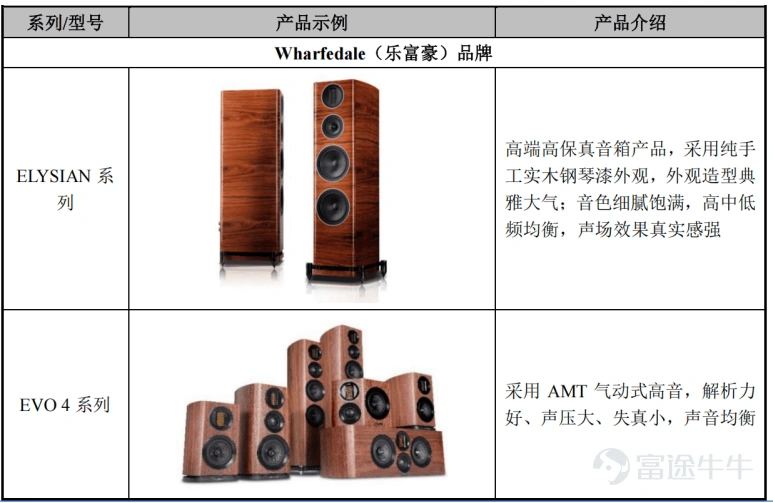
(Image / Sino International IPO prospectus)
Singer International's history dates back to Hong Kong-based Singer, which entered the Chinese mainland market in 1988. At that time, brothers Zhang Taiwu and Zhang Guangwu entered the mainland market as agents for audio equipment, stage lighting, and musical instrument brands, quickly establishing a nationwide distribution network.
In 1991, Singer Limited, the predecessor of Singer International, was established in Shenzhen with a registered capital of USD 500,000. In 2001, Singer Limited increased its registered capital, with International Audio Group contributing additional funds in cash.
In November 2002, Sanecore Limited transferred its 12.50% equity interest in Singer Limited (equivalent to USD 500,000 of registered capital) to International Audio Group, bringing International Audio Group’s ownership stake to 100%.

(Image / Singer International announcement)
Subsequently, Singer Limited underwent multiple rounds of capital increases and equity transfers, and in 2021, it was restructured into a joint-stock limited company.
As of the date of signing the prospectus, International Audio Group holds 79.53% of the company’s shares, making it the controlling shareholder of Singer International. The actual controllers are brothers Zhang Taiwu and Zhang Guangwu, who collectively control 93% of the shares through International Audio Group, Hongzhou Technology, and Hongyan Technology.
Meanwhile, Zhang Yingru, sister of Zhang Taiwu and Zhang Guangwu, holds 5% of Singer International’s shares through Ampton; Dingfeng Trading holds 2% of the company’s shares, and its managing partner, Peng Qiuxia, has a daughter with Zhang Taiwu. The company’s prospectus filed with the NEEQ explicitly states that Peng Qiuxia and Zhang Taiwu are in a de facto marital relationship but are not legally married.
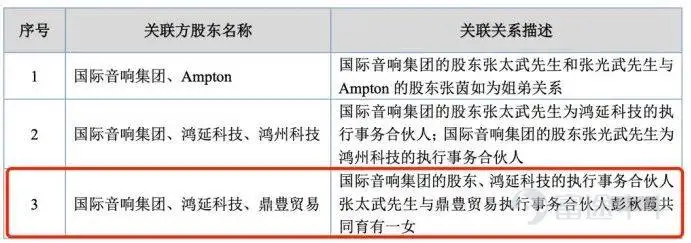
(Image / Singer International prospectus)
Ampton and Dingfeng Trading have entered into a concert party agreement with the controlling shareholder and actual controllers. As a result, the Zhang family collectively controls 100% of Singer International’s equity.
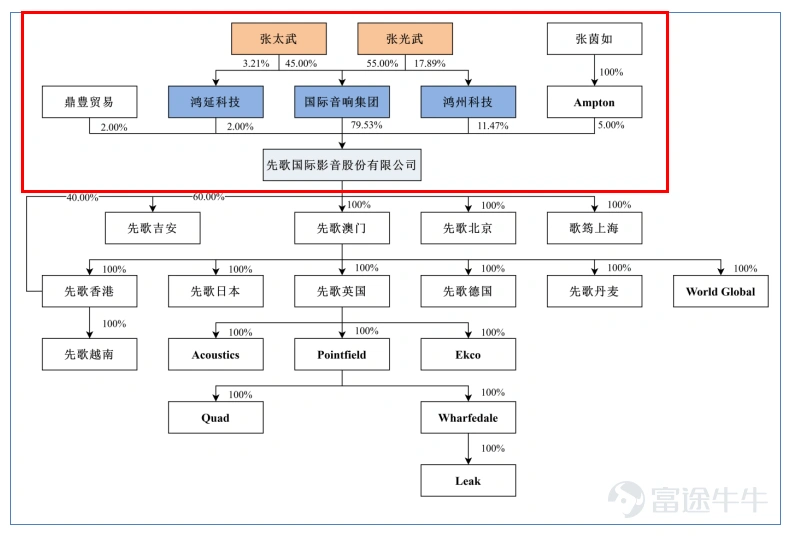
(Image / Singer International prospectus)
However, Xian Ge International has not identified Zhang Yinru and Peng Qiuxia as joint actual controllers or parties acting in concert with the actual controller. Based on this, the Beijing Stock Exchange requested the company to explain the reasons and rationale for this determination, and whether it is attempting to circumvent regulatory requirements regarding competition from affiliates and related-party transactions.
In response, Xian Ge International explained that Zhang Yinru and Peng Qiuxia do not participate in the company's day-to-day operations, hold relatively small equity stakes, and exert no material influence over shareholder decisions, thereby ruling out any attempt to circumvent regulations on competition from affiliates or related-party transactions.
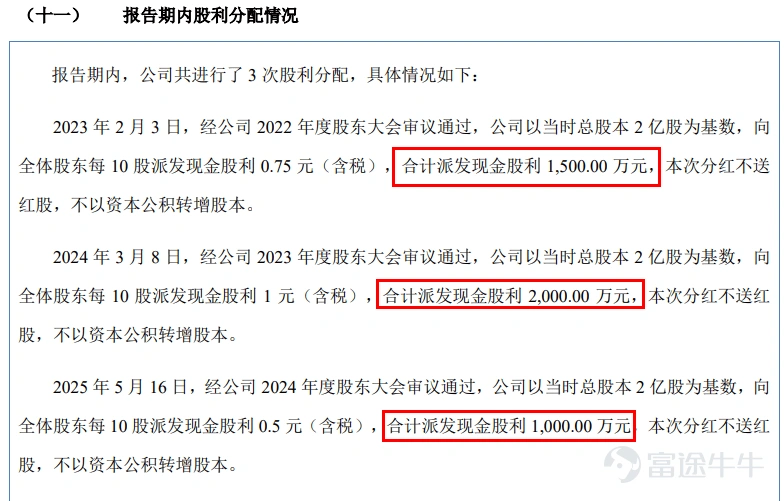
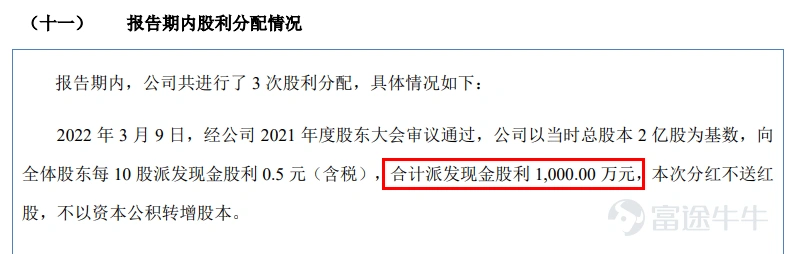
Under a highly concentrated ownership structure, Xian Ge International carried out multiple dividend distributions prior to its IPO.
According to the prospectus, between 2022 and 2025, Xian Ge International declared four cash dividends totaling RMB 55 million—specifically RMB 10 million, RMB 15 million, RMB 20 million, and RMB 10 million respectively. Based on the controlling shareholder family’s ownership percentage, virtually all of these dividends flowed directly to members of the Zhang family.
(Chart / Xian Ge International Prospectus)
Following these consecutive dividend payouts, when Xian Ge International first filed its prospectus, it simultaneously announced plans to raise RMB 35 million to supplement working capital.
The Beijing Stock Exchange questioned the destination of Xian Ge International’s cash dividends and asked the company to justify the calculation basis and reasonableness of its proposed fundraising for working capital, taking into account its cash position and dividend history.
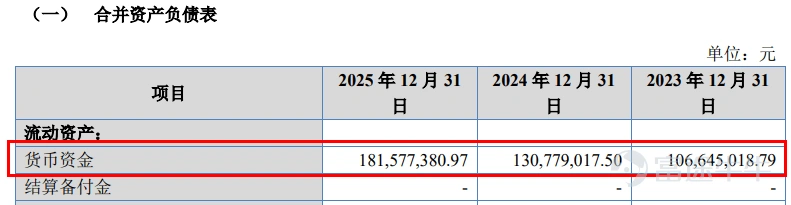
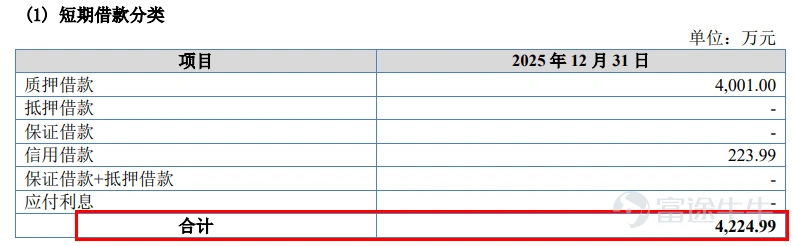
In fact, the company still maintains a relatively strong cash position. As of the end of 2025, Xian Ge International held RMB 182 million in cash and cash equivalents, with short-term borrowings of RMB 42.25 million, leaving ample room for operational liquidity.
(Chart / Xian Ge International Prospectus)
Faced with regulatory inquiries and market concerns, Xian Ge International proactively reduced its fundraising target before its listing hearing. In the updated filing submitted for the hearing, the company removed the working capital component entirely, cutting the total proposed fundraising amount to RMB 248 million.
2. Over 80% of revenue comes from overseas sales, raising questions about the authenticity of distributor revenue
Thanks to its product portfolio—including speakers, amplifiers, players, and decoders—Singor International has seen steady growth in its financial performance.
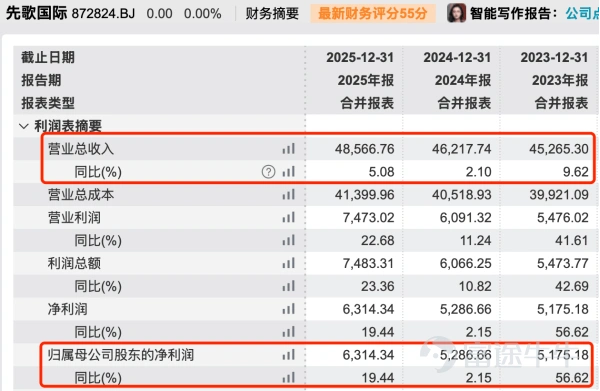
From 2023 to 2025 (hereinafter referred to as the 'Reporting Period'), Singor International reported revenues of RMB 453 million, RMB 462 million, and RMB 486 million, representing year-over-year growth of 9.62%, 2.10%, and 5.08%, respectively. Net profit attributable to shareholders amounted to RMB 51.75 million, RMB 52.87 million, and RMB 63.14 million, with year-over-year increases of 56.62%, 2.15%, and 19.44%, respectively.
(Image / Wind (unit: 10,000 yuan))
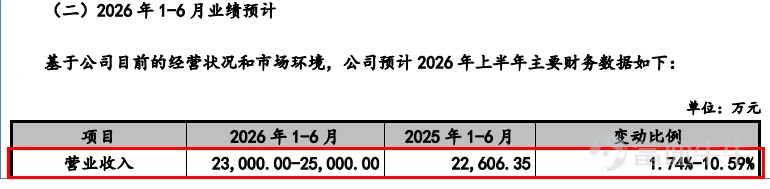
For the first half of 2026, Singor International expects revenue of between RMB 230 million and RMB 250 million, reflecting year-over-year growth of 1.74% to 10.59%. Net profit attributable to shareholders is projected to range from RMB 27 million to RMB 30 million, an increase of 6.11% to 17.90% year-over-year.

(Figure / Singor International IPO prospectus)
Judging from these figures, Singor International’s performance has continued to grow, albeit with unstable and notably fluctuating growth rates.
In its operations, Singor International is heavily reliant on overseas markets.
It is understood that Singor International’s high-fidelity products are primarily sold in developed countries and regions such as Europe, the United States, Japan, and South Korea, while its professional audio products are distributed globally across Europe, the Americas, Asia, and Africa.
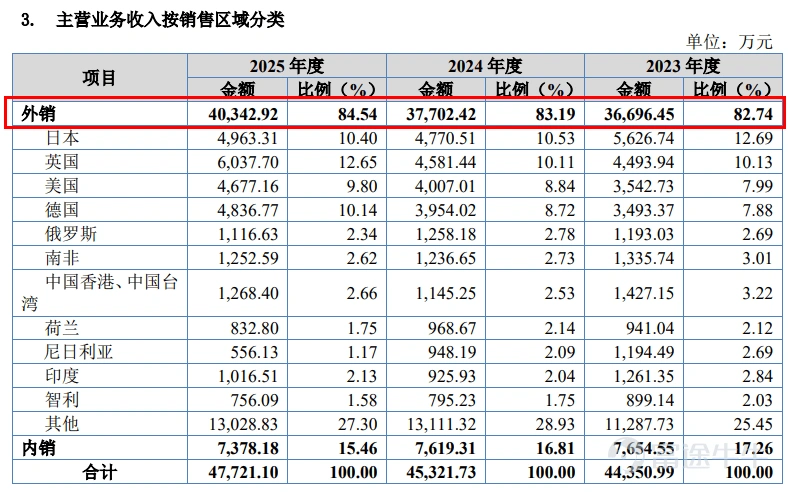
During the Reporting Period, Singor International generated overseas sales revenue of RMB 367 million, RMB 377 million, and RMB 403 million, accounting for 82.74%, 83.19%, and 84.54% of its total operating revenue, respectively—demonstrating a strong dependence on international markets.
(Figure / Singor International IPO prospectus)
In sales, SAE International primarily relies on distributors and has limited direct contact with end consumers.
SAE International stated that the company sells to global markets and that its self-built sales channels can reach only a limited number of end users. Under the distributor model, however, it can cover a broader base of end users, supporting product development and brand operations.
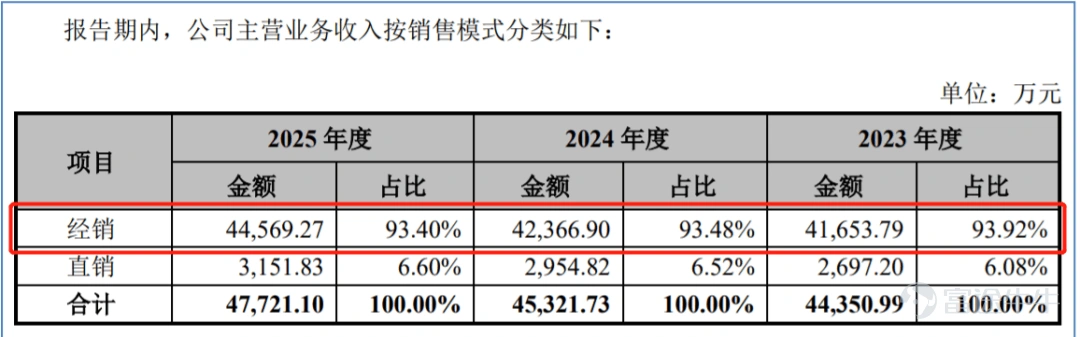
Currently, SAE International works with over 1,000 distributors. Sales revenue under the distributor model during the reporting periods amounted to RMB 417 million, RMB 424 million, and RMB 446 million, respectively, accounting for more than 90% of its total core business revenue.
(Figure / SAE International IPO prospectus)
However, SAE International’s heavy reliance on overseas markets and its strong dependence on distributors make it relatively difficult to conduct end-customer verification, collect supporting documentation, and perform on-site visits. Consequently, the Beijing Stock Exchange specifically highlighted concerns regarding the authenticity of SAE International’s distributor-related revenue in its inquiry letter.
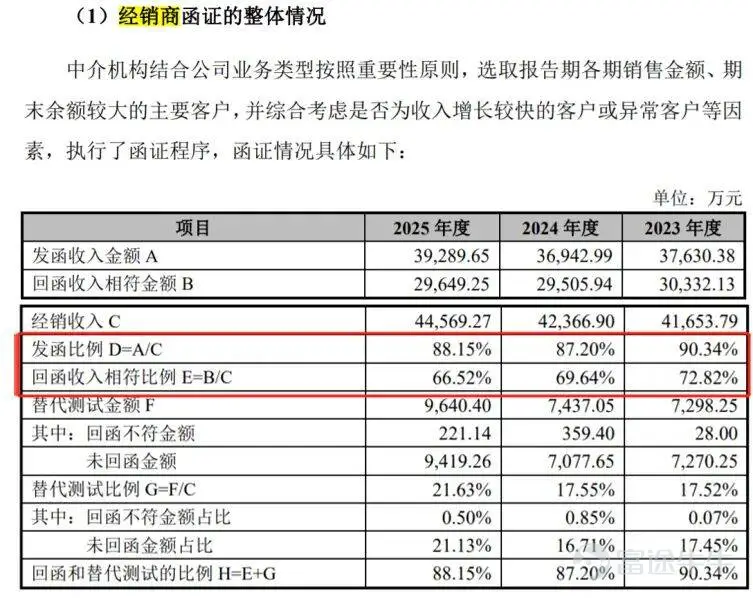
According to the company’s response to the inquiry letter, from 2023 to 2025, intermediaries sent confirmation requests covering 90.34%, 87.20%, and 88.15% of SAE International’s overseas revenue, respectively, with corresponding response rates of 72.82%, 69.64%, and 66.52%.
(Figure / SAE International’s response to the inquiry letter)
The data shows that Zheshang Securities consistently maintained a high confirmation request rate for SAE International’s overseas customers, but the effective response rate continued to decline—by 2025, more than 30% of overseas customers had not responded.
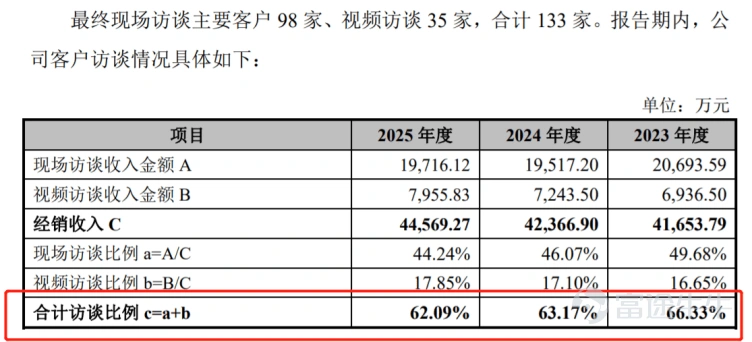
Meanwhile, Zheshang Securities selected customers with significant sales volumes, rapidly growing revenue, or unusual distributor activity for interviews, ultimately conducting on-site interviews with 98 customers and video interviews with 35, totaling 133. During the reporting periods, the combined interview coverage (on-site and video) stood at only 66.33%, 63.17%, and 62.09%, respectively.
(Figure / SAE International’s response to the inquiry letter)
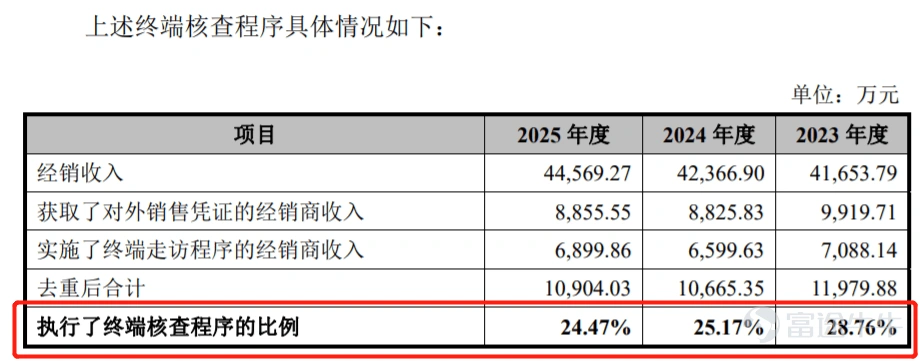
During customer visits, Zheshang Securities also conducted on-site visits to representative downstream customers of major distributors or key end-use projects. The coverage rates of these end-customer verification procedures were 28.76%, 25.17%, and 24.47%, respectively.
(Figure / Simgo International's response to inquiry letter)
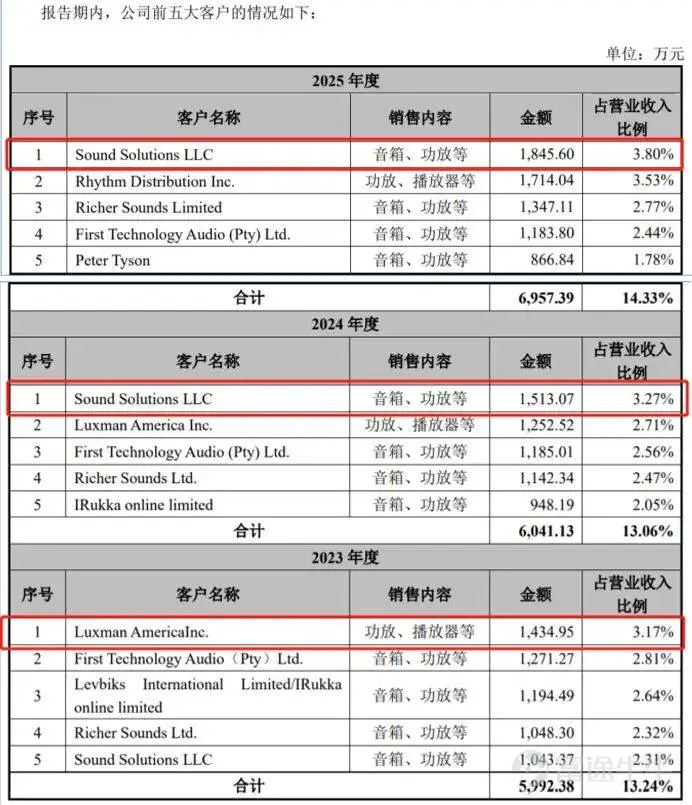
Notably, according to the response to the inquiry letter, some major distributors declined in-person interviews and instead participated in video interviews due to relatively small sales amounts and factors such as geopolitical conditions and visa processing issues.
However, among Simgo International's customers that declined on-site interviews, Sound Solutions, LLC was the company’s largest customer in both 2024 and 2025, with sales amounts of RMB 10.4337 million, RMB 15.1307 million, and RMB 18.4560 million during each respective reporting period.
(Figure / Simgo International's prospectus)
For IPO candidates, ensuring the authenticity of financial performance is paramount. Against the backdrop of persistently declining coverage rates across the three core verification procedures—written confirmations, on-site visits, and end-customer checks—the overall authenticity of the company’s distributor-related revenue warrants further scrutiny.
3. Reliance on acquisitions for expansion leads to lagging R&D expense ratio
In fact, Simgo International owns multiple internationally recognized brands.
The prospectus discloses that Simgo International has successively acquired overseas brands including Wharfedale (founded in 1932), Luxman (founded in 1925), Quad (founded in 1936), and Leak (founded in 1934). These brands possess rich historical heritage and brand equity, enjoying high recognition and reputation globally.
Additionally, Simgo International leverages domestic supply chains to shift its manufacturing focus to Ji’an, Jiangxi Province, covering upstream production and processing of critical acoustic components such as wooden enclosures and speakers, with manufacturing processes encompassing mold development, injection molding, and other stages.
According to QYR's research report, in the 2024 global home hi-fi audio ranking, the company held a 1.71% market share by unit sales, ranking seventh globally and second in China; by revenue, it held a 1.36% market share, ranking eighth globally and first in China.
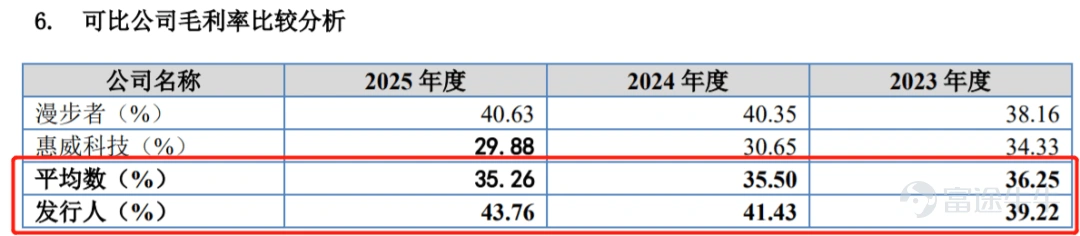
Notably, acquiring premium brands has boosted Sono International’s gross margin. During the reporting periods, the company’s overall gross margins were 39.22%, 41.43%, and 43.76%, respectively, showing year-over-year improvement.
In the same periods, the average gross margin of comparable peers in the industry was 36.25%, 35.50%, and 35.26%, respectively, declining year after year.
In comparison, Sono International’s gross margin trend not only diverged from the industry average but also exceeded those of comparable peers Edifier and HiVi.
(Figure / Sono International IPO prospectus)
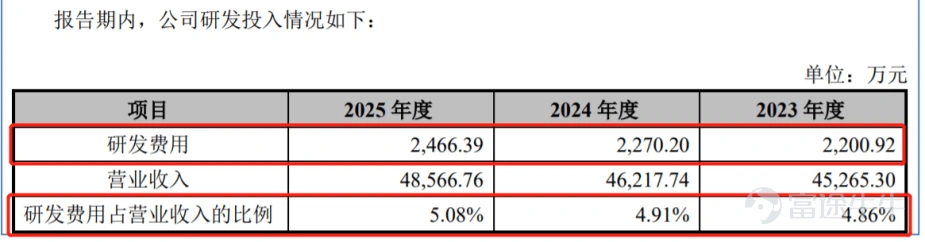
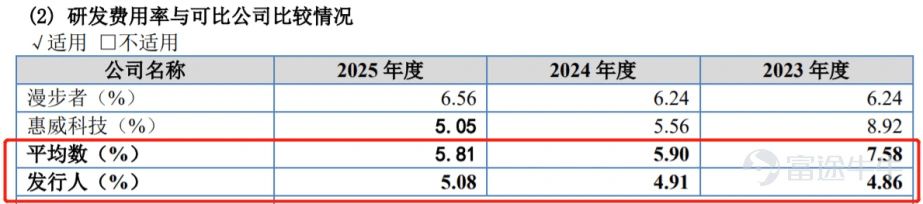
Sono International, which relies on acquisitions of established brands for expansion, has already fallen behind in R&D intensity.
During the reporting periods, Sono International’s R&D expenses amounted to RMB 22.01 million, RMB 22.70 million, and RMB 24.66 million, respectively, representing R&D expense ratios of 4.86%, 4.91%, and 5.08%—all below the average R&D expense ratio of its comparable peers.
(Figure / Sono International IPO prospectus)
In terms of R&D output, as of the end of 2025, the company had secured 323 granted patents, of which only 16 were invention patents—the type with higher innovation 'gold content.'
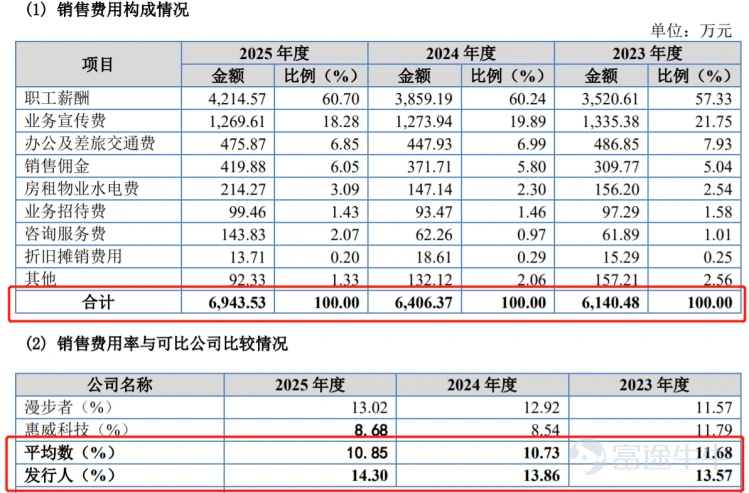
However, Sono International allocated significantly more resources to sales and marketing. During the reporting periods, its sales expenses amounted to RMB 61.40 million, RMB 64.06 million, and RMB 69.44 million, respectively, with sales expense ratios of 13.57%, 13.86%, and 14.30%—substantially higher than the average sales expense ratio of its comparable peers.
(Image / Singo International IPO prospectus)
Currently, global consumer markets continue to raise standards for technological iteration and localized customization; failure to maintain innovation capabilities could make it difficult to enhance product competitiveness.
Singo International has now reached the registration stage, and whether it will successfully list on the stock exchange will continue to be closely monitored by 'Frontline of Entrepreneurship.'
*Note: The featured image in this article is sourced from Singo International's official website.
Risk Disclaimer: The above content only represents the author's view. It does not represent any position or investment advice of Futu. Futu makes no representation or warranty.Read more
Comments
to post a comment