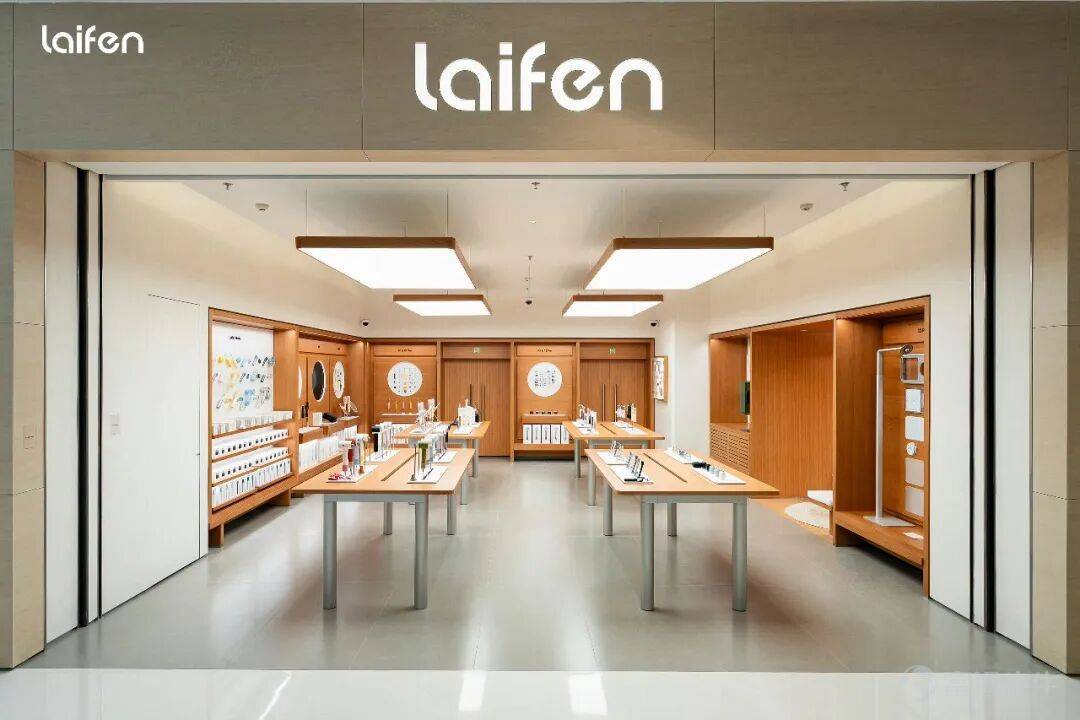

Leifeng turns motors into 'chips'

Produced by | Frontline of Entrepreneurship
Author | Feng Yu
Editor | Egg Chief
Visual editor | Xing Jing
Reviewed by | Song Wen
Inside the motor workshop of Leifeng’s Zhuhai mega-factory, a worker carefully secures tiny stator coils onto a fixture. Nearby, a laser welding machine emits brief flashes of light, fusing bearings with end caps—producing a single motor involves more than 100 steps, and one production line can churn out over a thousand units per day.
These motors will eventually be installed in Leifeng's hair dryers, electric toothbrushes, and shavers, but consumers will never see them—unless something goes wrong with the product.
Over the past few years, Leifeng has been labeled with numerous tags: 'Dyson alternative,' 'internet-famous brand,' 'traffic-savvy player'... Most of these labels stem from its explosive growth between 2021 and 2023—its GMV skyrocketed from RMB 150 million to RMB 3 billion, making its high-speed hair dryer the world’s top seller.
But once a company reaches a certain scale of revenue, the market starts asking another question: Is Leifeng merely a traffic-driven brand built on marketing, or is it truly a company grounded in manufacturing capabilities?
In July this year, 'Frontline Entrepreneurs' visited Leifeng's Zhuhai Mega Factory—scheduled to commence production in August 2025, with total investment exceeding RMB 500 million, covering over 200,000 square meters, and producing multiple product categories including hair dryers, electric toothbrushes, and shavers, with annual capacity reaching tens of millions of units. Nearly 90% of core components—from motors, injection molding, painting, and assembly to brush-head sterilization—are independently developed and manufactured in-house.

(Photo / Exterior view of the Mega Factory)
Inside this factory, you’ll see a completely different Leifeng.
1. Everything Starts with the Motor
Four motor prototypes are displayed on the showcase, each installed in a hair dryer, electric toothbrush, shaver, and foldable mini fan respectively. They differ in structure, operating principle, and magnetic circuit orientation—it would be hard to believe they came from the same company if not for the shared brand.
“Most small home appliances on the market use off-the-shelf generic motors. We start from scratch for every product category,” said the head of the motor division.
This path began in 2019. The first motor Leifeng developed was a three-phase high-speed brushless motor for hair dryers. The choice of three-phase over single-phase was specifically made to circumvent Dyson’s patent portfolio.
However, the three-phase design initially started with a three-slot configuration, and noise issues were once difficult to resolve. The team spent two years iterating to a six-slot structure and replaced the split bearings with an integrated one, raising rotational speed from 110,000 rpm to over 120,000 rpm and doubling the motor’s lifespan.
‘At the time, we outsourced production and sent numerous samples for evaluation, but none of the suppliers met our requirements,’ recalled the executive. ‘Our starting point was to build the quietest hair dryer possible—since users hold it in their hands while drying, excessive noise would discourage them from using it.’
With its electric toothbrush, Laifen opted for a servo motor. Traditional electric toothbrushes limit oscillation amplitude using internal mechanical stops, resulting in fixed angles. Laifen’s approach removed this physical constraint and instead installed two Hall-effect sensors to track rotor position in real time, enabling the motor to operate freely at any angle.

(Image / Laifen Servo Motor on Tmall)
As a result, the brush head’s sweeping range and vibration rhythm are no longer bound by hardware limitations but precisely controlled by algorithms—transforming brushing from a crude imitation of the Bass brushing technique into an accurate execution of dentists’ recommended motions.
Precisely because it eliminated hardware constraints, Laifen’s electric toothbrush offers far greater adjustability and customization than comparable products on the market. Users can fine-tune parameters such as vibration frequency, amplitude, and intensity via a mobile app, truly achieving a personalized brushing experience for every individual.

Details on the production side further illustrate Laifen’s meticulous approach to this motor. Bearings and end caps were initially secured with adhesive, but under high-frequency vibration and rotation, they tended to loosen. The company later switched to laser welding, fusing the two metals at high temperatures—‘no matter how much you shake it, it won’t come loose.’
Every motor that rolls off the production line is also sent into an anechoic chamber to run in a near-silent environment, where detection equipment identifies any abnormal sounds imperceptible to the human ear. ‘Few small-appliance manufacturers do this,’ said the workshop manager, ‘but sound is one of the most noticeable user experiences.’
The complexity of the shaver motor takes another leap forward. The P3 Pro uses a high-speed linear motor that drives the blades back and forth through alternating magnetic attraction and repulsion. The entire production line employs over 100 custom jigs and fixtures, involves more than 100 assembly steps, and produces 250 units per hour.

(Image / T1 Pro Shaver Components)
In the workshop, workers insert thin brass rods between two components to secure them in place, with spacing measured in millimeters. The company previously introduced two external automated machines, but their precision couldn’t match manual work, so they’ve been temporarily shelved.
“External suppliers can’t achieve our level of precision, and we don’t want our tooling or technical details leaked,” said the person in charge.
The axial-flux motor in the foldable mini fan may be the most 'luxurious' among the four. This technology is typically found in million-dollar electric sports cars. For Leifeng, it was newly developed to fit the ultra-thin foldable form factor, featuring 12 coils and 12 magnets internally, with each coil requiring two solder joints—all currently assembled by hand.

(Photo / Foldable electric fan)
To Leifeng, the motor is the “chip” of small home appliances: customized products have extremely tight internal space constraints, forcing standard off-the-shelf motors to choose between compact size and power output. To satisfy both requirements simultaneously, every parameter—from magnet specifications and coil turns to magnetic gap—must be independently fine-tuned.
Leifeng’s product design prioritizes simplicity and lightness, demanding high power density from motors within just a few cubic centimeters—a challenge many contract manufacturers are unwilling or unable to meet.
Leifeng has now established four proprietary motor technologies: high-speed three-phase brushless motors, servo motors, high-speed linear motors, and axial-flux motors.
Among these, the yield rate for high-speed brushless motors exceeds 98%, and the second-generation electric toothbrush servo motors exceed 99.6%. Each motor receives a unique QR code upon leaving the production line, recording its manufacturing time, production line, and operator—enabling full traceability to the specific batch if an issue is reported through after-sales service.
Leifeng’s foundational technical capabilities began precisely with this tiny motor.
2. Why Leifeng Isn’t Cheap
The pricing of the shaver once sparked internal debate at LeFun.
More than 60% of industry sales are concentrated below RMB 400, with offline supermarkets typically selling units for RMB 100–200; RMB 300 is already considered mid-to-high-end. Although LeFun’s P3 Pro shaver ultimately launched above this price point, it has since consistently ranked as the top-selling domestically produced shaver priced above RMB 500, placing it in the same tier as Braun.
Several easily overlooked details drove up the cost.
The first is the screw. Standard fixing screws cost between RMB 0.01 and RMB 0.03 each, but LeFun uses custom screws with circular laser-etched patterns that refract light when moved—each costing significantly more than a standard screw. The body is made of CNC-machined aluminum; if ordinary screws were used, the tactile quality would immediately feel 'a notch lower.'
The second is the motor frame. LeFun disassembled every imported shaver on the market and found the industry uniformly uses plastic frames—which tend to fatigue and fail under prolonged vibration, typically lasting only two to three years. LeFun opted for a steel frame paired with custom springs, enabling the unit to operate reliably for 400 hours, with a theoretical lifespan of five to ten years. However, steel machining is costly, and contract manufacturers were unwilling to take on such low-margin, technically complex work—so LeFun built its own production line.
The third is the foil. Imported from the Netherlands, the supplier specializes in precision surface treatment for semiconductors. 'Material costs are high, but there’s no substitute for the smooth shaving experience.'
All these factors combined result in a relatively high bill of materials, but Ye Hongxin refused to compromise.
The P3 Pro currently has a 98% positive review rate, with cumulative sales of 1.3 million units within 12 months of launch. During the 618 shopping festival, it generated RMB 120 million in sales—a 200% year-over-year increase. Since January this year, per-store profitability has turned positive, with quarterly profits steadily rising. Internally, the company has already locked in a three-year sales forecast based on this new growth trajectory.

(Image / P3 Pro Shaver)
The logic behind the toothbrush story is similar, but the point of contention lies not in the motor, but in the brush head.
Brush heads are widely regarded in the industry as a 'cash cow,' and most brands outsource production to cut costs. However, during the development of its second-generation product, Leifeng discovered that one of the biggest risks in brush head manufacturing is hygiene—since brush heads go directly into the mouth, dust and bacteria can directly compromise safety.
Leifeng invested over RMB 3 million to build its own fully automated brush head production line, equipped with plasma dust removal and ozone sterilization systems that achieve a 99.99% sterilization rate. The cleanroom standard for this facility meets Class 1,000 requirements—a level typically reserved for precision instruments and medical device manufacturing.

(Image / Fully automated toothbrush production line)
Moreover, because electric toothbrushes are oral-care products with unique safety considerations, Leifeng introduced a two-year replacement-only (no repair) service to give consumers greater peace of mind—an industry-leading service standard for electric toothbrushes.
Of course, from another perspective, Leifeng’s willingness to commit to a two-year replacement-only policy—and absorb potentially higher costs—demonstrates its absolute confidence in the quality of the i2.
During development, the i2 toothbrush underwent more than 40 durability tests, simulating three years of intensive use. This rigorous refinement helped the product surpass RMB 10 million in sales within just three days of launch. Since the i2’s debut, Leifeng’s electric toothbrush category has generated over RMB 250 million in GMV.
Leifeng views 'affordable alternative' as a relative concept: hair dryers priced at RMB 500–700 are naturally seen as budget alternatives compared to Dyson’s RMB 2,000–3,000 models; similarly, when benchmarked against Braun’s premium shavers priced above RMB 2,000, Leifeng’s electric toothbrushes appear less like substitutes simply because the category’s average price point is already low. In Leifeng’s pricing logic, prices aren’t anchored to competitors but instead determined by comprehensive material and R&D costs, set within a reasonable profit margin.
‘When our first-generation hair dryer launched, the average price of domestic hair dryers was under RMB 100. Even without Dyson in the market, we would have faced skepticism pricing it at RMB 599,’ said the aforementioned executive. ‘Leifeng’s confidence comes from proprietary technology and original design, which deliver an irreplaceable user experience.’
Overseas data is also validating this approach: this year, Leifeng achieved 85% year-over-year global GMV growth. During Amazon Prime Day, which concluded on June 30, daily GMV in North America and Europe surged approximately 8 to 10 times compared to the prior period.
Leifeng’s stringent demands on technology and craftsmanship have yielded commensurate commercial returns.
3. The Gigafactory Adds Capabilities
By the end of this year, part of Laifen’s Dongguan production lines will relocate to Zhuhai. This is not a simple factory move—once motor production, injection molding, final assembly, and warehousing are almost entirely consolidated into one campus, Laifen will fully transition to an 'end-to-end in-house' model.
The general manager of the Zhuhai Gigafactory summed up this shift in one sentence: 'Decentralized production incurs cross-regional logistics costs. Consolidation enables R&D and manufacturing to work in tandem, shortens new product validation cycles, and creates room to improve gross margins.'
The factory already boasts a high level of in-house production coverage: 80% of core components are manufactured within the campus, printed circuit boards (PCBs) are 70% to 80% self-produced, and motors, core structural parts, and key modules are all developed internally.
The factory head outlined three core benefits of in-house R&D and production: end-to-end confidentiality to prevent design leaks from contract manufacturers; full control over product quality across the entire process; and the need for a stable, proprietary supply chain to support long-term brand growth—'Heavy asset investments are amortized over multiple years, providing long-term support for new product development.'
Of course, another practical driver is that no existing production line on the market meets Laifen’s requirements.
The injection molding workshop is a case in point. In a space of over 6,400 square meters, more than 100 imported injection molding machines run 24/7 across three shifts, producing 5,000 hair dryer rear covers per shift with a yield rate of 99.7%. If judged solely by capacity and yield, there’s no shortage of capable contract manufacturers in the industry.

(Image / Injection Molding Workshop)
However, Laifen’s plastic components use a proprietary material formulation co-developed with raw material suppliers—to meet stringent requirements for paint adhesion and surface finish, standard off-the-shelf materials fall short. 'Materials engineers are involved from the R&D phase and iterate through repeated prototyping until the result is satisfactory,' said the workshop manager.
Molds are also designed internally, and the workshop houses an independent mold shop responsible for maintenance and tooling fabrication. In other words, from raw material formulation to mold design, contract manufacturers can only perform 'build-to-print' tasks—the production line Laifen requires simply does not exist in the external supply chain.
The situation with the painting line is similar. Laifen has built its own fully automated production line, featuring a Class 100,000 cleanroom in the peripheral areas and a Class 10,000 cleanroom in the core spray booth. The spray guns are fully automated, equipped with two color-control systems for seamless color switching. Standard products receive two to three coats of paint, while special materials like nylon and long-glass fiber receive four coats.
While the painting equipment itself was sourced externally, the total investment in the entire line—including environmental protection systems, fire safety measures, and safety evaluations—amounts to approximately RMB 30 million. Previously, when production was outsourced to suppliers, the painting yield rate ranged from 85% to 90%; after just three months of operating their own line, Laifen achieved a yield rate of 98%. Daily output stands at 200,000 to 300,000 units, translating to a weekly production value of 780,000 units. Currently, there is only one line, but the facility has reserved space for up to three lines in the future.

(Image / Painting production line)
“There’s no unified factory construction standard in the small home appliance industry—we referenced standards from major appliance manufacturers like Midea and Gree,” said the factory manager.
This isn’t just a slogan—Laifen has adopted the comprehensive set of standards used by large-appliance factories, covering shop floor layout, automation investments, warehousing and logistics, and production line support systems. Currently, the automation rate stands at around 30%, with plans to double it to 60% through the deployment of robotic arms. The injection molding workshop is already nearly unmanned, and the painting line operates at a 90% automation rate.
At the end of this manufacturing system sits a 3,000-square-meter reliability lab, staffed by nearly 70 professionals who conduct over 100 different tests. The lab doesn’t focus on functional innovation; it answers one question: will the product still perform reliably after prolonged use?
Once the production lines in Zhuhai and Dongguan are fully integrated, synergies and production flexibility will be further enhanced. The general manager of the Zhuhai mega-factory noted that the current state of the facility represents only an interim phase, with continuous iterations planned going forward.
For Laifen, the economics of building its own factory aren’t calculated on a per-unit cost basis. Contract manufacturing solves the problem of 'getting the product made,' whereas owning a factory ensures the ability to 'consistently produce high-quality products stably over the long term.' In an industry where competitors can replicate a technical solution within two or three days, manufacturing capability itself becomes the hardest barrier to entry.
Laifen still has room for improvement, and perhaps the very purpose of this factory is to steadily narrow that gap—not through marketing narratives, but through repeatedly validated precision in every single process step.
*Note: The featured image in this article is sourced from Laifen's official Weibo account.
Risk Disclaimer: The above content only represents the author's view. It does not represent any position or investment advice of Futu. Futu makes no representation or warranty.Read more
Comments
to post a comment