
Apple and Amazon reported starkly contrasting earnings— which one are you bullish on?

60-Second Visual Breakdown | After the Semiconductor Sell-Off, What Else Are We Waiting for to Confirm a True Bottom?
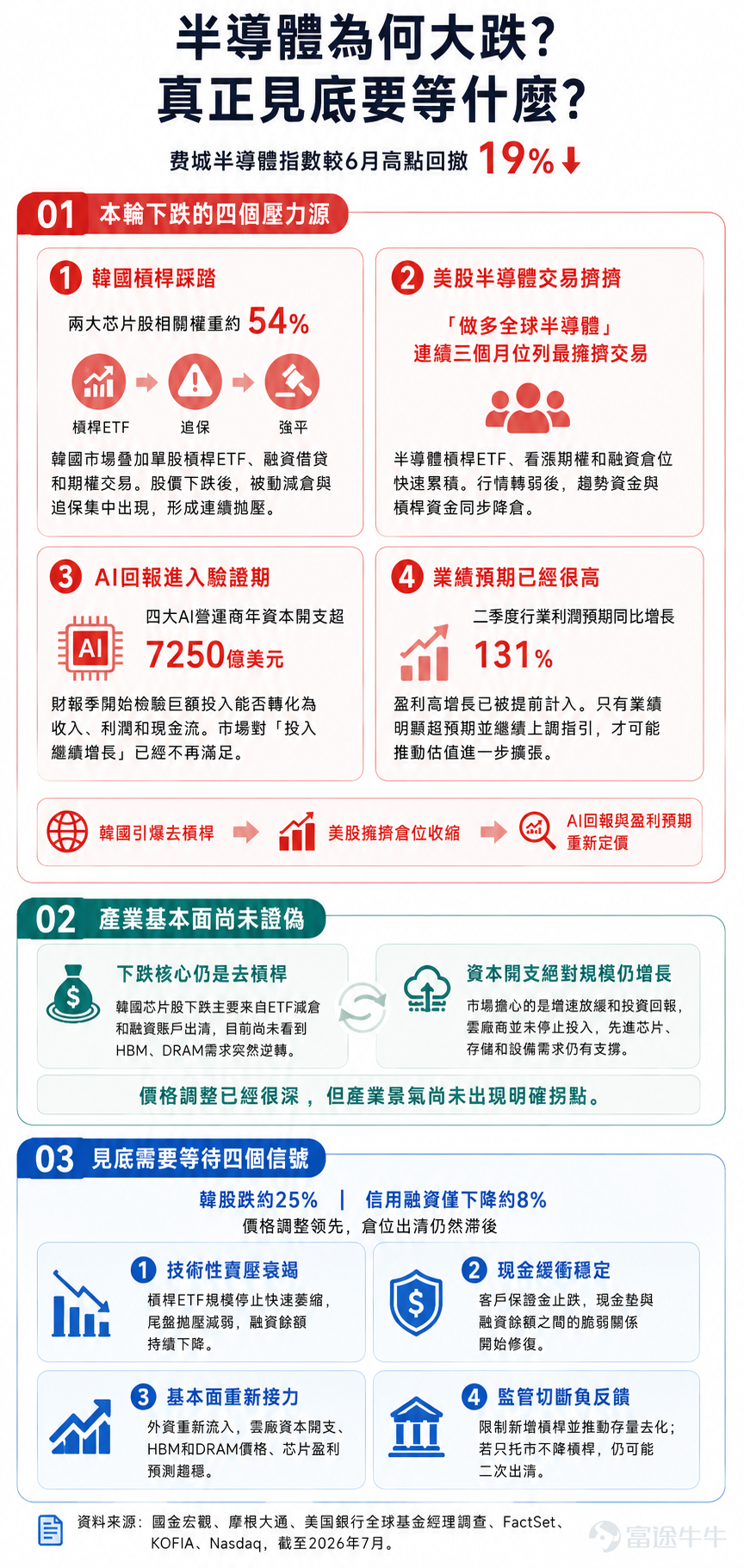
The immediate trigger for this round of semiconductor market correction originated in the South Korean market.The South Korean stock market is heavily concentrated in Samsung Electronics and SK Hynix (which together account for 54% of the KOSPI index weight), layered with three levels of leverage: 2x leveraged single-stock ETFs, household margin borrowing to invest in equities, and complex options trading. Once share prices weakened, daily rebalancing of these leveraged products mechanically triggered forced liquidations, causing simultaneous passive deleveraging, margin calls, and forced selling.creating a negative feedback loop of "sell → price drop → more selling", which quickly spilled over to global semiconductor stocks.

Meanwhile, the U.S. equity market itself faces overcrowded positioning.According to Bank of America’s July Global Fund Manager Survey, 82% of respondents identified “long global semiconductors” as the most crowded trade, ranking it number one for the third consecutive month. JPMorgan noted in its report that the deleveraging process initiated in U.S. equities in June is far from complete. Leveraged ETFs, bullish options, and margin positions all remain at elevated levels. Should market trends reverse, both trend-following and leveraged capital would simultaneously reduce their risk exposure.
Thirdly, AI-related trades have entered a period of return validation. The four major AI operators are collectively planning annual capital expenditures exceeding $725 billion, prompting the market to question whether these investments can translate into revenue, profits, and cash flow.According to FactSet data, the market expects Q2 earnings for the semiconductor and equipment sector to surge 131% year-over-year. Such high expectations mean that merely meeting forecasts may no longer be sufficient to justify further upward revaluation of stock prices.
However, this round of decline remains primarily driven by a liquidity shock for now.Goldman Sachs believes that the recent sell-off in Korean semiconductor stocks is mainly due to ETF position unwinding and does not signal a weakening semiconductor cycle.; Meritz Securities also assesses that DRAM supply still cannot meet demand, and this tightness could persist until 2027. The current sell-off in Korean chip stocks stems primarily from ETF deleveraging and margin account liquidations; there are no signs yet of a sudden reversal in HBM or DRAM demand, and cloud providers have not halted their capital expenditures.
Market institutions believe that the true bottom for Korean equities still awaits four signals:
① Exhaustion of technical selling pressure: leveraged ETF assets stop shrinking, end-of-day selling pressure eases, and margin balances continue to decline;
② Stabilization of cash buffers: client margin deposits stop falling, and the ratio of cash buffers to margin balances improves;
③ Fundamentals take over: foreign investors return, and earnings expectations for Samsung and SK Hynix’s semiconductor businesses improve (monitor cloud providers’ capex, HBM/DRAM pricing, and U.S. semiconductor earnings);
④ Effective regulatory intervention breaks the negative feedback loop: if authorities only support the market without reducing leverage, another round of deleveraging may occur after a rebound.
 Want stock picks or portfolio diagnostics? Curious about opportunities and risks in your holdings? Any investment-related questions—just ask Futubull AI!
Risk and Disclaimer Notice: 'Futubull' is an all-in-one financial investment trading platform. Brokerage services are provided by Futu Securities International (Hong Kong) Limited. This content does not constitute an offer, solicitation, recommendation, advice, opinion, or any form of guarantee regarding any securities, financial products, or instruments.
Risk Disclaimer: The above content only represents the author's view. It does not represent any position or investment advice of Futu. Futu makes no representation or warranty.Read more


Comments (29)
to post a comment
102
281