
Learning from History: What the History of Electricity Development Reveals for the AI Industry
By Chen Ningdi
There’s been a recurring notion lately: 'Computing power in the AI era is essentially the new electricity.' Yet so far, the AI industry has required massive capital investment—incurred costs without generating profits. If AI represents a fundamentally new factor of production, why hasn’t it immediately boosted societal productivity the way electricity did a century ago? To answer this, I studied the history of electricity development from over 100 years ago and found that these very questions were already resolved back then.
01
The War of Currents: Direct Current vs. Alternating Current
The application of electricity began in October 1878, when Thomas Edison invented the first commercially viable carbon-filament incandescent lamp. It featured high resistance, was suitable for parallel circuits, had a long lifespan, and could be manufactured at scale. However, light bulbs alone were insufficient; widespread adoption required a large and stable power distribution network. Thus, from 1878 to 1881, Edison focused on building an integrated system encompassing power generation, transmission, distribution, and consumption.
In September 1882, Edison’s Pearl Street Station began operations—the world’s first complete direct current (DC) power supply system. On its first day, it served 85 customers with a total of 400 lamps. Within a year, the number grew to 513 customers powering 10,000 lamps. Edison initially charged based on lamp usage time—at a rate of 1.2 cents per lamp-hour. On January 18, 1883, the Pearl Street system issued its first electricity bill for $50.40, equivalent to 4,200 standard lamp-hours. Converted into modern terms, this equals roughly 210 kilowatt-hours, or about 24 cents per kilowatt-hour. Adjusted for inflation, 24 cents then would be equivalent to approximately $8 today (compared to current U.S. electricity prices of around 20 cents/kWh and China’s at about 8 cents/kWh). Consequently, only the truly affluent could afford electric lighting. J.P. Morgan, a famous financier, was Edison’s first customer—installing 250 bulbs in his mansion in 1882—and also an investor in Edison’s lighting company.
Initially, Edison’s power system did not charge based on electricity consumption but rather on the number of light bulbs installed, using a flat monthly fee. However, users soon realized this approach was unfair, as electricity usage varied significantly among customers. The system gradually shifted toward billing based on actual energy consumed—a transition remarkably similar to how today’s AI large-model products are moving from flat-rate subscriptions to usage-based API pricing.
In theory, Edison’s electric lamp held enormous market potential, and his commercial empire should have rapidly taken shape. Yet ultimately, all of Edison’s companies merged with his rival Thomson-Houston Electric Company, forming what later became the renowned General Electric. Why did Edison’s business empire fail to succeed independently? The answer lies in the battle between direct current and alternating current.
Edison firmly believed that direct current would become the dominant electrical system of the future. However, DC power systems suffered from a critical flaw—excessive energy loss over distance, making long-distance power transmission impractical.
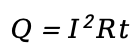
According to Joule’s law, electric current flowing through a conductor generates heat. The formula is:

where Q represents heat, I is current, R is resistance, and t is time. Since resistance is determined by the conductor material, with time fixed, the generated heat is proportional to the square of the current. Thus, even a slight increase in current causes heat generation to rise exponentially. To minimize transmission losses, the current (I) must be kept as low as possible.
Based on the fundamental power equation: P = UI,
where P is power, U is voltage, and I is current. For a generator, power (P) is fixed; therefore, to reduce current (I), voltage (U) must be increased as much as possible—meaning high-voltage transmission is essential. At the time, technology to step up DC voltage was immature, requiring a power station every mile—an economically unfeasible proposition.
In 1887, Tesla invented the polyphase alternating current (AC) induction motor. In May 1888, Tesla filed multiple patents related to AC power, designing an integrated system covering power generation, voltage step-up, transmission, voltage step-down, and end-use—known as the polyphase AC system. AC voltage can be easily stepped up or down, making it suitable for long-distance transmission and enabling safe, low-voltage usage at the consumer end.
Tesla initially worked for Edison for a period but later parted ways due to fundamental disagreements over AC power. Tesla subsequently secured investment from Westinghouse to fund his AC power initiatives. The AC system made its first major public debut at the 1893 Chicago World's Fair. General Electric, using Edison’s direct current (DC) system, quoted a price of $1.72 million, whereas Westinghouse’s AC-based proposal came in at just $620,000—less than one-third the cost. Westinghouse won the contract to supply electricity, lighting over 200,000 bulbs across the fairgrounds with AC power. Chicago earned the nickname 'The White City' as a result, breaking Edison’s company’s monopoly.
The second landmark case was the Niagara Falls hydroelectric power station, which needed to transmit electricity 26 miles to Buffalo. Edison’s team proposed building 10 separate power stations in their bid, while Tesla’s AC solution required only one station—at just one-tenth the cost. In 1896, AC power from Niagara Falls was successfully transmitted 26 miles to Buffalo, proving the commercial viability of long-distance AC transmission. Economically, AC power clearly outperformed Edison’s DC system, marking AC’s official entry onto the historical stage.
02
Economies of scale and the flywheel effect in the power industry
Although the technological path had been settled, electricity remained expensive. In 1892, one kilowatt-hour cost 20 cents—equivalent to about $6.70 today—making electricity a luxury good far from accessible to the general public. By 1900, fewer than 3% of U.S. households used electric lighting, and less than 5% of industrial power came from electricity; the remaining 95% still relied on steam engines.
So who truly drove down the price of electricity? This credit goes to Insull, Edison’s former assistant—a business genius who transformed electricity from a luxury into a mass-market utility through a core strategy of scaling.
First, he built extremely large power stations. In Chicago, he installed a massive 5,000-kilowatt steam turbine generator manufactured by General Electric. Previously, the largest unit General Electric had ever produced was just over 600 kilowatts. Increasing the capacity per generating unit significantly reduced overall generation costs.
Second, he implemented tiered pricing to minimize waste. Since residential peak demand occurred in the evening, Insull set very low rates for daytime and late-night electricity, targeting industrial users during those off-peak hours. This allowed the power station to operate at full capacity 24/7, spreading fixed costs across maximum output.
As electricity prices fell, customer numbers grew, further lowering per-unit costs and propelling the business into a self-reinforcing upward flywheel—the power of economies of scale. All these investments required massive capital inflows. To finance this, he constructed an entire pyramid-shaped holding company structure, continuously raising funds and issuing stock to advance Chicago’s electrification. Under Insull’s leadership, Chicago’s electricity rate plummeted from 20 cents per kilowatt-hour in 1892 to 10 cents in 1897, and further down to 2.5 cents by 1909. Chicago’s success served as a powerful model for the rest of the United States, igniting a nationwide wave of electrification.
As electricity prices continued to fall and the grid expanded, the true explosion in electricity demand finally arrived around 1920—not just because power became cheap, but primarily due to a surge in end-use applications. Appliances like electric irons, vacuum cleaners, and radios began entering households en masse. For example, vacuum cleaner adoption rose from 30% in 1920 to nearly 50% by 1930; radio sales were virtually zero in 1922, but by 1929, radios had penetrated 35% of American homes, with 4.5 million units sold that year alone.

Figure 1: Radio penetration continued to rise in the United States. Source: EH.net
Total electricity generation in the United States was 25 billion kilowatt-hours in 1912, growing to 43 billion kilowatt-hours by 1920, and reaching a remarkable 116 billion kilowatt-hours by 1929. The electrification rate of U.S. households surged from 14% in 1910 to nearly 70% by 1929.
Electrification profoundly shaped the appearance of modern cities.
Before electrification, household lighting relied primarily on gas lamps, which carried the risk of leaks. As a result, homes at the time were typically designed with larger floor areas and higher ceilings—often 4.5 to 5 meters high—to enhance safety. After electric lighting became widely adopted, ceiling heights dropped to around 3 meters, allowing architects to design lower ceilings and build structures with higher density. Meanwhile, the widespread adoption of elevators enabled vertical expansion of cities. Skyscrapers only became possible with electric lighting and elevators.
Another transformation was that the proliferation of household appliances altered domestic labor structures. Middle-class families previously employed servants, with wealthier households requiring even more staff. Estates like those depicted in the film 'The Great Gatsby' sometimes required dozens or even over a hundred servants. However, the advancement of electrical appliances reduced the need for hired help. Between 1900 and 1920, the share of households employing servants fell from 80% to 39%. With fewer servants needed, rooms also became smaller.
The spread of residential electricity also liberated housewives from domestic labor. Appliances such as vacuum cleaners, washing machines, and microwaves drastically reduced the time required for household chores, enabling women to enter the labor market. After 1920, the female labor force participation rate in the United States rose steadily. Before 1920, fewer than 5% of married women participated in the labor force; afterward, this figure increased rapidly. The rise in female labor participation further fueled the growth of women's rights awareness and political engagement, ultimately contributing to women gaining the right to vote.

Figure 2: Rising female labor force participation rate in the United States. Source: Claudia Goldin
Thus, the societal impact of electrification went far beyond merely improving efficiency—it reshaped society from multiple angles, including urban form, household structure, and political rights. This reminds me of the saying: young systems are shaped by society, but mature systems, in turn, shape the very fabric of society.
03
The adoption of new technologies is often slow and gradual.
What I’ve just described pertains to electrification in the consumer sector. What about industrial electrification? Economist Paul David once famously remarked that in 1900, people claimed generators were everywhere—except in economic statistics. His point was that, despite massive capital inflows into the power industry at the time, there was little observable boost in industrial productivity—a situation strikingly similar to today’s AI industry.
The AI industry is currently attracting significant capital, but costs still far exceed the profits generated. The impact of AI on the economy has not yet been substantial—this does not mean AI is a bubble or a scam. Any new productive force requires a breakthrough at the application level to drive economic growth. Today, AI agents have not yet entered the physical world; only an explosion in applications can massively reshape the economy and boost productivity.
Historically, the adoption of general-purpose technologies in productivity domains has been slow. Productivity gains are only unlocked once societies learn to restructure entire production systems around the new technology—a process fraught with resistance. Humans are inherently conservative, and the real impact of new technologies often takes a generation to materialize. For example, the transformative application of electricity in manufacturing did not truly accelerate until after 1920. This pattern closely mirrors the current trajectory of AI development.
Before electrification, factories in the 19th century relied primarily on steam engines for power. Many factories used a single large steam engine connected to a long central driveshaft, with numerous belts, pulleys, and gears transmitting power to various machines such as looms, lathes, drills, and stamping presses.

Figure 3: A factory in the steam era. Source: Compiled from public sources
Around 1900, factories began undergoing electrification. Initially, owners simply replaced steam-driven systems with electric motors while keeping the existing belts, pulleys, and gears unchanged. Consequently, efficiency gains were modest—essentially just swapping steam engines for motors. This approach made sense at the time: first, factory buildings and belt-driven transmission systems were already in place, and tearing them down for reconstruction would have been costly; second, small electric motors were still expensive and technologically immature; third, engineers and workers were more familiar with the old system, whereas maintaining a fully electrical setup would have required a large workforce trained in new technical skills.
It wasn’t until around 1920 that a new factory organizational model emerged, known as 'unit drive.' Under this system, each machine was equipped with its own small motor, allowing independent start, stop, and speed control—eliminating reliance on a central driveshaft. This freed machines from fixed spatial constraints imposed by transmission shafts, enabling factories to be reconfigured according to optimal production workflows, redesigning buildings accordingly, and even transforming organizational structures. Only then did manufacturing productivity experience a genuine leap forward.
Thomas Edison invented the electric light bulb in 1878, Nikola Tesla established the alternating current (AC) power system in 1894, Samuel Insull expanded residential electricity access by 1902, household appliances became widespread and factories began being designed around electrification principles by 1920, and full electrification across the United States wasn’t completed until 1950. The diffusion of electricity took a full 70 years. Eventually, electricity shed its aura of high-tech novelty and financial speculation, becoming cheap, reliable, and indispensable infrastructure—much like air and water.
I previously mentioned in"AI Hype = Strong Future Economic Growth??"the theory of weak links. This aligns perfectly with the historical diffusion of electricity. Humans are accustomed to existing organizational and production methods, and adopting new technologies takes time. Moreover, the power of technology must propagate through the entire economic system, and the narrowest bottleneck in this transmission process determines the ultimate pace of adoption. Factors such as human habits, legal regulations, and cost considerations all constrain how quickly a technology spreads.
04
When will AI’s stimulative effect on the economy become evident?
In 2017, the paper 'Attention Is All You Need' was published, introducing for the first time a novel deep learning architecture based on the attention mechanism—the Transformer. On November 30, 2022, ChatGPT was launched, igniting the AI boom. By 2024, major tech companies had begun a hardware arms race. In reality, the AI revolution has only just begun, and AI applications are still far from mature.
It took 70 years for electricity to become widespread. If we date the internet’s adoption from 1995, it took nearly 30 years—until around 2015—for mobile internet to gain global acceptance. If we instead trace it back to 1969, when the U.S. Department of Defense’s ARPANET became operational, the process spanned 47 years.
How long will the AI revolution take? Five years? Ten? I believe such rapid progress is highly unlikely. The process of building entirely new industrial and societal systems around a transformative technology—and unlocking its full productivity potential—is extremely lengthy. In my view, it will likely require at least one or two generations of adaptation. For most companies, AI transformation won’t be achieved simply by adopting a few AI tools, nor will equipping employees with Codex or Claude instantly skyrocket productivity. Realizing a leap in productivity through AI demands a complete redesign of entire production workflows—a process that will inevitably take considerable time.
Tokens, as the ‘electricity’ of the new era, are currently far from reaching a stable equilibrium in either supply or demand. As massive capital investments ramp up, token supply will continue to grow. Simultaneously, as token prices decline, demand will steadily emerge and eventually surge. With the large-scale deployment of AI agents, token consumption will become even more staggering. Eventually, supply and demand will reach balance. Once token markets stabilize and tokens become universally accessible anytime, anywhere, they will evolve into an indispensable, low-cost, and reliable general-purpose infrastructure—much like electricity today. At that point, I believe token pricing will be subject to government regulation, just as electricity rates are now.
Studying history helps us understand the rise and fall of technologies. When analyzing the AI industry, we might look to the history of electrification in the United States between 1880 and 1950—a prime example of a new general-purpose technology replacing established modes of production. I believe the current AI revolution will similarly transform production methods and reshape society, just as the electrical revolution did in its time.
05
Summary
1. Technology pathways determine success or failure:Although direct current (DC) enjoyed a first-mover advantage, alternating current (AC) ultimately prevailed due to its breakthroughs in long-distance transmission and cost efficiency. This serves as a reminder to the AI industry that choosing the right foundational technical architecture is critical—even early leaders can be overtaken if they persist with an incorrect technological trajectory.
2. Economies of scale and flywheel effects are key to widespread adoption:Samuel Insull drove down electricity prices dramatically through large-scale power stations, time-of-use pricing, and financial engineering, creating a powerful positive feedback loop. For AI, this implies that only through massive scale-driven investment to lower token costs—and by identifying sustainable sources of demand—can the industry transition from a capital-intensive phase to mass adoption, ultimately becoming a societal infrastructure.
3. The adoption of new technologies is inevitably slow and requires systemic restructuring:Weak-tie theory dictates that human acceptance of new technologies takes time. It took 70 years for electricity to evolve from invention to full electrification, and 49 years for the internet to achieve widespread adoption. AI has yet to deliver broad-based benefits; we must await breakthroughs at the application layer and a comprehensive redesign of production processes.
4. History offers lessons: AI will reshape society:Like electricity, AI—as a general-purpose technology—will ultimately transition from a luxury to essential infrastructure, profoundly transforming economic structures, social forms, and human lifestyles. We should remain patient, continue investing, and trust in its long-term revolutionary impact.
Author Bio:
Chen Ningdi graduated from the University of Chicago with a Bachelor of Arts degree with honors in Economics and Statistics. He has over 26 years of experience in the global financial industry and is the founder of Delin Securities and Delin Family Office. He previously served as the licensed responsible officer for Type 1, 4, and 6 licenses granted by the Hong Kong Securities and Futures Commission. He currently serves as Chairman of the Board, Executive Director, and Chief Executive Officer of Delin Holdings Group, and Vice President of the Hong Kong Limited Partnership Fund Association. He is the author of 'The Era of Wealth Transformation: Discovering Counter-Cyclical Survival Wisdom.'
Disclaimer
This article is for reference purposes only. Investors should base their investment decisions solely on information disclosed in the company's official announcements.
The information and materials provided on this platform, including text, graphics, links, or other items sourced from third-party information terminals, are for general reference only. Under no circumstances shall the information published on this platform constitute investment advice.
No person may reproduce or republish any content without authorization from this official account.
Content shared via WeChat is for reference only and is the property of DL Holdings and its respective content providers. For the full disclaimer, please visit DL Holdings’ official website: https://www.dl-holdings.com/
Risk Disclaimer: The above content only represents the author's view. It does not represent any position or investment advice of Futu. Futu makes no representation or warranty.Read more

Comments
to post a comment
2