
Quick Options Recap: Apple Hits New Highs, Memory Stocks Keep Tumbling — One Call, One Put, Both Offer $100 Profit Potential
Happy Friday, fellow investors.
This week in the US stock market, the most notable trend has been the continued sharp decline across the entire AI hardware supply chain, whilecapital is seeking refuge in defensive sectors—AAPL.:
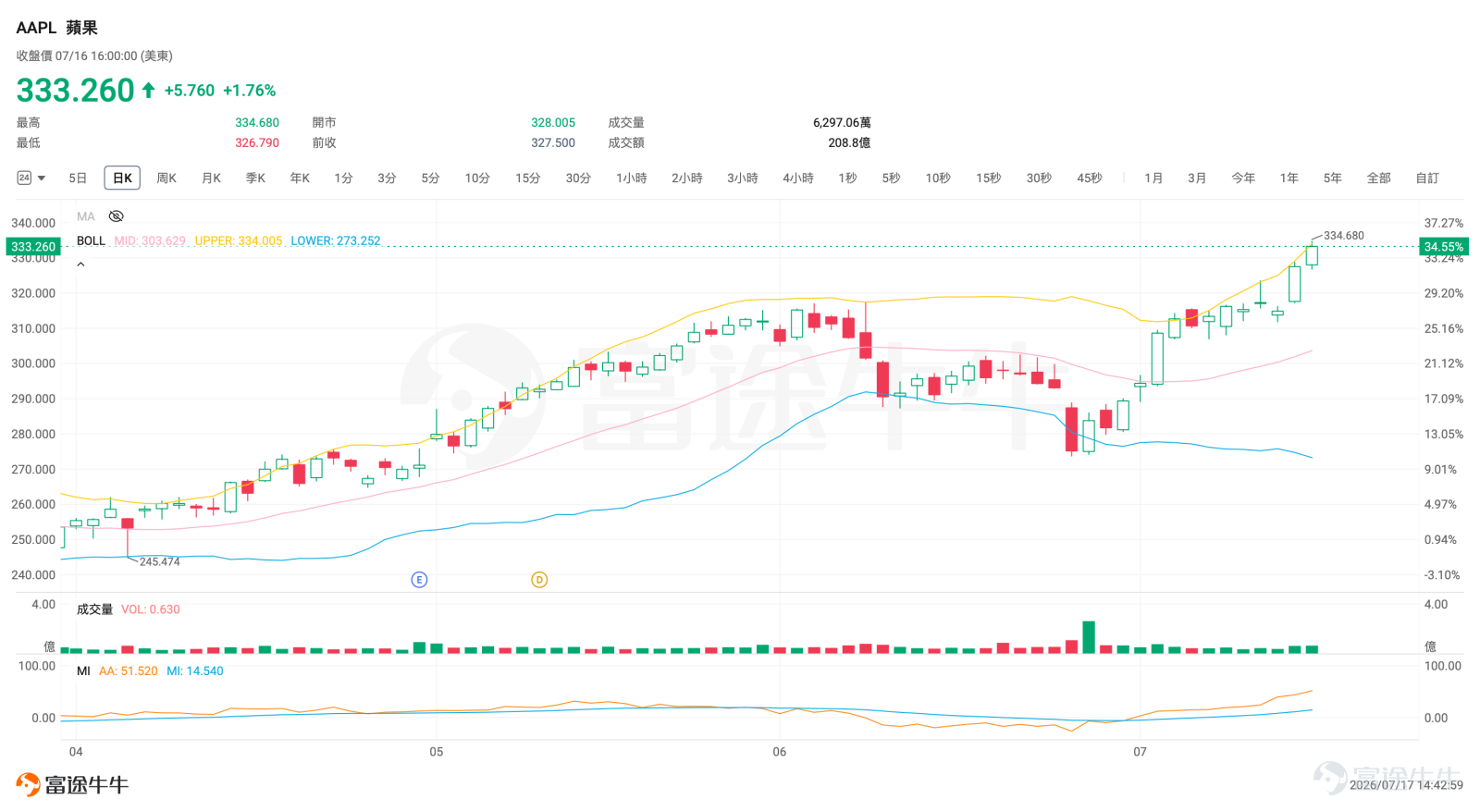
On one hand, memory and semiconductor stocks such as Micron, SK Hynix, and SanDisk continue to face position reductions; on the other, Apple has broken out to new all-time highs against the broader market downturn, reemerging as one of the strongest mega-cap tech names.
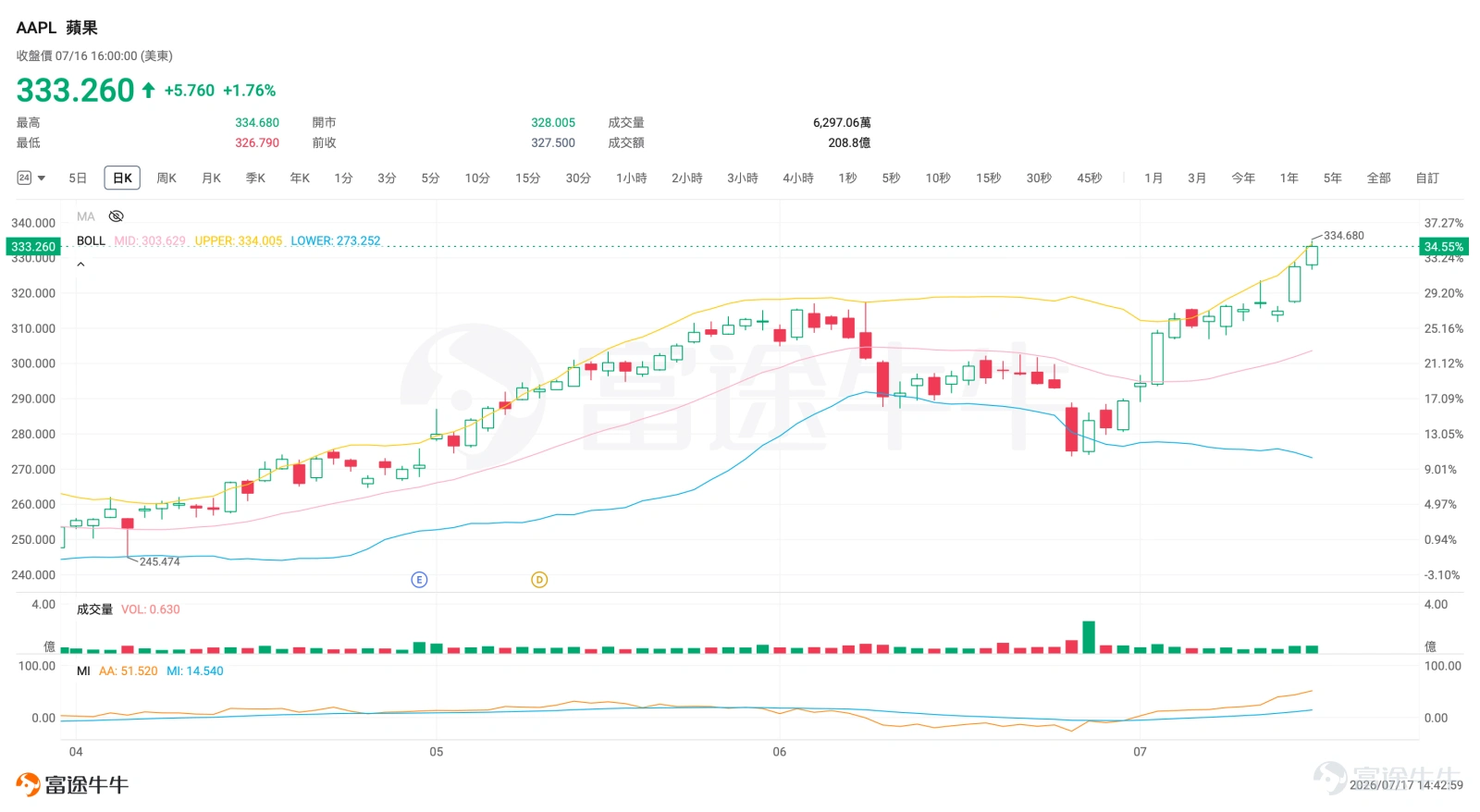
As of the close on July 16, $Apple (AAPL.US)$ Apple rose 1.76% to $333.26, setting another record closing high, while Micron fell approximately 6.4% on the same day, dragging its 2x leveraged ETF MUU down by about 11.8%.
The market appears to be rotating away from highly volatile and crowded AI hardware plays toward large-cap tech platforms and names with relatively lower capital expenditure requirements.
Today, we’ll dissect two options with completely opposite trajectories:
– MUU $30 Put expiring on July 17: shorting high-volatility memory exposure;
– AAPL $330 Call expiring July 17: Tracking Apple’s breakout to new highs.
One option profits from panic and leveraged amplification; the other profits from strong breakout momentum and concentrated capital inflows.
First position: MUU $30 Put
Memory stocks drop once, and the 2x ETF amplifies it again.
MUU is a 2x leveraged long ETF on Micron launched by Direxion, designed to deliver approximately twice the daily return of Micron’s stock price.on a single trading dayprovide about double the return of Micron’s stock performance.
In simple terms:
– Micron rose 5% in a single day, so MUU could theoretically gain around 10%;
– Micron fell 5% in a single day, and MUU could also drop by approximately 10%.
However, this only applies to daily targets. Over longer holding periods, actual returns are further affected by daily rebalancing, compounding effects, and volatility decay—so you cannot simply multiply Micron’s cumulative multi-day price moves by two. Direxion also explicitly warns that MUU is a single-stock leveraged ETF, carrying higher risk and volatility than directly holding Micron shares.
Why did memory stocks drop so sharply this week?
Fundamentals in the memory sector haven’t suddenly reversed entirely, but the market is reassessing three key factors:
First, the sector had previously rallied too far, leaving positions and leveraged trades extremely crowded; second, the market has started discussing new capacity additions expected in 2027–2028 and the resulting potential supply pressure; third, investors have become more sensitive about whether AI-related capital spending can sustain its current high growth rate over the long term.
Compounding these concerns, SK Hynix experienced sharp post-listing gains followed by steep declines, leveraged ETFs were forced into passive deleveraging, and hedge funds reduced their exposure to AI hardware—making any mildly negative news susceptible to amplification and triggering concentrated profit-taking.
Take a look at this contract
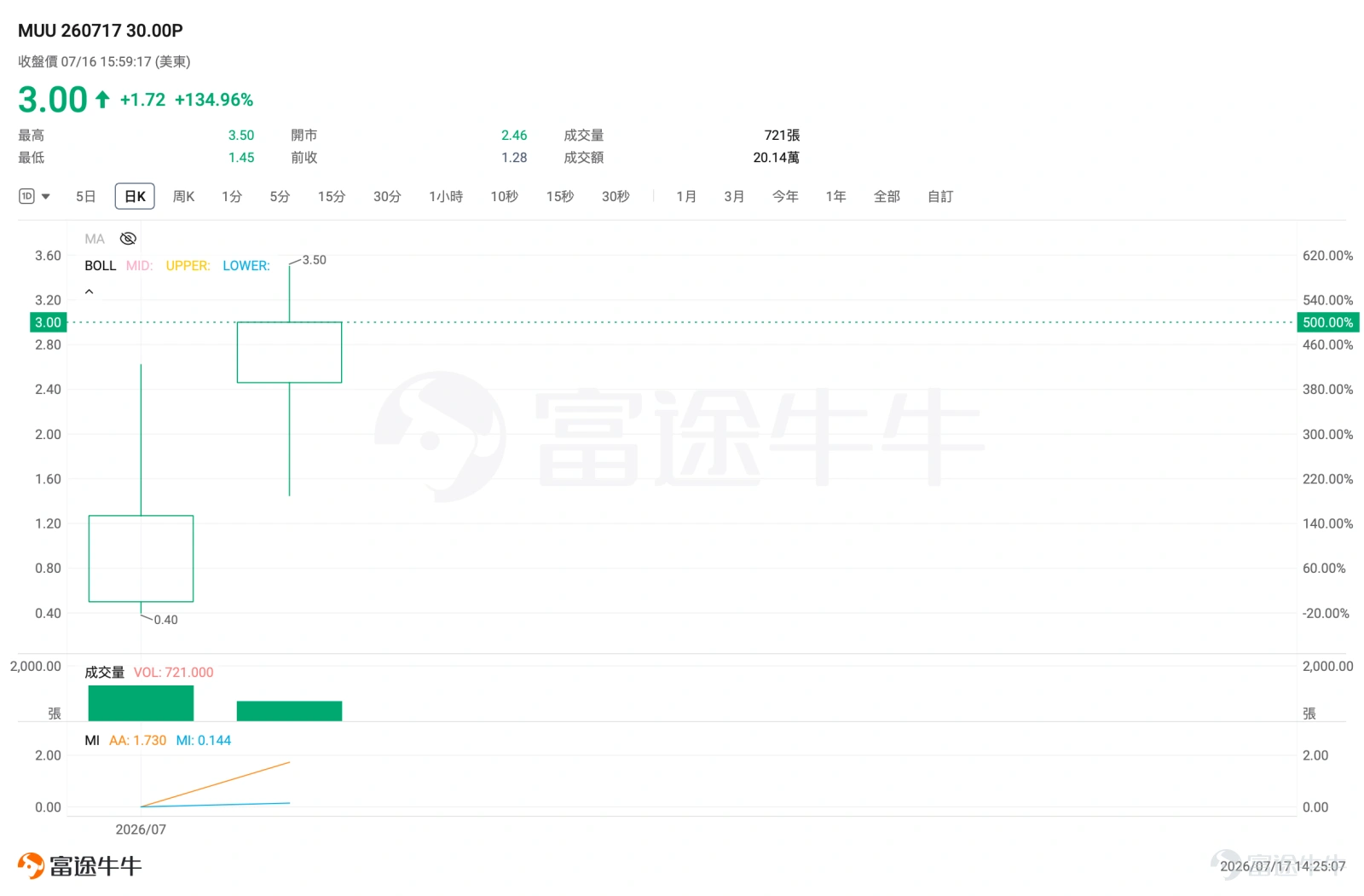
(The design images displayed on the screen are for demonstration purposes only and do not constitute any investment advice or guarantee; market movements are frequent, and the option prices shown do not represent actual conditions. The filtering criterion is options with an initial price below $3 per unit.)
MUU 260717 30.00P i.e., a put option expiring on July 17 with a $30 strike price:
– Earlier, it had previously dipped to around USD 0.40
– Opening price on July 16 was approximately USD 2.46
– Intraday low was around USD 1.45
– Intraday high reached up to USD 3.50
– Closed at and EPS of USD 3.00
– Single-day gain of approximately 134.96%
However, this figure reflects strong hindsight bias; even considering only the intraday low of USD 1.45 to the high of USD 3.50 on July 16, there was still significant upside potential.
What did this put option actually profit from?
It’s not just profiting from Micron’s decline.
It simultaneously captured gains from three layers of volatility:
1. The drop in Micron’s stock price;
2. The 2x daily leverage embedded in MUU;
3. As the near-expiry put option moved into the money, its delta and gamma rapidly increased.
But this is also the most critical point to emphasize:
Buying a put on MUU is effectively adding an extra layer of options leverage on top of a 2x leveraged long ETF.
When the directional bet is correct, the price can plummet like an elevator dropping; however, if Micron rebounds sharply, MUU rises, implied volatility declines, and time decay accelerates ahead of expiration—the put could quickly lose half its value.
Moreover, this contract has traded only 721 lots, with liquidity far lower than that of options on major tech stocks. The high price shown on the chart does not guarantee that every investor can execute at that level—traders should pay close attention to bid-ask spreads and use limit orders whenever possible.
Second trade: Apple hits a new all-time high amid market weakness, and its short-dated options are starting to accelerate
On July 15, AAPL surged approximately 4%, breaking above $327; on July 16, it rose further to $333.26, reaching an intraday high of $334.68 and setting consecutive new all-time highs.
This latest rally has been driven by several catalysts:
– Media reports indicate that Apple Intelligence has made significant progress in the Chinese market;
– Investors are optimistic that Apple will enhance its AI capabilities in China through local partners such as Alibaba and Baidu;
– Brokerages have raised their price targets, citing Apple’s pricing power and potential for AI monetization;
– Amid market concerns over excessive spending on AI data centers, Apple’s relatively asset-light AI strategy has regained investor favor.。
In short, this week investors are trading on the thesis that:
AI hardware requires continuous heavy investment, whereas Apple could leverage its existing installed base of approximately 2.5 billion devices to turn AI directly into ecosystem and services revenue.
Take a look at this contract
AAPL 260717 330.00Ci.e., the call option expiring on July 17 with a strike price of $330:
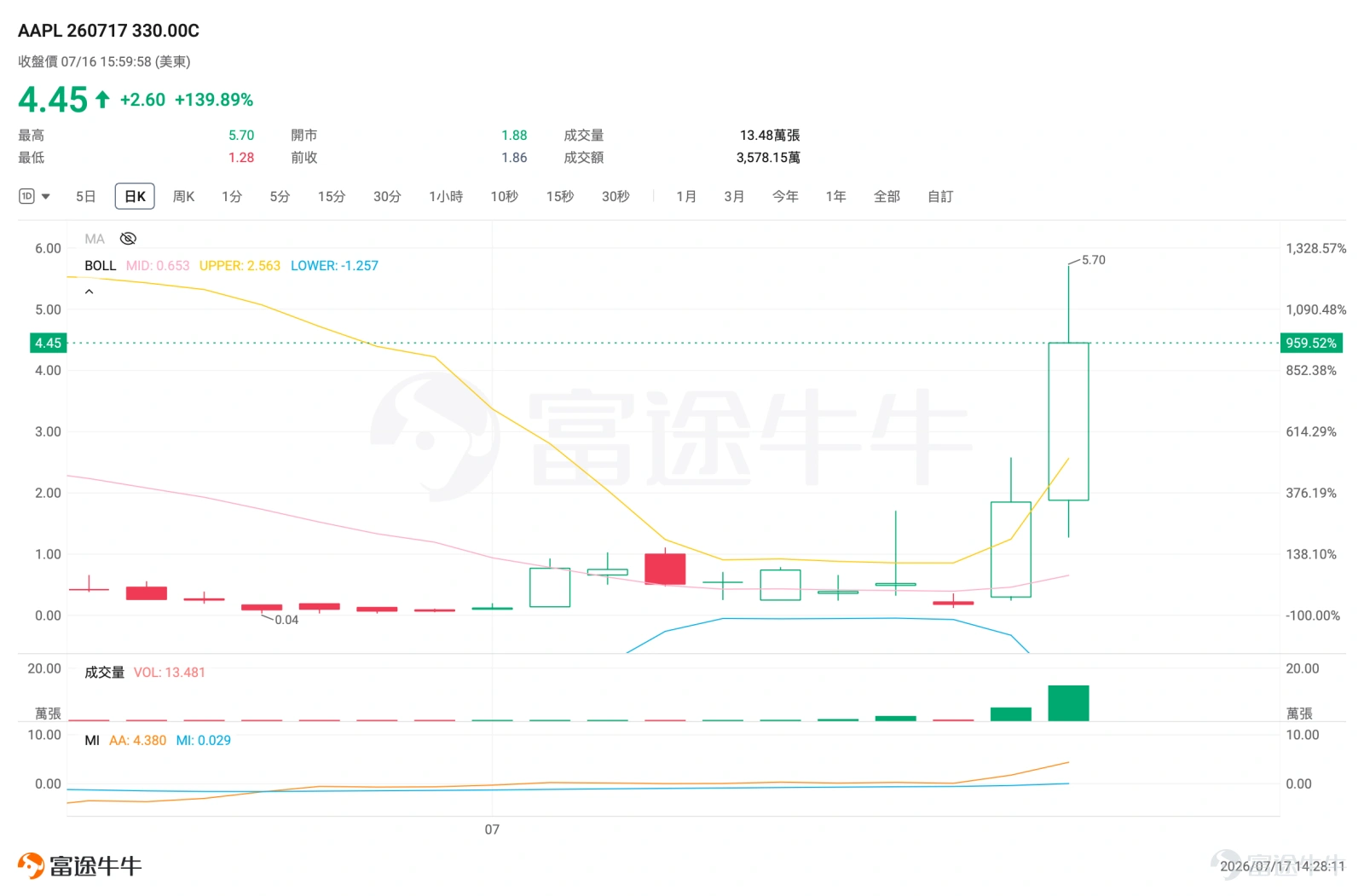
(The design images displayed on the screen are for demonstration purposes only and do not constitute any investment advice or guarantee; market movements are frequent, and the option prices shown do not represent actual conditions. The filtering criterion is options with an initial price below $3 per unit.)
On July 16, this call option:
– Opened at around $1.88
– Hit an intraday low of around 1.28 USD
– Rose intraday to a high of USD 5.70
– Closed at $4.45
– Up approximately 139.89%
– Volume reached 134,800 contracts
– Hit an intraday low of $0.13 on Tuesday
This is a classic 'breakout call': after Apple broke above the $330 psychological resistance level, the previously out-of-the-money call quickly moved into the money, with its delta rising. The closer the stock price gets to—or the more it surpasses—the strike price, the more sensitive the option's price becomes to movements in the underlying stock.
If AAPL trades sideways on Friday, time value will erode rapidly; if the stock closes below $330 at expiration, this call could expire worthless. Even if Apple doesn’t drop sharply, as long as it doesn’t rise fast enough, the buyer could still lose money due to theta decay.
Therefore, getting this call right wasn't just about direction—it was even more crucially about:
– Apple itself being in a strong uptrend;
– Stock price breaks through a key strike price;
– Upside momentum outpaces time value decay;
– Contract trading is active.
This week’s two options trades earned two completely different kinds of profits.
The MUU put profited from:
Unwinding of crowded memory trades + Micron’s decline + 2x ETF leverage + gamma effect near expiration.
The AAPL call profited from:
Rotation into mega-cap tech + breakout to all-time highs + move from out-of-the-money to in-the-money + accelerating trend.
On the surface, one trade was short and the other long—completely opposite directions—but both were driven by the same underlying theme:
Capital is rotating out of highly volatile, crowded AI hardware positions and into relatively stronger mega-cap tech platforms.
Weekly mini review: You can use $100-level option premiums to capture price elasticity, but don't mistake the highest price as your realized profit.
Both of these options previously used $100-level premiums to gain two-fold or even several-fold price elasticity.
However, there are three practical issues:
1. It’s usually very difficult to catch both the lowest and highest prices simultaneously.
The moves from $40 to $350 and from $128 to $570 represent full-range calculations—they don’t mean every investor can replicate such returns.
2. Paper profits on short-dated options vanish quickly.
Near expiration, gamma is very high, and so is theta. When the direction is right, gains can double rapidly—but even a brief pause can cause profits to erode just as fast.
3. MUU puts carry higher risk than standard puts.
The underlying asset is a 2x leveraged single-stock ETF; adding options on top creates a double-leveraged instrument, which isn’t suitable for large positions or long-term directional bets.
The real value of $100-level options lies in using a controlled premium to participate in a clearly defined market move—not in assuming that low cost alone justifies ignoring time decay, volatility, and the risk of expiring worthless.
First, understand what the market is pricing in before deciding whether to enter.
Not comfortable with options basics? Study up before jumping in.
If, while reading this recap, you’re still unclear about basic concepts like 'What is a Long Call?' or 'How do I interpret strike prices?', don’t rush to place an order—take some time first to solidify your foundational knowledge. We’ve compiled practical beginner resources below; we recommend saving them for future reference:
Finally, we have a small treat for our fellow investors—please feel free to claim it.Options Beginner Pack
*This event is exclusive to invited HK users. Click to learn more.Detailed event rules>>

Disclaimer
This content does not constitute any offer, solicitation, recommendation, opinion, or any guarantee of any securities, financial products, or tools. The risk of loss in trading options can be substantial. In some cases, losses may exceed the initial margin deposited. Even if stop-loss or limit orders such as "stop-loss" or "limit" are set, they may not prevent losses. Market conditions may cause these instructions to be unexecuted. You may be required to deposit additional margin within a short period. If you fail to provide the required amount within the specified time, your open positions may be liquidated. However, you will still be responsible for any shortfall in your account. Therefore, before trading, you should study and understand options and carefully consider whether such trading is suitable for you based on your financial situation and investment objectives. If you trade options, you should be familiar with the procedures for exercising options and the rights and obligations upon expiration, as well as your rights and responsibilities when exercising options and at expiration.
Risk Disclaimer: The above content only represents the author's view. It does not represent any position or investment advice of Futu. Futu makes no representation or warranty.Read more

Comments
to post a comment
12
4