English
Back
Open Account
USD 950 billion collaboration plus major player rankings—can they reignite confidence in memory stoc
Futubull Options Sir
joined discussion · ·

Options Sir Breaks Down the Buzz | SK Hynix Stock Shows High Volatility on First Day of Options Listing, Strong Short-Term Speculative Sentiment

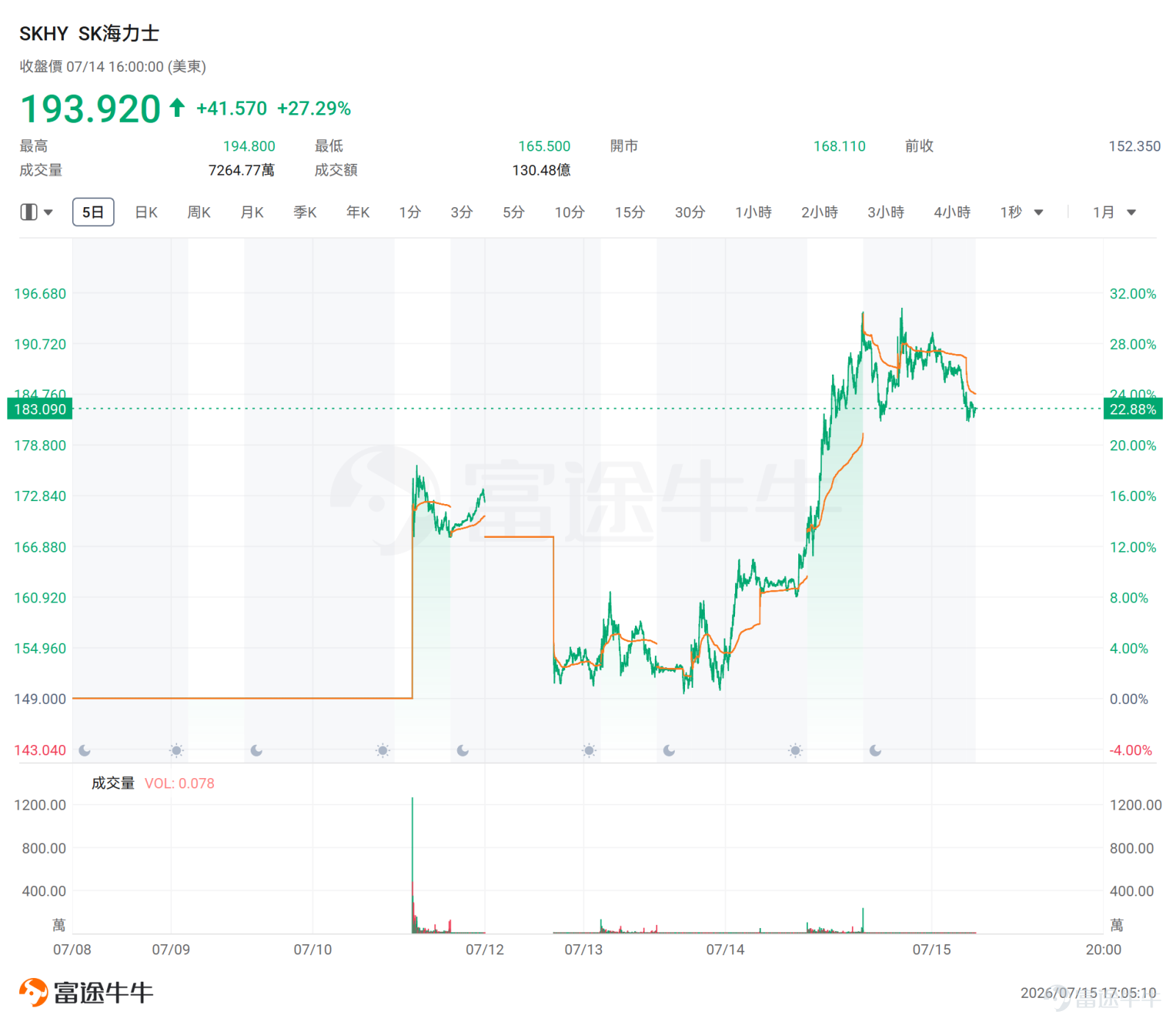
On the first trading day of U.S. stock options, $SK hynix (SKHY.US)$ Surged 27% overnight, fully recovering all losses since its listing. As of the close of South Korean stock market on the afternoon of July 15, SKHY’s market capitalization stood at approximately USD 1.41 trillion.$SK Hynix (000660.KR)$ The local South Korean shares have a market cap of USD 988.724 billion, trading at a premium of about 42.6%, far exceeding the initial listing spread of around 3% from last week’s offering. On the following day (July 15), SK Hynix fell more than 6% in pre-market trading, reflecting high volatility.
This phenomenon stems partly from the fact that arbitrage channels between the U.S. and South Korea have not yet opened, and short-term call options have fueled trading enthusiasm for the ADRs.
On the first trading day of U.S. stock options, $SK hynix (SKHY.US)$ Surged 27% overnight, fully recovering all losses since its listing. As of the close of South Korean stock market on the afternoon of July 15, SKHY’s market capitalization stood at approximately USD 1.41 trillion.$SK Hynix (000660.KR)$ The local South Korean shares have a market cap of USD 988.724 billion, trading at a premium of about 42.6%, far exceeding the initial listing spread of around 3% from last week’s offering. On the following day (July 15), SK Hynix fell more than 6% in pre-market trading, reflecting high volatility. This phenomenon stems partly from the fact that arbitrage channels between the U.S. and South Korea have not yet opened, and short-term call options have fueled trading enthusiasm for the ADRs. With arbitrage channels still closed, bullish-bearish divergence is intensifying SK Hynix listed in the U.S. via ADRs (American Depositary Receipts), which are instruments issued by a U.S. depositary bank backed by underlying local shares (i.e., SK Hynix shares traded in South Korea). According to SK Hynix’s official website announcement, each U.S.-listed ADR is convertible into 1/10 of a South Korean share of SK Hynix. Under normal circumstances, if significant price divergence emerges between the two markets, investors can profit from arbitrage by buying cheaper South Korean shares, converting them into U.S. ADRs, and selling at a higher price. However, according to confirmation from the Korea Securities Depository, The underlying new local shares in Korea corresponding to this ADR issuance are expected to list domestically on July 29. Applications for conversion between the local shares and ADRs will only be possible after the new local shares begin trading...
With arbitrage channels still closed, bullish-bearish divergence is intensifying
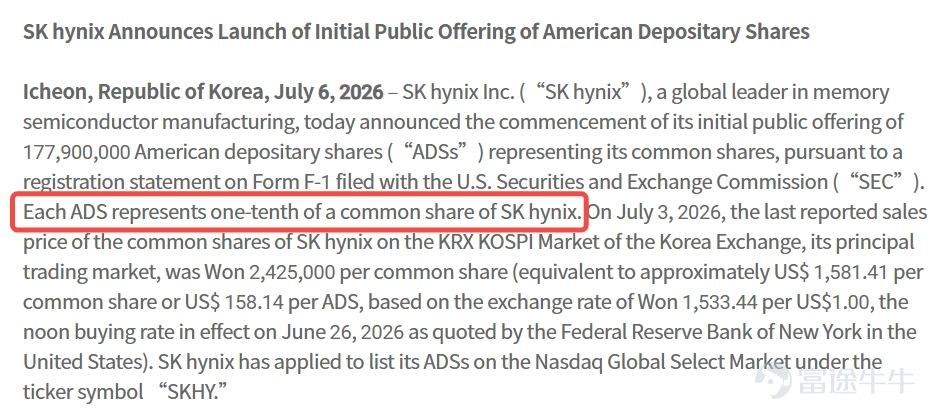
SK Hynix listed in the U.S. via ADRs (American Depositary Receipts), which are instruments issued by a U.S. depositary bank backed by underlying local shares (i.e., SK Hynix shares traded in South Korea). According to SK Hynix’s official website announcement, each U.S.-listed ADR is convertible into 1/10 of a South Korean share of SK Hynix.
On the first trading day of U.S. stock options, $SK hynix (SKHY.US)$ Surged 27% overnight, fully recovering all losses since its listing. As of the close of South Korean stock market on the afternoon of July 15, SKHY’s market capitalization stood at approximately USD 1.41 trillion.$SK Hynix (000660.KR)$ The local South Korean shares have a market cap of USD 988.724 billion, trading at a premium of about 42.6%, far exceeding the initial listing spread of around 3% from last week’s offering. On the following day (July 15), SK Hynix fell more than 6% in pre-market trading, reflecting high volatility. This phenomenon stems partly from the fact that arbitrage channels between the U.S. and South Korea have not yet opened, and short-term call options have fueled trading enthusiasm for the ADRs. With arbitrage channels still closed, bullish-bearish divergence is intensifying SK Hynix listed in the U.S. via ADRs (American Depositary Receipts), which are instruments issued by a U.S. depositary bank backed by underlying local shares (i.e., SK Hynix shares traded in South Korea). According to SK Hynix’s official website announcement, each U.S.-listed ADR is convertible into 1/10 of a South Korean share of SK Hynix. Under normal circumstances, if significant price divergence emerges between the two markets, investors can profit from arbitrage by buying cheaper South Korean shares, converting them into U.S. ADRs, and selling at a higher price. However, according to confirmation from the Korea Securities Depository, The underlying new local shares in Korea corresponding to this ADR issuance are expected to list domestically on July 29. Applications for conversion between the local shares and ADRs will only be possible after the new local shares begin trading...
Under normal circumstances, if significant price divergence emerges between the two markets, investors can profit from arbitrage by buying cheaper South Korean shares, converting them into U.S. ADRs, and selling at a higher price. However, according to confirmation from the Korea Securities Depository, The new local shares in Korea corresponding to this ADR offering are expected to be listed domestically on July 29, and applications for mutual conversion between the local shares and ADRs can only be submitted after the listing of these new shares.This means that until July 29, the market will be unable to correct the price discrepancy between the two markets through arbitrage mechanisms.
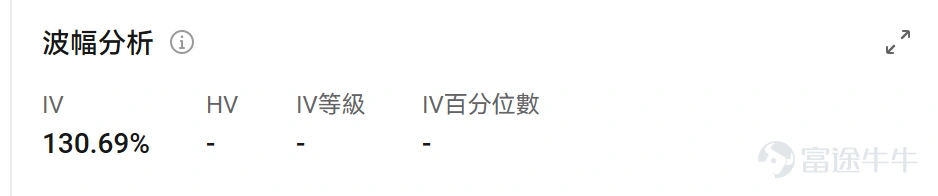
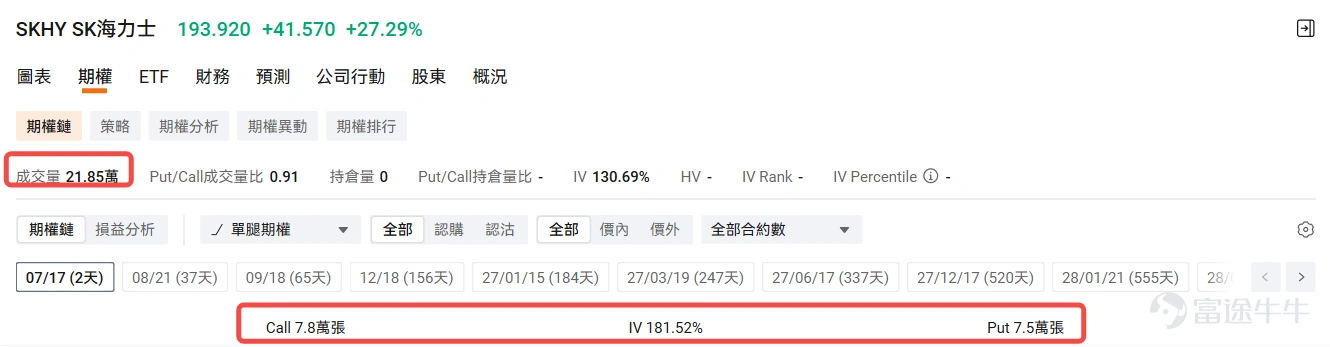
Recently, memory stocks led by SK Hynix and Micron have become battlegrounds for highly volatile bullish and bearish forces.Bearish-leaning analysts at KIS worry that the ramp-up of HBM capacity could ease memory demand, weakening the current pricing power of upstream memory suppliers, and have thus preemptively lowered their earnings forecasts for 2026 and 2027. In contrast, bullish voices such as SemiAnalysis argue that prices for commodity DRAM are rising steadily, providing sufficient support for company earnings.Regardless, every move by SK Hynix—as the sector leader in memory-related equities—will be magnified and closely scrutinized by the market.As of 17:30 Beijing time on July 15, SKHY was down more than 6% in pre-market trading following a sharp rally the previous day, reflecting heightened market volatility. In the options market, the implied volatility (IV) of SK Hynix options surged to 130.69% on its listing debut, signaling strong consensus expectations of significant near-term stock price swings.
On the first trading day of U.S. stock options, $SK hynix (SKHY.US)$ Surged 27% overnight, fully recovering all losses since its listing. As of the close of South Korean stock market on the afternoon of July 15, SKHY’s market capitalization stood at approximately USD 1.41 trillion.$SK Hynix (000660.KR)$ The local South Korean shares have a market cap of USD 988.724 billion, trading at a premium of about 42.6%, far exceeding the initial listing spread of around 3% from last week’s offering. On the following day (July 15), SK Hynix fell more than 6% in pre-market trading, reflecting high volatility. This phenomenon stems partly from the fact that arbitrage channels between the U.S. and South Korea have not yet opened, and short-term call options have fueled trading enthusiasm for the ADRs. With arbitrage channels still closed, bullish-bearish divergence is intensifying SK Hynix listed in the U.S. via ADRs (American Depositary Receipts), which are instruments issued by a U.S. depositary bank backed by underlying local shares (i.e., SK Hynix shares traded in South Korea). According to SK Hynix’s official website announcement, each U.S.-listed ADR is convertible into 1/10 of a South Korean share of SK Hynix. Under normal circumstances, if significant price divergence emerges between the two markets, investors can profit from arbitrage by buying cheaper South Korean shares, converting them into U.S. ADRs, and selling at a higher price. However, according to confirmation from the Korea Securities Depository, The underlying new local shares in Korea corresponding to this ADR issuance are expected to list domestically on July 29. Applications for conversion between the local shares and ADRs will only be possible after the new local shares begin trading...
Options Market: Short-term positioning intensifies share price volatility
From the trading structure, over 153,000 contracts of options expiring this week were traded yesterday, accounting for more than 70% of total volume, reflectinginvestors' preference for positioning on short-term price movements.
On the first trading day of U.S. stock options, $SK hynix (SKHY.US)$ Surged 27% overnight, fully recovering all losses since its listing. As of the close of South Korean stock market on the afternoon of July 15, SKHY’s market capitalization stood at approximately USD 1.41 trillion.$SK Hynix (000660.KR)$ The local South Korean shares have a market cap of USD 988.724 billion, trading at a premium of about 42.6%, far exceeding the initial listing spread of around 3% from last week’s offering. On the following day (July 15), SK Hynix fell more than 6% in pre-market trading, reflecting high volatility. This phenomenon stems partly from the fact that arbitrage channels between the U.S. and South Korea have not yet opened, and short-term call options have fueled trading enthusiasm for the ADRs. With arbitrage channels still closed, bullish-bearish divergence is intensifying SK Hynix listed in the U.S. via ADRs (American Depositary Receipts), which are instruments issued by a U.S. depositary bank backed by underlying local shares (i.e., SK Hynix shares traded in South Korea). According to SK Hynix’s official website announcement, each U.S.-listed ADR is convertible into 1/10 of a South Korean share of SK Hynix. Under normal circumstances, if significant price divergence emerges between the two markets, investors can profit from arbitrage by buying cheaper South Korean shares, converting them into U.S. ADRs, and selling at a higher price. However, according to confirmation from the Korea Securities Depository, The underlying new local shares in Korea corresponding to this ADR issuance are expected to list domestically on July 29. Applications for conversion between the local shares and ADRs will only be possible after the new local shares begin trading...
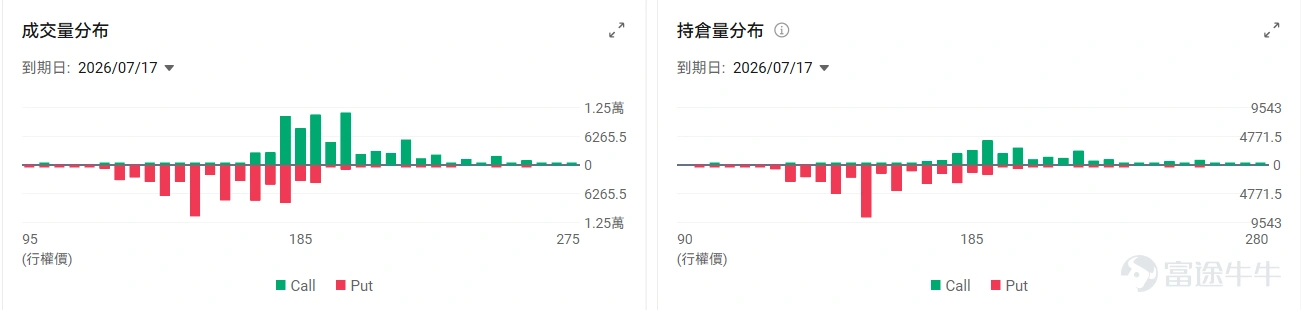
Among the options expiring this week, the most actively traded were call options with strike prices between USD 180 and USD 200, followed closely by put options with a USD 150 strike price, indicating thatsome investors are implementing downside protection.
On the first trading day of U.S. stock options, $SK hynix (SKHY.US)$ Surged 27% overnight, fully recovering all losses since its listing. As of the close of South Korean stock market on the afternoon of July 15, SKHY’s market capitalization stood at approximately USD 1.41 trillion.$SK Hynix (000660.KR)$ The local South Korean shares have a market cap of USD 988.724 billion, trading at a premium of about 42.6%, far exceeding the initial listing spread of around 3% from last week’s offering. On the following day (July 15), SK Hynix fell more than 6% in pre-market trading, reflecting high volatility. This phenomenon stems partly from the fact that arbitrage channels between the U.S. and South Korea have not yet opened, and short-term call options have fueled trading enthusiasm for the ADRs. With arbitrage channels still closed, bullish-bearish divergence is intensifying SK Hynix listed in the U.S. via ADRs (American Depositary Receipts), which are instruments issued by a U.S. depositary bank backed by underlying local shares (i.e., SK Hynix shares traded in South Korea). According to SK Hynix’s official website announcement, each U.S.-listed ADR is convertible into 1/10 of a South Korean share of SK Hynix. Under normal circumstances, if significant price divergence emerges between the two markets, investors can profit from arbitrage by buying cheaper South Korean shares, converting them into U.S. ADRs, and selling at a higher price. However, according to confirmation from the Korea Securities Depository, The underlying new local shares in Korea corresponding to this ADR issuance are expected to list domestically on July 29. Applications for conversion between the local shares and ADRs will only be possible after the new local shares begin trading...
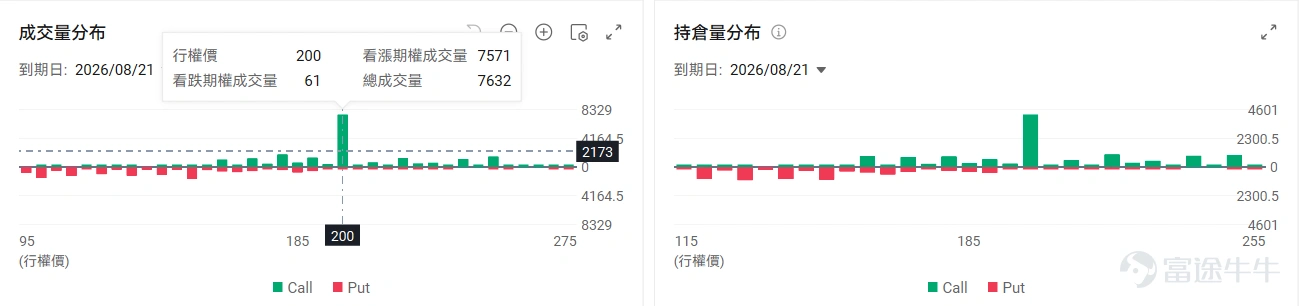
Call options expiring in August with a USD 200 strike price saw trading volume exceeding 7,571 contracts,reflecting investor confidence in the stock's potential to break above USD 200 in the medium term.
On the first trading day of U.S. stock options, $SK hynix (SKHY.US)$ Surged 27% overnight, fully recovering all losses since its listing. As of the close of South Korean stock market on the afternoon of July 15, SKHY’s market capitalization stood at approximately USD 1.41 trillion.$SK Hynix (000660.KR)$ The local South Korean shares have a market cap of USD 988.724 billion, trading at a premium of about 42.6%, far exceeding the initial listing spread of around 3% from last week’s offering. On the following day (July 15), SK Hynix fell more than 6% in pre-market trading, reflecting high volatility. This phenomenon stems partly from the fact that arbitrage channels between the U.S. and South Korea have not yet opened, and short-term call options have fueled trading enthusiasm for the ADRs. With arbitrage channels still closed, bullish-bearish divergence is intensifying SK Hynix listed in the U.S. via ADRs (American Depositary Receipts), which are instruments issued by a U.S. depositary bank backed by underlying local shares (i.e., SK Hynix shares traded in South Korea). According to SK Hynix’s official website announcement, each U.S.-listed ADR is convertible into 1/10 of a South Korean share of SK Hynix. Under normal circumstances, if significant price divergence emerges between the two markets, investors can profit from arbitrage by buying cheaper South Korean shares, converting them into U.S. ADRs, and selling at a higher price. However, according to confirmation from the Korea Securities Depository, The underlying new local shares in Korea corresponding to this ADR issuance are expected to list domestically on July 29. Applications for conversion between the local shares and ADRs will only be possible after the new local shares begin trading...
In this environment of heightened price volatility, if you seek stable returns and wish to avoid overnight anxiety, using options to smooth out gains and losses on your underlying equity positions becomes even more critical.
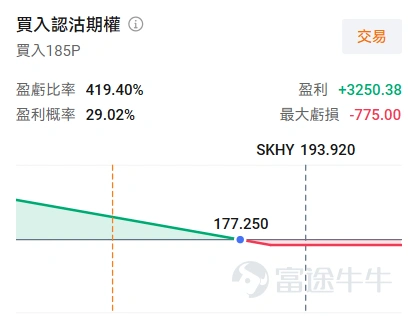
1. If you already hold storage-related stocks or leveraged ETFs and are concerned about substantial losses from sharp market swings,
Investors should leverage the protective nature of put options to hedge their positions amid heightened market volatility ahead of the start of ADR conversions.buy a put optionUse options as insurance to protect your position. When the stock price falls, put option prices rise, which can partially offset losses from your long equity position, allowing you to pursue upside gains while limiting your potential downside to a more manageable level. Although option premiums are relatively expensive right now, this strategy caps your maximum loss and lets you hold your position with greater peace of mind while waiting for future opportunities.
Note: Conversely, if you are short the stock and incur losses when the stock price rises, buying call options can help hedge part of that risk~
(The design images displayed on screen are for illustrative purposes only and do not constitute any investment advice or guarantee; market conditions change frequently, and the prices shown do not reflect actual market values.)
On the first trading day of U.S. stock options, $SK hynix (SKHY.US)$ Surged 27% overnight, fully recovering all losses since its listing. As of the close of South Korean stock market on the afternoon of July 15, SKHY’s market capitalization stood at approximately USD 1.41 trillion.$SK Hynix (000660.KR)$ The local South Korean shares have a market cap of USD 988.724 billion, trading at a premium of about 42.6%, far exceeding the initial listing spread of around 3% from last week’s offering. On the following day (July 15), SK Hynix fell more than 6% in pre-market trading, reflecting high volatility. This phenomenon stems partly from the fact that arbitrage channels between the U.S. and South Korea have not yet opened, and short-term call options have fueled trading enthusiasm for the ADRs. With arbitrage channels still closed, bullish-bearish divergence is intensifying SK Hynix listed in the U.S. via ADRs (American Depositary Receipts), which are instruments issued by a U.S. depositary bank backed by underlying local shares (i.e., SK Hynix shares traded in South Korea). According to SK Hynix’s official website announcement, each U.S.-listed ADR is convertible into 1/10 of a South Korean share of SK Hynix. Under normal circumstances, if significant price divergence emerges between the two markets, investors can profit from arbitrage by buying cheaper South Korean shares, converting them into U.S. ADRs, and selling at a higher price. However, according to confirmation from the Korea Securities Depository, The underlying new local shares in Korea corresponding to this ADR issuance are expected to list domestically on July 29. Applications for conversion between the local shares and ADRs will only be possible after the new local shares begin trading...
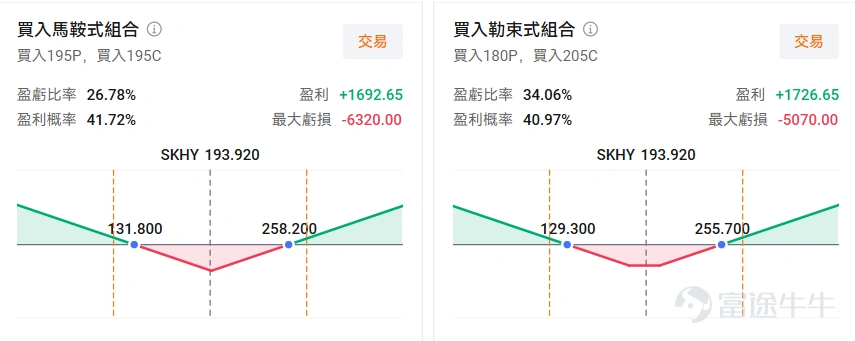
2. If you're uncertain about the specific direction of the stock price but expect increased volatility,
you can usea long straddle or long strangle.This strategy involves simultaneously buying a call option and a put option. As the stock price moves, the intrinsic values of the call and put offset each other, but heightened volatility can increase the extrinsic value of both options, thereby generating profit from the overall position.
However, note that implied volatility for options is currently at a relatively high level; if implied volatility declines, it could lead to losses for buyers of this strategy. If you believe the stock price will remain range-bound with minimal movement until expiration, you could instead take the opposite side by selling this strategy and profit from time decay (theta), provided you maintain sufficient margin collateral.
(The design images displayed on screen are for illustrative purposes only and do not constitute any investment advice or guarantee; market conditions change frequently, and the prices shown do not reflect actual market values.)
On the first trading day of U.S. stock options, $SK hynix (SKHY.US)$ Surged 27% overnight, fully recovering all losses since its listing. As of the close of South Korean stock market on the afternoon of July 15, SKHY’s market capitalization stood at approximately USD 1.41 trillion.$SK Hynix (000660.KR)$ The local South Korean shares have a market cap of USD 988.724 billion, trading at a premium of about 42.6%, far exceeding the initial listing spread of around 3% from last week’s offering. On the following day (July 15), SK Hynix fell more than 6% in pre-market trading, reflecting high volatility. This phenomenon stems partly from the fact that arbitrage channels between the U.S. and South Korea have not yet opened, and short-term call options have fueled trading enthusiasm for the ADRs. With arbitrage channels still closed, bullish-bearish divergence is intensifying SK Hynix listed in the U.S. via ADRs (American Depositary Receipts), which are instruments issued by a U.S. depositary bank backed by underlying local shares (i.e., SK Hynix shares traded in South Korea). According to SK Hynix’s official website announcement, each U.S.-listed ADR is convertible into 1/10 of a South Korean share of SK Hynix. Under normal circumstances, if significant price divergence emerges between the two markets, investors can profit from arbitrage by buying cheaper South Korean shares, converting them into U.S. ADRs, and selling at a higher price. However, according to confirmation from the Korea Securities Depository, The underlying new local shares in Korea corresponding to this ADR issuance are expected to list domestically on July 29. Applications for conversion between the local shares and ADRs will only be possible after the new local shares begin trading...
Finally, we have a small gift for fellow investors—feel free to claim youroptions beginner welcome pack
*This promotion is exclusively available to invited Hong Kong users. Click to learn moreDetailed event rules>>
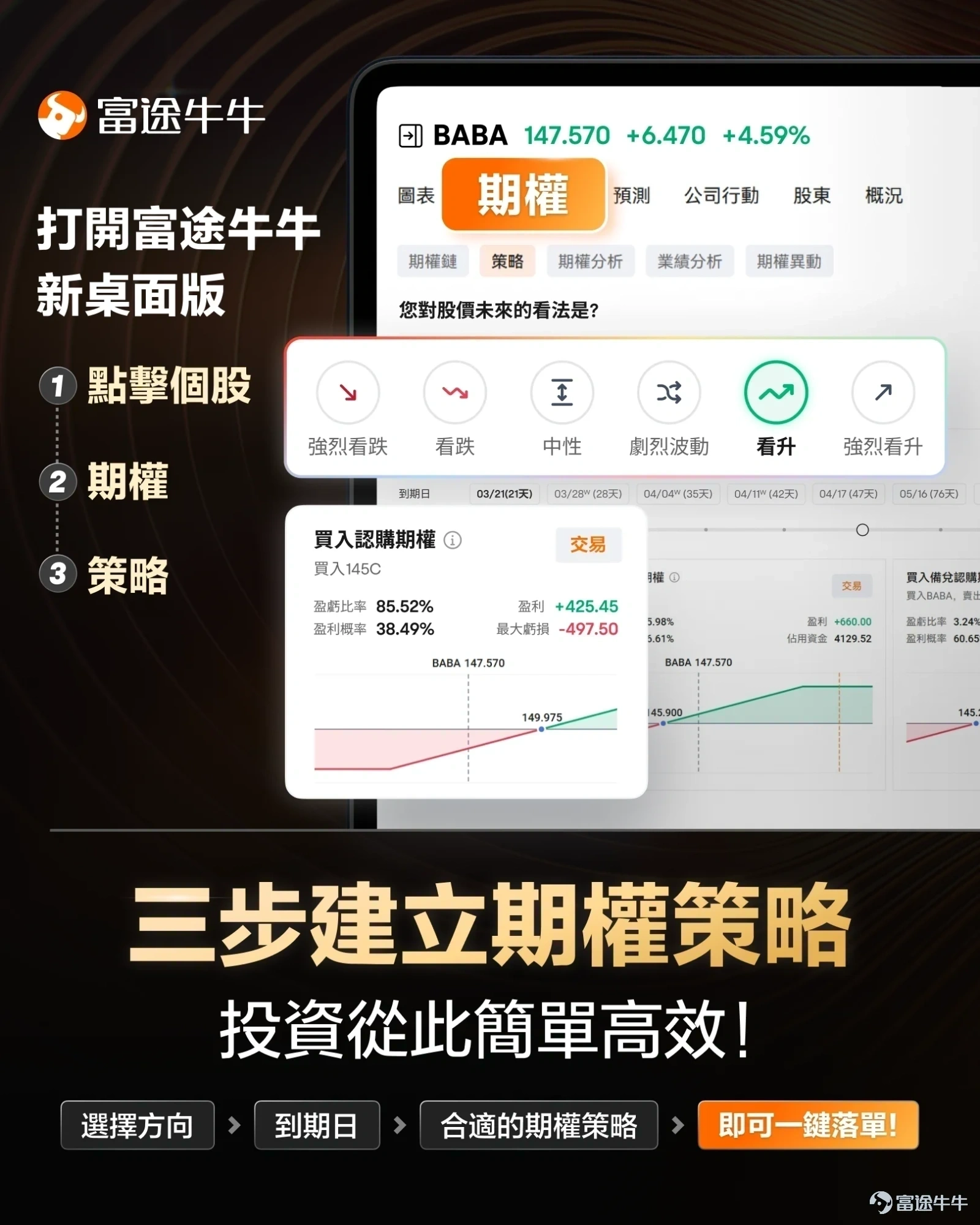
Market conditions are complex and volatile,Options strategiesare plentiful—unsure which to choose? Futubull helps you build one in three simple steps.Choose your strategy, and investing becomes simple and efficient!
On the first trading day of U.S. stock options, $SK hynix (SKHY.US)$ Surged 27% overnight, fully recovering all losses since its listing. As of the close of South Korean stock market on the afternoon of July 15, SKHY’s market capitalization stood at approximately USD 1.41 trillion.$SK Hynix (000660.KR)$ The local South Korean shares have a market cap of USD 988.724 billion, trading at a premium of about 42.6%, far exceeding the initial listing spread of around 3% from last week’s offering. On the following day (July 15), SK Hynix fell more than 6% in pre-market trading, reflecting high volatility. This phenomenon stems partly from the fact that arbitrage channels between the U.S. and South Korea have not yet opened, and short-term call options have fueled trading enthusiasm for the ADRs. With arbitrage channels still closed, bullish-bearish divergence is intensifying SK Hynix listed in the U.S. via ADRs (American Depositary Receipts), which are instruments issued by a U.S. depositary bank backed by underlying local shares (i.e., SK Hynix shares traded in South Korea). According to SK Hynix’s official website announcement, each U.S.-listed ADR is convertible into 1/10 of a South Korean share of SK Hynix. Under normal circumstances, if significant price divergence emerges between the two markets, investors can profit from arbitrage by buying cheaper South Korean shares, converting them into U.S. ADRs, and selling at a higher price. However, according to confirmation from the Korea Securities Depository, The underlying new local shares in Korea corresponding to this ADR issuance are expected to list domestically on July 29. Applications for conversion between the local shares and ADRs will only be possible after the new local shares begin trading...
Options Risk Warning:An option is a contract that gives the holder the right, but not the obligation, to buy or sell an underlying asset at a predetermined price on or before a specified date. The price of an option is influenced by multiple factors, including the current price of the underlying asset, the strike price, time to expiration, and implied volatility. Implied volatility reflects the market’s expectation of future price fluctuations over the life of the option; it is derived by reverse-engineering the Black-Scholes option pricing model and is commonly viewed as a gauge of market sentiment. When investors anticipate greater volatility, they may be willing to pay higher prices for options to hedge their risk exposure, resulting in higher implied volatility. Traders and investors use implied volatility to assess the attractiveness of option prices, identify potential mispricings, and manage risk exposure.
Disclaimer:This content does not constitute an offer, solicitation, recommendation, advice, opinion, or any form of guarantee regarding any securities, financial products, or instruments. The risk of loss from trading options can be substantial. In certain circumstances, your losses may exceed the initial margin deposit. Even if you place contingent orders such as 'stop-loss' or 'limit' orders, there is no assurance that these will prevent losses. Market conditions may render such orders unexecutable. You may be required to deposit additional margin on short notice. If you fail to meet the margin call within the specified timeframe, your open positions may be liquidated. You remain liable for any resulting deficit in your account. Therefore, you should thoroughly research and understand options before trading, and carefully consider whether such transactions are suitable for you based on your financial condition and investment objectives. If you trade options, you should be familiar with the procedures for exercising options and handling expiration, as well as your rights and obligations upon exercise or expiration. Options trading involves a high degree of risk and is not suitable for all investors. Investors should carefully read"Characteristics and Risks of Standardized Options"
Risk Disclaimer: The above content only represents the author's view. It does not represent any position or investment advice of Futu. Futu makes no representation or warranty.Read more
Thumbs Up
32
913K Views
Report
Comments
Write a Comment...
32
33