
Stock price plunges in its biggest drop in 58 years! IBM's second-quarter revenue missed expectations as customer demand shifted, and CEO admits 'execution fell short'
Author and source: Wall Street News
IBM’s second-quarter results took a hit. The company disclosed that in late June, customer capital expenditure direction shifted dramatically,with some budget allocations abruptly moving from software and mainframe segments to hardware resources such as servers, storage, and memory—areas facing tight supply—causing multiple large transactions to fail to close on schedule.Dragged down by this, second-quarter revenue came in significantly below market expectations.
IBM said in a statement on Tuesday,Preliminary second-quarter revenue was $17.2 billion, below the analyst consensus estimate of $17.9 billion. Sales in its infrastructure business declined particularly sharply, falling 7%.The company is still reviewing its financial data, and the final results expected to be released next week may differ slightly from these preliminary figures.
IBM CEO Arvind Krishna said the company had anticipated that supply chain issues would weigh on performance, but it did not expect clients to shift their budgets away from IBM products toward hardware such as servers, storage equipment, and memory to hedge against the risk of further price increases.
"The situation turned out worse than we expected," Krishna added, noting that IBM Z mainframes and their associated software were the primary drag on the company's underperformance.
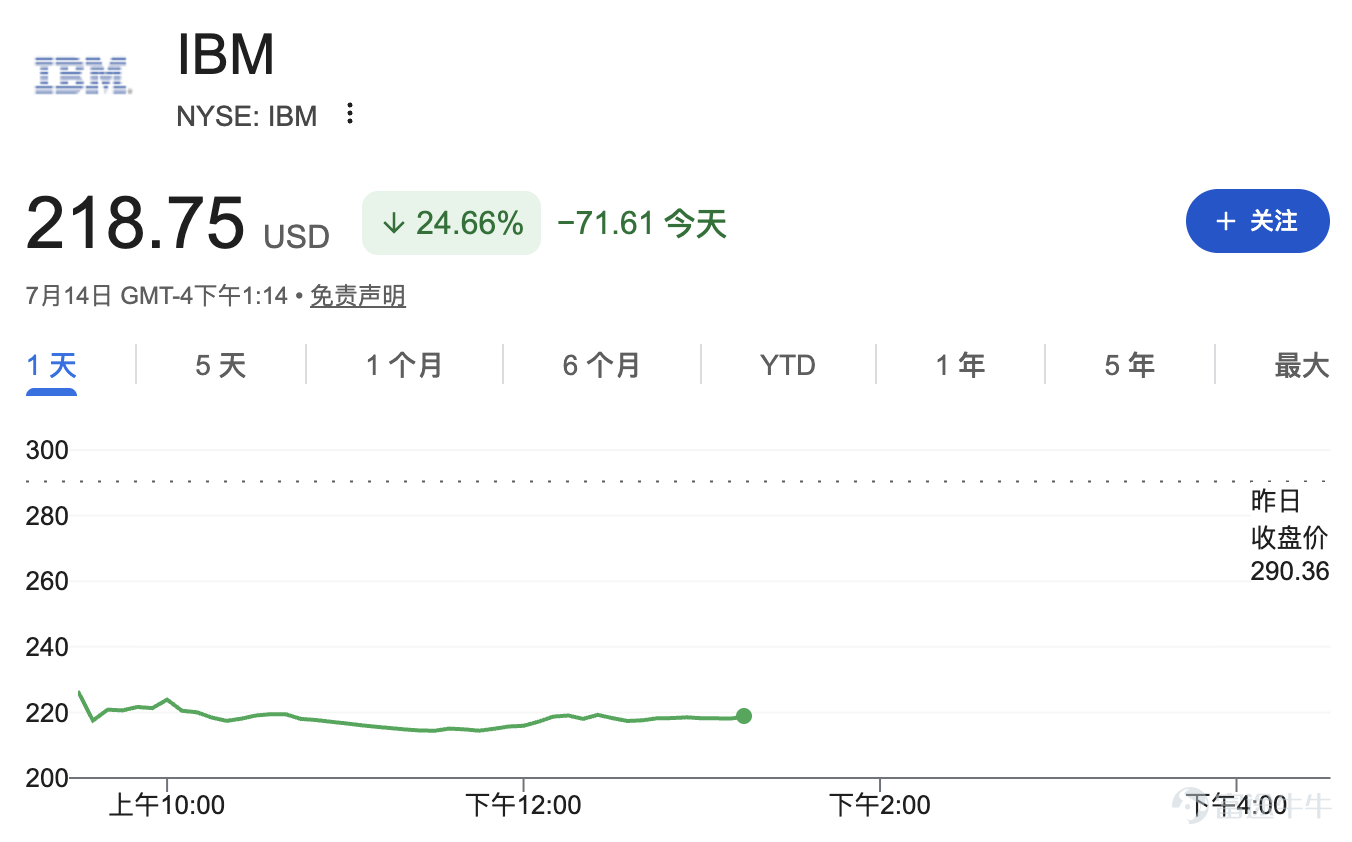
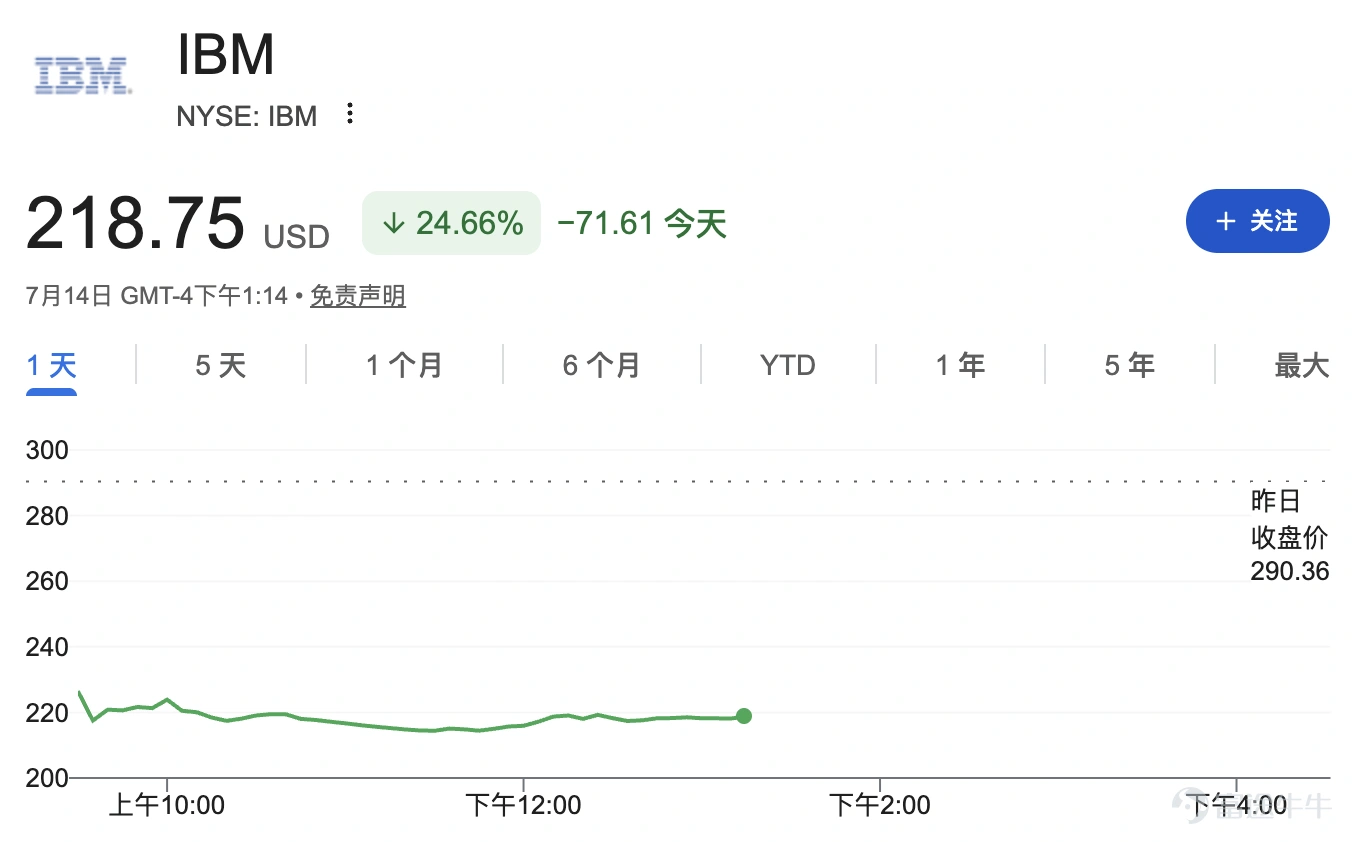
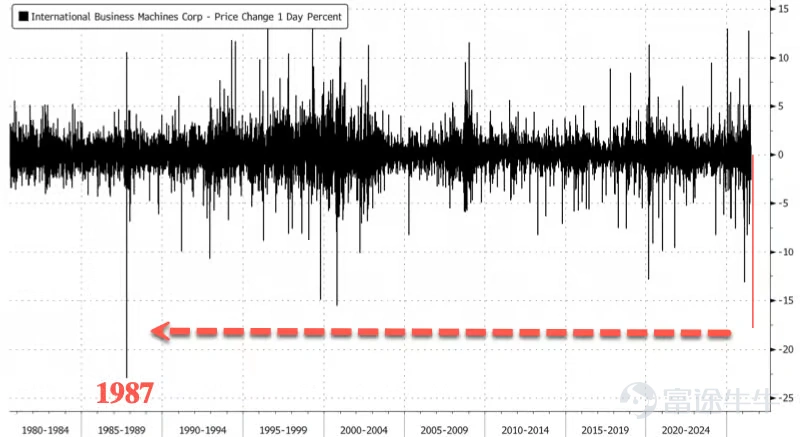
Following the announcement,IBM’s stock plunged as much as 26% during U.S. trading hours, marking its steepest intraday drop since at least January 3, 1968.The weak results also weighed on other software stocks, with Workday and ServiceNow each falling about 6%; meanwhile, chipmakers like SK Hynix and Arm saw their shares rise.
Krishna noted that in the final weeks of June, clients’ quarterly capital expenditure strategies shifted noticeably, with some enterprises prioritizing purchases of infrastructure hardware—such as servers, storage, and memory—to hedge against anticipated price increases and supply constraints.
This shift directly impacted IBM’s software and infrastructure segments. Preliminary company data showed software revenue grew 5% year-over-year in Q2, consulting revenue was roughly flat (up 1% on a constant-currency basis), while infrastructure revenue declined 7% year-over-year—significantly weaker than the market’s prior expectation of a low-single-digit decline for the full year.
IBM had previously expected the z17 mainframe product cycle to serve as a key growth driver for its infrastructure business, but actual performance fell short of expectations.Krishna stated that weak sales of the z platform and its associated software ecosystem—particularly transaction-processing software—were a major contributor to the earnings shortfall this quarter.
He emphasized,The primary reason for the disappointing results was the delay in closing several large deals, not a disappearance of client demand.However, the market will closely monitor results in upcoming quarters to determine whether these orders were merely postponed or if enterprise technology budgets are undergoing a more fundamental reallocation.
This earnings volatility is especially sensitive for IBM. The company had viewed the launch of the z17 mainframe as one of its most significant product cycles in recent years, aiming to drive growth across hardware, software, and services ecosystems.
However, Q2 results indicate that enterprise clients, amid the AI infrastructure investment boom, are rebalancing their IT budgets—redirecting funds toward compute equipment, storage, and supply chain resources, while spending on traditional enterprise software and mainframe-related investments faces downward pressure.
Krishna stated that the company had previously anticipated supply chain disruptions would affect customer procurement, but underestimated the extent to which clients were reprioritizing their capital expenditures. Additionally, the rapidly evolving cybersecurity landscape recently has diverted the attention of some client executives, impacting purchasing decisions.
Over the past few years, IBM has been striving to shed its image as a traditional hardware and mainframe vendor, accelerating its shift toward becoming an enterprise software and AI infrastructure provider through acquisitions such as Red Hat, HashiCorp, and Confluent.
The company previously emphasized that artificial intelligence would not weaken IBM’s business; rather, it would drive increased demand from clients for its infrastructure software, enabling enterprises to connect and manage diverse AI models more efficiently.
However, this latest profit warning has reignited market concerns about the structure of enterprise technology spending. IBM’s share price had already taken a hit in February after AI startup Anthropic launched a tool designed to modernize legacy programming languages on IBM mainframes.
The below-expectations second-quarter results have further reinforced market skepticism: as AI infrastructure investment enters a high-spending phase, are corporate IT budgets shifting away from mature software products toward hardware resources such as computing power and storage? If this trend persists, both IBM’s software growth thesis and its AI transformation roadmap will face renewed challenges.
Risk Disclaimer: The above content only represents the author's view. It does not represent any position or investment advice of Futu. Futu makes no representation or warranty.Read more

Comments
to post a comment
2