
What's the Talk on US Stocks | A Quiet Week, but Are US Treasuries Poised for Turmoil?

Chip stocks tumbled last night, while AI application software rallied against the trend! How to position for structural opportunities in AI spending?
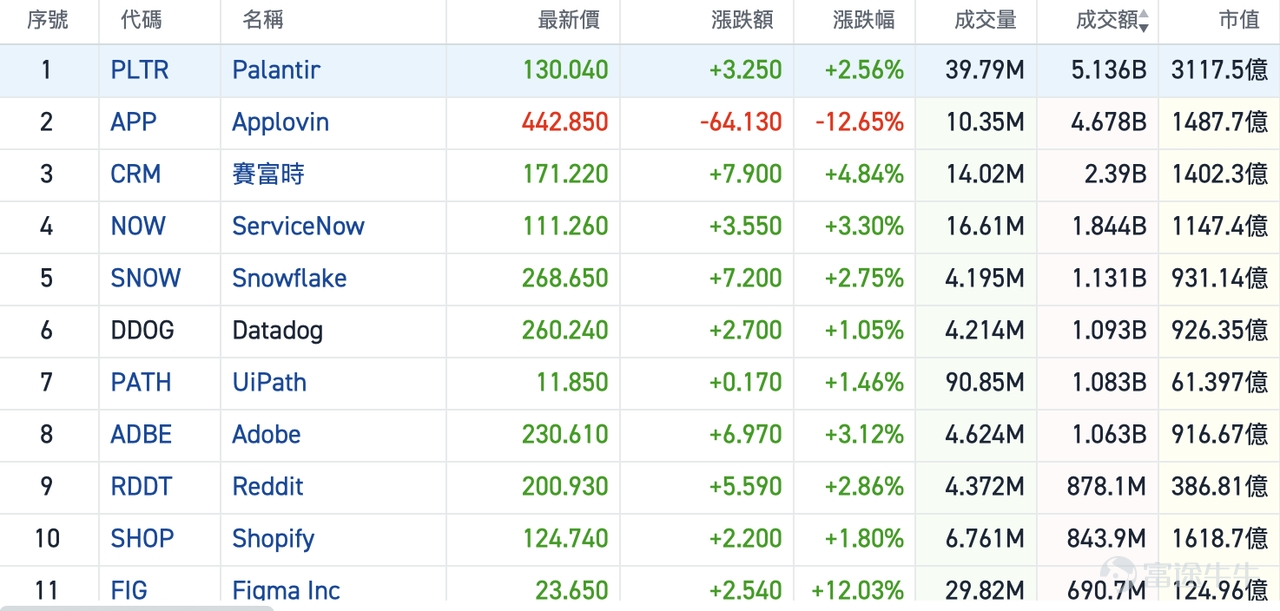
On July 13 (Eastern Time), U.S. equities declined across the board under dual pressures from escalating geopolitical tensions and hawkish interest rate expectations. $Nasdaq Composite Index (.IXIC.US)$ fell by approximately 1.55%, $PHLX Semiconductor Index (.SOX.US)$ plummeted nearly 5%, with chip and AI-computing-related hardware stocks all under pressure. In stark contrast, $AI application software (LIST23492.US)$ most gained, $Figma Inc (FIG.US)$ surged over 12%, $Salesforce (CRM.US)$ rose nearly 5%, $ServiceNow (NOW.US)$ 、 $Adobe (ADBE.US)$ climbed 3%; among mega-cap tech stocks, $Microsoft (MSFT.US)$ gained about 1.53% against the broader downtrend.
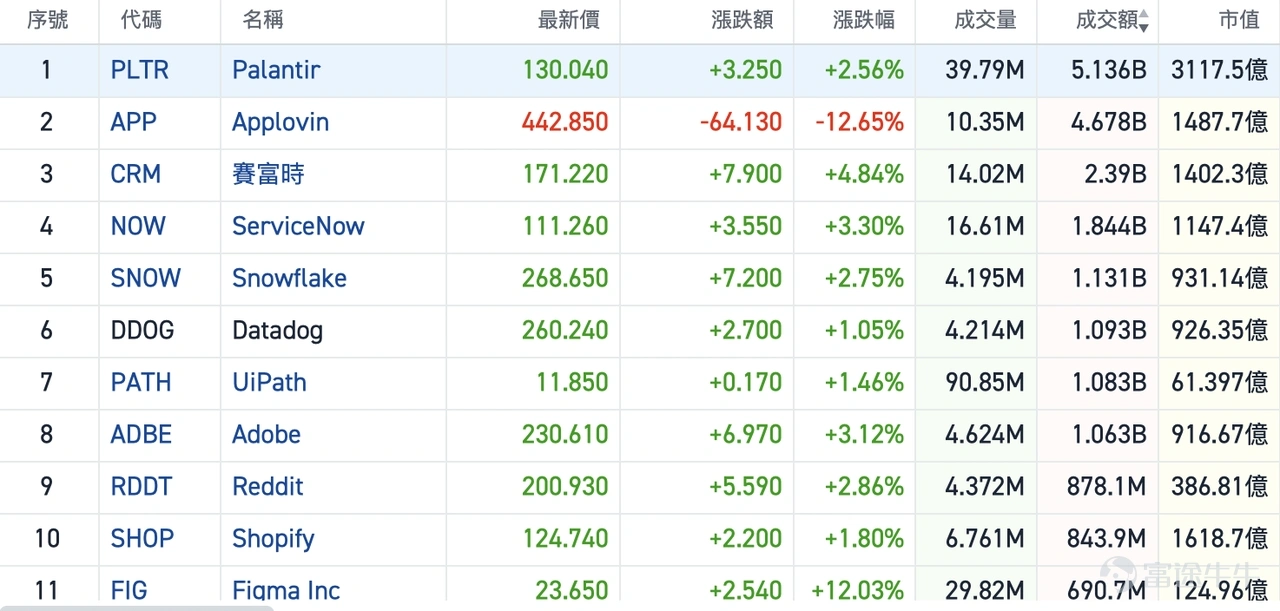
For investors, this market structure—hardware stocks selling off while software names strengthen—does not signal the end of the AI theme, but rather a rotation of capital:the market is shifting its focus from how much more AI computing power can be bought to which companies are actually receiving enterprise AI budgets.
Citi’s outlook on the software sector released ahead of Q2 earnings season provides an institutional explanation for this round of price signals—enterprise AI spending is undergoing a 'quality migration.'
Macro headwinds are exerting downward pressure, while divergence is emerging at the structural level.
The prior trading session saw a clear selloff driver. Escalating U.S.-Iran tensions pushed up oil prices and risk-off sentiment, lifting inflation expectations; heightened hawkish pressure in bond markets further compressed growth stock valuations. The volatile semiconductor chain became the outlet for this sentiment, with both semiconductor equipment and chip design stocks broadly weakening.
It’s important to distinguish between two types of risks.One stems from macro conditions and positioning-driven risk aversion,while the other arises from an actual slowdown in enterprise AI demand itself.Current market behavior aligns more closely with the former.
Within the software sector, names with platform characteristics—those closer to enterprise IT procurement decision-making—have shown relative resilience or even risen against the broader downtrend, indicating that capital has not abandoned AI but is instead refocusing on those truly positioned to absorb budget allocations.
Citi: IT budgets are recovering, but new spending is highly concentrated
Citi’s latest CIO survey found that after a weak Q1, technology spending improved quarter-over-quarter in Q2, with some delayed projects restarting; feedback from partners also suggests that transactions postponed earlier in the year may materialize in Q2. However, this improvement does not mean broad-based gains.
According to its survey: global IT budgets are expected to grow by approximately 3.3% over the next year; data analytics and AI have surpassed cybersecurity as the top investment priority;Around 6.5% of IT budgets have already been specifically allocated to AI-related initiatives.
Enterprise AI-related budgets are becoming highly concentrated among a select group of platform companies that possess robust data infrastructure and AI-enabling capabilities,New budget allocations are disproportionately flowing into AI infrastructure, cloud platforms, and data modernization projects,Traditional application software, meanwhile, faces increasingly intense competitive pressure and scrutiny over its business model.
Citi characterizes this trend as a 'quality migration'—AI budgets are consolidating toward platforms capable of demonstrating quantifiable return on investment (ROI).
For investors, this means K-shaped divergence within the software industry will continue to deepen:Companies positioned at the intersection of data infrastructure and AI are better positioned to capture enterprise strategic-level spending; traditional, highly commoditized application software vendors, on the other hand, face intensifying competition, slowing bookings, and ongoing skepticism about their business models.
Based on this view, Citi has named $MongoDB (MDB.US)$、 $Snowflake (SNOW.US)$and $Palantir (PLTR.US)$as its top pick in the software sector, believing these companies—situated at the 'intersection of data infrastructure and AI'—are best positioned to capitalize on the growth in enterprise AI spending.
Why these three? Data is the 'oil' of the AI era.
The underlying logic is actually quite straightforward. As this round of the AI arms race has progressed, the market has increasingly recognized that:While compute power (chips) is undoubtedly important, even the most powerful models cannot close the business loop without robust data infrastructure.According to Gartner research, among the five key factors influencing AI business value, 'data foundation' ranks first, accounting for as much as 27%.
$MongoDB (MDB.US)$ As the leader in NoSQL databases, its Atlas cloud platform is becoming a critical hub for enterprises migrating from legacy databases to cloud-native, AI-ready architectures, with growing demand for AI applications and vector search tools continuing to fuel its expansion. $Snowflake (SNOW.US)$ 's AI Data Cloud and Cortex platform are directly positioned to capture the growth红利 in AI-driven data consumption. Meanwhile, $Palantir (PLTR.US)$ It has even built a unique moat at the AI 'orchestration layer'—helping enterprises and governments embed AI into real decision-making workflows and directly delivering quantifiable business outcomes. Citi maintains a 'Buy' rating on all three, with price targets of $455, $320, and $225, respectively.
Additionally, Citi is bullish on $Microsoft (MSFT.US)$ (price target: $620) in the hyperscale and AI infrastructure space, and favors $Figma Inc (FIG.US)$ and $Shopify (SHOP.US)$ in the application software segment, believing they hold early advantages in AI-powered design and AI-driven agent-based commerce, respectively. The least favored names are $ZoomInfo (GTM.US)$ and $Adobe (ADBE.US)$ , as Citi noted both companies significantly lowered their earnings guidance last quarter, facing execution risks and pressure from slowing booking growth.
Key variable: Earnings season will serve as a test window for narrative realization
Whether this rally can continue hinges not on daily price swings, but on whether enterprise budgets are genuinely translating into trackable operational metrics for platform companies.Therefore, during this earnings season, investors should closely monitor metrics such as AI-related product contributions, cloud consumption growth, booking and renewal rates, and the quality of customer expansion.
On a broader level, Citi has raised its forecast for total AI industry revenue from approximately $2.8 trillion to about $3.3 trillion for 2026–2030, and increased its capital expenditure forecast for the same period from roughly $8.0 trillion to around $8.9 trillion—indicating a positive outlook. However, at the individual stock level, divergence will quickly widen.
A more practical framework for retail investors is this: hardware-side volatility largely reflects macro sentiment and positioning, while software-side divergence more directly mirrors shifts in enterprise procurement priorities.
An even more interesting phenomenon is that $Apple (AAPL.US)$has recently become a 'beneficiary' of the shifting AI narrative.Since hitting a low on June 25, Apple’s stock has surged 15%, adding nearly $600 billion in market capitalization and reclaiming its all-time high. Why? The market is beginning to question whether the massive investments in AI infrastructure chips will yield commensurate returns, and Apple’s conservative strategy of staying out of the AI data center arms race is turning from a weakness into a strength.
If AI investment shifts from the infrastructure-building phase to the application-driven phase, software platforms with data, use cases, and customer stickiness could be the true beneficiaries in the next stage.
Options strategies
Currently, implied volatility (IV) percentiles for software stocks are generally elevated. Taking $Palantir (PLTR.US)$ as an example, data as of July 13 shows its IV percentile sits at the historically high level of 80%, with a put/call ratio of 0.45, indicating most investors are betting on further upside.
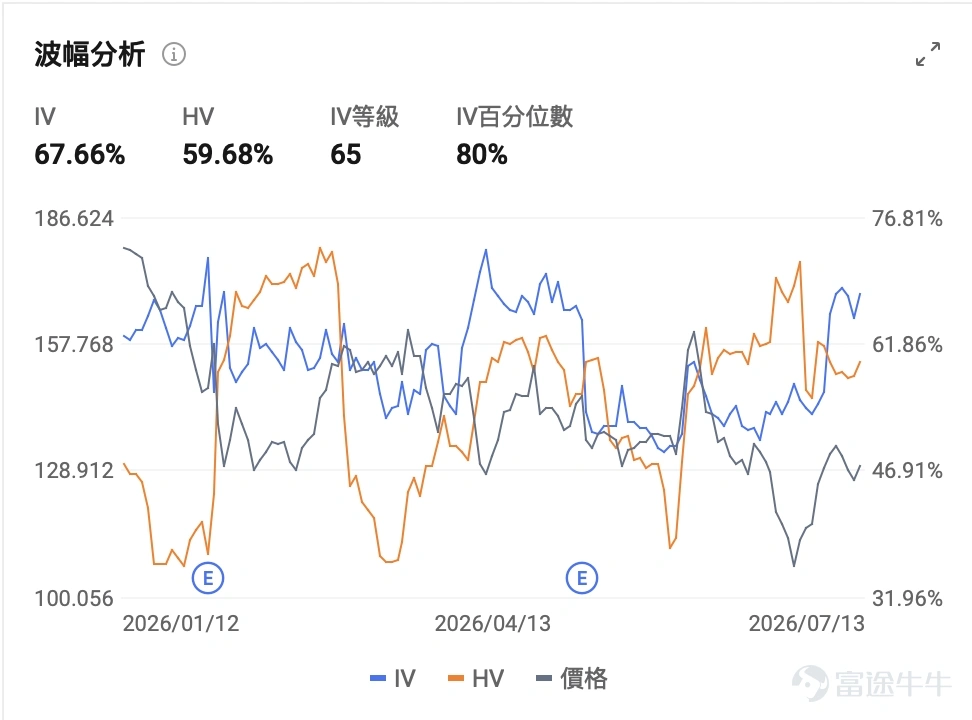
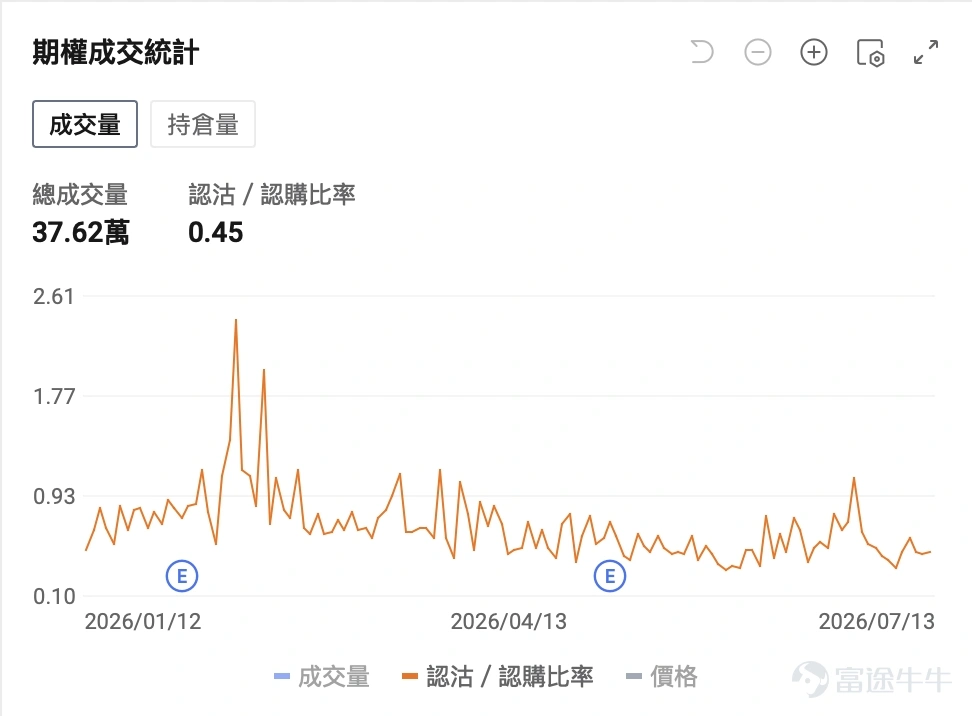
For investors bullish on AI application software stocks but reluctant to chase the underlying shares at current highs, consider the following two strategies:
1. Bull Call Spread:
If you agree with the medium-term bullish outlook but don’t want to bear the full cost of buying the stock outright, consider a bull call spread: buy a call option with a lower strike price while simultaneously selling a call option with a higher strike price. Taking $Palantir (PLTR.US)$ as an example, if you’re optimistic about its Q2 earnings but concerned about post-earnings volatility, this strategy can significantly reduce premium costs and cap maximum risk—ideal for a moderately bullish stance while managing premium outlay.
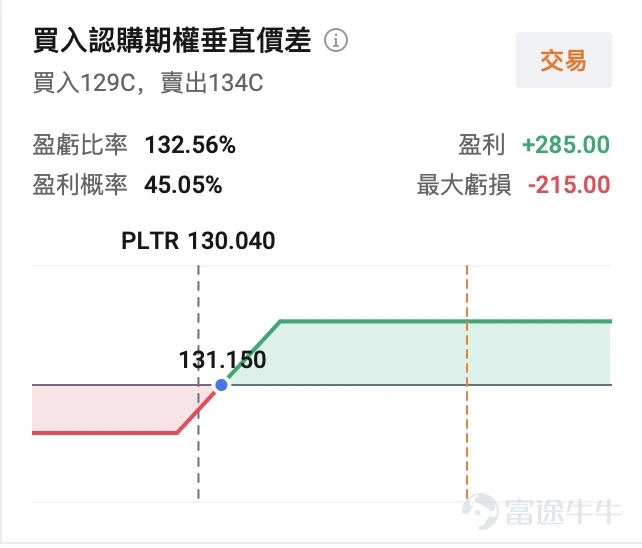
(Using PLTR as an example to explain options strategies; the illustrative images shown on screen are for demonstration purposes only and do not constitute investment advice or guarantees. Market conditions change frequently, and the prices depicted do not reflect real-time data.)
2. Sell Out-of-the-Money Put Options (Short Put)
For risk-averse investors willing to wait for a pullback to establish a position, consider selling out-of-the-money put options above your acceptable entry price: either collect the premium as compensation for holding period risk, or get assigned shares near the strike price.
Take $Palantir (PLTR.US)$ Taking PLTR as an example, currently trading at $130.04 with Citi’s price target at $225—if you believe downside risk is limited, you could consider selling September or longer-dated out-of-the-money put options. If the stock price stays above the strike price, you keep the premium; if it drops to or below the strike, you acquire the shares at a discounted price.
Note that this strategy assumes adequate margin and position management, along with predefined fundamental invalidation criteria. If earnings reports disprove growth assumptions or guidance significantly deteriorates, promptly cut losses or adjust the strategy—do not treat premium collection as risk-free income.
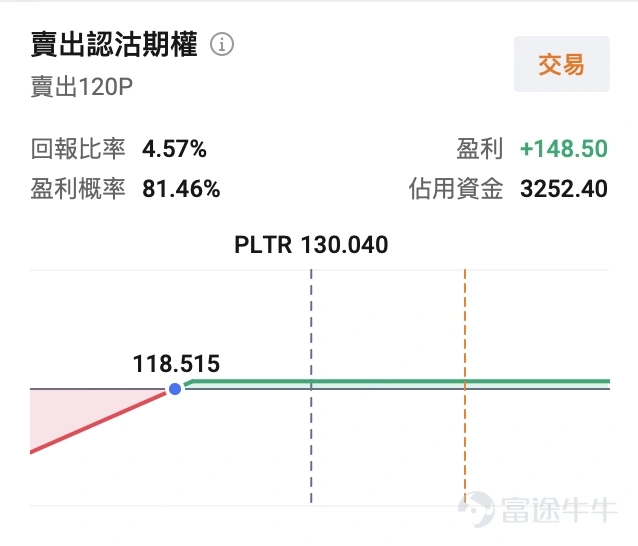
(Using PLTR as an example to explain options strategies; the illustrative images shown on screen are for demonstration purposes only and do not constitute investment advice or guarantees. Market conditions change frequently, and the prices depicted do not reflect real-time data.)
Summary
The recent rebound in the software sector suggests AI spending hasn’t disappeared but is shifting from broad narratives to consolidation around a few key platforms. For investors, the focus moving forward should not be whether AI trades still exist, but which companies can demonstrate—in their earnings reports—that they sit at the intersection of data infrastructure and verifiable ROI.
 Fellow investors, if you're considering getting into AI software stocks now, which trading strategy would you choose?
Finally, we have a small gift for our fellow investors—feel free to claim it!Options Starter Pack
*This promotion is exclusively available to invited HK users. Click to learn more.Detailed terms and conditions of the promotion >>
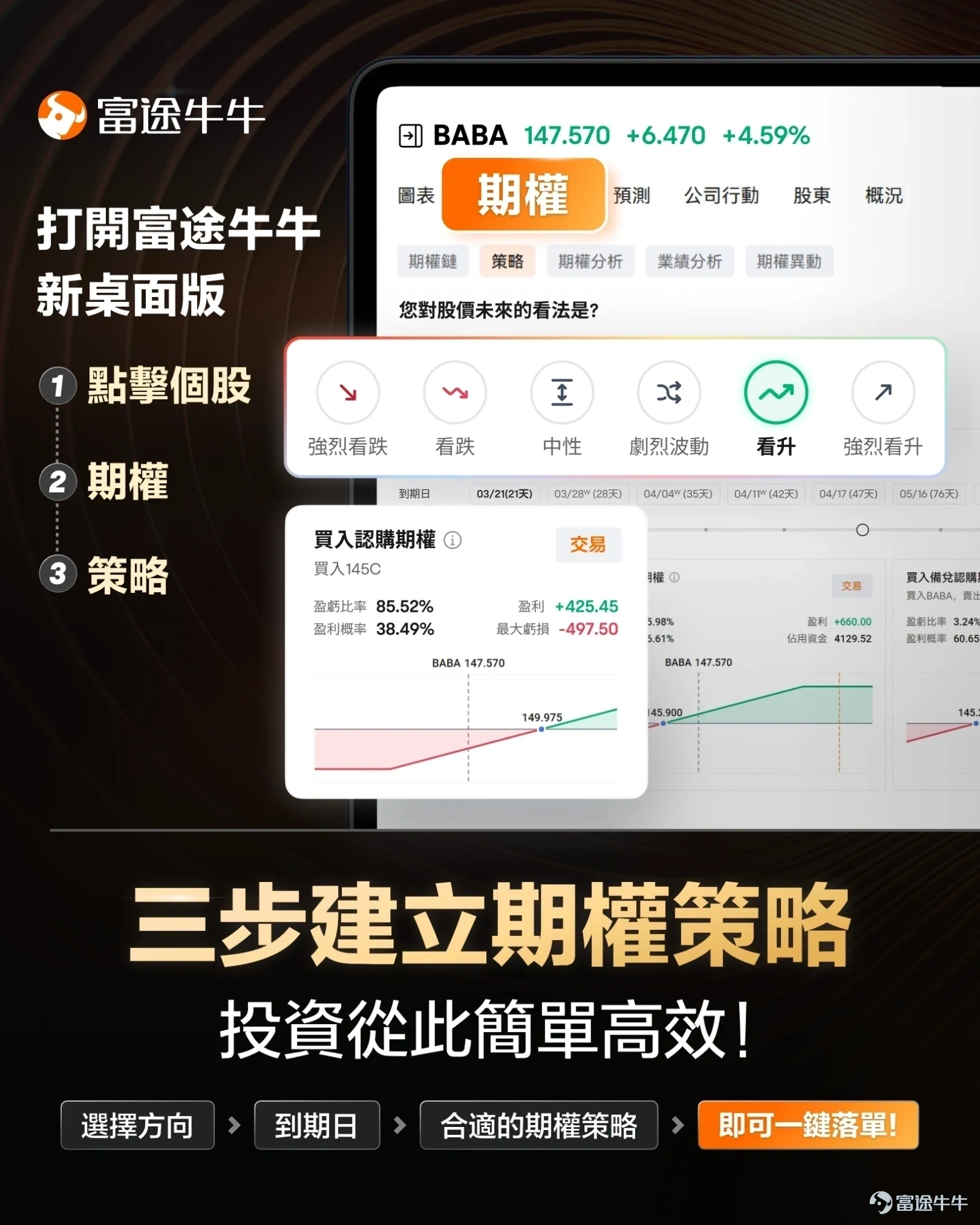
Market conditions are complex and ever-changing,Options strategiesToo many choices and unsure how to decide? Futubull helps you build yourOptions strategies, making investing simple and efficient from now on!
Options Risk Disclosure:An option is a contract that gives the holder the right—but not the obligation—to buy or sell an underlying asset at a predetermined price on or before a specific date. Option prices are influenced by multiple factors, including the current price of the underlying asset, the strike price, time to expiration, and implied volatility. Implied volatility reflects the market’s expectation of future price fluctuations over the option's life and is derived by reversing the Black-Scholes option pricing model. It is commonly viewed as a gauge of market sentiment. When investors anticipate greater volatility, they may be willing to pay higher premiums for options to hedge their risk, resulting in higher implied volatility. Traders and investors use implied volatility to assess the attractiveness of option prices, identify potential mispricings, and manage risk exposure.
Disclaimer:This content does not constitute an offer, solicitation, recommendation, advice, opinion, or any guarantee regarding any securities, financial products, or instruments. The risk of loss in trading options can be substantial. In certain circumstances, your losses may exceed the initial margin deposit. Even if you set contingent orders such as 'stop-loss' or 'limit' orders, there is no assurance these will prevent losses. Market conditions may render such orders unexecutable. You may be required to deposit additional margin on short notice. If you fail to meet the margin call within the specified timeframe, your open positions may be liquidated. You remain fully liable for any deficit balance in your account resulting from such liquidation. Therefore, prior to trading options, you should thoroughly research and understand options and carefully consider whether such trading aligns with your financial situation and investment objectives. If you trade options, you should be familiar with the procedures for exercising options and handling expiration, as well as your rights and obligations upon exercise or expiration. Options trading involves substantial risk and is not suitable for all investors. Investors should carefully read"Characteristics and Risks of Standardized Options"。
Risk Disclaimer: The above content only represents the author's view. It does not represent any position or investment advice of Futu. Futu makes no representation or warranty.Read more


Comments (3)
to post a comment
11
17