
Tencent steps in to take over Manus—no fool’s bargain here
Author: Ye Er
Source: AI Lanmeihui
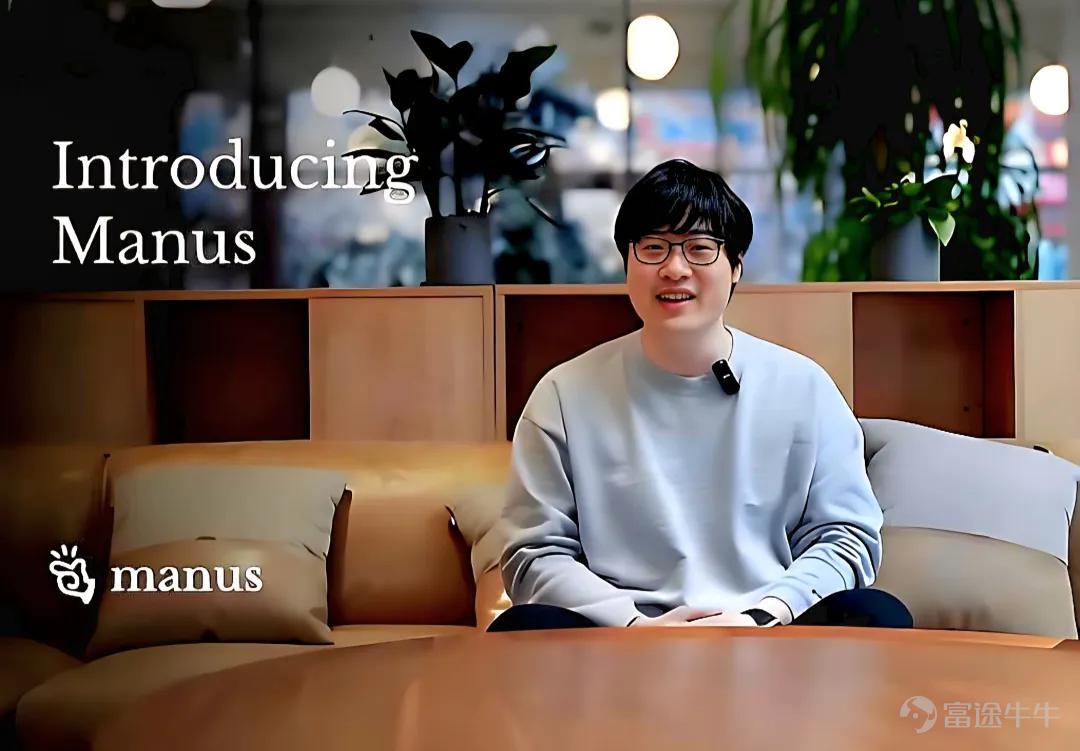
Ownership of the high-profile AI venture Manus is once again in flux.
Market sources indicate that Tencent is spearheading a consortium of Chinese capital to repurchase all of Manus’s equity from Meta at an estimated valuation of $2 billion. Upon completion of the deal, Tencent will become Manus’s largest single shareholder, though still holding a minority stake, and Manus will continue operating as an independent company.
Once finalized, this transaction will formally conclude the series of controversies over the past six months—including foreign acquisition attempts and regulatory interventions—by bringing the core AI asset back under domestic capital through a 'repurchase.'
The question is: why Tencent?
On the surface, Tencent, as an original shareholder of Manus, was deeply involved in the early growth trajectory of this high-profile AI venture. At the very beginning of Manus’s rise to fame, Tencent joined forces with top-tier institutions such as Sequoia China and ZhenFund to invest, making it a core early backer.
But fundamentally, leading the 'redemption' of Manus is likely a pivotal strategic move for Tencent to address its shortcomings in the general-purpose AI space.
Tencent is now sounding the trumpet for a counteroffensive in the AI arena.
For a long time, Tencent’s AI efforts—from large models to native applications—have been criticized externally for falling behind. However, as the focus shifts to AI agents and with the explosive popularity of WeChat AI and Workbuddy, Tencent has finally entered its comfort zone.
Manus will undoubtedly add further momentum.
In fact, much of Manus’s luster has already faded.
In March last year, Manus burst onto the scene. As the world’s first general-purpose AI agent product, it went viral overnight, with its beta invitation codes reportedly trading for as much as RMB 100,000.
At the time, Manus not only transcended the limitations of traditional AI assistants but also redefined the boundaries of human-AI collaboration through its ability to autonomously plan, execute complex tasks, and directly deliver results. Industry insiders hailed it as the biggest breakthrough in domestic AI technology since DeepSeek.
However, subsequently, on one hand, Manus deliberately distanced itself from the Chinese market and triggered regulatory backlash after being acquired by Meta for a quick exit; on the other hand, the surge in popularity of OpenClaw and rapid iterations by major players in the AI agent space have gradually eroded Manus’s first-mover advantage.
Even though Manus’s annualized revenue run rate has climbed from $100 million to $400–500 million within six months, reflecting substantial growth, this surge is largely attributable to the self-reinforcing ecosystem of Meta.

Once separated from Meta’s ecosystem, whether Manus can sustain its current performance level is clearly a major question mark.
This also implies that Tencent’s decision to repurchase all of Manus’s equity at a $2 billion valuation may not be financially prudent from a pure capital allocation standpoint.
But Tencent certainly won’t act as a 'gullible spender.'
First, Manus aligns precisely with Tencent’s current strategic focus on AI agents.
This year, Pony Ma explicitly articulated Tencent’s 'shrimp-farming' AI strategy, centering on building an open AI Agent ecosystem.
Tencent has already laid foundational groundwork with HunYuan large models, WeCom, and Tencent Cloud, but it still lacks a globally validated, general-purpose AI agent capable of executing complex, multi-step tasks autonomously across platforms.
Manus’s unique capabilities in task planning, cross-tool orchestration, and long-context execution precisely fill the most critical gap in Tencent’s ecosystem—the 'execution layer.' Internally, it can be embedded into WeChat to create a native AI automation tool for billions of users; externally, it enhances Tencent’s MaaS (Model-as-a-Service) agent solutions for enterprise clients, establishing a differentiated AI competitive edge.
Second, Manus serves as a mature global springboard for AI expansion.
This year, the open-source OpenClaw—dubbed a 'token cash cow'—has gone viral, directly driving surging revenues for Zhipu, Kimi, and MiniMax, whose incomes have multiplied several-fold in a short period. Yet, despite this overseas token boom, major players like Tencent have captured only a modest share of the spoils.
Since its surge in popularity in March 2025, Manus has already accumulated real-world usage data from millions of overseas users and built a complete, independent overseas sales, payment, and user operations system, fully validating its commercialization path—a capability that can also synergize with Tencent’s AI internationalization efforts.
More importantly, Tencent is now sounding the charge for an AI counteroffensive, and the repurchase of Manus has become part of this strategic push.
Earlier, at Tencent’s annual shareholder meeting, Ma Huateng remarked, 'A year ago, we thought we’d boarded a ship—but later realized it was leaking. Now, we finally feel we’re standing on solid ground, though we still can’t quite sit back comfortably; we hope the ship will pick up speed soon.'
This is precisely the most authentic reflection of Tencent’s AI transformation.
Over the past two years, Tencent has long found itself in an awkward position in the AI space—slow to break through and weak in implementation. From large models to consumer-facing (C-end) applications, it consistently lacked a standout, industry-defining product, leading many in the market to believe Tencent had fallen behind.
But this year, a clear trend has emerged: Tencent’s AI efforts are finally standing tall.
First, it brought in Yao Shunyu to restructure the HunYuan development framework, returning Tencent’s HunYuan large model to the mainstream table. Then, on the consumer side, WeChat AI sparked significant market imagination. Even more impressively, for enterprise (B-end) and productivity scenarios, Tencent launched WorkBuddy.

According to data from Analysys, WorkBuddy now boasts a cross-platform monthly active user (MAU) base of 20 million and daily active users (DAU) exceeding 13 million, making it the brightest star in Tencent’s current AI ecosystem.
Yet these achievements only signify that Tencent has finally gained a firm foothold in the AI race. What’s now more urgent is what Pony Ma described as 'making the ship sail faster'—shifting from steady positioning to proactive offense, from stacking use cases to securing technological leadership, and from passive following to active steering.
Tencent is already doing exactly that.
Data shows that in 2025, Tencent invested RMB 85.75 billion in R&D for the full year, including RMB 18 billion specifically allocated to AI. By the first quarter of 2026, its capital expenditure had already reached RMB 31.9 billion, with the vast majority directed toward computing infrastructure and large-model development. Tencent’s commitment to AI has clearly intensified.
At the strategic level, Tencent has once again deployed its proven ecosystem approach, adhering to its core philosophy of 'entrusting half its life to partners.' Moving beyond purely internal, closed-door R&D, it is now securing high-quality assets across the entire AI landscape through comprehensive industrial investments.
Prior to leading the recent buyback of Manus, Tencent increased its investment in Kimi in February; in May, during DeepSeek’s Series A round, Tencent made a significant RMB 10 billion investment; in July, it participated in Ke Ling’s funding round to address its gap in AIGC video generation—and now, with this move to lead the buyback of Manus, Tencent has, within just six months, strategically positioned itself behind nearly every top-tier domestic AI venture that possesses core technological barriers and clear commercialization potential.
It could even be described as an all-out shopping spree.
Clearly, Tencent’s determination is evident: it aims not only to fully shed its image of lagging in AI but also to reclaim a leadership position in the AI race.
The key question now is how much momentum this buyback of Manus will actually add to Tencent’s AI ambitions.
Risk Disclaimer: The above content only represents the author's view. It does not represent any position or investment advice of Futu. Futu makes no representation or warranty.Read more

Comments
to post a comment
2
1