
Deep Dive into Pop Mart: What If 'Emotional Value' Meets a 'Traffic Recession'?
In this age of uncertainty, young consumers’ spending logic is becoming increasingly difficult to measure by rational standards.
A Nordic elf figurine with an upturned mouth and mischievous eyes can fetch several times its original price in the secondary market; a palm-sized vinyl toy can draw adults to queue for hours before stores open. The magic of trendy collectibles lies not in what they are, but in the 'emotional value' they deliver to buyers.
When a cup of bubble tea, opening a blind box, or buying a limited-edition collaboration plush becomes an outlet for emotional release, consumption ceases to be about owning an object—it becomes a fleeting affirmation of one’s identity.
Pop Mart<$POP MART (09992.HK)$>, stands as the most emblematic symbol of this wave of emotional consumption. It doesn’t sell necessities or functional products, yet it precisely taps into Gen Z’s collective hunger for companionship, the thrill of collecting, and social currency.
Yet every business myth built on emotion carries an inherent, almost fated fragility. Emotions can ignite overnight—and vanish just as quickly. Pop Mart spent a decade building its trendy collectibles empire, but what sustains that empire isn’t technological moats or distribution advantages—it’s a base of consumers who could change their minds at any moment.
Can a company propped up by 'emotion' establish a truly rational foundation before that emotion fades?
The 'unknowability' of IP popularity: Labubu’s breakout success and underlying concerns
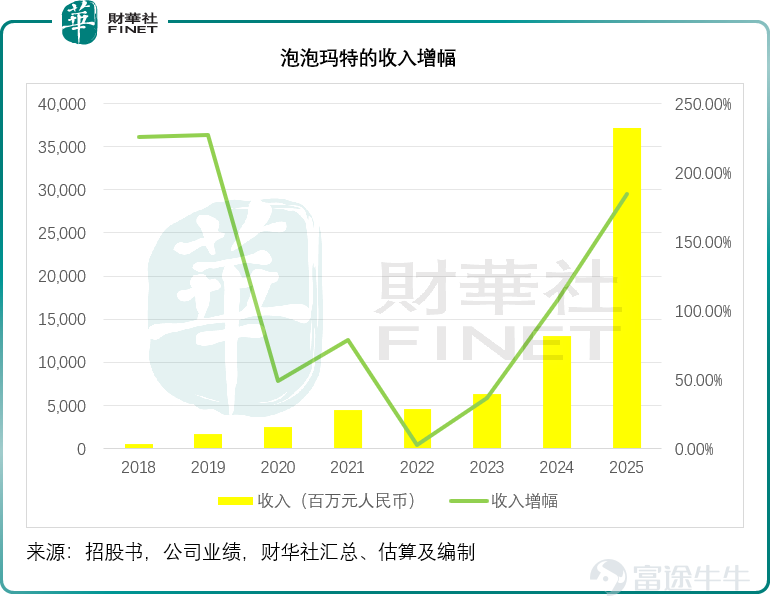
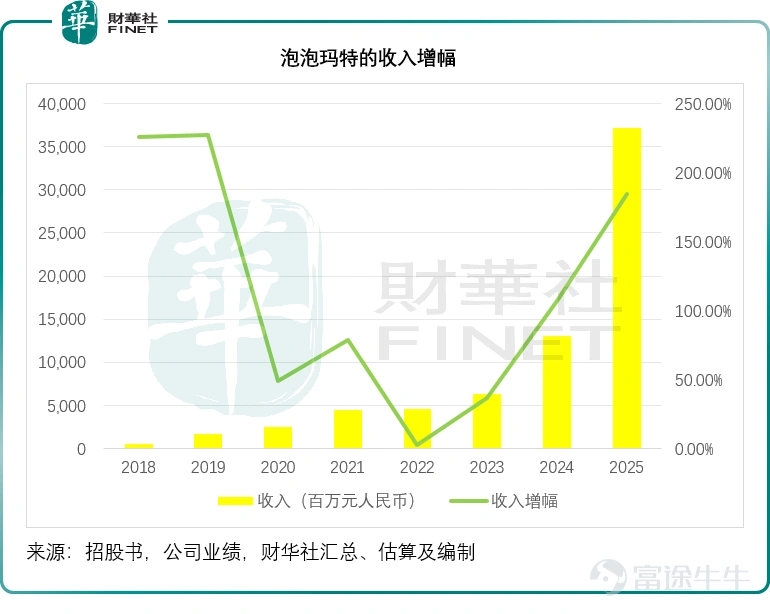
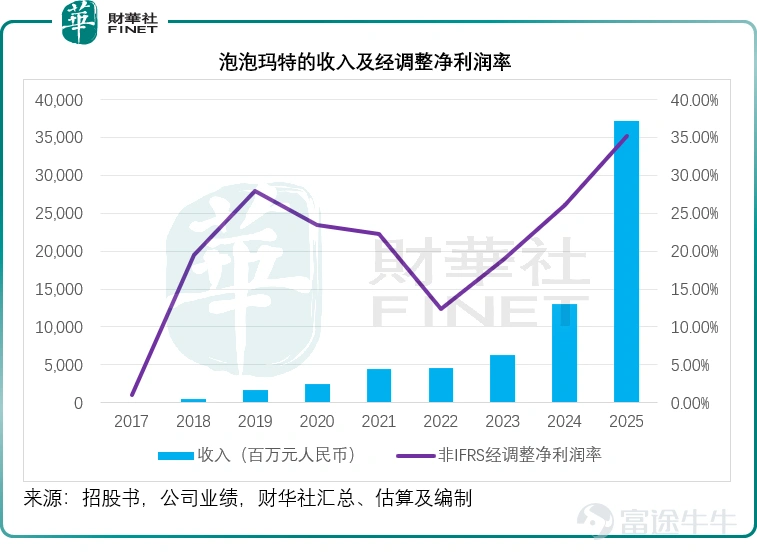
In 2025, Pop Mart reported revenue of RMB 37.12 billion, up 184.71% year-over-year. Its non-GAAP adjusted net profit surged 284.46% year-over-year to RMB 13.084 billion, with the adjusted net profit margin rising further from 26.10% in 2024 to 35.25%, as shown in the chart below.
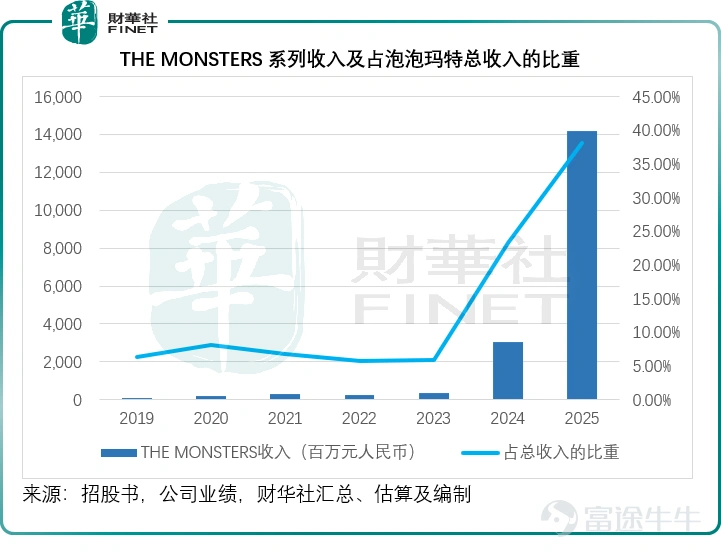
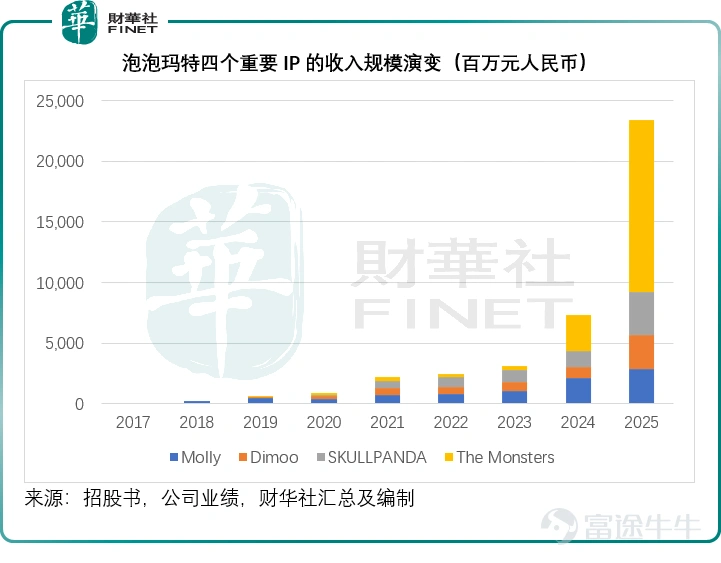
The MONSTERS series, to which Labubu belongs, is undoubtedly the biggest driver behind Pop Mart's robust revenue growth in 2025. In 2025, revenue from THE MONSTERS series surged 365.72% year-over-year to RMB 14.161 billion, increasing its share of total revenue from 23.32% in 2024 to 38.15% in 2025, as shown in the chart below.
Labubu is likely the key unsung hero behind this success. Created by Kasing Lung, this Nordic elf character has broken into the mainstream with its whimsical and quirky charm, evolving into a globally recognized IP. The series not only generated core revenue and significant incremental growth for the company but also substantially boosted brand awareness and created spillover traffic that lifted sales of other IPs, making it the absolute pillar of Pop Mart’s financial performance.
However, collectible toy consumption is inherently emotional, preference-driven, and non-essential. Consumer enthusiasm is highly volatile—without underlying necessity, preferences shift rapidly: fans might fall obsessively in love with Labubu over a single expression, a short video clip, or their favorite celebrity’s endorsement, yet just as quickly move on when the next 'top-tier' IP emerges.
Due to the lack of deep-rooted narratives or substantive core values underpinning these IPs, such emotionally driven preferences struggle to foster lasting brand loyalty, potentially leading to significant volatility in Pop Mart’s financial performance.
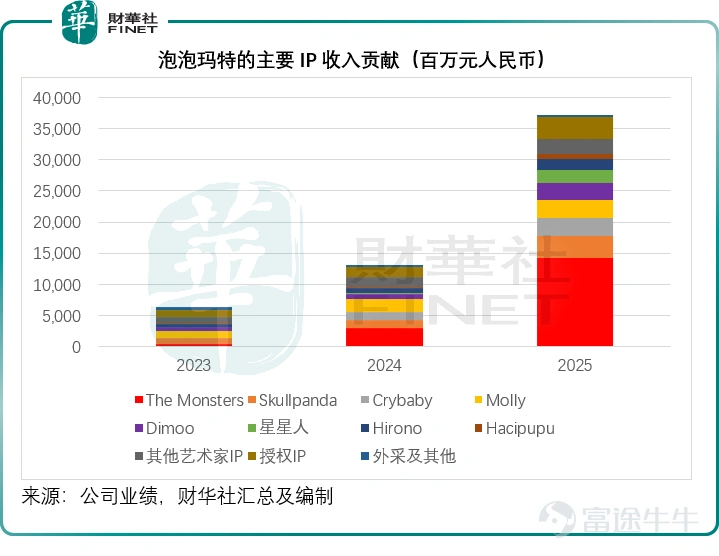
As shown in the chart below, several of Pop Mart’s newer IPs—including Xingxing Ren (Star People) and Crybaby—have seen notable growth over the past three years, with 2025 revenue surging 1,601.81% and 151.44% year-over-year, respectively. However, their scale remains small, and whether they can become the next Labubu remains uncertain. Meanwhile, longer-standing IPs like Molly and Skullpanda continue to grow strongly but still lag far behind THE MONSTERS in terms of revenue scale.
To hedge against the risk of a single IP’s decline, the company must continuously invest heavily in incubating new IPs, ramp up marketing efforts, expand its product portfolio, and secure high-value IP rights through large-scale acquisitions to maintain market momentum. However, this business model has low barriers to entry and is easily replicated by competitors such as 52TOYS, Finding Unicorn, and MINISO’s$MNSO (09896.HK)$TOP TOY, which are actively replicating successful hit-making strategies, intensifying industry-wide homogenization and competition.
The collectible toy industry is fundamentally a 'one-hit-wonder' arena—breakout hits are serendipitous rather than guaranteed. Most IPs have short lifespans, and companies struggle to cultivate evergreen franchises. This implies that Pop Mart’s high-growth narrative lacks inherent sustainability at its core.
Overseas Expansion: A Test of Precision Amid Slowing Growth
International operations currently represent Pop Mart’s most critical growth narrative.
In 2025, the company’s overseas business expanded rapidly, with revenue nearly matching that of its domestic operations. Segment profitability continued to recover, significantly narrowing the earnings gap with the mainland business. On a per-store basis, overseas store sales were notably higher than those in mainland China, primarily because the dense concentration and large base of mainland stores diluted foot traffic and revenue per store, whereas overseas locations were strategically positioned and benefited from strong brand scarcity, resulting in superior per-store output.
The domestic market remains resilient, with steady expansion continuing across both offline stores and online channels in mainland China. Membership continues to grow year-over-year, and customer repurchase rates have consistently risen, laying the initial foundation for a user loyalty system. However, it must be acknowledged that this loyalty lacks high barriers to exit. Unlike premium discretionary consumer brands such as Moutai, which represent entrenched lifestyle choices with high switching costs, Pop Mart’s customer repurchases remain rooted in 'trend preferences,' where consumption decisions are driven by fleeting likes and dislikes, resulting in fragile and easily disrupted engagement.
Operating data for Q1 2026 appears to signal that growth has peaked: under high-base pressure, overseas business growth has clearly decelerated and is likely to enter a sustained slowdown; similarly, growth in mainland offline channels has also moderated, with base effects compounded by aesthetic fatigue, gradually eroding domestic growth tailwinds. For a trend-driven collectible toy company like Pop Mart, an inability to sustain high growth rates or consistently launch hit products may indicate that a growth ceiling is emerging, posing a serious test to its long-term scalability.
Extreme cost optimization: How much further can profitability improve?
2025 marked the peak year for Pop Mart’s profit efficiency, placing its profitability among the top tier of consumer companies with exceptionally strong financial performance. The company’s gross margin surged to 72.10% for the full year, and its adjusted net profit margin reached an impressive 35.25%—far exceeding most discretionary consumer peers and highlighting its premium profitability. This high profitability was no accident but rather the result of rigorous expense control combined with economies of scale. In 2025, all major cost and expense ratios saw significant optimization, maximizing gains from cost reduction and efficiency enhancement: cost of goods sold as a percentage of revenue dropped to 22.92%, fully leveraging supply chain scale advantages; employee benefit expenses—which had previously remained in double digits—plummeted to 6.07%; royalty fees as a share of revenue declined from 3.02% in 2024 to 2.25%, reflecting continuous optimization of IP licensing costs; and advertising and marketing expenses fell back to 3.22% of revenue, indicating substantially improved marketing efficiency.
However, behind these stellar figures lie underlying concerns: the company’s core expense ratios have already been compressed to low levels, leaving limited room for further cost control or operational efficiency improvements.
Entering 2026, management has warned that gross margins are expected to decline by 1–2 percentage points due to rising raw material prices, logistics costs, and tariffs. The benefits from recent years’ 'cost reduction and efficiency enhancement' initiatives are fading, meaning future profit growth will likely depend more heavily on 'top-line expansion'—that is, sustained revenue growth.
The double-edged sword of financial strength: How should excess cash be deployed?
As of the end of 2025, Pop Mart held RMB 17.225 billion in cash and time deposits (up from RMB 9.620 billion at the beginning of the year), carried no interest-bearing debt, maintained a healthy asset structure, and reported consistently improving operating cash flow—demonstrating cash flow alignment far superior to most peers and exceptional risk resilience.
This abundant cash flow also enables the company to consistently return capital to shareholders. In recent years, Pop Mart has routinely executed dividend payouts and share buybacks, steadily maturing its shareholder return framework and establishing a robust mechanism for delivering investor value.
However, ample cash reserves simultaneously introduce new operational risks: how to efficiently deploy vast idle capital has become the market’s greatest uncertainty. The core toy business faces limited growth potential and diminishing room for optimization. If the company continues to focus solely on its core business, capital efficiency will be hard to improve; yet if it pursues diversification or external investments, it confronts unfamiliar industries and cross-sector operational risks. A strong financial foundation is a double-edged sword—it can buffer against industry cyclicality but may also drag down long-term corporate value through inefficient capital allocation or reckless expansion.
Market Divergence: The 'Scissors Gap' Between Southbound Capital and Share Price
A noteworthy phenomenon is that since 2026, Southbound capital holdings have risen from 17.75% to 24.80%, yet the company’s share price has cumulatively fallen by more than 18%. Duan Yongping has even increased his stake against the trend to 6.04%, becoming the second-largest shareholder.
The rationale behind Southbound capital’s accumulation may stem from the company’s impressive historical financial results, solid balance sheet, or even Duan Yongping’s lead—but investors must also consider the underlying fragility of its business model: emotionally driven consumer spending, low industry barriers to entry, and insufficient growth sustainability are core concerns.
Conclusion
In summary, Pop Mart now stands at a critical crossroads. In 2025, it demonstrated through an impeccable financial report that it is an outstanding ‘designer toy retailer.’ However, to evolve into a ‘cultural company’ with ‘evergreen IPs,’ significant uncertainties remain regarding the longevity of its intellectual properties, deepening its presence in overseas markets, and cultivating new growth drivers.
For investors seeking the next promising consumer-sector investment opportunity by analyzing Pop Mart’s rise and potential challenges, the 13th HK100 Awards may offer a valuable benchmark. The ranking evaluates Hong Kong-listed companies based on multidimensional operational metrics to assess their long-term development value, providing the market with a curated sample of high-quality listed enterprises and enabling investors to gain a more nuanced understanding of the opportunities and risks embedded in different sectors’ growth models.
Risk Disclaimer: The above content only represents the author's view. It does not represent any position or investment advice of Futu. Futu makes no representation or warranty.Read more

Comments
to post a comment
1
1