
Baidu Options Opportunity Pool | Biotech quietly hits new highs, memory chip catalysts pile up—where’s the market momentum shifting?
Hello fellow investors, welcome to this week’s 'Playing Options with $100' opportunity pool! Each week we focus on clear market themes and highlight noteworthy low-barrier options opportunities. We don’t talk about once-in-a-lifetime windfalls; instead, we explain the rationale, whether it’s worth watching, and where the risks lie.
【📢 The 'Bai Dao Plays Options' series now has its own dedicated account! If you find this series helpful and want to see our weekly opportunity pool updates and Friday recaps as soon as they’re out, fellow investors, don’t forget to click follow~】
Market Focus This Week
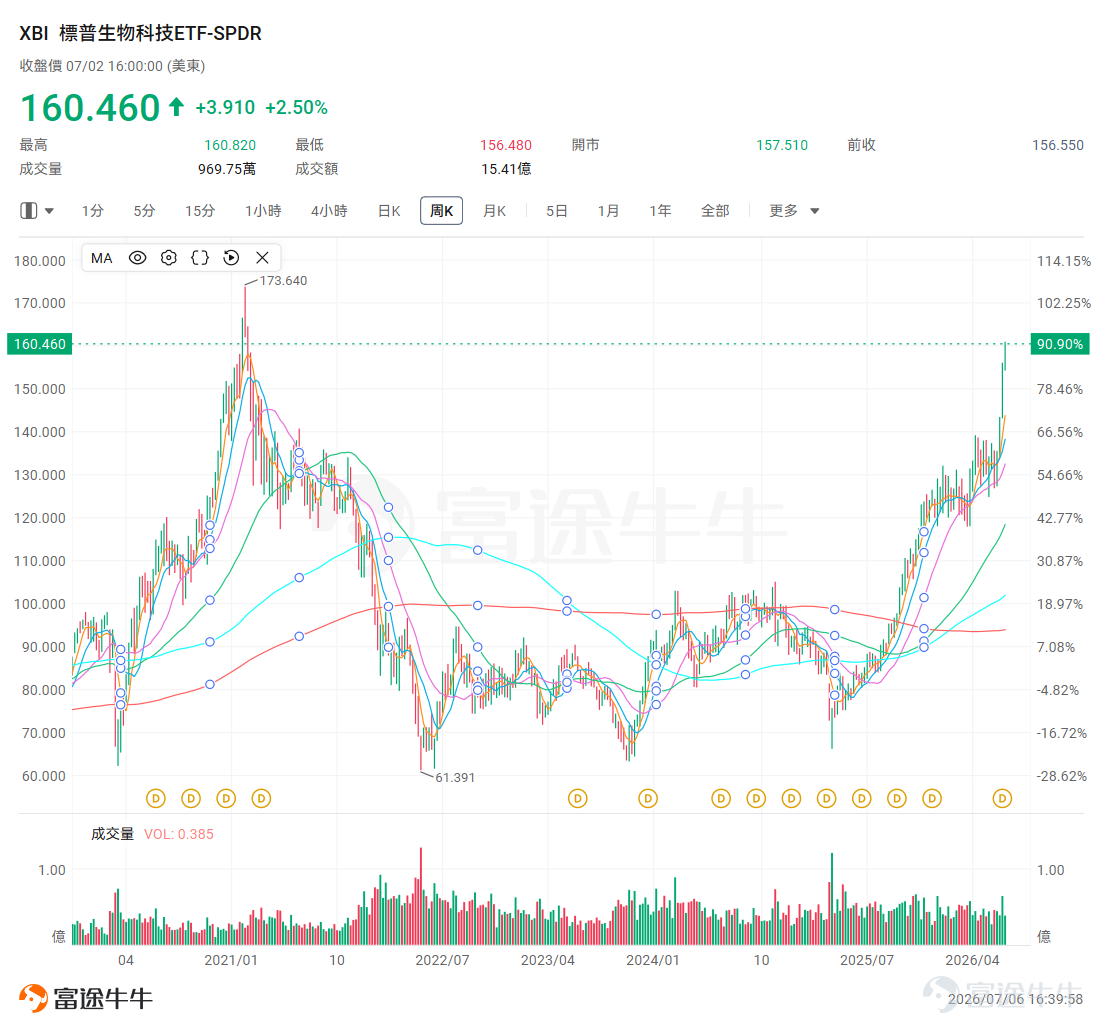
Last week, the market played out a classic case of 'the wheel of fortune turning'—major indices climbed steadily, yet previously hot sectors like memory chips and photonics collectively pulled back. Meanwhile, a long-neglected sector quietly reached new highs: biotechnology. The XBI ETF is now approaching its all-time high from 2021, yet it continues to receive scant market attention.
On the other side, the memory chip sector enters a week packed with catalysts: Samsung will $CSOP Samsung Electronics Daily (2x) Leveraged Product (07747.HK)$ release its earnings guidance on Tuesday, and on Friday SK Hynix $CSOP SK Hynix Daily (2x) Leveraged Product (07709.HK)$ will debut on Nasdaq in what’s set to be the largest-ever U.S. IPO by an overseas company. But at this stage of the rally, is this the peak of good news—or just another leg higher? Micron faced $Apple (AAPL.US)$ a surprise price hike after earnings, while Hynix’s 'unlimited long-term contracts' collided with $Meta Platforms (META.US)$ a narrative reversal around 'selling computing power'—keeping volatility in the memory sector stubbornly elevated.
This rotation pattern—where previously overlooked sectors gain strength while popular ones face pressure—is precisely when options become an ideal tool for expressing market views. Whether you're betting that biotech will break through resistance or seeking opportunities amid the bullish-bearish divergence in the memory sector, options allow you to test your thesis with limited capital.
Target One: $SPDR S&P Biotech ETF (XBI.US)$
The biotech sector recently can be described as 'quietly raking in big gains.'While market attention has been focused on the ups and downs of AI chips,the XBI ETF has quietly climbed close to its all-time high reached in 2021.
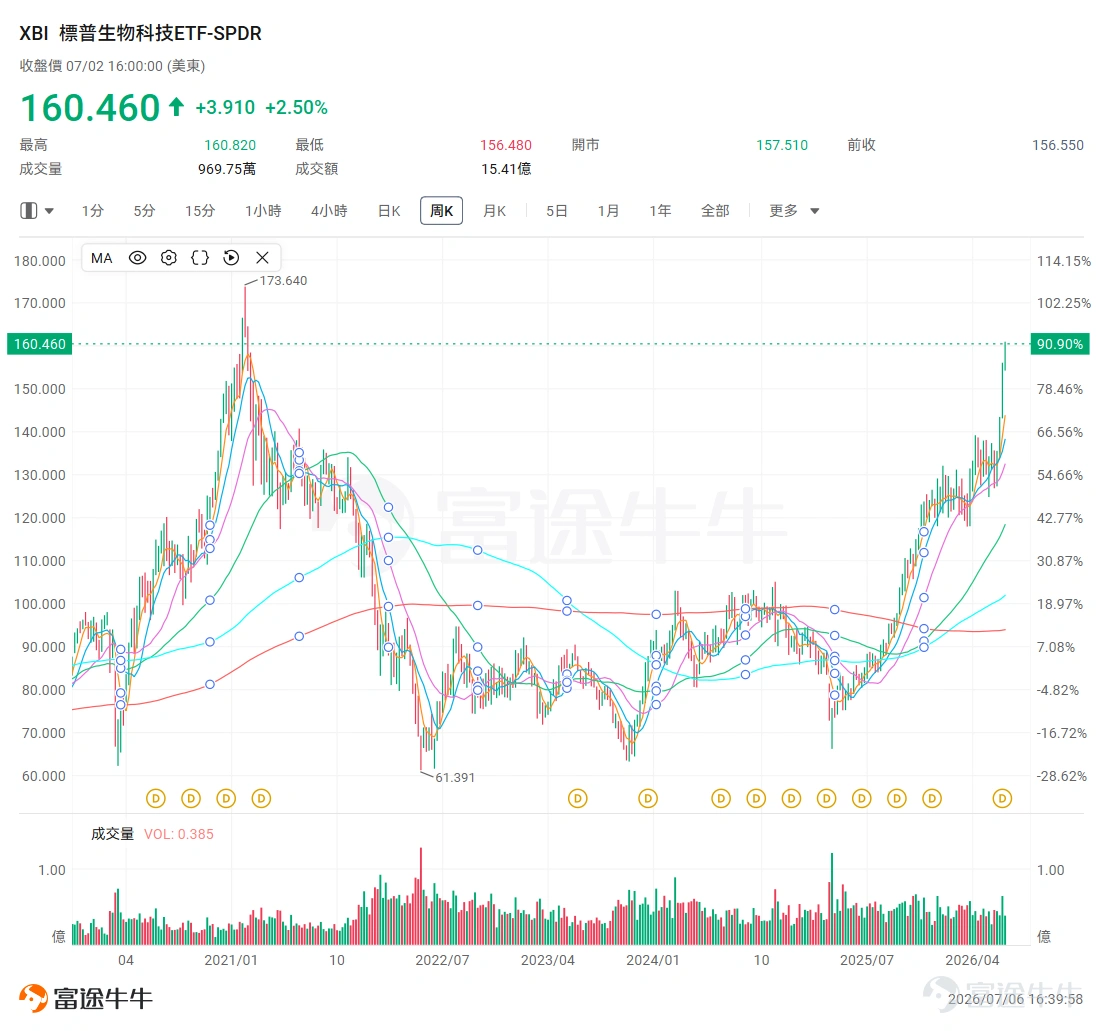
Several factors are driving this rally:First, expectations for Federal Reserve rate cuts are rising, directly benefiting rate-sensitive growth sectors like biotechnology. Second, as popular investment themes become overcrowded, capital is seeking undervalued 'valuation troughs' that have been underweighted—biotech being one such long-overlooked sector. Third, the sector has been receiving intermittent positive catalysts from mergers & acquisitions and clinical trial progress.
The core reason to watch it lies in:It is technically approaching the strong resistance level represented by its 2021 high.A breakout could trigger a new rally, while failure to break through and subsequent pullback would also provide a clear trading signal. Regardless of your view, this is a well-defined opportunity with a clear technical setup and rationale.
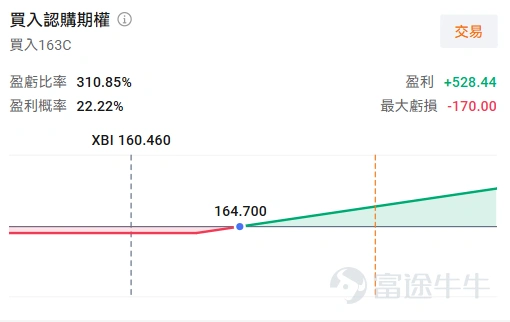
(The design images displayed on the screen are for demonstration purposes only and do not constitute any investment advice or guarantee; market conditions fluctuate frequently, and the option prices shown in the illustration do not represent actual situations. The filtering criterion is options with a unit price around 1 dollar.)
Bullish rationale:
The sector has been significantly underweighted for a long time, and capital is now flowing back in. When popular sectors become too crowded, investors often seek 'valuation troughs'—and biotech is precisely one of the sectors that has been neglected for years.
If it convincingly breaks above the 2021 high—a key resistance level—it could open up fresh upside potential on the technical chart and attract more trend-following capital.
Compared to individual stocks, XBI, as a sector ETF, diversifies away the risk of any single company’s clinical trial failure, making it suitable for investors who are bullish on the sector as a whole but prefer not to bet on individual names.
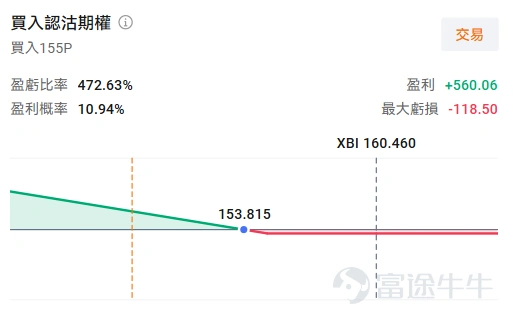
(The design images displayed on the screen are for demonstration purposes only and do not constitute any investment advice or guarantee; market conditions fluctuate frequently, and the option prices shown in the illustration do not represent actual situations. The filtering criterion is options with a unit price around 1 dollar.)
Bearish rationale:
The 2021 high represents a strong resistance level—at that point, XBI began a decline of over 60%. The market retains a 'memory' of this price level, where profit-taking and short-covering selling pressure could concentrate.
Although the sector has rallied, there hasn’t been a clear fundamental catalyst—such as a wave of blockbuster drug approvals—to justify the move. The gains appear primarily driven by capital rotation, raising questions about sustainability.
If market leadership shifts back toward growth stocks broadly, biotech’s appeal as a 'safe haven' may diminish.
Target Two: $Roundhill Memory ETF (DRAM.US)$
This week marks a catalyst-heavy period for memory chip stocks: Samsung released its earnings preview on Tuesday (the market expects Q2 profits to surge approximately 18-fold year-over-year, with internal chatter even suggesting 'one year’s profit equals 40 years’ worth'), and SK Hynix will list on the Nasdaq this Friday in what is set to be the largest-ever U.S. IPO by a foreign company, aiming to raise around USD 28 billion.
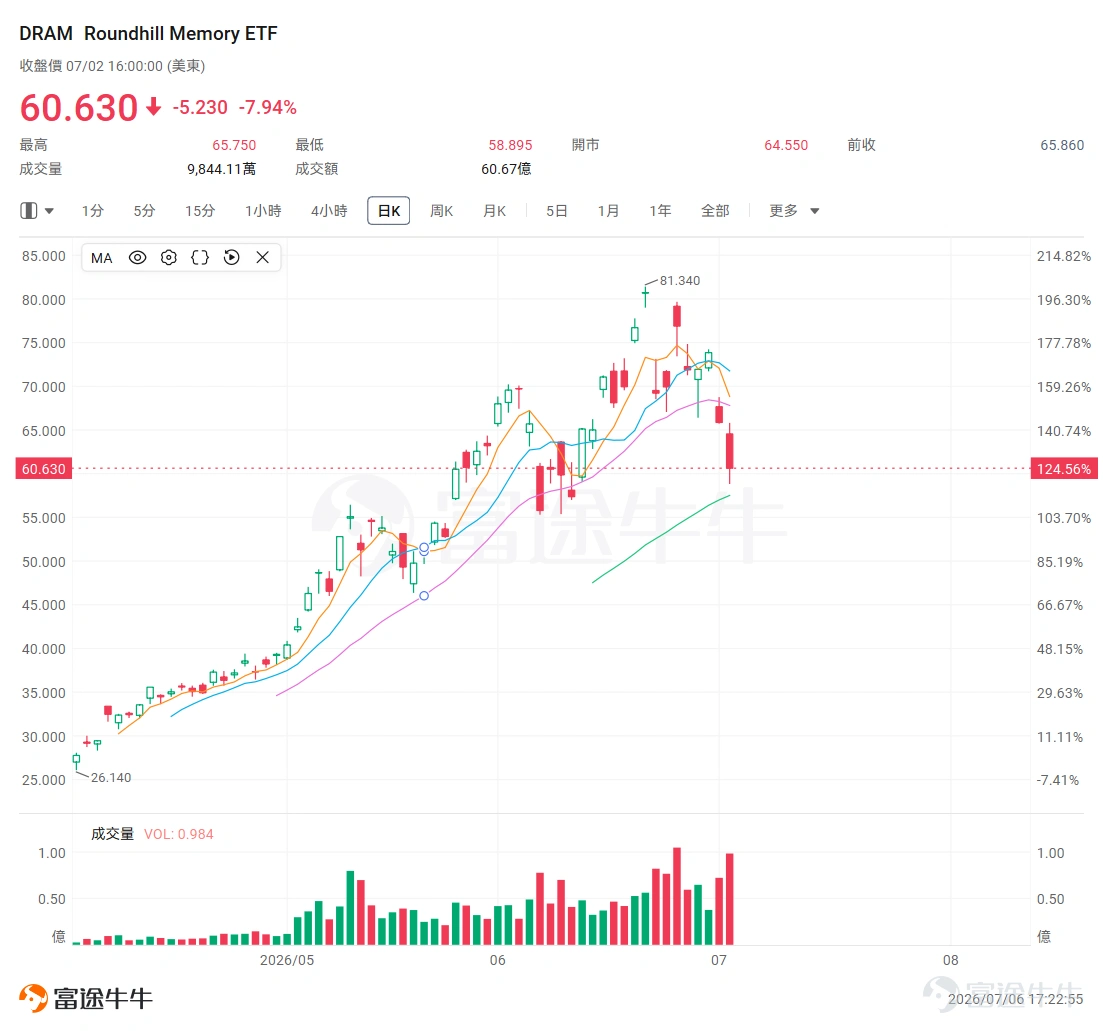
But why not just buy $Micron Technology (MU.US)$ options directly? Simple—Micron now trades at USD 1,000–2,000 per share, making the entry cost for a single options contract prohibitively high. The DRAM ETF covers major memory players like Micron, Samsung, and SK Hynix, currently priced just above USD 60, offering significantly lower options entry barriers—ideal for investors wanting exposure to the memory sector without taking concentrated single-stock positions.
Of course, the memory sector exhibits a 'profitable one month, loss-making the next' pattern, and volatility remains very high.
At this stage of the market move,strong internal catalysts do not preclude external black swan events.After Micron reported earnings, it was suddenly hit by Apple’s price hike announcement (raising expectations for downstream costs); meanwhile, SK Hynix’s narrative of 'unlimited long-term supply agreements' collided head-on with Meta’s surprise announcement about 'selling computing power,' which briefly sparked market fears that excess AI capacity could weigh on memory demand.Therefore, this position may be better suited for gradual deployment as the situation unfolds: maintain a degree of caution if the rally continues, but retain a measure of optimism if the pullback persists.
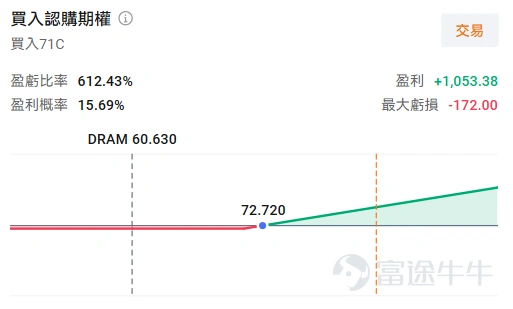
(The design images displayed on the screen are for demonstration purposes only and do not constitute any investment advice or guarantee; market conditions fluctuate frequently, and the option prices shown in the illustration do not represent actual situations. The filtering criterion is options with a unit price around 1 dollar.)
Bullish rationale:
If Samsung’s earnings continue to blow past expectations, it could reignite market confidence in the memory cycle. Samsung Electronics’ foundry business just achieved its first monthly profit in three years in June—a clear signal of a fundamental inflection point.
SK Hynix’s Nasdaq listing serves as an 'event-driven catalyst'—as the leader in HBM (High Bandwidth Memory), its valuation benchmark could trigger a sector-wide re-rating of memory stocks.
Memory remains in a favorable cycle, with DRAM outperforming NAND and foundries outperforming module makers. Many institutions also argue that the two major bearish factors are actually false narratives, and misplaced sentiment has obscured structural opportunities.
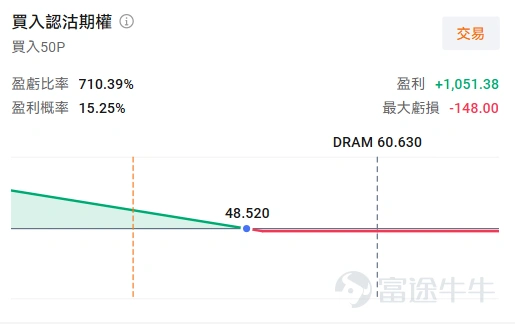
(The design images displayed on the screen are for demonstration purposes only and do not constitute any investment advice or guarantee; market conditions fluctuate frequently, and the option prices shown in the illustration do not represent actual situations. The filtering criterion is options with a unit price around 1 dollar.)
Bearish rationale:
Michael Burry, the famed short-seller, publicly stated last week that he shorted Micron at $1,051 and warned of a potential 30% correction in U.S. semiconductor stocks. While he may not be right, his view reflects the sentiment of a segment of the market.
The memory sector has already accumulated significant gains this year, and profit-taking pressure cannot be ignored—especially after a cluster of catalysts materializes, as the adage 'good news is bad news' often plays out.
Although some analysts have dismissed Meta's reported move to 'sell computing power' as a misinterpretation, if market concerns about 'AI compute oversupply' gain traction, memory—as a key component of AI infrastructure—will struggle to remain insulated. The Bank of Korea has also issued warnings about leveraged ETFs tied to SK Hynix and Samsung, highlighting regulatory concerns over sector volatility.
Important Reminder
Options can expire worthless: Whether you're bullish or bearish, options have an expiration date. If the stock price hasn't moved far enough in your anticipated direction by expiration, your option could become worthless. Only invest an amount you can afford to lose.
Positioning timing recommendation: This week features a cluster of memory-related catalysts (Samsung’s earnings on Tuesday and SK Hynix’s listing on Friday). We recommend observing the market’s reaction after these events before making decisions, to avoid taking heavy positions at peak uncertainty. Following event resolution, implied volatility is likely to drop regardless of price direction—a phenomenon known as IV Crush, where option prices automatically deflate as uncertainty dissipates. Buyers should pay special attention to this.
That wraps up this week’s opportunity watchlist. Biotech is quietly climbing, while memory chips face dense catalysts—the market’s favor rotates constantly. But no matter which theme you’re betting on, always clarify where the risks lie first. See you Friday!
Not comfortable with options basics? Study up before jumping in.
If you’re reading this opportunity watchlist and still feel fuzzy about concepts like 'What is a Long Call?' or 'How do I interpret strike prices?', don’t rush to place orders—take time to solidify your foundational knowledge first. Here’s a curated list of practical beginner resources; we recommend bookmarking it:
Finally, here's a small perk for fellow Futubull investors, welcome to claim it.Options Beginner Pack~
*This event is exclusive to invited HK users. Click to learn more.Detailed event rules>>

Disclaimer
This content does not constitute any offer, solicitation, recommendation, opinion, or any guarantee of any securities, financial products, or tools. The risk of loss in trading options can be substantial. In some cases, losses may exceed the initial margin deposited. Even if stop-loss or limit orders such as "stop-loss" or "limit" are set, they may not prevent losses. Market conditions may cause these instructions to be unexecuted. You may be required to deposit additional margin within a short period. If you fail to provide the required amount within the specified time, your open positions may be liquidated. However, you will still be responsible for any shortfall in your account. Therefore, before trading, you should study and understand options and carefully consider whether such trading is suitable for you based on your financial situation and investment objectives. If you trade options, you should be familiar with the procedures for exercising options and the rights and obligations upon expiration, as well as your rights and responsibilities when exercising options and at expiration.
Risk Disclaimer: The above content only represents the author's view. It does not represent any position or investment advice of Futu. Futu makes no representation or warranty.Read more


Comments
to post a comment
8
7