
Delin Weekly Review (July 6, 2026)
Market Review
1
US labor market cools
Data released by the U.S. Bureau of Labor Statistics showed that nonfarm payrolls rose by only 57,000 in June, roughly half the market expectation of 113,000 and significantly below May’s revised gain of 129,000 (previously reported as 172,000). Additionally, combined revisions for April and May reduced payroll gains by 74,000, indicating that recent months’ strong employment figures were substantially overstated.
According to data released by ADP Research, private-sector employment in the U.S. increased by 98,000 in June, below economists’ forecast of 119,000 and down from the prior month’s gain of 122,000. Employment has now risen for the twelfth consecutive month, suggesting the labor market slowdown has not yet turned into a clear stall.
Data released by the Institute for Supply Management (ISM) showed that the U.S. manufacturing PMI declined by 0.7 points month-over-month to 53.3 in June, below the expected 53.9 but still near a four-year high. Falling oil prices drove the ISM Prices Paid Index down sharply by 9.1 points to 73—below the forecast of 77.5—marking the largest single-month drop since July 2022.
Data from the U.S. Bureau of Labor Statistics showed that job openings rose slightly to 7.594 million in May, modestly above April’s revised figure of 7.585 million. The median economist forecast was 7.3 million. The quit rate remained unchanged at 1.9%, layoffs edged up slightly, and hiring was essentially flat. The Federal Reserve closely watches the ratio of job openings per unemployed person, which also held steady at approximately 1:1.
Eurostat data showed that eurozone CPI rose 2.8% year-over-year in June, below market expectations of 3.0% and a notable decline from May’s 3.2%. Core inflation, excluding food and energy, fell to 2.4% from 2.6%, also below the expected 2.5%. In response to the data, money markets quickly reduced bets on further European Central Bank policy tightening this year.
This week’s employment data indicated that while the U.S. labor market remains somewhat resilient, it is not overheating. Last month’s leisure and hospitality hiring, which had exceeded expectations, pulled back this month. We believe investors should carefully analyze employment data to distinguish noise in high-frequency indicators. Last week, Fed Chair Waller delivered a dovish-leaning speech, aligning with our expectations, as markets had previously priced in an overly hawkish outlook. We think the market should focus on future recommendations from Waller’s working group regarding Fed guidance and inflation metrics to determine strategic positioning. We also believe Waller is unlikely to significantly alter the current Fed policy direction before the working group completes its work. In terms of asset allocation, we continue to recommend a balanced approach and caution toward sectors with elevated valuations and substantial profit-taking pressure.
2
China’s economy has shown signs of recovery.
The latest data released by China’s National Bureau of Statistics showed that the Manufacturing Purchasing Managers’ Index (PMI) rose to 50.3% in June, up 0.3 percentage points from the previous month, returning above the 50-point expansion-contraction threshold. Meanwhile, the Non-Manufacturing Business Activity Index and the Composite PMI Output Index stood at 50.2% and 50.6%, respectively, each rising modestly by 0.1 percentage point from the prior month. The data indicate an improvement in China’s economic sentiment. Two key highlights were synchronized expansion in both production and demand within manufacturing and continued leadership by high-tech manufacturing.
The People’s Bank of China conducted its first-ever CNY 300 billion overnight reverse repo operation, alongside a CNY 157.5 billion seven-day reverse repo, to address liquidity pressures around the mid-year quarter-end. This move serves both as a precise short-term measure to 'smooth peaks and fill valleys' and as a significant step in the transformation of the monetary policy framework—upgrading overnight reverse repos from an ad hoc tool to a regular instrument, complementing the seven-day tenor to enhance short-end interest rate management.
RatingDog reported that its China Manufacturing PMI stood at 51.7 in June, down slightly from May’s 51.8, marking a three-month low—yet still above both the 50 expansion-contraction line and the long-term average of 50.8 since 2004. The Q2 average PMI was 51.9, the strongest quarterly reading since Q4 2020. Output growth reached its fastest pace since August 2023, procurement activity remained above the long-term average for the fifth consecutive month, and input price inflation—a persistent concern for manufacturers—cooled markedly, helping ease cost pressures on businesses.
RatingDog reported that its China Services PMI came in at 54.1 in June, slightly down from May’s high of 54.4 but still the third-highest reading in nearly three years and well above the 50 threshold. New business exports hit a year-to-date high, sales prices returned to expansion after two months of contraction, and employment growth reached its highest level since July 2024.
This week’s economic data suggest continued divergence in China’s economy. We believe greater clarity on the policy outlook is now the key focus for markets. We advise investors to closely monitor the upcoming July Politburo meeting for further signals of policy easing and whether stabilization efforts will target consumption, real estate, or fertility support. Additionally, we caution investors about extreme sectoral divergence in equities. Following the recent pullback, some high-quality stocks now offer dividend yields exceeding 5%, presenting attractive allocation opportunities; we recommend focusing on fundamentally stable names. For semiconductor and technology sectors that have seen significant gains, we suggest maintaining a cautious stance and taking profits selectively.
3
Delin Securities' View
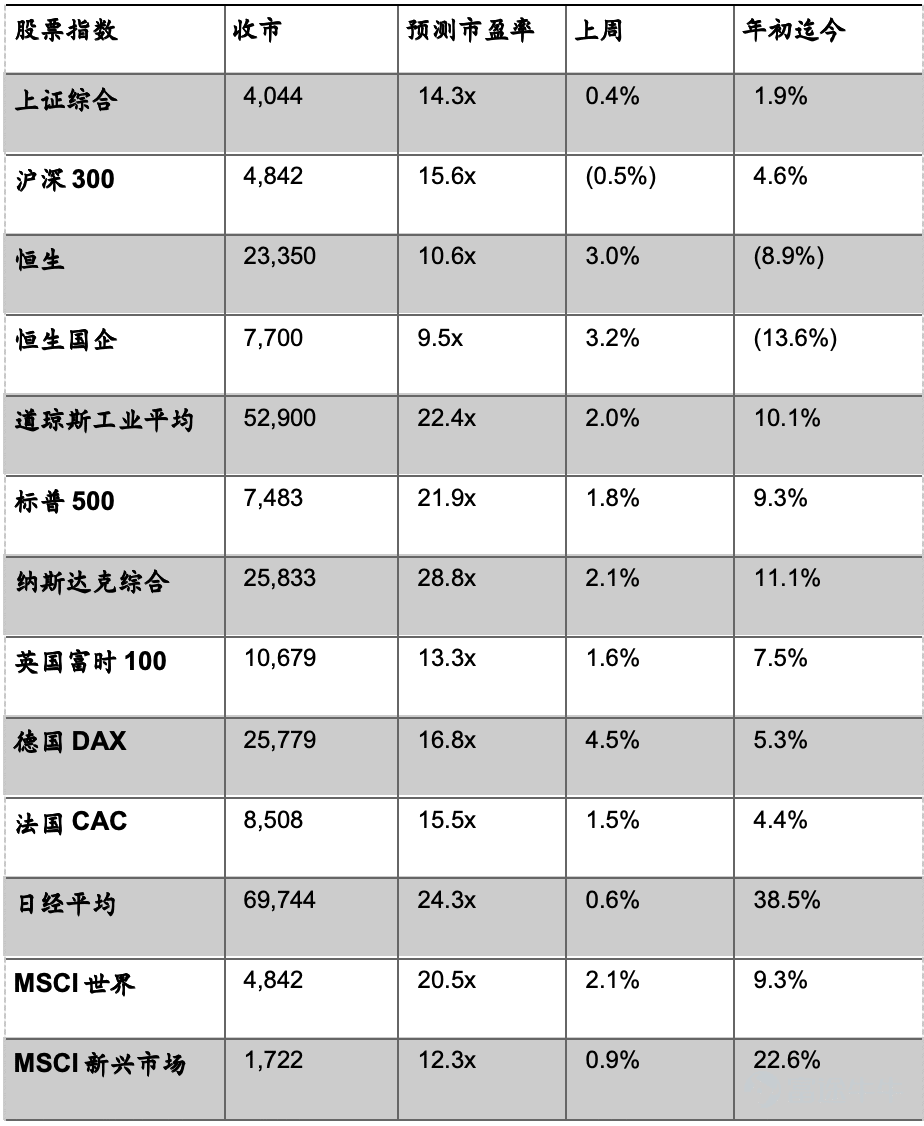
Kenty Wong, Deputy CEO of Delin Securities, observed that Hong Kong stocks finally showed some signs of recovery in July. On Friday last week, the Hang Seng Index rose nearly 300 points, marking its second consecutive gain and closing at 23,350. Over the four trading days last week, the index gained a total of 678 points, officially ending a seven-week losing streak. Last week’s market performance was primarily driven by external economic factors: weaker-than-expected U.S. employment data cooled market expectations for interest rate hikes, becoming a key catalyst supporting Hong Kong equities.
Looking ahead to this week, Hong Kong stocks are expected to continue their upward momentum in the near term. After a period of strong inflows, shares of AI and robotics-related companies—previously favored by investors—have recently pulled back, potentially prompting some capital to rotate into traditional tech and internet sectors. We believe that once these major index-weighted stocks begin to rebound, they will provide meaningful support and uplift to the broader Hong Kong market in the short term. The Hang Seng Index is expected to retest the 24,000 level by mid-July.
Reviewing the first half of 2026, global equity markets experienced significant turbulence. Market attention centered on robust demand driven by the artificial intelligence and semiconductor industries, propelling major Asia-Pacific markets—including Japan, South Korea, and Taiwan—to repeated record highs. In stark contrast, Hong Kong stocks appeared 'lonely and downtrodden,' significantly underperforming neighboring markets, prompting investor disappointment. In the first half, Taiwan’s weighted index broke through the 47,000 mark, led by Taiwan Semiconductor and AI-related stocks; South Korea’s KOSPI index was not far behind, surging past 8,000 in mid-May thanks to explosive growth in semiconductor exports; meanwhile, Japan’s Nikkei index traded above 70,000 throughout the first half, supported by sustained foreign inflows and solid corporate earnings. A common thread among these three markets was their ability to seize global industry trends and translate technological innovation into stock market gains. By contrast, the Hang Seng Index declined by 2,749 points in the first half, marking its worst performance in nearly six years—highlighting deep-seated structural issues in the Hong Kong market and its lag in industrial transformation and new economy development, leaving it far behind the global pace of technological innovation.
4
Mainland Market Observations
Last week, China’s A-share market exhibited a pattern of initial strength followed by a pullback, with sharp sectoral divergence. The Shanghai Composite Index edged up 0.41% for the week, closing at 4,043.64 points, while the Shenzhen Component Index and ChiNext Index fell by 1.17% and 4.16%, respectively. Notably, the ChiNext Index retreated sharply after approaching its prior high on Wednesday, signaling a clear rebalancing between growth and value investment styles.
Market trading activity remained elevated, with average daily turnover across the two exchanges holding steadily above RMB 3 trillion. However, volume contracted in the latter half of the week, indicating growing caution among incremental funds and highlighting characteristics of a stock-picking, zero-sum environment.
Sector-wise, pharmaceuticals, biotechnology, and beauty care led weekly gains, benefiting from valuation repair. Meanwhile, technology sectors such as communications and electronics—which had seen substantial earlier rallies—plummeted due to concentrated profit-taking. With the mid-year earnings reporting window approaching in mid-July, market logic is rapidly shifting from 'sentiment-driven speculation' to 'earnings validation,' prompting capital to focus increasingly on sub-sectors backed by solid fundamentals.
Key News
1
Retail investors are pouring into the RWA sector against the prevailing trend,
Stripe launches OUSD stablecoin with industry giants
According to the latest data as of July 3, 2026, the total on-chain market capitalization of real-world assets (RWA) has declined for several consecutive months to USD 30.62 billion. However, the total number of asset holders has surged逆势 to a record high of 954,300, indicating that new capital—primarily from retail investors—is allocating heavily into tokenized assets. Meanwhile, global regulatory approaches are diverging yet becoming more pragmatic, with project developments accelerating rapidly and the boundary between traditional finance and crypto-native ecosystems being swiftly eroded.
Among recent developments, the Open Standard Alliance—led by payments giant Stripe and comprising 140 fintech and traditional financial institutions—announced the launch of its innovative U.S. dollar stablecoin, Open USD (OUSD), capturing market attention. Designed around a 'shared benefits' model, OUSD offers institutional-grade, zero-fee large-scale minting and redemption, and returns nearly all interest earned from its U.S. Treasury reserves directly to distribution channels. This approach directly challenges the duopoly of USDT and USDC, which have historically retained profits exclusively, and even triggered a single-day drop of over 17% in Circle’s share price.
The founding partners of the alliance boast an impressive lineup, including traditional payment networks such as Visa, Mastercard, and American Express; crypto platforms like Coinbase and Bybit; major financial institutions including BlackRock, Bank of New York Mellon (BNY), and Standard Chartered; and tech giants Google and Shopify. As an open-source stablecoin governed by a multi-party board, OUSD is scheduled to officially launch later this year, aiming to provide an open, low-cost, high-throughput stablecoin infrastructure for global capital flows—marking a pivotal shift in stablecoin competition from reserve-size rivalry toward battles over traditional distribution channels and settlement mechanisms.
2
ChangXin Celebrates Positive News Ahead of IPO
As ChangXin Technology advances toward its listing on the STAR Market, reports have emerged that it has signed long-term server DRAM supply agreements worth over RMB 20 billion with Tencent, with contracts extending up to five years, and that Apple is considering sourcing memory chips from the company. These developments have led the market to reposition ChangXin not just as a 'domestic substitute' but as a contender closer to the world’s fourth-largest DRAM supplier. Both announcements have significantly bolstered ChangXin’s perceived technological credibility, supply chain standing, and revenue visibility.
Against the backdrop of memory entering a supercycle, multi-year supply agreements have become industry norms. Terms such as price bands, advance payments, and penalty clauses help manufacturers lock in revenue while enabling customers to secure supply. Reports note conflicting accounts regarding whether ChangXin’s agreement with Tencent spans three or five years, and it remains unclear if the deal includes HBM. Nevertheless, even the server DRAM long-term order alone reflects strong demand from cloud and internet giants for supply stability.
It remains highly uncertain whether Apple will ultimately receive U.S. regulatory approval to source from ChangXin. However, Citi offered a straightforward interpretation: even if the deal doesn’t materialize, Apple’s mere consideration of ChangXin as a potential supplier serves as a strong endorsement of its product maturity. This signals a narrative shift for ChangXin—from a purely 'domestic alternative' to a player capable of penetrating the global high-end supply chain—providing positive catalysts for equipment, packaging/testing, and upstream/downstream materials stocks.
Fundamentally, ChangXin’s earnings elasticity has become extraordinary. Founded in 2016, the company posted losses for nine consecutive years before turning its first profit last year. Yet in Q1 of this year, revenue surged 7.2-fold year-over-year to RMB 50.8 billion, with net profit reaching RMB 24.8 billion. The company now expects H1 net profit to range between RMB 50 billion and RMB 57 billion—effectively erasing most of its cumulative decade-long losses within just six months. This explains why the market views this IPO as one of the most anticipated semiconductor mega-deals in mainland China in recent years.
3
Food Delivery Platforms Reach Five Consensus Points
Beijing Municipal Market Supervision Administration convened the first negotiation session among Meituan, Taobao Flash Delivery, JD.com Food Delivery, restaurant merchants, and industry associations, resulting in five consensus points aimed at curbing 'cutthroat' competition in the food delivery sector. The core objective is to steer subsidies, marketing, and delivery practices back onto a more rational track. This dialogue mechanism seeks to establish a more regularized communication channel among platforms, merchants, riders, and consumers.
First, optimize subsidies: platforms pledged to allocate subsidy budgets reasonably, set scientifically grounded caps on order discounts, curb irrational large-scale subsidies, and reduce the adverse impact of excessive price competition on merchant operations. Second, offer fee concessions: platforms will enhance support for high-quality restaurants through mechanisms such as fee rebates and rate discounts.
Third, practice rational marketing: platforms require promotional content to be truthful and effective, avoid overreliance on ultra-low pricing to capture traffic, and remind merchants to participate in promotions rationally. Fourth, provide support and safeguards: platforms will offer financial, equipment, and traffic support to merchants implementing 'open kitchen, transparent cooking' initiatives, encouraging standardized operations.
The fifth measure involves standardizing delivery management. Platforms will reasonably set merchant meal preparation times and rider delivery windows, moving away from an exclusive focus on 'minute-level speed races' to reduce pressure on both merchants and riders. Overall, this signals that the food delivery industry is transitioning from a phase of 'burning cash to grab market share' to a new stage characterized by 'controllable subsidies, rational competition, and a focus on service and quality.'
4
Kling AI has secured nearly USD 3 billion in funding.
Kling AI, under Kuaishou, is nearing completion of a financing round of nearly USD 3 billion, with a post-money valuation expected to reach USD 18 billion—setting a new global record for fundraising by a video large-model company. The round was jointly led by Tencent, CPE Source Fund, Guofang Venture Capital, BlueFive, Zhongguancun Science City Fund, and CITIC Securities, with participation from multiple industrial and entertainment-focused investors, reflecting strong market confidence in the commercial prospects of AI-powered video generation.
This funding round is not merely a financing announcement but marks the official launch of Kling AI's independent commercialization journey. According to the announcement, Beijing Kling has signed agreements with 21 initial investors who will inject approximately USD 2.028 billion upfront, followed by an additional USD 767 million from 15 subsequent investors, bringing total fundraising to a cap of approximately USD 3 billion—representing 16.67% of Beijing Kling’s expanded registered capital.
The funds will primarily support technological R&D and ecosystem expansion, with a core focus on enhancing video generation capabilities, broadening creative use cases, and accelerating real-world industry adoption. Kuaishou emphasized that bringing in diverse strategic investors will help drive the commercialization of large AI models in video generation and accelerate the transition from 'showcasing model capabilities' to 'generating sustainable revenue.'
From an industry perspective, this financing round indicates that video large models have entered a new phase marked by capital intensity and heightened competition. Kling AI is no longer just an internal AI project within Kuaishou but is now being valued by the market as an independent platform company—a shift that will simultaneously accelerate its expansion in technology development, commercialization, and ecosystem partnerships.
5
HKEX Introduces Standardization of Board Lot Sizes
The core of HKEX’s adjustment is to standardize board lot sizes across the Hong Kong market, making trading easier to understand and more accessible for retail investors. Previously, board lot sizes varied significantly across stocks, sometimes resulting in high entry barriers that were unfriendly to trading in low-priced stocks and new listings. This reform aims to gradually address this issue.
The first phase will take effect on July 2, 2026, initially lowering the minimum guideline for board lot value from HKD 2,000 to HKD 1,000. Newly listed companies will need to comply with both the revised upper and lower limits for board lot value and the new standardization requirements. Existing listed companies will immediately adopt the new lower value limit; if they later undertake stock splits, consolidations, or changes to board lot sizes, they must do so under the new framework.
HKEX has also narrowed board lot sizes to eight standardized options: 1, 50, 100, 500, 1,000, 2,000, 5,000, and 10,000 shares. This standardization makes trading units more uniform across the market, enabling investors to calculate entry costs, compare different stocks, and handle odd-lot trades with greater clarity, while also streamlining operations for brokers and market systems.
Phase two will commence following the launch of the dematerialized securities market on November 16, 2026. All issuers will be required to adopt one of the standardized board lot sizes within six months after completing the transition. HKEX will also enhance the odd-lot trading mechanism and study new automated order-matching arrangements; if implemented, these measures could further boost Hong Kong equities’ liquidity and trading convenience.
6
Tesla’s valuation anchor shifts
Tesla delivered 480,126 vehicles globally in the second quarter, a 25% year-over-year increase that significantly exceeded analysts’ expectations of fewer than 400,000 units, setting a record for the strongest-ever Q2 performance. However, the market once again followed the classic 'buy the rumor, sell the news' pattern: after four consecutive days of gains had already priced in the positive news, Tesla’s share price plunged upon the announcement, marking its steepest single-day decline in nearly a year. Moreover, Tesla still trails Chinese automaker BYD in total pure electric vehicle sales.
The significant outperformance in deliveries was primarily driven by strong demand in China and Europe, while U.S. demand demonstrated greater-than-expected resilience following the removal of the $7,500 federal EV tax credit. However, current sales are almost entirely supported by the two core models—Model 3 and Model Y. Retail demand for Cybertruck remains persistently weak, and Tesla has already ceased production of Model S and Model X to fully redeploy freed-up capacity at its Fremont, California factory toward humanoid robot manufacturing.
To accelerate its transformation into a high-tech enterprise, Tesla has sharply increased its 2024 capital expenditure plan to over $25 billion—roughly triple last year’s level—with the bulk of this investment directed toward cutting-edge initiatives such as the Optimus robot and autonomous Cybercab. Meanwhile, energy storage deployments rebounded by 53% quarter-over-quarter to 13.5 GWh in Q2. Although Wall Street remains divided on whether this meets expectations, there is broad consensus that Megapack will continue to benefit significantly from structural tailwinds driven by AI data centers and power infrastructure development.
Multiple analysts emphasize that Tesla’s core valuation drivers have now decisively shifted away from traditional automotive manufacturing and delivery metrics toward the long-term progress of its artificial intelligence, Full Self-Driving (FSD), and robotics businesses. As the marginal impact of legacy vehicle models wanes, automotive delivery figures are hitting a ceiling in their ability to lift the stock price. Going forward, Tesla’s long-term cash flows and valuation ceiling will ultimately hinge on the pace of commercialization and technological maturity in AI and Robotaxi.
Market statistics


This week's economic data schedule

Disclaimer
This report was prepared by DL Family Office (Hong Kong) Limited based on publicly available information. DL Family Office (Hong Kong) Limited is licensed by the Hong Kong Securities and Futures Commission to engage in Type 4 (advice on securities) and Type 9 (asset management) regulated activities.
The content and opinions in this report are for reference only and do not constitute recommendations, offers, solicitations, advertisements, or promotions for the relevant securities or financial instruments. DL Family Office (Hong Kong) Limited strives for accuracy and reliability in the information provided but does not guarantee independent verification of the public data used.
DL Family Office (Hong Kong) Limited, its branches, affiliates, directors, staff, employees, and agents assume no responsibility for any expressions, warranties, implications, correctness, fairness, or completeness of the information contained in this report. They also bear no liability for any errors, ambiguities, omissions, or misunderstandings arising therefrom.
This report is distributed exclusively to specific individuals. Without written authorization from DL Family Office (Hong Kong) Limited, no recipient may copy, distribute, disseminate, quote, reproduce, or provide any part or all of the content to third parties.
DL Family Office (Hong Kong) Limited reserves all rights to this report.
Risk Disclaimer: The above content only represents the author's view. It does not represent any position or investment advice of Futu. Futu makes no representation or warranty.Read more
Comments
to post a comment