
Zhongji Xuchuang is now in hot IPO subscription! Around 80% of new listings in 2026 rose on their fi

Yanwen Logistics’ Six-Year, Three-Time Rocky IPO Dream: Profits Surge While Revenue Plummets for Three Consecutive Years, and Its Largest Client Experiences Wild Swings
On May 25, Yanwen Logistics Co., Ltd. (hereinafter referred to as 'Yanwen Logistics'), a veteran player with over two decades of experience in the logistics industry, submitted its prospectus to the Hong Kong Stock Exchange, which has been accepted, with Shenwan Hongyuan (Hong Kong) acting as sole sponsor.
Notably, this company—the second-largest third-party B2C cross-border logistics service provider in China—is making its third attempt to enter the capital markets.
In retrospect, Yanwen Logistics' path to listing has been rather tortuous. As early as September 2020, the company signed a ChiNext IPO counseling agreement with CITIC Securities, aiming to list on the Shenzhen Stock Exchange. By July 2021, when it submitted its prospectus, the intended listing board had already shifted to the Main Board. However, after undergoing two rounds of regulatory inquiries, Yanwen Logistics unexpectedly withdrew its application just before its scheduled listing hearing in January 2023, drawing public attention. The company explained that the withdrawal was primarily due to founder Zhou Wenxing’s family asset arrangements, under which he planned to transfer a portion of his shares gratuitously to his sister, Zhou Wenling. Given that this transfer occurred during a critical phase of the IPO review process and introduced uncertainty regarding changes in the company's equity structure, the company opted to proactively withdraw its application.
Three years later, Yanwen Logistics has pivoted to Hong Kong and relaunched its IPO journey. However, multiple red flags disclosed in its prospectus—including volatile financial performance, losses in overseas operations, and a dramatic shift in customer composition—have cast significant uncertainty over its listing prospects.
Profits surge while revenue plummets over three years
According to the prospectus and Tianyancha data, Yanwen Logistics was founded in 1998 and operates as a private integrated cross-border export e-commerce logistics service provider, specializing in offering international express delivery, dedicated logistics lines, and supply chain management solutions to global e-commerce platforms and sellers.
According to data from Frost & Sullivan, measured by revenue from cross-border e-commerce express delivery services in 2025, Yanwen Logistics ranks second among China’s third-party B2C cross-border e-commerce logistics providers, with a market share of 1.8%. By parcel volume shipped to the United States in 2025, the company also ranks second among such providers in China, with a market share of 1.4%.
During the historical reporting period from 2023 to 2025 (hereinafter referred to as the 'Reporting Period'), Yanwen Logistics generated revenues of RMB 9.483 billion, RMB 5.827 billion, and RMB 6.687 billion, representing year-over-year changes of -38.6% and +14.8%, respectively. Net profit amounted to RMB 581.2 million, RMB 496.7 million, and RMB 1.06 billion, with year-over-year changes of -14.5% and +114.1%. Net profit margins stood at 0.6%, 0.8%, and 1.6%, indicating persistently thin profitability. Gross margin improved gradually, reaching 3.6%, 6.5%, and 6.9% over the same period.
The sharp decline in the company's revenue in 2024 was primarily driven by a contraction in cross-border e-commerce express delivery services. In 2025, revenue rebounded thanks to dual growth drivers—cross-border e-commerce express delivery and domestic last-mile delivery services—though overall scale still fell short of the peak level seen at the beginning of 2023.
From a business segment perspective, cross-border e-commerce express delivery remains the core revenue driver. During the Reporting Period, this segment generated revenues of RMB 7.664 billion, RMB 4.675 billion, and RMB 5.737 billion, accounting for 80.8%, 80.2%, and 85.8% of total annual revenue, respectively.
Other cross-border services generated revenues of RMB 1.819 billion, RMB 1.061 billion, and RMB 565 million during the Reporting Period, representing 19.2%, 18.2%, and 8.4% of total annual revenue, respectively, reflecting the company’s continued strategic focus on its core express delivery business.
To address gaps in its end-to-end overseas capabilities, the company launched U.S. domestic last-mile delivery services in March 2024. In 2024 and 2025, last-mile delivery generated revenues of RMB 912 million and RMB 3.85 billion, accounting for 1.6% and 5.8% of total annual revenue, respectively, achieving remarkable scale growth. However, losses also widened significantly during the same period, reaching RMB 159.4 million and RMB 309.6 million, resulting in a classic case of revenue growth without corresponding profit improvement.
Renowned economist Song Qinghui noted that, according to industry dynamics, Yanwen Logistics’ U.S. last-mile delivery business exhibits simultaneous rapid revenue growth and expanding losses—a hallmark of a company aggressively investing to capture market share. Last-mile delivery is the costliest and most operationally complex segment of the cross-border logistics chain, requiring sustained investment in owned distribution networks, warehousing infrastructure, vehicle fleets, IT systems, and local staffing, alongside aggressive pricing strategies to acquire customers. Consequently, it is common for such businesses to experience faster scale expansion than profit improvement in their early stages. Although revenue in 2025 grew more than fourfold year-over-year, losses nearly doubled, indicating that economies of scale have yet to materialize fully and that the pace of reduction in per-unit fulfillment costs lags behind the speed of business expansion.
For a Hong Kong listing, the persistently loss-making U.S. last-mile delivery business could create dual pressures. On one hand, it erodes the company's overall profit margin, degrades the quality of operating cash flow, and weakens investor confidence in earnings stability. On the other hand, capital markets place greater emphasis on profitability rather than mere scale expansion for cross-border logistics firms. If the last-mile business fails to reach breakeven over the long term, the market may view it as a high-risk, cash-burning growth strategy, thereby compressing valuation multiples. Additionally, intense competition in the U.S. domestic logistics market—amid pressure from giants like Amazon Logistics, UPS, and FedEx—creates uncertainty around Yanwen Logistics’ ability to establish a differentiated competitive edge, which will remain a key risk factor closely watched by Hong Kong investors.
Dr. Zhu Keli, Founding Dean of the China Institute of New Economy Research, analyzed that Yanwen Logistics’ U.S. last-mile delivery business exhibits simultaneous rapid scale expansion and widening losses—a typical transitional phenomenon for cross-border logistics companies making heavy overseas asset investments. Revenue surged from over RMB 90 million to RMB 385 million, representing a leapfrog expansion in scale, yet losses widened in parallel. The core reason lies in the extremely rigid fixed costs inherent to the U.S. last-mile segment. Overseas sorting centers, local delivery fleets, domestic labor, and compliance certifications constitute substantial, ongoing fixed expenditures. During the initial network expansion phase, continuous scaling up of service points, personnel, and transportation capacity steadily drove fixed costs higher. Although network coverage continues to broaden, shipment density has yet to cross the breakeven threshold, and economies of scale have not been fully realized—resulting in a transitional state where higher revenue leads to greater fixed cost amortization and correspondingly larger losses.
Strategically, the company’s investment in U.S. last-mile delivery aims to break free from the monopoly held by overseas local logistics providers, complete its end-to-end fulfillment capabilities, and enhance control over delivery speed, after-sales service, and pricing. This represents a strategic trade-off: accepting short-term concessions and interim losses in exchange for long-term influence across the supply chain.
However, prolonged losses will directly weigh on the company’s operational fundamentals and valuation for its Hong Kong listing. Operationally, sustained losses from the last-mile business continuously erode profits from the core business, drain operating cash flow, and constrain the scope for overall earnings recovery. From a capital markets perspective, Hong Kong investors exhibit low tolerance for persistently unprofitable operations. Continued expansion in both scale and losses will raise market risk premiums and depress revenue multiples and earnings expectations. Without a clear timeline for narrowing losses and achieving breakeven, the company’s listing valuation will remain suppressed, its IPO timeline extended, and investor assessments of its growth quality and earnings certainty negatively impacted.
Looking at the broader industry landscape, Zhu Keli noted that the U.S.-bound cross-border logistics sector currently faces multiple variables—including tariff adjustments, tightening regulations, stricter last-mile compliance requirements, and exchange rate volatility—significantly elevating geopolitical and operational risks. Cross-border logistics firms deeply entrenched in the U.S. corridor must adopt a systematic approach combining diversified market strategies, upgraded compliance frameworks, financial hedging, and optimized pricing to mitigate external uncertainties.
In terms of market positioning, companies must reduce heavy reliance on the U.S. route alone. Leveraging frameworks such as RCEP and USMCA, they should establish transshipment channels through Southeast Asia and Mexico to diversify exposure to sudden tariff policy shifts and smooth out volatility from any single market through a more balanced regional cargo mix. Simultaneously, they should optimize overseas warehouse operations and customs clearance models to align with new U.S. inspection and tariff rules, thereby minimizing unexpected costs like cargo seizures or retroactive duty payments.
On foreign exchange risk, firms should establish a routine hedging mechanism, using forward contracts and options to lock in medium- to long-term currency conversion costs. They should also implement a 'USD-in, USD-out' currency matching model to reduce frequent exchange losses and incorporate exchange rate adjustment clauses into long-term contracts to fairly allocate currency fluctuation costs.
From a compliance standpoint, companies should build localized compliance teams to dynamically track evolving U.S. regulations on customs, last-mile delivery, and data governance, ensuring standardized declarations, fulfillment processes, and subcontractor management across the entire chain to avoid regulatory penalties. Operationally, they should implement tiered product offerings and differentiated pricing—using premium, high-margin products to offset policy and cost volatility—and continuously optimize last-mile network density to lower per-unit costs, thereby enhancing operational resilience against external uncertainties.
Song Qinghui also remarked that for cross-border logistics companies centered on the U.S. market, the current challenge is no longer limited to traditional operational risks but involves systemic risks arising from the convergence of policy shifts, regulatory tightening, exchange rate fluctuations, and geopolitical conditions. First, they should accelerate diversification of their market footprint—reducing dependence on a single U.S. route and narrow customer base—and actively expand into Europe, Southeast Asia, the Middle East, and Latin America to mitigate business volatility caused by policy shocks through geographic dispersion.
Second, they must strengthen localized operational capabilities and compliance management overseas. As U.S. customs inspections, labor regulations, and data compliance requirements tighten, companies need to establish dedicated compliance teams to bolster risk management in customs declarations, taxation, labor practices, and data security—avoiding unexpected costs and legal liabilities from violations. At the same time, partnering with established local logistics providers can help alleviate the operational burden associated with heavy asset investments.
Regarding foreign exchange risk, a systematic hedging mechanism should be established, using financial instruments such as forward foreign exchange contracts and currency swaps to lock in a portion of U.S. dollar-denominated revenues and costs, thereby mitigating the erosion of profits caused by RMB–USD exchange rate fluctuations. Additionally, the company should optimize the currency matching structure between revenues and expenditures to enhance its natural hedging capacity. In the long run, cross-border logistics firms must shift from relying solely on China’s export-driven tailwinds to competing based on global supply chain service capabilities—by strengthening integrated warehousing and distribution, digital operations, and value-added services—to bolster resilience against external environmental shifts and reduce operational uncertainty stemming from overseas policy changes and currency volatility.
Customer base passively reshaped: top client’s contribution dropped from over half to single digits
During the reporting period, Yanwen Logistics experienced a transformative shift in its customer structure over three years, primarily triggered by adjustments in centralized procurement models by leading e-commerce platforms.
During the reporting period, the company’s revenue from third-party cross-border e-commerce platforms amounted to RMB 5.998 billion, RMB 1.685 billion, and RMB 863 million, representing 63.3%, 28.9%, and 12.9% of total revenue for the respective periods. Major platforms previously consolidated logistics orders under centralized procurement; however, starting in 2024, they shifted to segmented procurement across multiple service providers, significantly reducing order volume for the company.
To offset the loss of platform orders, the company pivoted toward cross-border merchants and Chinese brands expanding overseas, generating revenue of RMB 3.485 billion, RMB 4.142 billion, and RMB 5.824 billion during the period, accounting for 36.7%, 71.1%, and 87.1% of total revenue, respectively.
Although the company’s customer structure has improved, the legacy risk of historical overreliance on a single major client remains deeply imprinted. During the reporting period, revenue from the top five clients accounted for 64.0%, 31.6%, and 18.0% of total revenue, with the largest client alone contributing 51.9%, 21.8%, and 8.4%, respectively. In 2023, more than half of the company’s revenue depended on a single client, and related revenue sharply declined over the subsequent two years, causing significant volatility in Yanwen Logistics’ revenue composition and prolonged pressure on earnings stability.
On the cost side, profitability in the cross-border logistics industry has long been squeezed by three rigid cost components: trunk transportation, overseas customs clearance and last-mile delivery, and manual sorting—this is also the core reason behind Yanwen Logistics’ persistently low net profit margin.
During the reporting period, administrative expenses amounted to RMB 122 million, RMB 131 million, and RMB 141 million, representing 1.3%, 2.2%, and 2.1% of total revenue, respectively; R&D expenses totaled RMB 514 million, RMB 433 million, and RMB 393 million, accounting for 0.5%, 0.7%, and 0.6% of total revenue, indicating persistently low investment in research and development; distribution and sales expenses were RMB 485 million, RMB 500 million, and RMB 538 million, or 0.5%, 0.9%, and 0.8% of total revenue, respectively.
In terms of asset turnover, trade receivables have shown a consistent downward trend, with net balances at period-end amounting to RMB 1.025 billion, RMB 651 million, and RMB 324 million, respectively. Days sales outstanding (DSO) for trade receivables were 25 days, 53 days, and 27 days, respectively. The increase in DSO in 2024 was primarily due to longer settlement cycles from third-party cross-border e-commerce platforms, while the reduction in 2025 resulted from the company’s optimization of its customer structure.
As of April 30, 2026, approximately RMB 3.03 billion, or about 86.6%, of the company’s trade receivables as of the end of 2025 had been settled.
Cash flow improved significantly, with net cash generated from operating activities during the reporting periods amounting to -RMB 2.57 million, RMB 398 million, and RMB 516 million, respectively.
Distributed over RMB 80 million in dividends to other shareholders; previously experienced internal family disputes.
In this IPO, Yanwen Logistics intends to allocate the proceeds raised to four key areas: advancing global expansion and broadening its overseas logistics network; increasing investment in core technology research and development; expanding its global talent team; and using any remaining funds for working capital replenishment.
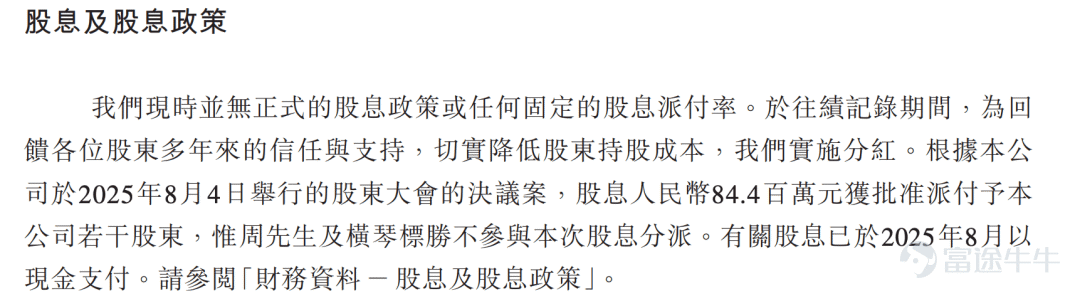
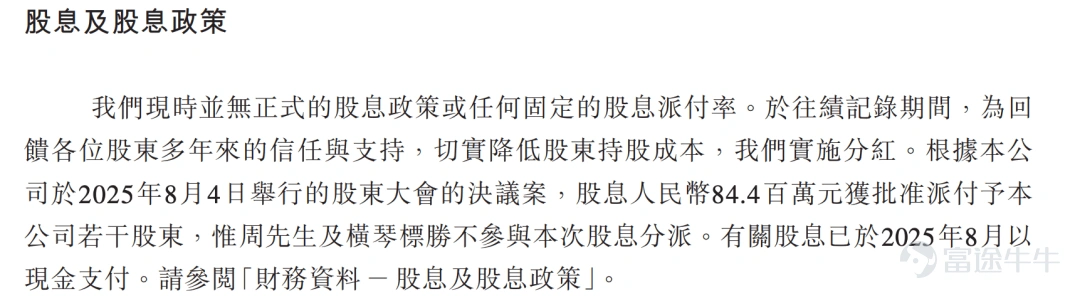
Notably, as of the end of 2025, the company’s cash and cash equivalents balance stood at RMB 9.35 billion, indicating ample liquidity. However, in August 2025, the company’s shareholders approved a resolution to distribute cash dividends totaling RMB 844.4 million to certain shareholders.
According to the prospectus, the purpose of this dividend distribution is to reward shareholders for their long-term support and reduce their cost basis. The recipients were certain shareholders; controlling shareholder Zhou Wenxing and the employee stock ownership platform he controls, Zhuhai Hengqin Biaosheng Enterprise Management Center (Limited Partnership), did not participate in this distribution.
In terms of equity structure, as of the latest practicable date, the company was directly held by Zhou Wenxing, Zeng Yan, and Hengqin Biaosheng with approximately 35.26%, 28.69%, and 7.84% equity interests, respectively. Zeng Yan is Zhou Wenxing’s spouse, and Hengqin Biaosheng is controlled by Mr. Zhou as its general partner. Consequently, as of the latest practicable date, Zhou Wenxing, Zeng Yan, and Hengqin Biaosheng together held 71.79% of the company's equity directly or indirectly.
On the compliance front, Tianyancha shows that as of July 5, the company was involved in a total of 18 legal cases, 72.22% of which listed the company as the defendant. The primary causes of action include corporate resolution disputes, contract disputes, service contract disputes, and transportation contract disputes.
Going back to 2017, an internal family dispute at Yanwen Logistics caused considerable turmoil.
The root of this conflict traces back to the family’s initial equity arrangements at the company’s founding. In January 1998, Zhou Daren and Mei Suhua, a married couple, along with their son Zhou Wenxing, co-founded Yanwen Technology (later renamed Yanwen Logistics) with a registered capital of RMB 100,000. At inception, Zhou Daren held 10%, Mei Suhua held 10%, and Zhou Wenxing held 80%.
In October 2000, Zhou Wenxing transferred 20% of his shares each to Zhou Daren and Mei Suhua, signing an 'Equity Transfer Agreement.' This transfer was a gratuitous transaction among close relatives, reducing Zhou Wenxing’s stake to 40%, while Zhou Daren and Mei Suhua each held 30% thereafter.
In September 2015, Zhou Daren and Mei Suhua each transferred their 30% equity stakes to Zhou Wenxing free of charge, resulting in Zhou Wenxing holding 100% of the company's shares. In return, the company committed to allocate RMB 10 million from undistributed dividends to purchase a retirement home for the couple. In November of the same year, Zhou Wenxing transferred 40% of his equity stake to his wife, Zeng Yan, who thereby officially became a shareholder.
In May 2017, Zhou Daren, then 81 years old, and his wife Mei Suhua filed a lawsuit with the Chaoyang District People's Court in Beijing, alleging that their son Zhou Wenxing had induced them to transfer their equity under pretexts such as 'avoiding future inheritance tax' and subsequently transferred part of the shares to his daughter-in-law Zeng Yan before and after the equity transfer, violating his promise not to transfer the shares to any third party. The elderly couple submitted four claims: first, that their signatures on the November 2015 shareholders’ resolution regarding the share transfer to Zeng Yan were forged and did not reflect their true intentions; second, that the December 2016 shareholders’ resolution was adopted without proper notice or an actual meeting; third, that the January 2017 share transfer agreement should be rescinded and the first shareholders’ resolution of Yanwen Limited’s fifth board declared invalid; and fourth, that the company should pay the promised RMB 10 million for the housing purchase.
This bitter legal battle between father and son lasted two and a half years, with all four cases undergoing both first-instance and appellate proceedings. By November 2019, all matters had been conclusively adjudicated, with the courts rejecting all claims by Zhou Daren and Mei Suhua and upholding the legality of the existing shareholding structure. Although the matter was legally settled, this intra-family dispute became a critical obstacle for Yanwen Logistics just before its planned A-share listing in 2023. To this day, the shadow of this family feud remains a lingering concern hanging over Yanwen Logistics’ path to going public. (Produced by Harbor Financial)
Harbor Business Observer, by Zhang Ranqi
Risk Disclaimer: The above content only represents the author's view. It does not represent any position or investment advice of Futu. Futu makes no representation or warranty.Read more
Comments
to post a comment